UNESCO EDUCATION SECTOR
International Conference on
Artificial Intelligence and Education
Data-based EMIS and education data analytics
Beijing
People’s Republic of China
16 – 18 May 2019
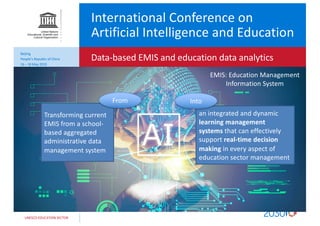
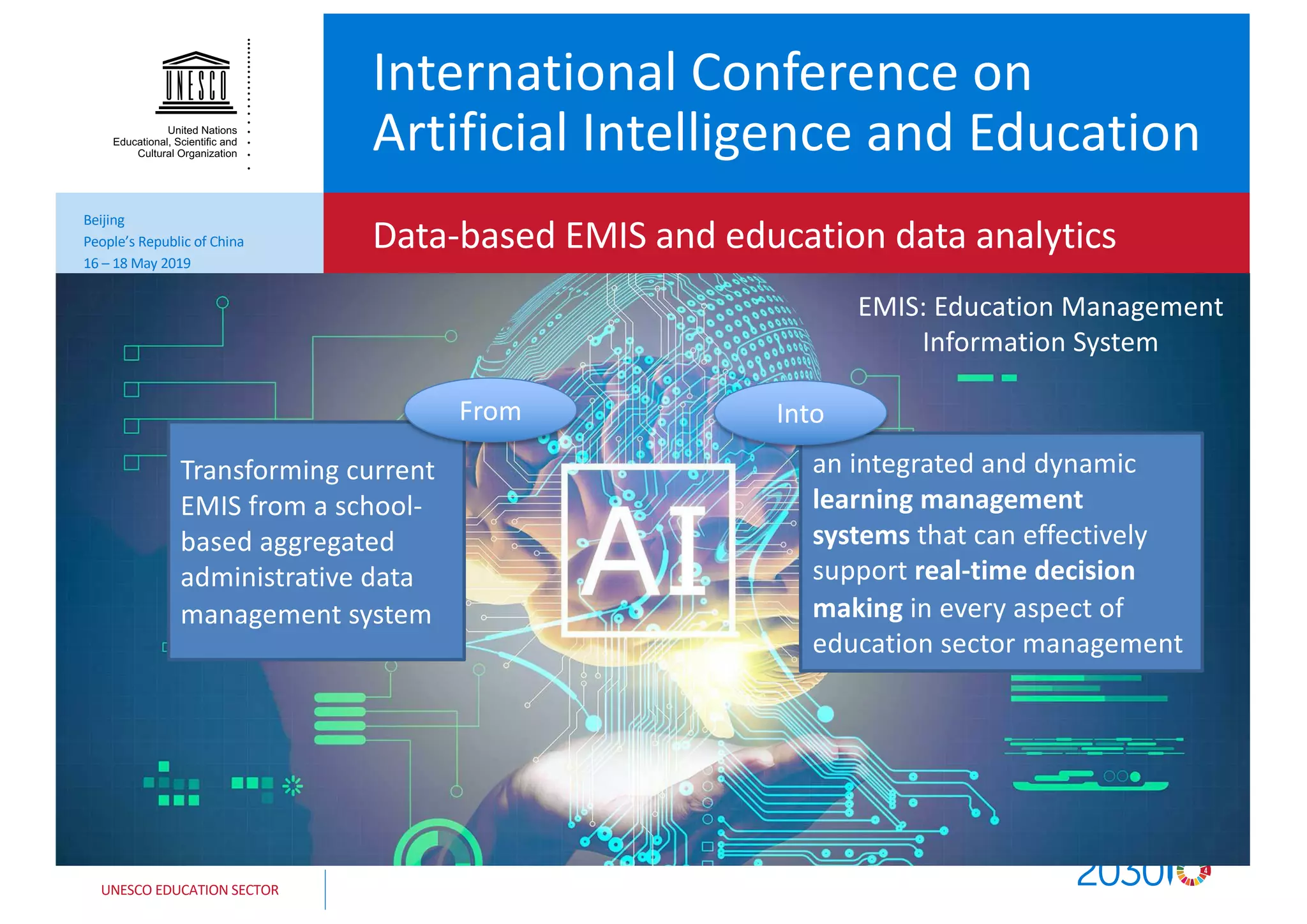
Transforming current
EMIS from a school-
based aggregated
administrative data
management system
an integrated and dynamic
learning management
systems that can effectively
support real-time decision
making in every aspect of
education sector management
From Into
EMIS: Education Management
Information System
UNESCO EDUCATION SECTOR
International Conference on
Artificial Intelligence and Education
Data-based EMIS and education data analytics
Beijing
People’s Republic of China
16 – 18 May 2019
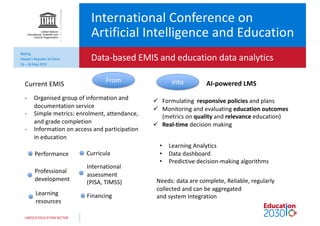
From IntoCurrent EMIS AI-powered LMS
Performance Curricula
Financing
Professional
development
Learning
resources
International
assessment
(PISA, TIMSS)
• Learning Analytics
• Data dashboard
• Predictive decision-making algorithms
ü Formulating responsive policies and plans
ü Monitoring and evaluating education outcomes
(metrics on quality and relevance education)
ü Real-time decision making
- Organised group of information and
documentation service
- Simple metrics: enrolment, attendance,
and grade completion
- Information on access and participation
in education
Needs: data are complete, Reliable, regularly
collected and can be aggregated
and system Integration
UNESCO EDUCATION SECTOR 3
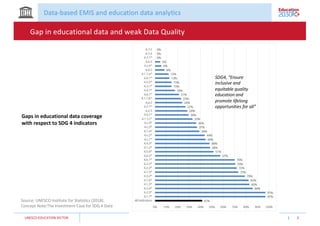
Gap in educational data and weak Data Quality
Gaps in educational data coverage
with respect to SDG 4 indicators
SDG4, “Ensure
inclusive and
equitable quality
education and
promote lifelong
opportunities for all”
Source: UNESCO Institute for Statistics (2018).
Concept Note:The Investment Case for SDG 4 Data
UNESCO EDUCATION SECTOR 4
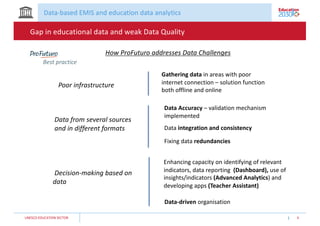
Gap in educational data and weak Data Quality
Gathering data in areas with poor
internet connection – solution function
both offline and online
Data Accuracy – validation mechanism
implemented
How ProFuturo addresses Data Challenges
Poor infrastructure
Data from several sources
and in different formats
Best practice
Decision-making based on
data
Enhancing capacity on identifying of relevant
indicators, data reporting (Dashboard), use of
insights/indicators (Advanced Analytics) and
developing apps (Teacher Assistant)
Data integration and consistency
Fixing data redundancies
Data-driven organisation
UNESCO EDUCATION SECTOR 5
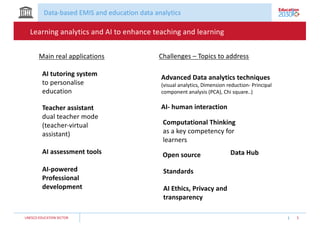
Learning analytics and AI to enhance teaching and learning
AI tutoring system
to personalise
education
Advanced Data analytics techniques
(visual analytics, Dimension reduction- Principal
component analysis (PCA), Chi square..)
Teacher assistant
dual teacher mode
(teacher-virtual
assistant)
AI assessment tools
Computational Thinking
as a key competency for
learners
AI- human interaction
AI-powered
Professional
development
Main real applications Challenges – Topics to address
Standards
AI Ethics, Privacy and
transparency
Open source Data Hub
UNESCO EDUCATION SECTOR 6
Thank you
Paula Valverde
Head of Product and Innovation. Telefonica
@paula_valver

Data-based EMIS and learning analytics

  • 1.
    UNESCO EDUCATION SECTOR InternationalConference on Artificial Intelligence and Education Data-based EMIS and education data analytics Beijing People’s Republic of China 16 – 18 May 2019 Transforming current EMIS from a school- based aggregated administrative data management system an integrated and dynamic learning management systems that can effectively support real-time decision making in every aspect of education sector management From Into EMIS: Education Management Information System
  • 2.
    UNESCO EDUCATION SECTOR InternationalConference on Artificial Intelligence and Education Data-based EMIS and education data analytics Beijing People’s Republic of China 16 – 18 May 2019 From IntoCurrent EMIS AI-powered LMS Performance Curricula Financing Professional development Learning resources International assessment (PISA, TIMSS) • Learning Analytics • Data dashboard • Predictive decision-making algorithms ü Formulating responsive policies and plans ü Monitoring and evaluating education outcomes (metrics on quality and relevance education) ü Real-time decision making - Organised group of information and documentation service - Simple metrics: enrolment, attendance, and grade completion - Information on access and participation in education Needs: data are complete, Reliable, regularly collected and can be aggregated and system Integration
  • 3.
    UNESCO EDUCATION SECTOR3 Gap in educational data and weak Data Quality Gaps in educational data coverage with respect to SDG 4 indicators SDG4, “Ensure inclusive and equitable quality education and promote lifelong opportunities for all” Source: UNESCO Institute for Statistics (2018). Concept Note:The Investment Case for SDG 4 Data
  • 4.
    UNESCO EDUCATION SECTOR4 Gap in educational data and weak Data Quality Gathering data in areas with poor internet connection – solution function both offline and online Data Accuracy – validation mechanism implemented How ProFuturo addresses Data Challenges Poor infrastructure Data from several sources and in different formats Best practice Decision-making based on data Enhancing capacity on identifying of relevant indicators, data reporting (Dashboard), use of insights/indicators (Advanced Analytics) and developing apps (Teacher Assistant) Data integration and consistency Fixing data redundancies Data-driven organisation
  • 5.
    UNESCO EDUCATION SECTOR5 Learning analytics and AI to enhance teaching and learning AI tutoring system to personalise education Advanced Data analytics techniques (visual analytics, Dimension reduction- Principal component analysis (PCA), Chi square..) Teacher assistant dual teacher mode (teacher-virtual assistant) AI assessment tools Computational Thinking as a key competency for learners AI- human interaction AI-powered Professional development Main real applications Challenges – Topics to address Standards AI Ethics, Privacy and transparency Open source Data Hub
  • 6.
    UNESCO EDUCATION SECTOR6 Thank you Paula Valverde Head of Product and Innovation. Telefonica @paula_valver