DEPARTMENT OF
INFORMATION TECHNOLOGY
DATE: 06/06/2022
TIME: 10.00 AM to 10.45 AM
SUBJECT: DATA STRUCTURES & ALGORITHMS
Dr.G.AMBIKA MCA.,M.Phil., Ph.D.,
Assistant professor,
Department of Information Technology,
Bon secours college for women,
Thanjavur.
Unit I
Arrays and sequential representations – ordered lists – Stacks and
Queues – Evaluation of Expressions – Multiple Stacks and Queues –
Singly Linked List – Linked Stacks and queues – Polynomial
addition.
Unit II
Trees – Binary tree representations – Tree Traversal – Threaded
Binary Trees – Binary Tree Representation of Trees – Graphs and
Representations – Traversals, Connected Components and Spanning
Trees – Shortest Paths and Transitive closure – Activity Networks –
Topological Sort and Critical Paths.
Unit III
Algorithms – Priority Queues - Heaps – Heap Sort – Merge Sort – Quick
Sort – Binary Search – Finding the Maximum and Minimum.
Unit IV
Greedy Method : The General Method – Optimal Storage on Tapes –
Knapsack Problem – Job Sequencing with Deadlines – Optimal
Merge Patterns.
Unit V
Back tracking: The General Method – The 8-Queens Problem – Sum
of Subsets – Graph Coloring.
Text Books:
1. Fundamentals of Data Structure – Ellis Horowiz, SartajSahni,
Galgotia Publications, 2008
2. Computer Algorithms – Ellis Horowiz, SartajSahni and
Sanguthevar Rajasekaran, University Press, 2008.
Reference Book:
1. Data Structures – Seymour Lipschutz, Tata Mcgraw Hill,
Schaum‘s Outline Series,
Data:
 Digital Account of Technology Advancement
 Raw facts
Ex: Name, weight,price…
Information:
 Processed and organized data is called Information.
 Data structure refers to an organized way of arrangement
of data related to each other in the memory. Which allows the
program to handle in an efficient way.
 Data structure = Data organization + allowed operations.
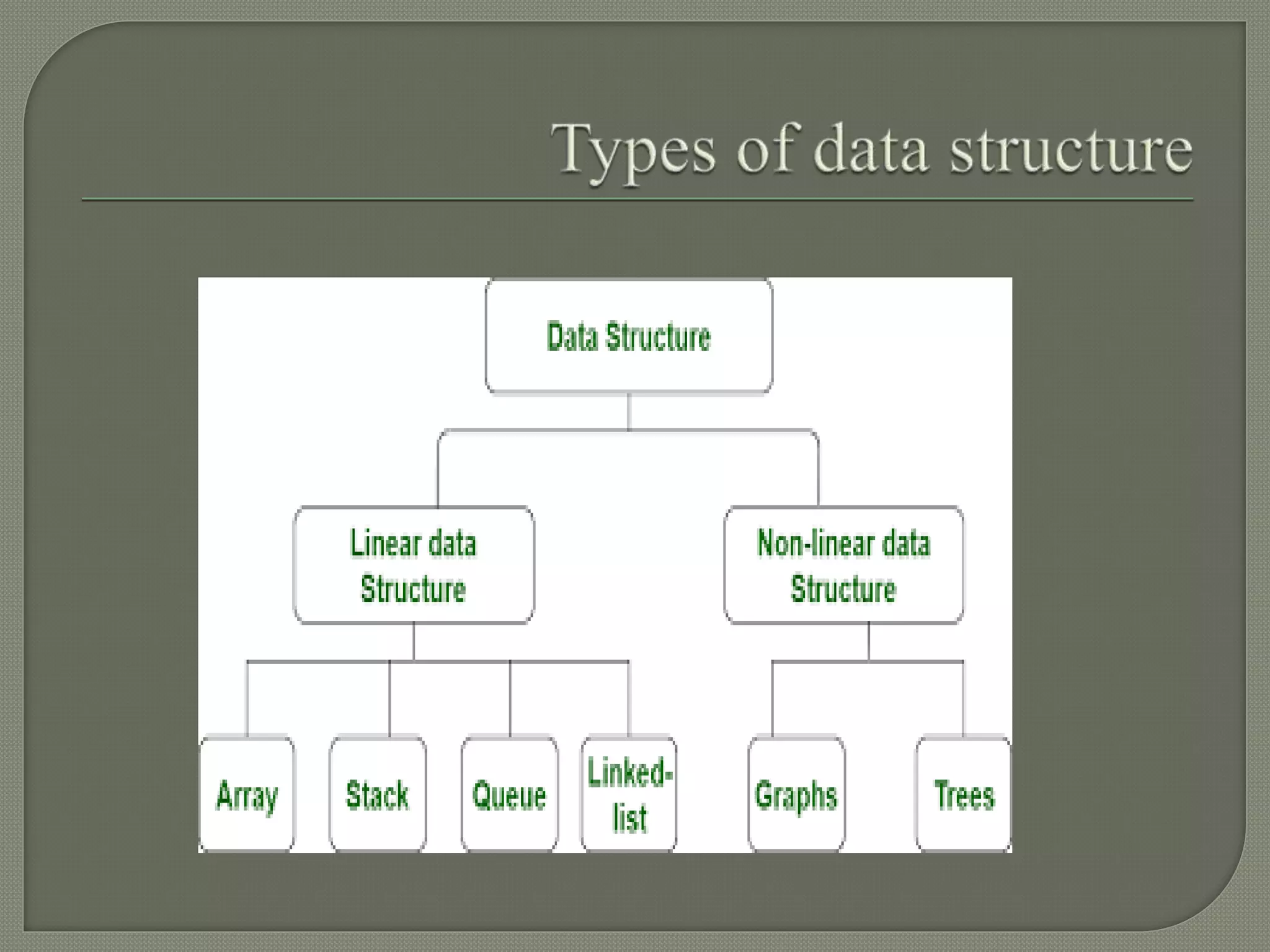
Linear Data Structure:
A Data structure is said to be linear if elements or items
form a sequence one after another.
Non-Linear Data Structure:
Each element is attached to one or more elements creating
a relationship among the items
Array:
An array is a group of same type of data items that are
referred by a common name.
Each item stored in an array is called an element.
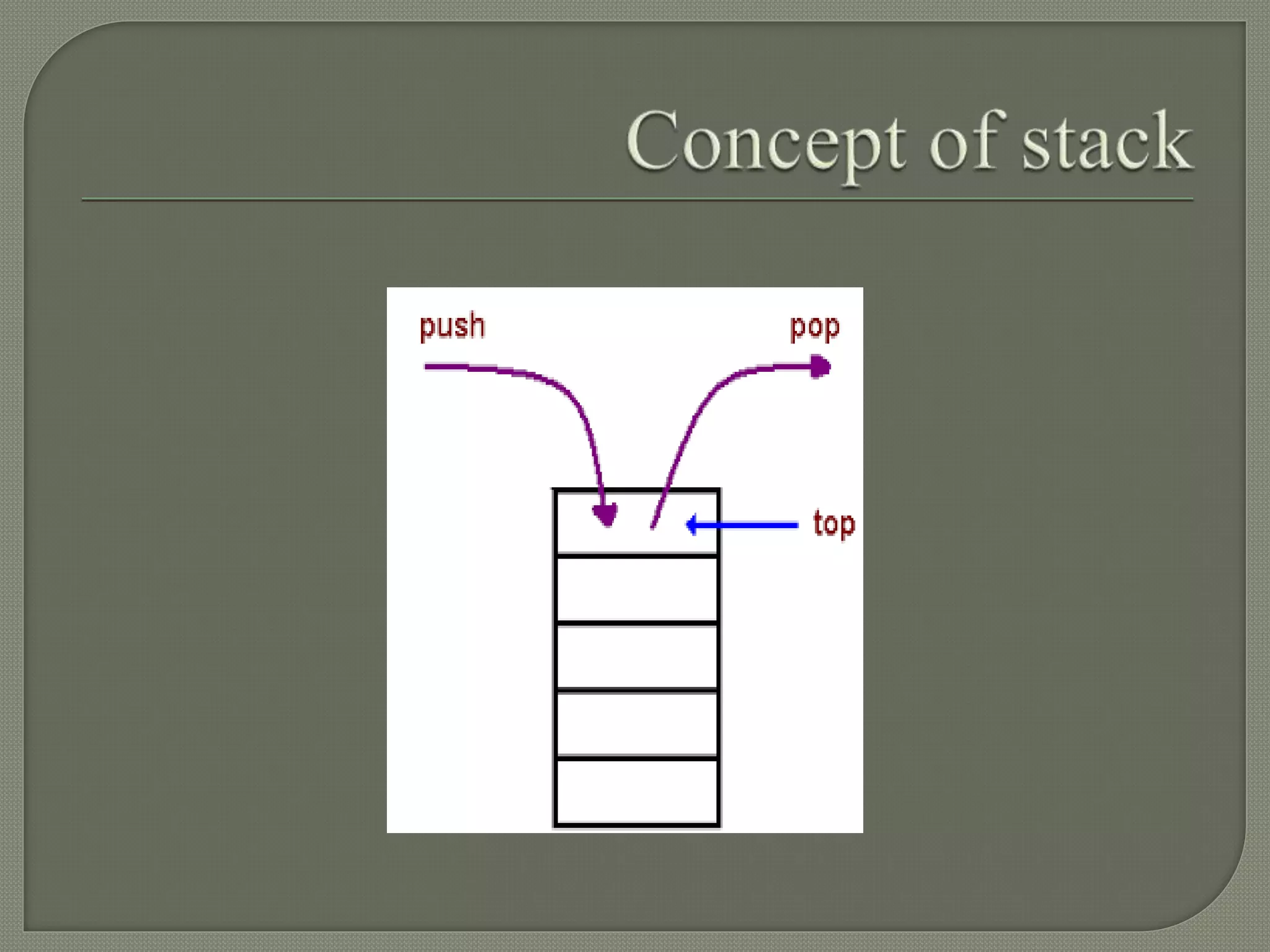
 Stack is a linear data structure.
 Stack is an ordered collection and organization of data item
could be inserted and deleted from the end.
 All items may be inserted and deleted only from the top of the
stack.
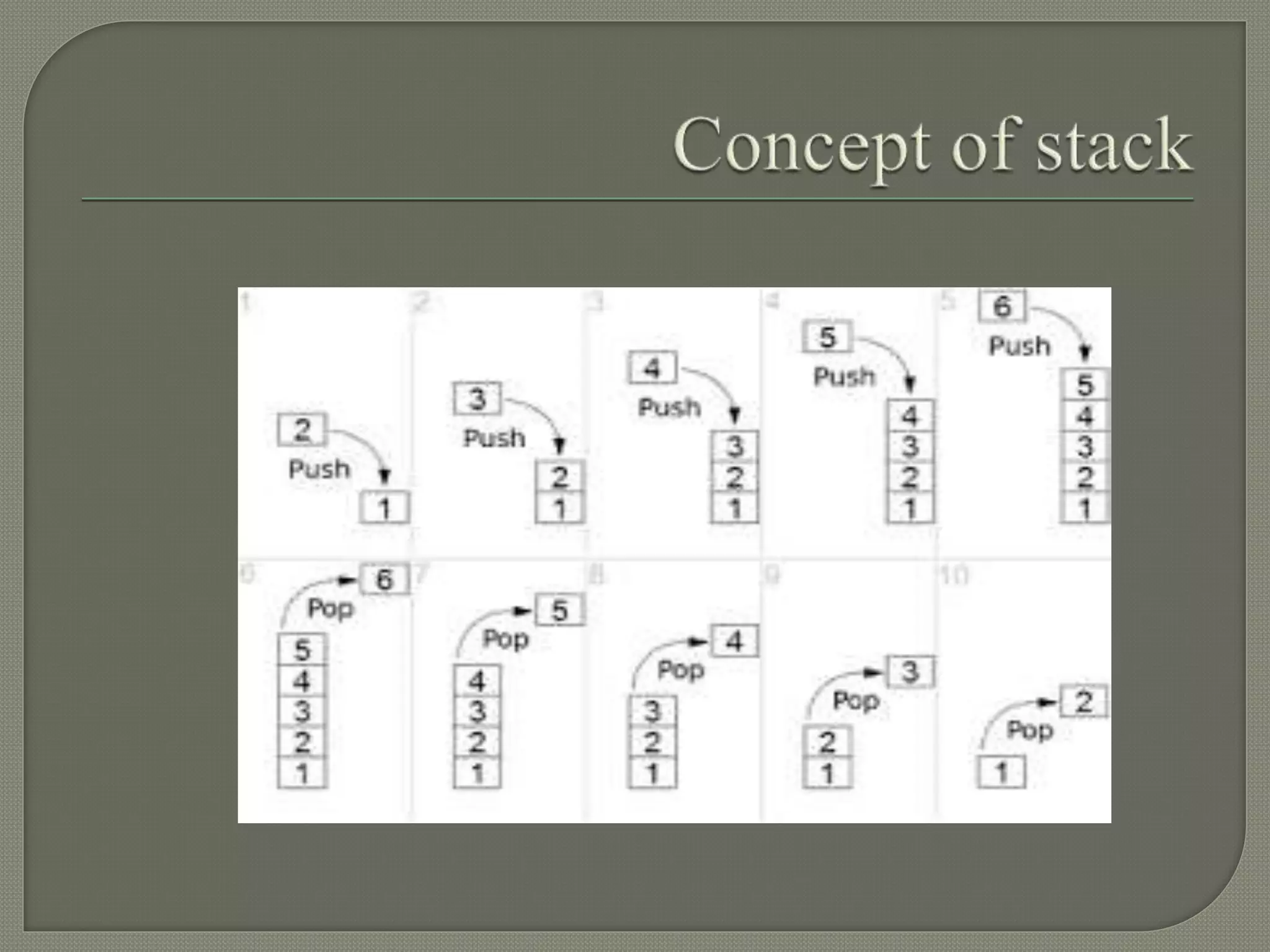
 Stack works on the concept of LIFO
 LIFO-Last In First OUT.
 Stacks are very commonly implemented using arrays.
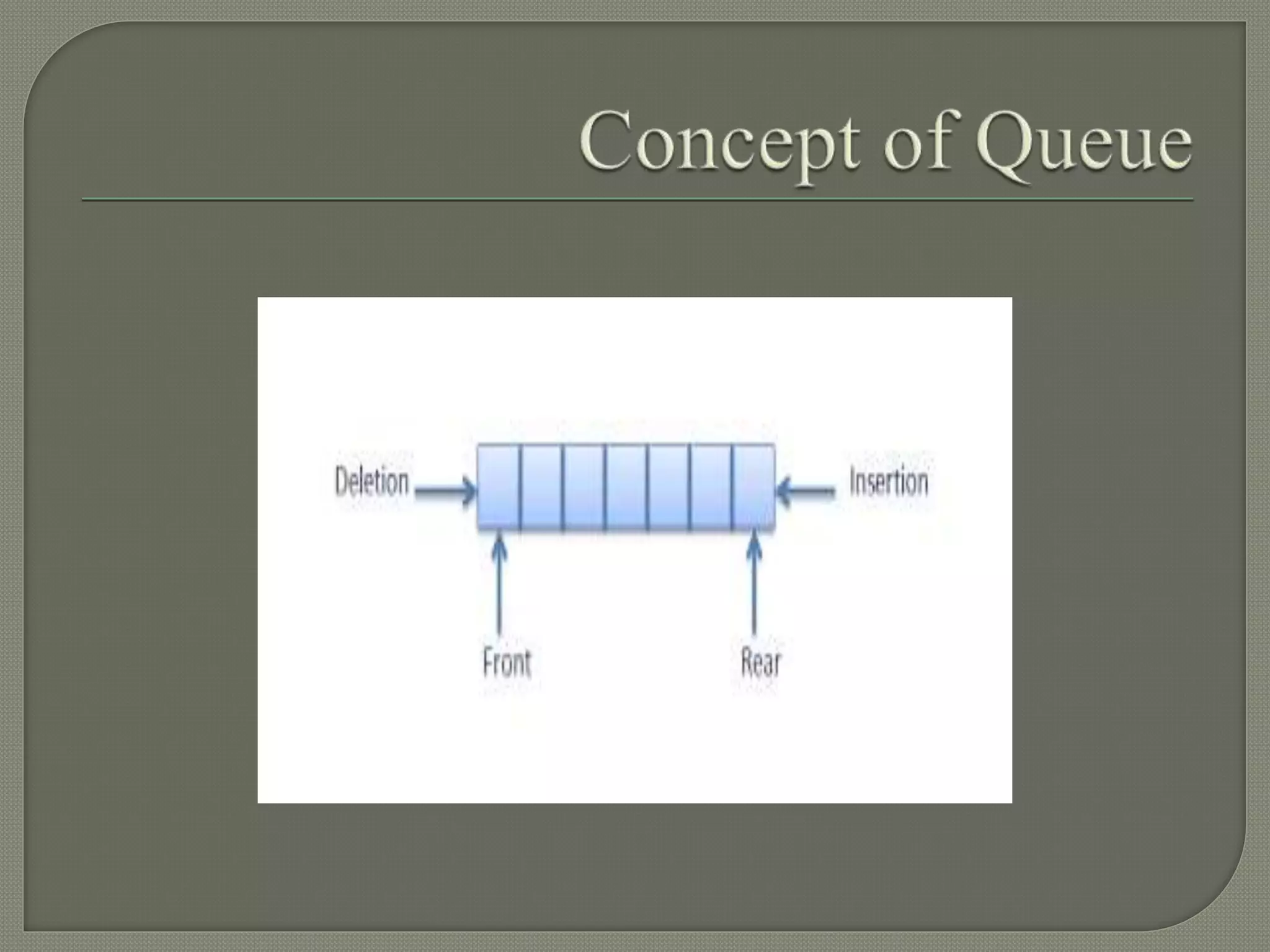
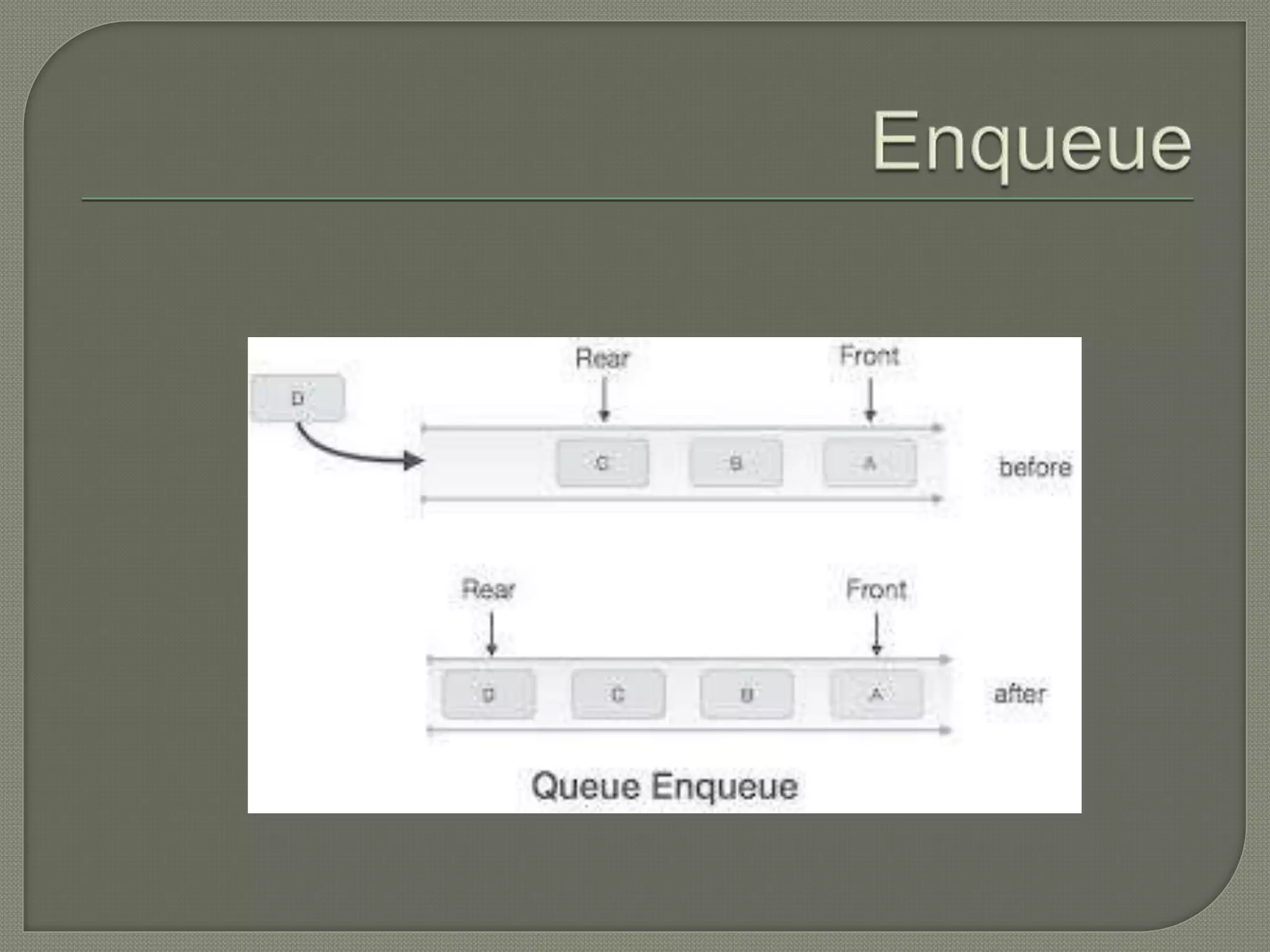
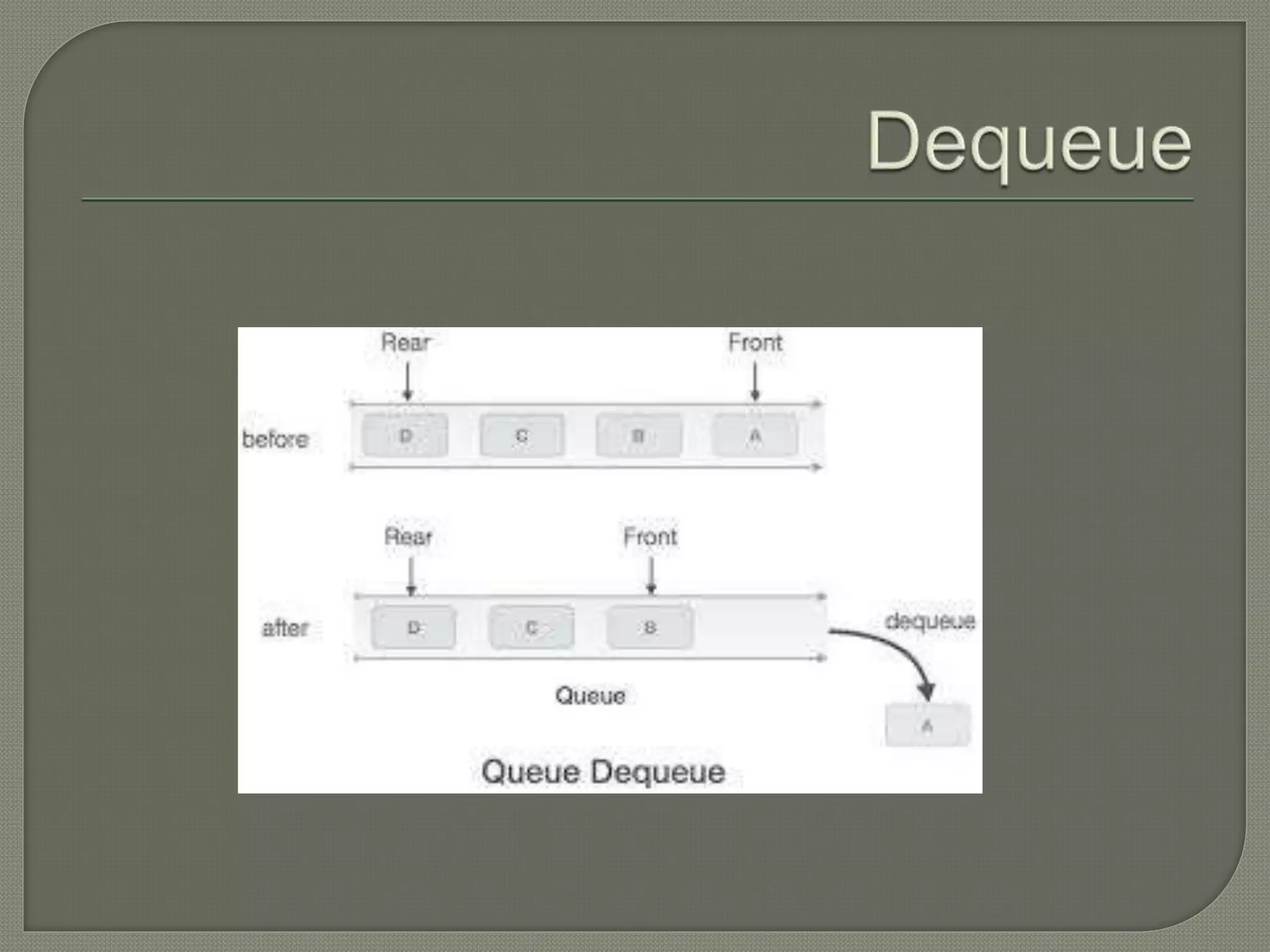
 Queue is a ordered list which all items are inserted at one end
the rear and retrieved from the other end the front.
 Queue work on the concept of FIFO
 FIFO-First in first out.
 It is a linear data structure.
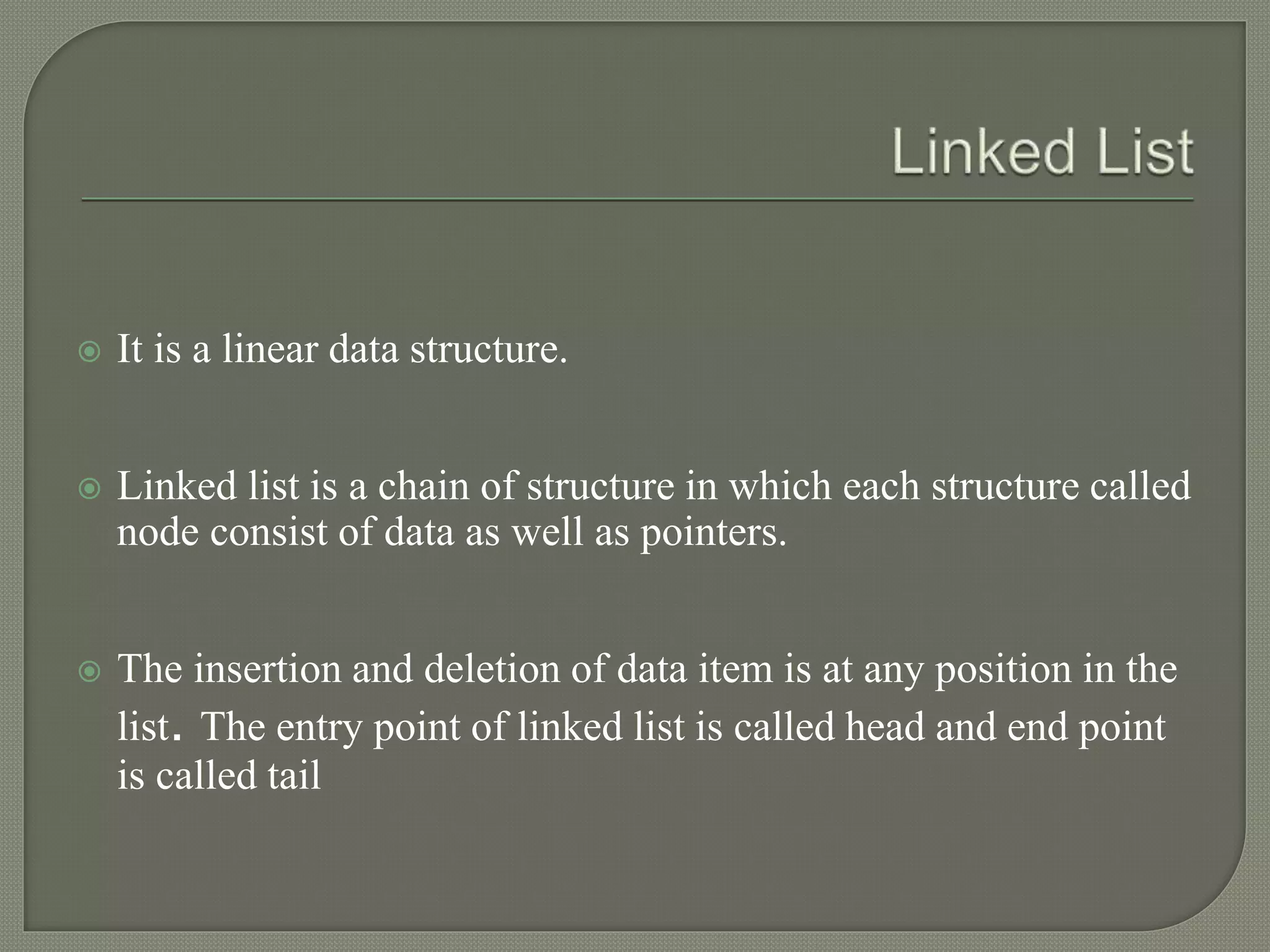
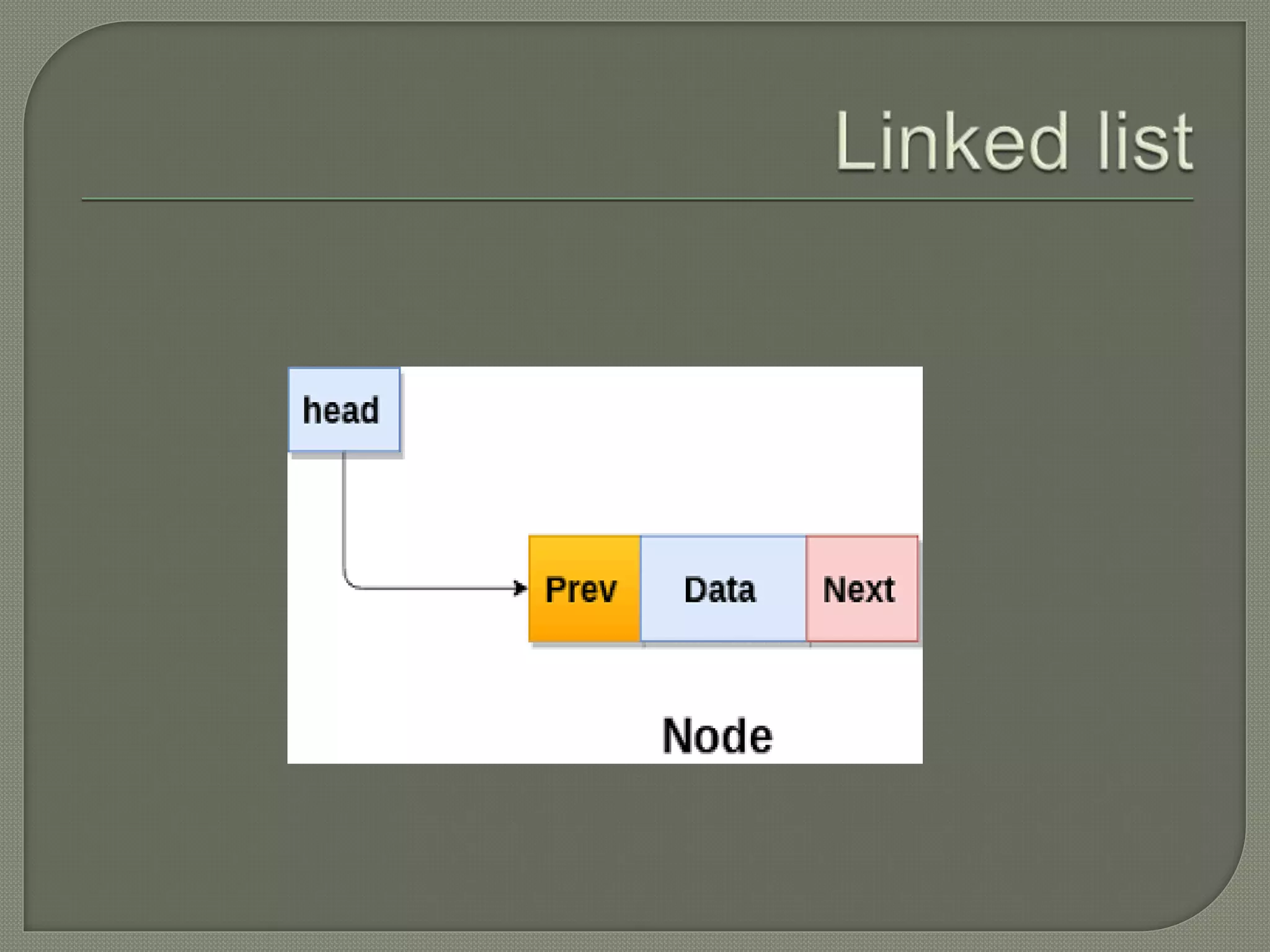
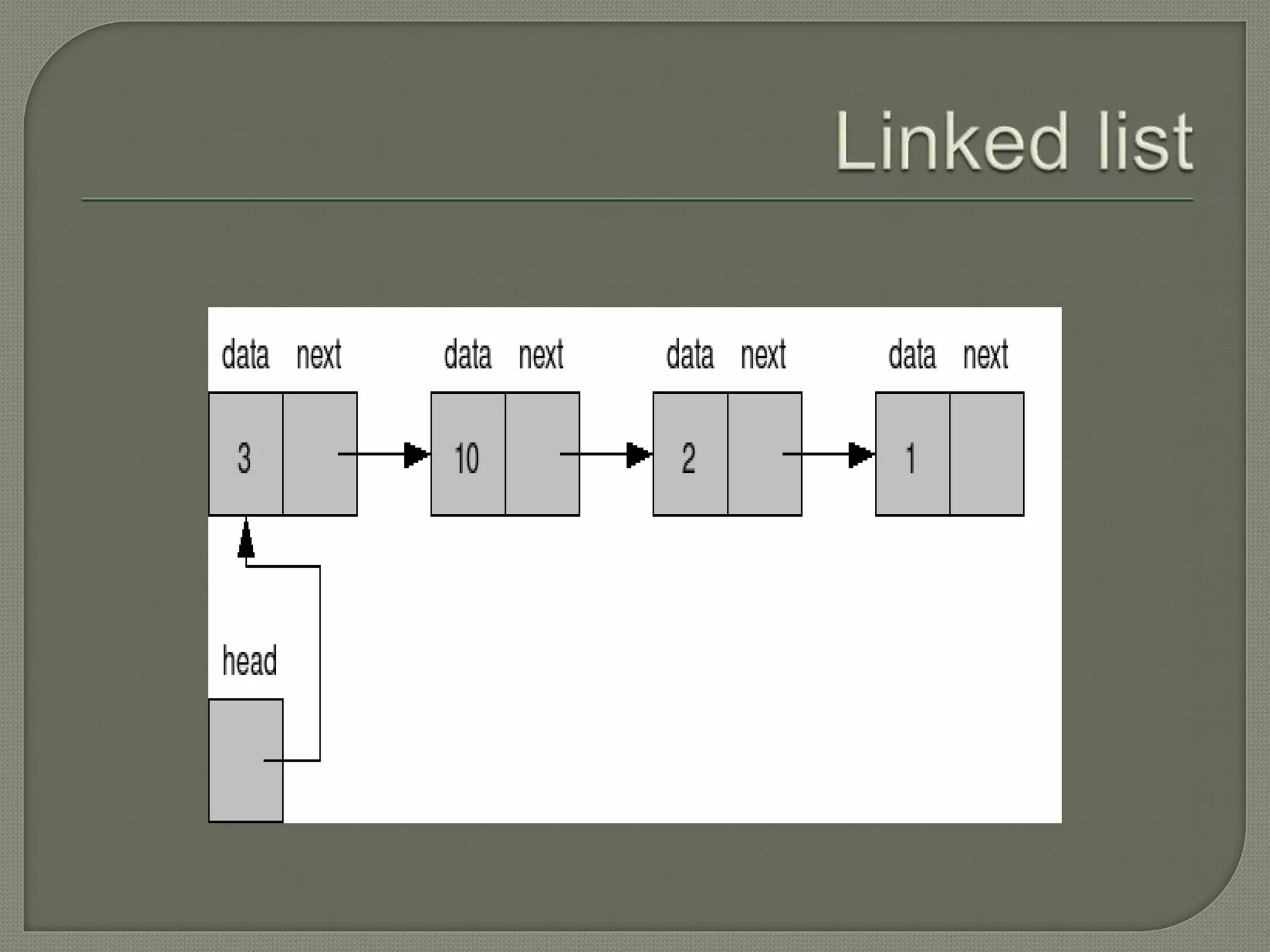
 Linked list is a chain of structure in which each structure called
node consist of data as well as pointers.
 The insertion and deletion of data item is at any position in the
list. The entry point of linked list is called head and end point
is called tail
Single linked list
Double linked list
Circular linked list
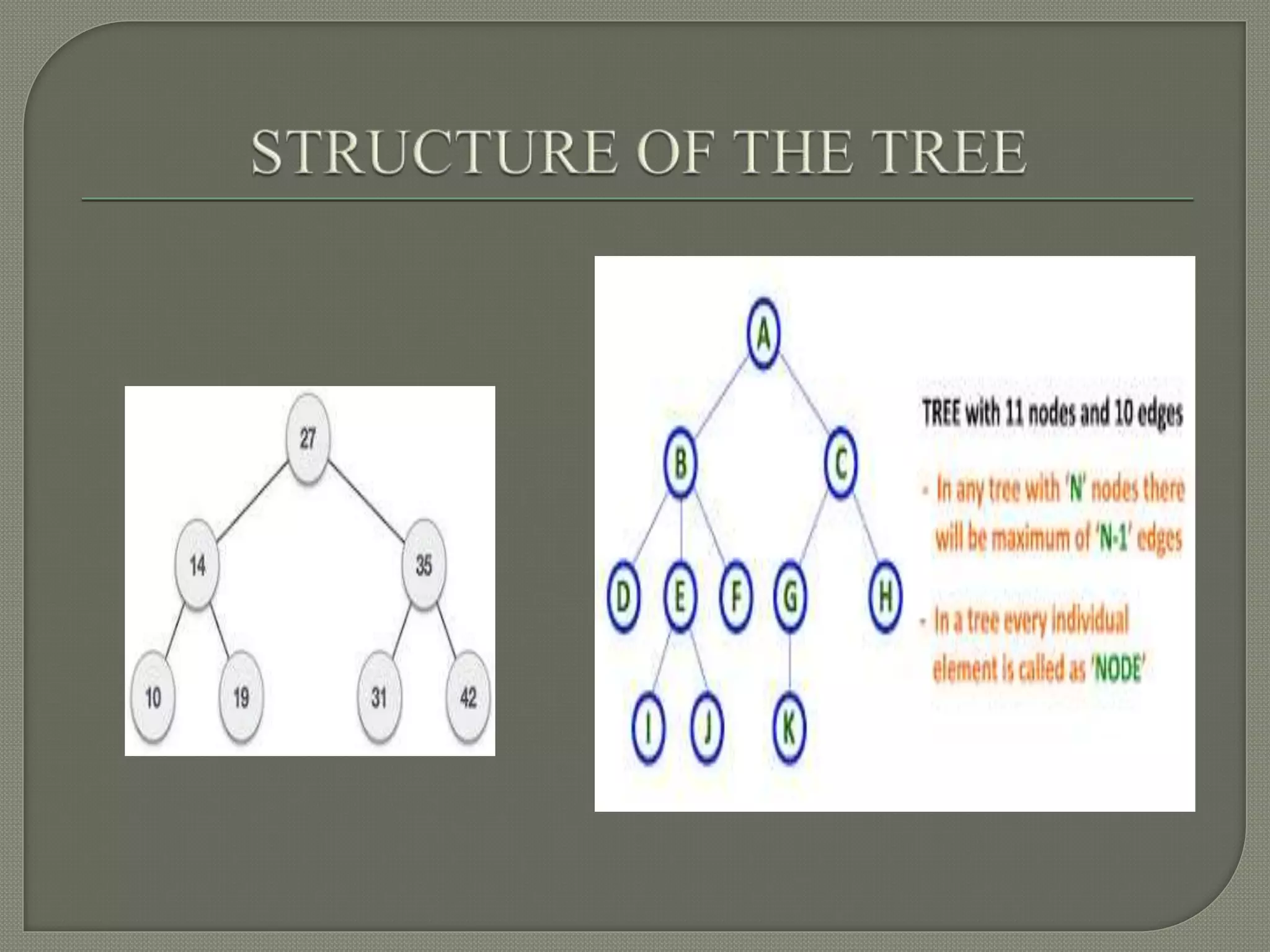
Tree is a nonlinear data structure used to
represent a data containing a hierarchical
relationship between the elements.
Types of tree:
Balanced binary tree
Unbalanced binary tree.
Data Structure1.pptx

Data Structure1.pptx

  • 1.
  • 2.
    DATE: 06/06/2022 TIME: 10.00AM to 10.45 AM SUBJECT: DATA STRUCTURES & ALGORITHMS
  • 3.
    Dr.G.AMBIKA MCA.,M.Phil., Ph.D., Assistantprofessor, Department of Information Technology, Bon secours college for women, Thanjavur.
  • 4.
    Unit I Arrays andsequential representations – ordered lists – Stacks and Queues – Evaluation of Expressions – Multiple Stacks and Queues – Singly Linked List – Linked Stacks and queues – Polynomial addition. Unit II Trees – Binary tree representations – Tree Traversal – Threaded Binary Trees – Binary Tree Representation of Trees – Graphs and Representations – Traversals, Connected Components and Spanning Trees – Shortest Paths and Transitive closure – Activity Networks – Topological Sort and Critical Paths.
  • 5.
    Unit III Algorithms –Priority Queues - Heaps – Heap Sort – Merge Sort – Quick Sort – Binary Search – Finding the Maximum and Minimum. Unit IV Greedy Method : The General Method – Optimal Storage on Tapes – Knapsack Problem – Job Sequencing with Deadlines – Optimal Merge Patterns. Unit V Back tracking: The General Method – The 8-Queens Problem – Sum of Subsets – Graph Coloring.
  • 6.
    Text Books: 1. Fundamentalsof Data Structure – Ellis Horowiz, SartajSahni, Galgotia Publications, 2008 2. Computer Algorithms – Ellis Horowiz, SartajSahni and Sanguthevar Rajasekaran, University Press, 2008. Reference Book: 1. Data Structures – Seymour Lipschutz, Tata Mcgraw Hill, Schaum‘s Outline Series,
  • 7.
    Data:  Digital Accountof Technology Advancement  Raw facts Ex: Name, weight,price… Information:  Processed and organized data is called Information.
  • 8.
     Data structurerefers to an organized way of arrangement of data related to each other in the memory. Which allows the program to handle in an efficient way.  Data structure = Data organization + allowed operations.
  • 10.
    Linear Data Structure: AData structure is said to be linear if elements or items form a sequence one after another. Non-Linear Data Structure: Each element is attached to one or more elements creating a relationship among the items
  • 11.
    Array: An array isa group of same type of data items that are referred by a common name. Each item stored in an array is called an element.
  • 12.
     Stack isa linear data structure.  Stack is an ordered collection and organization of data item could be inserted and deleted from the end.  All items may be inserted and deleted only from the top of the stack.
  • 13.
     Stack workson the concept of LIFO  LIFO-Last In First OUT.  Stacks are very commonly implemented using arrays.
  • 16.
     Queue isa ordered list which all items are inserted at one end the rear and retrieved from the other end the front.  Queue work on the concept of FIFO  FIFO-First in first out.
  • 20.
     It isa linear data structure.  Linked list is a chain of structure in which each structure called node consist of data as well as pointers.  The insertion and deletion of data item is at any position in the list. The entry point of linked list is called head and end point is called tail
  • 22.
    Single linked list Doublelinked list Circular linked list
  • 24.
    Tree is anonlinear data structure used to represent a data containing a hierarchical relationship between the elements. Types of tree: Balanced binary tree Unbalanced binary tree.