Data Analyst Certifications Matter Today
Enhancing Skills and Career
Prospects in a Data-Driven World
©iabac.org
Introduction
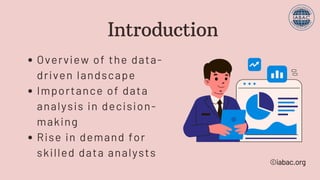
Overview of the data-
driven landscape
Importance of data
analysis in decision-
making
Rise in demand for
skilled data analysts
©iabac.org
Role of a Data Analyst
Key responsibilities
Data collection
Data cleaning
Data analysis
Data visualization
Reporting
©iabac.org
Importance of Data Analysts
How data analysts drive business strategies?
Trend Analysis: Uncovers market trends to align
strategies.
Operational Efficiency: Improves processes and
reduces costs.
Customer Segmentation: Enables targeted marketing
and personalization.
Informed Decisions: Provides data-driven insights for
strategy.
Forecasting: Predicts trends for proactive planning.
Performance Tracking: Measures success against goals.
©iabac.org
The Rise of Big Data
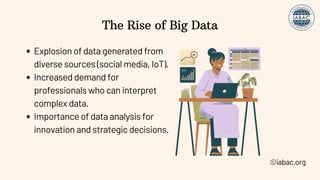
Explosion of data generated from
diverse sources (social media, IoT).
Increased demand for
professionals who can interpret
complex data.
Importance of data analysis for
innovation and strategic decisions.
©iabac.org
Why Certifications Hold Value
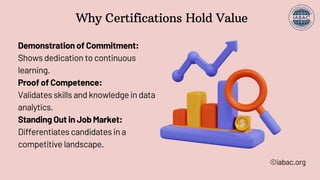
Demonstration of Commitment:
Shows dedication to continuous
learning.
Proof of Competence:
Validates skills and knowledge in data
analytics.
Standing Out in Job Market:
Differentiates candidates in a
competitive landscape.
©iabac.org
Key Benefits of Earning a Certification
Career Advancement: Opens up
diverse job opportunities.
Better Salary Potential: Certified
analysts often earn higher
salaries.
Skill Enhancement: Deepens
knowledge and exposes new
tools.
©iabac.org
Networking and Recognition
Access to Professional
Community: Connects you
with industry experts.
Enhanced Credibility:
Recognition in the industry
boosts professional standing.
©iabac.org
Overview of Recognized Certifications
IABAC Certified Data Analyst
Associate: Foundational skills for
beginners.
IABAC Data Analytics Professional
Certificate: Advanced techniques and
tools.
IABAC Certified Data Scientist: Focus
on machine learning and advanced
analytics.
©iabac.org
How Certification Enhances
Practical Knowledge
Real-World Projects: Hands-on
experience in actual scenarios.
Industry-Relevant Case Studies: Insights
into current challenges.
Bridging Theory and Application:
Reinforces learning through practical
exercises.
©iabac.org
Certification vs. Traditional Degree
Shorter and Cost-Effective:
Certifications require less time and
investment.
Supplemental Knowledge: Enhance
your existing education or
experience.
Flexibility: Suitable for career
switchers and upskilling
professionals.
©iabac.org
Impact of Certifications on Salary
and Job Prospects
Higher Salary Potential: Certified
professionals earn more.
Career Growth Opportunities:
Leads to promotions and leadership
roles.
Increasing Demand: Organizations
are seeking validated skills.
©iabac.org
Choosing the Right Certification
Assess Career Goals: Align certification with
desired career path.
Identify Skills to Learn: Focus on relevant
tools and methodologies.
Consider Time and Budget: Choose a
program that fits your circumstances.
Research Certification Reputation: Ensure
it's recognized in the industry.
©iabac.org
Conclusion
Importance of data analyst
certifications in enhancing skills and
career prospects.
Encouragement to pursue relevant
certifications for growth in the data
analytics field.
Call to action: Start exploring
certification options today.
©iabac.org
THANK YOU
©iabac.org

Data Analyst Certifications Matter Today.pdf

  • 1.
    Data Analyst CertificationsMatter Today Enhancing Skills and Career Prospects in a Data-Driven World ©iabac.org
  • 2.
    Introduction Overview of thedata- driven landscape Importance of data analysis in decision- making Rise in demand for skilled data analysts ©iabac.org
  • 3.
    Role of aData Analyst Key responsibilities Data collection Data cleaning Data analysis Data visualization Reporting ©iabac.org
  • 4.
    Importance of DataAnalysts How data analysts drive business strategies? Trend Analysis: Uncovers market trends to align strategies. Operational Efficiency: Improves processes and reduces costs. Customer Segmentation: Enables targeted marketing and personalization. Informed Decisions: Provides data-driven insights for strategy. Forecasting: Predicts trends for proactive planning. Performance Tracking: Measures success against goals. ©iabac.org
  • 5.
    The Rise ofBig Data Explosion of data generated from diverse sources (social media, IoT). Increased demand for professionals who can interpret complex data. Importance of data analysis for innovation and strategic decisions. ©iabac.org
  • 6.
    Why Certifications HoldValue Demonstration of Commitment: Shows dedication to continuous learning. Proof of Competence: Validates skills and knowledge in data analytics. Standing Out in Job Market: Differentiates candidates in a competitive landscape. ©iabac.org
  • 7.
    Key Benefits ofEarning a Certification Career Advancement: Opens up diverse job opportunities. Better Salary Potential: Certified analysts often earn higher salaries. Skill Enhancement: Deepens knowledge and exposes new tools. ©iabac.org
  • 8.
    Networking and Recognition Accessto Professional Community: Connects you with industry experts. Enhanced Credibility: Recognition in the industry boosts professional standing. ©iabac.org
  • 9.
    Overview of RecognizedCertifications IABAC Certified Data Analyst Associate: Foundational skills for beginners. IABAC Data Analytics Professional Certificate: Advanced techniques and tools. IABAC Certified Data Scientist: Focus on machine learning and advanced analytics. ©iabac.org
  • 10.
    How Certification Enhances PracticalKnowledge Real-World Projects: Hands-on experience in actual scenarios. Industry-Relevant Case Studies: Insights into current challenges. Bridging Theory and Application: Reinforces learning through practical exercises. ©iabac.org
  • 11.
    Certification vs. TraditionalDegree Shorter and Cost-Effective: Certifications require less time and investment. Supplemental Knowledge: Enhance your existing education or experience. Flexibility: Suitable for career switchers and upskilling professionals. ©iabac.org
  • 12.
    Impact of Certificationson Salary and Job Prospects Higher Salary Potential: Certified professionals earn more. Career Growth Opportunities: Leads to promotions and leadership roles. Increasing Demand: Organizations are seeking validated skills. ©iabac.org
  • 13.
    Choosing the RightCertification Assess Career Goals: Align certification with desired career path. Identify Skills to Learn: Focus on relevant tools and methodologies. Consider Time and Budget: Choose a program that fits your circumstances. Research Certification Reputation: Ensure it's recognized in the industry. ©iabac.org
  • 14.
    Conclusion Importance of dataanalyst certifications in enhancing skills and career prospects. Encouragement to pursue relevant certifications for growth in the data analytics field. Call to action: Start exploring certification options today. ©iabac.org
  • 15.