Lessons learned for large-scale apps running
in a hybrid cloud environment: Intuit’s journey
Dana Quinn – Director, App Ops
May 28, 2015
MISSION:
To improve our customers’ financial lives
so profoundly…they can’t imagine going
back to the old way
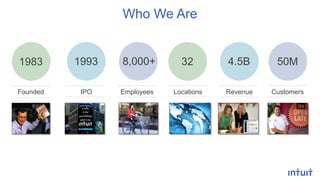
Who We Are
1983
Founded
8,000+
Employees
50M
Customers
1993
IPO
4.5B
Revenue
32
Locations
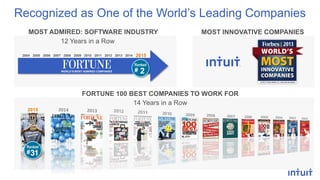
Recognized as One of the World’s Leading Companies
FORTUNE 100 BEST COMPANIES TO WORK FOR
MOST ADMIRED: SOFTWARE INDUSTRY MOST INNOVATIVE COMPANIES
2015
31
Ranked
#
12 Years in a Row
2004 2005 2006 2007 2008 2009 2010 2011 2012 2015
WORLD’S MOST ADMIRED COMPANIES
2013 2014
14 Years in a Row
2
Ranked
#
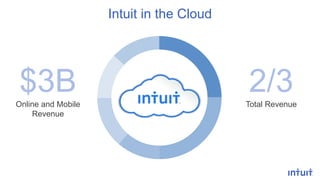
Online and Mobile
Revenue
Total Revenue
$3B 2/3
Intuit in the Cloud
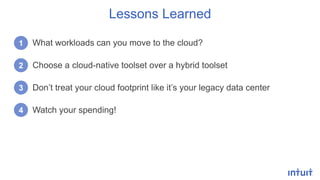
What workloads can you move to the cloud?
Choose a cloud-native toolset over a hybrid toolset
Don’t treat your cloud footprint like it’s your legacy data center
Watch your spending!
Lessons Learned
1
2
3
4
• Speed innovation in service of solving customer problems!
• Enable our product development teams to move quickly
• Not directly solving for hosting costs, but added benefit
Why Intuit Chose to Move Workloads to Cloud
What workloads are good to start with?
1
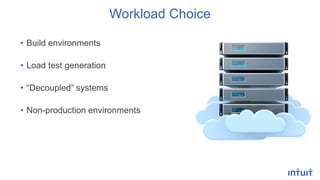
• Build environments
• Load test generation
• “Decoupled” systems
• Non-production environments
Workload Choice
Cloud-native or hybrid toolsets?
2
• We feel choosing cloud-native toolsets is the best option
• Avoid things that add friction on the cloud side
• Cloud-native toolsets give the most access to your cloud capabilities
• The people we hire increasingly have cloud-native skills
Hybrid: Attractive from an Engineering Mindset, but …
What about cloud vendor lock-in?
Don’t treat your cloud like your data center
3
• Don’t bring legacy management patterns into your cloud environments
• Insist on right patterns as you move to cloud!
• You’ll track new metrics – average instance age (keep low), utilization
• Anti-patterns to watch for when moving from legacy
• Challenge yourself to realize these patterns from the start
Don’t Make Your Cloud Feel Like Fog
Watch your spending
4
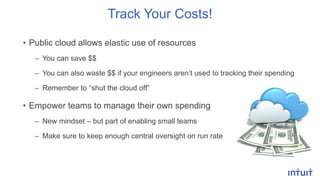
Track Your Costs!
• Public cloud allows elastic use of resources
– You can save $$
– You can also waste $$ if your engineers aren’t used to tracking their spending
– Remember to “shut the cloud off”
• Empower teams to manage their own spending
– New mindset – but part of enabling small teams
– Make sure to keep enough central oversight on run rate
Don’t Let This Happen to You
Intuit’s results
Our Wins (and a Few Bumps)
• Workloads moved to cloud have blossomed!
• Small teams are successful at getting new products out quickly
• Elastic capabilities help us make our hosting dollars go further
– Load test generation usage up quite a bit
– Emerging pattern of on-demand dev environment creation and
automatic environment shutoff after a period of time
Additional Intuit Content at Velocity
• 10 Tips for Your Journey to the Public Cloud
– Suchi Upadhyayula, Director of Product Development, Mint.com
– Sean McCluskey, Director of Quality and Operations, Mint.com
– Thursday, 2:40pm–3:20pm, Ballroom F
• Systems Thinking – Patterns for Scaling Unstable Systems
– Siddharth Ram, Chief Architect, Intuit Small Business Group
– Friday, 1:45pm–2:25pm, Ballroom F
• Stop by booth 301 in the Exhibit Hall!
Thank you!

Dana Quinn Velocity Keynote

  • 1.
    Lessons learned forlarge-scale apps running in a hybrid cloud environment: Intuit’s journey Dana Quinn – Director, App Ops May 28, 2015
  • 3.
    MISSION: To improve ourcustomers’ financial lives so profoundly…they can’t imagine going back to the old way
  • 4.
  • 5.
    Recognized as Oneof the World’s Leading Companies FORTUNE 100 BEST COMPANIES TO WORK FOR MOST ADMIRED: SOFTWARE INDUSTRY MOST INNOVATIVE COMPANIES 2015 31 Ranked # 12 Years in a Row 2004 2005 2006 2007 2008 2009 2010 2011 2012 2015 WORLD’S MOST ADMIRED COMPANIES 2013 2014 14 Years in a Row 2 Ranked #
  • 6.
    Online and Mobile Revenue TotalRevenue $3B 2/3 Intuit in the Cloud
  • 7.
    What workloads canyou move to the cloud? Choose a cloud-native toolset over a hybrid toolset Don’t treat your cloud footprint like it’s your legacy data center Watch your spending! Lessons Learned 1 2 3 4
  • 8.
    • Speed innovationin service of solving customer problems! • Enable our product development teams to move quickly • Not directly solving for hosting costs, but added benefit Why Intuit Chose to Move Workloads to Cloud
  • 9.
    What workloads aregood to start with? 1
  • 10.
    • Build environments •Load test generation • “Decoupled” systems • Non-production environments Workload Choice
  • 11.
  • 12.
    • We feelchoosing cloud-native toolsets is the best option • Avoid things that add friction on the cloud side • Cloud-native toolsets give the most access to your cloud capabilities • The people we hire increasingly have cloud-native skills Hybrid: Attractive from an Engineering Mindset, but … What about cloud vendor lock-in?
  • 13.
    Don’t treat yourcloud like your data center 3
  • 14.
    • Don’t bringlegacy management patterns into your cloud environments • Insist on right patterns as you move to cloud! • You’ll track new metrics – average instance age (keep low), utilization • Anti-patterns to watch for when moving from legacy • Challenge yourself to realize these patterns from the start Don’t Make Your Cloud Feel Like Fog
  • 15.
  • 16.
    Track Your Costs! •Public cloud allows elastic use of resources – You can save $$ – You can also waste $$ if your engineers aren’t used to tracking their spending – Remember to “shut the cloud off” • Empower teams to manage their own spending – New mindset – but part of enabling small teams – Make sure to keep enough central oversight on run rate
  • 17.
    Don’t Let ThisHappen to You
  • 18.
  • 19.
    Our Wins (anda Few Bumps) • Workloads moved to cloud have blossomed! • Small teams are successful at getting new products out quickly • Elastic capabilities help us make our hosting dollars go further – Load test generation usage up quite a bit – Emerging pattern of on-demand dev environment creation and automatic environment shutoff after a period of time
  • 20.
    Additional Intuit Contentat Velocity • 10 Tips for Your Journey to the Public Cloud – Suchi Upadhyayula, Director of Product Development, Mint.com – Sean McCluskey, Director of Quality and Operations, Mint.com – Thursday, 2:40pm–3:20pm, Ballroom F • Systems Thinking – Patterns for Scaling Unstable Systems – Siddharth Ram, Chief Architect, Intuit Small Business Group – Friday, 1:45pm–2:25pm, Ballroom F • Stop by booth 301 in the Exhibit Hall!
  • 21.