Culture and Consumer
Behavior: Values, Ideals
& Myths
By: Jasmine Alexander
What is Culture?
● Collective pattern including attitudes, beliefs and customs guiding one’s
daily life
● Culture is correlated with geography
○ American culture
■ Ex. Baseball games, Thanksgiving meals, fireworks
● Ideological ways we represent our cultures include
○ Values
○ Ideals
○ Myths
Values
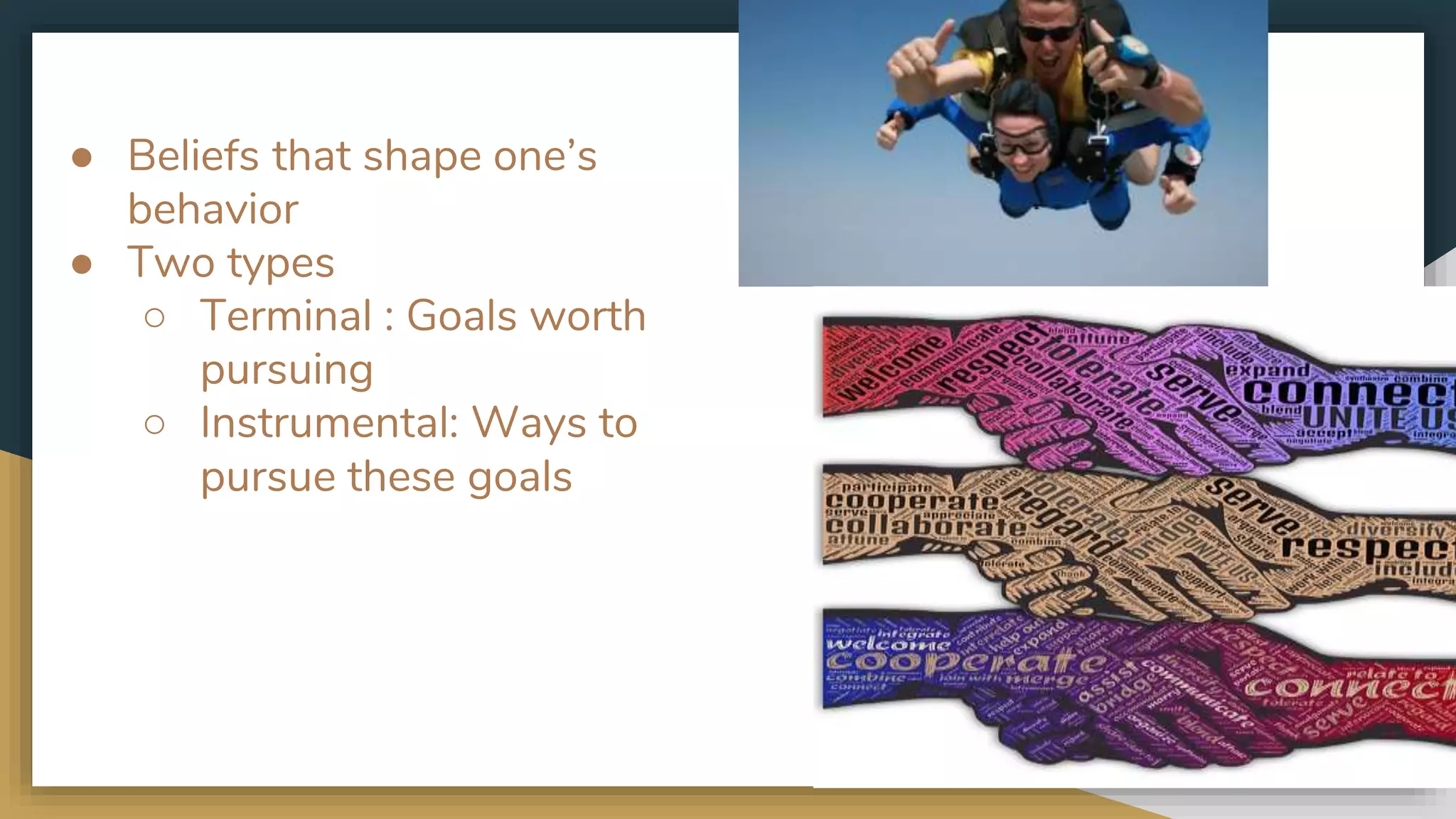
● Beliefs that shape one’s
behavior
● Two types
○ Terminal : Goals worth
pursuing
○ Instrumental: Ways to
pursue these goals
Values and Consumption
● Children & extended family purchase
airline tickets to travel home for the
holidays
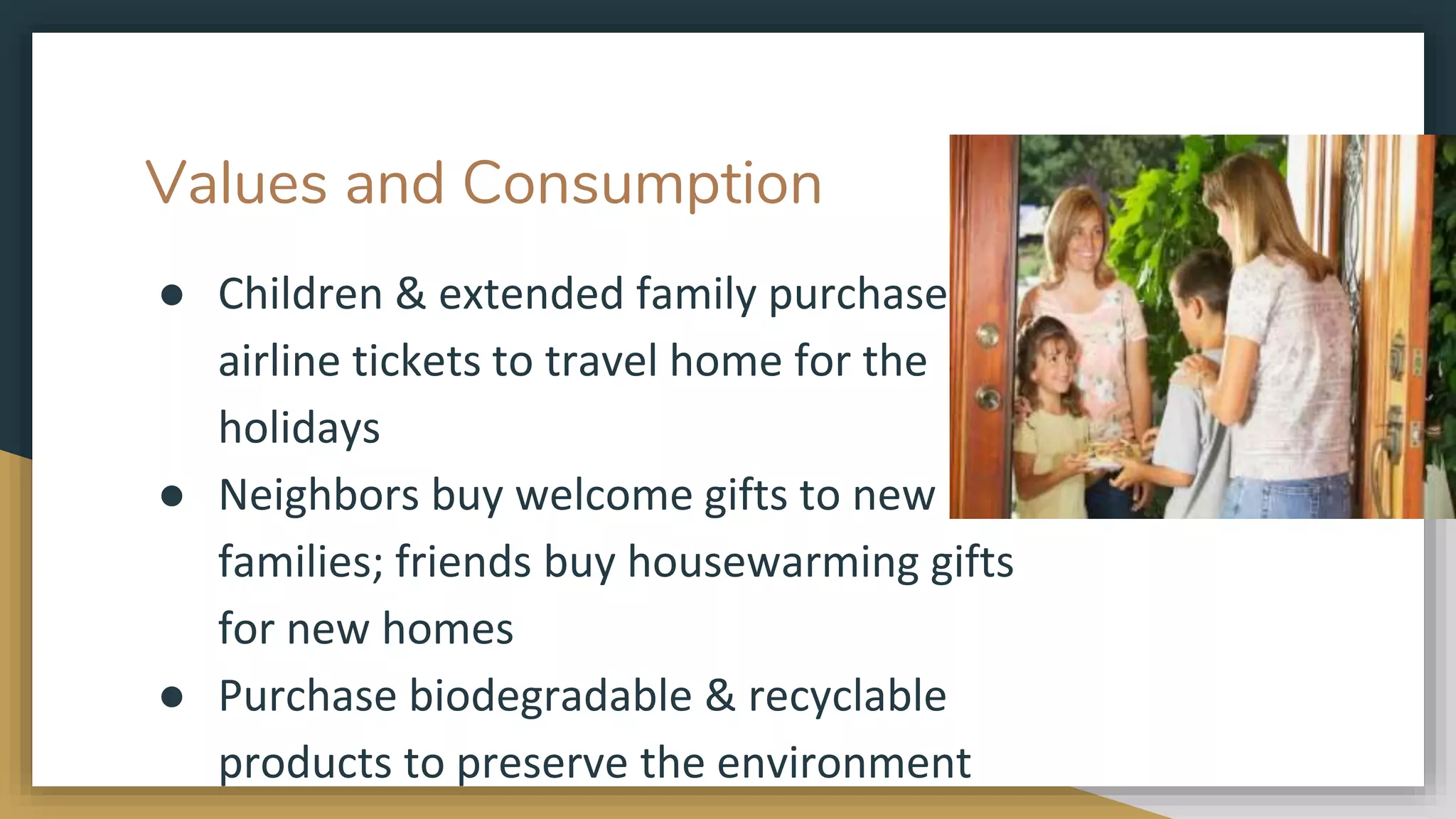
● Neighbors buy welcome gifts to new
families; friends buy housewarming gifts
for new homes
● Purchase biodegradable & recyclable
products to preserve the environment
Ideals
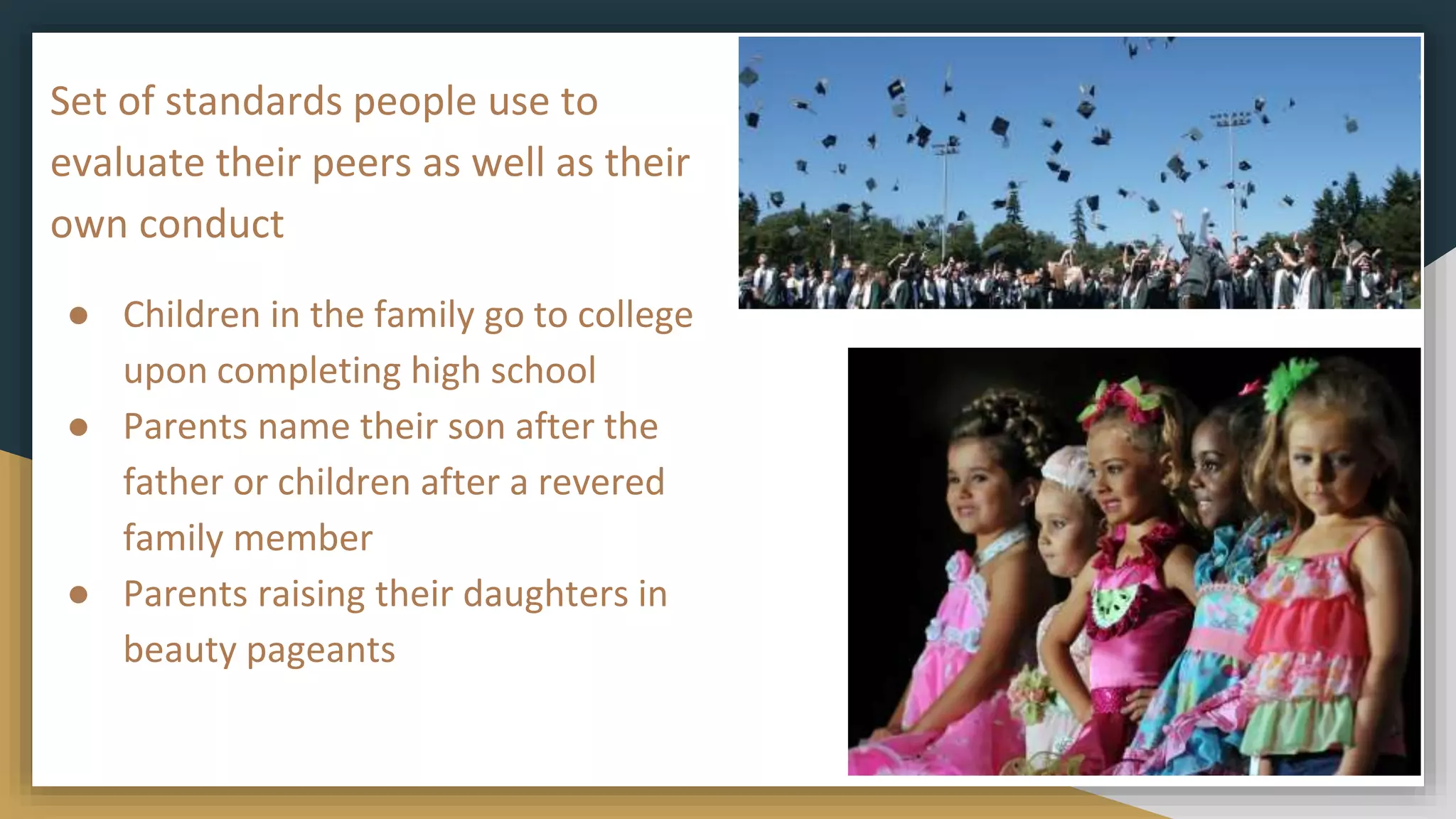
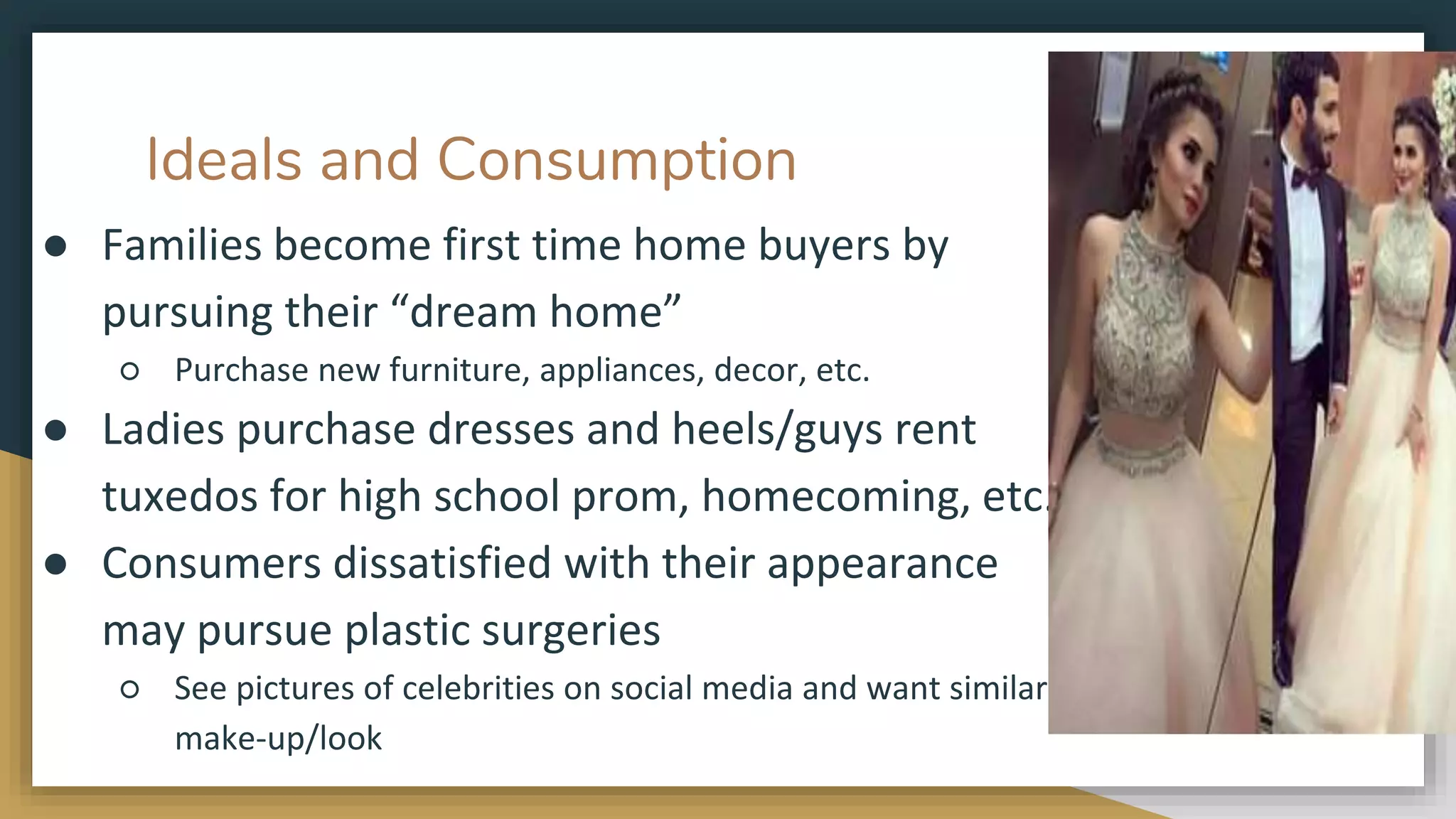
Set of standards people use to
evaluate their peers as well as their
own conduct
● Children in the family go to college
upon completing high school
● Parents name their son after the
father or children after a revered
family member
● Parents raising their daughters in
beauty pageants
Ideals and Consumption
● Families become first time home buyers by
pursuing their “dream home”
○ Purchase new furniture, appliances, decor, etc.
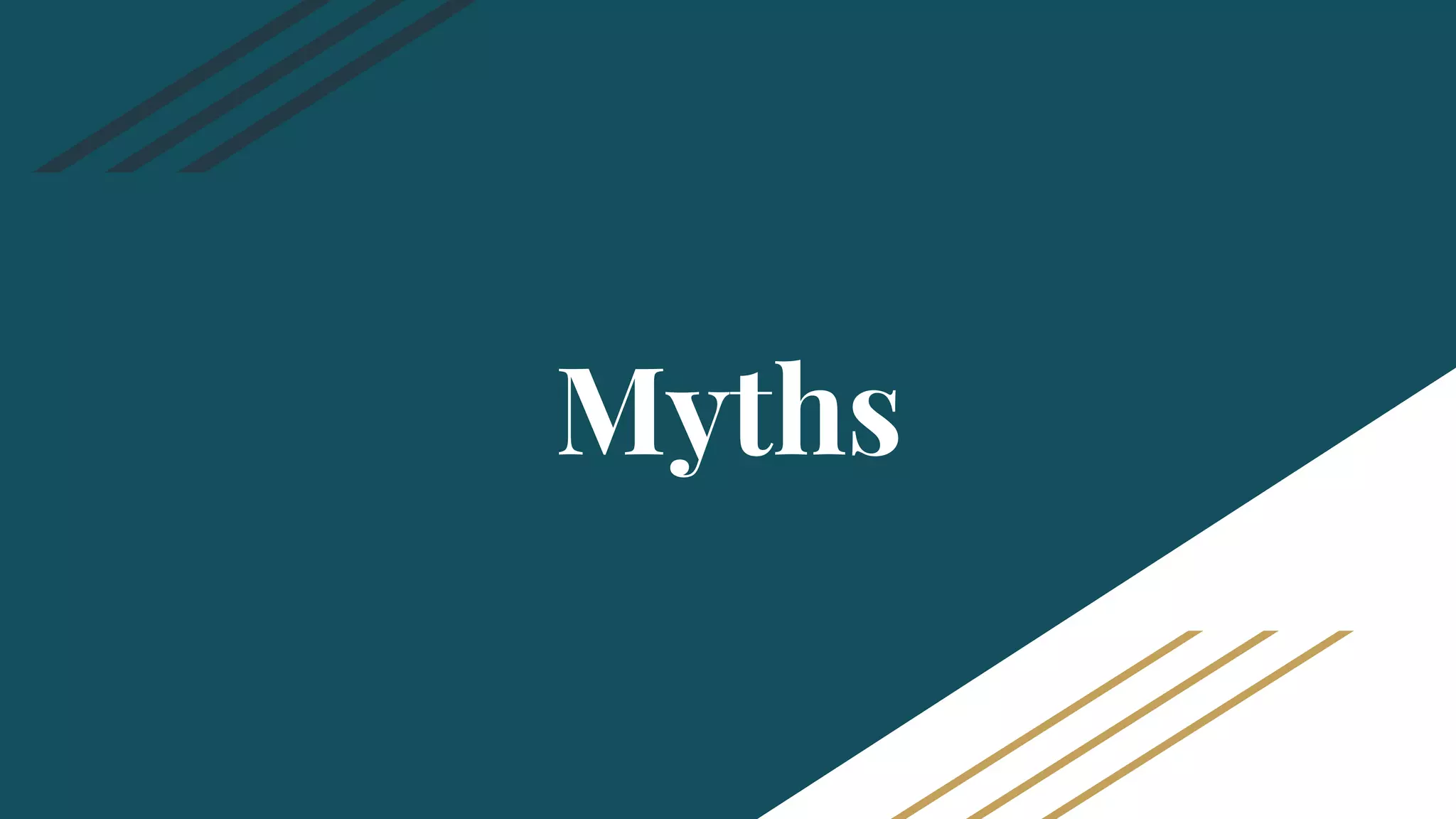
● Ladies purchase dresses and heels/guys rent
tuxedos for high school prom, homecoming, etc.
● Consumers dissatisfied with their appearance
may pursue plastic surgeries
○ See pictures of celebrities on social media and want similar
make-up/look
Myths
Traditional stories reinforcing
a cultural value historically
passed down generations
● Boogeyman used to trick
children into good behavior
● Cupid on Valentine’s Day
uses a bow and arrow to
create attraction between
two people
Myths and Consumption:
● Cartoon characters become lovable friends of
toddlers
○ Marketed through stuffed dolls, apparel, video
games, room decor, halloween costumes etc.
● Sports teams and brand representation
○ Notre Dame Fighting Irish
■ Irish Immigrant soldiers who fought in the Civil War
○ San Francisco 49ers
■ Gold miners who arrived in Northern California during the
mid-1800s gold rush (1849)
Case: Back-To-School Shopping
● Mid July - Early September (location)
● Kids receive brand new clothes & supplies to represent the new
school year, even if they don’t need them
● 2017 Back to school prediction estimated K-12 $29.5 Billion and
college to reach $54.1 Billion reaching a total of $83.6 Billion!!!
○ Both numbers increased from the previous year
● Back to school ads on television heavily marketed throughout
July-September time
● Survey of 7,226 consumers by National Retail Federation for back-
to-school plans between June 30-July 5 2017
K-12 B.T.S. Consumption
● $10.2 billion on Clothing
● $8.8 billion on electronics (computers, calculators, tablets)
● $5.6 billion on shoes
● $4.9 billion on school supplies (notebooks, folders, pencils, backpacks, lunchbox,
etc.)
● “Schools are changing their classroom experience to include more technology including
laptops and tablets, that is why many parents, specifically Millennials, are spending more
during back-to-school season and taking advantage of retailers’ best deals to stretch their
budgets.” (Smith)
● “65 % of back-to-school shoppers say half or more of their purchases are a direct result of
their children’s influence” (Smith)
College B.T.S. Consumption
● $12.8 billion on electronics (laptops, tablet, accessories, calculator,
smartphone/cell phone)
● $8.0 billion on clothing
● $7.5 billion on snacks/ food items
● $5.9 billion on dorm/apartment furnishings
● $4.5 billion on shoes
● $4.5 billion on personal care items
● $3.9 billion on school supplies
● $3.9 billion on gift cards
● $3.2 billion on branded collegiate gear
Questions for the Audience
1. Did you and your family at any point make back to school shopping time a
tradition? If so, how?
2. What were your must have items to buy during back to school time? (Early
2000s)
3. Did back to school shopping time ever help you to understand the value on
your education?
Thank you
Sources
smitha@nrf.com. “Back-to-School and Back-to-College Spending to Reach
$83.6 Billion.” National Retail Federation, 12 July 2017,
nrf.com/media/press-releases/back-school-and-back-college-spending-
reach-836-billion.

Undergraduate MRKT 443: Consumer Behavior (Culture and Consumer Behavior: Values, Ideals & Myths)

  • 1.
    Culture and Consumer Behavior:Values, Ideals & Myths By: Jasmine Alexander
  • 2.
    What is Culture? ●Collective pattern including attitudes, beliefs and customs guiding one’s daily life ● Culture is correlated with geography ○ American culture ■ Ex. Baseball games, Thanksgiving meals, fireworks ● Ideological ways we represent our cultures include ○ Values ○ Ideals ○ Myths
  • 3.
  • 4.
    ● Beliefs thatshape one’s behavior ● Two types ○ Terminal : Goals worth pursuing ○ Instrumental: Ways to pursue these goals
  • 5.
    Values and Consumption ●Children & extended family purchase airline tickets to travel home for the holidays ● Neighbors buy welcome gifts to new families; friends buy housewarming gifts for new homes ● Purchase biodegradable & recyclable products to preserve the environment
  • 6.
  • 7.
    Set of standardspeople use to evaluate their peers as well as their own conduct ● Children in the family go to college upon completing high school ● Parents name their son after the father or children after a revered family member ● Parents raising their daughters in beauty pageants
  • 8.
    Ideals and Consumption ●Families become first time home buyers by pursuing their “dream home” ○ Purchase new furniture, appliances, decor, etc. ● Ladies purchase dresses and heels/guys rent tuxedos for high school prom, homecoming, etc. ● Consumers dissatisfied with their appearance may pursue plastic surgeries ○ See pictures of celebrities on social media and want similar make-up/look
  • 9.
  • 10.
    Traditional stories reinforcing acultural value historically passed down generations ● Boogeyman used to trick children into good behavior ● Cupid on Valentine’s Day uses a bow and arrow to create attraction between two people
  • 11.
    Myths and Consumption: ●Cartoon characters become lovable friends of toddlers ○ Marketed through stuffed dolls, apparel, video games, room decor, halloween costumes etc. ● Sports teams and brand representation ○ Notre Dame Fighting Irish ■ Irish Immigrant soldiers who fought in the Civil War ○ San Francisco 49ers ■ Gold miners who arrived in Northern California during the mid-1800s gold rush (1849)
  • 12.
    Case: Back-To-School Shopping ●Mid July - Early September (location) ● Kids receive brand new clothes & supplies to represent the new school year, even if they don’t need them ● 2017 Back to school prediction estimated K-12 $29.5 Billion and college to reach $54.1 Billion reaching a total of $83.6 Billion!!! ○ Both numbers increased from the previous year ● Back to school ads on television heavily marketed throughout July-September time ● Survey of 7,226 consumers by National Retail Federation for back- to-school plans between June 30-July 5 2017
  • 13.
    K-12 B.T.S. Consumption ●$10.2 billion on Clothing ● $8.8 billion on electronics (computers, calculators, tablets) ● $5.6 billion on shoes ● $4.9 billion on school supplies (notebooks, folders, pencils, backpacks, lunchbox, etc.) ● “Schools are changing their classroom experience to include more technology including laptops and tablets, that is why many parents, specifically Millennials, are spending more during back-to-school season and taking advantage of retailers’ best deals to stretch their budgets.” (Smith) ● “65 % of back-to-school shoppers say half or more of their purchases are a direct result of their children’s influence” (Smith)
  • 14.
    College B.T.S. Consumption ●$12.8 billion on electronics (laptops, tablet, accessories, calculator, smartphone/cell phone) ● $8.0 billion on clothing ● $7.5 billion on snacks/ food items ● $5.9 billion on dorm/apartment furnishings ● $4.5 billion on shoes ● $4.5 billion on personal care items ● $3.9 billion on school supplies ● $3.9 billion on gift cards ● $3.2 billion on branded collegiate gear
  • 15.
    Questions for theAudience 1. Did you and your family at any point make back to school shopping time a tradition? If so, how? 2. What were your must have items to buy during back to school time? (Early 2000s) 3. Did back to school shopping time ever help you to understand the value on your education?
  • 16.
  • 17.
    Sources smitha@nrf.com. “Back-to-School andBack-to-College Spending to Reach $83.6 Billion.” National Retail Federation, 12 July 2017, nrf.com/media/press-releases/back-school-and-back-college-spending- reach-836-billion.