Culture media
Culture media are mediums that provide essential nutrients & minerals
to support the growth of microorganisms in laboratory
Composition
The basis for almost all the bacteriological media is meat extract (broth)
providing most of the required nutrients (Lab Lemco)
Other growth requirements of bacteria are provided by digested and un-
coagulable proteins to the broth in the form of commercial peptone
Peptone: water-soluble mixture of polypeptides & amino acids formed by
the partial hydrolysis of protein
A typical culture medium is composed of a complement of amino acids,
vitamins, inorganic salts, glucose, and serum as a source of growth
factors, hormones, and attachment factors
In addition to nutrients, the medium also helps maintain pH & osmolality
Culture media
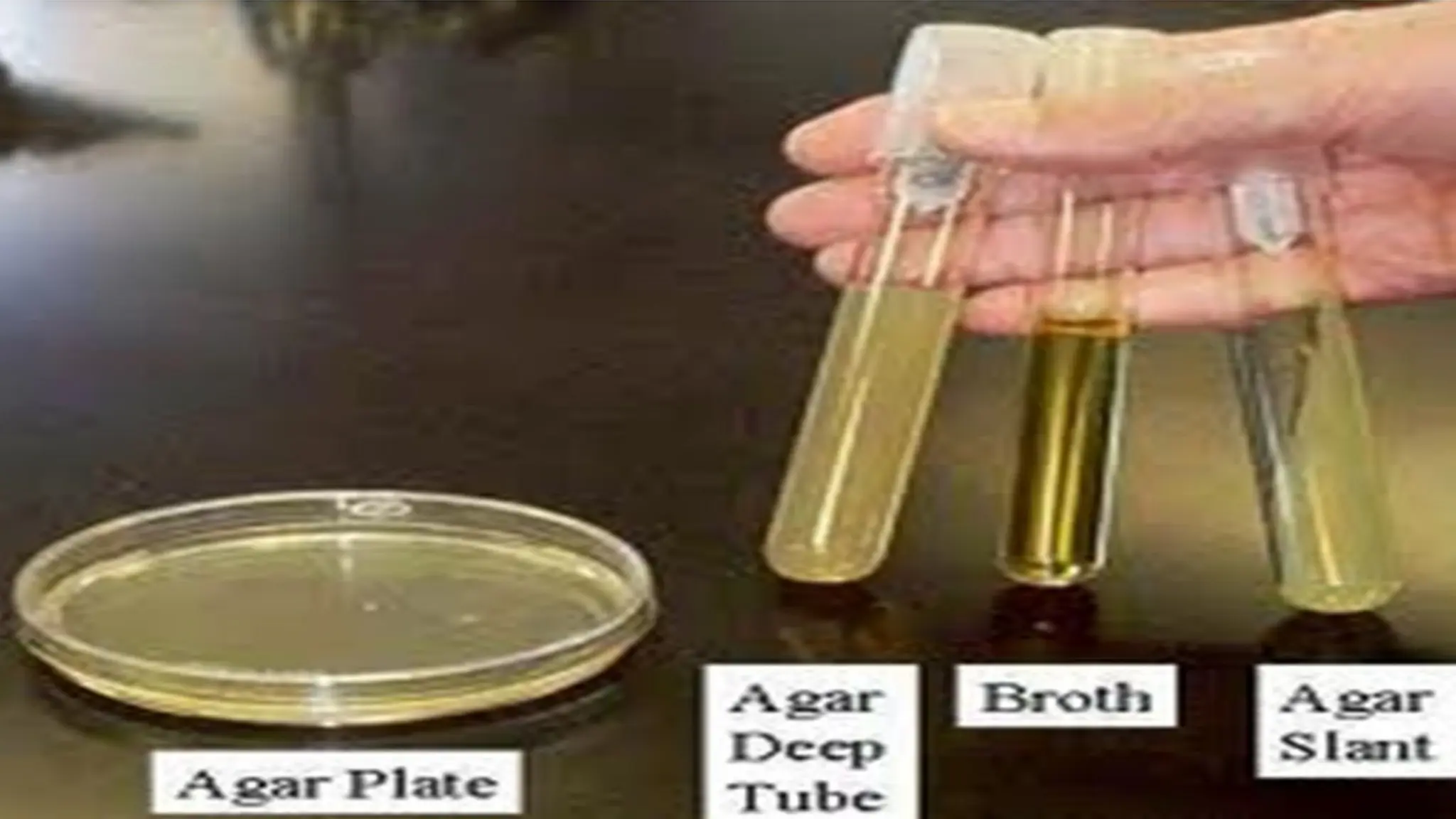
The media may be solid or liquid
The solid media are prepared by the addition of gelatin or agar to the
broth to a final concentration of 1- 2%
Gelatin is an albumin-like material derived from bones, tendons, &
cartilage
Agar (means jelly-like) is obtained from dried seaweed
By its nature, agar is an aseptic and solidifying component, which makes
it an ideal candidate to use in culture media
Eggs and potatoes can also be used to solidify liquid media
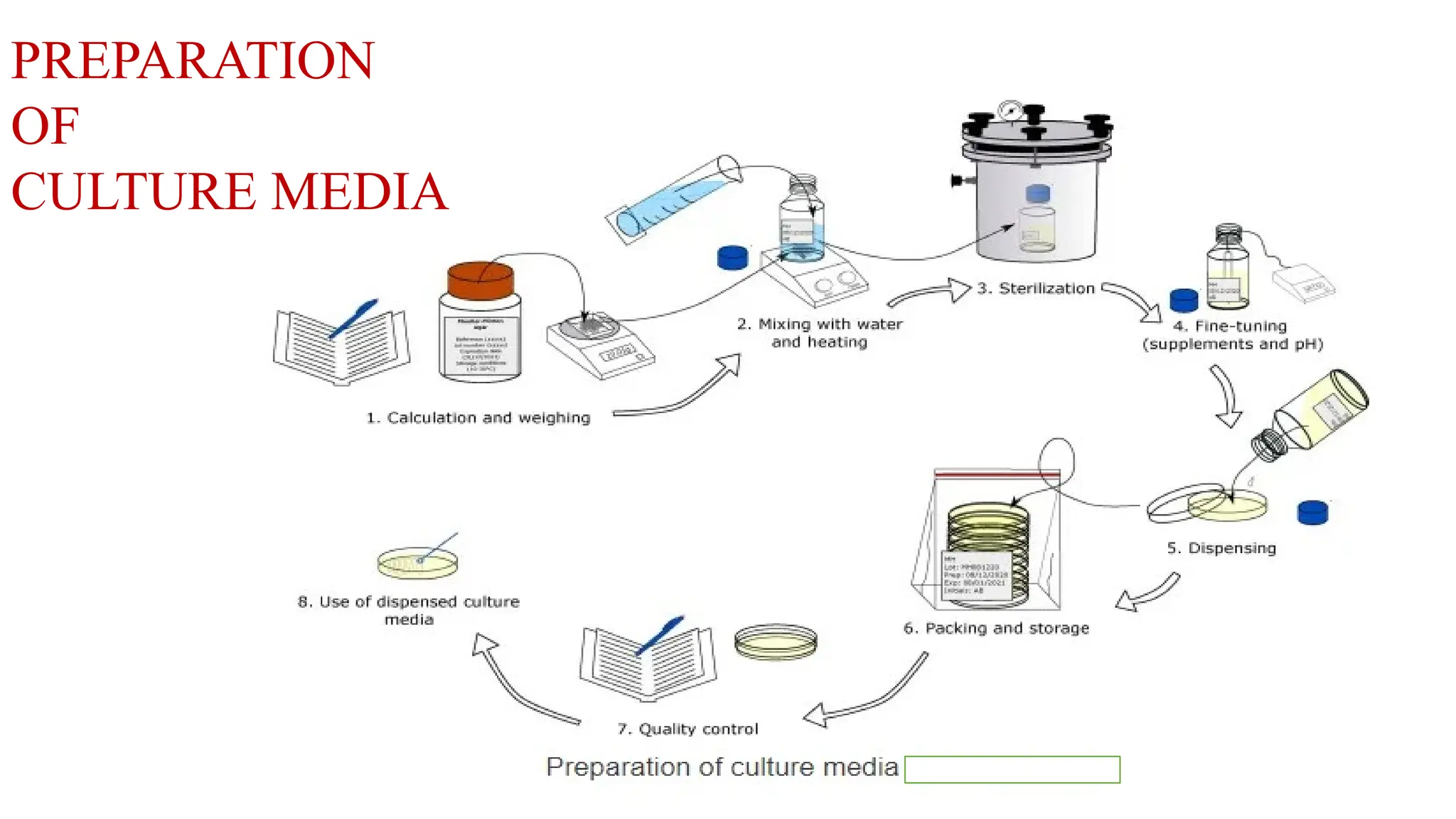
PREPARATION
OF
CULTURE MEDIA
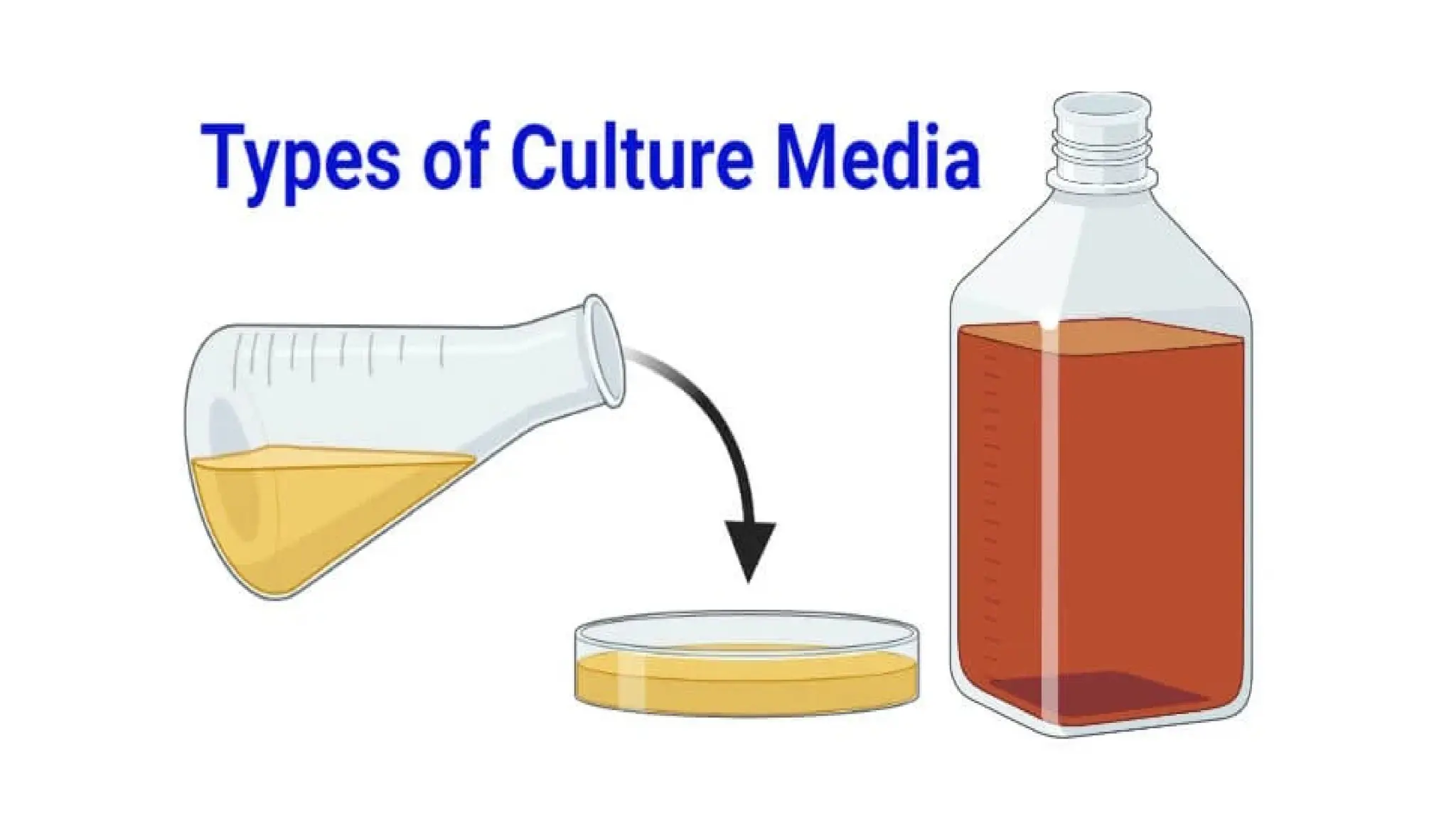
TYPES OF CULTURE MEDIA
1. Simple media 2. Enriched media
3. Selective media 4. Differential media
5. Enrichment media
Simple Media: These contain basic nutrients for bacterial growth like
broth with peptone with or without a solidifying agent
Examples: Nutrient broth & peptone water
Enriched Media: Simple media are sometimes not appropriate for the
isolation and subsequent growth of pathogenic bacteria
It thus becomes necessary to add enriched materials
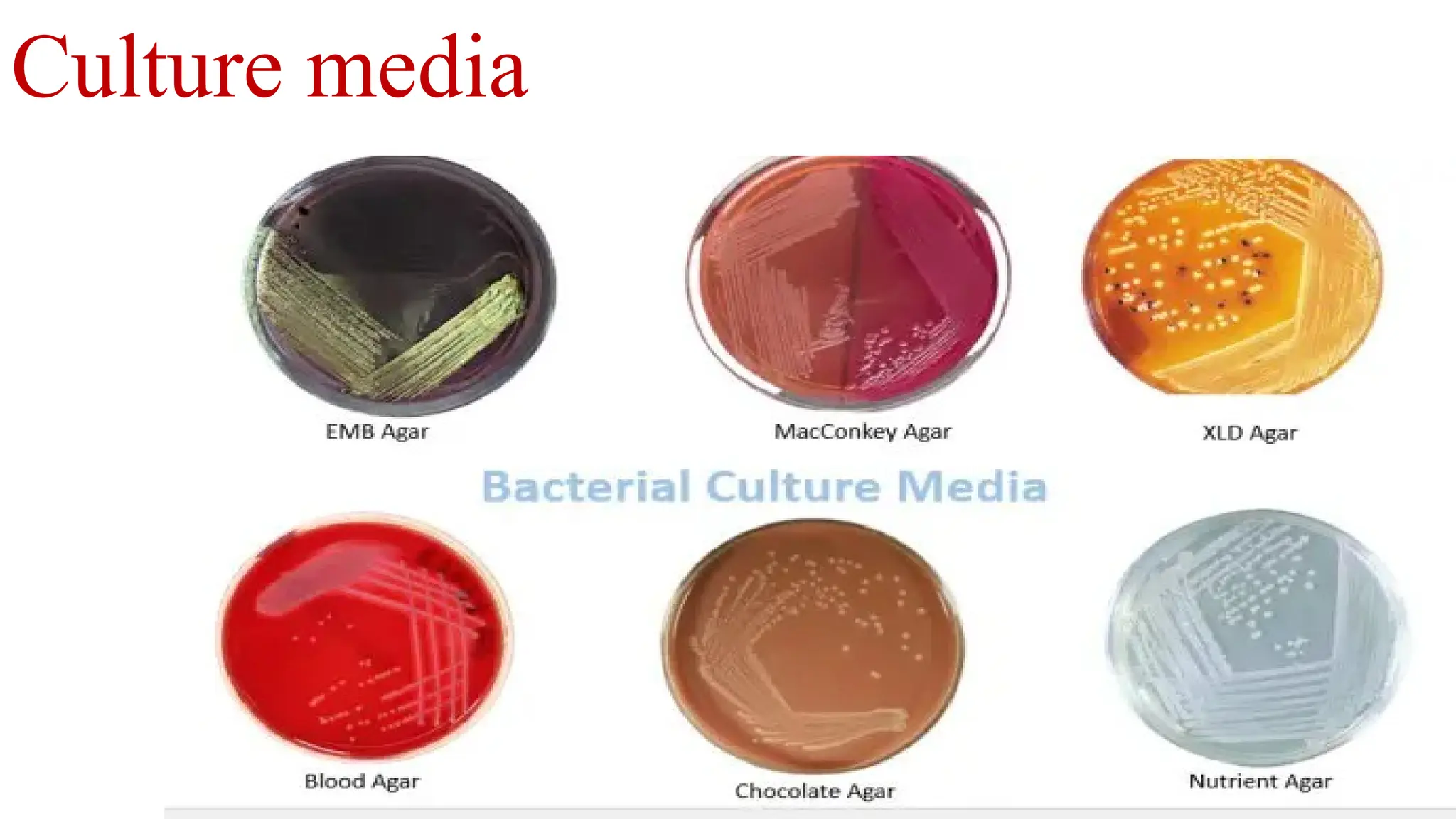
Examples: Blood agar & chocolate agar
Commonly used enriched substances are:
Blood(5-10%), Serum(10%), Ascitic fluid(10%), Glucose(1-2%)
Selective Media: In order to have the best possible chance of isolating a
particular type of organism it is important to use a medium that favors its
growth and also discourages the growth of unwanted organisms, such a
medium is selective
Examples: 1. BSA (Bismuth Sulphite agar) for Salmonella
2. Alkaline peptone water for Vibrio cholerae
3. Potassium tellurite agar for C. diphtheriae
4. DCA for Salmonella & Shigella
Differential Media: It is a medium to differentiate between the colonies
of different organisms
Example, presence of lactose & an indicator in MacConkey agar makes it
possible to differentiate b/w lactose & non-lactose fermenting organisms
CLED (Cysteine Lactose Electrolyte Deficient) medium
Enrichment media:
Sometimes there is a need to provide an enriched environment to some
organisms and to inhibit other organisms
These media are usually liquid in nature (broth)
Examples: Tetrathionate (TT) and Selenite F broth
In these Salmonella and Shigella species get enriched nutrients, whereas,
other intestinal flora like Escherichia coli and Klebsiella pneumoniae are
inhibited
Sometimes the temperature is used for this purpose, cold enrichment is
used for Listeria monocytogenes and heat enrichment is used for
Legionella species

Cultre Media, technique to grow bacteria in efficient way

  • 1.
  • 2.
    Culture media aremediums that provide essential nutrients & minerals to support the growth of microorganisms in laboratory Composition The basis for almost all the bacteriological media is meat extract (broth) providing most of the required nutrients (Lab Lemco) Other growth requirements of bacteria are provided by digested and un- coagulable proteins to the broth in the form of commercial peptone Peptone: water-soluble mixture of polypeptides & amino acids formed by the partial hydrolysis of protein A typical culture medium is composed of a complement of amino acids, vitamins, inorganic salts, glucose, and serum as a source of growth factors, hormones, and attachment factors In addition to nutrients, the medium also helps maintain pH & osmolality
  • 3.
    Culture media The mediamay be solid or liquid The solid media are prepared by the addition of gelatin or agar to the broth to a final concentration of 1- 2% Gelatin is an albumin-like material derived from bones, tendons, & cartilage Agar (means jelly-like) is obtained from dried seaweed By its nature, agar is an aseptic and solidifying component, which makes it an ideal candidate to use in culture media Eggs and potatoes can also be used to solidify liquid media
  • 4.
  • 9.
    TYPES OF CULTUREMEDIA 1. Simple media 2. Enriched media 3. Selective media 4. Differential media 5. Enrichment media Simple Media: These contain basic nutrients for bacterial growth like broth with peptone with or without a solidifying agent Examples: Nutrient broth & peptone water Enriched Media: Simple media are sometimes not appropriate for the isolation and subsequent growth of pathogenic bacteria It thus becomes necessary to add enriched materials Examples: Blood agar & chocolate agar Commonly used enriched substances are: Blood(5-10%), Serum(10%), Ascitic fluid(10%), Glucose(1-2%)
  • 10.
    Selective Media: Inorder to have the best possible chance of isolating a particular type of organism it is important to use a medium that favors its growth and also discourages the growth of unwanted organisms, such a medium is selective Examples: 1. BSA (Bismuth Sulphite agar) for Salmonella 2. Alkaline peptone water for Vibrio cholerae 3. Potassium tellurite agar for C. diphtheriae 4. DCA for Salmonella & Shigella Differential Media: It is a medium to differentiate between the colonies of different organisms Example, presence of lactose & an indicator in MacConkey agar makes it possible to differentiate b/w lactose & non-lactose fermenting organisms CLED (Cysteine Lactose Electrolyte Deficient) medium
  • 11.
    Enrichment media: Sometimes thereis a need to provide an enriched environment to some organisms and to inhibit other organisms These media are usually liquid in nature (broth) Examples: Tetrathionate (TT) and Selenite F broth In these Salmonella and Shigella species get enriched nutrients, whereas, other intestinal flora like Escherichia coli and Klebsiella pneumoniae are inhibited Sometimes the temperature is used for this purpose, cold enrichment is used for Listeria monocytogenes and heat enrichment is used for Legionella species