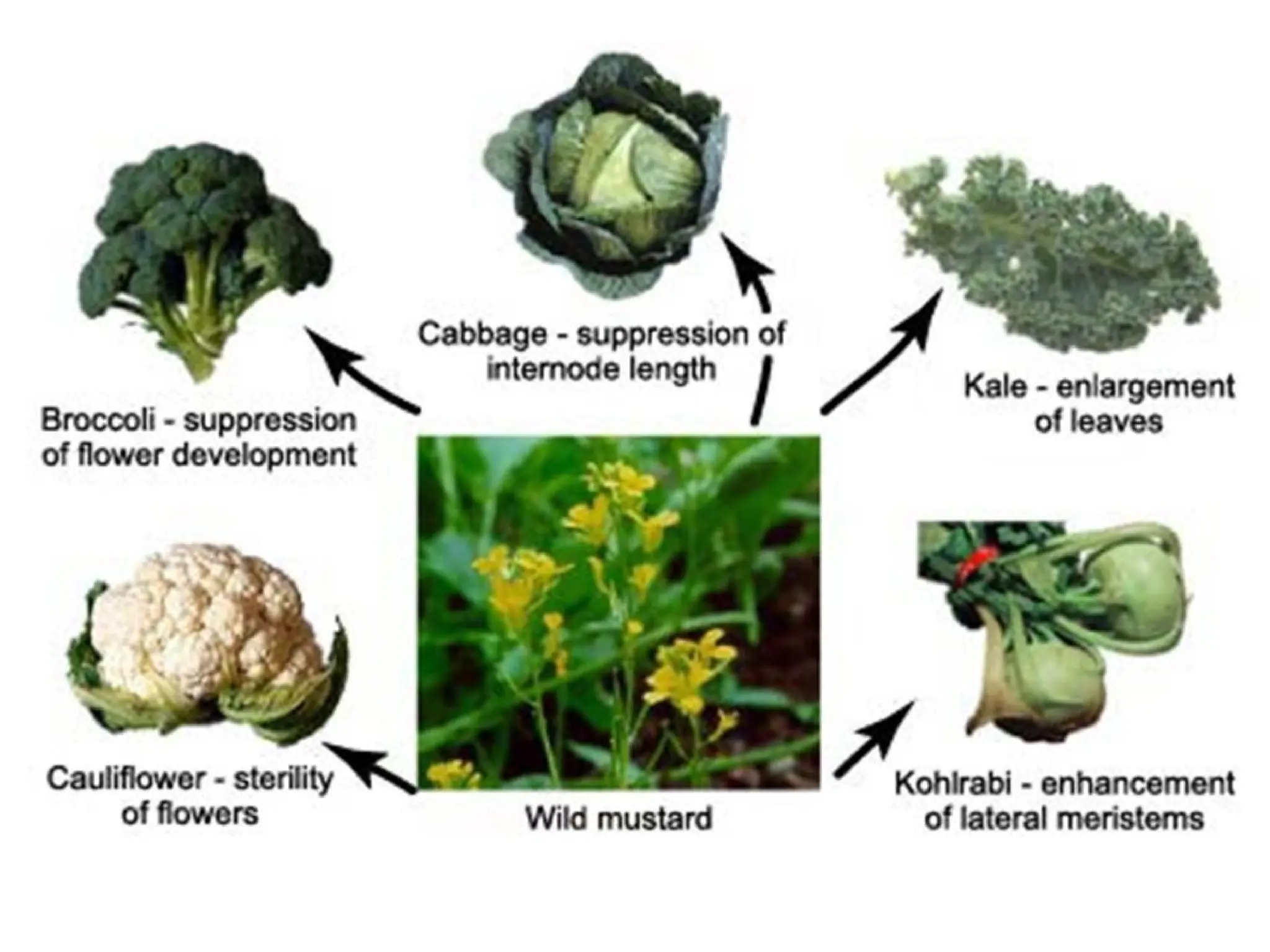
Cole crops (2078)
•The word Cole comes from “Caulis” meaning stem. Cole meaning a
group of highly differentiated plants originated from a common parent,
the wild cabbage or ‘Colewart’, Brassica oleracea var. sylvestris.
• It is native of western Europe and northern shore of Mediterranean Sea.
• Cole crops belong to the family Cruciferae.
• Cauliflower
• Cabbage
• Broccoli
• Knolkhol
• Brussel’s Sprouts
• Kale
5.
Cole crops withtheir botanical names:
1. Cauliflower: Brassica oleraceae var. botrytis
2. Cabbage: Brassica oleraceae var. capitata
3. Sprouting broccoli: B. oleraceae var. italica
4. Knol khol: Brassica caulorapa
5. Brussel’s sprouts: B. oleraceae var. gemmifera
6. Chinese cabbage: B. chinensis (Heading type), B.
pekinensis (non heading type)
7. Kale: B. oleraceae var. acephala
Uses or Importance
•All Cole crops are rich source of vitamin-A and C.
• They also contain minerals including Phosphorous,
Potash, calcium, sodium and iron
• They are eaten both raw as well as cooked
• They are also used medicine for several purposes
• Cabbage juice is said to be a remedy against
poisonous mushroom and is also used as a gargle
against hoarseness (गाला बस्नु/स्वर भासिनु):
(Dysphonia) when your voice sounds rough,
raspy, strained or breathy.
11.
• Among theCole crops in Nepal, Cauliflower and
Cabbage are the two most important crops while
Kholkhol, Chinese Cabbage and Broccoli are
though grown in certain areas is yet to be
popularized where as Brussel’s sprouts and Kale are
yet to be introduced.
• Popular Cole crops of Nepal are grown almost all
the year round either in the hills or in the plains.
12.
Cauliflower (Brassica oleraceavar. botrytis )
• Cauliflower consists of two Latin words, ‘caulis’
and ‘floris’, former means cabbage and the later
means flowers.
• Chromosome number: 2n = 18
• Cultivate almost all geographical regions in Nepal
• Generally used as vegetable.
• Can be used to prepare pickle, Pakora etc.
13.
Nutritive value ofcauliflower
According to the USDA, approximately 100 grams
of raw cauliflower contains:
• 25 calories energy
• 5.3 grams carbohydrates.
• 2 grams protein.
• 0.1 gram fat.
• 2.5 grams fiber.
• 46.4 milligrams vitamin C.
• 16 micrograms vitamin K
• 57 micrograms folate.
14.
Cauliflower production inNepal
SINA, 2021/22
Major cauliflower producing district of Nepal are:
Dhankuta, Khotang, Jhapa, Morang, Sunsari, Saptari,
Siraha, Dhanusha, Mahottari, Sarlahi, Bara,
Sindhupalchok, Kavre, Makwanpur, Banke, Baridya,
Rupandehi, etc.
MoAD, 2018/19
Crop Area (Ha) Production
(MT)
Yield
(Mt/Ha)
Cauliflower 39,214 611,015 15.58
15.
Varieties of Cauliflower
•Cauliflower varieties are categorized in to 4 major groups:
1. Tropical/ early varieties :
• Suitable for tropical climate, heavy to moderate rainfall: Eg.
Sarlahi deepali, Snow moon,White Top
2. Sub tropical/ mid season varieties:
• Suitable for subtropical climate, heavy rainfall and heavy soil.
Eg. Kathmandu local, Khumal Jyapu (released in 2072), Ramy,,
Silvercup-60
3. Temperate/late maturing European varieties
• Suitable for cool climate: snow best, NS-160, Anna-90, All the
Round , Milkyway, Snow Mistique, Dolpa Snowball-16
4. Exotic hybrid varieties
3.a. Write down the difference between temperate and tropical
varieties of Cauliflower (2077)
21.
Varieties of Cauliflower
•Early cauliflower:- Pusa Deepali, Katki, Kunwari, Early
Patna, Pusa Early Synthetic, Pant Gobhi-3
• Mid season varieties:- Aghani, Poosi, Patna main crop, Early
snowball, Ktm local, Japanese Improved, Pant Gobhi-2, Pusa
Synthetic, Giant Snowball (D-96), D-86.
• Late season varieties:- Dania, Snowball-16, Pusa Snowball-
1, Pusa Snowball K-1, etc.
• The early varieties are smaller in size & have curd of
yellowish tinge.
• The mid season varieties produce the largest curds of dirty
white in color.
• The late season varieties are compact & milky white in
color.
24.
Climate
• Cool seasonvegetable.
• Temperature plays important role during
transformation form vegetative to curdling, curd
development, curd to bolting and flowering.
• Seed germination: 10-21ºC and optimum monthly
temperature: 15 – 25ºC is required for plant growth
and development.
• Optimum temperature for curding:
Tropical varieties (early season): 20 – 27 ºC
Sub Tropical variety (mid season): 13-19ºC
Temperate variety (late season): 10 -16ºC
25.
Soil
• Well-drained fertilelight loam soil with good
moisture holding capacity
• Soil pH ranges from 5.5-6.6 is best for better
development and growth of cauliflower.
• 2-3 ploughing to make the soil friable followed by
planking
26.
Manure and fertilizer
•Application of 15-20 Ton FYM, 200 Kg N, 120 Kg P and
80 Kg K per hectare is required
• Half dose of the Nitrogen and entire dose of Phosphorus,
Potash and FYM should be applied during filed preparation
• Remaining half dose of nitrogen should be applied in
equal doses at 4-6 weeks after transplantation and
during curd formation stage
• Sensitive to boron and molybdenum deficiency, so
application of 10-15 kg Borax and 1-1.5 kg sodium or
Ammonium Molybdate per hectare as basal dose is
recommended.
27.
Nursery management
Soil treatmentand preparation
• As mentioned in the lecture of nursery care and
management
• 20 seed beds of 2.5 m length with 1 m breadth are
enough for raising seeding for transplanting in 1
hectare. Seed are sown in line at 5 cm apart.
• Prick the seedling out at 2-3 leaf stage (first pair of
true leaves) to make healthy and hardy.
• Seedling become ready for transplanting in 4-5 weeks.
Early varieties: 3-4 leaf stage,
Mid and Late varieties: 5-6 leaf stage.
28.
Pricking out:-
• Transferringyoung seedlings from initial
primary nursery be to more spacious
accommodation of secondary nursery bed by
pricking small holes the soil where the tiny
plants are inserted.
Pricking off: Removal of seedlings from beds.
29.
Sowing time andtransplanting
Geographical
regions
Variety
Group
Sowing Time Transplanting
time
Harvesting
time
Terai/Plains
(<300 m)
Early
Mid
Late
May-June
July-August
Sept-October
June-August
Aug. – Sept.
Early Nov.
Sept. – Oct.
Dec. – Jan.
Jan. - Feb.
Mid hills
(300-2000 m)
Early
Mid
Late
Early to late
May
June-July
August- Sept.
June – July
July- August
Sept. – Oct.
Sept. – Oct.
Dec. – Jan.
Jan. – Feb.
High hills
(2000 – 3000 m)
Mid
Late
March – April
April - May
April – May
May - June
July –
August Sept.
– Nov.
30.
Seed rate andSpacing
Variety Seed rate (g/ha) Spacing
Early Variety 500 - 600 60 cm X 50 cm
Mid Variety 400 -500 60 cm X 60 cm
Late Variety 400-500 75 cm X 60 cm
31.
Irrigation and interculturaloperation
Irrigation:
• First irrigation is given just after transplanting.
• Early crop: may need twice a week
• Mid and late crops: Once a week
Intercultural operation:
• Frequent shallow hoeing is necessary by khurpi
or hoe to kills weed and provide soil mulch.
• Two earthing up: - First at 4-5 Weeks after
transplanting and second right before the initiation
of curd formation.
32.
Blanching
• Preventing thecurds of cauliflower from direct sunlight
that makes the curd white and improve the tenderness
• Done to exclude light form the curd and to prevent yellowing
of curd.
• In common practice, blanching is to bring the outer leaves
over the head and tie them with a twine or rubber band.
• Should be done only when the head has grown fully and
leaves should not be tied over for more than 4-5 days.
• Prolonged blanching may lead to rotting and discoloration of
curd (head)
33.
Use of plantgrowth regulators
Foliar application of GA3 @ 50 ppm at 20 and 40 days
after transplantation increase the yield.
Kaur and Mal, 2018
34.
Harvesting
• Harvest whencurd has attained the proper size
and compactness.
• Plant is cut off well below the curd so that the stub
left protects the curd during transport
• Don’t trim the leaf from the head
• In the market – leaf should be cut 2.5 – 3 cm
projecting above the head before sending the
heads to the market.
35.
Yield and Storage
•Early crops gives low yield and mid season crops
give high yield
Yield:
• Early varieties: 12-15 ton/ha,
• Mid and late varieties: 20-30 ton/ha
Storage
• Curds can be stored for 3-4 days at room temperature
• At 0ºC temperature with 90-95% RH, curds can be
stored for 2-4 weeks (Hardenburgs et al., 1990).
36.
Seed production
• Crosspollinated crop and pollination is mainly done
by bees.
• Some bee hives in the seed production plant is
recommended.
• Isolation distance must be maintained with other
varieties
Foundation seed:1600 m
Certified seed: 1000m
• Seeds of early season varieties are produced in
plains and main season varieties are produced in the
hills.
37.
Seed production methods
•The seed production methods for early season
cauliflower:
1. In – situ method:
• Easy and most economic method of seed production .
Leave the plants with good curds in the field where they
flower and process seeds
• Roughing of off type and undesirable plants is essential
before flowering for quality seed production
• Seed ripens during April – May.
• Yield: 500 – 650 Kg seed/ha with better quality.
• Seeds are obtained 4-11 days earlier than other methods
38.
2. Transplanting method:
•In-situ method occupies a lot of area because plants for seed
productions are here & there in the field.
• Selected plants with best curds uprooted carefully with ball
of earth and re- planted (75cmX75cm) in a solid block for
seed production.
• Field should be well prepared and manure before
transplanting.
• Curd of the plant before transplanting or at the time of
transplanting is given scooping in the middle of the curd.
• Scooping helps in the early emergence of the flower stalks.
• Crop is harvested at 70% pod maturity and curing
becomes essential. Curing, threshing and other operation
should be completed before the onset of rain.
39.
Seed Production inMain season cauliflower:
• In-situ method is the most successful method in
seed production of main season crops.
• Seed sowing and transplantation should be
completed by the end of August and end of
September, respectively.
• Yield: 250 – 400 Kg/ha.
Scooping of Curd Curd after Scooping
41.
Physiological disorders/ Productionconstraints
(2074, 2075, 2078, 2079 and 2080,2081)
1. Buttoning
• Development of small heads just like buttons. Leaves also remain small which
are unable to cover curds
Causes:
• Transplanting of over aged seedling
• Poor supply of nitrogenous fertilizers and overcrowding of plants
• Planting early varieties late and vice versa may also causes buttoning
Correction:
• Right selection of the variety
• Apply recommended dose of Nitrogen and transplant 4-5 weeks old seedlings
43.
2. Riceyness
• Velvetyor granular appearance on the surface of the curd
is seen due to elongation of pedicel and formation of
small white flower buds at the curdling stage.
• Small whitish coloured flowers are seen on the surface
which is known as ‘ricey.’
Causes:
• Temperature fluctuation
• Hereditary factors have also been reported for riceyness
• Heavy application of nitrogenous fertilizer and high relative
humidity
Correction:
• Grow the crop when temperature is favorable
• Use of high quality and genetically pure seeds
45.
3. Blindness:
– Completeabsence of cauliflower head
or terminal bud
– Leaves of blind cauliflower are large,
thick, leathery and dark green
Causes:
– Low temperature at initial growth stage
– Mechanical injury or injury by insect
and pest at the terminal bud
Correction:
• Protect the crop from low temperature
injury
• Careful handling at transplanting and
careful of insect pests
47.
4. Fuzziness:
• Pedunclesare elongated to give rise a full velvety appearance of curds
formed.
• Almost all the pre floral buds which develops precociously on the curd
surface give the fuzzy appearance.
Causes:
• Unfavorable weather
• Delay in harvesting and hereditary factors
Correction:
• Avoid sowing when the temperature is high
• Harvest the crop at proper maturity.
48.
5. Leaf curds/Leafyness:
–Developmentof small leaves from the curds
due to high temperature during curd formation.
Correction:
–Grow varieties according to the climate and
geographical location
49.
6. Pinking
• Sometimescurds show
pink tinge, this appears
due to the exposure of
curds to high light intensities
• Under this condition,
anthocyanin form and gives rise pink color curds
Nutritional disorders, 2076,2080
1.Browning (Brown rot or red rot)
• Caused by boron deficiency which is influenced by soil pH.
• Particularly common in high pH soil.
• Appearance of water soaked lesions in the stem, leaf and on the
surface of the curd which later become rusty and brown in
color.
• Sometimes, the curd and leaves starts decaying.
• Hollow stem is also a symptom of browning.
Control:
– Apply 20 kg borax in the soil or spray 0.2% Boric acid.
53.
2. Whiptail:
• Causeddue to Molybdenum deficiency.
• Molybdenum becomes unavailable in very
acidic soil having pH below 5.0.
• Normal leaf blade development fails and
only strap like savoyed (डाडु like) leaves are
formed .
• In extreme cases only, mid-rib develops,
causes deformity and no marketable curd is
formed.
Control:
•Apply Sodium or Ammonium Molybdate @
1 kg/ha during field preparation.
•Add lime to raise the pH of the soil to 6.5
55.
3. Hollow Stem:
•Hollowness caused due to boron deficiency may be
identified by water soaked and discolored tissue,
whereas, hollowness caused by nitrogen, the stem is
perfectively clear while with no sign of
disintegration.
Cause:
• caused by boron deficiency and higher supply of
nitrogen.
Control:
• Spray Borax @ 0.3-0.4%
Cabbage (Brassica oleraceaeL. Var. capitata f.
alba DC.)
• The word cabbage is derived form the French word
“Coboche” meaning head.
• Chromosome number: 2n = 18
• Edible part: Head
• Fruit type: Siliqua
• Cultivate almost all geographical regions and second
most cultivated vegetables of Nepal, in respect of area,
production and availability almost round the year.
• Cabbage is distinguish by its swollen head which is
formed by thickening the edible bud with thickly pact
overlapping leaves manifesting a large head.
60.
Uses
• White cabbageis generally, grown in Nepal.
• Savoy cabbage and red cabbage are also grown in
limited scale.
• It is consumed through out the country in the form
of vegetable or raw as salad.
61.
• Indol 3-Carbinol an anticancer compound is
present in cabbage.
• Sauerkraut: a processed product prepared from
white cabbage and useful in scurvy.
• Sauerkraut is a German word meaning cabbage
fermentation.
• Lactic acid forming bacteria play an important
role in fermentation. They ferment leaf sugar and
produce a distinctly sour taste with a long shelf
life.
• Cabbage have a cooling effect and helps in the
prevention of constipation.
• It speed up digestion, increases appetite and useful
for diabetic patients.
• Aroma containing compound present in raw
cabbage is Allyl isothiocyanate and in cooked
cabbage is Dimethyl disulphide.
62.
Cabbage production inNepal
Source: SINA, 2021/22
• Major cabbage producing district of Nepal are:
• Ilam, Terathum, Dhankuta, Khotang, Jhapa, Morang,
Sunsari, Saptrai, Siraha, Mahottari, Sarlahi, Bara,
Dolakha, Kavre, Makwanpur, Banke, Bardiya,
Rupandehi, etc.
Crop Area
(Ha)
Production
(MT)
Yield
(Mt/Ha)
Cabbage 34,314 587,668 17.13
63.
Varieties of cabbage
A.According to the botanical characteristic
cabbage can be classified as
1. Common cabbage (B. oleracea var. capitata
L.f. alba):
• E.g. White cabbage
2. Purple/red cabbage (B. oelracea var.
capitata L.f. rubra):
• E.g. red cabbage - Red acre, Red rock etc
3. Savoy cabbage (B. oleracea var. sabauda):
• E.g. Savoy cabbage.
65.
B. On thebasis of head shape cabbage can be classified as:
1. Round head or ball head types:
• Eg. Golden Acre, Pride of India, Copenhagen Market , Green express
etc
2. Flat head or drum head types:
• Eg. Pusa drum head, Large drum head, Pusa Mukta etc.
3. Conical head type:
• Eg. Jersey wakefield, Charleston wakefield etc.
4. Savoy type:
• Eg. Chieftain, Drum head savoy etc.
5. Red cabbage:-e.g. Red acre, red rock, etc.
6. Hybrid cabbage:-e.g. K-K cross, K-Y cross.
Generally round head types are early variety followed by the conical
types.
The drum head & Savoy types are commonly late variety.
66.
Released and RegisteredVarieties of cabbage in Nepal
• Copenhagen Market
• Green Coronet
• Rareball
• T 621
• Super Green
• NSR
• K.F. 65
• N 766
• NYCR
• Wigson 171
• Nepastar
• Summer cross
• Green Challenge
• Nepa Round
• Bonus
• Super Coronet
• Ruby King
• Green Hero
• Green Top
• Y.R. Honam
• Green Hot
• Asia Express
• Golden Ball
• Kshitiz
• Nepa Magic
• Rishi
• Nepa Green
• Jenith
• Futoski
Climate
• Cool seasoncrop.
• Withstand extreme cold and frost relatively better
than cauliflower.
• Losses its flavor in warm weather
• Optimum seed germination temp: 12.8 – 15.6ºC
• Optimum temp. for growth and development: 15 –
20ºC
• Above 25ºC growth is checked.
• Minimum temperature for growth is just above 0ºC.
73.
Soil
• Well-drained fertilelight loam soil with
good moisture holding capacity
• Soil pH ranges from 6.0-6.5 is best for better
development and growth
• Clay loam or silt soils are more suitable for
late crops to get larger yield
• Does not grow well in highly acidic soil.
74.
Manure and fertilizer
•Application of 15-20 Ton FYM, 240 Kg N, 180 Kg
P and 80 Kg K per hectare is required.
• Half dose of the Nitrogen and entire dose of
Phosphorus, Potash and FYM should be applied
during filed preparation
• Remaining half dose of nitrogen should be applied
in 2 split doses:
• 1st half should be side dressed one month after
transplanting at the time of earthing up
• 2nd half dose should be side dressed at head
formation stage.
75.
• At hightemperature formation of head can be
improved by spraying 2% solution of common salt.
• Azospirillum and Phosphobacteria 2 kg each are
recommended along with FYM.
Nursery management
Same as in cauliflower
Sowing Time
76.
Seed rate andSpacing
Seed rate:
Early varieties: 300 – 500 g/ha
Late varieties: 400 – 600 g/ ha
Spacing:
Early varieties: 40cmX40cm or 60cmx30cm
Mid and late season cultivars: 50cmX50cm
or 75 cmX30cm
77.
Transplanting
• Seedling becomeready for transplanting in 4-6
weeks or 4-6 true leaf stage
• Hardening of the seedling is generally
followed which enables the plant to with stand
the shock of transplanting and low
temperature
• Transplanting is done on flat or on ridges
• Rainy season crops should be planted in
raised bed to provide good drainage
78.
Inter cultural andirrigation
• Frequent shallow hoeing is necessary by khurpi or
hoe to kills weed and provide soil mulch.
• Earthing up: 4-6 weeks after transplanting
• Pre-plant application of Basalin @ 0.5 L/ha to
control monocot as well as dicot weeds
• Mulching
• Irrigation: first irrigation given immediately just
after transplanting, 10 – 15 days interval (2
weeks).
Harvesting, Yield andstorage
• Cabbage heads are harvested when they attain full size and
become hard.
• Early varieties yield low in comparison to mid and late
season varieties
Yield:
• Early varieties: 25 – 30 ton/ha
• Mid season varieties: 35- 49 ton/ha
• Late season varieties: 39 – 59 ton/ ha
Storage:
• The marketable heads can be stored for 4-5 days in room
temperature
• Cabbage can be stored at 0ºC and 90-95% RH for about 2
to 8 months (Mercontilia, 1989).
81.
Seed production
• Cabbageis biennial in nature for seed production.
• Isolation distance must be maintained 1600m (F.S)
and 1000 m (C.S) with other varieties
• Requires chilling temperature of 4.4 – 10 ºC for
about 40 – 60 days
• Cabbage seeds are mainly produced by two
methods: (2073)
• Seed to seed method
• Head to seed method
i. Head intactmethod
• Most common methods of commercial seed
production of cabbage.
• In this method, when the crop is fully
mature in the first season, the heads are
examined for true to type.
• The plants with off type heads are removed
from the field.
• The head is kept intact and only a cross
cut is given on the head to facilitate the
emergence of flower stalk in the month of
march when head start bursting or bulging
or give dome shape appearance.
• The seed yield is slightly low as compared
to stump, or stump with central core intact
method.
84.
ii. Stump method(without central core)
• The heads are cut just below the base by a sharp
knife, keeping the stem with the outer leaves
intact.
• The de-headed portion is called stump.
• When temperature starts to rise, the bud sprout
from the axils of all leaves and leaf scars.
Advantages
(i) Gives extra income by way of sale of heads.
(ii) The crop matures 12-15 days earlier than the head
intact method and
(iii) Seed yield is slightly increased.
• Disadvantages
• The flower stalks require stalking other wise
they may break down easily during intercultural
operation.
85.
iii. Stump withcentral core intact:
• Heads are not removed, but chopped on all sides with downward perpendicular
cuts, in such way that the central core is not damaged.
• During the last week of February and till march, when the head starts bursting, two
vertical cuts are given to the head taking care that the central core is not damaged.
• The flowering shoots arise form the terminal and auxiliary buds.
Advantages
(i) Shoots arising from the main stem are not decumbent, hence very heavy staking
is not required and
(ii) Seed yield is increased.
• Disadvantages
• The chopped heads cannot be marketed.
87.
2. Head toseed method: (2073)
• Selected heads of cabbage are uprooted with ball of
earth on Nov-Dec. and replanted in a compact block
at 75 X 75 cm spacing.
• They are replanted in a such way that the whole
stem below the head goes under ground with the
head resting just above the surface of soil.
• After replanting two cuts of 2-5 cm deep are given
at right angle across each head so that the seed
stalks may develop normally.
88.
Physiological disorder/Production constraints
1.Premature seeding or bolting
The phenomenon of premature production of seed stalk before
formation of head is know as bolting.
• The failures of leaves to form a solid head are the common defects in
early cabbage causing considerable loss.
Causes:
• Early sowing of seeds in hot weather
• Presence of warm winter
• Sudden and extreme changes in temp during plant growth
• Poor viability of seed
• Poor soil due to inadequate nutrient supply
• Failure to control weed , disease, insect pest at proper time
• Lack of proper management , influence of humidity.
89.
Control
– Grow boltingresistance
varieties
– Avoid sowing in warm climate
– Supply adequate amount of
nutrients
– Follow proper plant protection
measures
90.
Broccoli
• Morphologically, broccoliis more resembling to
cauliflower but the plant forms head rather than the
curd, consisting of green bud and thick fleshy floral
stalk.
• Beside the main head, long slender small heads which are
called spears are developed in the axils of the leaves.
• These become ready for harvest after the removal of main
head.
• Both the head and fleshy stem are eaten as salad or
cooked vegetables.
91.
Nutritive value ofBroccoli
• Good source of Sulphoraphane, a compound
associated with reducing the risk of cancer.
92.
Broccoli production inNepal
Source: SINA, 2021/22
Major Broccoli producing district of Nepal are:
• Morang, Khotang, Sunsari, Siraha, Kavre,
Bhaktapur, Chitwan, Lamjung, Dang, Kailali etc.
Source: MoAD, 2018/19
Crop Area
(Ha)
Production
(MT)
Yield
(Mt/Ha)
Broccoli 2,665 30,523 11.45
Broccoli Varieties
• EverestGreen
• Sakura
• King Dome
• Early You
• Nok Guk
• Green Dome 115
• Green Dome 80
• Green Parasole
• Premium Cup
• Sentauro
• Green Piya
• Calabrese
Knolkhol Varieties
• Samrat
• Nepal Ball
Chinese Cabbage
Spring Sun 60
N 7
C R Chun Dai Gil
Blues
Winter Visiter
98.
Climate
• Sensitive tohigher temperatures as bud cluster of
head becomes loose quickly.
• Higher temp also gives rise to bracts during
developmental stages of head.
• It is grown as winter crop in most part of the Nepal,
however in higher hills.
• It can be grown as spring summer crops
• Optimum temperature for proper head formation: 12
-18ºC
• Crops grown in cool temp has better taste and
keeping quality.
99.
Soil and fieldpreparation
• Well-drained Sandy loam or clay loam soil rich in
OM are preferred
• Soil pH: 5.5 -6.5
• 2-3 ploughing to make the soil friable followed by
planking
100.
Manure and fertilizer
•Half dose of the Nitrogen and entire dose of
Phosphorus, Potash and FYM should be applied
during filed preparation.
• Application of 15-20 Ton FYM, 200 Kg N, 160
Kg P and 100 Kg K per hectare is required.
• Remaining half dose of nitrogen should be
broadcasted in 2 split doses at 30 and 45 days
after transplanting.
101.
Sowing time andNursery management
Sowing time:
Geographical region Time of sowing Time of harvest
High hills Feb.- April June – august
Mid hills and Terai Aug. – Oct. Nov. – Feb.
Valley and foot hills Aug. - Sept. Nov. – Jan.
Nursery management
Same as in cauliflower
102.
Seed rate, Spacingand Transplanting
Transplanting:
• Seedling are ready for transplanting after
30-40 days of sowing.
Spacing: 45cmX30 cm
Seed rate: 400-500 g/ ha
103.
Irrigation and interculture
•Need high moisture condition.
• Dry spell during the head formation stage reduced
the yield considerably.
Irrigation:
• First irrigation is given just after transplanting.
• 7-8 days interval
• Shallow hoeing and earthing up are followed as
other Cole crops
104.
Harvesting and Yield
Harvesting:
•Early type cultivars mature at 40-50 day, mid:
60-100 days late after 100 days of transplanting
• When the head attain proper size, the central
head is removed along with 10-15 cm long
fleshy stem.
• Side sprouts commonly called spears are
harvested after central head
Yield: 10-14 ton/ha
105.
Seed production
Sproutingbroccoli requires two season for
seed production
Plant population: 35000 – 40000 plant/ha
Chilling requirement: 6-8 weeks
Isolation distance for other varieties: 1600
meters
Rouging
Harvesting
Seed stalks with ripened pods are cut by
hand, when they are still green, but the seeds
are physiologically ripe.
Stalks are packed in wind rows in the field
and kept for 10 to 14 days to dry.
Combining can commence after this period.
Yield: 800-1200 kg seed/ha
106.
Plant protection measures– Insect Pests
1. Cabbage butterfly (Pieris brassicae):
• Blue green caterpillars remain together and
feed at one site.
• Later, they separated and crawl to new
leaves.
Control
• Hand picking and destruction of egg and
caterpillars.
• Spray Sevin 50 WP @ 2 gm/L of water.
• Two sprayings of Fenvalerate (0.1%) or
Deltamethrin (0.003%) at 15 days interval
after 20-25 DAT manage the larvae.
• Conserve larval parasitoid Apanteles
glomeratus (Braconidae) in the natural
populations.
107.
2. Cabbage looper(Trichoplusia ni)
• Green caterpillars which are identified by the characteristics
loop while moving.
• Larvae feeds on the underside of developing leaves.
• Outer leaves become riddled with small irregular holes
Control:
• Mechanical control by hand picking
• Field sanitation and growing of resistant varieties
108.
3. Cabbage aphid(Brevicoryne brassicae)
• They suck sap from leaves. The growth of plants is checked and
infected leaves falls
Control
• Set up yellow sticky trap @ 10/ha
Spray any one of the following:
• Dimethoate 30 EC 1000 ml/ha
• Methyl demeton 25 EC 1000 ml/ha
• Azadirachtin 0.03% 2.5-5.0 L/ha
• Aphid skin is covered with waxy filaments and for better adherence
on aphid body, add wetting agent in spray fluid.
109.
4. Cutworms (Agrotis ipsilon, A. segetum)
• Caterpillars bite the foliage and cut the stem at the ground level
Control
• Fork soil during summer months to expose larvae and
• pupae to avian predators
• Install pheromone traps @ 5/ha to monitor and attract male moths
• Drench collar region of plants in evening hours with chloripyriphos
20 EC 4 ml/ L a day after planting
• In endemic areas, apply NSKE 5% or neem oil 5 L in 500 - 750 L of
water per ha.
110.
5. Diamondback moth(Plutella xylostella)
• First instar larvae mine epidermal surface
of leaves producing typical white patches.
• Larvae, second instar onwards feed
externally making holes on the leaves and
soil them with excreta.
• Heavy infestations leave little more than
the leaf veins.
Control:
• Spray Thiodane 35EC @ 10 days interval
• Install pheromone trap @ 12/ha
• Spray Azadirachtin 5% Neem Extract
Concentrate @ 5 mL/10L water at 10-15
days interval.
111.
A. Fungal disease:
1.Damping off
• The stem of the seeding decay at the soil surface and finally it
collapses due to shrinking of tissues of stem near the ground.
• The disease is more serious when excess of water is supplied and
temperature is high.
Control:
• Provide proper drainage facility to avoid stagnation of water
• Do not grow nursery bed on the same location every year
• Treat the nursery bed by solarization
• Seed treatment with Captan, Bevistin, or Thiram @ 2g / Kg of seed.
• Spraying of seedling with Captan, Bevistin or Rodomil@ 1.5-2 g/L
of water is effective in controlling post-emergence damping off.
• Drench the soil with Formalin (40%) @ 50 mL/10 L of water and
cover the bed with plastic for 2 weeks.
Same as in tomato
112.
3. Club rot/Deformed root
(Plasmodiophora brassicae)
• Disease is prevalent in the acidic soil.
• In severe cases, malformed root
resembles a clubbed appearance.
• Foliage wilts on sunny days and recover
toward the evening.
Control
– Badly infested area should be
abandoned for growing cruciferous
crops (at least 6 years)
– Soil is kept alkaline by liming
113.
4. Black spotor alternaria leaf spot (Alternaria
brassicae, A. brassicicola)
• The first sign of leaf spot is small, brown or
black spots on the leaves. Eventually, the spots
enlarge into pale brown or tan circles.
• Dark, fuzzy or sooty spores and concentric,
bull’s-eye rings may develop on the spots.
• Under serious condition of the disease
development, the linear spots are also seen in the
petiole and stem.
Control
• Treat the seed in hot water at 50ºC for 30 mins
• Avoid cruciferous crop in crop rotation for 3
years
• Spray Diathane M 45 or Bavistin @ 2.5 g/L of
water in early stage of disease.
• About 2-3 sprayings is necessary at an interval
of 10 -15 days
114.
5. Black leg(Phoma lingam)
• Infection often occurs on the base of the stem of
the young plant in the nursery bed or the
field, causing dark sunken area.
• On leaves, it causes sunken, irregular grayish
spots with a purplish to black margin
Control:
• Cultivate resistant variety – Pusa Drum head
(cabbage)
• Long term crop rotation
• Seed treatment by hot water at 50ºC for 30 min
• Treat the seed with Benomyl slurry combine
with Thiram
• The wilting of the plant is characteristics of the
advanced stage of the disease
115.
6. Downey mildew(Peronospora parasitica)
• Purplish brown spot appears under the leaf surface followed
by appearance of downy (soft fine feather or hair like) growth
on such lesions.
• Young leaves are less susceptible than old ones
• Infected curd exhibit brownish to blackish look.
Control:
• Clean cultivation and crop rotation with cereals
• Treat the seed with Caption or Thiram @ 2.5 -3 g/kg seeds
• Spray Ridomil MZ-72 (0.25%) or Dithane M-45 (0.2%) at 10
days intervals
116.
7. White rotor Stalk rot (Sclerotinia
sclerotiorum)
• Most serious disease of seed crop in cabbage
and cauliflower.
• Stem and inflorescence twigs becomes straw
and dry.
Control:
• Follow crop rotation with rice
• Seed treatment with 60 ppm Aureofungin or
50 ppm Sreptocycline before sowing
• 4-5 spray of 0.05% Bavistin in combination
with 0.2% Diathane M-45 followed by 0.2%
Diathane M-45 alone alternatively at 10-15
days interval.
• Pith of infected plant is filled with black and
hard sclerotia
117.
8. Cabbage Yellows(Fusarium
oxysporum f. conglutinans)
– Older leaves of affected plants turn
yellow and fall followed by
younger leaves.
– Plant growth is stunted and
defoliation occurs.
– The vascular system of the stem
also turns yellow.
Control:
• Clean cultivation and crop rotation
• Use resistant varieties
• Dipping of roots in 1% Zinc Dimethyl
Dithiocarbonate for 30 min before
transplanting
118.
B. Bacterial Disease
i.Black rot (Xanthomonas compestris)
• Chlorotic area appear near leaf margin which progress towards
the center in the form of V- shaped yellowish spots.
• Latter the veins become dark.
• The cabbage head get discolored.
Control
• Hot water treatments of seed at 52ºC for 30 min to 1 hour
• Seed treatment with Agrimycin 0.01%
• Crop rotation at least 3-5 years
• Spray Indofil M-45 @ 100 ppm and repeat at least 8-10 days interval
• Resistant varieties: Pusa Mukta (cabbage)
119.
ii. Soft rot(Erwinia carotovora)
• First symptoms appear on fleshy affected tissues as
small water soaked lesions, which enlarge rapidly
• Characterized by soft, slimy and bad smelling rot of
affected plants.
• High atmospheric humidity favors the disease.
• The attack occurs only after black rot or any
mechanical injury.
120.
C. Viral Disease
1.Mosaic (cauliflower mosaic, cabbage mosaic,
broccoli mosaic)
• Causes interveinal chlorosis and bending of leaf
veins of mature plants.
• The virus is transmitted by different aphids.
Control:
• Destroy the affected plants
• Control the aphids