A JOURNEY TO CREATE
BIGGER DREAMS
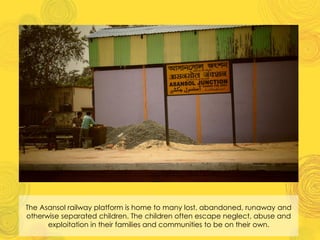
The Asansol railway platform is home to many lost, abandoned, runaway and
otherwise separated children. The children often escape neglect, abuse and
exploitation in their families and communities to be on their own.
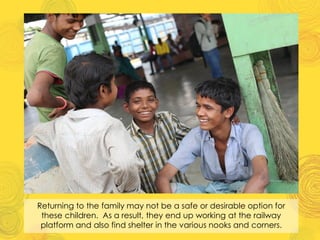
Returning to the family may not be a safe or desirable option for
these children. As a result, they end up working at the railway
platform and also find shelter in the various nooks and corners.
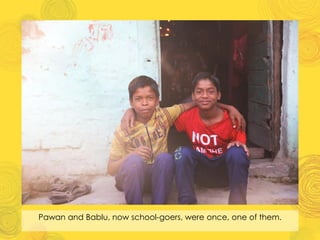
Pawan and Bablu, now school-goers, were once, one of them.
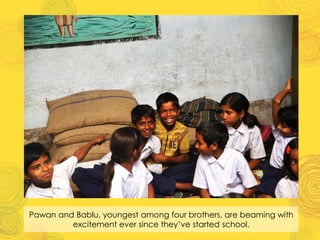
Pawan and Bablu, youngest among four brothers, are beaming with
excitement ever since they’ve started school.
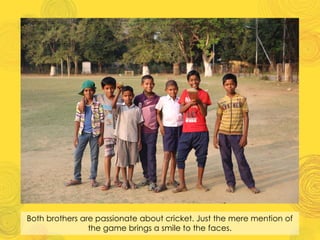
Both brothers are passionate about cricket. Just the mere mention of
the game brings a smile to the faces.
A few years back, the scenario was different.
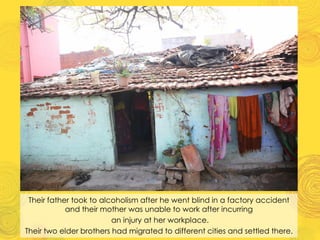
Their father took to alcoholism after he went blind in a factory accident
and their mother was unable to work after incurring
an injury at her workplace.
Their two elder brothers had migrated to different cities and settled there.
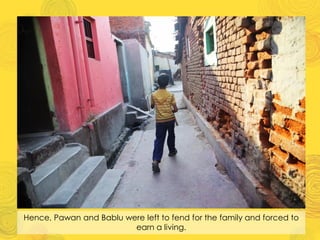
Hence, Pawan and Bablu were left to fend for the family and forced to
earn a living.
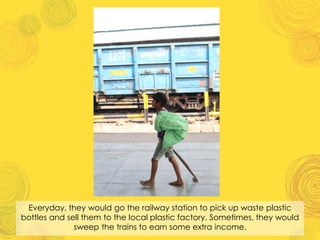
Everyday, they would go the railway station to pick up waste plastic
bottles and sell them to the local plastic factory. Sometimes, they would
sweep the trains to earn some extra income.
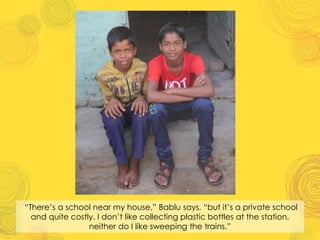
“There’s a school near my house,” Bablu says, “but it’s a private school
and quite costly. I don’t like collecting plastic bottles at the station,
neither do I like sweeping the trains.”
The outreach team of CCRP, a CRY initiative, got in
touch with the two brothers and helped them get
admission into Adarsh Hindi Vidyalaya.
But, the boys went back to work in a couple of days,
as there was no earning member in the household.
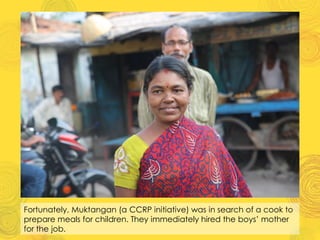
Fortunately, Muktangan (a CCRP initiative) was in search of a cook to
prepare meals for children. They immediately hired the boys’ mother
for the job.
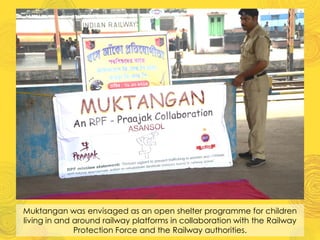
Muktangan was envisaged as an open shelter programme for children
living in and around railway platforms in collaboration with the Railway
Protection Force and the Railway authorities.
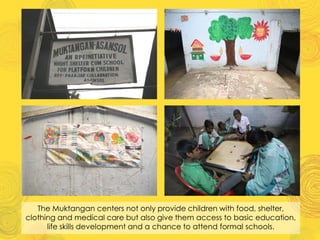
The Muktangan centers not only provide children with food, shelter,
clothing and medical care but also give them access to basic education,
life skills development and a chance to attend formal schools.
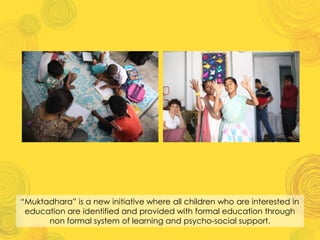
“Muktadhara” is a new initiative where all children who are interested in
education are identified and provided with formal education through
non formal system of learning and psycho-social support.
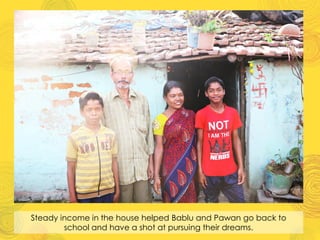
Steady income in the house helped Bablu and Pawan go back to
school and have a shot at pursuing their dreams.
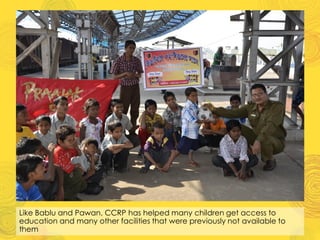
Like Bablu and Pawan, CCRP has helped many children get access to
education and many other facilities that were previously not available to
them
CRY identified the need to bring children in need of care and protection
(CNCP) into the mainstream in the eastern region
• Their aim was to link them to the Juvenile Justice system and other
Child Protection mechanisms that already exist
• Towards that goal, CRY identified the resource organization called
PRAJAK that runs an initiative termed Coalition for Child’s Right to
Protection (CCRP)
• CRY has worked closely with CCRP to develop a holistic and
comprehensive strategy for long term implications instead of just
focussing on immediate resolution and has helped them focus on the
children’s right to survival, development, protection and participation
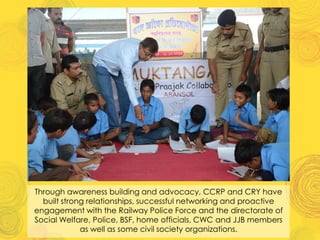
Through awareness building and advocacy, CCRP and CRY have
built strong relationships, successful networking and proactive
engagement with the Railway Police Force and the directorate of
Social Welfare, Police, BSF, home officials, CWC and JJB members
as well as some civil society organizations.
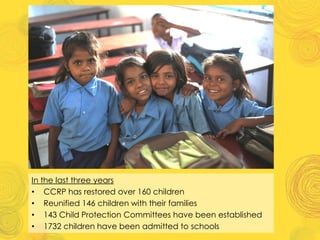
In the last three years
• CCRP has restored over 160 children
• Reunified 146 children with their families
• 143 Child Protection Committees have been established
• 1732 children have been admitted to schools
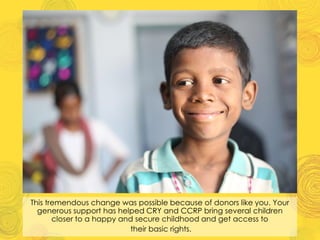
This tremendous change was possible because of donors like you. Your
generous support has helped CRY and CCRP bring several children
closer to a happy and secure childhood and get access to
their basic rights.
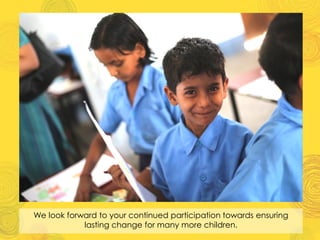
We look forward to your continued participation towards ensuring
lasting change for many more children.

The Coalition for Child’s Right to Protection, West Bengal

  • 1.
    A JOURNEY TOCREATE BIGGER DREAMS
  • 2.
    The Asansol railwayplatform is home to many lost, abandoned, runaway and otherwise separated children. The children often escape neglect, abuse and exploitation in their families and communities to be on their own.
  • 3.
    Returning to thefamily may not be a safe or desirable option for these children. As a result, they end up working at the railway platform and also find shelter in the various nooks and corners.
  • 4.
    Pawan and Bablu,now school-goers, were once, one of them.
  • 5.
    Pawan and Bablu,youngest among four brothers, are beaming with excitement ever since they’ve started school.
  • 6.
    Both brothers arepassionate about cricket. Just the mere mention of the game brings a smile to the faces.
  • 7.
    A few yearsback, the scenario was different.
  • 8.
    Their father tookto alcoholism after he went blind in a factory accident and their mother was unable to work after incurring an injury at her workplace. Their two elder brothers had migrated to different cities and settled there.
  • 9.
    Hence, Pawan andBablu were left to fend for the family and forced to earn a living.
  • 10.
    Everyday, they wouldgo the railway station to pick up waste plastic bottles and sell them to the local plastic factory. Sometimes, they would sweep the trains to earn some extra income.
  • 11.
    “There’s a schoolnear my house,” Bablu says, “but it’s a private school and quite costly. I don’t like collecting plastic bottles at the station, neither do I like sweeping the trains.”
  • 12.
    The outreach teamof CCRP, a CRY initiative, got in touch with the two brothers and helped them get admission into Adarsh Hindi Vidyalaya. But, the boys went back to work in a couple of days, as there was no earning member in the household.
  • 13.
    Fortunately, Muktangan (aCCRP initiative) was in search of a cook to prepare meals for children. They immediately hired the boys’ mother for the job.
  • 14.
    Muktangan was envisagedas an open shelter programme for children living in and around railway platforms in collaboration with the Railway Protection Force and the Railway authorities.
  • 15.
    The Muktangan centersnot only provide children with food, shelter, clothing and medical care but also give them access to basic education, life skills development and a chance to attend formal schools.
  • 16.
    “Muktadhara” is anew initiative where all children who are interested in education are identified and provided with formal education through non formal system of learning and psycho-social support.
  • 17.
    Steady income inthe house helped Bablu and Pawan go back to school and have a shot at pursuing their dreams.
  • 18.
    Like Bablu andPawan, CCRP has helped many children get access to education and many other facilities that were previously not available to them
  • 19.
    CRY identified theneed to bring children in need of care and protection (CNCP) into the mainstream in the eastern region • Their aim was to link them to the Juvenile Justice system and other Child Protection mechanisms that already exist • Towards that goal, CRY identified the resource organization called PRAJAK that runs an initiative termed Coalition for Child’s Right to Protection (CCRP) • CRY has worked closely with CCRP to develop a holistic and comprehensive strategy for long term implications instead of just focussing on immediate resolution and has helped them focus on the children’s right to survival, development, protection and participation
  • 20.
    Through awareness buildingand advocacy, CCRP and CRY have built strong relationships, successful networking and proactive engagement with the Railway Police Force and the directorate of Social Welfare, Police, BSF, home officials, CWC and JJB members as well as some civil society organizations.
  • 21.
    In the lastthree years • CCRP has restored over 160 children • Reunified 146 children with their families • 143 Child Protection Committees have been established • 1732 children have been admitted to schools
  • 22.
    This tremendous changewas possible because of donors like you. Your generous support has helped CRY and CCRP bring several children closer to a happy and secure childhood and get access to their basic rights.
  • 23.
    We look forwardto your continued participation towards ensuring lasting change for many more children.