Product Pages Tested
How carefully pinpointing customer anxiety led to a 78%
increase in conversion
We’re sharing on Twitter!
#WebClinic
#WebClinic
Today’s speakers
Austin McCraw
Director,
Content Production
MECLABS
Taylor Kennedy
Senior Research
Manager
MECLABS
Ben Huppertz
Senior Research
Manager
MECLABS
#WebClinic
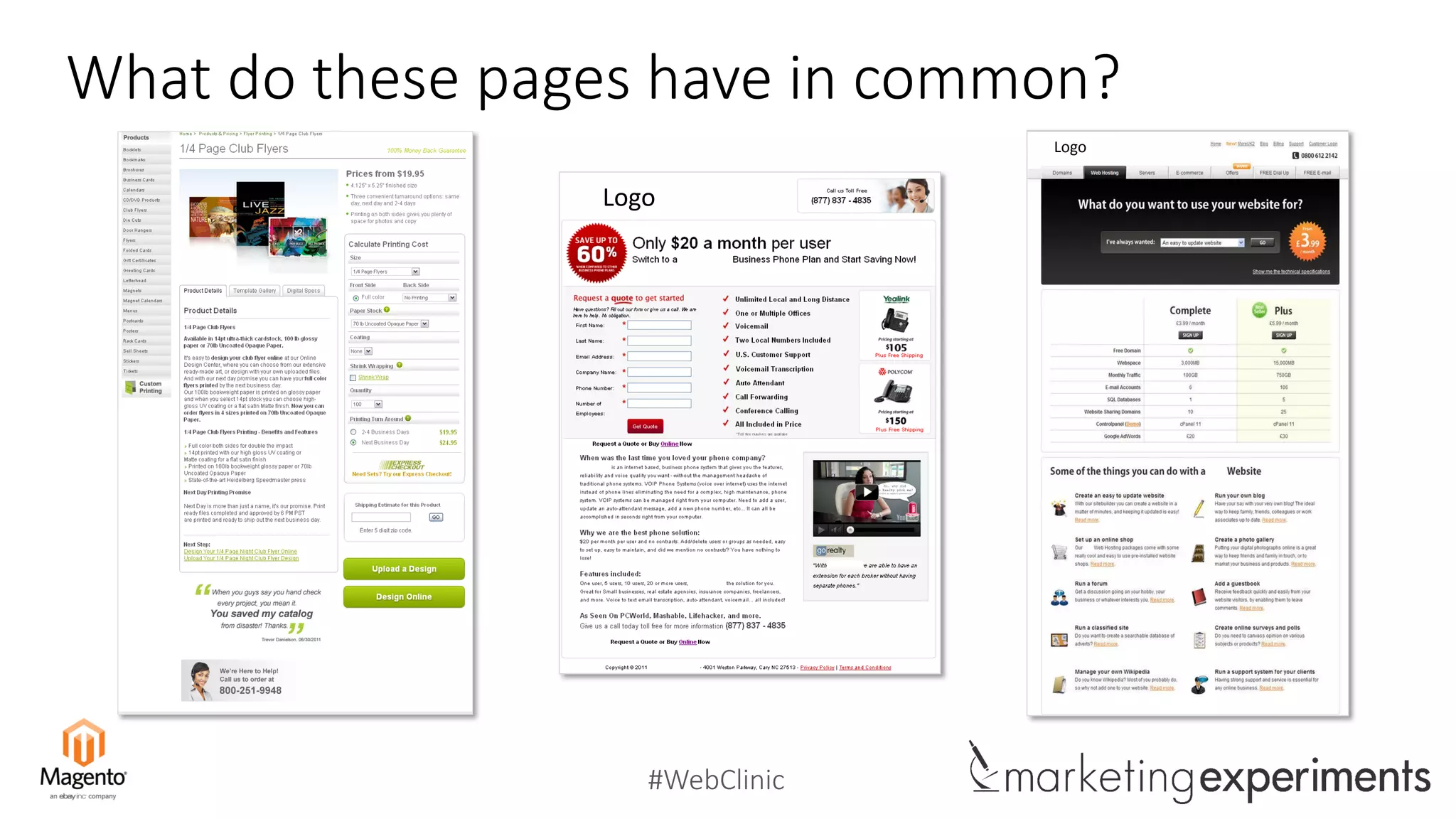
What do these pages have in common?
Logo
Logo
#WebClinic
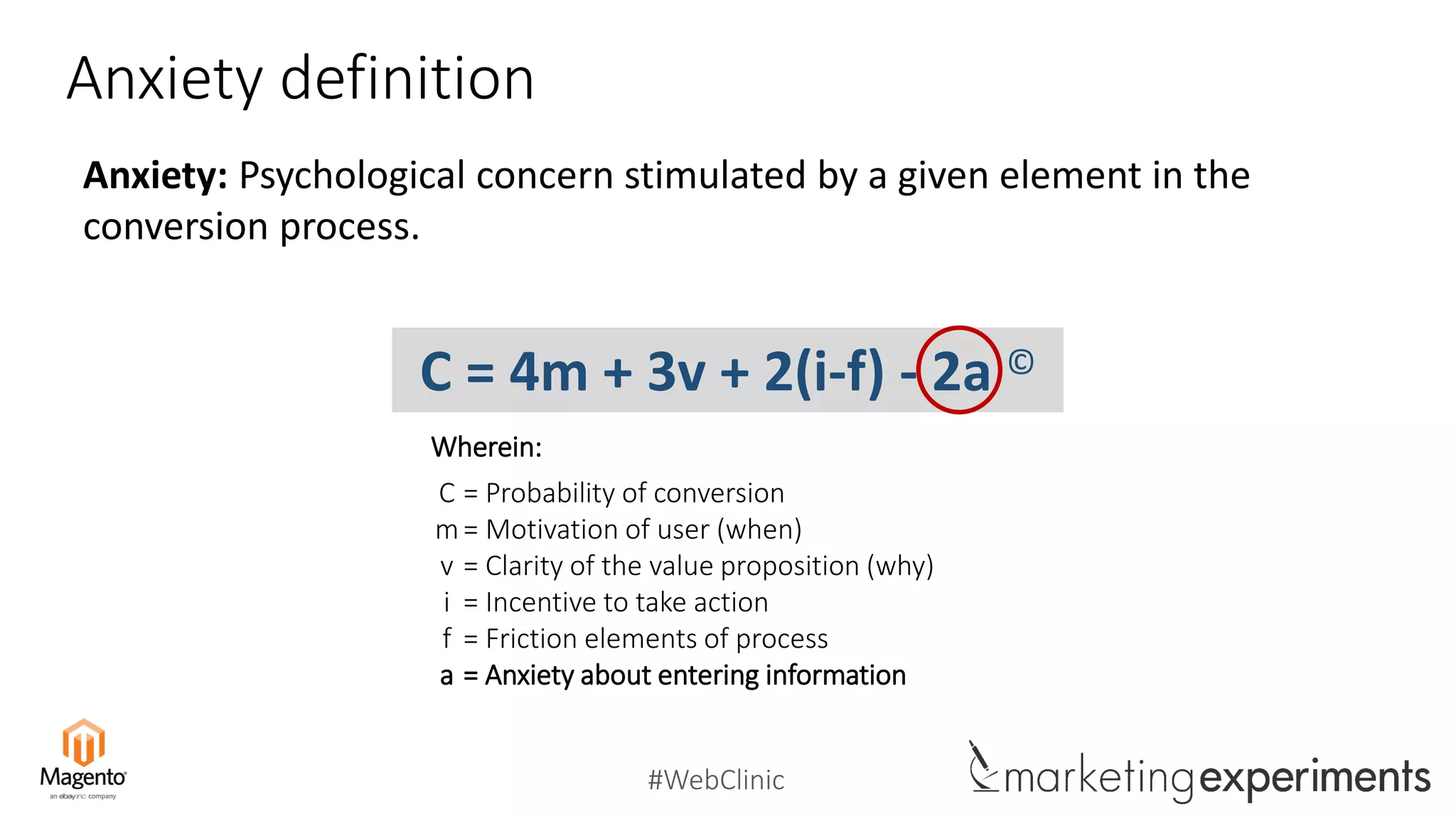
Anxiety definition
C = 4m + 3v + 2(i-f) - 2a ©
C
m
v
i
f
a
= Probability of conversion
= Motivation of user (when)
= Clarity of the value proposition (why)
= Incentive to take action
= Friction elements of process
= Anxiety about entering information
Wherein:
Anxiety: Psychological concern stimulated by a given element in the
conversion process.
There are two reasons marketers
should care about customer anxiety
on their product pages.
#WebClinic
Why should marketers care?
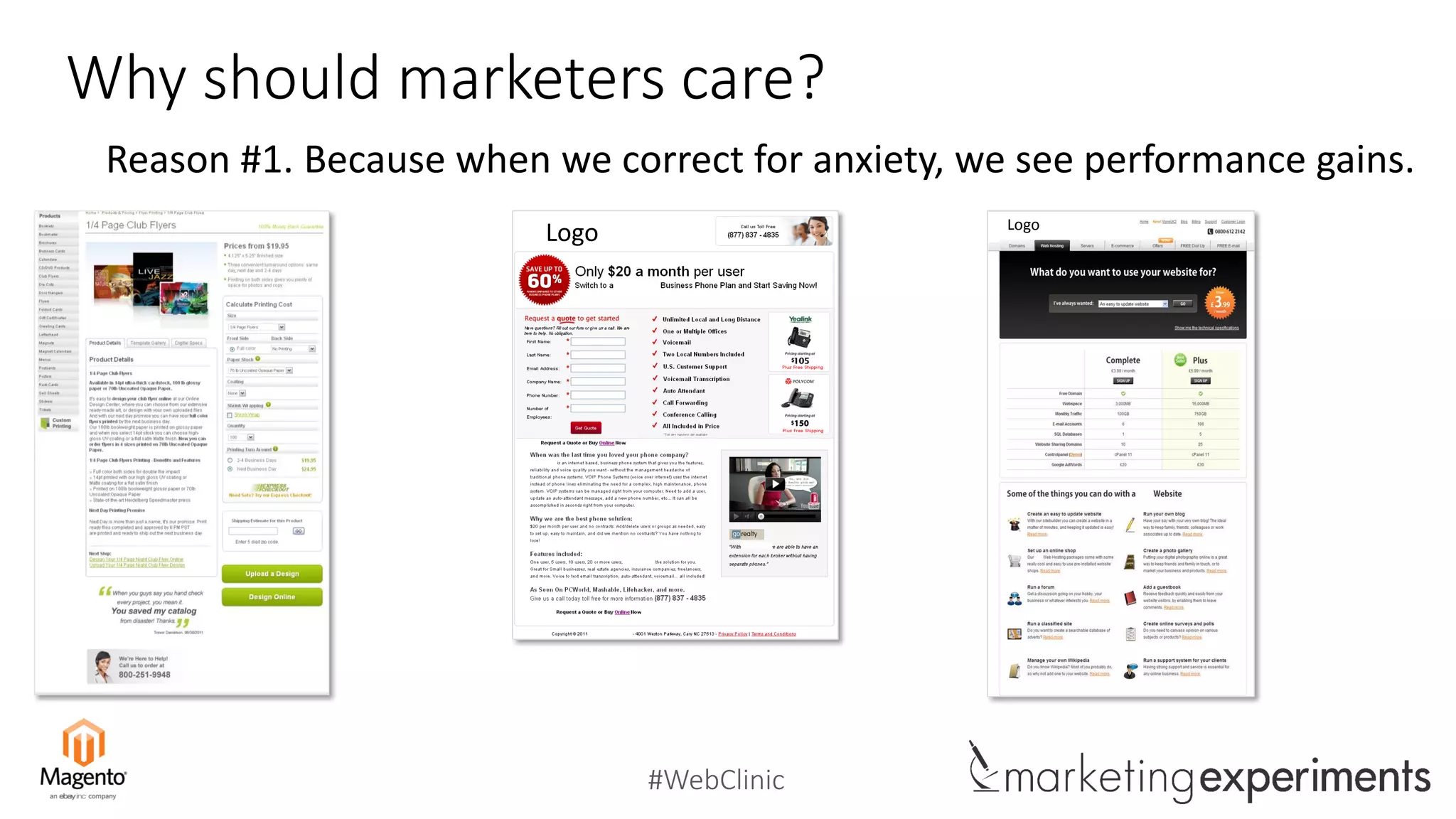
Reason #1. Because when we correct for anxiety, we see performance gains.
Logo
Logo
#WebClinic
Why should marketers care?
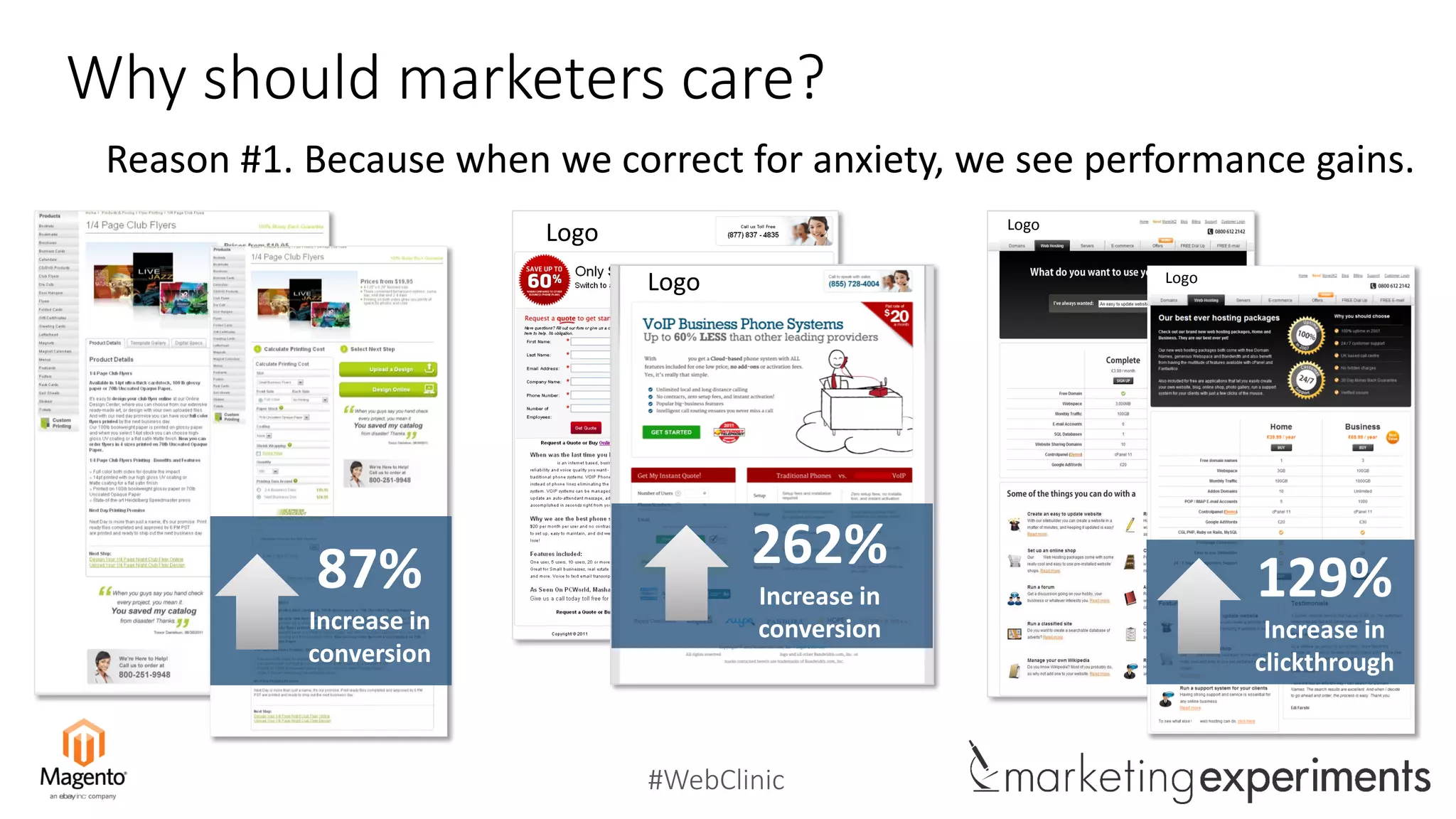
Reason #1. Because when we correct for anxiety, we see performance gains.
Logo
Logo
Logo
129%
Increase in
clickthrough
87%
Increase in
conversion
Logo
262%
Increase in
conversion
#WebClinic
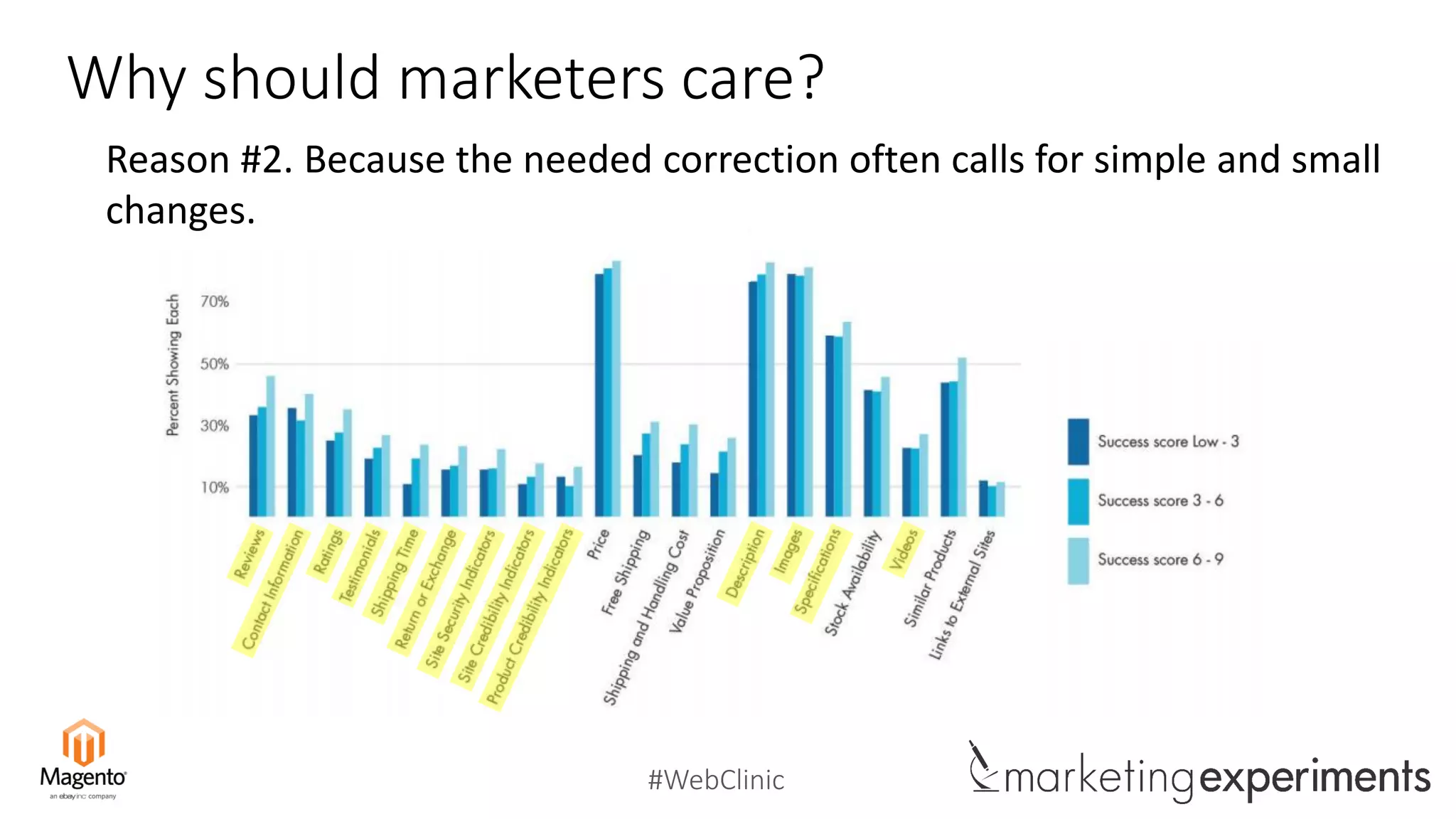
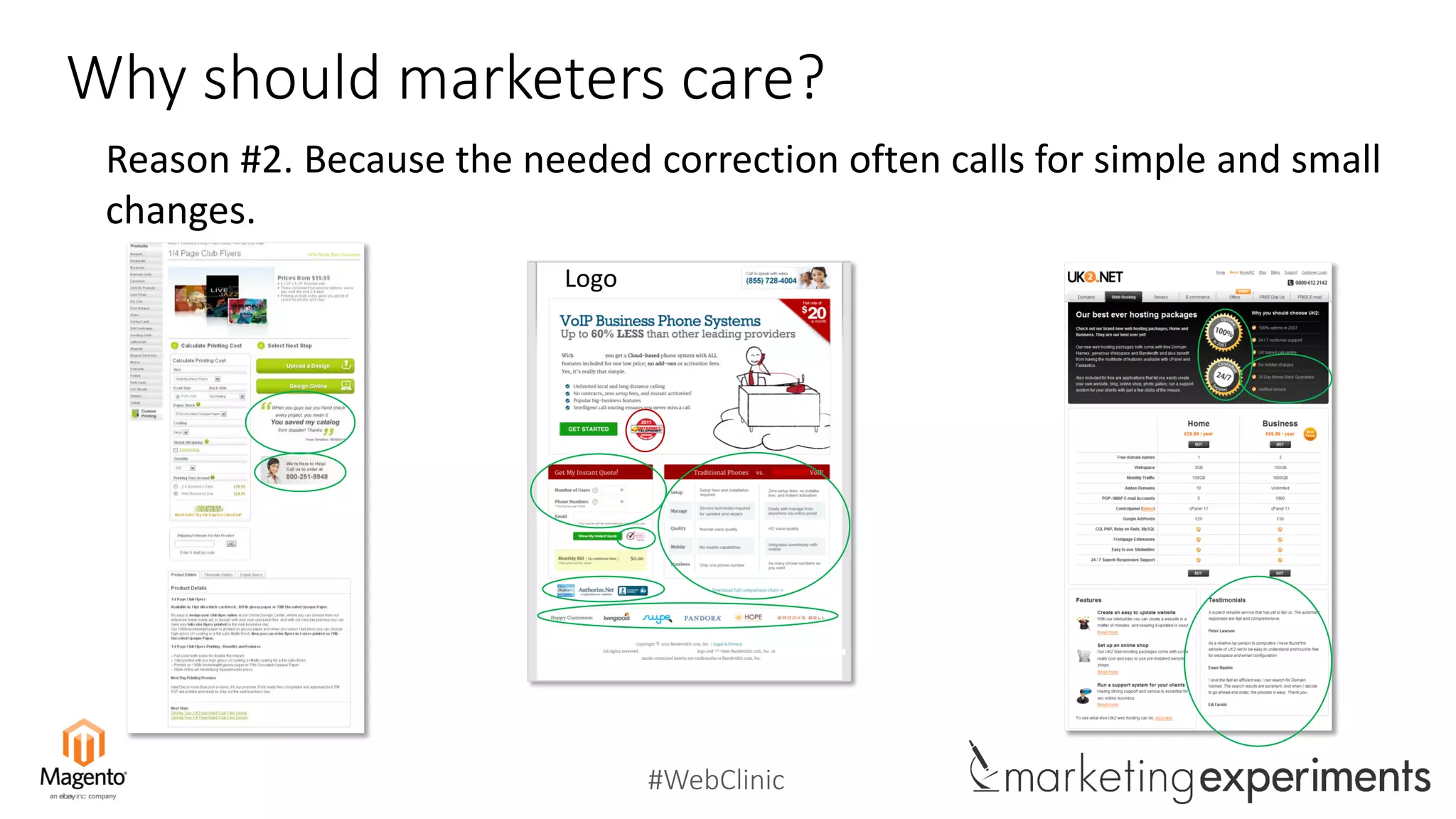
Why should marketers care?
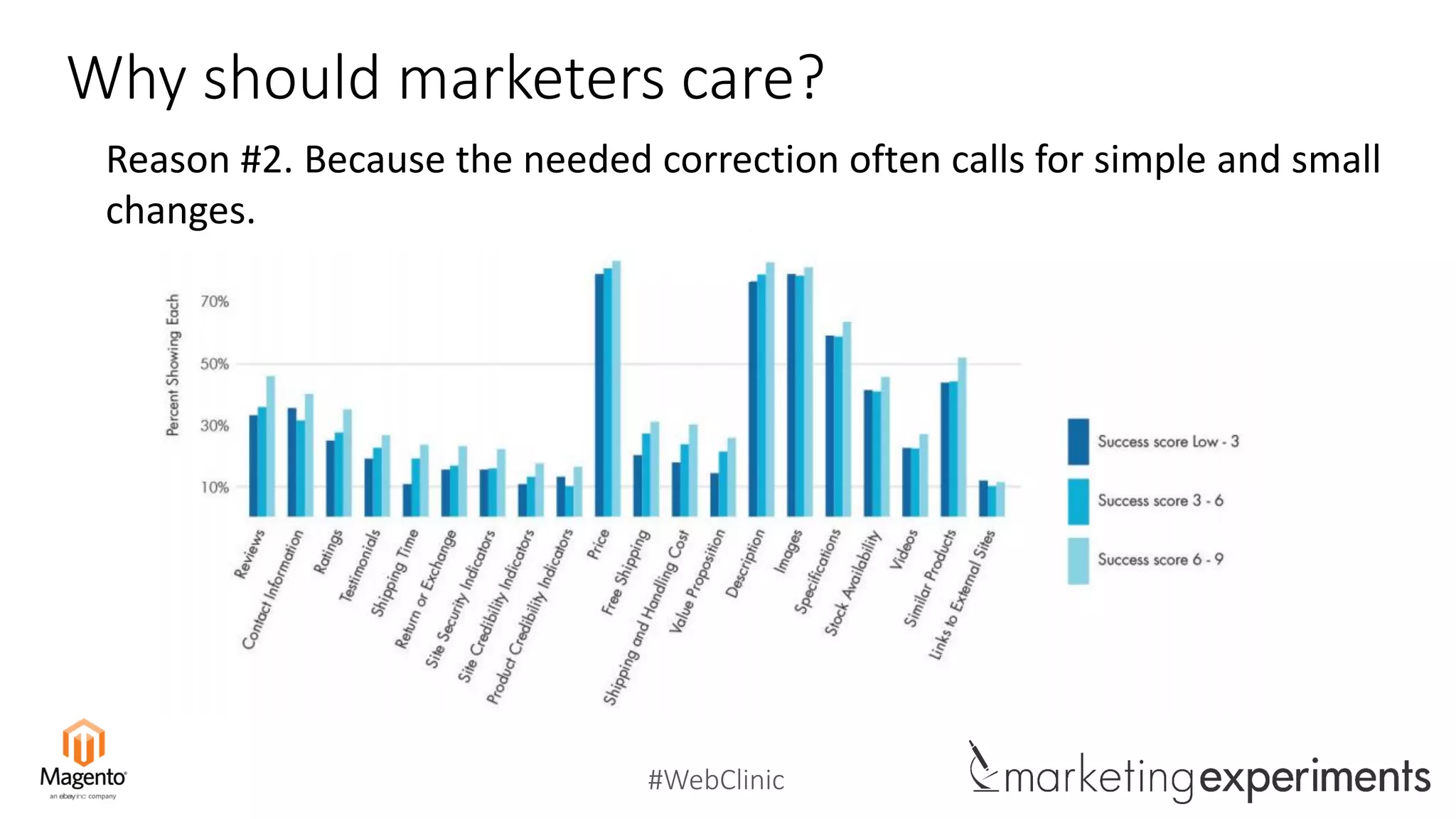
Reason #2. Because the needed correction often calls for simple and small
changes.
#WebClinic
Why should marketers care?
Reason #2. Because the needed correction often calls for simple and small
changes.
#WebClinic
Logo
Why should marketers care?
Reason #2. Because the needed correction often calls for simple and small
changes.
#WebClinic
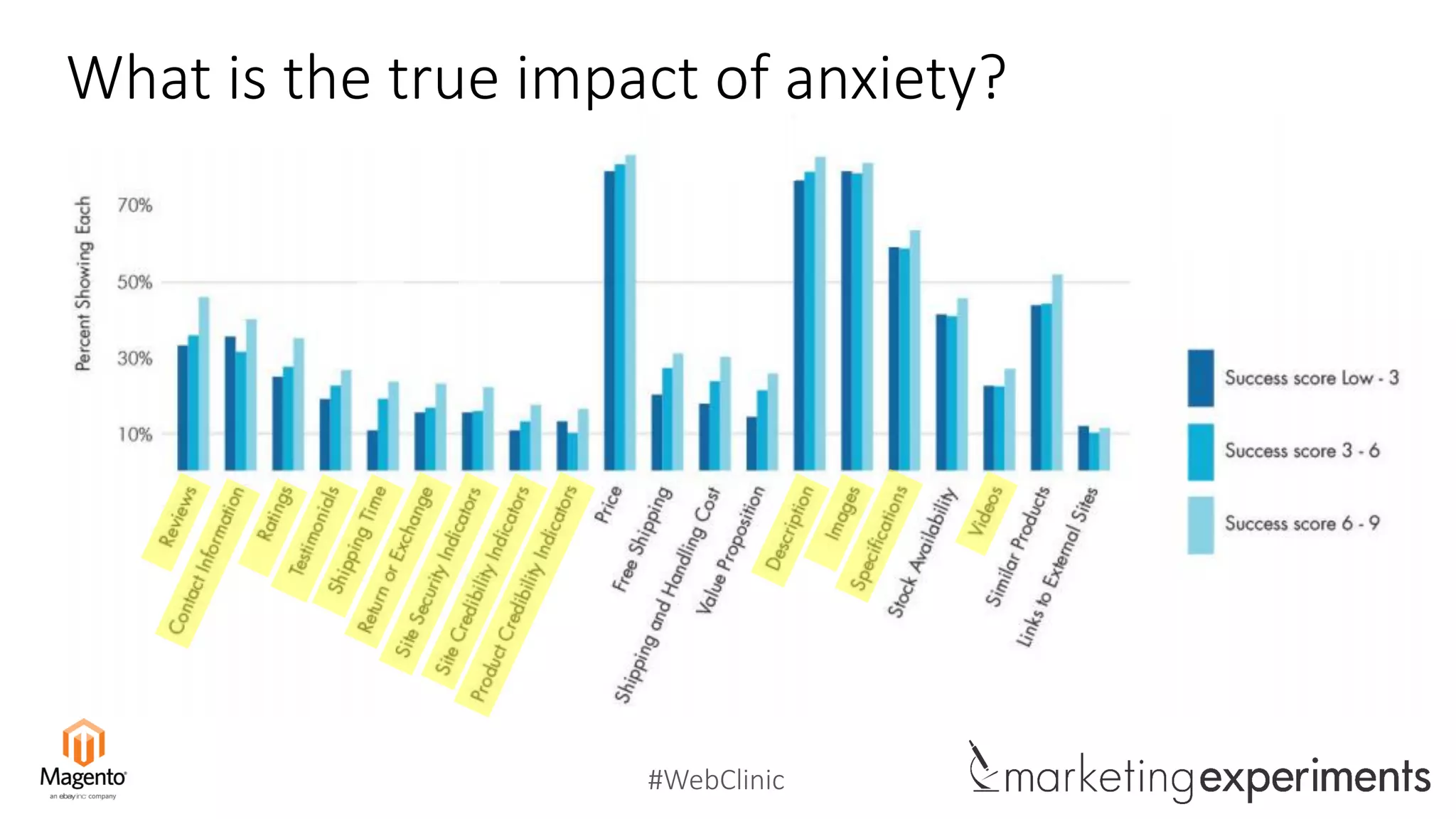
Which small changes have the most
impact on our product pages?
#WebClinic
What is the true impact of anxiety?
#WebClinic
What is the true impact of anxiety?
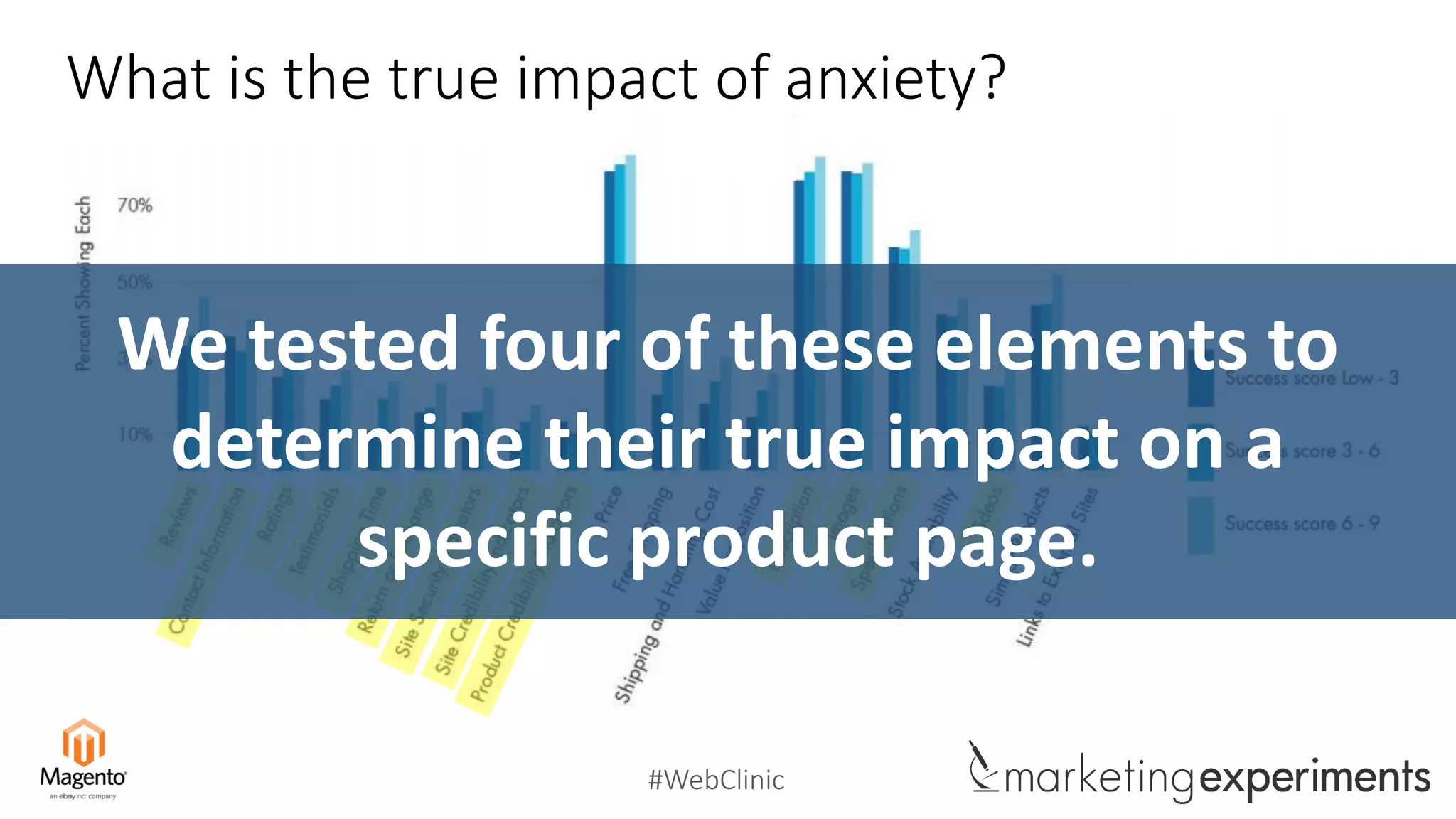
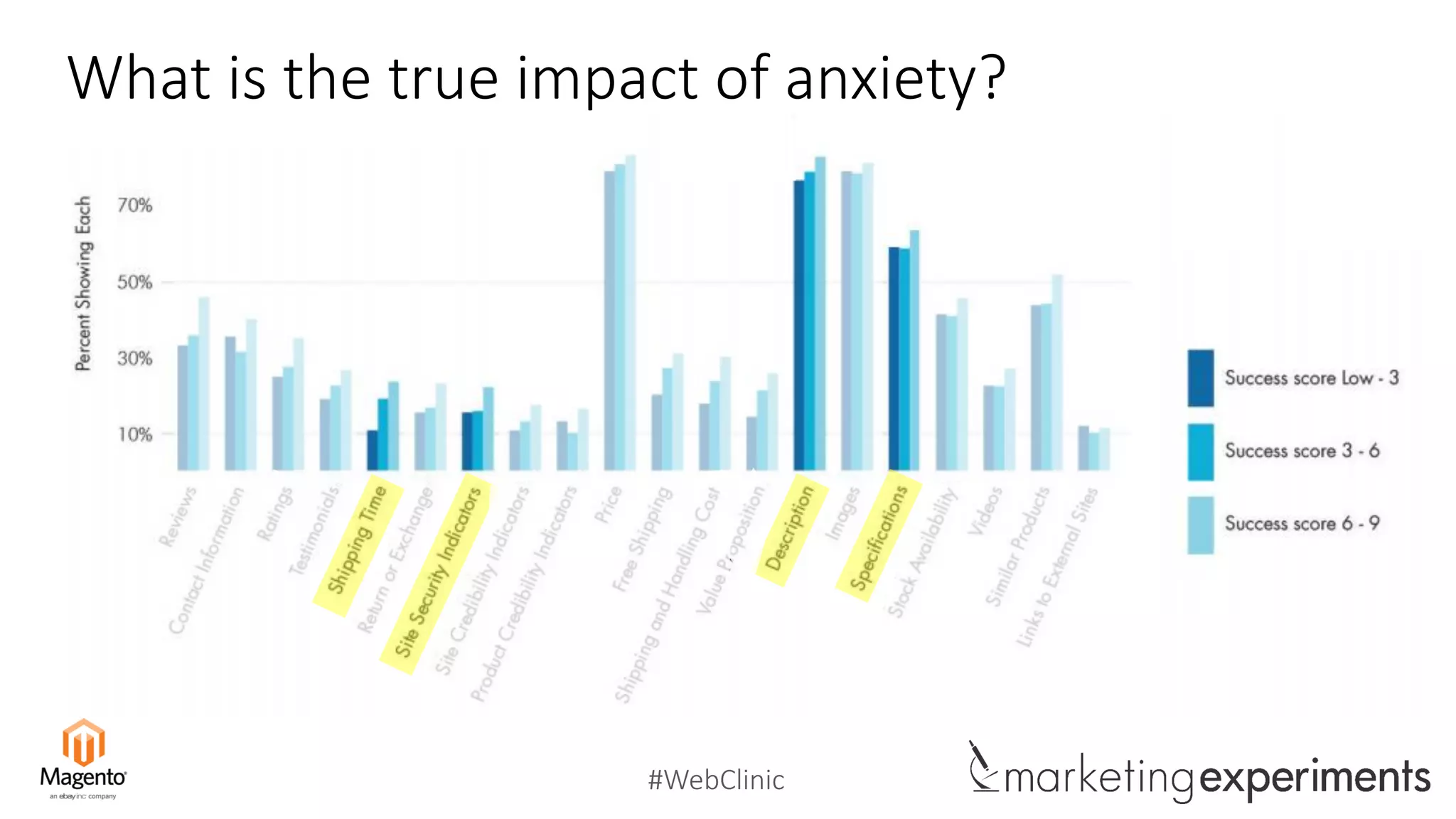
We tested four of these elements to
determine their true impact on a
specific product page.
#WebClinic
What is the true impact of anxiety?
#WebClinic
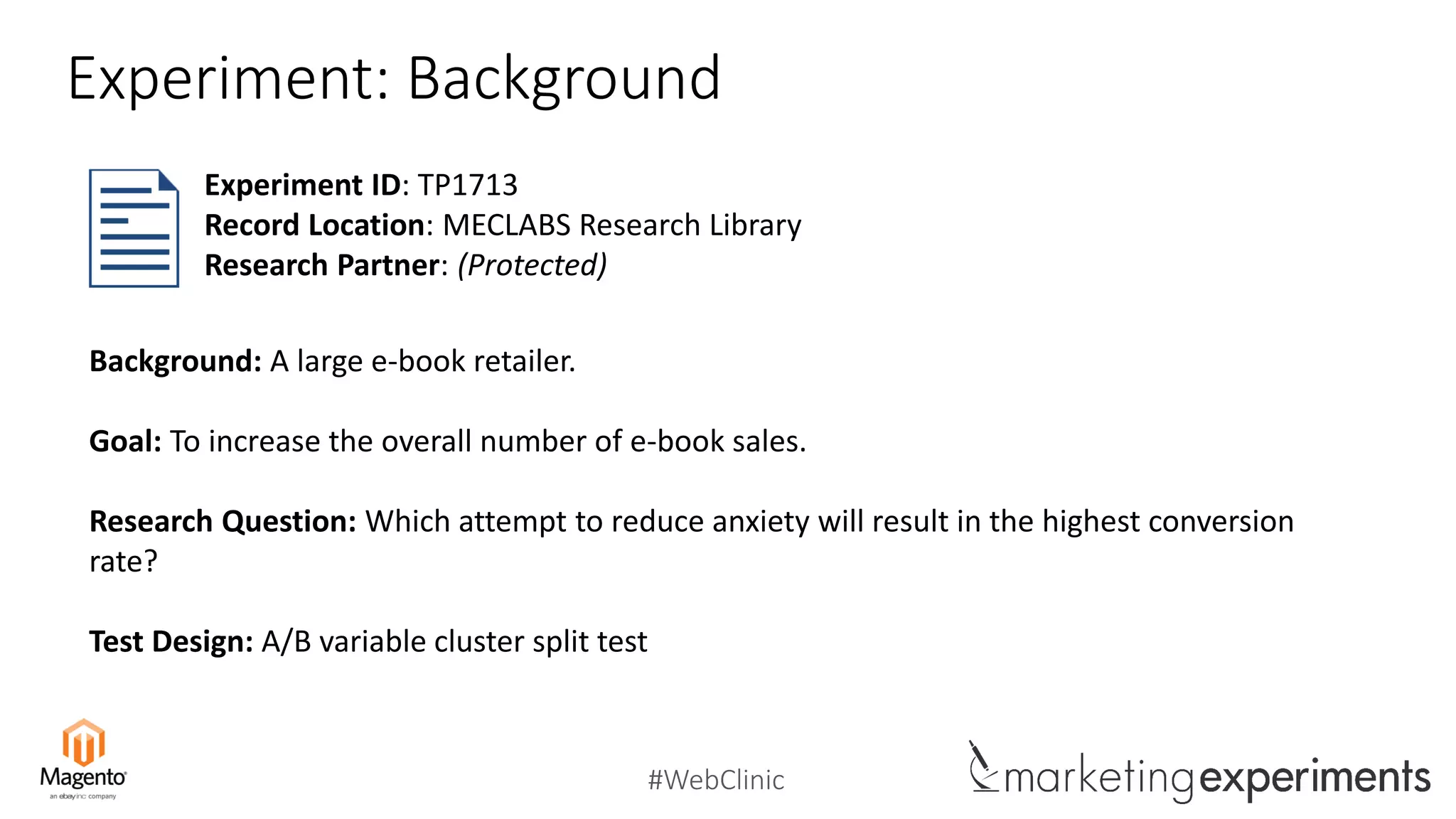
Experiment: Background
Background: A large e-book retailer.
Goal: To increase the overall number of e-book sales.
Research Question: Which attempt to reduce anxiety will result in the highest conversion
rate?
Test Design: A/B variable cluster split test
Experiment ID: TP1713
Record Location: MECLABS Research Library
Research Partner: (Protected)
#WebClinic
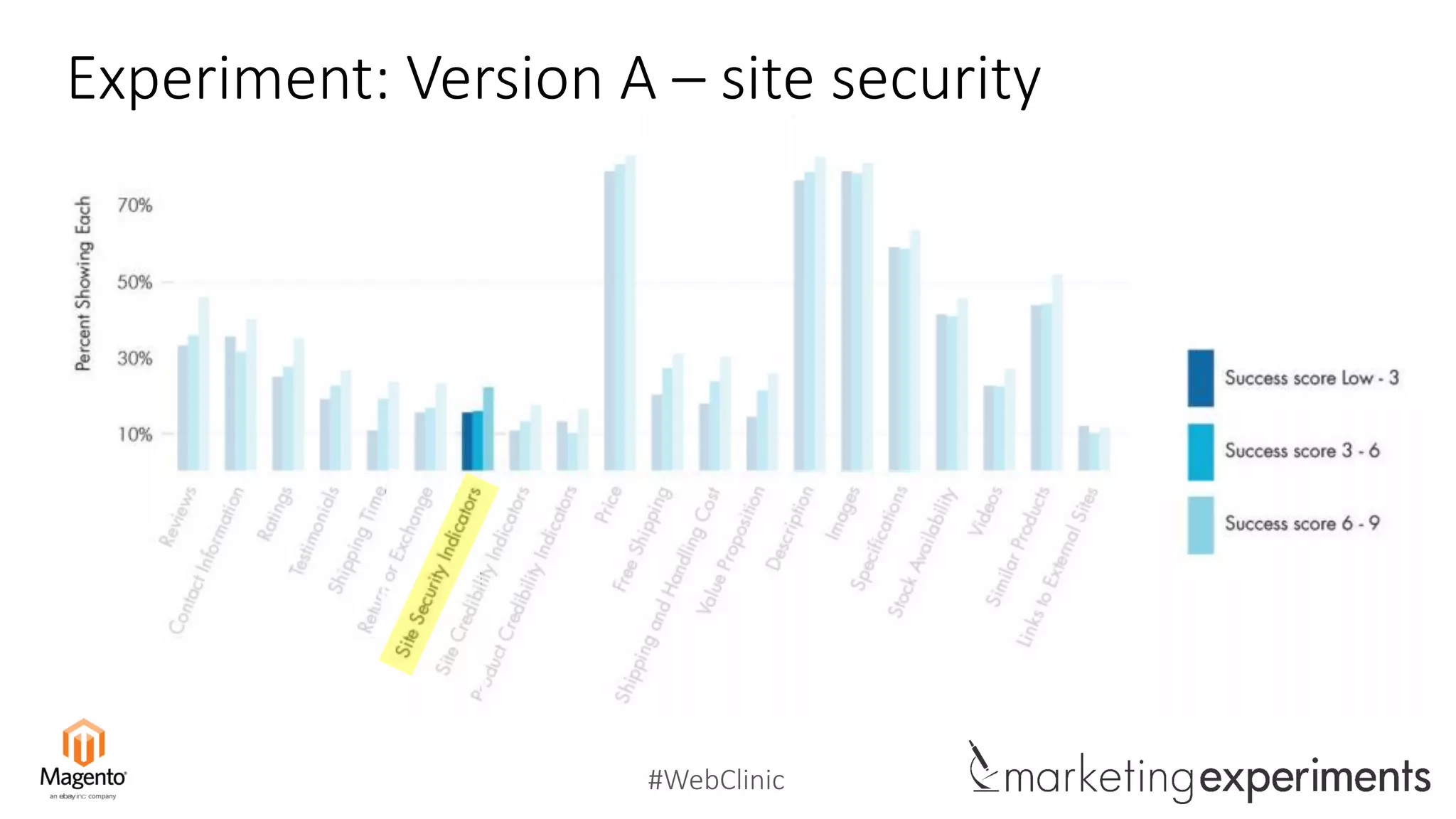
Experiment: Version A – site security
#WebClinic
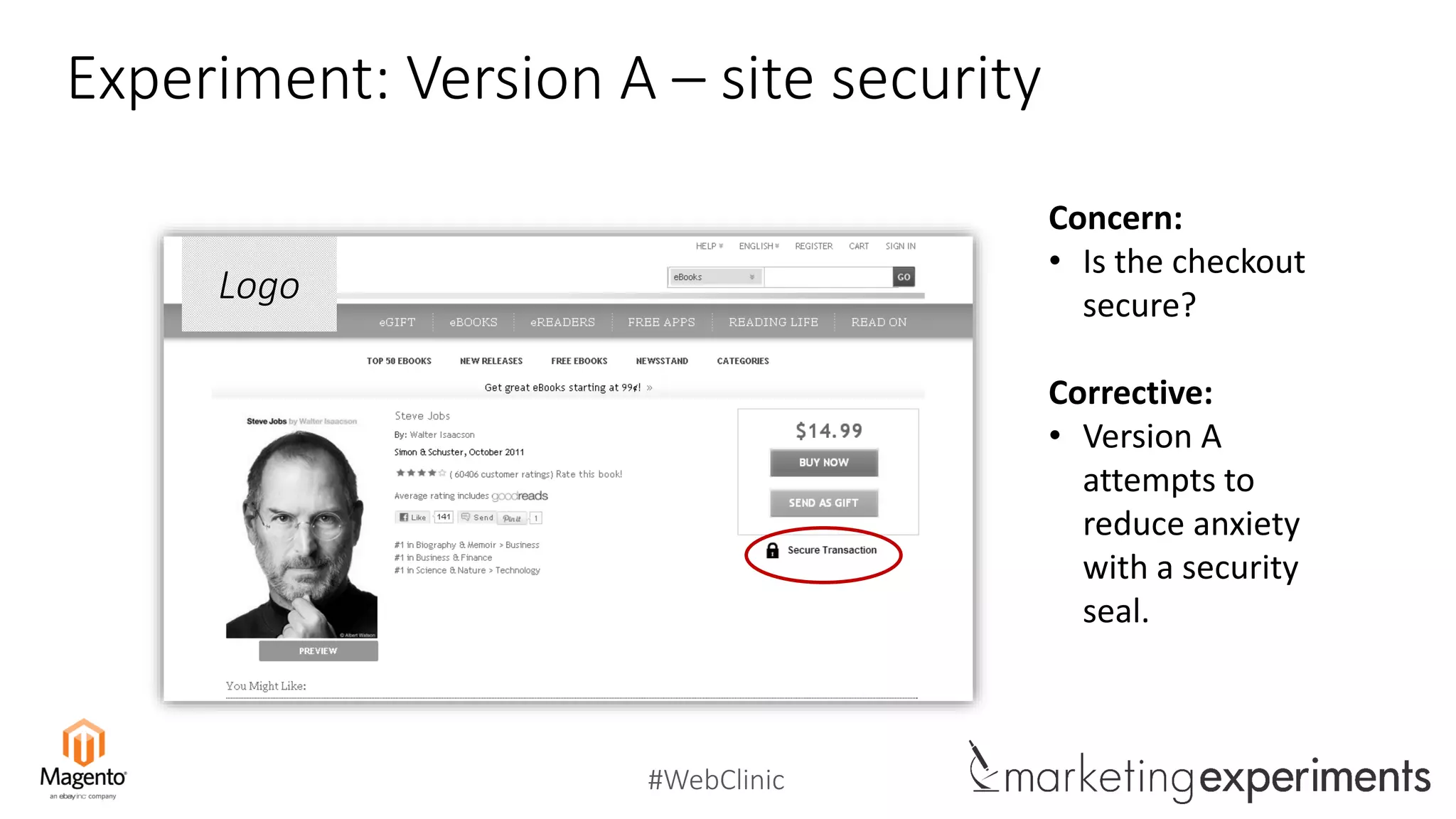
Experiment: Version A – site security
Concern:
• Is the checkout
secure?
Corrective:
• Version A
attempts to
reduce anxiety
with a security
seal.
Logo
#WebClinic
Experiment: Version B – [product] specifications
#WebClinic
Experiment: Version B – [product] specifications
Logo
Concern:
• Is my device
compatible?
Corrective:
• Version B
illustrates
compatibility
with all devices.
#WebClinic
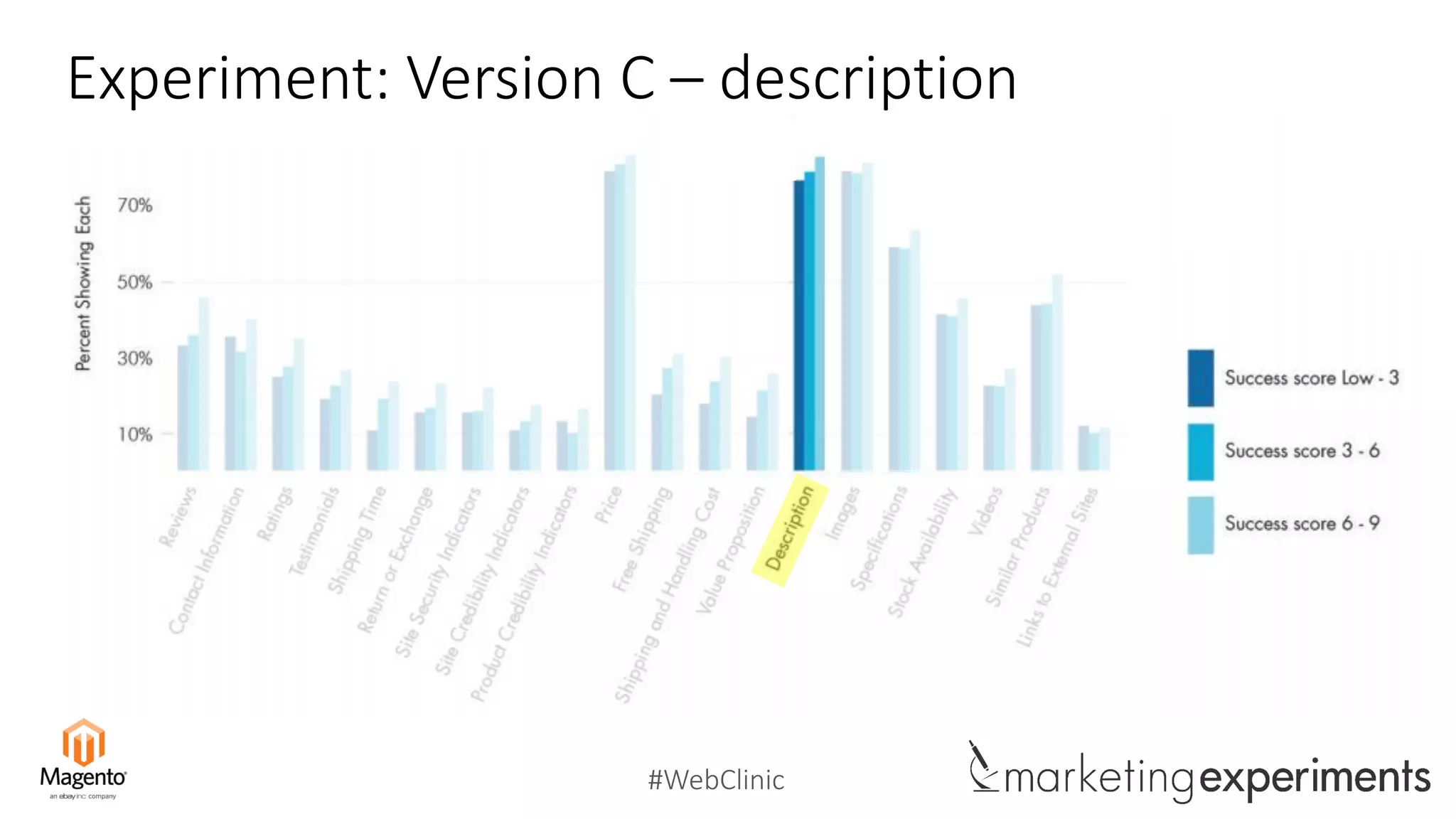
Experiment: Version C – description
#WebClinic
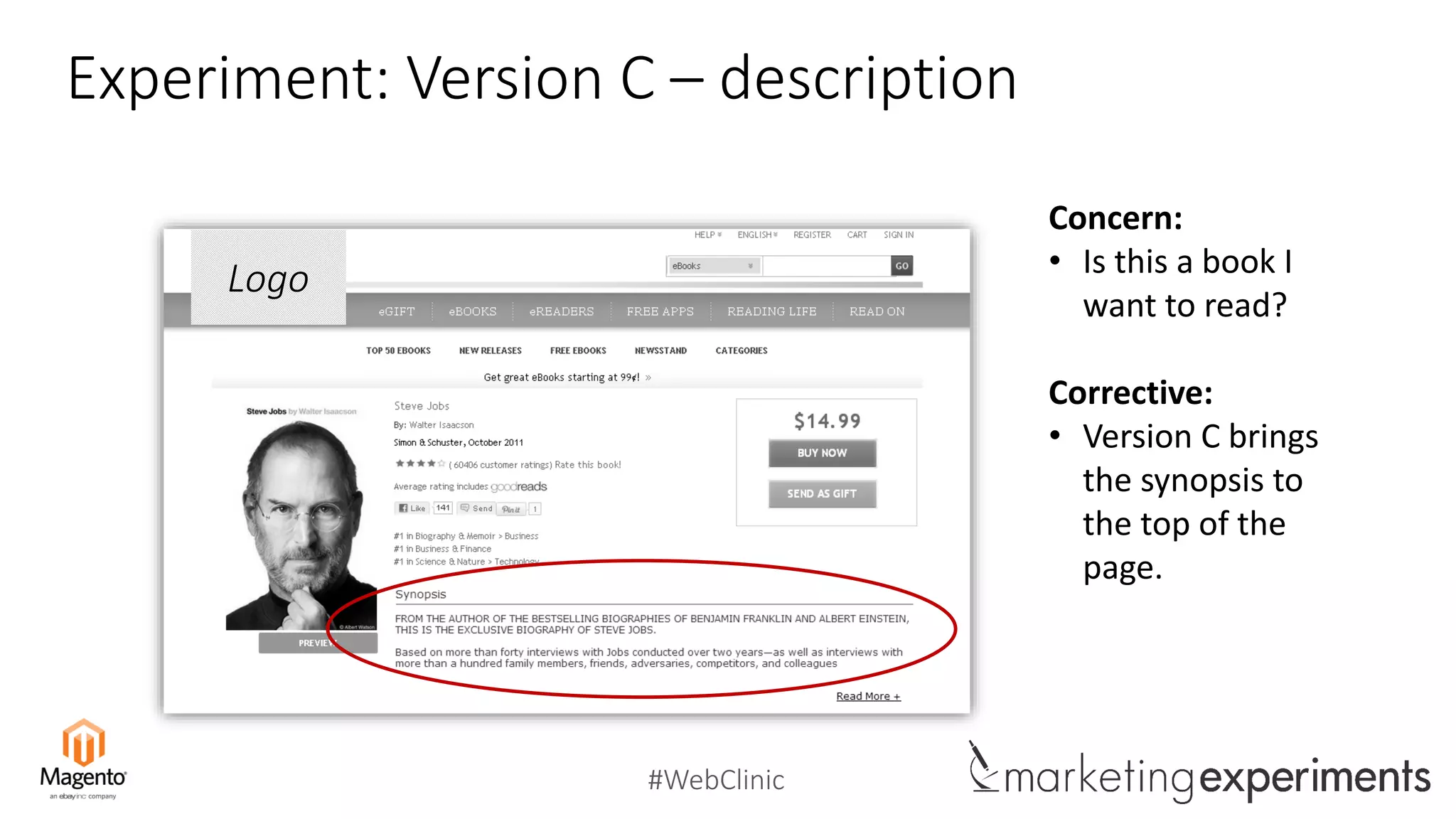
Experiment: Version C – description
Logo
Concern:
• Is this a book I
want to read?
Corrective:
• Version C brings
the synopsis to
the top of the
page.
#WebClinic
Experiment: Version D – shipping [access] time
#WebClinic
Experiment: Version D – shipping [access] time
Logo
Concern:
• Can I read this
immediately?
Corrective:
• Version D
highlights the
short time it
takes to begin
reading.
#WebClinic
Experiment : Side by side
Logo Logo
LogoLogo
Version A: Site security Version B: [Product] specifications
Version D: Shipping [access] timeVersion C: Description
#WebClinic
Experiment: Results
Relative increase in conversion78%Moving the product description up on the page increased conversion by 78%.
Design Conversion Rate % Relative Change
Control 1.92% –
Version A: Site Security 2.56% 33.4%
Version B: [Product] Specification 2.29% 19.1%
Version C: Description 3.42% 78.0%
Version D: Shipping [Access] Time 2.35% 22.5%
What can this experiment teach us
about anxiety that we can apply to
our product pages?
#WebClinic
What we discovered
A
B
D
C
10%
30%
50%
70%
ConversionRate
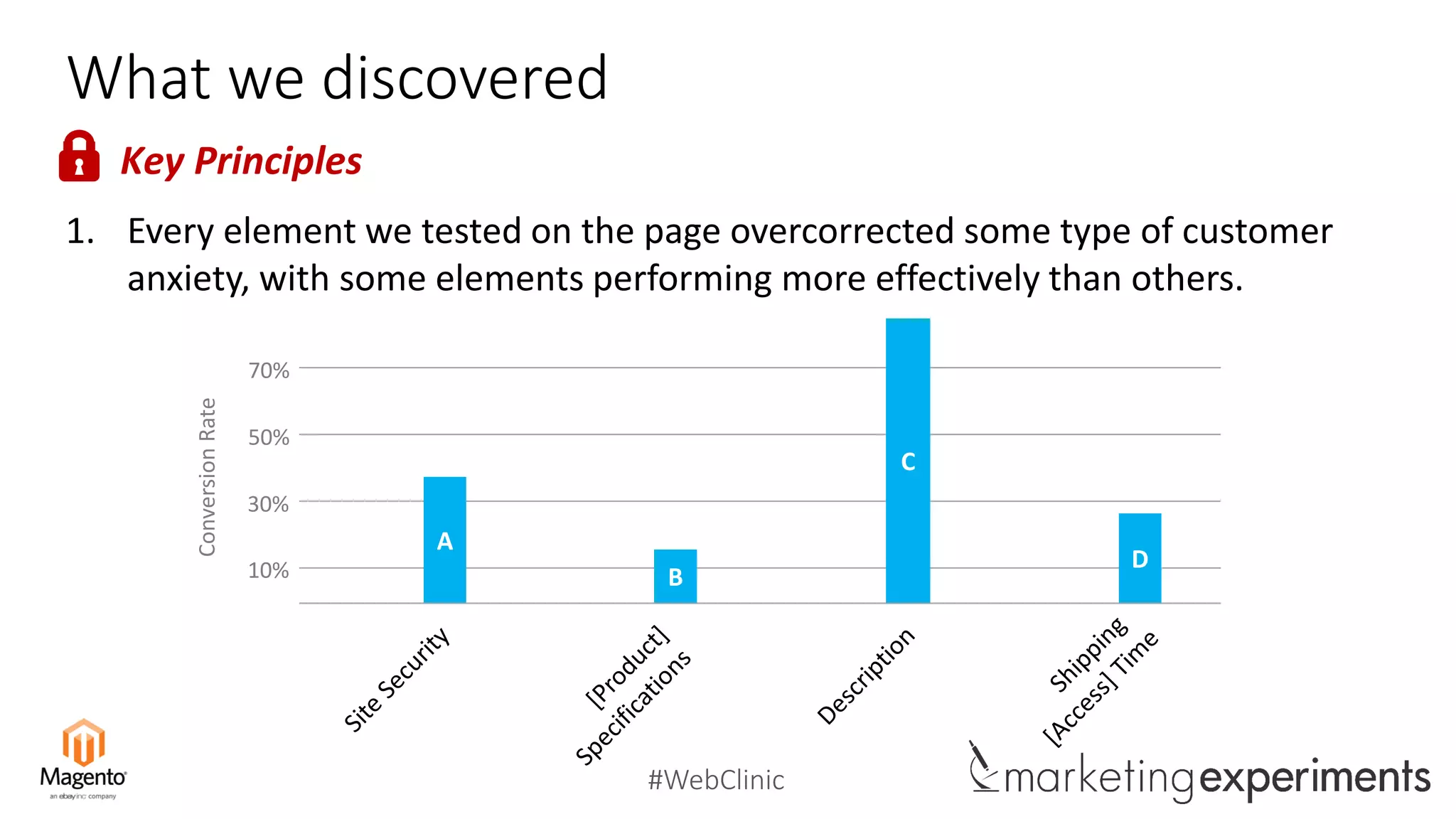
1. Every element we tested on the page overcorrected some type of customer
anxiety, with some elements performing more effectively than others.
Key Principles
#WebClinic
What we discovered
10%
30%
50%
70%
ConversionRate
D
B
A
C
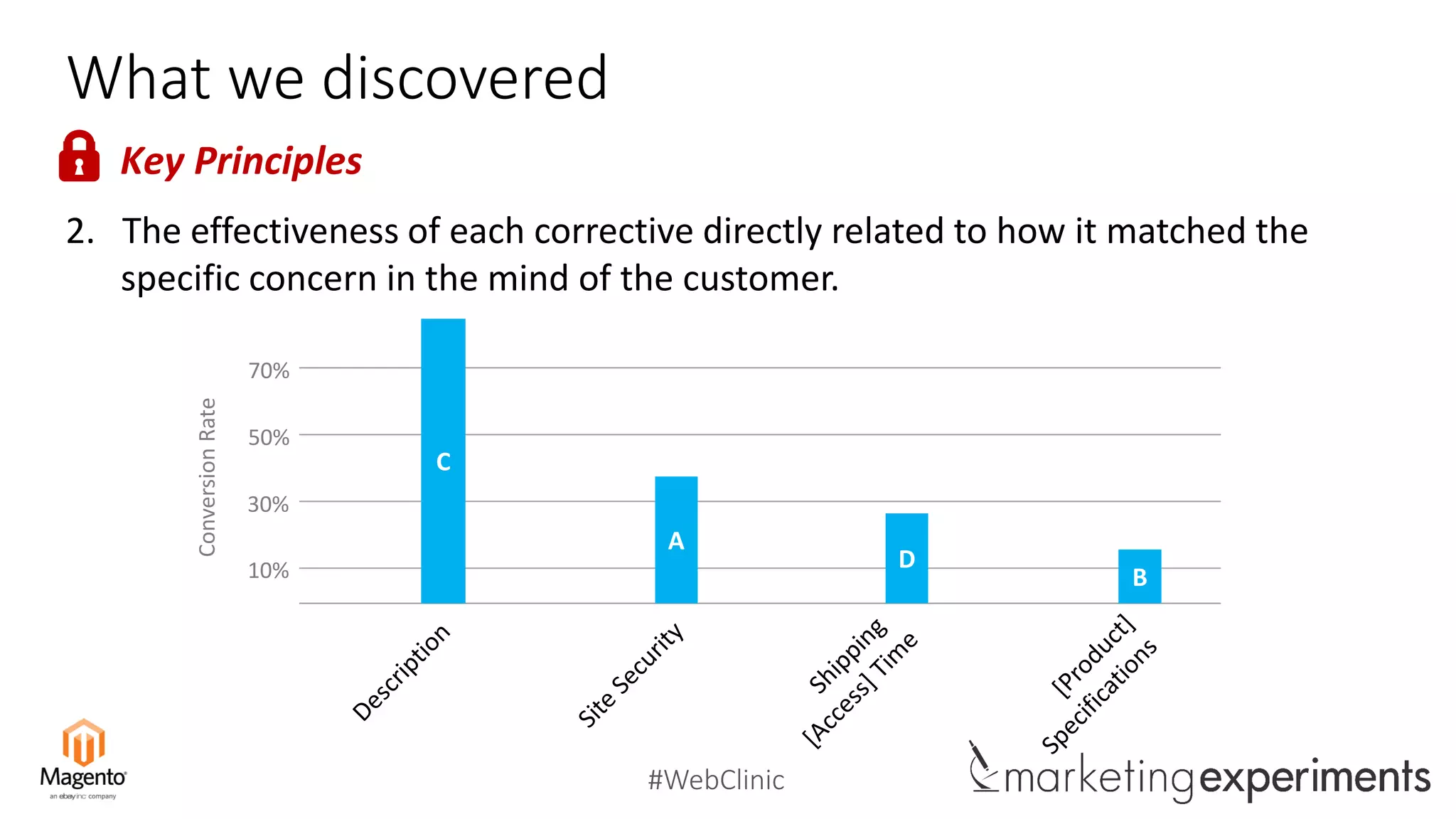
2. The effectiveness of each corrective directly related to how it matched the
specific concern in the mind of the customer.
Key Principles
#WebClinic
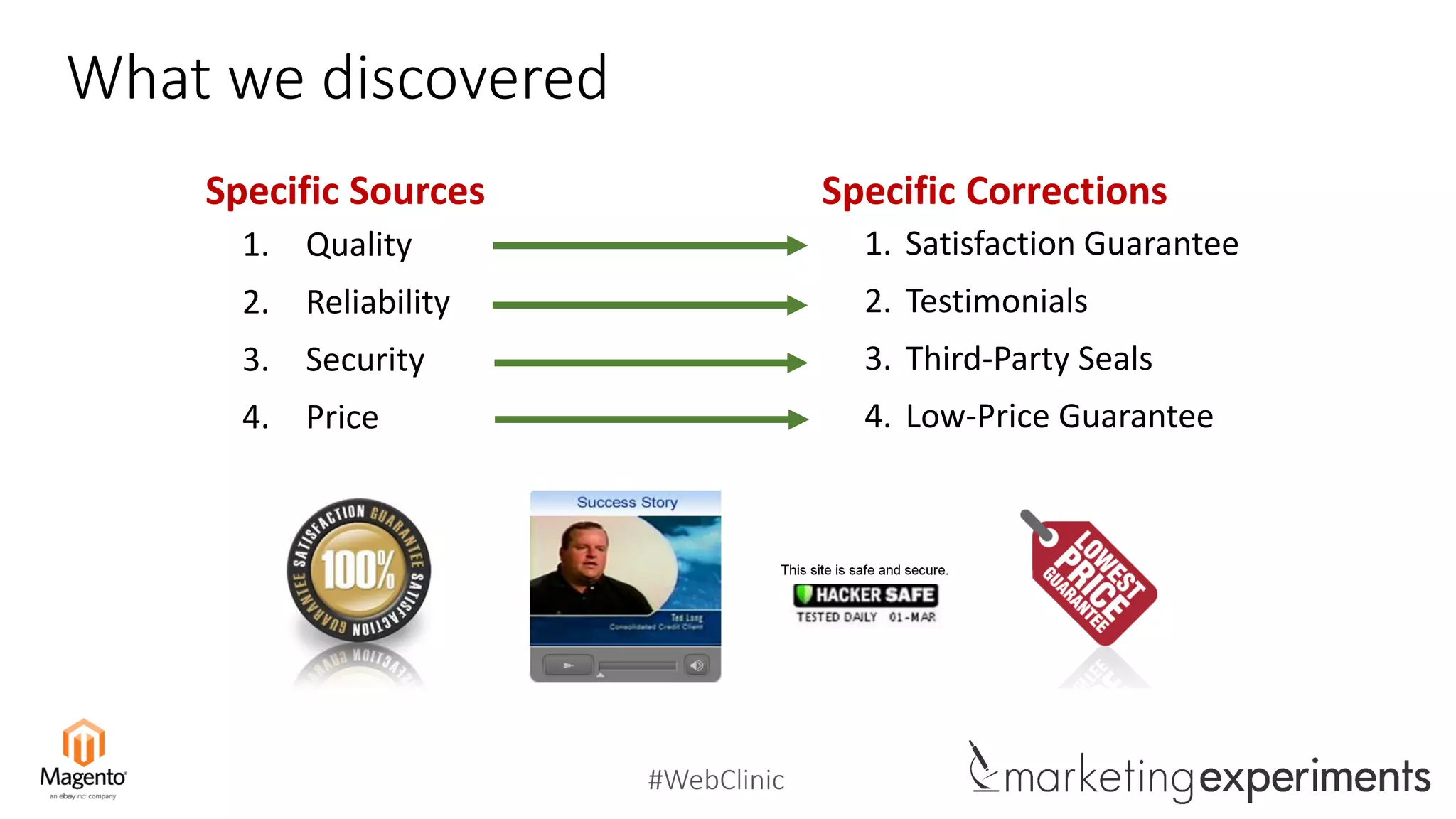
1. Quality
2. Reliability
3. Security
4. Price
Specific Corrections
1. Satisfaction Guarantee
2. Testimonials
3. Third-Party Seals
4. Low-Price Guarantee
Specific Sources
What we discovered
#WebClinic
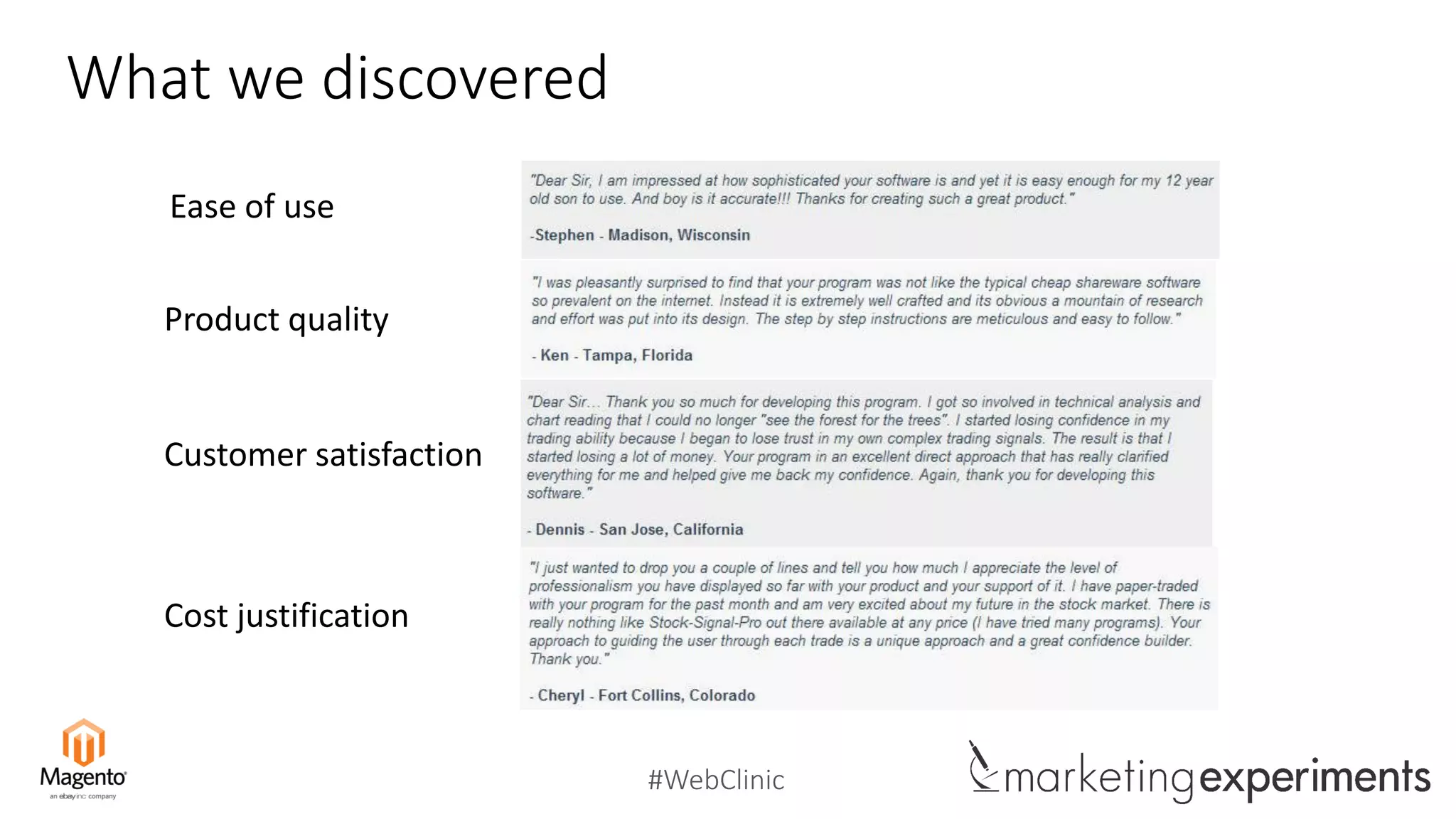
Ease of use
Product quality
Customer satisfaction
Cost justification
What we discovered
#WebClinic
What we discovered
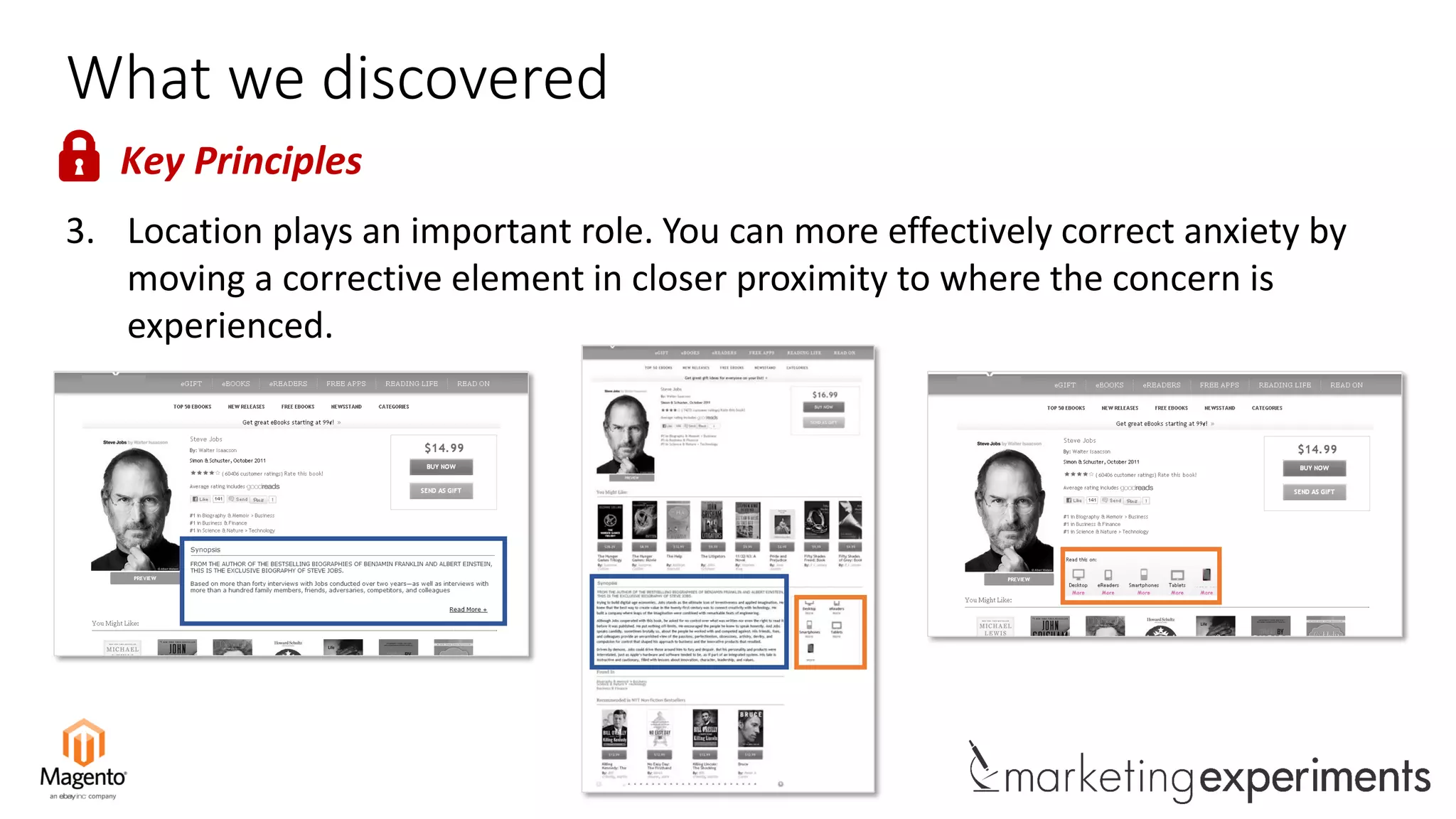
3. Location plays an important role. You can more effectively correct anxiety by
moving a corrective element in closer proximity to where the concern is
experienced.
Key Principles
#WebClinic
Summary
1. Anxiety is lethal to conversion, and it can often be corrected with a simple,
yet strategic, change to a product page element.
2. The effectiveness of an anxiety corrective is dependent on two essential
factors:
• Specificity – How specific is the corrective to the source of anxiety?
• Proximity – How close is the corrective to the moment of concern?
Live optimization
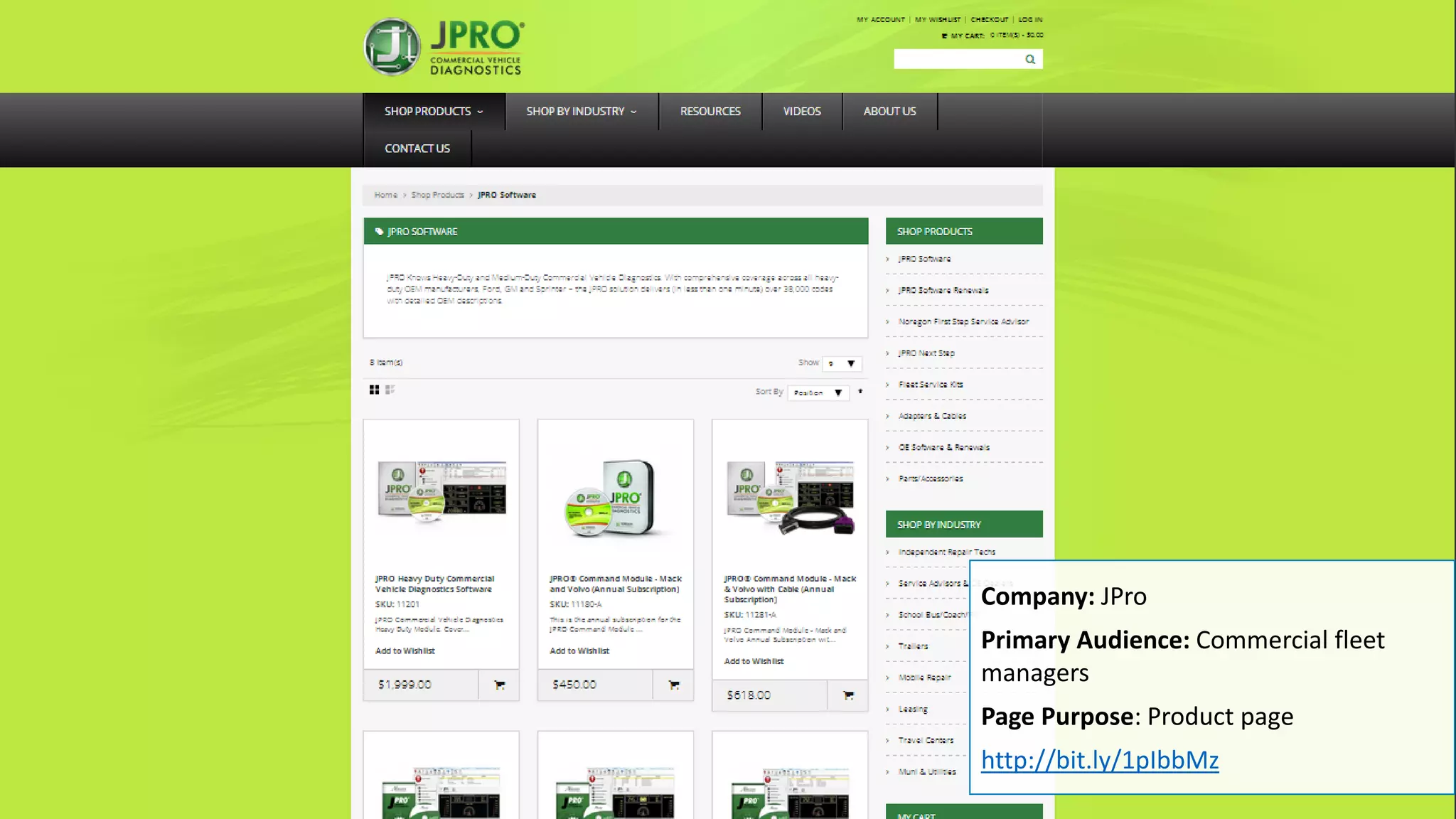
Company: JPro
Primary Audience: Commercial fleet
managers
Page Purpose: Product page
http://bit.ly/1pIbbMz
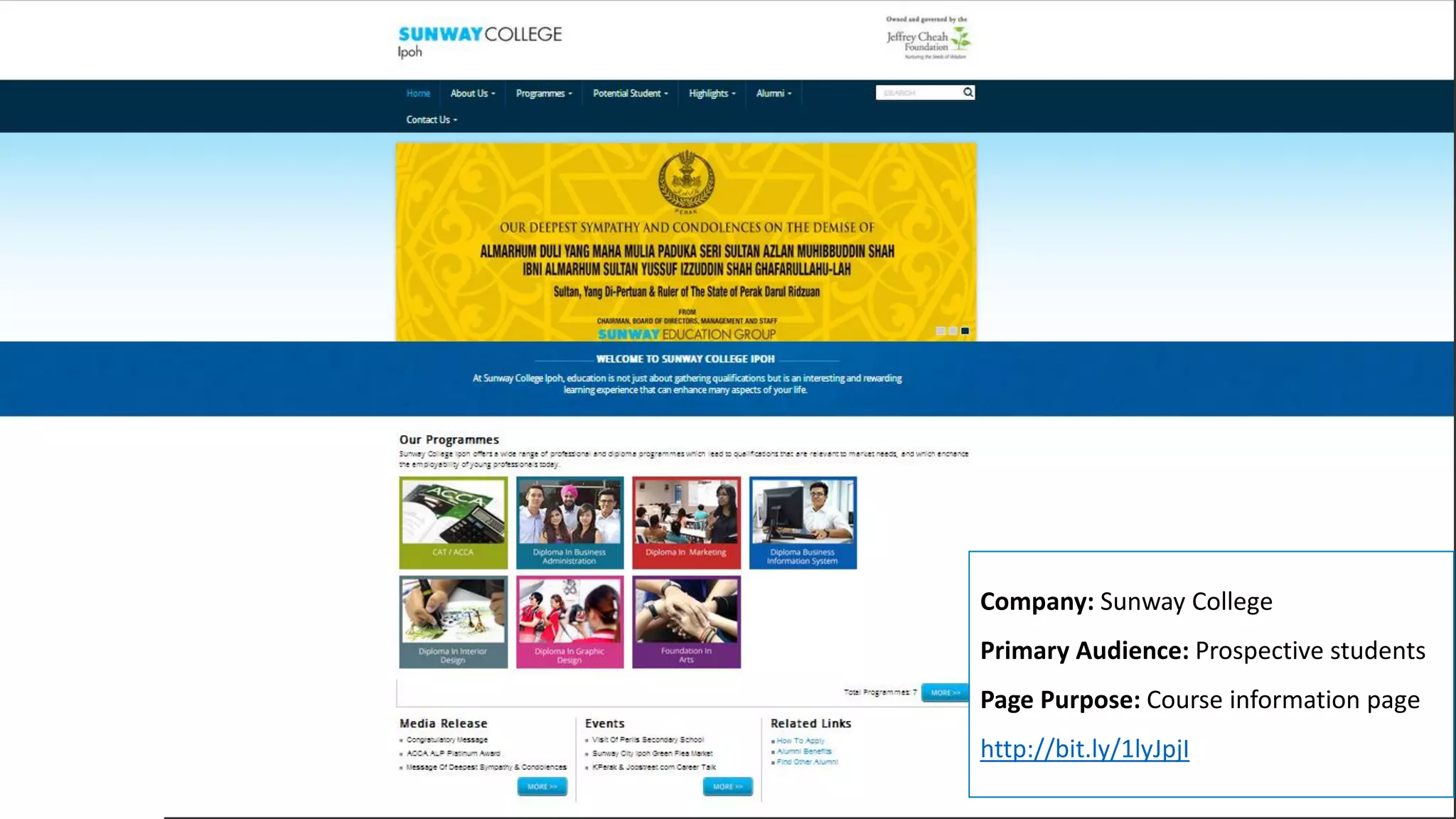
Company: Sunway College
Primary Audience: Prospective students
7
Page Purpose: Course information page
http://bit.ly/1lyJpjI
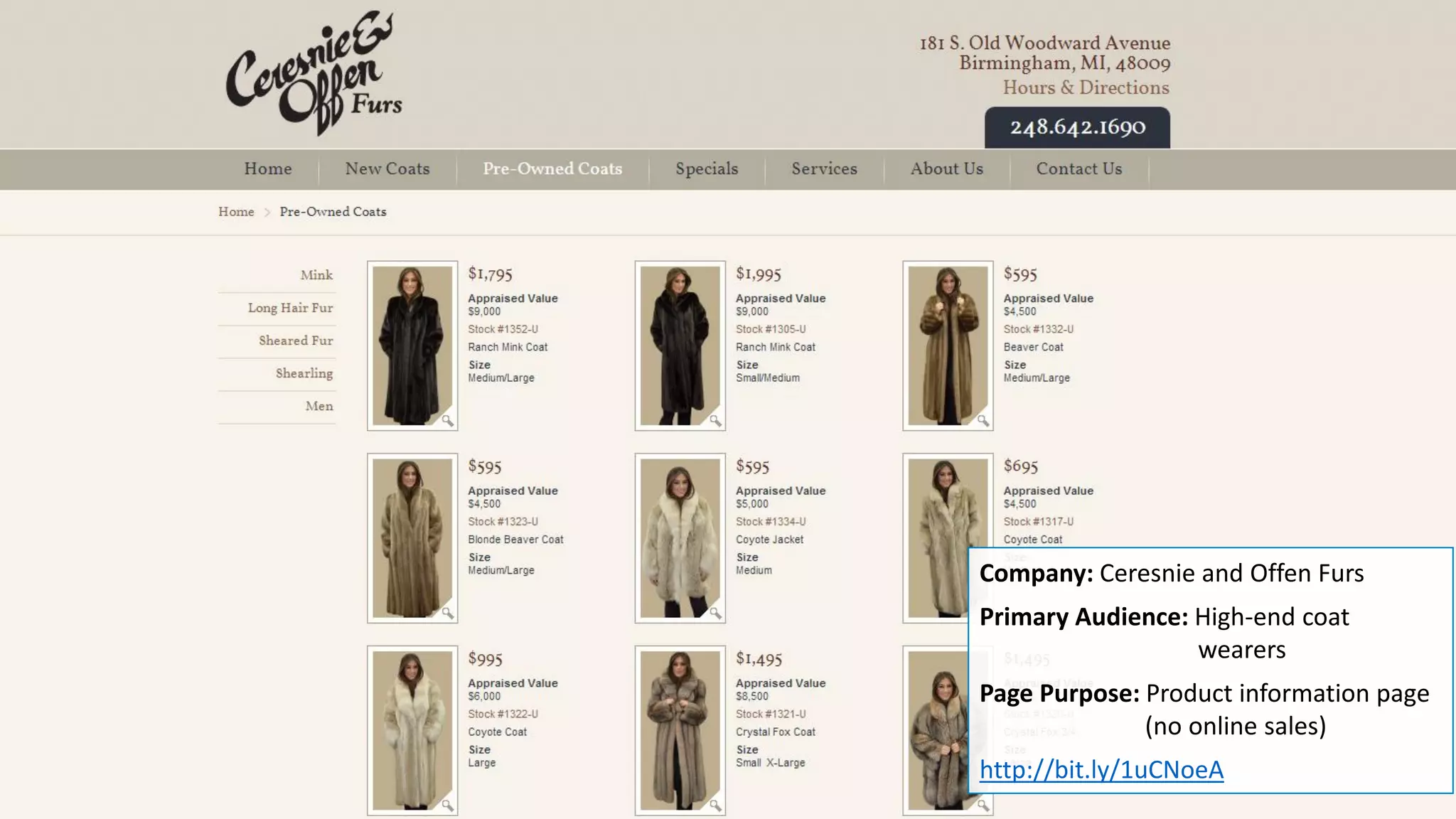
Company: Ceresnie and Offen Furs
Primary Audience: High-end coat
wearers
Page Purpose: Product information page
(no online sales)
http://bit.ly/1uCNoeA
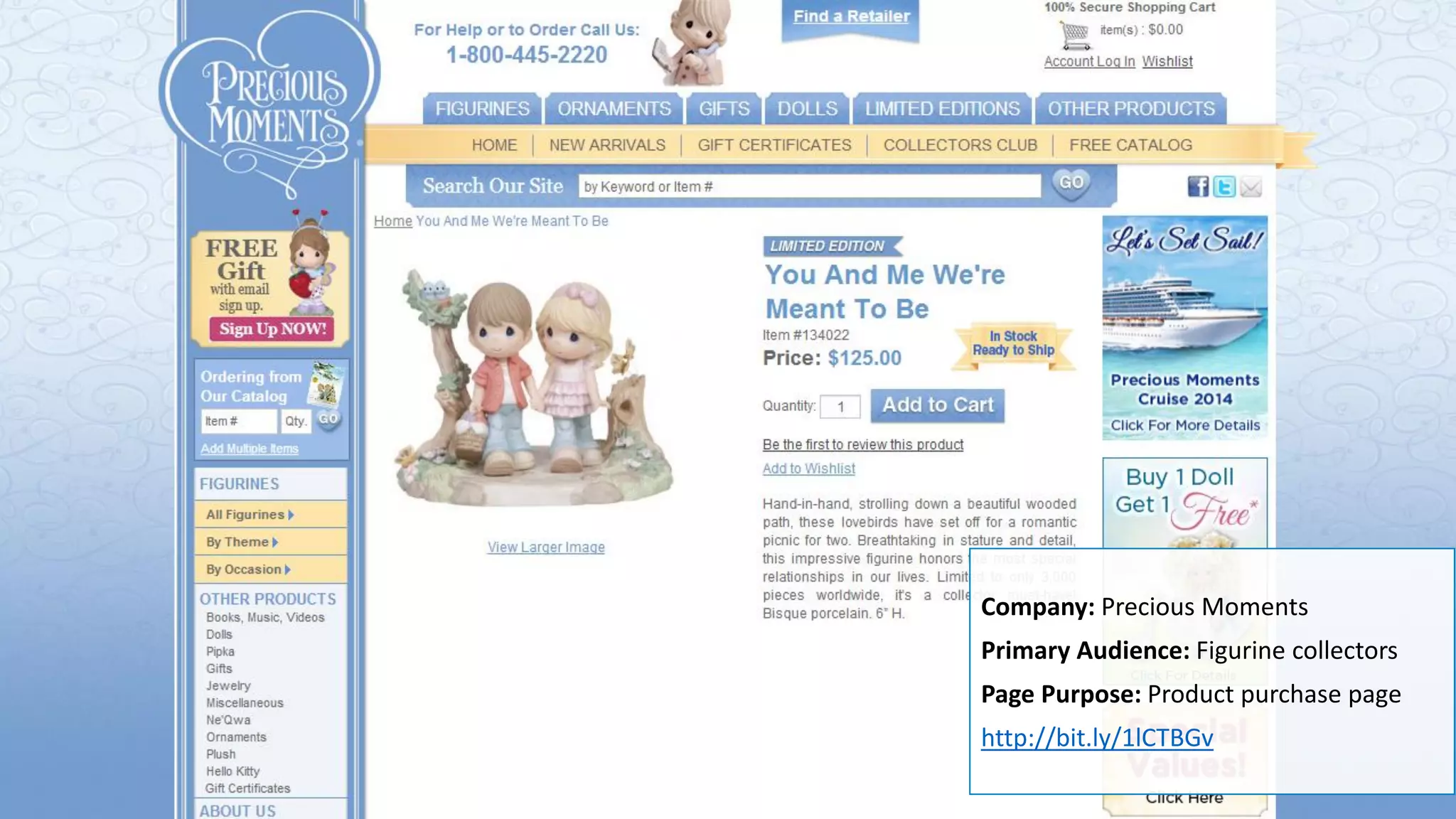
Company: Precious Moments
Primary Audience: Figurine collectors
Page Purpose: Product purchase page
http://bit.ly/1lCTBGv
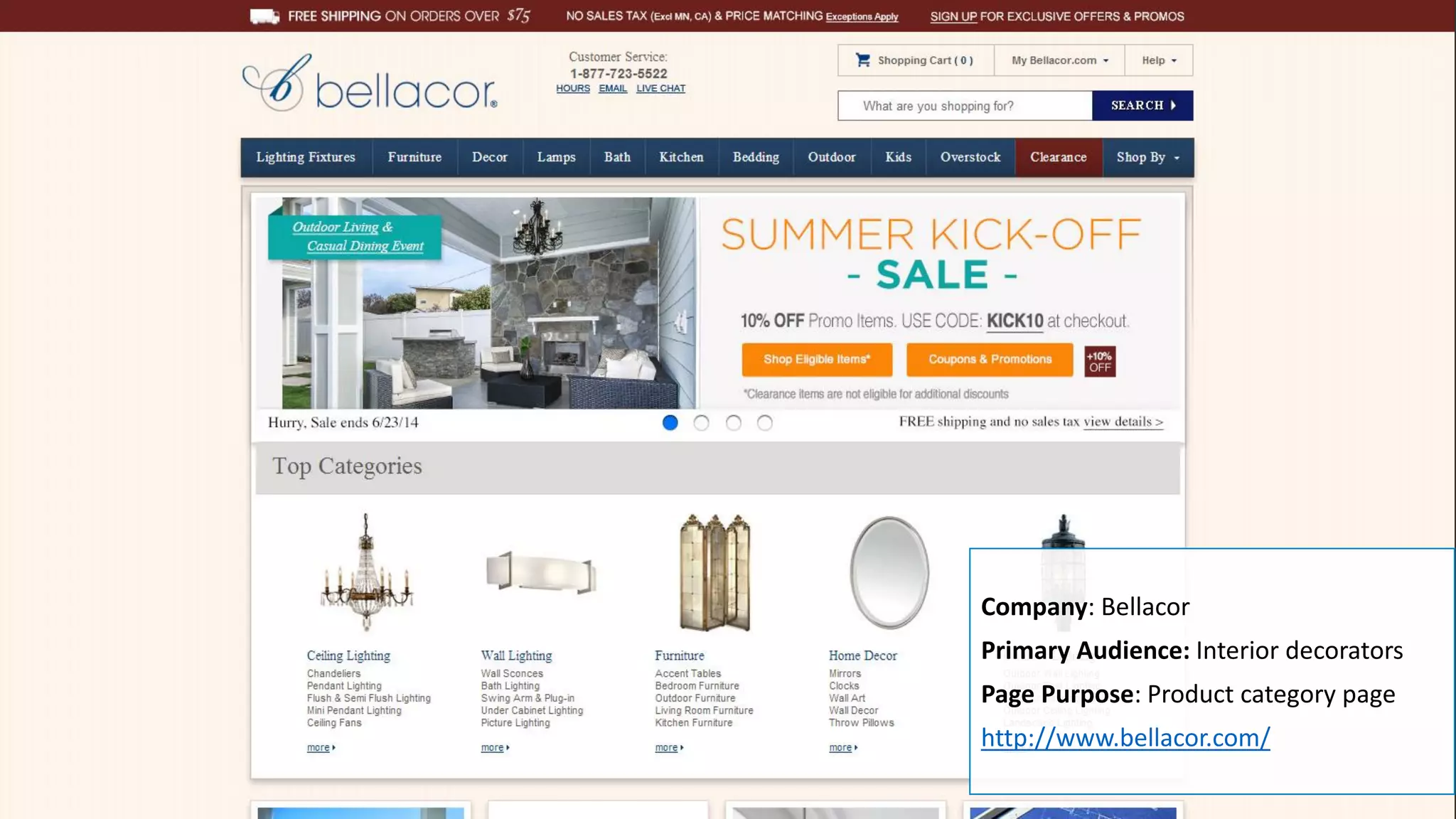
Company: Bellacor
Primary Audience: Interior decorators
Page Purpose: Product category page
http://www.bellacor.com/
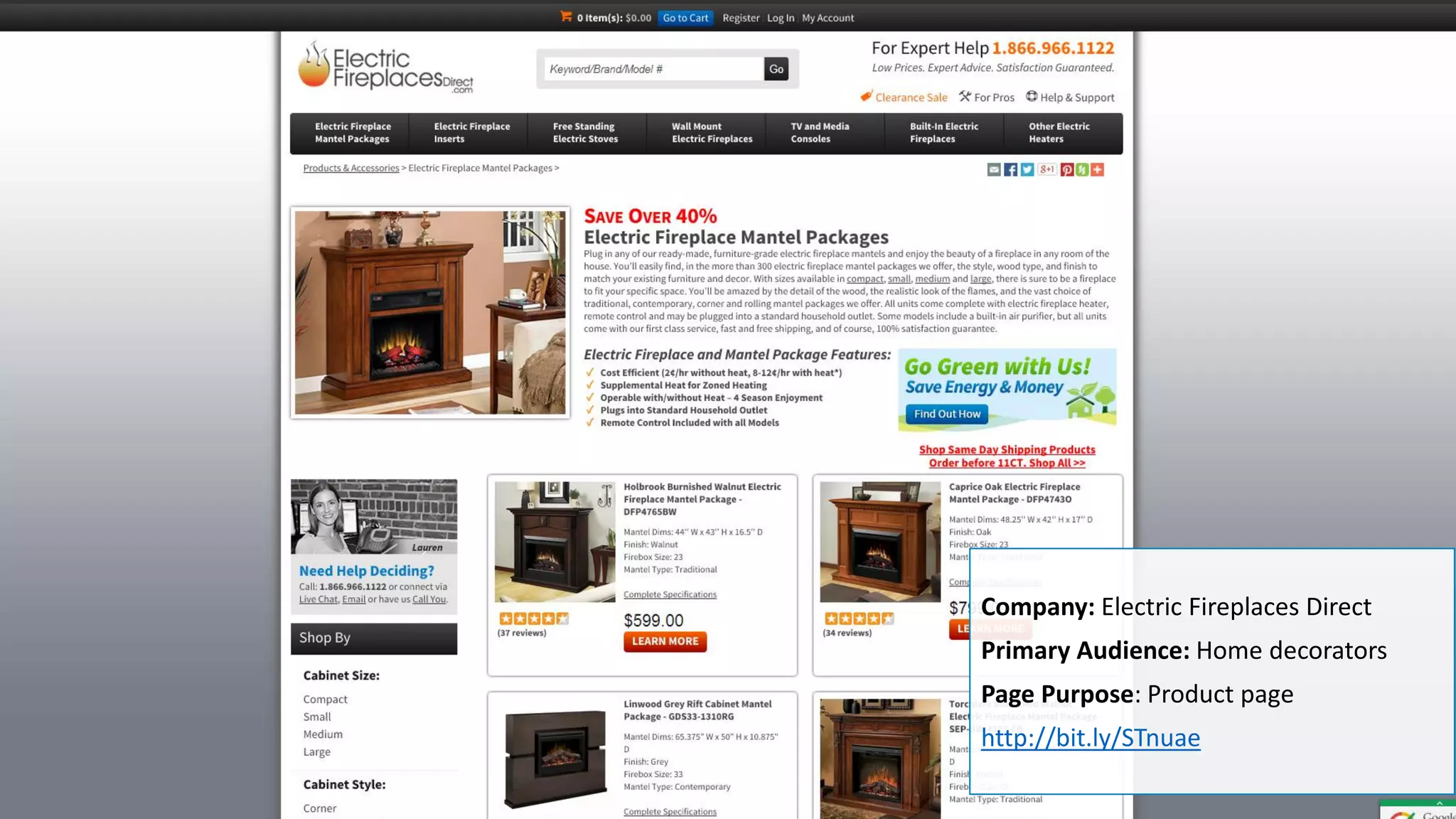
Company: Electric Fireplaces Direct
Primary Audience: Home decorators
Page Purpose: Product page
http://bit.ly/STnuae
#WebClinic
Next Clinic: Background
Background: A large audio technology and engineering company offering professional and personal
audio products
Goal: To increase email clickthrough
Research Question: Which email approach will result in the highest clickthrough rate?
Test Design: A/B split test
Experiment ID: TP20173
Record Location: MECLABS Research Library
Research Partner: (Protected)
#WebClinic
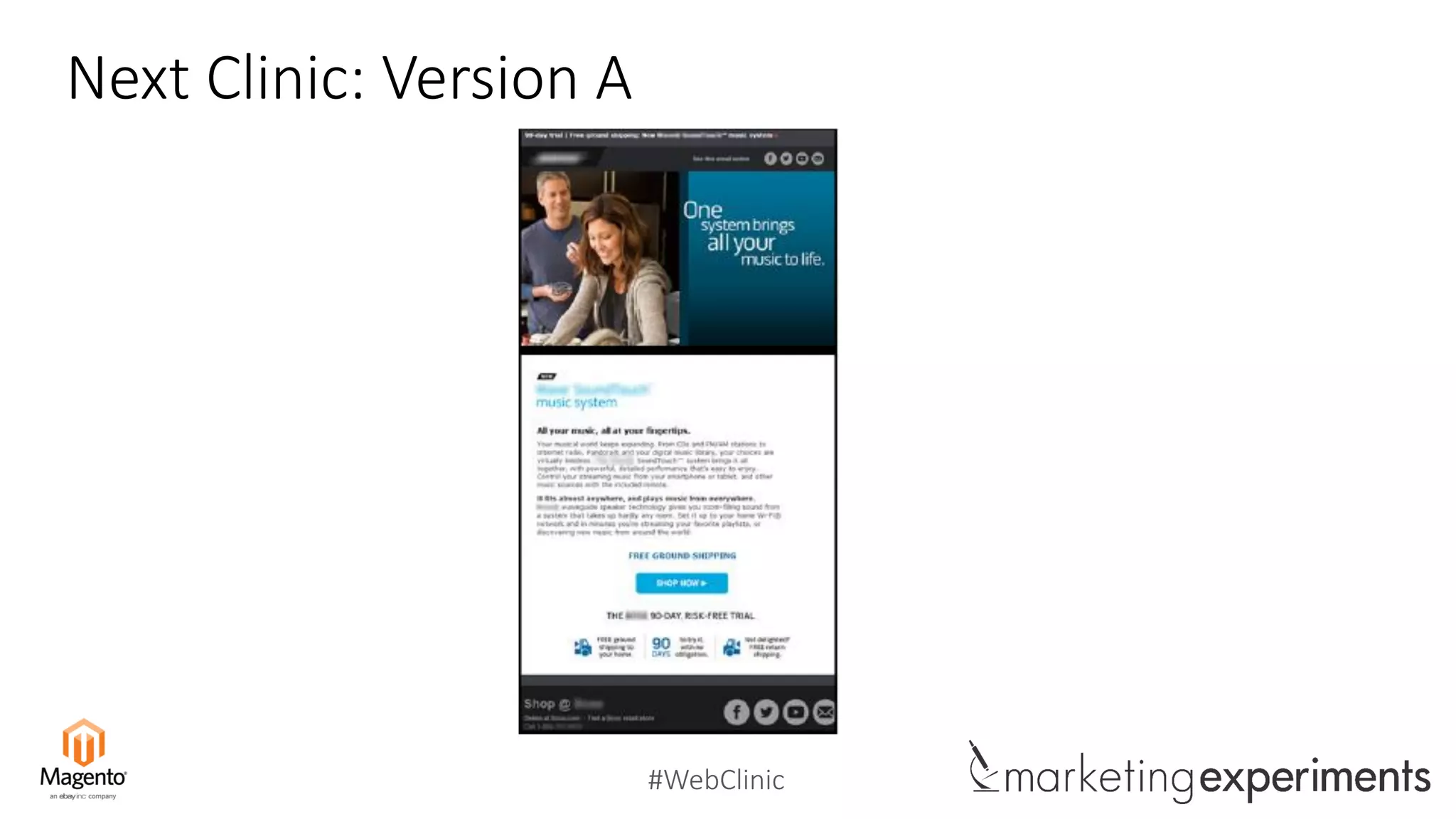
Next Clinic: Version A
#WebClinic
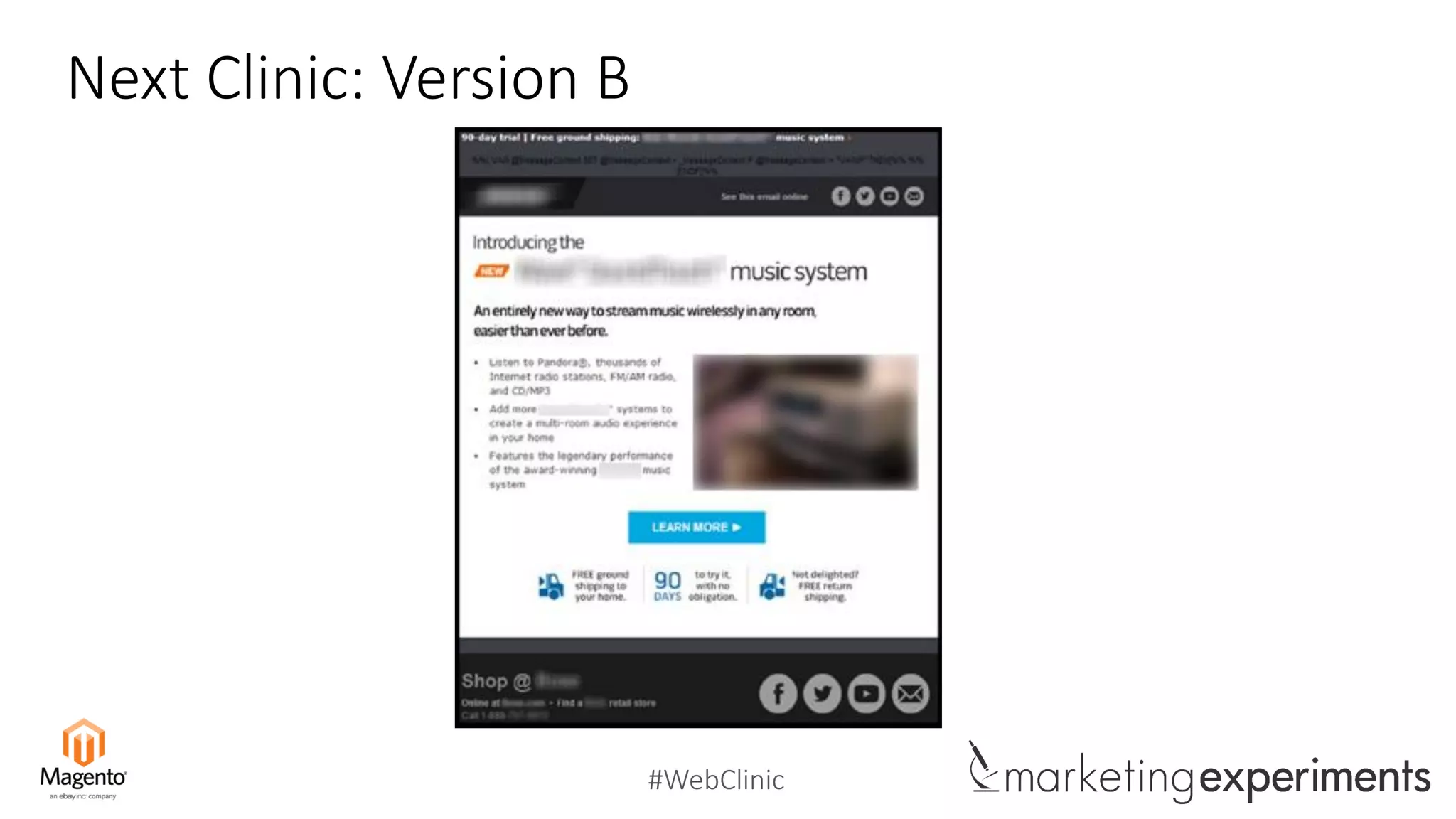
Next Clinic: Version B
#WebClinic
Next Clinic: Version C
#WebClinic
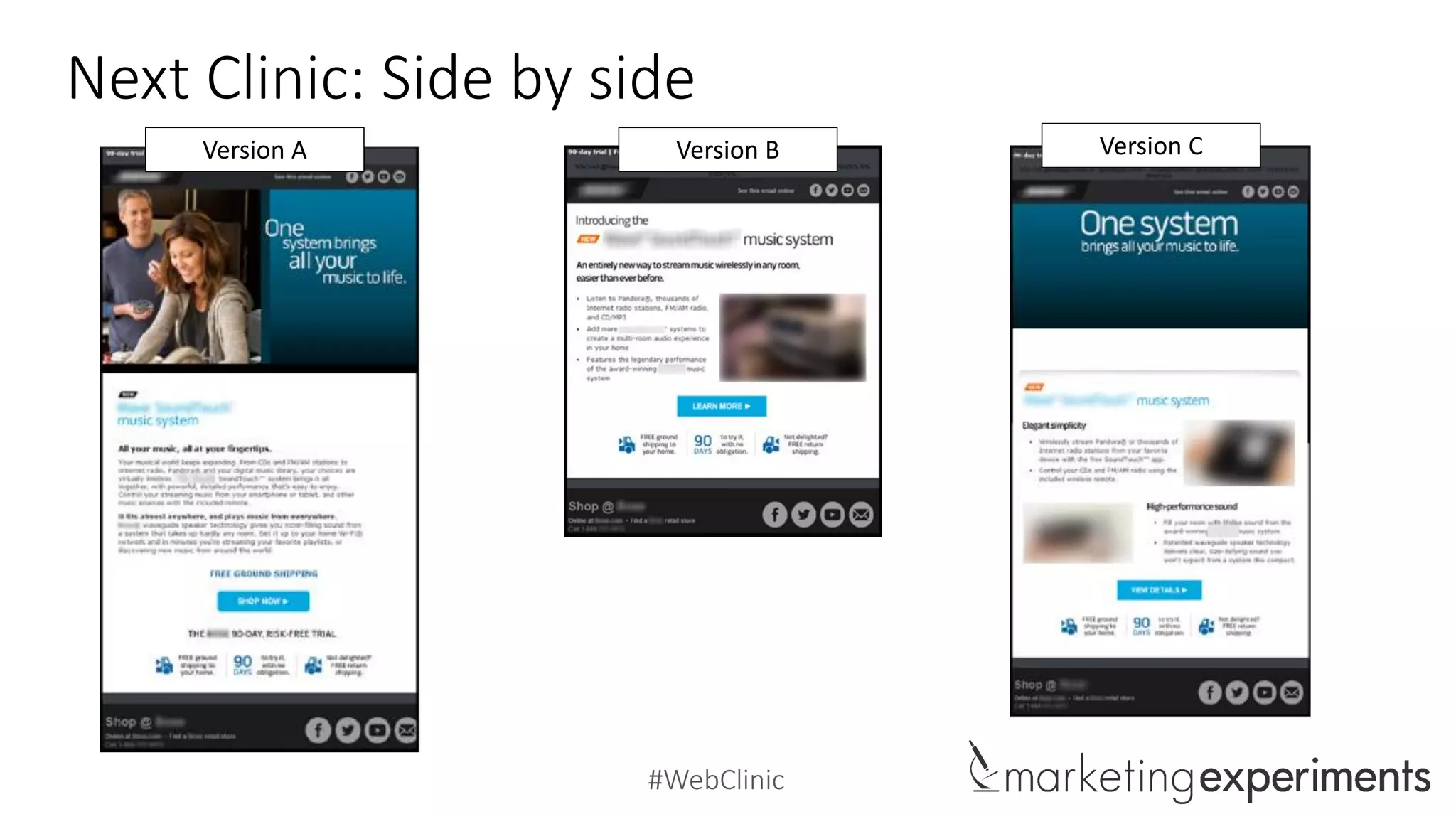
Next Clinic: Side by side
Version A Version B Version C
#WebClinic
Live July 9 at 4:00 p.m. EDT
• What changes were implemented in the copy
• How to identify the right call-to-action for an email send
• How you can apply the principles from this clinic to your own email
marketing efforts
Join the next live 35-minute Web clinic
to discover:
Next Clinic: Email Copy Refined
To join live, register at the link below:
MarketingExperiments.com/EmailCopy
Email Copy Refined
How a change in copy approach led to a
25% relative increase in clickthrough rate
#WebClinic
See how you can conduct research with us
MECLABS conducts rigorous experiments in the new science of optimization. We apply our
discoveries to help leaders optimize the financial performance of their sales and
marketing programs.
Learn more about how you may be a fit for
a MECLABS Research Partnership:
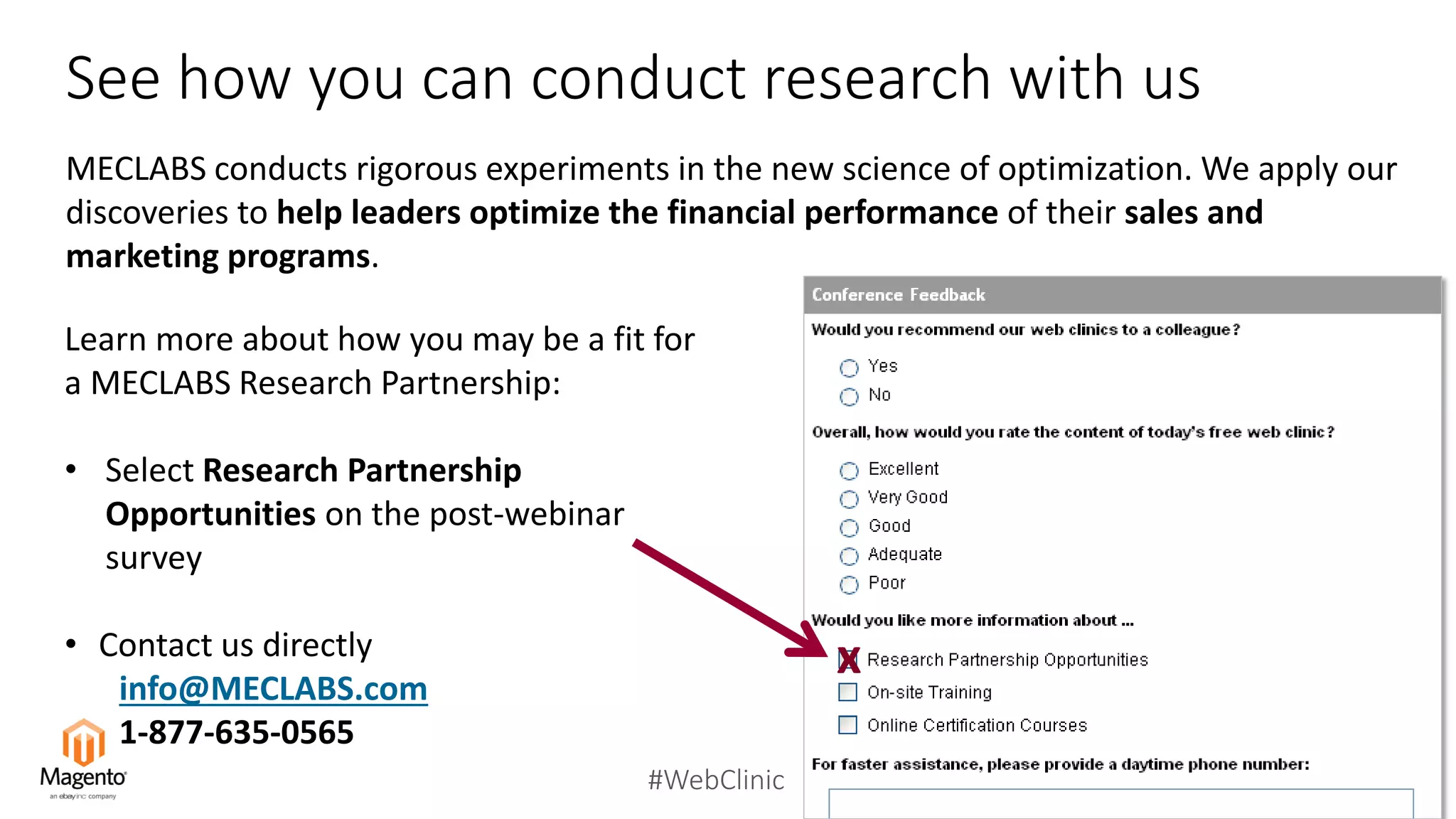
• Select Research Partnership
Opportunities on the post-webinar
survey
• Contact us directly
info@MECLABS.com
1-877-635-0565
x

ME - Product Pages Tested