Critical Chain Project
Management & Theory of
Constraints
A QUICK SNAPSHOT
Traditional Critical Path Method
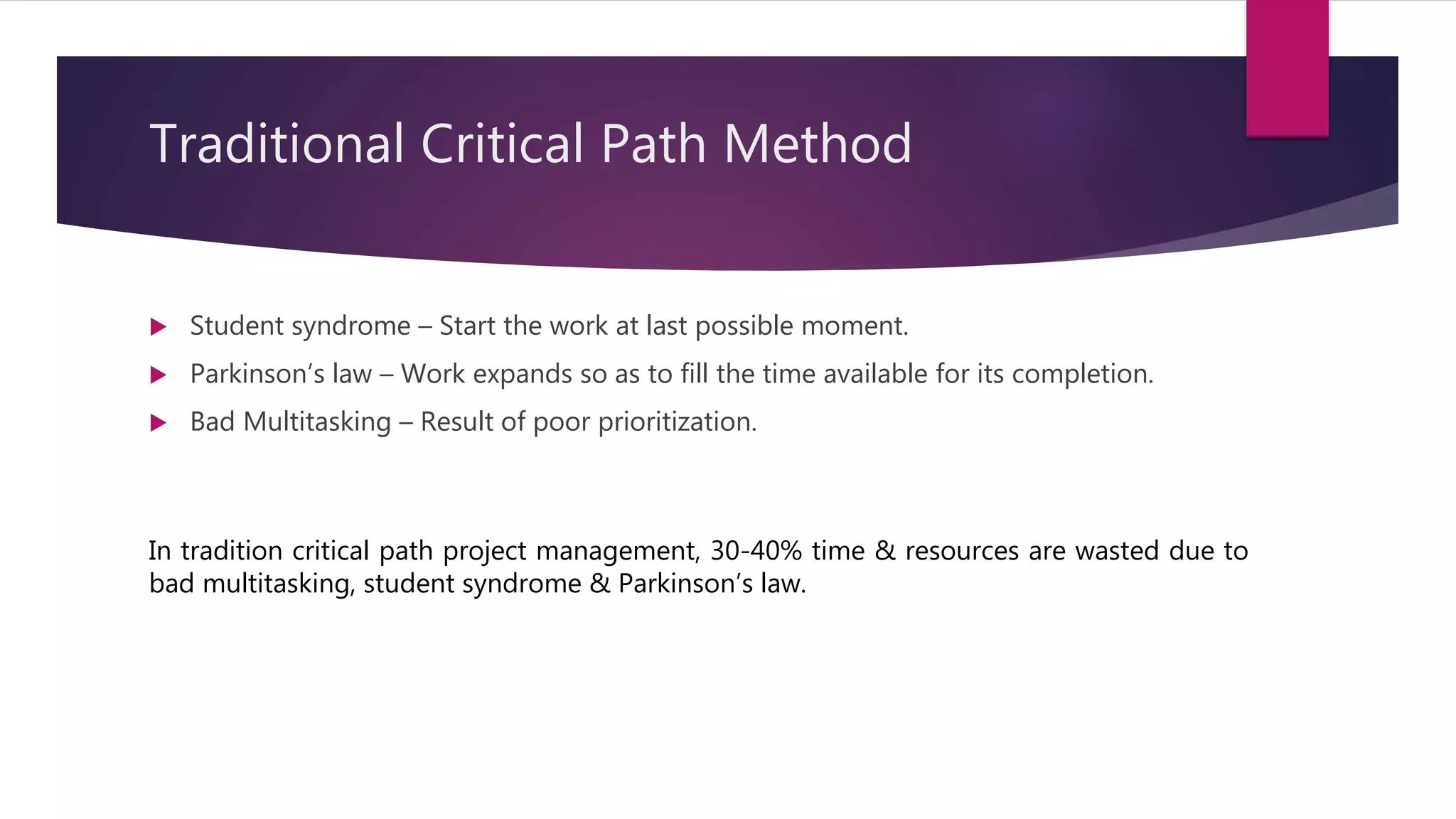
 Student syndrome – Start the work at last possible moment.
 Parkinson’s law – Work expands so as to fill the time available for its completion.
 Bad Multitasking – Result of poor prioritization.
In tradition critical path project management, 30-40% time & resources are wasted due to
bad multitasking, student syndrome & Parkinson’s law.
Critical Chain Project Management (CCPM)
4
1 2
3 4
5
Critical Chain Project Management
Tradition Critical Path Planning
John
Each Task has Buffer
Bad Multitasking
John
1 2
3
5
Feeding Buffer
4
DueDate
DueDate
Aggressive Estimation
Eliminate Multitasking
Project Buffer
Critical Chain Project Management (CCPM)
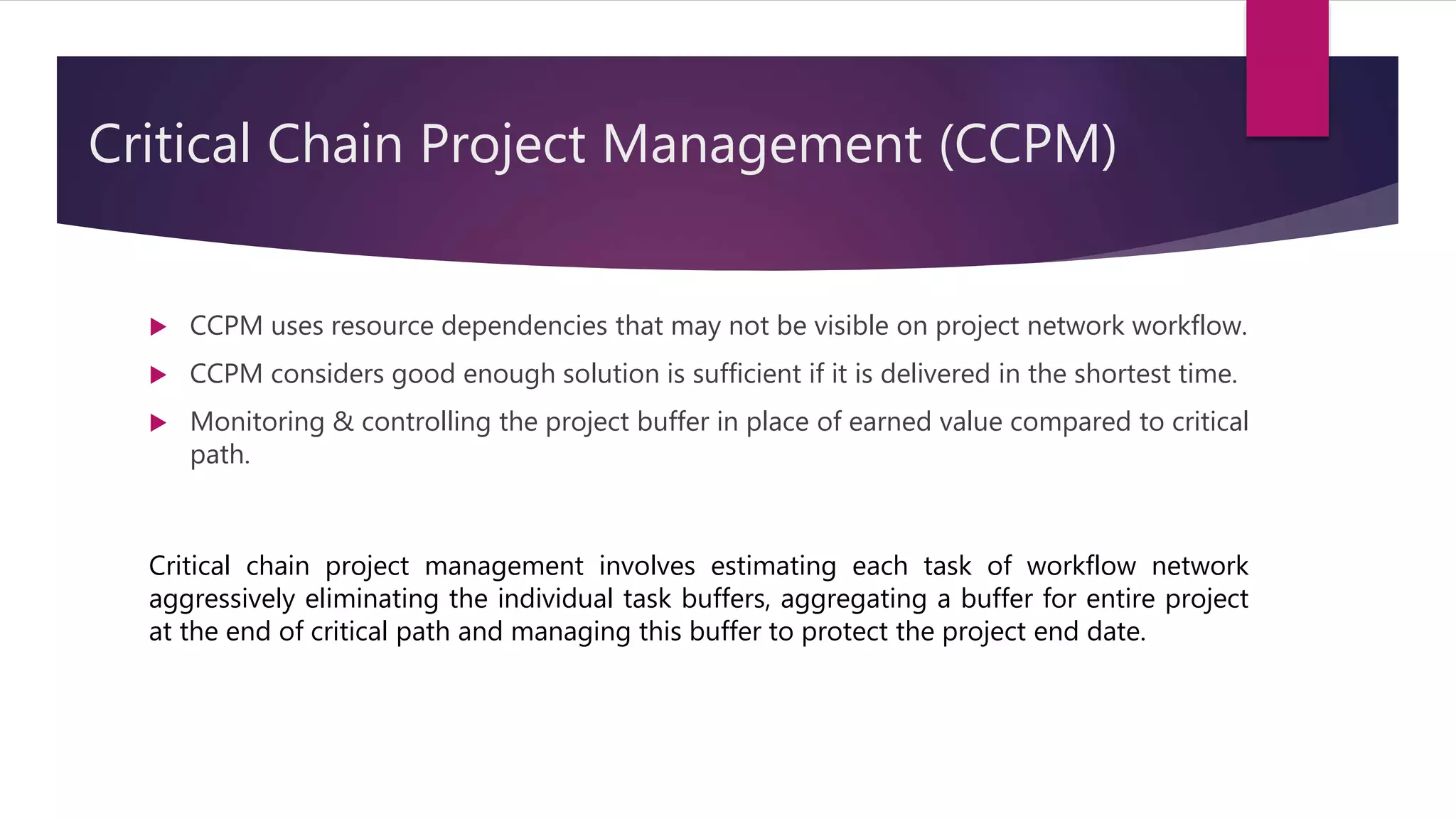
 CCPM uses resource dependencies that may not be visible on project network workflow.
 CCPM considers good enough solution is sufficient if it is delivered in the shortest time.
 Monitoring & controlling the project buffer in place of earned value compared to critical
path.
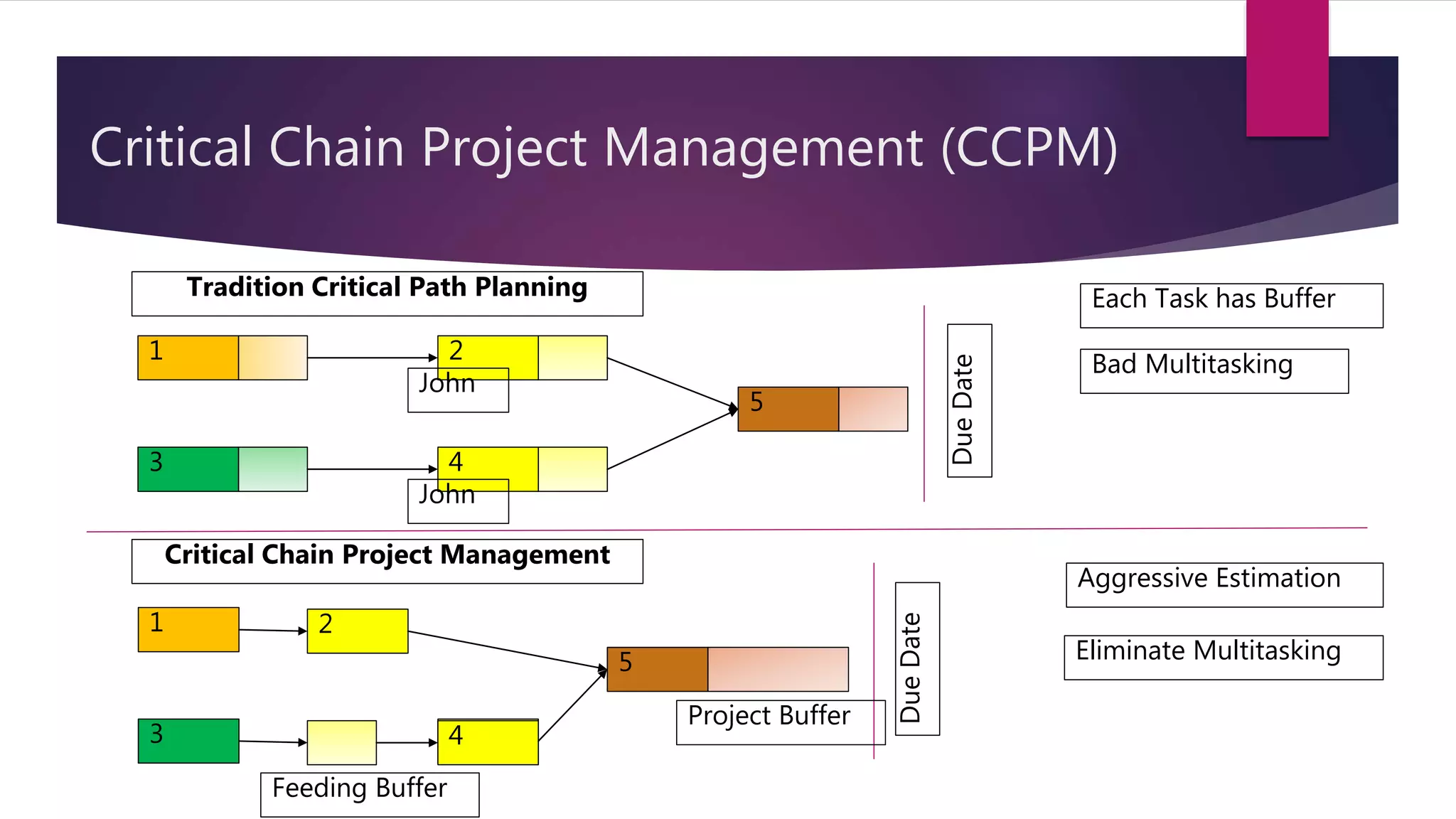
Critical chain project management involves estimating each task of workflow network
aggressively eliminating the individual task buffers, aggregating a buffer for entire project
at the end of critical path and managing this buffer to protect the project end date.
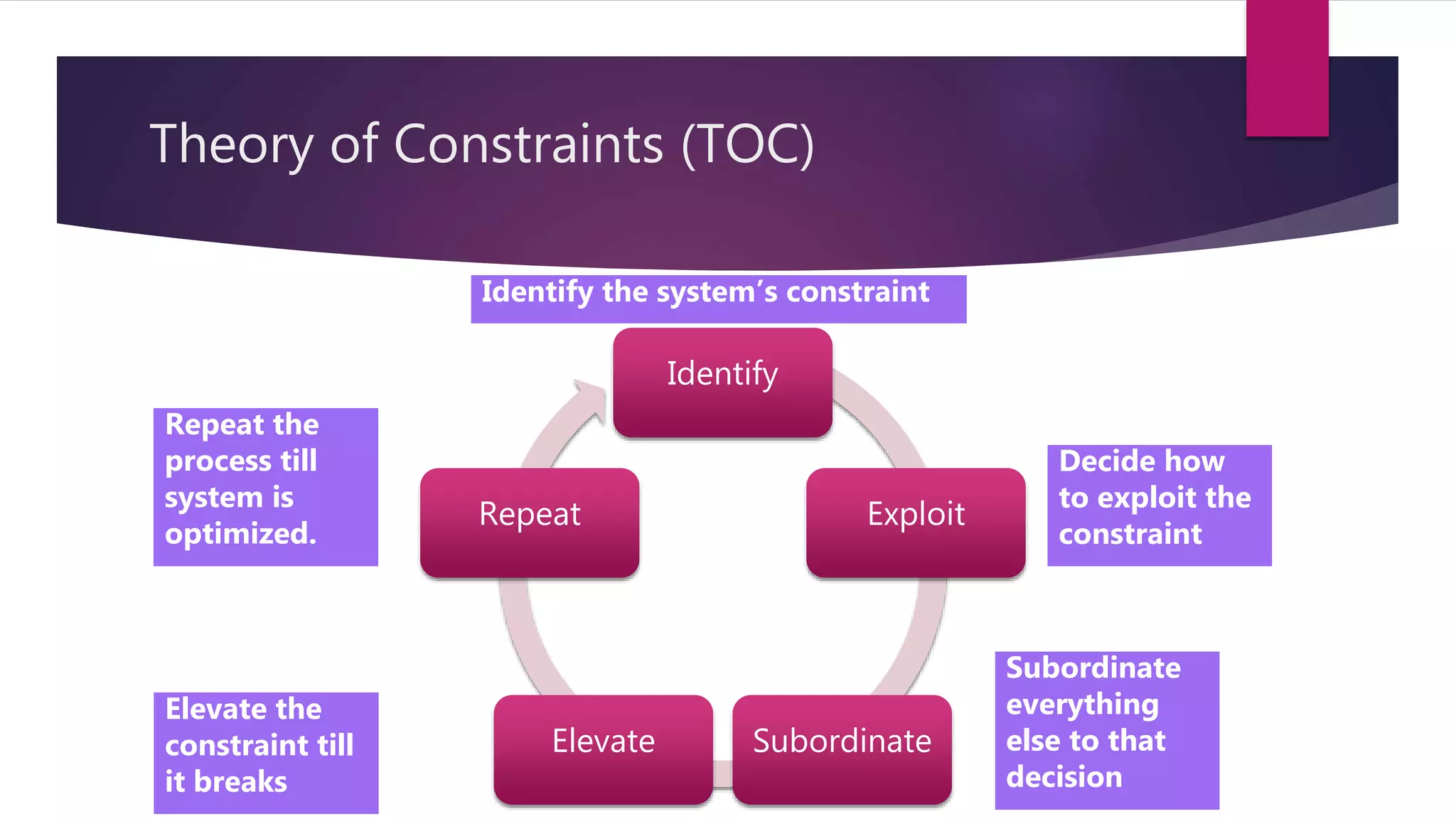
Theory of Constraints (TOC)
Identify
Exploit
SubordinateElevate
Repeat
Identify the system’s constraint
Decide how
to exploit the
constraint
Subordinate
everything
else to that
decision
Elevate the
constraint till
it breaks
Repeat the
process till
system is
optimized.
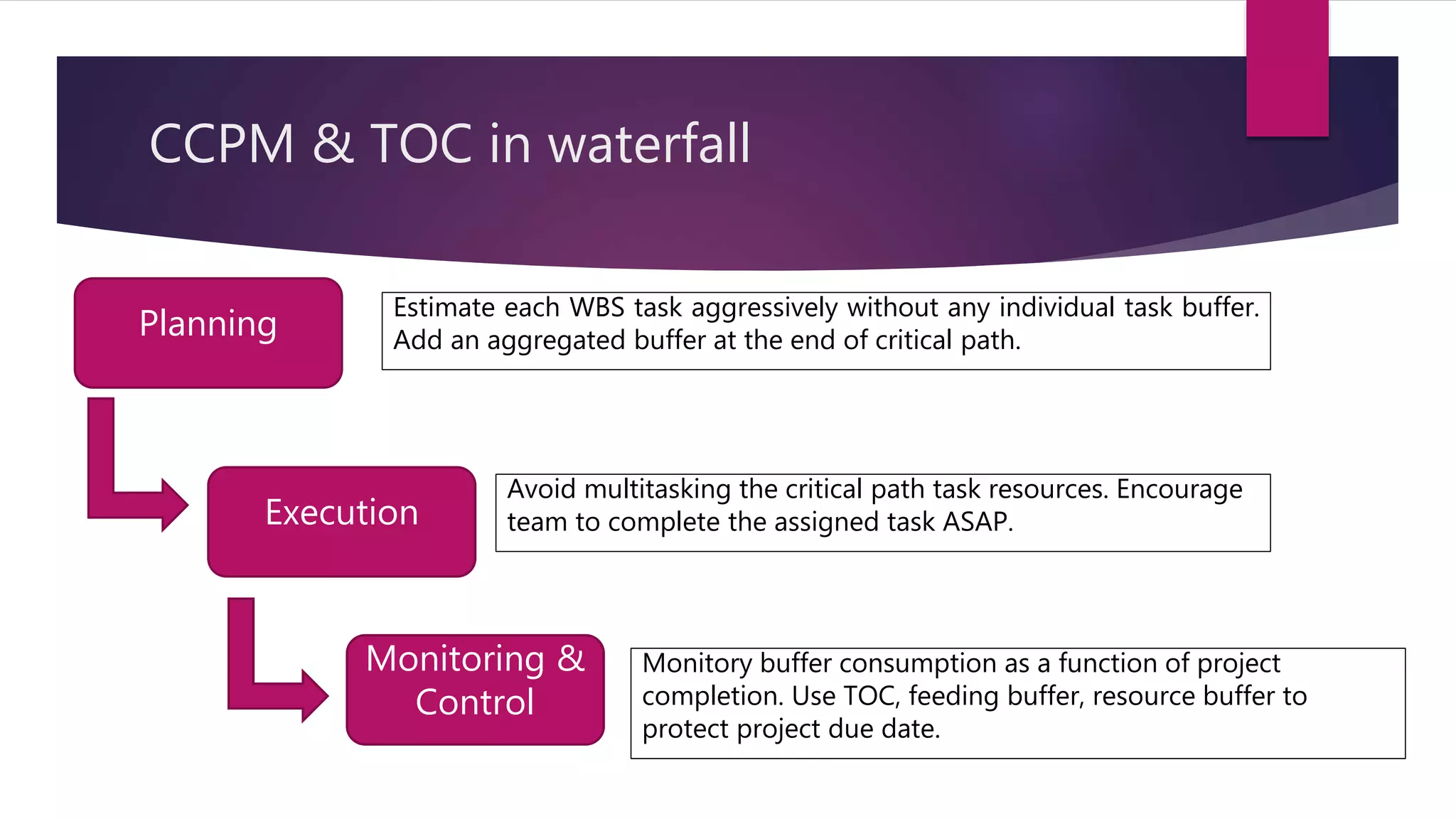
CCPM & TOC in waterfall
Monitoring &
Control
Planning
Execution
Estimate each WBS task aggressively without any individual task buffer.
Add an aggregated buffer at the end of critical path.
Avoid multitasking the critical path task resources. Encourage
team to complete the assigned task ASAP.
Monitory buffer consumption as a function of project
completion. Use TOC, feeding buffer, resource buffer to
protect project due date.
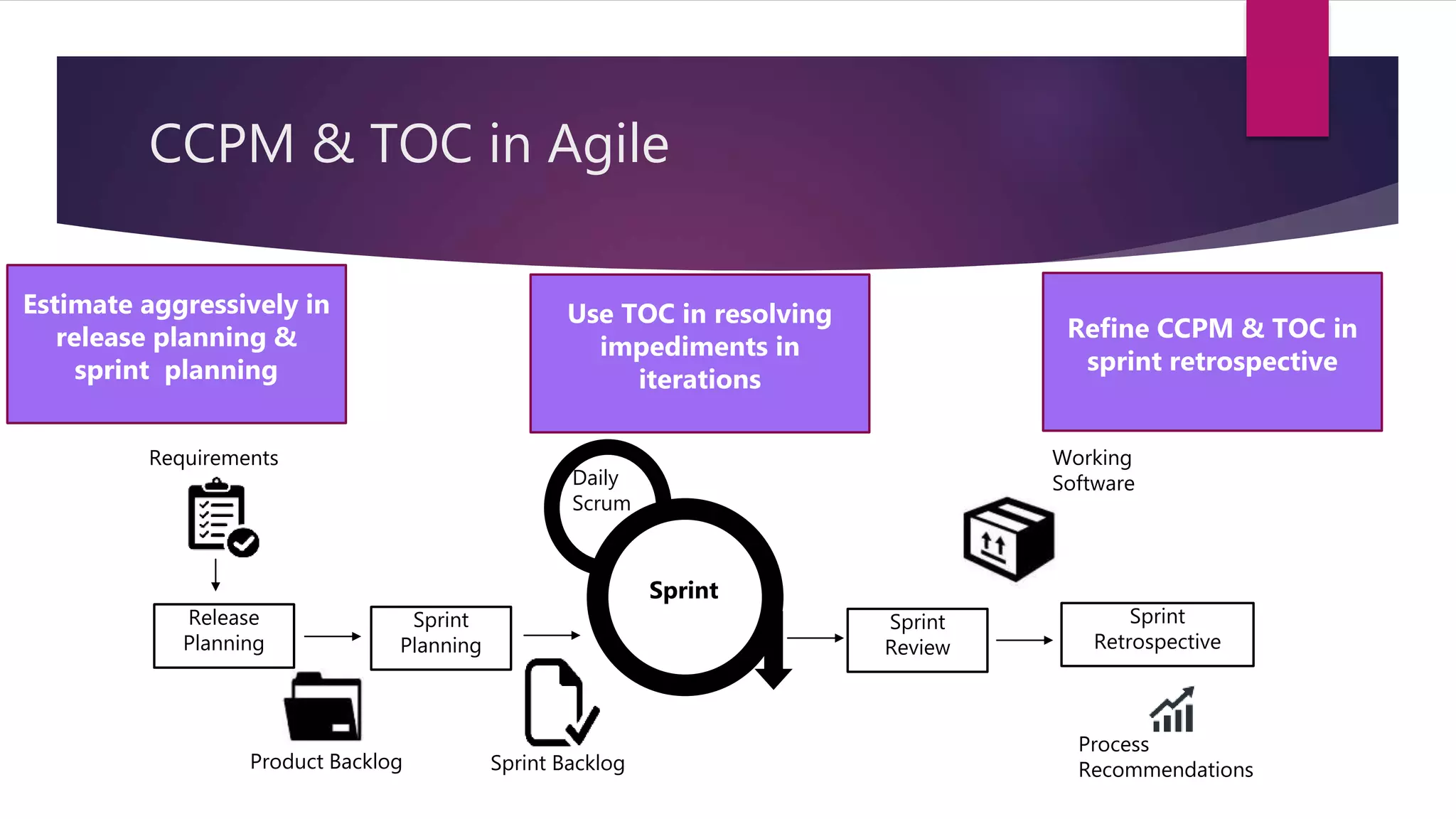
CCPM & TOC in Agile
Release
Planning
Sprint
Planning
Sprint
Retrospective
Requirements
Product Backlog Sprint Backlog
Process
Recommendations
Working
Software
Sprint
Review
Daily
Scrum
Sprint
Estimate aggressively in
release planning &
sprint planning
Use TOC in resolving
impediments in
iterations
Refine CCPM & TOC in
sprint retrospective
TOC & CCPM
 Eliyahu M. Goldratt introduced Theory of constraints
in 1984 in his book The Goal.
 Eliyahu M. Goldratt introduced critical chain project
management in 1997 in his book Critical Chain.
Thank you
http://solutionframework.blogspot.in/

Critical Chain Project Management & Theory of Constraints

  • 1.
    Critical Chain Project Management& Theory of Constraints A QUICK SNAPSHOT
  • 2.
    Traditional Critical PathMethod  Student syndrome – Start the work at last possible moment.  Parkinson’s law – Work expands so as to fill the time available for its completion.  Bad Multitasking – Result of poor prioritization. In tradition critical path project management, 30-40% time & resources are wasted due to bad multitasking, student syndrome & Parkinson’s law.
  • 3.
    Critical Chain ProjectManagement (CCPM) 4 1 2 3 4 5 Critical Chain Project Management Tradition Critical Path Planning John Each Task has Buffer Bad Multitasking John 1 2 3 5 Feeding Buffer 4 DueDate DueDate Aggressive Estimation Eliminate Multitasking Project Buffer
  • 4.
    Critical Chain ProjectManagement (CCPM)  CCPM uses resource dependencies that may not be visible on project network workflow.  CCPM considers good enough solution is sufficient if it is delivered in the shortest time.  Monitoring & controlling the project buffer in place of earned value compared to critical path. Critical chain project management involves estimating each task of workflow network aggressively eliminating the individual task buffers, aggregating a buffer for entire project at the end of critical path and managing this buffer to protect the project end date.
  • 5.
    Theory of Constraints(TOC) Identify Exploit SubordinateElevate Repeat Identify the system’s constraint Decide how to exploit the constraint Subordinate everything else to that decision Elevate the constraint till it breaks Repeat the process till system is optimized.
  • 6.
    CCPM & TOCin waterfall Monitoring & Control Planning Execution Estimate each WBS task aggressively without any individual task buffer. Add an aggregated buffer at the end of critical path. Avoid multitasking the critical path task resources. Encourage team to complete the assigned task ASAP. Monitory buffer consumption as a function of project completion. Use TOC, feeding buffer, resource buffer to protect project due date.
  • 7.
    CCPM & TOCin Agile Release Planning Sprint Planning Sprint Retrospective Requirements Product Backlog Sprint Backlog Process Recommendations Working Software Sprint Review Daily Scrum Sprint Estimate aggressively in release planning & sprint planning Use TOC in resolving impediments in iterations Refine CCPM & TOC in sprint retrospective
  • 8.
    TOC & CCPM Eliyahu M. Goldratt introduced Theory of constraints in 1984 in his book The Goal.  Eliyahu M. Goldratt introduced critical chain project management in 1997 in his book Critical Chain.
  • 9.