HOW TO SEE


BE


 CREATIVEGYM
                               R


                                   TA
                          BE
             SEE - WINTER 2011 -
SEE TODAY
• see discussion - the basics
• see exercise 1 - visual dominance
• see exercise 2 - self-portrait
• see exercise 3 - visual thinking strategies
• see exercise 4 - negative space puzzle
• see exercise 5 - touch contour drawing
see | discussion
SEEING BASICS

• STEROSCOPIC VISION

• RIGHT OR LEFT EYED

• UNPURE PROCESSING

• INCULTURED SEEING

• SELECTED VIEW

• REALITY IS PERCEPTION
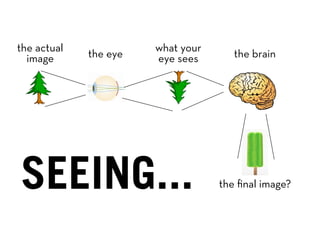
the actual             what your
  image      the eye   eye sees       the brain


SEEING...                          the final image?
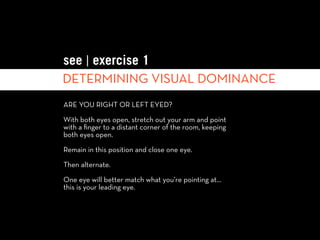
see | exercise 1
DETERMINING VISUAL DOMINANCE
ARE YOU RIGHT OR LEFT EYED?

With both eyes open, stretch out your arm and point
with a finger to a distant corner of the room, keeping
both eyes open.

Remain in this position and close one eye.

Then alternate.

One eye will better match what you’re pointing at…
this is your leading eye.
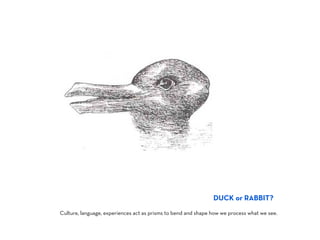
DUCK or RABBIT?
Culture, language, experiences act as prisms to bend and shape how we process what we see.
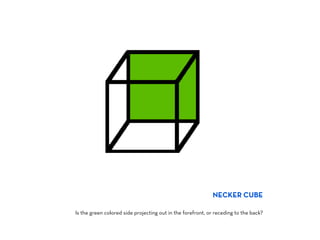
NECKER CUBE

Is the green colored side projecting out in the forefront, or receding to the back?
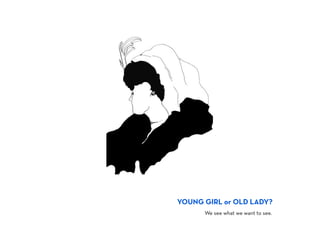
YOUNG GIRL or OLD LADY?
      We see what we want to see.
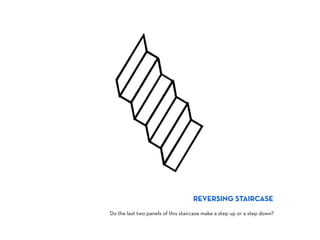
REVERSING STAIRCASE
Do the last two panels of this staircase make a step up or a step down?
SEEING...
is about looking beyond your mind’s eye

Don’t believe what you see!

Understanding the relationship between what you see and what
you know goes beyond the physical. It is about awareness,
discovery, perception, and the limits personal context imposes on
our ability to really see.

Let’s first understand how we see; re-learn how to see; how to open
our mind’s eye and work around inherent bias.
see | exercise 2
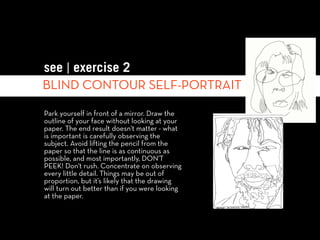
BLIND CONTOUR SELF-PORTRAIT

Park yourself in front of a mirror. Draw the
outline of your face without looking at your
paper. The end result doesn't matter - what
is important is carefully observing the
subject. Avoid lifting the pencil from the
paper so that the line is as continuous as
possible, and most importantly, DON'T
PEEK! Don't rush. Concentrate on observing
every little detail. Things may be out of
proportion, but it’s likely that the drawing
will turn out better than if you were looking
at the paper.
see | exercise 3
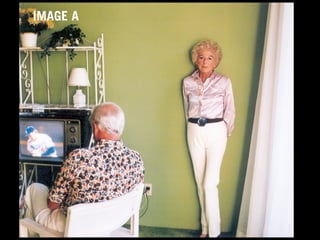
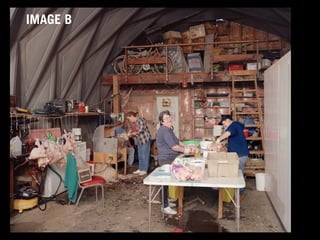
VISUAL THINKING STRATEGIES
Visual thinking strategies is about finding meaning in imagery. By
discussing visual images, contextual interpreting, speculating, analyzing,
categorizing, and questioning, visual literacy skills are employed. It’s
about how to communicate and how to think creatively and critically.
Spend ten minutes looking at each image that follows and answer the
following questions as you look:

       • What’s going on in this picture?

      • What do you see that makes you say that?

      • What more can you find?
IMAGE A
IMAGE B
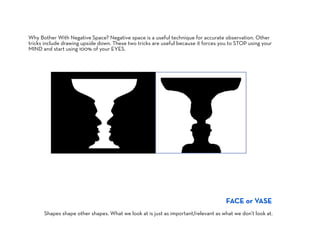
Why Bother With Negative Space? Negative space is a useful technique for accurate observation. Other
tricks include drawing upside down. These two tricks are useful because it forces you to STOP using your
MIND and start using 100% of your EYES.


                                                                                    FACE or VASE
      Shapes shape other shapes. What we look at is just as important/relevant as what we don’t look at.
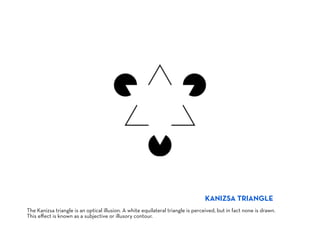
KANIZSA TRIANGLE
The Kanizsa triangle is an optical illusion. A white equilateral triangle is perceived, but in fact none is drawn.
This effect is known as a subjective or illusory contour.
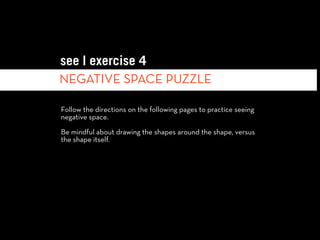
see | exercise 4
NEGATIVE SPACE PUZZLE

Follow the directions on the following pages to practice seeing
negative space.

Be mindful about drawing the shapes around the shape, versus
the shape itself.
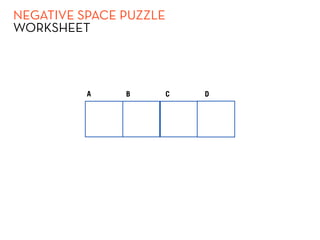
NEGATIVE SPACE PUZZLE
WORKSHEET


          A    B        C   D
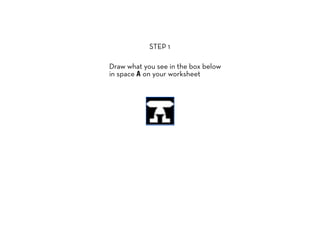
STEP 1

Draw what you see in the box below
in space A on your worksheet
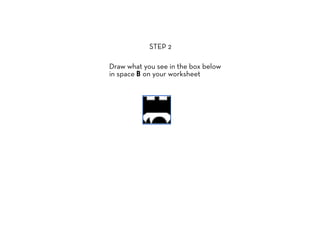
STEP 2

Draw what you see in the box below
in space B on your worksheet
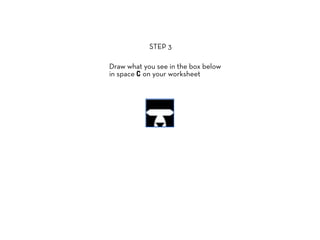
STEP 3

Draw what you see in the box below
in space C on your worksheet
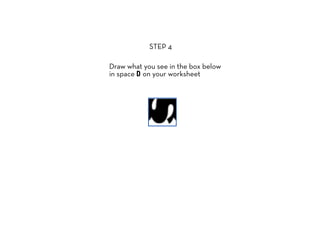
STEP 4

Draw what you see in the box below
in space D on your worksheet
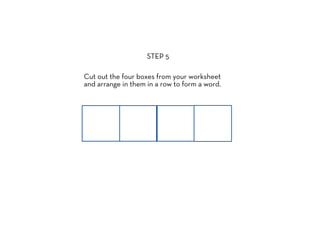
STEP 5

Cut out the four boxes from your worksheet
and arrange in them in a row to form a word.
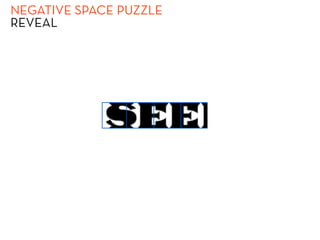
NEGATIVE SPACE PUZZLE
REVEAL
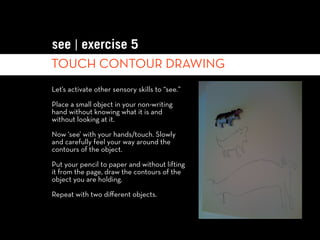
see | exercise 5
TOUCH CONTOUR DRAWING
Let’s activate other sensory skills to “see.”

Place a small object in your non-writing
hand without knowing what it is and
without looking at it.

Now ‘see’ with your hands/touch. Slowly
and carefully feel your way around the
contours of the object.

Put your pencil to paper and without lifting
it from the page, draw the contours of the
object you are holding.

Repeat with two different objects.

Creative Gym: SEEING

  • 1.
    HOW TO SEE BE CREATIVEGYM R TA BE SEE - WINTER 2011 -
  • 2.
    SEE TODAY • seediscussion - the basics • see exercise 1 - visual dominance • see exercise 2 - self-portrait • see exercise 3 - visual thinking strategies • see exercise 4 - negative space puzzle • see exercise 5 - touch contour drawing
  • 3.
    see | discussion SEEINGBASICS • STEROSCOPIC VISION • RIGHT OR LEFT EYED • UNPURE PROCESSING • INCULTURED SEEING • SELECTED VIEW • REALITY IS PERCEPTION
  • 4.
    the actual what your image the eye eye sees the brain SEEING... the final image?
  • 5.
    see | exercise1 DETERMINING VISUAL DOMINANCE ARE YOU RIGHT OR LEFT EYED? With both eyes open, stretch out your arm and point with a finger to a distant corner of the room, keeping both eyes open. Remain in this position and close one eye. Then alternate. One eye will better match what you’re pointing at… this is your leading eye.
  • 6.
    DUCK or RABBIT? Culture,language, experiences act as prisms to bend and shape how we process what we see.
  • 7.
    NECKER CUBE Is thegreen colored side projecting out in the forefront, or receding to the back?
  • 8.
    YOUNG GIRL orOLD LADY? We see what we want to see.
  • 9.
    REVERSING STAIRCASE Do thelast two panels of this staircase make a step up or a step down?
  • 10.
    SEEING... is about lookingbeyond your mind’s eye Don’t believe what you see! Understanding the relationship between what you see and what you know goes beyond the physical. It is about awareness, discovery, perception, and the limits personal context imposes on our ability to really see. Let’s first understand how we see; re-learn how to see; how to open our mind’s eye and work around inherent bias.
  • 11.
    see | exercise2 BLIND CONTOUR SELF-PORTRAIT Park yourself in front of a mirror. Draw the outline of your face without looking at your paper. The end result doesn't matter - what is important is carefully observing the subject. Avoid lifting the pencil from the paper so that the line is as continuous as possible, and most importantly, DON'T PEEK! Don't rush. Concentrate on observing every little detail. Things may be out of proportion, but it’s likely that the drawing will turn out better than if you were looking at the paper.
  • 12.
    see | exercise3 VISUAL THINKING STRATEGIES Visual thinking strategies is about finding meaning in imagery. By discussing visual images, contextual interpreting, speculating, analyzing, categorizing, and questioning, visual literacy skills are employed. It’s about how to communicate and how to think creatively and critically. Spend ten minutes looking at each image that follows and answer the following questions as you look: • What’s going on in this picture? • What do you see that makes you say that? • What more can you find?
  • 13.
  • 14.
  • 15.
    Why Bother WithNegative Space? Negative space is a useful technique for accurate observation. Other tricks include drawing upside down. These two tricks are useful because it forces you to STOP using your MIND and start using 100% of your EYES. FACE or VASE Shapes shape other shapes. What we look at is just as important/relevant as what we don’t look at.
  • 16.
    KANIZSA TRIANGLE The Kanizsatriangle is an optical illusion. A white equilateral triangle is perceived, but in fact none is drawn. This effect is known as a subjective or illusory contour.
  • 17.
    see | exercise4 NEGATIVE SPACE PUZZLE Follow the directions on the following pages to practice seeing negative space. Be mindful about drawing the shapes around the shape, versus the shape itself.
  • 18.
  • 19.
    STEP 1 Draw whatyou see in the box below in space A on your worksheet
  • 20.
    STEP 2 Draw whatyou see in the box below in space B on your worksheet
  • 21.
    STEP 3 Draw whatyou see in the box below in space C on your worksheet
  • 22.
    STEP 4 Draw whatyou see in the box below in space D on your worksheet
  • 23.
    STEP 5 Cut outthe four boxes from your worksheet and arrange in them in a row to form a word.
  • 24.
  • 25.
    see | exercise5 TOUCH CONTOUR DRAWING Let’s activate other sensory skills to “see.” Place a small object in your non-writing hand without knowing what it is and without looking at it. Now ‘see’ with your hands/touch. Slowly and carefully feel your way around the contours of the object. Put your pencil to paper and without lifting it from the page, draw the contours of the object you are holding. Repeat with two different objects.