TROUBLE
SHOOTING
DIAGNOSE AND REPAIR LIGHT
VEHICLE EMISSION CONTROL
SYSTEMS
■ SARANYOO SRINUAL
■ MICHAEL LEITE
■ TAVNEET SINGH
■ CHUNJIANG LI
■ ANSON
MEMBER
MEANING
DIAGNOSE AND REPAIR LIGHT VEHICLE EMISSION CONTROL
SYSTEMS
● Identifying and fixing problems in the
pollution-reducing systems of smaller
vehicles like cars and trucks.
● Mechanics and technicians use various
tests and tools to figure out what's wrong
with these systems and then make the
necessary repairs to ensure the vehicle
pollutes less and runs properly.
Diagnostic testing procedures.
● Follow diagnosing test strategies
● Follow the procedures in the WSM.
● Follow Menzies workplace procedures.
● Perform the diagnosis without causing
harm to people, the environment and
vehicle components.
DIAGNOSTIC TESTING
PROCEDURES FOR
CRANKCASE
VENTILATION SYSTEM
OPERATION
INTRODUCTION
● PCV (POSITIVE CRANKCASE VENTILATION)
Problems
● The ways to check a PCV valve
● PCV System Checks
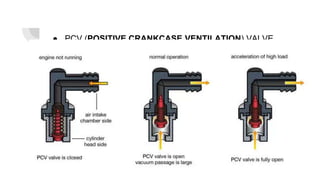
● PCV (POSITIVE CRANKCASE VENTILATION) VALVE
PCV Problems
● OBD II Monitoring: Vehicles from 2002
onwards with OBD II systems have PCV
system monitoring. On older OBD
systems isn't monitored. PCV issues in
pre-2002 vehicles may not trigger
warning lights or diagnostic trouble codes
(DTC).
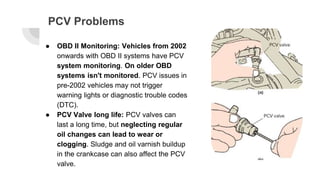
● PCV Valve long life: PCV valves can
last a long time, but neglecting regular
oil changes can lead to wear or
clogging. Sludge and oil varnish buildup
in the crankcase can also affect the PCV
valve.
PCV Problems
● Common PCV Problems: Sludge, oil varnish deposits, and fuel buildup
inside the valve can restrict or block vapour flow; this is a common PCV
problem. Unable to remove moisture and blowby vapours from the crankcase
due to a blocked PCV valve leads to sludge, increased pressure, and potential
oil leaks.
● A stuck PCV valve pintle: can cause a rough idle, hard starting, and lean
misfires. Leaky or loose hoses can introduce un-metered air, disrupting the
fuel mixture.
● Cold Weather Considerations: Cold temperatures can freeze and stick PCV
valves due to moisture in the system. A stuck closed PCV valve can lead to
crankcase pressure issues. Some vehicles use heated PCV valves to
prevent freezing.
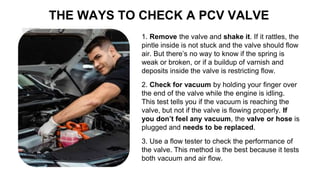
THE WAYS TO CHECK A PCV VALVE
1. Remove the valve and shake it. If it rattles, the
pintle inside is not stuck and the valve should flow
air. But there’s no way to know if the spring is
weak or broken, or if a buildup of varnish and
deposits inside the valve is restricting flow.
2. Check for vacuum by holding your finger over
the end of the valve while the engine is idling.
This test tells you if the vacuum is reaching the
valve, but not if the valve is flowing properly. If
you don’t feel any vacuum, the valve or hose is
plugged and needs to be replaced.
3. Use a flow tester to check the performance of
the valve. This method is the best because it tests
both vacuum and air flow.
PCV System Checks
● Importance of Airflow: Proper airflow through the PCV system is crucial
to remove blowby vapors and moisture without upsetting the engine's
air/fuel mixture.
● Checking Airflow:
○ Method 1: Pinch or block the vacuum hose to the PCV valve while
idling. A drop of 50 to 80 rpm indicates correct airflow.
○ Method 2: Measure vacuum in the crankcase using a gauge.
Normal operation should yield 1 to 3 inches of vacuum at idle.
○ High vacuum may suggest a leaking intake manifold gasket.
○ No vacuum or pressure buildup indicates PCV system issues.
PCV System Checks
● Identifying Crankcase Air Leaks: An engine won't develop much
vacuum if there are leaks in the oil pan, valve cover, intake manifold
gasket, or crankshaft seals. Leaky components can introduce
unfiltered air, contaminating the oil.
● Leak Detection: Lightly pressurize the crankcase (1 to 3 psi) using
shop air through the dipstick tube, oil filler cap, or breather. Block other
vents. Use soapy water to identify air leaks by observing bubbles.
Replace gaskets or seals as necessary.
These points summarize the steps to assess and maintain proper PCV
system airflow and detect potential issues, ensuring the engine operates
efficiently.
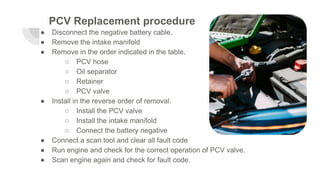
PCV Replacement procedure
● Disconnect the negative battery cable.
● Remove the intake manifold
● Remove in the order indicated in the table.
○ PCV hose
○ Oil separator
○ Retainer
○ PCV valve
● Install in the reverse order of removal.
○ Install the PCV valve
○ Install the intake manifold
○ Connect the battery negative
● Connect a scan tool and clear all fault code
● Run engine and check for the correct operation of PCV valve.
● Scan engine again and check for fault code.
PCV Replacement Tips
● When replacing a PCV valve, make sure the replacement valve is the
same as the original. External appearances can be misleading because
valves that look the same on the outside may be calibrated differently
inside. If the replacement valve does not have the same flow characteristics
as the original, it may upset emissions and cause driveability problems.
● The PCV hose that connects the PCV valve to the engine should be
replaced when the valve is changed. Use hose that is approved for PCV
use only.

CRANKCASE VENTILATION SYSTEM OPERATION.pptx

  • 1.
    TROUBLE SHOOTING DIAGNOSE AND REPAIRLIGHT VEHICLE EMISSION CONTROL SYSTEMS
  • 2.
    ■ SARANYOO SRINUAL ■MICHAEL LEITE ■ TAVNEET SINGH ■ CHUNJIANG LI ■ ANSON MEMBER
  • 3.
    MEANING DIAGNOSE AND REPAIRLIGHT VEHICLE EMISSION CONTROL SYSTEMS ● Identifying and fixing problems in the pollution-reducing systems of smaller vehicles like cars and trucks. ● Mechanics and technicians use various tests and tools to figure out what's wrong with these systems and then make the necessary repairs to ensure the vehicle pollutes less and runs properly.
  • 4.
    Diagnostic testing procedures. ●Follow diagnosing test strategies ● Follow the procedures in the WSM. ● Follow Menzies workplace procedures. ● Perform the diagnosis without causing harm to people, the environment and vehicle components.
  • 5.
  • 6.
    INTRODUCTION ● PCV (POSITIVECRANKCASE VENTILATION) Problems ● The ways to check a PCV valve ● PCV System Checks
  • 7.
    ● PCV (POSITIVECRANKCASE VENTILATION) VALVE
  • 8.
    PCV Problems ● OBDII Monitoring: Vehicles from 2002 onwards with OBD II systems have PCV system monitoring. On older OBD systems isn't monitored. PCV issues in pre-2002 vehicles may not trigger warning lights or diagnostic trouble codes (DTC). ● PCV Valve long life: PCV valves can last a long time, but neglecting regular oil changes can lead to wear or clogging. Sludge and oil varnish buildup in the crankcase can also affect the PCV valve.
  • 9.
    PCV Problems ● CommonPCV Problems: Sludge, oil varnish deposits, and fuel buildup inside the valve can restrict or block vapour flow; this is a common PCV problem. Unable to remove moisture and blowby vapours from the crankcase due to a blocked PCV valve leads to sludge, increased pressure, and potential oil leaks. ● A stuck PCV valve pintle: can cause a rough idle, hard starting, and lean misfires. Leaky or loose hoses can introduce un-metered air, disrupting the fuel mixture. ● Cold Weather Considerations: Cold temperatures can freeze and stick PCV valves due to moisture in the system. A stuck closed PCV valve can lead to crankcase pressure issues. Some vehicles use heated PCV valves to prevent freezing.
  • 10.
    THE WAYS TOCHECK A PCV VALVE 1. Remove the valve and shake it. If it rattles, the pintle inside is not stuck and the valve should flow air. But there’s no way to know if the spring is weak or broken, or if a buildup of varnish and deposits inside the valve is restricting flow. 2. Check for vacuum by holding your finger over the end of the valve while the engine is idling. This test tells you if the vacuum is reaching the valve, but not if the valve is flowing properly. If you don’t feel any vacuum, the valve or hose is plugged and needs to be replaced. 3. Use a flow tester to check the performance of the valve. This method is the best because it tests both vacuum and air flow.
  • 11.
    PCV System Checks ●Importance of Airflow: Proper airflow through the PCV system is crucial to remove blowby vapors and moisture without upsetting the engine's air/fuel mixture. ● Checking Airflow: ○ Method 1: Pinch or block the vacuum hose to the PCV valve while idling. A drop of 50 to 80 rpm indicates correct airflow. ○ Method 2: Measure vacuum in the crankcase using a gauge. Normal operation should yield 1 to 3 inches of vacuum at idle. ○ High vacuum may suggest a leaking intake manifold gasket. ○ No vacuum or pressure buildup indicates PCV system issues.
  • 12.
    PCV System Checks ●Identifying Crankcase Air Leaks: An engine won't develop much vacuum if there are leaks in the oil pan, valve cover, intake manifold gasket, or crankshaft seals. Leaky components can introduce unfiltered air, contaminating the oil. ● Leak Detection: Lightly pressurize the crankcase (1 to 3 psi) using shop air through the dipstick tube, oil filler cap, or breather. Block other vents. Use soapy water to identify air leaks by observing bubbles. Replace gaskets or seals as necessary. These points summarize the steps to assess and maintain proper PCV system airflow and detect potential issues, ensuring the engine operates efficiently.
  • 13.
    PCV Replacement procedure ●Disconnect the negative battery cable. ● Remove the intake manifold ● Remove in the order indicated in the table. ○ PCV hose ○ Oil separator ○ Retainer ○ PCV valve ● Install in the reverse order of removal. ○ Install the PCV valve ○ Install the intake manifold ○ Connect the battery negative ● Connect a scan tool and clear all fault code ● Run engine and check for the correct operation of PCV valve. ● Scan engine again and check for fault code.
  • 14.
    PCV Replacement Tips ●When replacing a PCV valve, make sure the replacement valve is the same as the original. External appearances can be misleading because valves that look the same on the outside may be calibrated differently inside. If the replacement valve does not have the same flow characteristics as the original, it may upset emissions and cause driveability problems. ● The PCV hose that connects the PCV valve to the engine should be replaced when the valve is changed. Use hose that is approved for PCV use only.