Dhachanamurtitm
Asst Professor
Asan Inst of Management
Need for Corporate Governance
 Growing Number of Scams : In recent years, many scams, frauds and corrupt
practices have taken place. Misuse and misappropriation of public money are
happening everyday in India and worldwide. It is happening in the stock market,
banks, financial institutions, companies and government offices. In order to avoid
these scams and financial irregularities, many companies have started corporate
governance.
 Indifference on the part of Shareholders : In general, shareholders are
inactive in the management of their companies. They only attend the Annual
general meeting. Postal ballot is still absent in India. Proxies are not allowed to
speak in the meetings. Shareholders associations are not strong. Therefore,
directors misuse their power for their own benefits. So, there is a need for
corporate governance to protect all the stakeholders of the company.
 Globalisation : Today most big companies are selling their goods in the global
market. So, they have to attract foreign investor and foreign customers. They
also have to follow foreign rules and regulations. All this requires corporate
governance. Without Corporate governance, it is impossible to enter, survive and
succeed the global market.
 Takeovers and Mergers : Today, there are many takeovers and mergers in
the business world. Corporate governance is required to protect the interest of all
the parties during takeovers and mergers.
 SEBI : SEBI has made corporate governance compulsory for certain companies.
This is done to protect the interest of the investors and other stakeholders.
 In today's scenario there is a need for strict and
transparent governance to facilitate growth,
stability and profitability in business.
 To that effect, starting October 1, 2017 Securities
and Exchange Board of India's (SEBI) new
regulations will require companies to get
shareholders approval for related party
transactions, established whistleblower
mechanisms, elaborate disclosures on pay
packages and have at least one woman director
on their boards.
 Examples of related parties are:
 Affiliates.
 Other subsidiaries under common control.
 Owners of the business, its managers, and their
families.
 Auditors clear Infosys of alleged violations of
corporate governance By Agencies | Jun 24,
2017 12:06 am
-Auditors have concluded investigating various
allegations of violation of corporate governance at
Infosys Ltd, made by a whistleblower, and have
found no evidence of wrong doing, the company
said in a release on Friday.
 -In February, a whistleblower had written to the
Securities and Exchange Board of India alleging
Infosys violated the securities law on severance
payment made to former chief financial officer
Rajiv Bansal. The letter also made several other
allegations, including mis-dealings in the $200-
mn acquisition of Israeli company, Panaya, which
provides cloud-based management services.

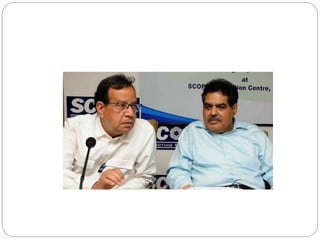
SEBI Chairman Ajay Tyagi on Monday said that
the SEBI-appointed Uday Kotak headed panel
will also examine the corporate governance
related issues of listed public sector enterprises.
 Kotak, the panel comprises 20 members
including representatives of corporate India, stock
exchanges, professional bodies, investor groups,
chambers of commerce, law firms, academicians
and research professionals.
 Listed public sector enterprises are now keen
that the minimum number of independent
directors in their boards be reduced from the
current 50 per cent norm
 Tyagi told reporters that SEBI will in next one
month come out with a discussion paper on credit
rating agencies.
 "We are not happy with the current state of affairs
of rating agencies," he said.
 CII?
 Whistle Blowing ?
 Inside Trading ?
 CII is a non-government, not-for-profit, industry-
led and industry-managed organization, playing a
proactive role in India's development process.
 A whistleblower (also written as whistle-blower
or whistle blower) is a person who exposes any
kind of information or activity that is deemed
illegal, unethical, or not correct within an
organization that is either private or public. ..
 The collapse of international giants likes Enron,
World Com of the US and Xerox of Japan are
said to be due to the absence of good corporate
governance and corrupt practices adopted by
management of these companies and their
financial consulting firms.
Importance of Corporate
Governance:
Investors and shareholders of a corporate
company need protection for their investment due
to lack of adequate standards of financial
reporting and accountability.
Corporate governance is considered as an
important means for paying heed to investors’
grievances. Kumar Manglam Birla Committee on
corporate governance found that companies were
not paying adequate attention to the timely
dissemination of required information to investors
in by India.
 The extent to which corporate enterprises
observe the basic principles of good corporate
governance has now become an important factor
for attracting foreign investment
 Indispensable for healthy and vibrant stock
market. An important advantage of strong
corporate governance is that it is indispensable
for a vibrant stock market. A healthy stock market
is an important instrument for investors protection
 Benefits of Corporate Governance
 Good corporate governance ensures corporate success
and economic growth.
 Strong corporate governance maintains investors’
confidence, as a result of which, company can raise capital
efficiently and effectively.
 It lowers the capital cost.
 There is a positive impact on the share price.
 It provides proper inducement to the owners as well as
managers to achieve objectives that are in interests of the
shareholders and the organization.
 Good corporate governance also minimizes wastages,
corruption, risks and mismanagement.
 It helps in brand formation and development.
 It ensures organization in managed in a manner that fits
the best

Corporate governance

  • 1.
  • 2.
    Need for CorporateGovernance  Growing Number of Scams : In recent years, many scams, frauds and corrupt practices have taken place. Misuse and misappropriation of public money are happening everyday in India and worldwide. It is happening in the stock market, banks, financial institutions, companies and government offices. In order to avoid these scams and financial irregularities, many companies have started corporate governance.  Indifference on the part of Shareholders : In general, shareholders are inactive in the management of their companies. They only attend the Annual general meeting. Postal ballot is still absent in India. Proxies are not allowed to speak in the meetings. Shareholders associations are not strong. Therefore, directors misuse their power for their own benefits. So, there is a need for corporate governance to protect all the stakeholders of the company.  Globalisation : Today most big companies are selling their goods in the global market. So, they have to attract foreign investor and foreign customers. They also have to follow foreign rules and regulations. All this requires corporate governance. Without Corporate governance, it is impossible to enter, survive and succeed the global market.  Takeovers and Mergers : Today, there are many takeovers and mergers in the business world. Corporate governance is required to protect the interest of all the parties during takeovers and mergers.  SEBI : SEBI has made corporate governance compulsory for certain companies. This is done to protect the interest of the investors and other stakeholders.
  • 3.
     In today'sscenario there is a need for strict and transparent governance to facilitate growth, stability and profitability in business.
  • 4.
     To thateffect, starting October 1, 2017 Securities and Exchange Board of India's (SEBI) new regulations will require companies to get shareholders approval for related party transactions, established whistleblower mechanisms, elaborate disclosures on pay packages and have at least one woman director on their boards.
  • 5.
     Examples ofrelated parties are:  Affiliates.  Other subsidiaries under common control.  Owners of the business, its managers, and their families.
  • 6.
     Auditors clearInfosys of alleged violations of corporate governance By Agencies | Jun 24, 2017 12:06 am -Auditors have concluded investigating various allegations of violation of corporate governance at Infosys Ltd, made by a whistleblower, and have found no evidence of wrong doing, the company said in a release on Friday.
  • 7.
     -In February,a whistleblower had written to the Securities and Exchange Board of India alleging Infosys violated the securities law on severance payment made to former chief financial officer Rajiv Bansal. The letter also made several other allegations, including mis-dealings in the $200- mn acquisition of Israeli company, Panaya, which provides cloud-based management services.
  • 8.
     SEBI Chairman AjayTyagi on Monday said that the SEBI-appointed Uday Kotak headed panel will also examine the corporate governance related issues of listed public sector enterprises.  Kotak, the panel comprises 20 members including representatives of corporate India, stock exchanges, professional bodies, investor groups, chambers of commerce, law firms, academicians and research professionals.
  • 10.
     Listed publicsector enterprises are now keen that the minimum number of independent directors in their boards be reduced from the current 50 per cent norm  Tyagi told reporters that SEBI will in next one month come out with a discussion paper on credit rating agencies.  "We are not happy with the current state of affairs of rating agencies," he said.
  • 11.
     CII?  WhistleBlowing ?  Inside Trading ?
  • 12.
     CII isa non-government, not-for-profit, industry- led and industry-managed organization, playing a proactive role in India's development process.
  • 13.
     A whistleblower(also written as whistle-blower or whistle blower) is a person who exposes any kind of information or activity that is deemed illegal, unethical, or not correct within an organization that is either private or public. ..
  • 14.
     The collapseof international giants likes Enron, World Com of the US and Xerox of Japan are said to be due to the absence of good corporate governance and corrupt practices adopted by management of these companies and their financial consulting firms.
  • 15.
    Importance of Corporate Governance: Investorsand shareholders of a corporate company need protection for their investment due to lack of adequate standards of financial reporting and accountability. Corporate governance is considered as an important means for paying heed to investors’ grievances. Kumar Manglam Birla Committee on corporate governance found that companies were not paying adequate attention to the timely dissemination of required information to investors in by India.
  • 16.
     The extentto which corporate enterprises observe the basic principles of good corporate governance has now become an important factor for attracting foreign investment  Indispensable for healthy and vibrant stock market. An important advantage of strong corporate governance is that it is indispensable for a vibrant stock market. A healthy stock market is an important instrument for investors protection
  • 17.
     Benefits ofCorporate Governance  Good corporate governance ensures corporate success and economic growth.  Strong corporate governance maintains investors’ confidence, as a result of which, company can raise capital efficiently and effectively.  It lowers the capital cost.  There is a positive impact on the share price.  It provides proper inducement to the owners as well as managers to achieve objectives that are in interests of the shareholders and the organization.  Good corporate governance also minimizes wastages, corruption, risks and mismanagement.  It helps in brand formation and development.  It ensures organization in managed in a manner that fits the best