Download to read offline

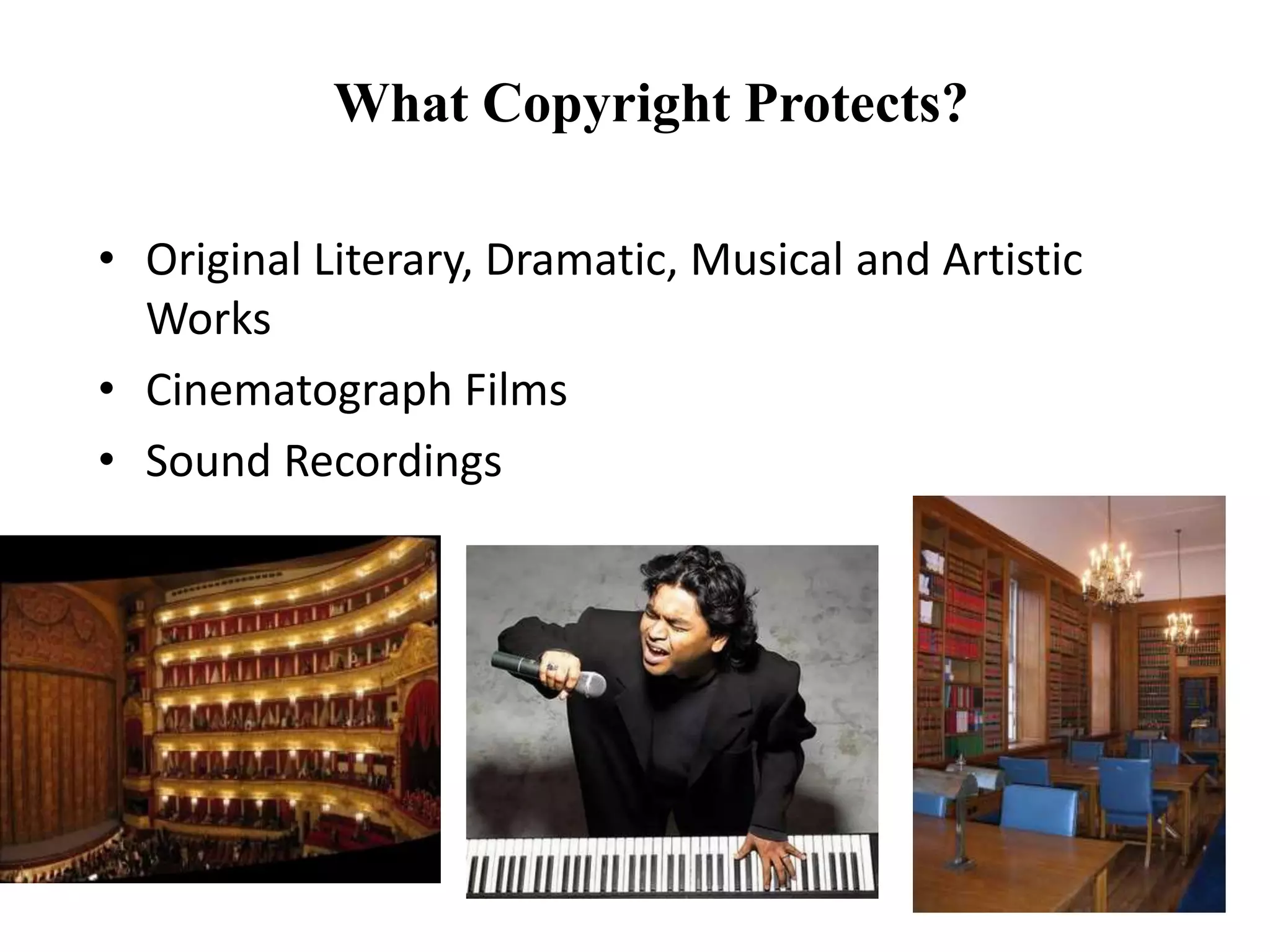
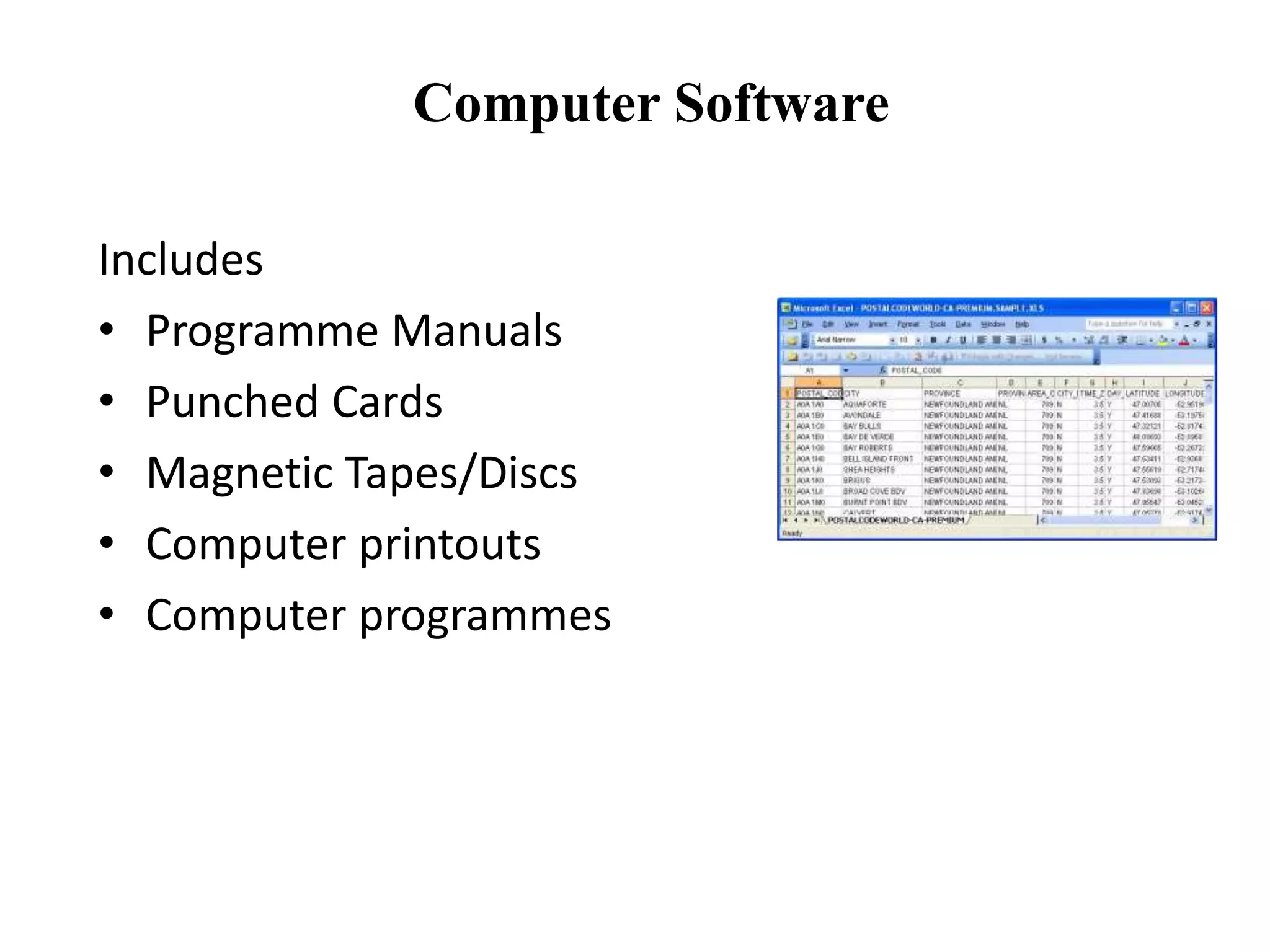
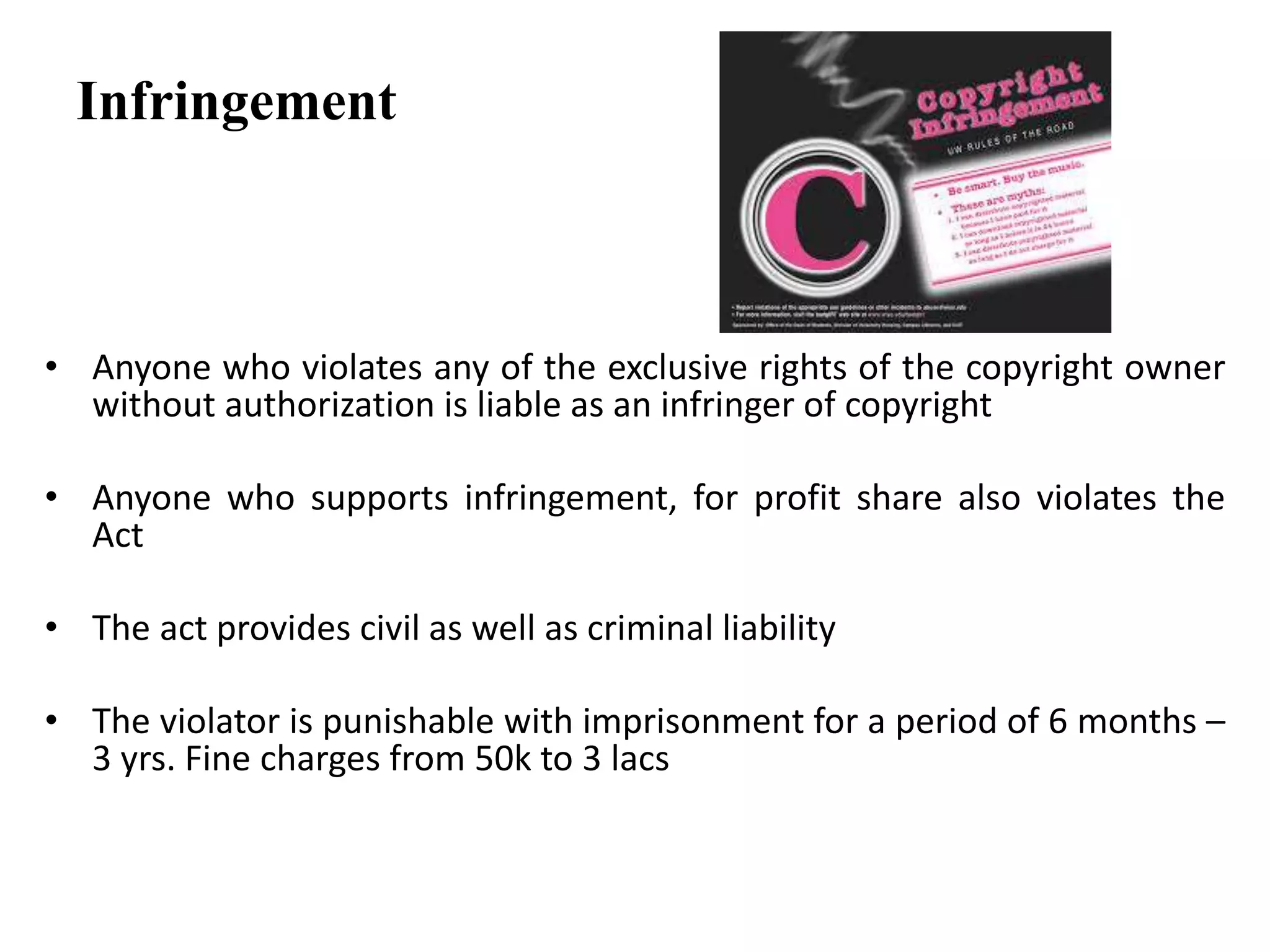
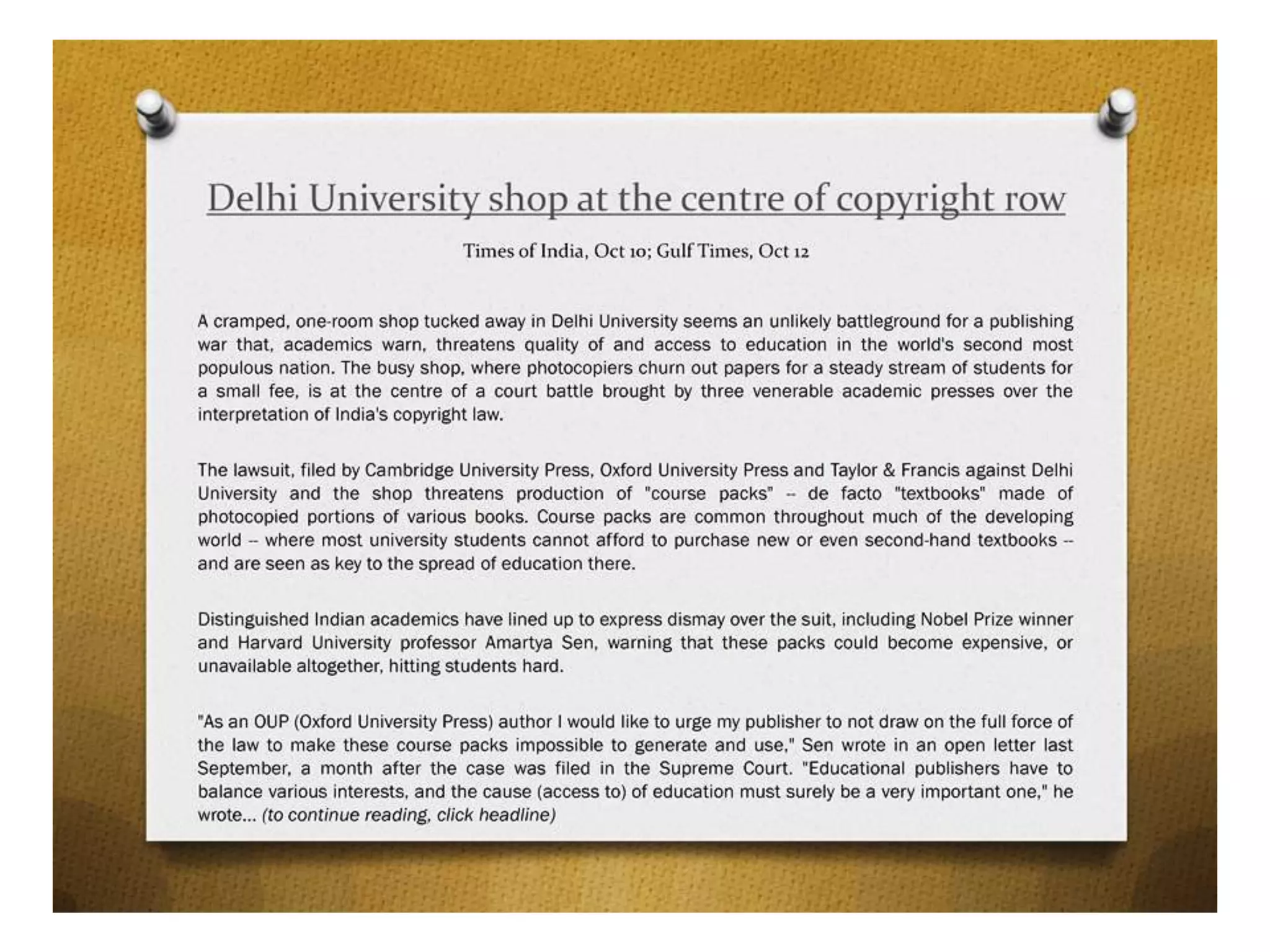
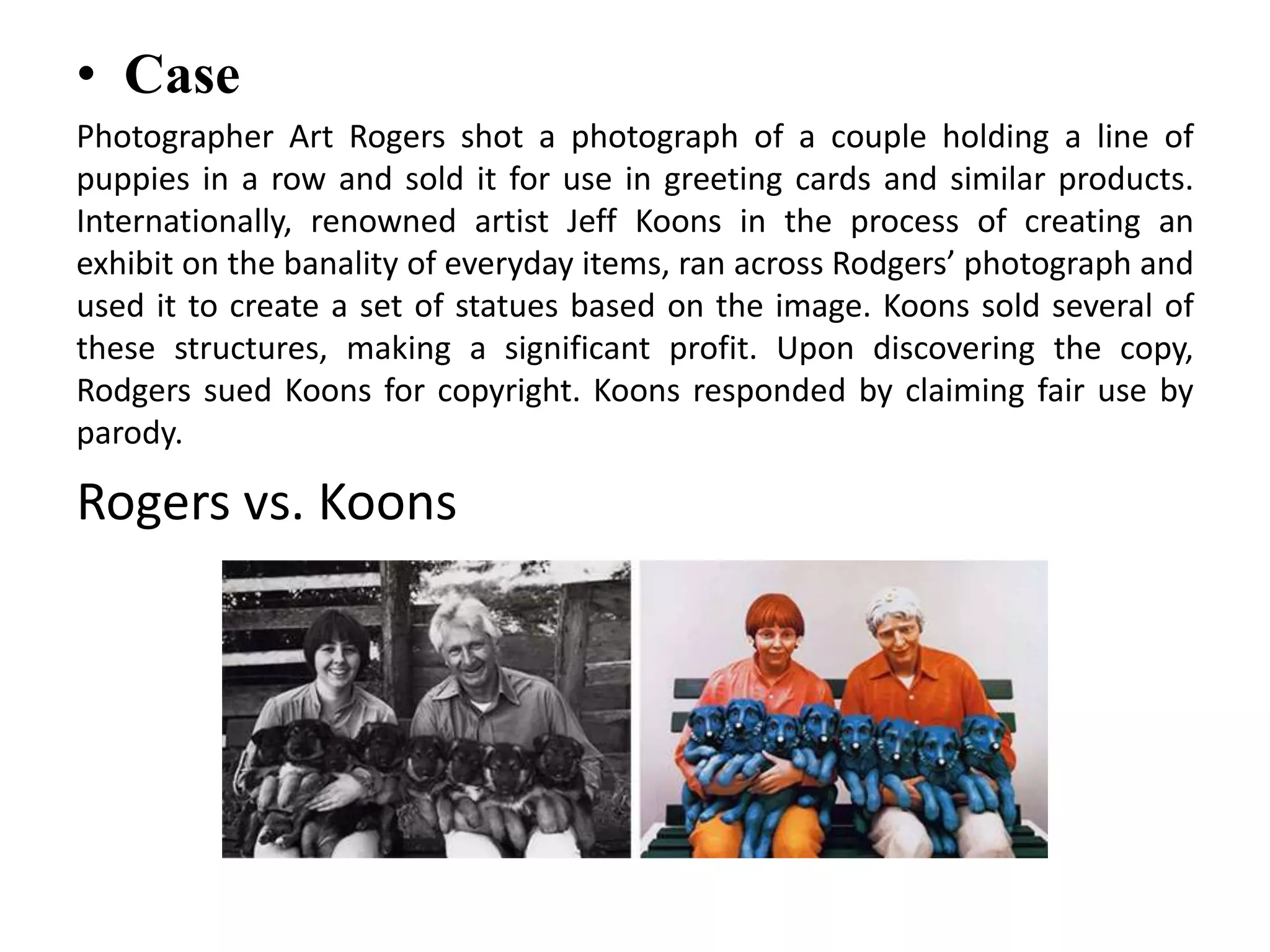

- Copyright protects original creative works like literature, music, art and films from being copied without permission. It gives the creator exclusive rights over the work for a limited time, usually the life of the creator plus 60-70 years. - Works that can be copyrighted include books, songs, photographs, software and architectural designs. Fair use allows limited copying for purposes like research, review and reporting current events. - Infringement of copyright occurs when someone violates the creator's exclusive rights without authorization, such as by copying, distributing or adapting the work. The case of Rogers vs Koons involved an artist who was found to have infringed by copying a photographer's work without permission.


![Copyright act unitiv ( part i) [compatibility mode]](https://cdn.slidesharecdn.com/ss_thumbnails/copyrightactunitivparticompatibilitymode-120426114336-phpapp02-thumbnail.jpg?width=640&height=640&fit=bounds)


