Julian Tait
@julianlstar
Cooperative Data
Cooperative Congress
Cardiff 2013
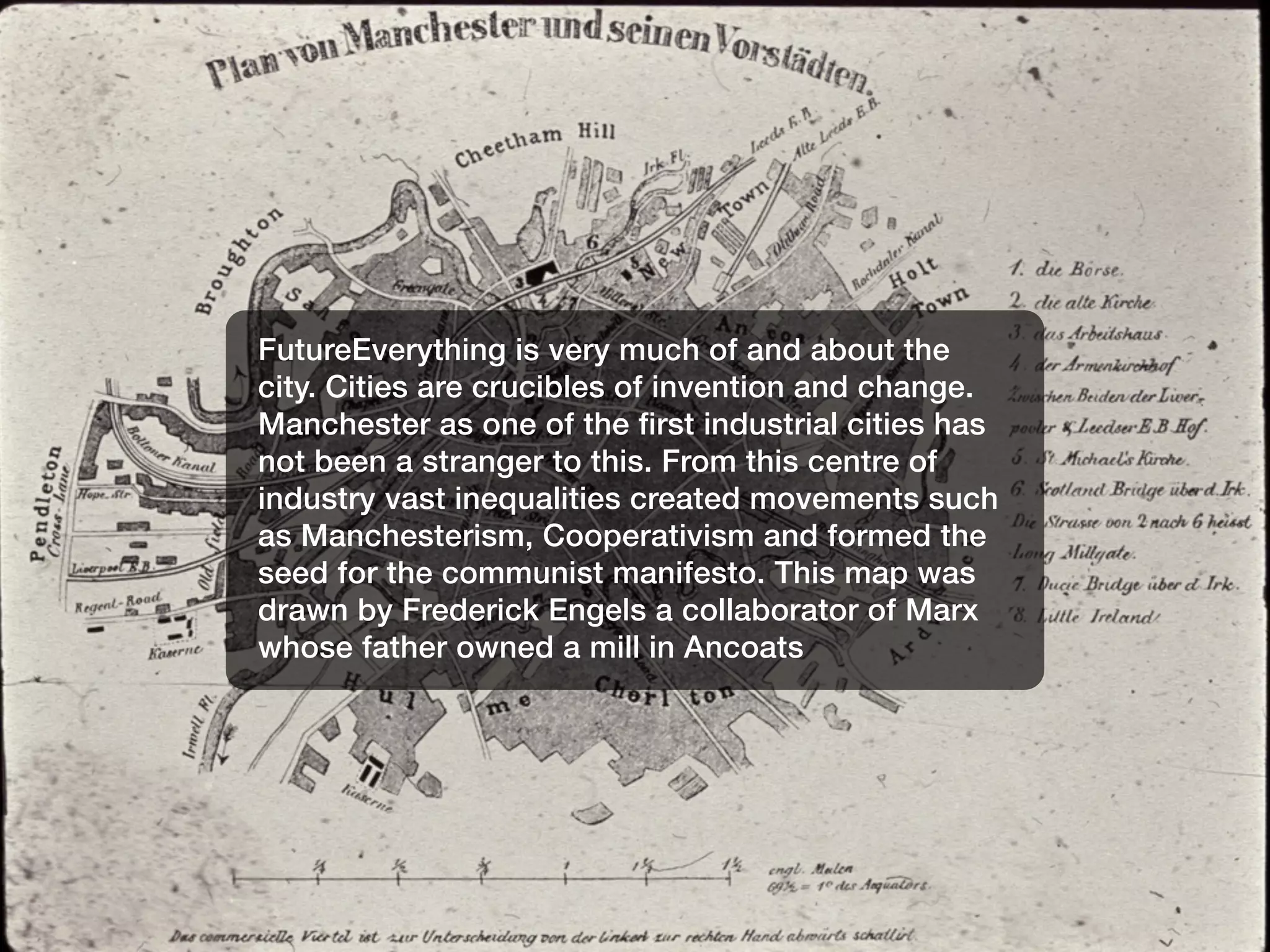
FutureEverything is very much of and about the
city. Cities are crucibles of invention and change.
Manchester as one of the first industrial cities has
not been a stranger to this. From this centre of
industry vast inequalities created movements such
as Manchesterism, Cooperativism and formed the
seed for the communist manifesto. This map was
drawn by Frederick Engels a collaborator of Marx
whose father owned a mill in Ancoats
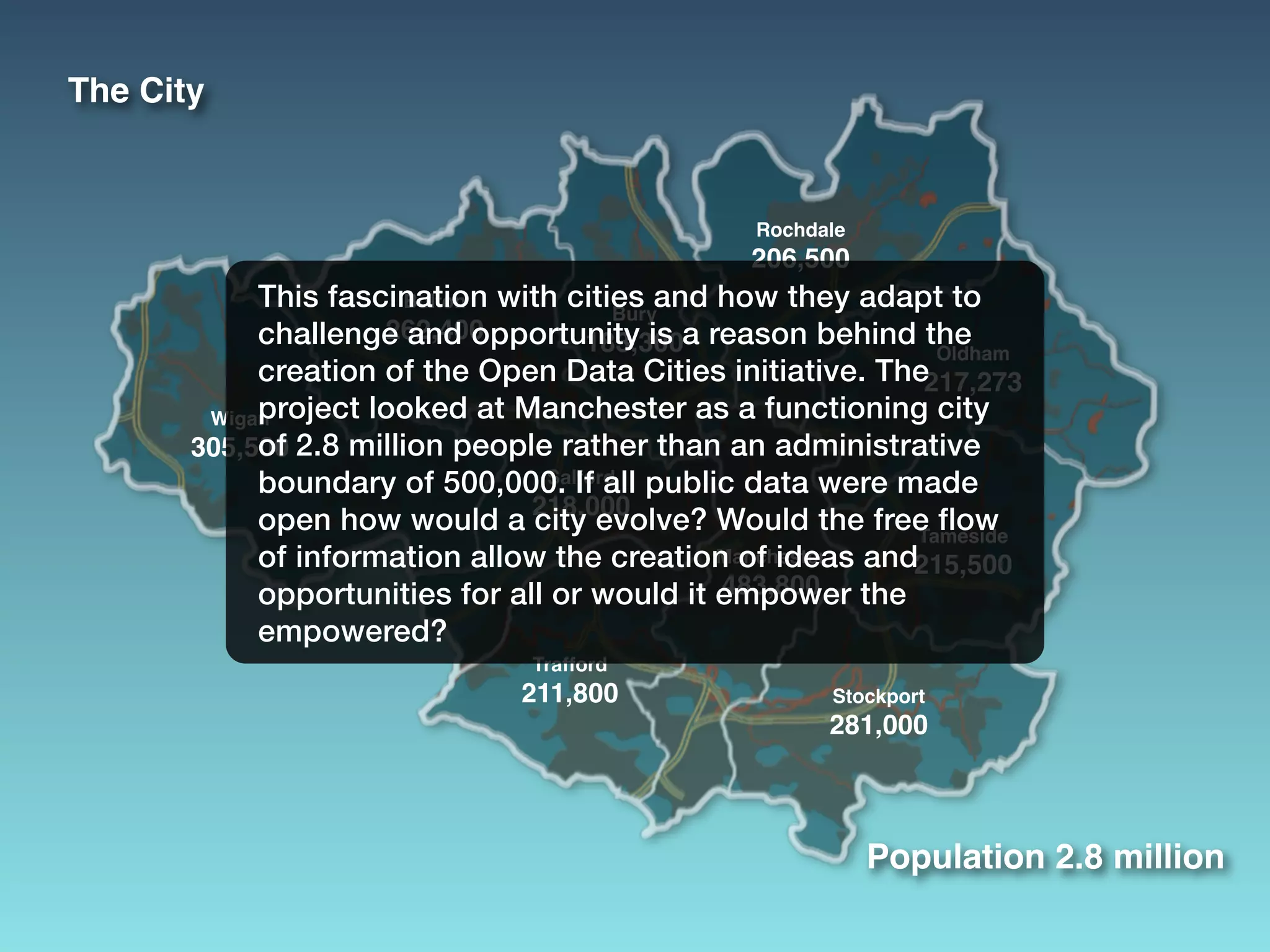
Rochdale
206,500
Oldham
217,273
Tameside
215,500
Stockport
281,000
Manchester
483,800
Trafford
211,800
Salford
218,000
Wigan
305,500
Bolton
262,400
Bury
183,300
The City
Population 2.8 million
This fascination with cities and how they adapt to
challenge and opportunity is a reason behind the
creation of the Open Data Cities initiative. The
project looked at Manchester as a functioning city
of 2.8 million people rather than an administrative
boundary of 500,000. If all public data were made
open how would a city evolve? Would the free flow
of information allow the creation of ideas and
opportunities for all or would it empower the
empowered?
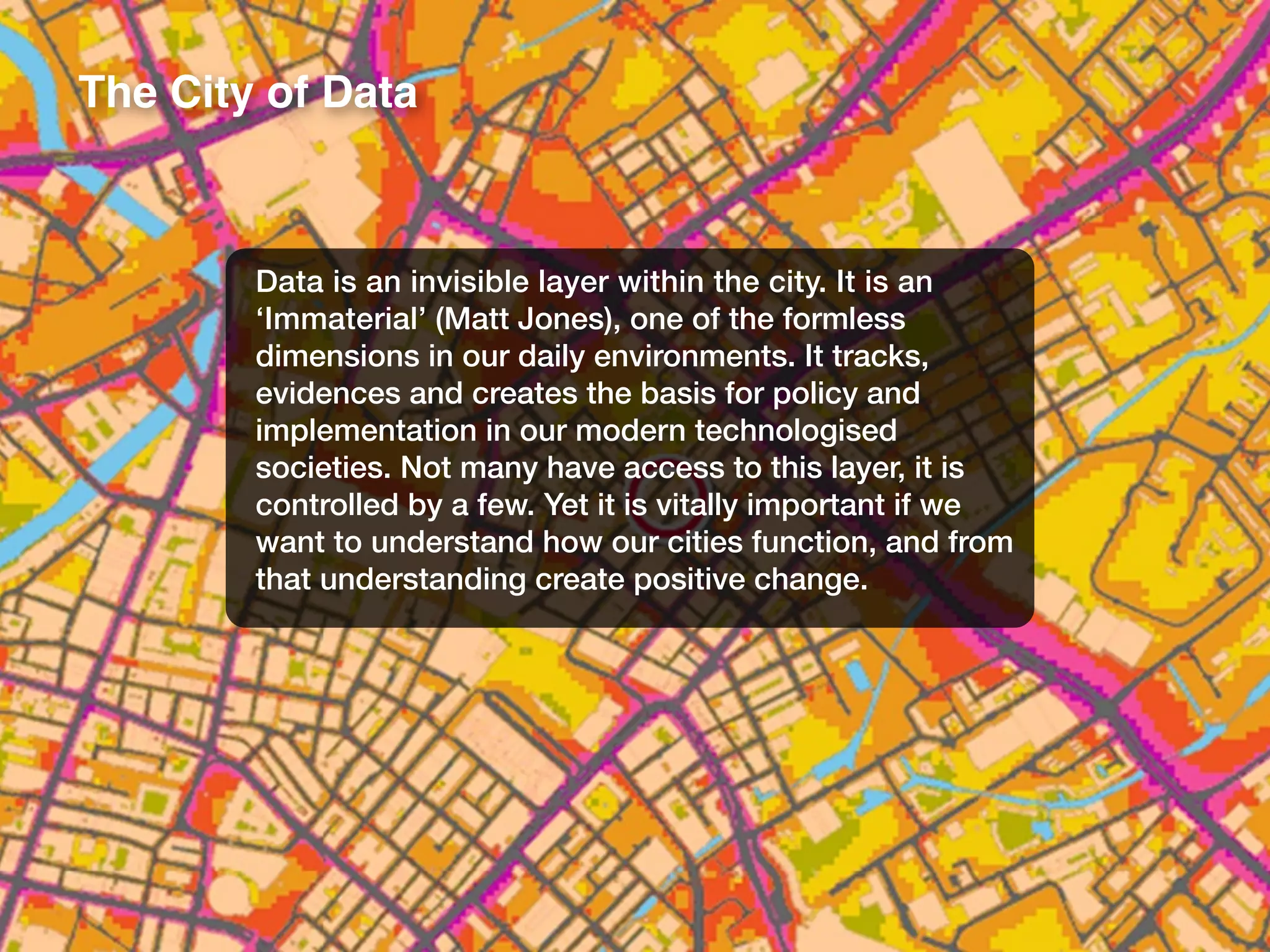
The City of Data
Data is an invisible layer within the city. It is an
‘Immaterial’ (Matt Jones), one of the formless
dimensions in our daily environments. It tracks,
evidences and creates the basis for policy and
implementation in our modern technologised
societies. Not many have access to this layer, it is
controlled by a few. Yet it is vitally important if we
want to understand how our cities function, and from
that understanding create positive change.
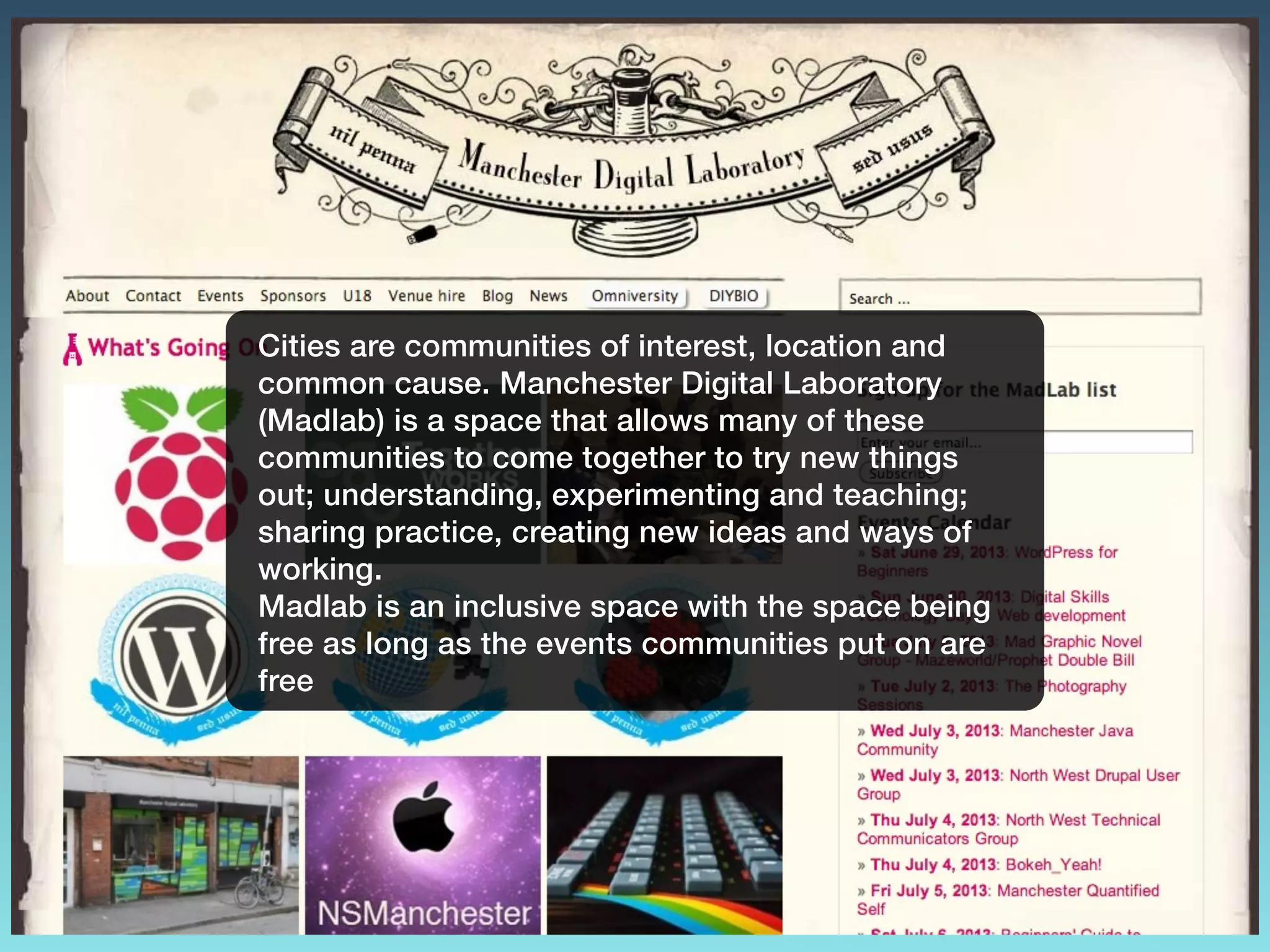
Cities are communities of interest, location and
common cause. Manchester Digital Laboratory
(Madlab) is a space that allows many of these
communities to come together to try new things
out; understanding, experimenting and teaching;
sharing practice, creating new ideas and ways of
working.
Madlab is an inclusive space with the space being
free as long as the events communities put on are
free
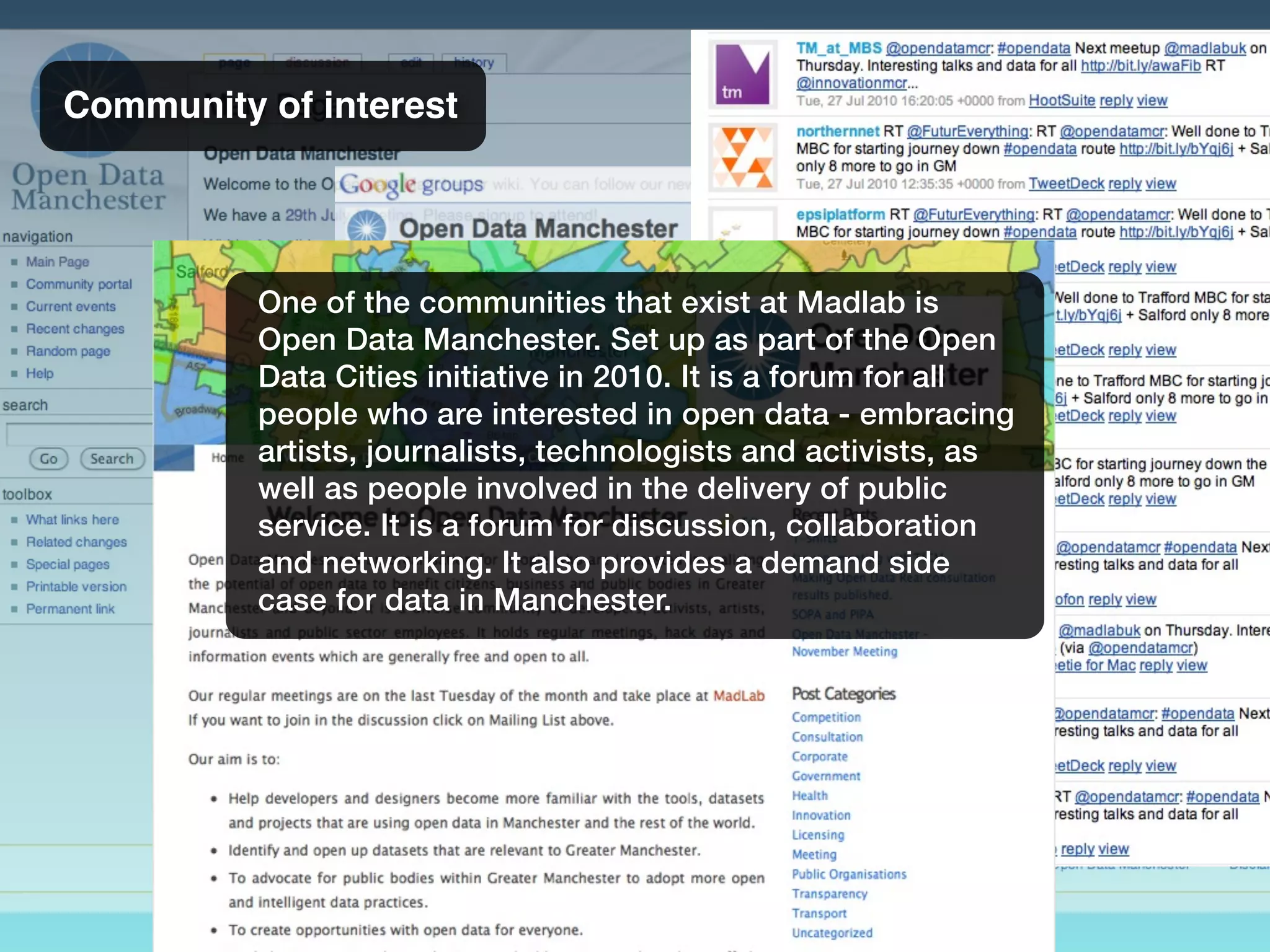
Community of interest
One of the communities that exist at Madlab is
Open Data Manchester. Set up as part of the Open
Data Cities initiative in 2010. It is a forum for all
people who are interested in open data - embracing
artists, journalists, technologists and activists, as
well as people involved in the delivery of public
service. It is a forum for discussion, collaboration
and networking. It also provides a demand side
case for data in Manchester.
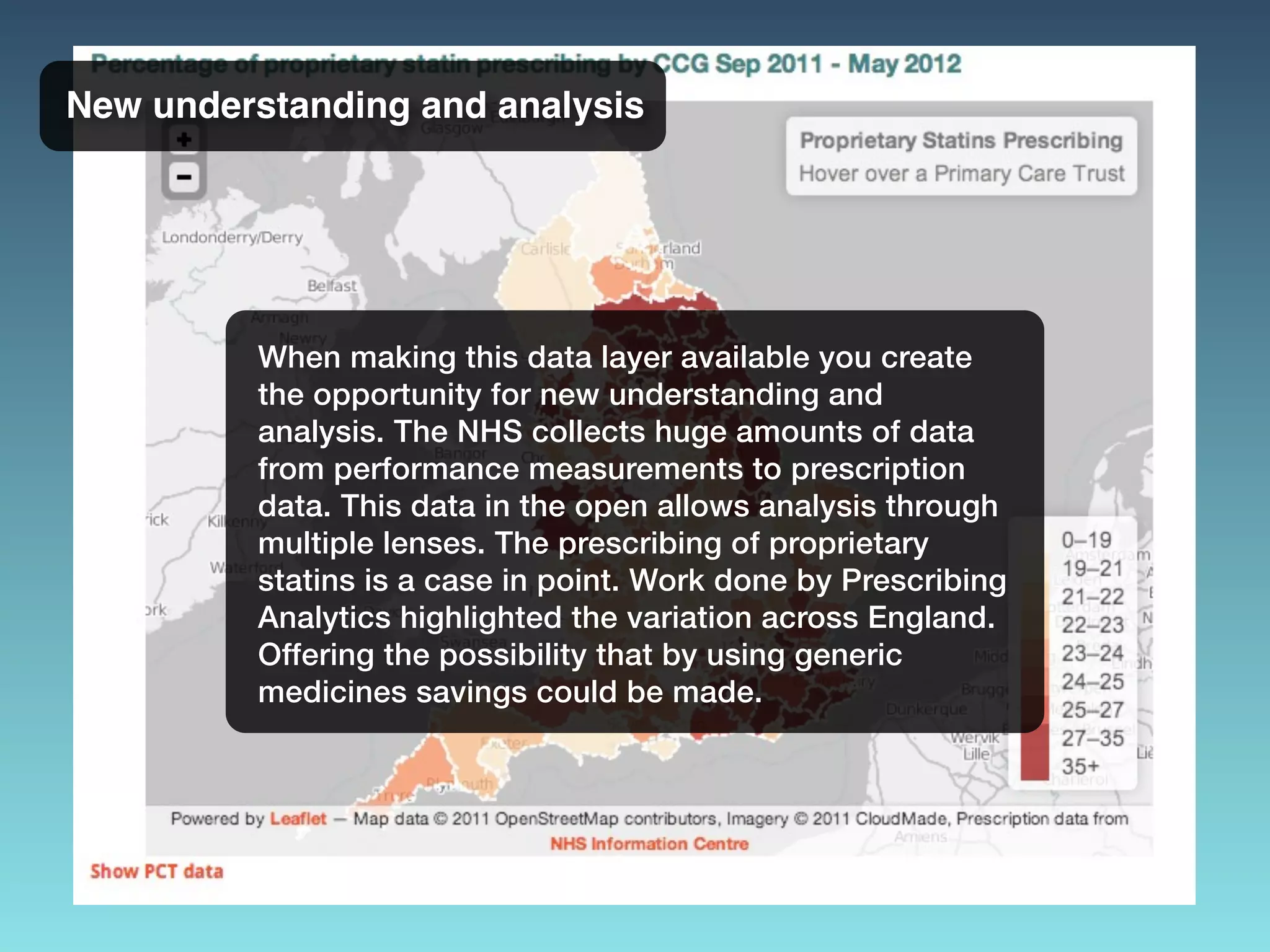
New understanding and analysis
When making this data layer available you create
the opportunity for new understanding and
analysis. The NHS collects huge amounts of data
from performance measurements to prescription
data. This data in the open allows analysis through
multiple lenses. The prescribing of proprietary
statins is a case in point. Work done by Prescribing
Analytics highlighted the variation across England.
Offering the possibility that by using generic
medicines savings could be made.
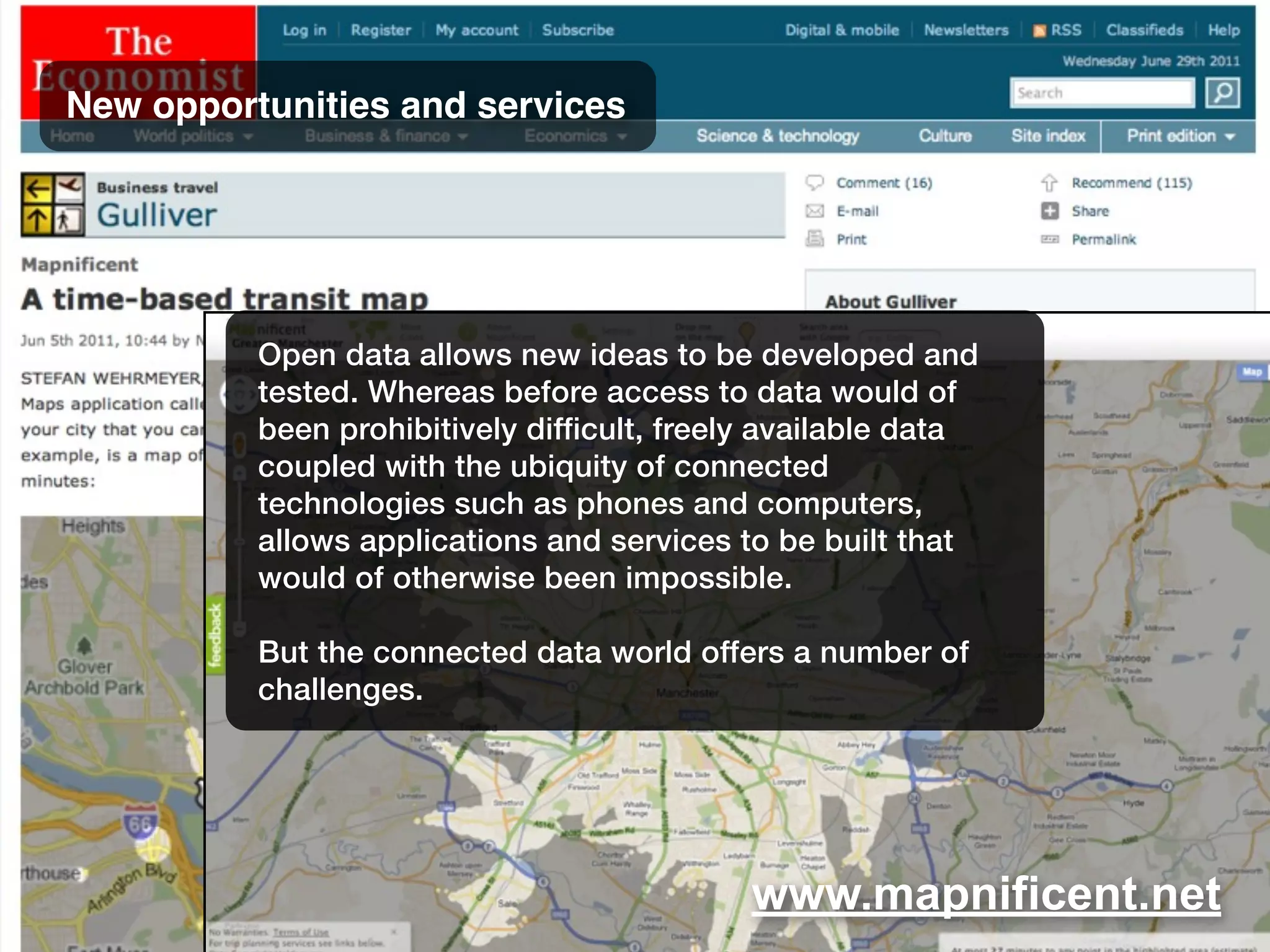
www.mapnificent.net
New opportunities and services
Open data allows new ideas to be developed and
tested. Whereas before access to data would of
been prohibitively difficult, freely available data
coupled with the ubiquity of connected
technologies such as phones and computers,
allows applications and services to be built that
would of otherwise been impossible.
But the connected data world offers a number of
challenges.
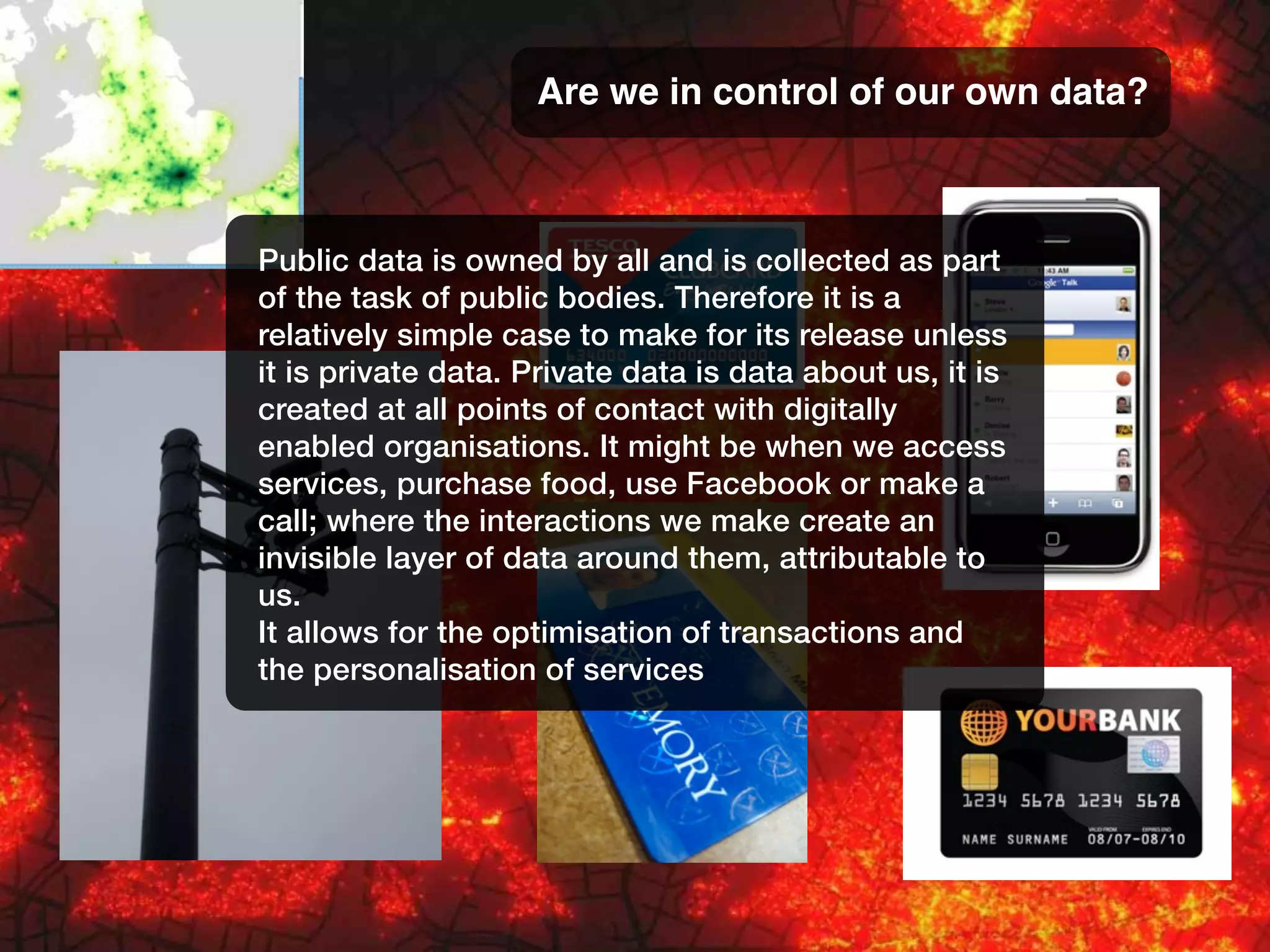
Are we in control of our own data?
Public data is owned by all and is collected as part
of the task of public bodies. Therefore it is a
relatively simple case to make for its release unless
it is private data. Private data is data about us, it is
created at all points of contact with digitally
enabled organisations. It might be when we access
services, purchase food, use Facebook or make a
call; where the interactions we make create an
invisible layer of data around them, attributable to
us.
It allows for the optimisation of transactions and
the personalisation of services
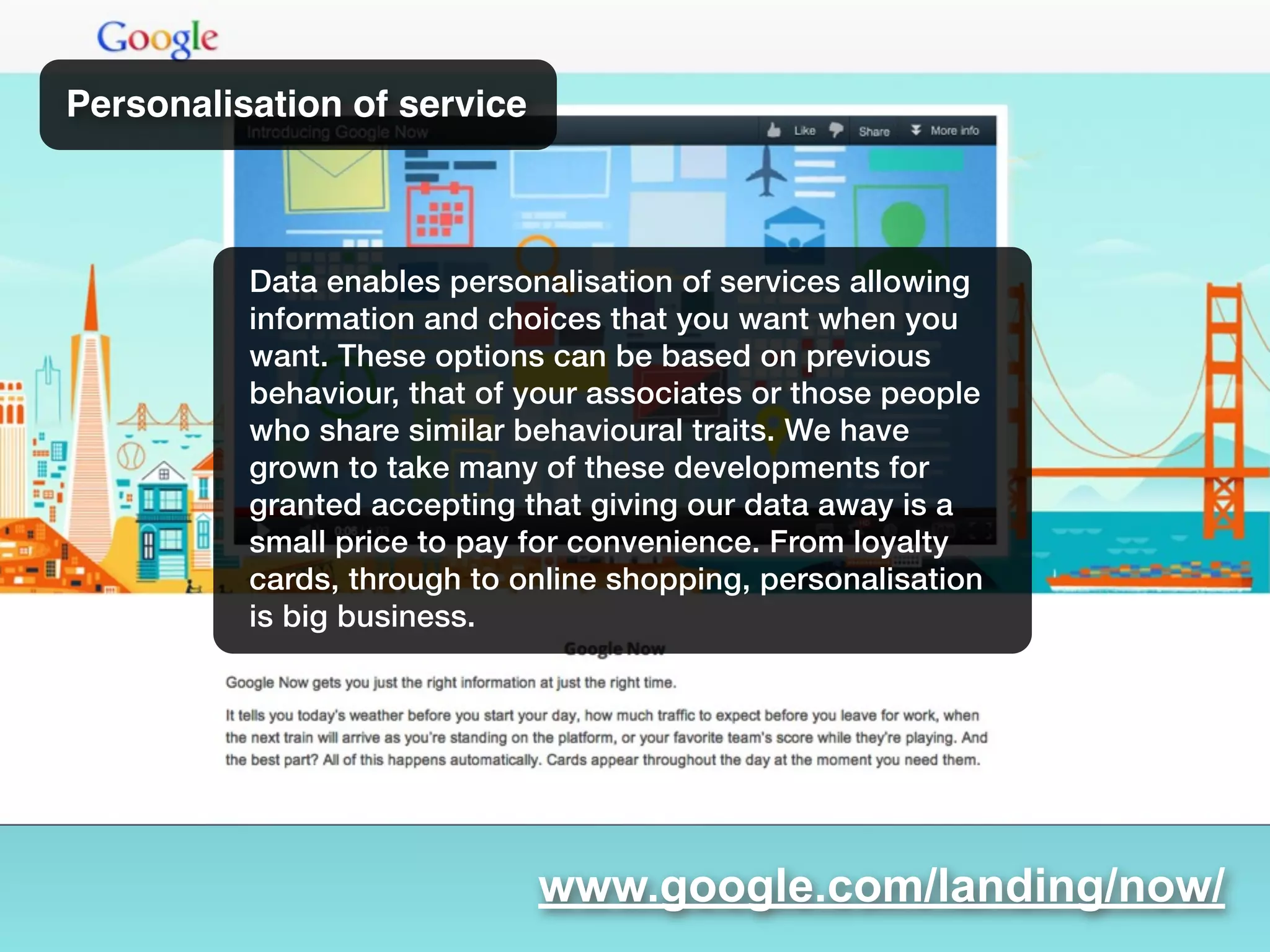
www.google.com/landing/now/
Personalisation of service
Data enables personalisation of services allowing
information and choices that you want when you
want. These options can be based on previous
behaviour, that of your associates or those people
who share similar behavioural traits. We have
grown to take many of these developments for
granted accepting that giving our data away is a
small price to pay for convenience. From loyalty
cards, through to online shopping, personalisation
is big business.
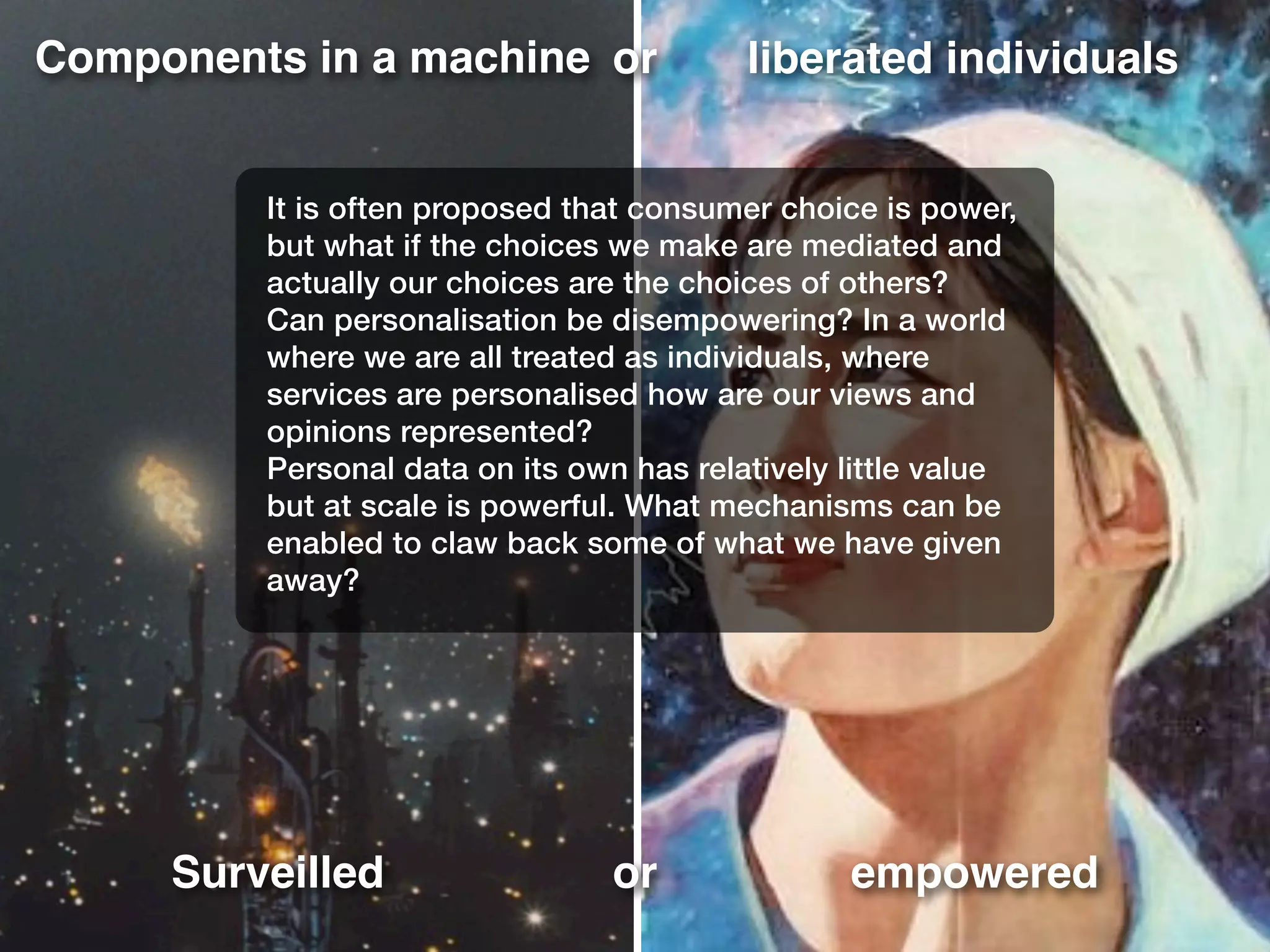
Components in a machine liberated individuals
Surveilled empowered
or
or
It is often proposed that consumer choice is power,
but what if the choices we make are mediated and
actually our choices are the choices of others?
Can personalisation be disempowering? In a world
where we are all treated as individuals, where
services are personalised how are our views and
opinions represented?
Personal data on its own has relatively little value
but at scale is powerful. What mechanisms can be
enabled to claw back some of what we have given
away?
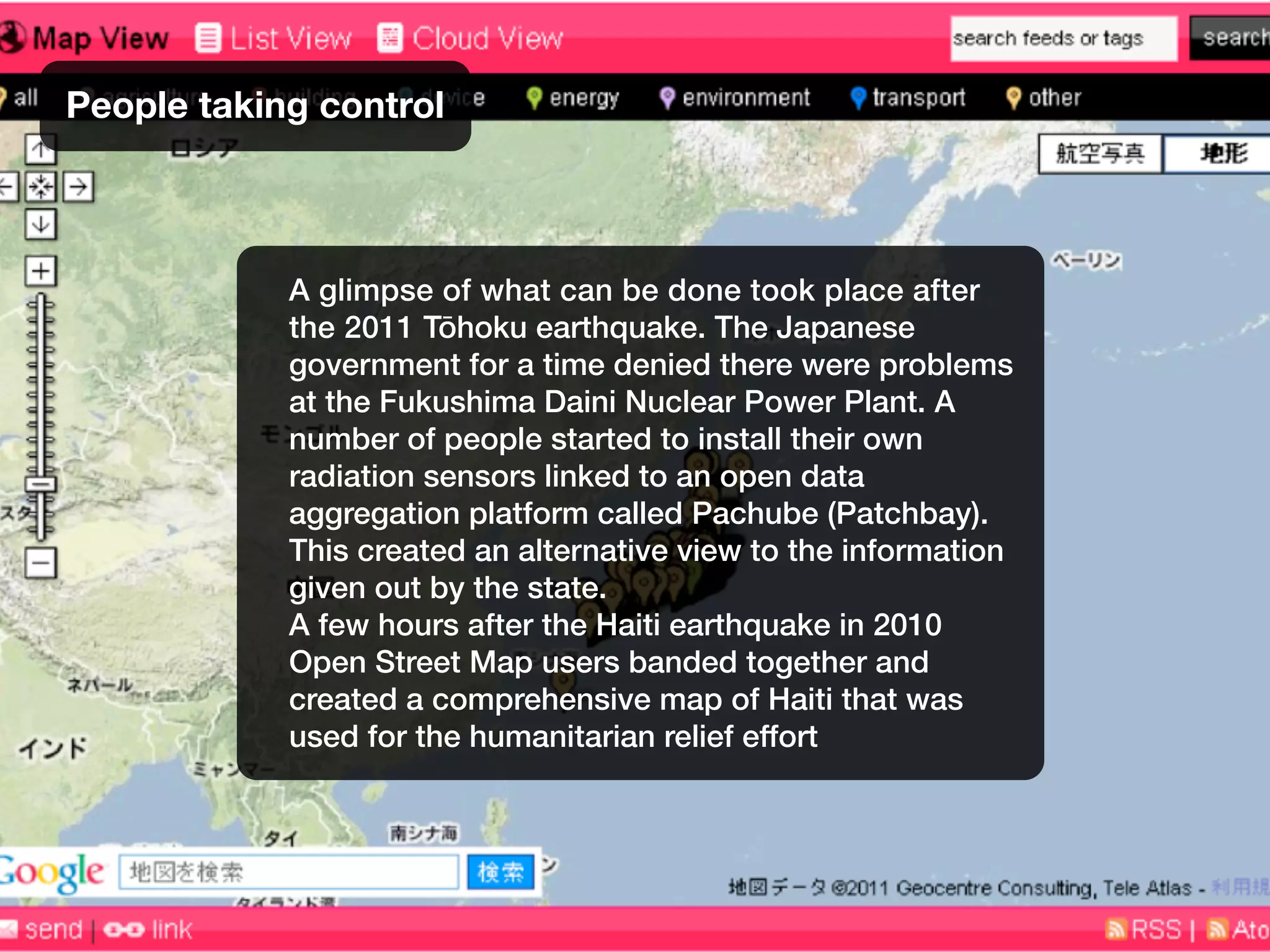
People taking control
A glimpse of what can be done took place after
the 2011 Tōhoku earthquake. The Japanese
government for a time denied there were problems
at the Fukushima Daini Nuclear Power Plant. A
number of people started to install their own
radiation sensors linked to an open data
aggregation platform called Pachube (Patchbay).
This created an alternative view to the information
given out by the state.
A few hours after the Haiti earthquake in 2010
Open Street Map users banded together and
created a comprehensive map of Haiti that was
used for the humanitarian relief effort
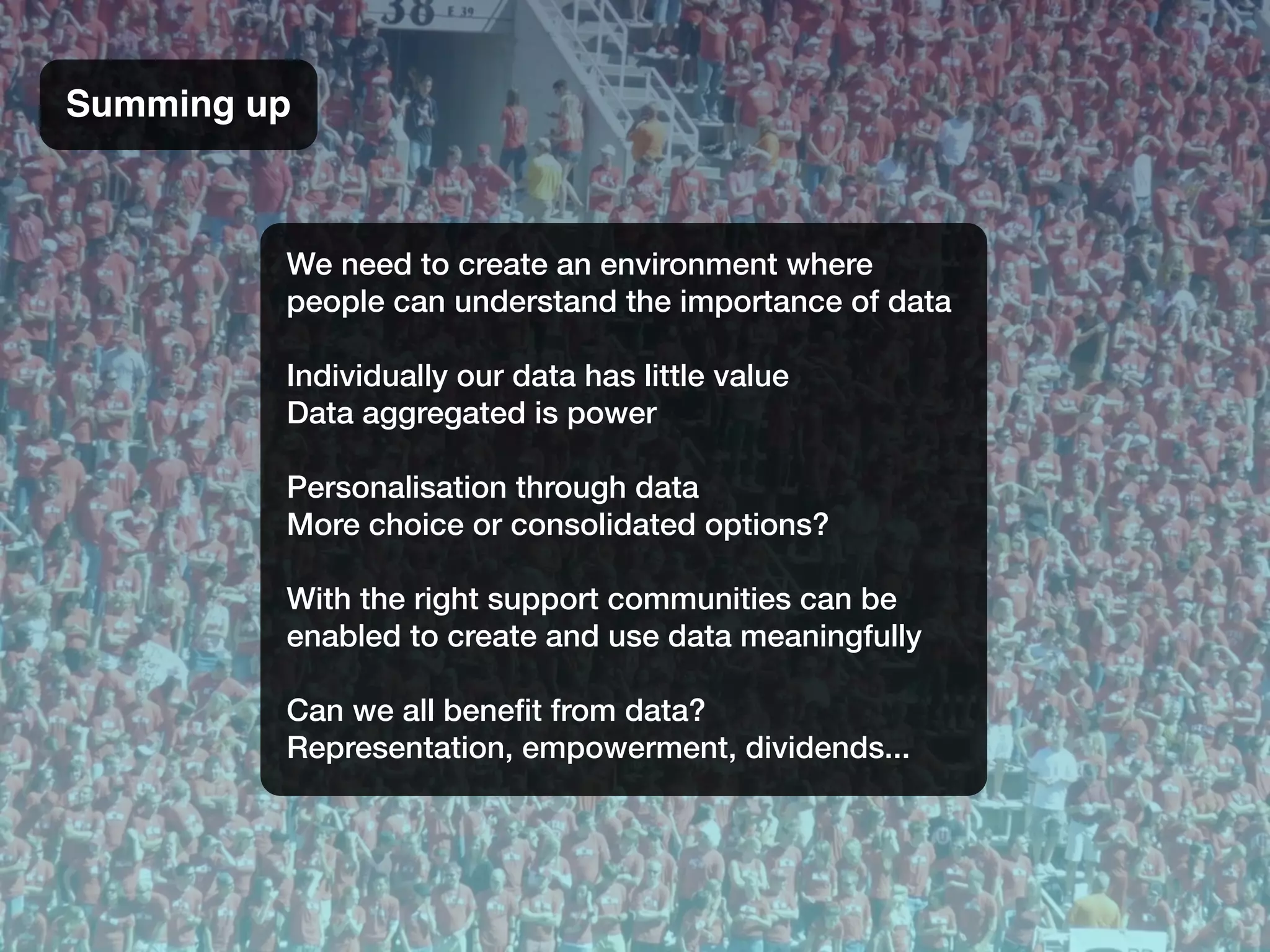
We need to create an environment where
people can understand the importance of data
Individually our data has little value
Data aggregated is power
Personalisation through data
More choice or consolidated options?
With the right support communities can be
enabled to create and use data meaningfully
Can we all benefit from data?
Representation, empowerment, dividends...
Summing up
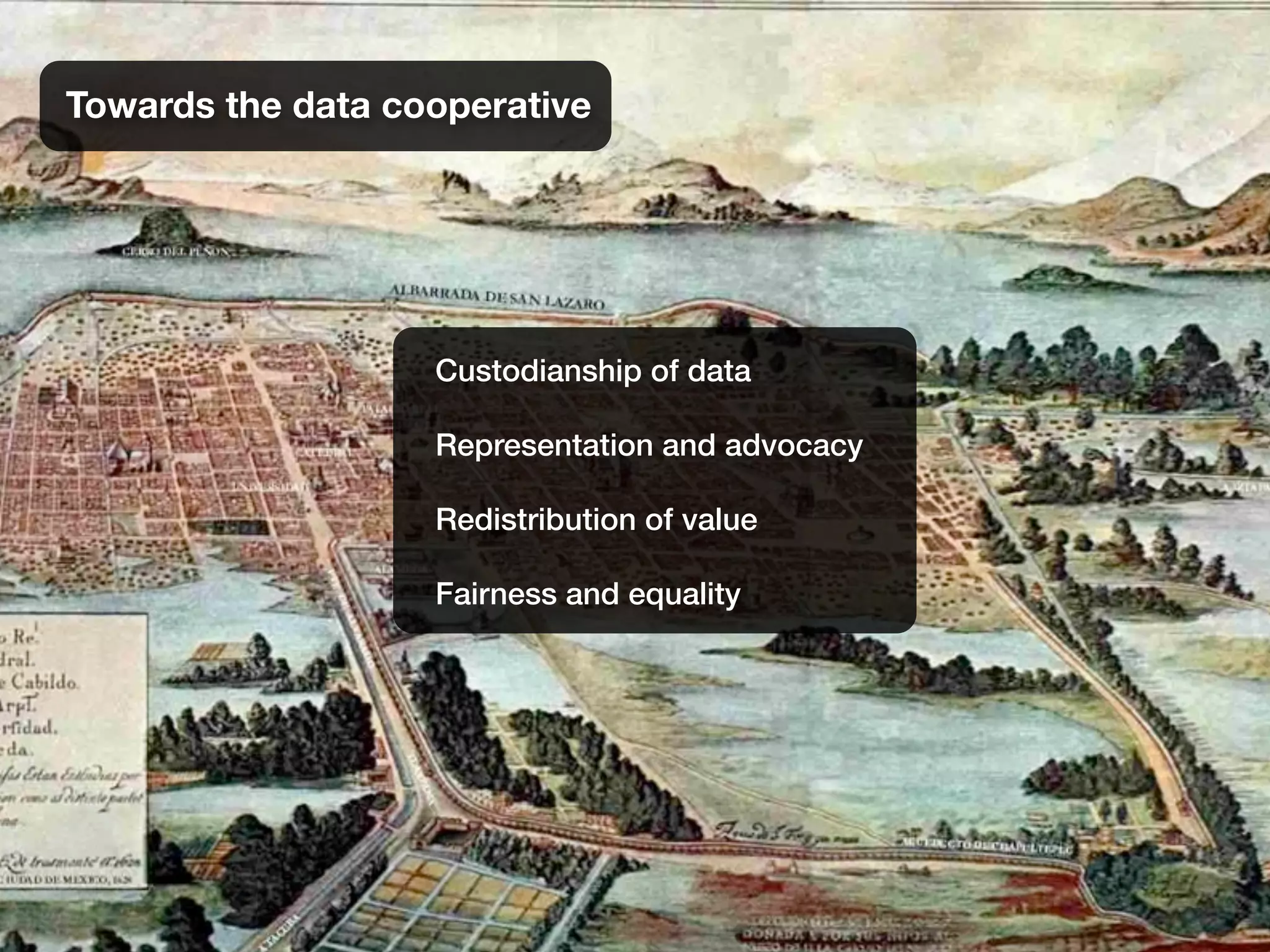
Towards the data cooperative
Custodianship of data
Representation and advocacy
Redistribution of value
Fairness and equality
Thank You
julian@futureeverything.org

Cooperative Data

  • 1.
  • 2.
    FutureEverything is verymuch of and about the city. Cities are crucibles of invention and change. Manchester as one of the first industrial cities has not been a stranger to this. From this centre of industry vast inequalities created movements such as Manchesterism, Cooperativism and formed the seed for the communist manifesto. This map was drawn by Frederick Engels a collaborator of Marx whose father owned a mill in Ancoats
  • 3.
    Rochdale 206,500 Oldham 217,273 Tameside 215,500 Stockport 281,000 Manchester 483,800 Trafford 211,800 Salford 218,000 Wigan 305,500 Bolton 262,400 Bury 183,300 The City Population 2.8million This fascination with cities and how they adapt to challenge and opportunity is a reason behind the creation of the Open Data Cities initiative. The project looked at Manchester as a functioning city of 2.8 million people rather than an administrative boundary of 500,000. If all public data were made open how would a city evolve? Would the free flow of information allow the creation of ideas and opportunities for all or would it empower the empowered?
  • 4.
    The City ofData Data is an invisible layer within the city. It is an ‘Immaterial’ (Matt Jones), one of the formless dimensions in our daily environments. It tracks, evidences and creates the basis for policy and implementation in our modern technologised societies. Not many have access to this layer, it is controlled by a few. Yet it is vitally important if we want to understand how our cities function, and from that understanding create positive change.
  • 5.
    Cities are communitiesof interest, location and common cause. Manchester Digital Laboratory (Madlab) is a space that allows many of these communities to come together to try new things out; understanding, experimenting and teaching; sharing practice, creating new ideas and ways of working. Madlab is an inclusive space with the space being free as long as the events communities put on are free
  • 6.
    Community of interest Oneof the communities that exist at Madlab is Open Data Manchester. Set up as part of the Open Data Cities initiative in 2010. It is a forum for all people who are interested in open data - embracing artists, journalists, technologists and activists, as well as people involved in the delivery of public service. It is a forum for discussion, collaboration and networking. It also provides a demand side case for data in Manchester.
  • 7.
    New understanding andanalysis When making this data layer available you create the opportunity for new understanding and analysis. The NHS collects huge amounts of data from performance measurements to prescription data. This data in the open allows analysis through multiple lenses. The prescribing of proprietary statins is a case in point. Work done by Prescribing Analytics highlighted the variation across England. Offering the possibility that by using generic medicines savings could be made.
  • 8.
    www.mapnificent.net New opportunities andservices Open data allows new ideas to be developed and tested. Whereas before access to data would of been prohibitively difficult, freely available data coupled with the ubiquity of connected technologies such as phones and computers, allows applications and services to be built that would of otherwise been impossible. But the connected data world offers a number of challenges.
  • 9.
    Are we incontrol of our own data? Public data is owned by all and is collected as part of the task of public bodies. Therefore it is a relatively simple case to make for its release unless it is private data. Private data is data about us, it is created at all points of contact with digitally enabled organisations. It might be when we access services, purchase food, use Facebook or make a call; where the interactions we make create an invisible layer of data around them, attributable to us. It allows for the optimisation of transactions and the personalisation of services
  • 10.
    www.google.com/landing/now/ Personalisation of service Dataenables personalisation of services allowing information and choices that you want when you want. These options can be based on previous behaviour, that of your associates or those people who share similar behavioural traits. We have grown to take many of these developments for granted accepting that giving our data away is a small price to pay for convenience. From loyalty cards, through to online shopping, personalisation is big business.
  • 11.
    Components in amachine liberated individuals Surveilled empowered or or It is often proposed that consumer choice is power, but what if the choices we make are mediated and actually our choices are the choices of others? Can personalisation be disempowering? In a world where we are all treated as individuals, where services are personalised how are our views and opinions represented? Personal data on its own has relatively little value but at scale is powerful. What mechanisms can be enabled to claw back some of what we have given away?
  • 12.
    People taking control Aglimpse of what can be done took place after the 2011 Tōhoku earthquake. The Japanese government for a time denied there were problems at the Fukushima Daini Nuclear Power Plant. A number of people started to install their own radiation sensors linked to an open data aggregation platform called Pachube (Patchbay). This created an alternative view to the information given out by the state. A few hours after the Haiti earthquake in 2010 Open Street Map users banded together and created a comprehensive map of Haiti that was used for the humanitarian relief effort
  • 13.
    We need tocreate an environment where people can understand the importance of data Individually our data has little value Data aggregated is power Personalisation through data More choice or consolidated options? With the right support communities can be enabled to create and use data meaningfully Can we all benefit from data? Representation, empowerment, dividends... Summing up
  • 14.
    Towards the datacooperative Custodianship of data Representation and advocacy Redistribution of value Fairness and equality
  • 15.