Contractor Employees
Legal Perspective
By
Faisal Mahmood Ghani
Advocate and Industrial Relations Advisor
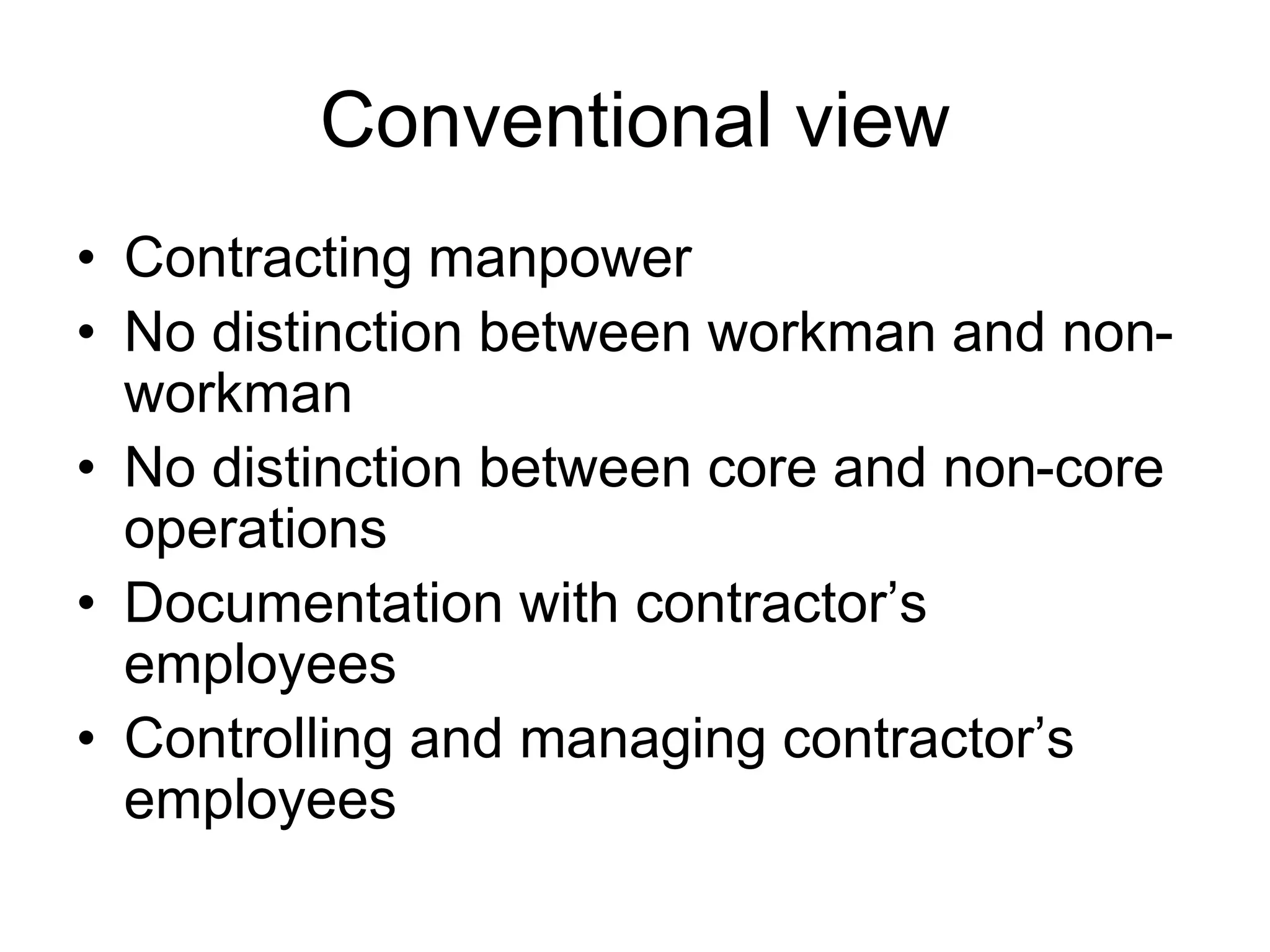
• Contracting manpower
• No distinction between workman and non-
workman
• No distinction between core and non-core
operations
• Documentation with contractor’s
employees
• Controlling and managing contractor’s
employees
Conventional view
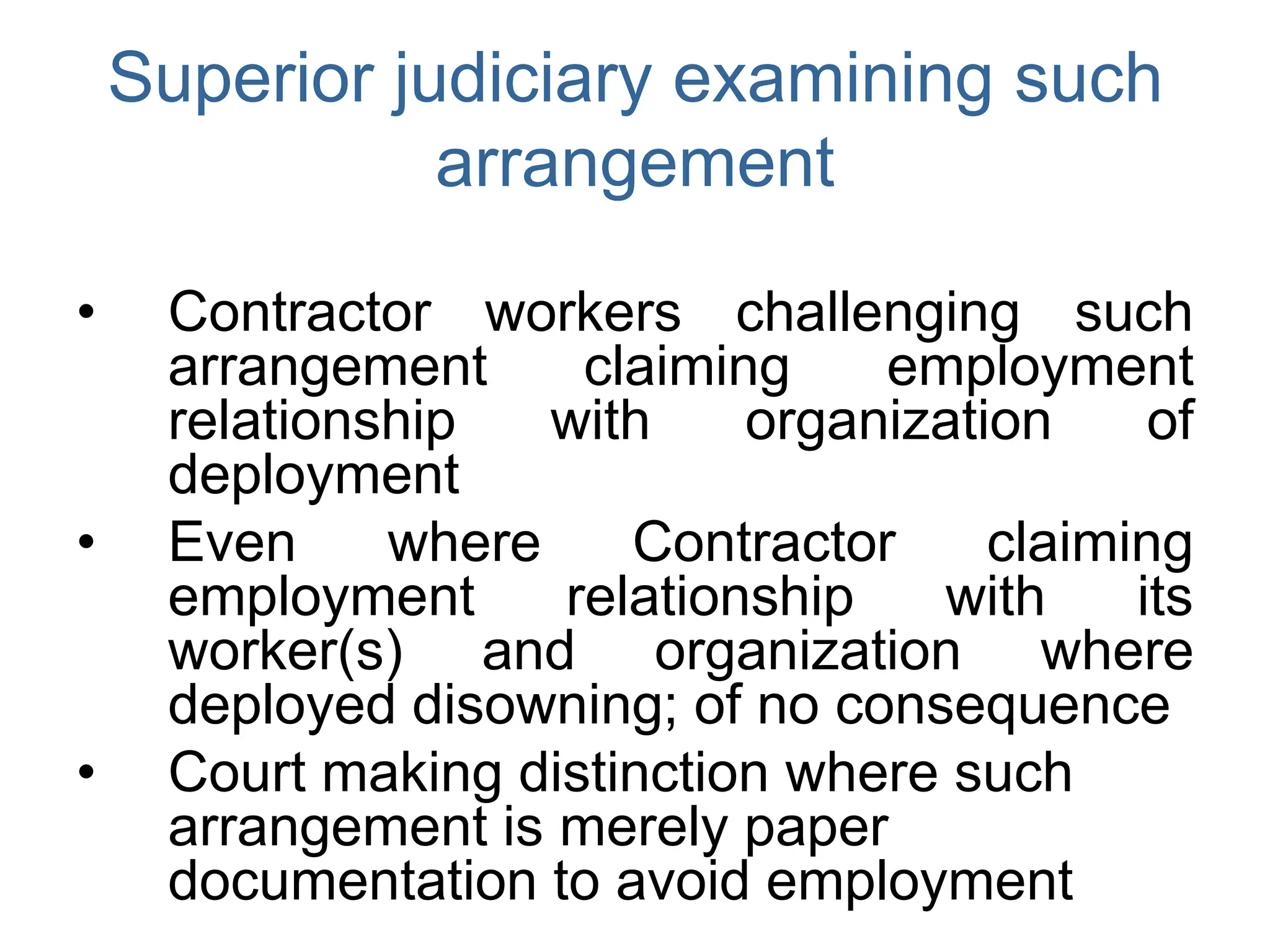
Superior judiciary examining such
arrangement
• Contractor workers challenging such
arrangement claiming employment
relationship with organization of
deployment
• Even where Contractor claiming
employment relationship with its
worker(s) and organization where
deployed disowning; of no consequence
• Court making distinction where such
arrangement is merely paper
documentation to avoid employment
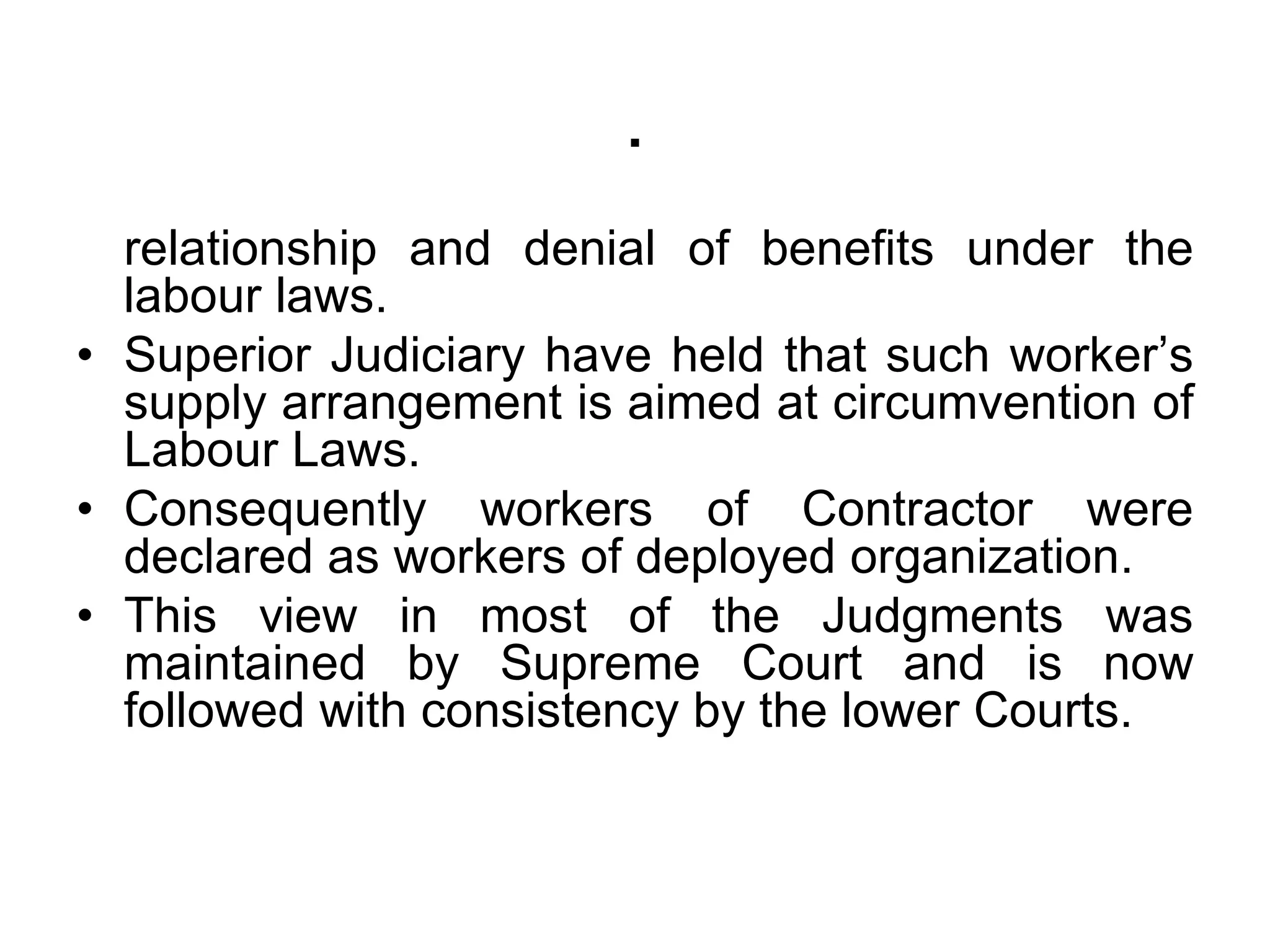
relationship and denial of benefits under the
labour laws.
• Superior Judiciary have held that such worker’s
supply arrangement is aimed at circumvention of
Labour Laws.
• Consequently workers of Contractor were
declared as workers of deployed organization.
• This view in most of the Judgments was
maintained by Supreme Court and is now
followed with consistency by the lower Courts.
.
.
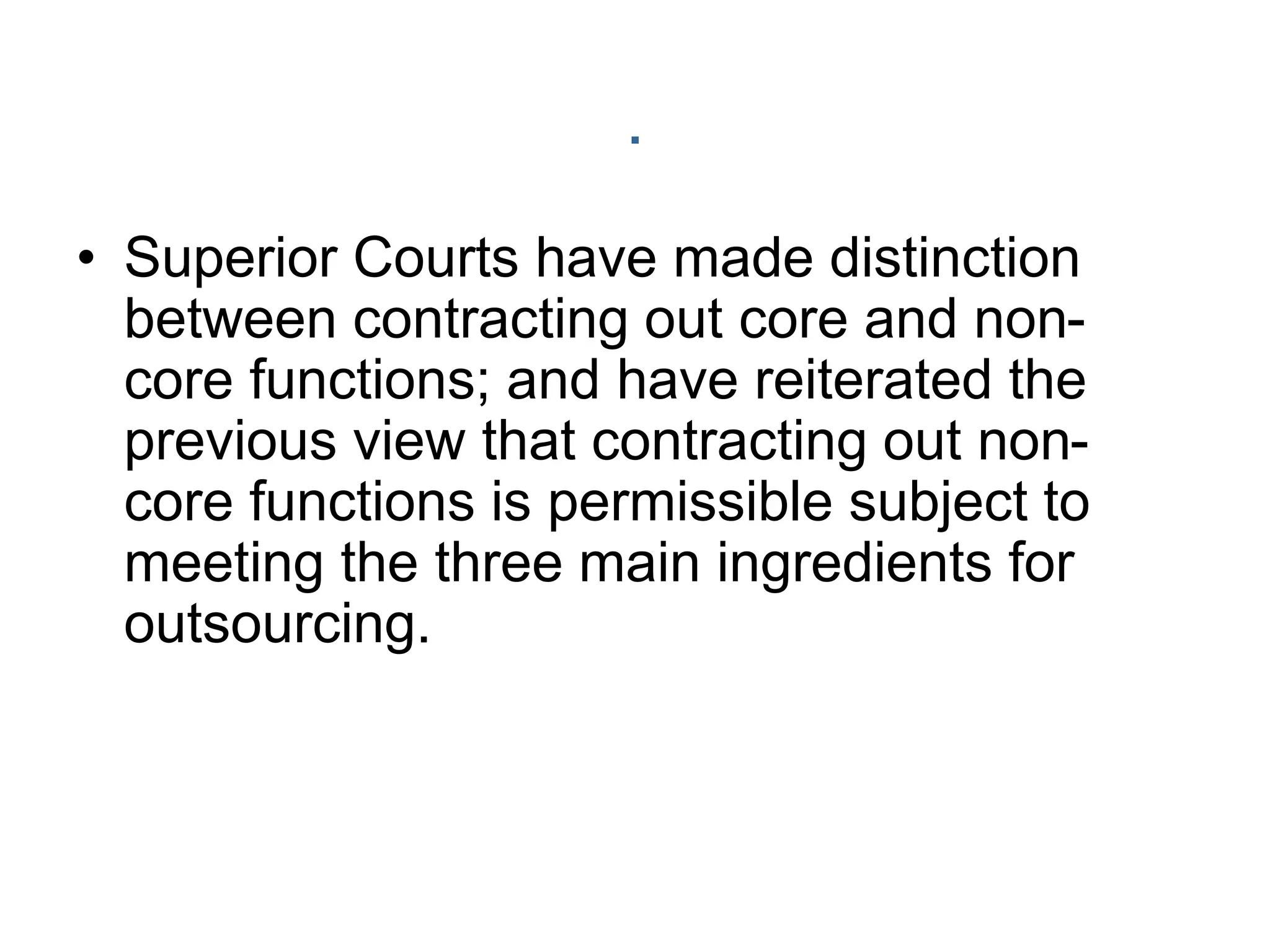
• Superior Courts have made distinction
between contracting out core and non-
core functions; and have reiterated the
previous view that contracting out non-
core functions is permissible subject to
meeting the three main ingredients for
outsourcing.
Legal view
Now the criteria to be fulfilled for
outsourcing of non core functions and
where the contractor/service
provider/vendor can render services and
deploy its workers are:
1. Engagement and appointment letter of
the contractor;
2. Payment of salary and other benefits by
the contractor;
3. Control and supervision by the Contractor
.
However there is no legal exposure where
outsourcing is done in core functions but
the Agreement requires deployment of
non-workman; as such persons are not
governed under the Labour Laws but
under the terms of appointment letter e.g.,
Sales related persons, management cadre
etc.

Contractor Employees Legal Perspective.ppt

  • 1.
    Contractor Employees Legal Perspective By FaisalMahmood Ghani Advocate and Industrial Relations Advisor
  • 2.
    • Contracting manpower •No distinction between workman and non- workman • No distinction between core and non-core operations • Documentation with contractor’s employees • Controlling and managing contractor’s employees Conventional view
  • 3.
    Superior judiciary examiningsuch arrangement • Contractor workers challenging such arrangement claiming employment relationship with organization of deployment • Even where Contractor claiming employment relationship with its worker(s) and organization where deployed disowning; of no consequence • Court making distinction where such arrangement is merely paper documentation to avoid employment
  • 4.
    relationship and denialof benefits under the labour laws. • Superior Judiciary have held that such worker’s supply arrangement is aimed at circumvention of Labour Laws. • Consequently workers of Contractor were declared as workers of deployed organization. • This view in most of the Judgments was maintained by Supreme Court and is now followed with consistency by the lower Courts. .
  • 5.
    . • Superior Courtshave made distinction between contracting out core and non- core functions; and have reiterated the previous view that contracting out non- core functions is permissible subject to meeting the three main ingredients for outsourcing.
  • 6.
    Legal view Now thecriteria to be fulfilled for outsourcing of non core functions and where the contractor/service provider/vendor can render services and deploy its workers are: 1. Engagement and appointment letter of the contractor; 2. Payment of salary and other benefits by the contractor; 3. Control and supervision by the Contractor
  • 7.
    . However there isno legal exposure where outsourcing is done in core functions but the Agreement requires deployment of non-workman; as such persons are not governed under the Labour Laws but under the terms of appointment letter e.g., Sales related persons, management cadre etc.