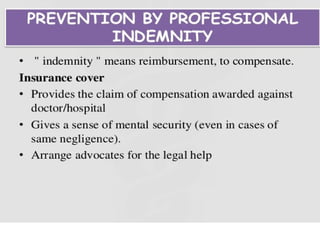
Consumer Protection Act
(1986)
C
o
l
u
m
n
1
C
o
l
u
m
n
2
C
o
l
u
m
n
3
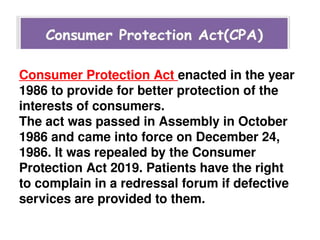
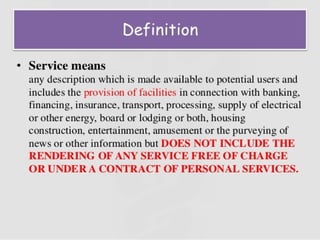
Consumer Protection Act enacted in the year
1986 to provide for better protection of the
interests of consumers.
The act was passed in Assembly in October
1986 and came into force on December 24,
1986. It was repealed by the Consumer
Protection Act 2019. Patients have the right
to complain in a redressal forum if defective
services are provided to them.
C
o
l
u
m
n
1
C
o
l
u
m
n
2
C
o
l
u
m
n
3
Row 1 Row 2 Row 3 Row 4
0
2
4
6
8
10
12
Column 1
Column 2
Column 3
C
o
l
u
m
n
1
C
o
l
u
m
n
2
C
o
l
u
m
n
3
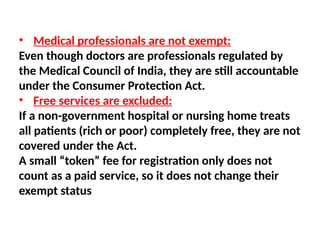
• Medical professionals are not exempt:
Even though doctors are professionals regulated by
the Medical Council of India, they are still accountable
under the Consumer Protection Act.
• Free services are excluded:
If a non-government hospital or nursing home treats
all patients (rich or poor) completely free, they are not
covered under the Act.
A small “token” fee for registration only does not
count as a paid service, so it does not change their
exempt status
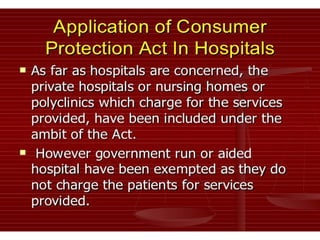
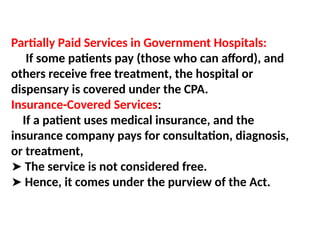
Partially Paid Services in Government Hospitals:
If some patients pay (those who can afford), and
others receive free treatment, the hospital or
dispensary is covered under the CPA.
Insurance-Covered Services:
If a patient uses medical insurance, and the
insurance company pays for consultation, diagnosis,
or treatment,
➤ The service is not considered free.
➤ Hence, it comes under the purview of the Act.
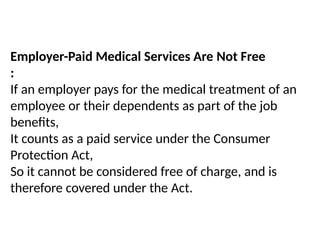
Employer-Paid Medical Services Are Not Free
:
If an employer pays for the medical treatment of an
employee or their dependents as part of the job
benefits,
It counts as a paid service under the Consumer
Protection Act,
So it cannot be considered free of charge, and is
therefore covered under the Act.
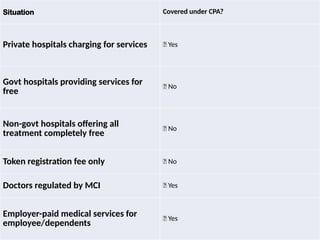
Situation Covered under CPA?
Private hospitals charging for services ✅ Yes
Govt hospitals providing services for
free
❌ No
Non-govt hospitals offering all
treatment completely free
❌ No
Token registration fee only ❌ No
Doctors regulated by MCI ✅ Yes
Employer-paid medical services for
employee/dependents
✅ Yes
C
o
l
u
m
n
1
C
o
l
u
m
n
2
C
o
l
u
m
n
3
C
o
l
u
m
n
1
C
o
l
u
m
n
2
C
o
l
u
m
n
3
Row 1 Row 2 Row 3 Row 4
0
2
4
6
8
10
12
Column 1
Column 2
Column 3
C
o
l
u
m
n
1
C
o
l
u
m
n
2
C
o
l
u
m
n
3
C
o
l
u
m
n
1
C
o
l
u
m
n
2
C
o
l
u
m
n
3
Row 1 Row 2 Row 3 Row 4
0
2
4
6
8
10
12
Column 1
Column 2
Column 3
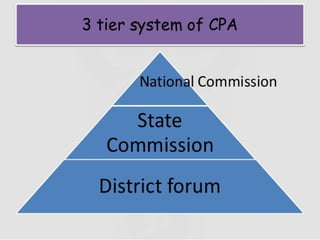
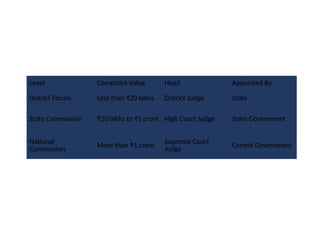
Level Complaint Value Head Appointed By
District Forum Less than ₹20 lakhs District Judge State
State Commission ₹20 lakhs to ₹1 crore High Court Judge State Government
National
Commission More than ₹1 crore
Supreme Court
Judge Central Government
C
o
l
u
m
n
1
C
o
l
u
m
n
2
C
o
l
u
m
n
3
C
o
l
u
m
n
1
C
o
l
u
m
n
2
C
o
l
u
m
n
3
C
o
l
u
m
n
1
C
o
l
u
m
n
2
C
o
l
u
m
n
3
C
o
l
u
m
n
1
C
o
l
u
m
n
2
C
o
l
u
m
n
3
C
o
l
u
m
n
1
C
o
l
u
m
n
2
C
o
l
u
m
n
3
Row 1 Row 2 Row 3 Row 4
0
2
4
6
8
10
12
Column 1
Column 2
Column 3
C
o
l
u
m
n
1
C
o
l
u
m
n
2
C
o
l
u
m
n
3
C
o
l
u
m
n
1
C
o
l
u
m
n
2
C
o
l
u
m
n
3
C
o
l
u
m
n
1
C
o
l
u
m
n
2
C
o
l
u
m
n
3
C
o
l
u
m
n
1
C
o
l
u
m
n
2
C
o
l
u
m
n
3
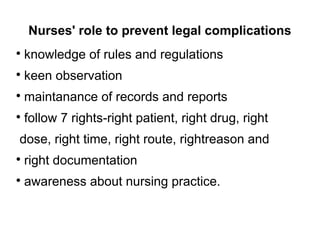
Nurses' role to prevent legal complications
●
knowledge of rules and regulations
●
keen observation
●
maintanance of records and reports
●
follow 7 rights-right patient, right drug, right
dose, right time, right route, rightreason and
●
right documentation
●
awareness about nursing practice.
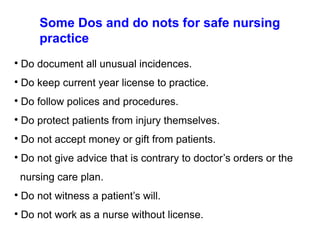
Some Dos and do nots for safe nursing
practice
C
o
l
u
m
n
1
C
o
l
u
m
n
2
C
o
l
u
m
n
3
●
Do document all unusual incidences.
●
Do keep current year license to practice.
●
Do follow polices and procedures.
●
Do protect patients from injury themselves.
●
Do not accept money or gift from patients.
●
Do not give advice that is contrary to doctor’s orders or the
nursing care plan.
●
Do not witness a patient’s will.
●
Do not work as a nurse without license.
THANK YOU

Consumer protection act copy.pptx management