Downloaded 55 times


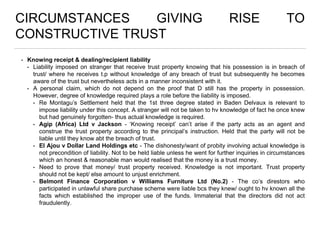
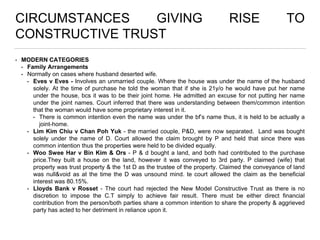




Constructive trusts arise by operation of law rather than by the intention of the parties. They are used in circumstances where it would be unfair for someone to benefit from property that rightfully belongs to another. The document outlines several traditional and modern circumstances that give rise to constructive trusts, including: when someone obtains unauthorized profits from a trust; uses a statute to commit fraud; enters into a mutual will agreement; or acquires property through unlawful conduct like murder. Constructive trusts can also be imposed on strangers who infringe on or assist with breaching a trust. Modern categories where constructive trusts are imposed include family arrangements involving common intentions around property, as well as license agreements where someone is occupying land without a proprietary interest.


![TORT II [occupier's liability notes]](https://cdn.slidesharecdn.com/ss_thumbnails/uuuk2203-tortiioccupiersliabilitynotes-200608061732-thumbnail.jpg?width=640&height=640&fit=bounds)


