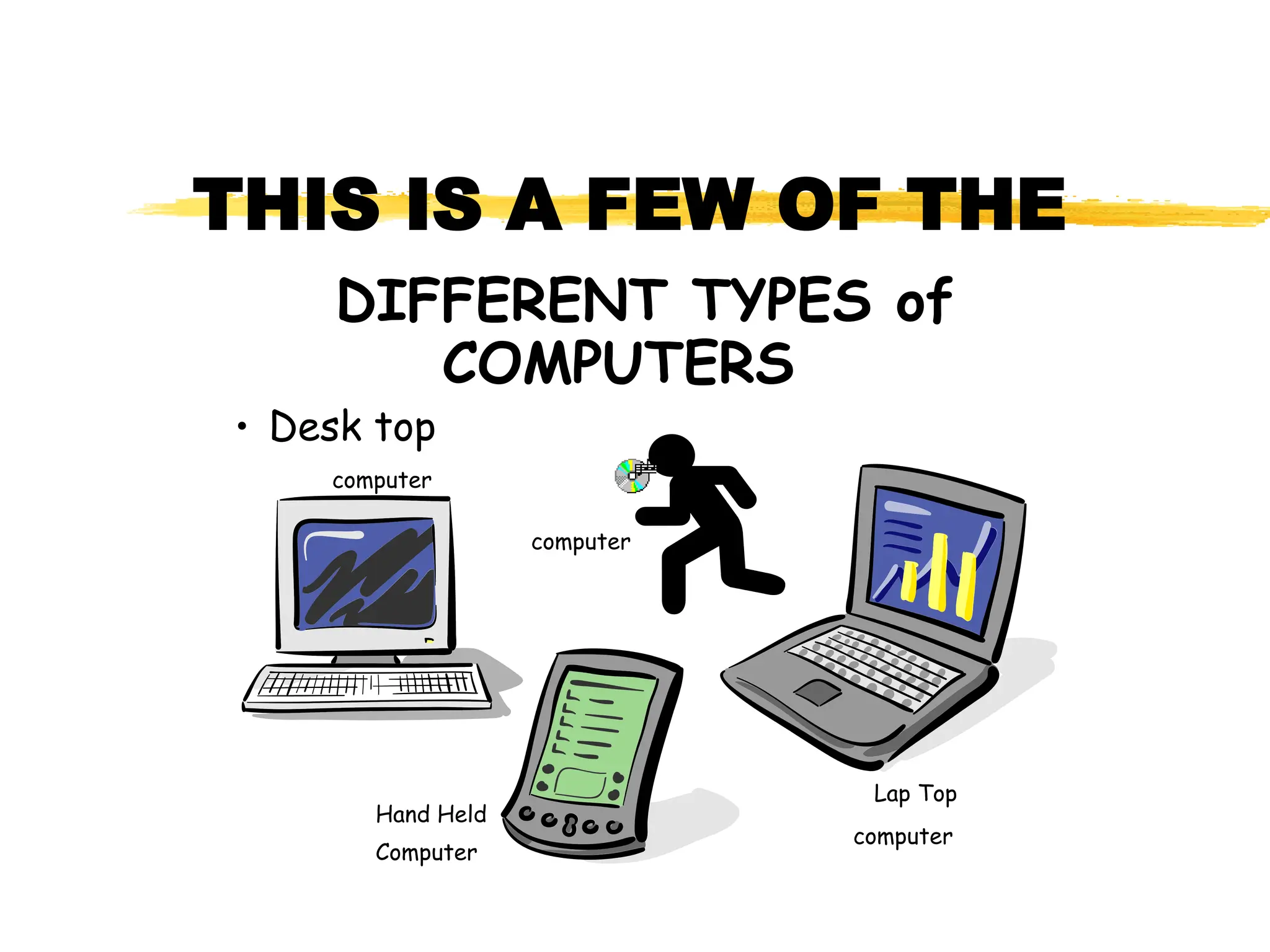
THIS IS A FEW OF THE
DIFFERENT TYPES of
COMPUTERS
‱ Desk top
Lap Top
Hand Held
computer
computer
Computer
computer
Computers Have Two Main
Parts
1. Computer Hardware
2. Computer Software
DEFINITION
ïșHardware Vs. Software
If you can touch it, it’s hardware
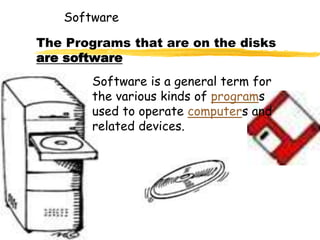
The Programs that are on the disks
are software
Software is a general term for
the various kinds of programs
used to operate computers and
related devices.
Software
Hardware
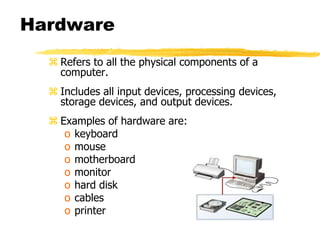
ïș Refers to all the physical components of a
computer.
ïș Includes all input devices, processing devices,
storage devices, and output devices.
ïș Examples of hardware are:
o keyboard
o mouse
o motherboard
o monitor
o hard disk
o cables
o printer
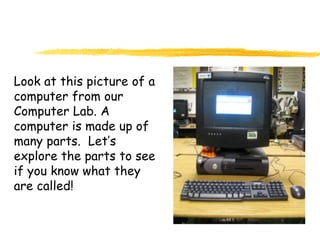
Look at this picture of a
computer from our
Computer Lab. A
computer is made up of
many parts. Let’s
explore the parts to see
if you know what they
are called!
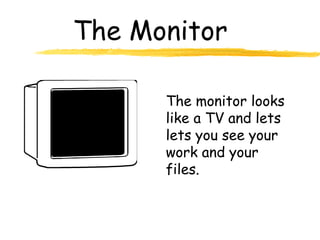
The Monitor
The monitor looks
like a TV and lets
lets you see your
work and your
files.
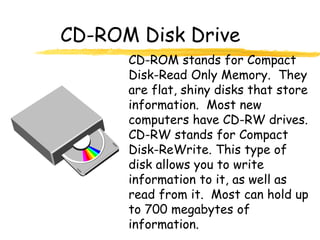
CD-ROM Disk Drive
CD-ROM stands for Compact
Disk-Read Only Memory. They
are flat, shiny disks that store
information. Most new
computers have CD-RW drives.
CD-RW stands for Compact
Disk-ReWrite. This type of
disk allows you to write
information to it, as well as
read from it. Most can hold up
to 700 megabytes of
information.
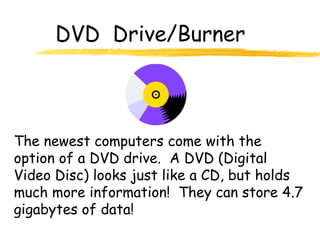
DVD Drive/Burner
The newest computers come with the
option of a DVD drive. A DVD (Digital
Video Disc) looks just like a CD, but holds
much more information! They can store 4.7
gigabytes of data!
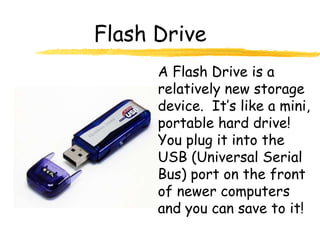
Flash Drive
A Flash Drive is a
relatively new storage
device. It’s like a mini,
portable hard drive!
You plug it into the
USB (Universal Serial
Bus) port on the front
of newer computers
and you can save to it!
How Do Computers Work?
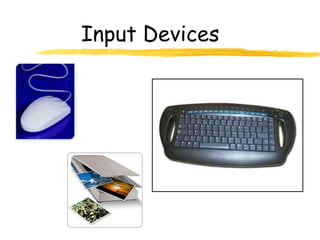
ïșInput--This is when information is entered into a
computer. Some common input devices include
the keyboard, mouse and scanner.
ïșOutput--This is the information that comes out
of a computer after it has been processed. The
information comes out on output devices such
as a printer or computer monitor.
ïșProcessing--This is when the information is
handled by the computer’s brain, known as the
CPU (Central Processing Unit).
Input Devices
The Keyboard
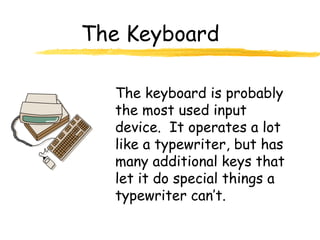
The keyboard is probably
the most used input
device. It operates a lot
like a typewriter, but has
many additional keys that
let it do special things a
typewriter can’t.
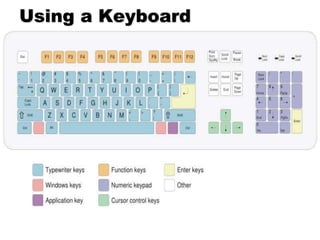
Using a Keyboard
Special Keyboard Keys
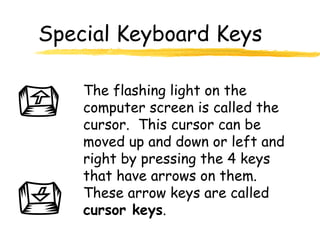
The flashing light on the
computer screen is called the
cursor. This cursor can be
moved up and down or left and
right by pressing the 4 keys
that have arrows on them.
These arrow keys are called
cursor keys.
Shift Key
When this key is pressed at the same
time you press a letter key, a capital
letter appears on your screen. When
it is held down when you press a key
with a symbol and number, the top
symbol appears on the computer
screen. There are two shift keys on
your keyboard.
The Backspace Key
When this key is pressed, the
cursor moves back one space to the
left on your computer screen. This
key is very helpful when you press
the wrong letter or number. You
can erase your mistakes!

computer-hardware1.ppt to protect the sc

  • 1.
    THIS IS AFEW OF THE DIFFERENT TYPES of COMPUTERS ‱ Desk top Lap Top Hand Held computer computer Computer computer
  • 2.
    Computers Have TwoMain Parts 1. Computer Hardware 2. Computer Software
  • 3.
    DEFINITION ïșHardware Vs. Software Ifyou can touch it, it’s hardware
  • 4.
    The Programs thatare on the disks are software Software is a general term for the various kinds of programs used to operate computers and related devices. Software
  • 5.
    Hardware ïș Refers toall the physical components of a computer. ïș Includes all input devices, processing devices, storage devices, and output devices. ïș Examples of hardware are: o keyboard o mouse o motherboard o monitor o hard disk o cables o printer
  • 6.
    Look at thispicture of a computer from our Computer Lab. A computer is made up of many parts. Let’s explore the parts to see if you know what they are called!
  • 7.
    The Monitor The monitorlooks like a TV and lets lets you see your work and your files.
  • 8.
    CD-ROM Disk Drive CD-ROMstands for Compact Disk-Read Only Memory. They are flat, shiny disks that store information. Most new computers have CD-RW drives. CD-RW stands for Compact Disk-ReWrite. This type of disk allows you to write information to it, as well as read from it. Most can hold up to 700 megabytes of information.
  • 9.
    DVD Drive/Burner The newestcomputers come with the option of a DVD drive. A DVD (Digital Video Disc) looks just like a CD, but holds much more information! They can store 4.7 gigabytes of data!
  • 10.
    Flash Drive A FlashDrive is a relatively new storage device. It’s like a mini, portable hard drive! You plug it into the USB (Universal Serial Bus) port on the front of newer computers and you can save to it!
  • 11.
    How Do ComputersWork? ïșInput--This is when information is entered into a computer. Some common input devices include the keyboard, mouse and scanner. ïșOutput--This is the information that comes out of a computer after it has been processed. The information comes out on output devices such as a printer or computer monitor. ïșProcessing--This is when the information is handled by the computer’s brain, known as the CPU (Central Processing Unit).
  • 12.
  • 13.
    The Keyboard The keyboardis probably the most used input device. It operates a lot like a typewriter, but has many additional keys that let it do special things a typewriter can’t.
  • 14.
  • 15.
    Special Keyboard Keys Theflashing light on the computer screen is called the cursor. This cursor can be moved up and down or left and right by pressing the 4 keys that have arrows on them. These arrow keys are called cursor keys.
  • 16.
    Shift Key When thiskey is pressed at the same time you press a letter key, a capital letter appears on your screen. When it is held down when you press a key with a symbol and number, the top symbol appears on the computer screen. There are two shift keys on your keyboard.
  • 17.
    The Backspace Key Whenthis key is pressed, the cursor moves back one space to the left on your computer screen. This key is very helpful when you press the wrong letter or number. You can erase your mistakes!