Computer Vision
COMPUTER VISION SPECIALIST
[Presenter's Name Here]
Foundational
Concepts
Understanding the Basics of
Computer Vision and Image
Processing
Computer vision and image processing are interconnected fields
that enable machines to interpret visual data. By utilizing algorithms
and techniques, these technologies allow computers to analyze
images, identify patterns, and make decisions based on visual
information. Their importance continues to grow across various
industries, driving innovation and efficiency.
The
Evolution of
Computer
Vision
Technologie
s
Historical Overview
This section explores the origins and advancements made.
Digital Image
Basics
Understanding pixels, resolution,
and color models in computer
vision
At the heart of computer vision lies the concept of digital images.
These images are comprised of individual elements called pixels,
which collectively determine resolution and quality. Familiarizing
oneself with color models, especially RGB, is essential for effective
image processing and analysis in various applications across the field.
Image
Processing
Operation
s
Transformation
Image filtering enhances clarity and reduces noise.
Computer Vision
Tasks
Understanding the role of feature
extraction in visual analysis
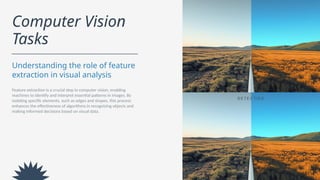
Feature extraction is a crucial step in computer vision, enabling
machines to identify and interpret essential patterns in images. By
isolating specific elements, such as edges and shapes, this process
enhances the effectiveness of algorithms in recognizing objects and
making informed decisions based on visual data.
Common
Algorithms
and Tools
in
Computer
Vision
Algorithms and Tools
Essential techniques for effective image processing tasks.
Facial Recognition
Understanding the Technology
Behind Identifying Faces in
Images
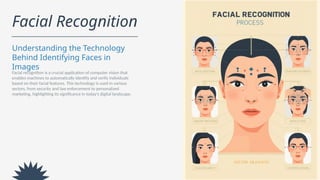
Facial recognition is a crucial application of computer vision that
enables machines to automatically identify and verify individuals
based on their facial features. This technology is used in various
sectors, from security and law enforcement to personalized
marketing, highlighting its significance in today’s digital landscape.
Facial Recognition Use Cases
Security
Unlocking devices using face
recognition
Marketing
Delivering personalized customer
experiences
Law Enforcement
Identifying suspects in
investigations
Access Control
Enhancing security in restricted
areas
Ethical
Consideration
s in Facial
Recognition
Technology
Privacy Issues
Ensuring ethical use of facial recognition is crucial.
Object Detection
Techniques
Understanding Object Detection:
Techniques, Use Cases, and
Challenges in Application
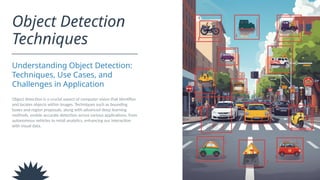
Object detection is a crucial aspect of computer vision that identifies
and locates objects within images. Techniques such as bounding
boxes and region proposals, along with advanced deep learning
methods, enable accurate detection across various applications, from
autonomous vehicles to retail analytics, enhancing our interaction
with visual data.
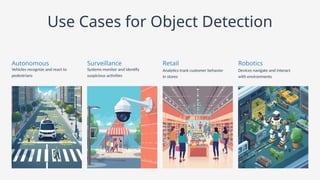
Use Cases for Object Detection
Autonomous
Vehicles recognize and react to
pedestrians
Retail
Analytics track customer behavior
in stores
Surveillance
Systems monitor and identify
suspicious activities
Robotics
Devices navigate and interact
with environments
Challenges
in Object
Detection
Occlusion and Lighting
Detecting objects becomes difficult when they are obscured.
Future Prospects
The Impact of AI and Deep
Learning on Computer Vision
Technologies
Advances in AI and deep learning are revolutionizing computer
vision, enhancing accuracy and speed. As algorithms evolve, they
unlock new possibilities for real-time image analysis and
interpretation. This progress paves the way for innovations across
various sectors, including healthcare, autonomous systems, and
smart cities, transforming how we interact with visual data.
Integration
with Other
Technologie
s
Augmented Reality
Enhancing real-world experiences with digital overlays and
information.
Bias and Fairness
Addressing Ethical Concerns in
Computer Vision Algorithms
As computer vision continues to evolve, the challenges of bias
and fairness in algorithms have become increasingly critical. Ensuring
that these systems operate equitably requires a focus on data privacy
and the computational costs involved in developing robust, fair
solutions. Addressing these issues is essential for responsible
technological advancement.
Conclusion and
Summary
Recap of Computer Vision and
Image Processing Applications
and Importance
In conclusion, computer vision and image processing are rapidly
evolving fields that profoundly impact our daily lives. By enabling
machines to interpret visual data, they enhance security, improve
automation, and drive innovation across various industries.
Continued exploration and ethical considerations in these domains
are essential for future advancements.
WEBSITE
reallygreatsite.com
EMAIL
hello@reallygreatsite.com
PHONE
123-456-7890
We welcome your
questions and
insights today!
Thank You

Computer vision its introduction and working procedures

  • 1.
    Computer Vision COMPUTER VISIONSPECIALIST [Presenter's Name Here]
  • 2.
    Foundational Concepts Understanding the Basicsof Computer Vision and Image Processing Computer vision and image processing are interconnected fields that enable machines to interpret visual data. By utilizing algorithms and techniques, these technologies allow computers to analyze images, identify patterns, and make decisions based on visual information. Their importance continues to grow across various industries, driving innovation and efficiency.
  • 3.
    The Evolution of Computer Vision Technologie s Historical Overview Thissection explores the origins and advancements made.
  • 4.
    Digital Image Basics Understanding pixels,resolution, and color models in computer vision At the heart of computer vision lies the concept of digital images. These images are comprised of individual elements called pixels, which collectively determine resolution and quality. Familiarizing oneself with color models, especially RGB, is essential for effective image processing and analysis in various applications across the field.
  • 5.
  • 6.
    Computer Vision Tasks Understanding therole of feature extraction in visual analysis Feature extraction is a crucial step in computer vision, enabling machines to identify and interpret essential patterns in images. By isolating specific elements, such as edges and shapes, this process enhances the effectiveness of algorithms in recognizing objects and making informed decisions based on visual data.
  • 7.
    Common Algorithms and Tools in Computer Vision Algorithms andTools Essential techniques for effective image processing tasks.
  • 8.
    Facial Recognition Understanding theTechnology Behind Identifying Faces in Images Facial recognition is a crucial application of computer vision that enables machines to automatically identify and verify individuals based on their facial features. This technology is used in various sectors, from security and law enforcement to personalized marketing, highlighting its significance in today’s digital landscape.
  • 9.
    Facial Recognition UseCases Security Unlocking devices using face recognition Marketing Delivering personalized customer experiences Law Enforcement Identifying suspects in investigations Access Control Enhancing security in restricted areas
  • 10.
    Ethical Consideration s in Facial Recognition Technology PrivacyIssues Ensuring ethical use of facial recognition is crucial.
  • 11.
    Object Detection Techniques Understanding ObjectDetection: Techniques, Use Cases, and Challenges in Application Object detection is a crucial aspect of computer vision that identifies and locates objects within images. Techniques such as bounding boxes and region proposals, along with advanced deep learning methods, enable accurate detection across various applications, from autonomous vehicles to retail analytics, enhancing our interaction with visual data.
  • 12.
    Use Cases forObject Detection Autonomous Vehicles recognize and react to pedestrians Retail Analytics track customer behavior in stores Surveillance Systems monitor and identify suspicious activities Robotics Devices navigate and interact with environments
  • 13.
    Challenges in Object Detection Occlusion andLighting Detecting objects becomes difficult when they are obscured.
  • 14.
    Future Prospects The Impactof AI and Deep Learning on Computer Vision Technologies Advances in AI and deep learning are revolutionizing computer vision, enhancing accuracy and speed. As algorithms evolve, they unlock new possibilities for real-time image analysis and interpretation. This progress paves the way for innovations across various sectors, including healthcare, autonomous systems, and smart cities, transforming how we interact with visual data.
  • 15.
    Integration with Other Technologie s Augmented Reality Enhancingreal-world experiences with digital overlays and information.
  • 16.
    Bias and Fairness AddressingEthical Concerns in Computer Vision Algorithms As computer vision continues to evolve, the challenges of bias and fairness in algorithms have become increasingly critical. Ensuring that these systems operate equitably requires a focus on data privacy and the computational costs involved in developing robust, fair solutions. Addressing these issues is essential for responsible technological advancement.
  • 17.
    Conclusion and Summary Recap ofComputer Vision and Image Processing Applications and Importance In conclusion, computer vision and image processing are rapidly evolving fields that profoundly impact our daily lives. By enabling machines to interpret visual data, they enhance security, improve automation, and drive innovation across various industries. Continued exploration and ethical considerations in these domains are essential for future advancements.
  • 18.