Light Pollution
Sarthak singh
rajawat
What is Light pollution
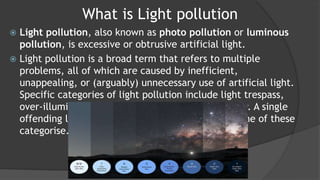
 Light pollution, also known as photo pollution or luminous
pollution, is excessive or obtrusive artificial light.
 Light pollution is a broad term that refers to multiple
problems, all of which are caused by inefficient,
unappealing, or (arguably) unnecessary use of artificial light.
Specific categories of light pollution include light trespass,
over-illumination, glare, light clutter, and sky glow. A single
offending light source often falls into more than one of these
categorise.
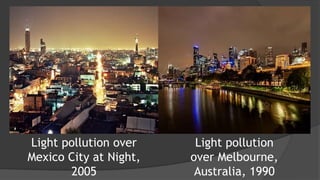
Light pollution over
Mexico City at Night,
2005
Light pollution
over Melbourne,
Australia, 1990
Does Light pollution effect on animals and
human health?
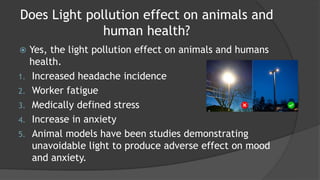
 Yes, the light pollution effect on animals and humans
health.
1. Increased headache incidence
2. Worker fatigue
3. Medically defined stress
4. Increase in anxiety
5. Animal models have been studies demonstrating
unavoidable light to produce adverse effect on mood
and anxiety.
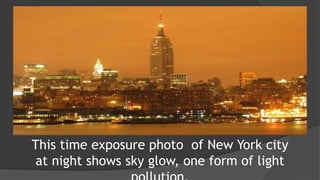
This time exposure photo of New York city
at night shows sky glow, one form of light
How to reduce light pollution
 Reducing light pollution implies many things, such as reducing
sky glow, reducing glare, reducing light trespass, and
reducing clutter. The method for best reducing light
pollution, therefore, depends on exactly what the problem is
in any given instance. Possible solutions include:
 Utilizing light source of minimum intensity necessary to
accomplish the light’s purpose.
 Turning light off using a timer or occupancy sensor or
manually when not needed.
 Improving lighting fixtures, so that they direct their light
more accurately toward where it is needed, and with less
side effects.
 Adjusting the type of light used, so that the light waves
emitted are those that are less likely to cause severe light
Computer project on light pollution

Computer project on light pollution

  • 1.
  • 2.
    What is Lightpollution  Light pollution, also known as photo pollution or luminous pollution, is excessive or obtrusive artificial light.  Light pollution is a broad term that refers to multiple problems, all of which are caused by inefficient, unappealing, or (arguably) unnecessary use of artificial light. Specific categories of light pollution include light trespass, over-illumination, glare, light clutter, and sky glow. A single offending light source often falls into more than one of these categorise.
  • 3.
    Light pollution over MexicoCity at Night, 2005 Light pollution over Melbourne, Australia, 1990
  • 4.
    Does Light pollutioneffect on animals and human health?  Yes, the light pollution effect on animals and humans health. 1. Increased headache incidence 2. Worker fatigue 3. Medically defined stress 4. Increase in anxiety 5. Animal models have been studies demonstrating unavoidable light to produce adverse effect on mood and anxiety.
  • 5.
    This time exposurephoto of New York city at night shows sky glow, one form of light
  • 6.
    How to reducelight pollution  Reducing light pollution implies many things, such as reducing sky glow, reducing glare, reducing light trespass, and reducing clutter. The method for best reducing light pollution, therefore, depends on exactly what the problem is in any given instance. Possible solutions include:  Utilizing light source of minimum intensity necessary to accomplish the light’s purpose.  Turning light off using a timer or occupancy sensor or manually when not needed.  Improving lighting fixtures, so that they direct their light more accurately toward where it is needed, and with less side effects.  Adjusting the type of light used, so that the light waves emitted are those that are less likely to cause severe light