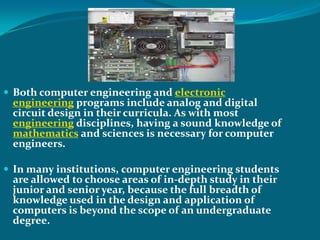
 Computer engineering is a discipline that integrates
 several fields of electrical engineering and computer
 science required to develop computer systems.
 Computer engineers usually have training in
 electronic engineering (or electrical engineering),
 software design, and hardware-software integration
 instead of only software engineering or electronic
 engineering. Computer engineers are involved in
 many hardware and software aspects of computing,
 from the design of individual microprocessors,
 personal computers
 This field of engineering not only focuses on how
 computer systems themselves work, but also how
 they integrate into the larger picture.
 Usual tasks involving computer engineers
 include writing software and firmware for
 embedded microcontrollers, designing
 VLSI chips, designing analog
 sensors, designing mixed signal circuit
 boards, and designing operating systems.
 Computer engineers are also suited for
 robotics. which relies heavily on using digital systems to
 research,
 control and monitor electrical systems like
 motors, communications, and sensors
 The first accredited computer engineering degree
 program in the United States was established at Case
 Western Reserve University in 1971. As of October
 2004, there were 170 ABET-accredited computer
 engineering programs in the US. In
 Europe, accreditation of computer engineering
 schools is done by a variety of agencies part of the
 EQANIE network. Due to increasing job requirements
 for engineers, who can concurrently design
 hardware, software, firmware, and manage all forms
 of computer systems used in industry, some tertiary
 institutions around the world offer a bachelor's
 degree generally called computer engineering.
 Both computer engineering and electronic
 engineering programs include analog and digital
 circuit design in their curricula. As with most
 engineering disciplines, having a sound knowledge of
 mathematics and sciences is necessary for computer
 engineers.

 In many institutions, computer engineering students
 are allowed to choose areas of in-depth study in their
 junior and senior year, because the full breadth of
 knowledge used in the design and application of
 computers is beyond the scope of an undergraduate
 degree.
 Advanced Computer Engineering Laboratory is
 engaged in solving problems related to high-
 performance and low-power computing systems with
 focus on VLSI chip engineering. We are experts in
 high-speed digital circuits as well as low-power design.
 We specialize in low-power digital circuit libraries and
 optimal relationship between computational energy
 and speed. Our broader expertise is also in Computer
 Arithmetic, Media Signal Processing, Cryptography
 and System Architecture.

Computer engineering

  • 2.
     Computer engineeringis a discipline that integrates several fields of electrical engineering and computer science required to develop computer systems. Computer engineers usually have training in electronic engineering (or electrical engineering), software design, and hardware-software integration instead of only software engineering or electronic engineering. Computer engineers are involved in many hardware and software aspects of computing, from the design of individual microprocessors, personal computers
  • 3.
     This fieldof engineering not only focuses on how computer systems themselves work, but also how they integrate into the larger picture. Usual tasks involving computer engineers include writing software and firmware for embedded microcontrollers, designing VLSI chips, designing analog sensors, designing mixed signal circuit boards, and designing operating systems. Computer engineers are also suited for robotics. which relies heavily on using digital systems to research, control and monitor electrical systems like motors, communications, and sensors
  • 4.
     The firstaccredited computer engineering degree program in the United States was established at Case Western Reserve University in 1971. As of October 2004, there were 170 ABET-accredited computer engineering programs in the US. In Europe, accreditation of computer engineering schools is done by a variety of agencies part of the EQANIE network. Due to increasing job requirements for engineers, who can concurrently design hardware, software, firmware, and manage all forms of computer systems used in industry, some tertiary institutions around the world offer a bachelor's degree generally called computer engineering.
  • 5.
     Both computerengineering and electronic engineering programs include analog and digital circuit design in their curricula. As with most engineering disciplines, having a sound knowledge of mathematics and sciences is necessary for computer engineers.  In many institutions, computer engineering students are allowed to choose areas of in-depth study in their junior and senior year, because the full breadth of knowledge used in the design and application of computers is beyond the scope of an undergraduate degree.
  • 6.
     Advanced ComputerEngineering Laboratory is engaged in solving problems related to high- performance and low-power computing systems with focus on VLSI chip engineering. We are experts in high-speed digital circuits as well as low-power design. We specialize in low-power digital circuit libraries and optimal relationship between computational energy and speed. Our broader expertise is also in Computer Arithmetic, Media Signal Processing, Cryptography and System Architecture.