Biometric screenings
are heath checks that
one can get at their
local doctor that can
monitor cholesterol,
glucose, blood
pressure, height,
weight, and body mass
index. These
screenings are usually
offered after an
employee has done a
health risk assessment.
This assessment iden-
tifies factors that could
be harmful in our
lives. We can talk with
our health professional
to come up with ideas
and solutions to t risky
behaviors. The usual
screening takes about
15-20 minutes and can
include: carotid artery
ultrasound, blood
pressure check, blood
draw, diabetes
screening, and
cholesterol screening.
The health screening
can help the us know
our risks for common
diseases for heart
disease, diabetes, asth-
ma, and other medical
conditions. After the
test has been adminis-
tered, the health pro-
fessional conducting
the test is able to take
the us through the re-
sults of the test and
come up with a well-
ness program or
immediate ideas that
can create a better life-
style for the future.
What is a Biometric Screening?
Sources:
http://www.ehow.com/
about_5187843_biometric-
screening_.html
http://www.humankinetics.com/
excerpts/excerpts/normal-ranges-
of-body-weight-and-body-fat
http://
www.muscleandfitness.com/
nutrition/lose-fat/20-tips-shed-
body-fat-good?page=5
http://abcnews.go.com/Health/
DiabetesOverview/story?
id=3843451
http://www.netdoctor.co.uk/ate/
heartandblood/203867.html
There are two different types of
fat in our bodies. Essential fat and
Storage fat.
ESSENTIAL FAT
Essential fat is something that our
body needs to function. This type
of fat lies in all of our nerves, in
our bone marrow and in our or-
gans. It protects these parts of our
body and in return cannot be lost
without compromising the health
of our body.
STORAGE FAT
Storage fat on the other hand is fat
that is accumulated and when
needed is used as energy. This fat
in excess can result in medical
problems and obesity. On the left
of this page is a table with the
percentages of storage body fat.
With proper exercise, diet, and
strength training our body fat can
be lowered and lead to a healthier
lifestyle and better you!
TIPS TO FIX
 Drink more water
 Reduce starchy carbs
 Eat 5-6 times per day
 Eat more vegetables and
fiber
 Engage in cardiovascular
exercise at least 5 days a
week for 30 minutes
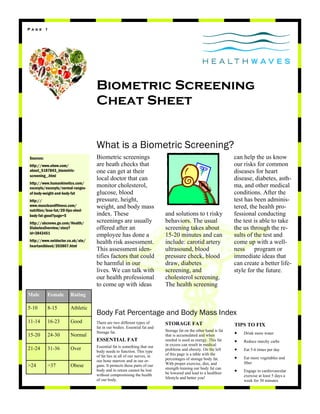
Biometric Screening
Cheat Sheet
Body Fat Percentage and Body Mass Index
Male Female Rating
5-10 8-15 Athletic
11-14 16-23 Good
15-20 24-30 Normal
21-24 31-36 Over
>24 >37 Obese
P a g e 1
LDL Cholesterol
LDL cholesterol, or “bad” cholester-
ol can increase your risk of getting
heart disease. The LDL cholesterol
can build up in the walls of your
arteries and make the circulation
to the heart much more difficult. The
lower this number the healthier you
are. This cholesterol should not
above 190. If it is found to be
above this number, action must
be taken with diet, exercise and
sometimes medication to lower
the n umber and decrease the
risk.
HDL Cholesterol
HDL cholesterol, or “good”
cholesterol takes the bad choles-
terol out of your blood which
prevents build up in the arteries.
The higher the number of HDL
the better.
Triglycerides
Triglycerides are fat that are appar-
ent in the body. This is the most
common type of fat and the one that
sits on our hips and stomachs. High
triglycerides have been linked to
heart disease. If your triglycerides
are 200 or higher you should see a
health professional.
Total Cholesterol
This is a comprehensive number of
the LDL, HDL, and other lipids. This
number is used to determine the risk
of heart disease and how to manage
it.
TIPS TO FIX
 Eat more omega 3 fatty acids
(Fish oil, flaxseed, walnuts)
 Eat more monounsaturated
fats (olive oil, nut butter,
avocados)
 Avoid trans, hydrogenated,
and saturated fats
 Try to walk at least 10,000
steps or five miles every day
 Do cardiovascular exercise
at least 5 times a week for 30
minutes or 150 minutes a week
Diastolic Blood Pressure
The bottom number or diastolic
blood pressure measures how much
pressure is in the arteries between
each heart beat. In other words it
measures when the heart is resting.
Blood pressure measures the rate and
force of the heart beat within the
arterial walls. The normal range for
blood pressure is 120/80 mm Hg.
The top number is called our systolic
blood pressure, and the bottom num-
ber is called the diastolic blood pres-
sure.
Systolic Blood Pressure
The top number or systolic blood
pressure measures how much pres-
sure is inside our arteries when the
heart is beating. In other words,
when the heart muscle is contracting.
TIPS TO FIX
 Shed some extra pounds
 Consume lower amounts of
sodium
 Keep a food diary to see where
your diet is planned well and
where you need to make chang-
es
 Never go to the grocery store
hungry and always have a list
 Limit alcohol consumption
P a g e 2
Glucose
Cholesterol
Blood Pressure
numbers. That meaning that this is
how their body is handling the sub-
stances. If this number is high then
something is wrong.
Non Fasting Glucose
This type of test is taken after the
patient has recently eaten. The re-
sults of this test are varied and it is
determining what you have just
eaten, not how your body is reacting.
If this number is high it could mean
nothing.
TIPS TO FIX
 Still eat foods you enjoy but
make them in smaller portions
 Include healthy carbohydrates
such as fruits and vegetables
 Minimize the amount of added
sugars and sodium you
consume each day
 Trim the amount of total fat
grams
Glucose is another name for blood
sugar. Our body uses this sugar as an
energy source to fuel our cells and
organs. The muscles and the brain
take in carbohydrates and break
down the molecules into the energy
that we call glucose. There are dif-
ferent ways to measure glucose.
Fasting Glucose
This type of test is taken when the
patient has not eaten for at least 8-10
hours. This will be their bottom line
B i o m e t r i c S c r e e n i n g C h e a t S h e e t
Cholesterol Ratio
Your cholesterol
ratio is your Total
Cholesterol divided
by your HDL
cholesterol. This
number should
usually be around
3.5.
Where are
you?
Systolic
mmHg
Diastolic
mmHg
Normal Less than
120
Less
than 80
Pre-
Hypertension
120-139 80-89
Hypertension
Stage 1
140-159 90-99
Hypertension
Stage2
160-higher 100 or
higher
Hypertensive
Crisis
Higher
than 180
Higher
than 110

Comprehensive flyer

  • 1.
    Biometric screenings are heathchecks that one can get at their local doctor that can monitor cholesterol, glucose, blood pressure, height, weight, and body mass index. These screenings are usually offered after an employee has done a health risk assessment. This assessment iden- tifies factors that could be harmful in our lives. We can talk with our health professional to come up with ideas and solutions to t risky behaviors. The usual screening takes about 15-20 minutes and can include: carotid artery ultrasound, blood pressure check, blood draw, diabetes screening, and cholesterol screening. The health screening can help the us know our risks for common diseases for heart disease, diabetes, asth- ma, and other medical conditions. After the test has been adminis- tered, the health pro- fessional conducting the test is able to take the us through the re- sults of the test and come up with a well- ness program or immediate ideas that can create a better life- style for the future. What is a Biometric Screening? Sources: http://www.ehow.com/ about_5187843_biometric- screening_.html http://www.humankinetics.com/ excerpts/excerpts/normal-ranges- of-body-weight-and-body-fat http:// www.muscleandfitness.com/ nutrition/lose-fat/20-tips-shed- body-fat-good?page=5 http://abcnews.go.com/Health/ DiabetesOverview/story? id=3843451 http://www.netdoctor.co.uk/ate/ heartandblood/203867.html There are two different types of fat in our bodies. Essential fat and Storage fat. ESSENTIAL FAT Essential fat is something that our body needs to function. This type of fat lies in all of our nerves, in our bone marrow and in our or- gans. It protects these parts of our body and in return cannot be lost without compromising the health of our body. STORAGE FAT Storage fat on the other hand is fat that is accumulated and when needed is used as energy. This fat in excess can result in medical problems and obesity. On the left of this page is a table with the percentages of storage body fat. With proper exercise, diet, and strength training our body fat can be lowered and lead to a healthier lifestyle and better you! TIPS TO FIX  Drink more water  Reduce starchy carbs  Eat 5-6 times per day  Eat more vegetables and fiber  Engage in cardiovascular exercise at least 5 days a week for 30 minutes Biometric Screening Cheat Sheet Body Fat Percentage and Body Mass Index Male Female Rating 5-10 8-15 Athletic 11-14 16-23 Good 15-20 24-30 Normal 21-24 31-36 Over >24 >37 Obese P a g e 1
  • 2.
    LDL Cholesterol LDL cholesterol,or “bad” cholester- ol can increase your risk of getting heart disease. The LDL cholesterol can build up in the walls of your arteries and make the circulation to the heart much more difficult. The lower this number the healthier you are. This cholesterol should not above 190. If it is found to be above this number, action must be taken with diet, exercise and sometimes medication to lower the n umber and decrease the risk. HDL Cholesterol HDL cholesterol, or “good” cholesterol takes the bad choles- terol out of your blood which prevents build up in the arteries. The higher the number of HDL the better. Triglycerides Triglycerides are fat that are appar- ent in the body. This is the most common type of fat and the one that sits on our hips and stomachs. High triglycerides have been linked to heart disease. If your triglycerides are 200 or higher you should see a health professional. Total Cholesterol This is a comprehensive number of the LDL, HDL, and other lipids. This number is used to determine the risk of heart disease and how to manage it. TIPS TO FIX  Eat more omega 3 fatty acids (Fish oil, flaxseed, walnuts)  Eat more monounsaturated fats (olive oil, nut butter, avocados)  Avoid trans, hydrogenated, and saturated fats  Try to walk at least 10,000 steps or five miles every day  Do cardiovascular exercise at least 5 times a week for 30 minutes or 150 minutes a week Diastolic Blood Pressure The bottom number or diastolic blood pressure measures how much pressure is in the arteries between each heart beat. In other words it measures when the heart is resting. Blood pressure measures the rate and force of the heart beat within the arterial walls. The normal range for blood pressure is 120/80 mm Hg. The top number is called our systolic blood pressure, and the bottom num- ber is called the diastolic blood pres- sure. Systolic Blood Pressure The top number or systolic blood pressure measures how much pres- sure is inside our arteries when the heart is beating. In other words, when the heart muscle is contracting. TIPS TO FIX  Shed some extra pounds  Consume lower amounts of sodium  Keep a food diary to see where your diet is planned well and where you need to make chang- es  Never go to the grocery store hungry and always have a list  Limit alcohol consumption P a g e 2 Glucose Cholesterol Blood Pressure numbers. That meaning that this is how their body is handling the sub- stances. If this number is high then something is wrong. Non Fasting Glucose This type of test is taken after the patient has recently eaten. The re- sults of this test are varied and it is determining what you have just eaten, not how your body is reacting. If this number is high it could mean nothing. TIPS TO FIX  Still eat foods you enjoy but make them in smaller portions  Include healthy carbohydrates such as fruits and vegetables  Minimize the amount of added sugars and sodium you consume each day  Trim the amount of total fat grams Glucose is another name for blood sugar. Our body uses this sugar as an energy source to fuel our cells and organs. The muscles and the brain take in carbohydrates and break down the molecules into the energy that we call glucose. There are dif- ferent ways to measure glucose. Fasting Glucose This type of test is taken when the patient has not eaten for at least 8-10 hours. This will be their bottom line B i o m e t r i c S c r e e n i n g C h e a t S h e e t Cholesterol Ratio Your cholesterol ratio is your Total Cholesterol divided by your HDL cholesterol. This number should usually be around 3.5. Where are you? Systolic mmHg Diastolic mmHg Normal Less than 120 Less than 80 Pre- Hypertension 120-139 80-89 Hypertension Stage 1 140-159 90-99 Hypertension Stage2 160-higher 100 or higher Hypertensive Crisis Higher than 180 Higher than 110