All artwork is copyright of the artist. 
Where possible all artists have been named 
and all artwork dated. This document should 
be used for educational purposes only. 
Composition 4: 
Experiments with 
Scale 
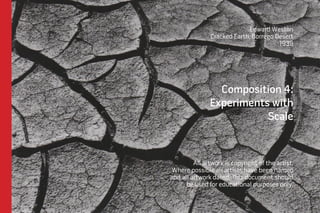
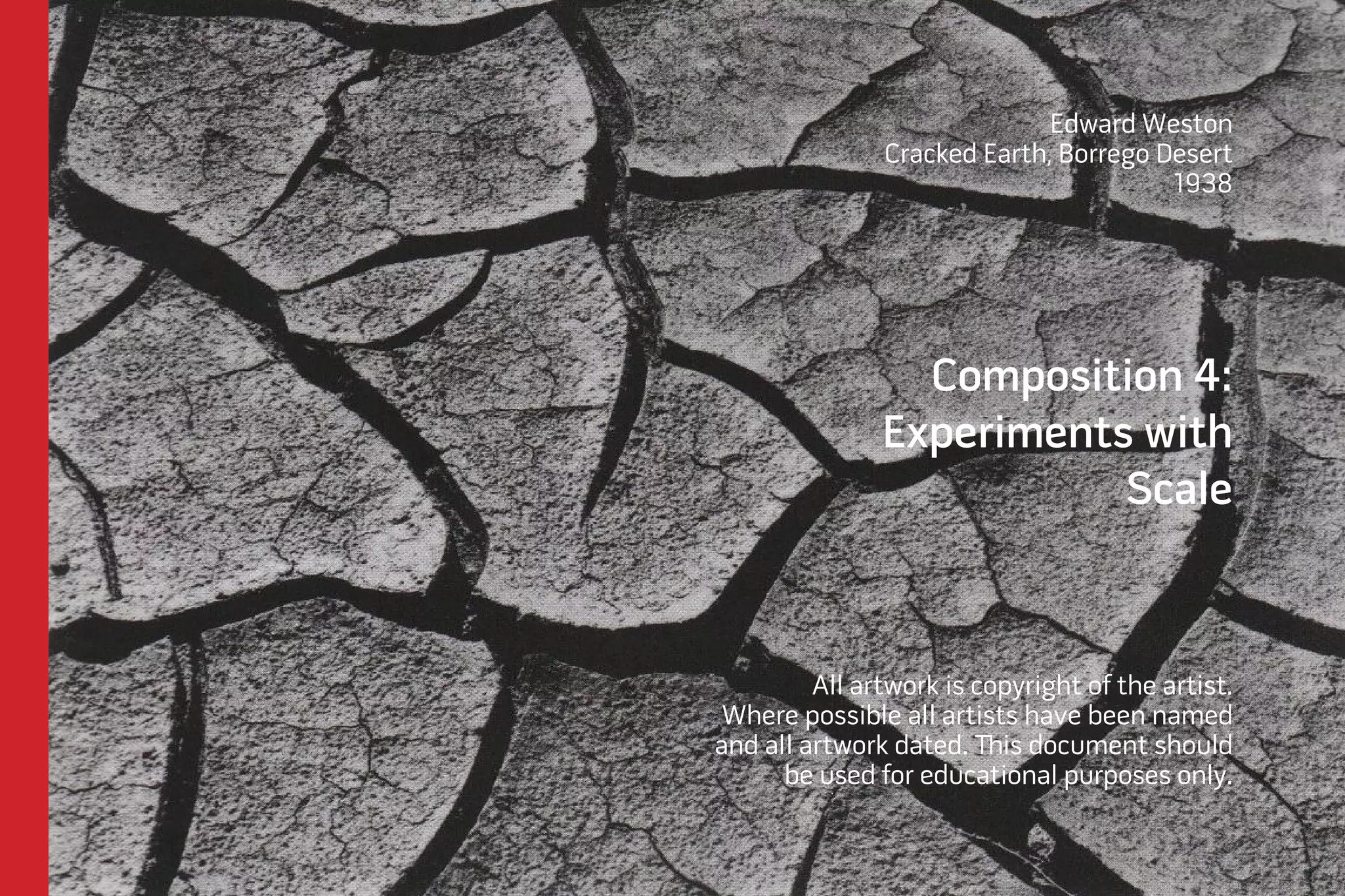
Edward Weston 
Cracked Earth, Borrego Desert 
1938
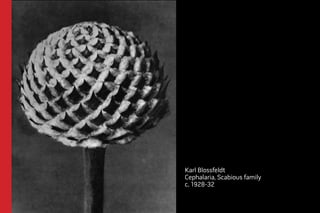
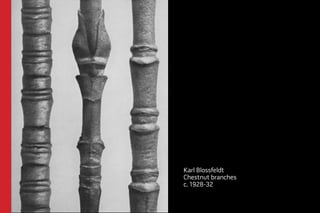
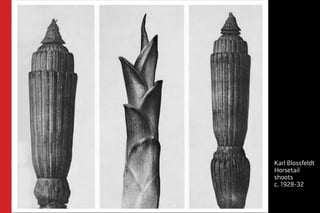
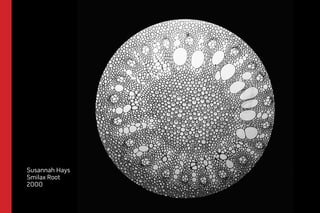
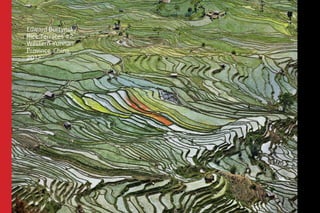
One of the main effects of scale in photography is that 
it can render the subject abstract and unrecognizable. 
Familiar objects become strange and mysterious, and 
the viewer must ask him- or herself: 
“What am I looking at?” 
Photographers can use both extreme proximity and 
extreme distance to achieve this effect.
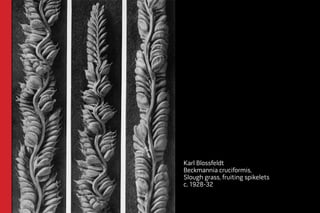
Karl Blossfeldt 
Beckmannia cruciformis, 
Slough grass, fruiting spikelets 
c. 1928-32
Karl Blossfeldt 
Cephalaria, Scabious family 
c. 1928-32
Karl Blossfeldt 
Chestnut branches 
c. 1928-32
Karl Blossfeldt 
Horsetail 
shoots 
c. 1928-32
Susannah Hays 
Smilax Root 
2000
Edward Burtynsky 
Rice Terraces #2, 
Western Yunnan 
Province, China, 
2012
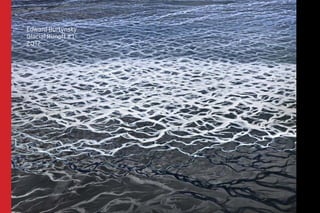
Edward Burtynsky 
Glacial Runoff #1 
2012
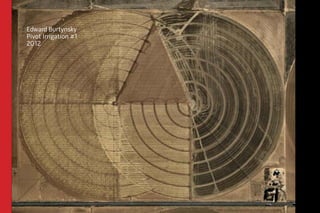
Edward Burtynsky 
Pivot Irrigation #1 
2012
Edward Burtynsky 
Xiaolangdi Dam #3, 
Yellow River, 
Henan Province, China, 
2011
Experiments with scale can result in the emergence 
of undiscovered elements in every-day objects, such 
as textures and other details which are otherwise 
overlooked. Artists may use such images to 
contemplate the archival layering age lends to objects, 
and the impact of age and environment on man-made 
or natural objects. 
Such images are often timeless - could you say whether 
the image was taken in the 1930s or yesterday?
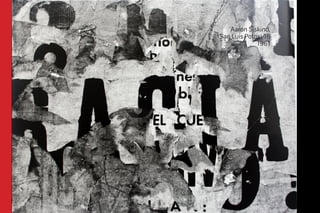
Aaron Siskind, 
San Luis Potosi 16 
1961
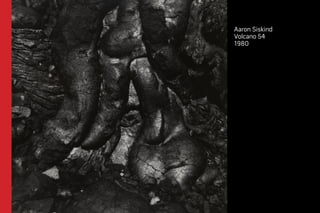
Aaron Siskind 
Volcano 54 
1980
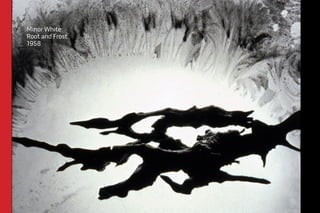
Minor White 
Root and Frost 
1958
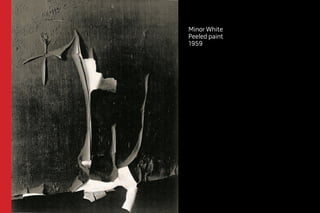
Minor White 
Peeled paint 
1959
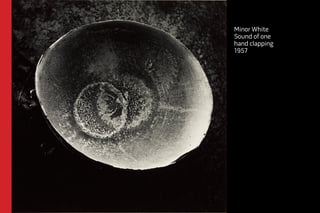
Minor White 
Sound of one 
hand clapping 
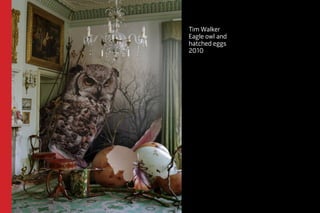
1957
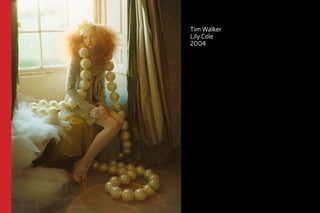
Unexpected difference in scale lends photographs, 
collages or photomontages a surreal aspect, as in the 
following photographs. 
In some photos it suggests a misfit, a break in the 
normality of things, as in a weird dream. In other 
photographs it reinforces the intended focus of the 
scene, for instance the teenage girls in the following 
photographs. 
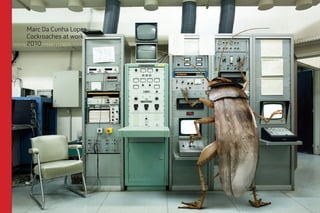
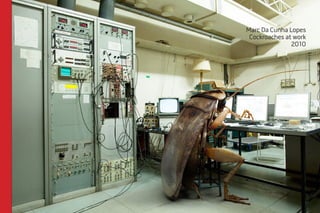
It can also serve as a metaphor, for instance in the work 
of Marc Da Cunha Lopes, in which giant cockroaches 
operate machinery.
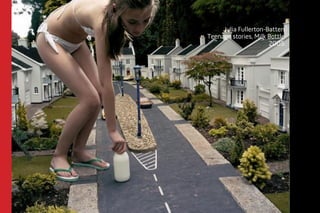
Julia Fullerton-Batten 
Teenage stories, Milk Bottle 
2005
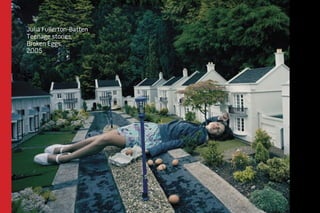
Julia Fullerton-Batten 
Teenage stories, 
Broken Eggs, 
2005
Tim Walker 
Eagle owl and 
hatched eggs 
2010
Tim Walker 
Lily Cole 
2004
Marc Da Cunha Lopes 
Cockroaches at work 
2010
Marc Da Cunha Lopes 
Cockroaches at work 
2010
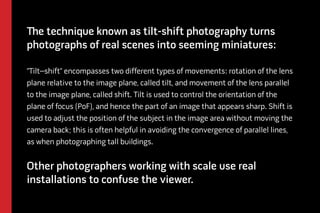
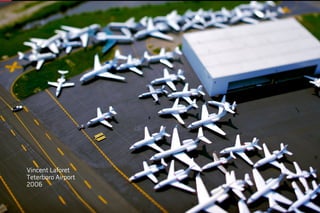
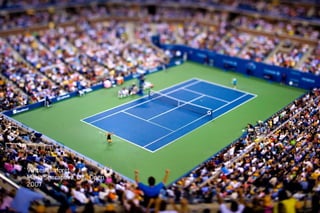
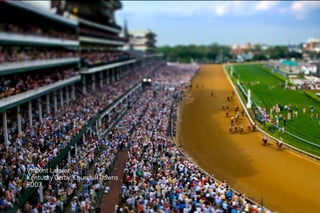
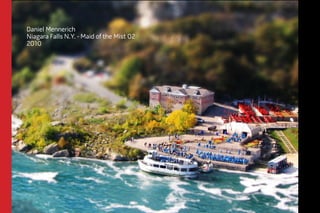
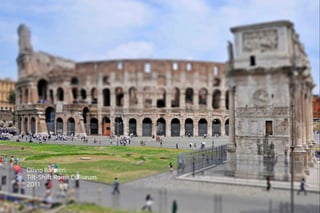
The technique known as tilt-shift photography turns 
photographs of real scenes into seeming miniatures: 
“Tilt–shift” encompasses two different types of movements: rotation of the lens 
plane relative to the image plane, called tilt, and movement of the lens parallel 
to the image plane, called shift. Tilt is used to control the orientation of the 
plane of focus (PoF), and hence the part of an image that appears sharp. Shift is 
used to adjust the position of the subject in the image area without moving the 
camera back; this is often helpful in avoiding the convergence of parallel lines, 
as when photographing tall buildings. 
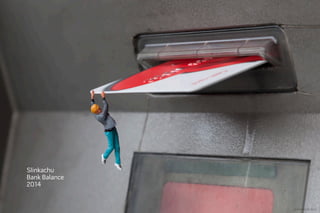
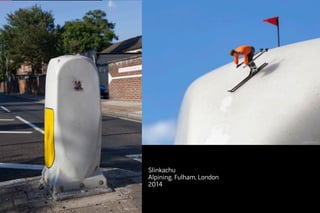
Other photographers working with scale use real 
installations to confuse the viewer.
Vincent Laforet 
Teterboro Airport 
2006
Vincent Laforet 
Maria Sharapova, U.S. Open 
2007
Vincent Laforet 
Kentucky Derby, Churchill Downs 
2007
Daniel Mennerich 
Niagara Falls N.Y. - Maid of the Mist 02 
2010
Olivio Barbieri 
Tilt-Shift Rome Coliseum 
2011
Slinkachu 
Bank Balance 
2014
Slinkachu 
Alpining, Fulham, London 
2014
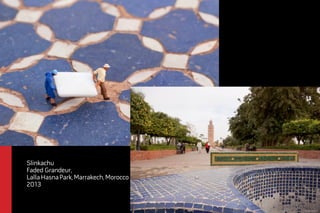
Slinkachu 
Faded Grandeur, 
Lalla Hasna Park, Marrakech, Morocco 
2013

Composition 4 | Experiments with scale

  • 1.
    All artwork iscopyright of the artist. Where possible all artists have been named and all artwork dated. This document should be used for educational purposes only. Composition 4: Experiments with Scale Edward Weston Cracked Earth, Borrego Desert 1938
  • 2.
    One of themain effects of scale in photography is that it can render the subject abstract and unrecognizable. Familiar objects become strange and mysterious, and the viewer must ask him- or herself: “What am I looking at?” Photographers can use both extreme proximity and extreme distance to achieve this effect.
  • 3.
    Karl Blossfeldt Beckmanniacruciformis, Slough grass, fruiting spikelets c. 1928-32
  • 4.
    Karl Blossfeldt Cephalaria,Scabious family c. 1928-32
  • 5.
    Karl Blossfeldt Chestnutbranches c. 1928-32
  • 6.
    Karl Blossfeldt Horsetail shoots c. 1928-32
  • 7.
  • 8.
    Edward Burtynsky RiceTerraces #2, Western Yunnan Province, China, 2012
  • 9.
  • 10.
    Edward Burtynsky PivotIrrigation #1 2012
  • 11.
    Edward Burtynsky XiaolangdiDam #3, Yellow River, Henan Province, China, 2011
  • 12.
    Experiments with scalecan result in the emergence of undiscovered elements in every-day objects, such as textures and other details which are otherwise overlooked. Artists may use such images to contemplate the archival layering age lends to objects, and the impact of age and environment on man-made or natural objects. Such images are often timeless - could you say whether the image was taken in the 1930s or yesterday?
  • 13.
    Aaron Siskind, SanLuis Potosi 16 1961
  • 14.
  • 15.
    Minor White Rootand Frost 1958
  • 16.
  • 17.
    Minor White Soundof one hand clapping 1957
  • 18.
    Unexpected difference inscale lends photographs, collages or photomontages a surreal aspect, as in the following photographs. In some photos it suggests a misfit, a break in the normality of things, as in a weird dream. In other photographs it reinforces the intended focus of the scene, for instance the teenage girls in the following photographs. It can also serve as a metaphor, for instance in the work of Marc Da Cunha Lopes, in which giant cockroaches operate machinery.
  • 19.
    Julia Fullerton-Batten Teenagestories, Milk Bottle 2005
  • 20.
    Julia Fullerton-Batten Teenagestories, Broken Eggs, 2005
  • 21.
    Tim Walker Eagleowl and hatched eggs 2010
  • 22.
    Tim Walker LilyCole 2004
  • 23.
    Marc Da CunhaLopes Cockroaches at work 2010
  • 24.
    Marc Da CunhaLopes Cockroaches at work 2010
  • 25.
    The technique knownas tilt-shift photography turns photographs of real scenes into seeming miniatures: “Tilt–shift” encompasses two different types of movements: rotation of the lens plane relative to the image plane, called tilt, and movement of the lens parallel to the image plane, called shift. Tilt is used to control the orientation of the plane of focus (PoF), and hence the part of an image that appears sharp. Shift is used to adjust the position of the subject in the image area without moving the camera back; this is often helpful in avoiding the convergence of parallel lines, as when photographing tall buildings. Other photographers working with scale use real installations to confuse the viewer.
  • 26.
  • 27.
    Vincent Laforet MariaSharapova, U.S. Open 2007
  • 28.
    Vincent Laforet KentuckyDerby, Churchill Downs 2007
  • 29.
    Daniel Mennerich NiagaraFalls N.Y. - Maid of the Mist 02 2010
  • 30.
    Olivio Barbieri Tilt-ShiftRome Coliseum 2011
  • 31.
  • 32.
  • 33.
    Slinkachu Faded Grandeur, Lalla Hasna Park, Marrakech, Morocco 2013