Submit Manuscript | http://medcraveonline.com
Abbreviations: PDC, pyruvate dehydrogenase complex;
TCA cycle, tricarboxylic acid cycle;NEFA, nonesterified fatty acids;
PEMF, pulsed electromagnetic field; ATP, adenosine triphosphate;
ADP, adenosine diphosphate; AC, adenylate cyclase; CoA, coenzyme
A; NAD, nicotinamide adenine dinucleotide; FAD, flavin adenine
dinucleotide; ThDP, thiamine diphosphat
Introduction
Prolongedperiodofexercisetrainingcanleadtoimpressiveincrease
in cardiac exercise capacity but the contribution of cardiac responses
is less clear.1-3
The improvement in functional capacity observed in
the training group seems to be related to peripheral factors rather than
in central cardiovascular performance./1, 2/ Exercise has a favourable
effects on endothelial function,4
strengthens muscles5
enhances
skeletal muscle aerobic metabolism,6
reverses resting neuroendocrine
hyperactivity in heart failure patients.6,7
Exercise causes the release of
myokines from skeletal muscle, increases mitochondrial biogenesis,
improves fatty acid oxidation8
and increases the availability of nitric
oxide.9
Some studies have shown improvement in V02peak after
exercise training1,5
but others have not.2,4
Hambrecht et al have reported favourable effects on remodeling,
considering the improvements in LV stroke volume and decrease in
LV end diastolic diameter and volume as secondary effects of exercise
therapy related to improved peripheral vasodilation.6
Platt C et al.10
highlight vascular response associated with improved cardiac function
during chronic exercise.
The contribution of myocardial function to the training response,
and indeed the benefits of training on myocardial performance have
been debated.1
Since the energy metabolism is closely linked to cardiac function11
we assessed impact of the metabolic support on cardiac function
during cardiovascular rehabilitation.
We assumed that cardiac metabolic therapeutic approach must be
integrative, improving the complete substrate oxidation, i.e. supporting
normal mechanism of energy production without increased generation
of reactive oxygen species.
Complementary supportive cardiac rehabilitation
The work load on the bicycle started with 50% of the peak work
load from the cardiopulmonary echocardiography exercise test,
and then gradually increased by either 10 or 15 W/min. Heart rate
and rhythm were recorded continuously by 12-lead ECG and blood
pressure was measured automatically at the 2 minutes interval.
Exercise was symptom, blood pressure, heart rate and arrhythmias
limited. Before each exercise training the patients received
magnesium, niacin, coenzyme Q10, biotin, glutathione, vitamin E,
thiamine diphosphate, riboflavin, pantothenic acid, pyridoxal and beta
carotene. Immediately after supervised exercise training patients were
J Cardiol Curr Res. 2023;16(3):87‒92. 87
©2023 Jakovljevic et al. This is an open access article distributed under the terms of the Creative Commons Attribution License,
which permits unrestricted use, distribution, and build upon your work non-commercially.
Complementary supportive cardiac rehabilitation
Volume 16 Issue 3 - 2023
Mila Jakovljević,Ana Fabris
Polyclinic for Cardiovascular Diseases and Prevention Sveti
Nikola Korčula, Croatia
Correspondence: Mila Jakovljević, Polyclinic for
Cardiovascular Diseases and Prevention, Korčula, Croatia,
Email
Received: August 03, 2023 | Published: September 08, 2023
Abstract
Aim: Physical training increases cardiac exercise capacity, but generally does not affect
cardiac function.
Since energy metabolism is closely linked to cardiac function, we assessed the impact of the
integrative metabolic approach on the cardiac function during cardiovascular rehabilitation.
Our concept was not to act on one specific enzyme, protein or particular metabolic pathway,
but “to improve the flux” supporting normal mechanisms for energy production without
increased generation of mitochondrial reactive oxygen species.
Methods: 3 weeks exercise training was undertaken on an upright bicycle ergometer in 30
complementary supportive cardiac rehabilitation sessions. Before each exercise training
the patients received magnesium, niacin, coenzyme Q10, biotin, glutathione, vitamin E,
thiamine diphosphate, riboflavin, pantothenic acid, pyridoxal, and beta-carotene. Following
the exercise training the patients inhaled 95% oxygen 4 l/min provided by oxygen
concentrator with ionization lying inside a low frequency pulsed electromagnetic field with
intensity of up to 30 microtesla. After oxygen inhalation, the patients received carnitine,
arginine, NADH, lipoic acid, selenium, and vitamin C.Acardiopulmonary echocardiograpy
exercise test was performed at the start and the end of the three-week session and the
patients were asked to evaluate the visual analogue scale.
Results: Arithmetic means of most Ergospiro echocardiographic parameters are lower
before and higher after rehabilitation. Exceptions are the values VE/VC02, VD/VT, BR and
E/e’, where the ratio of arithmetic means is reversed. The correlation coefficients for all 20
pairs of cardiopulmonary echocardiographic variables before and after rehabilitation range
from 0, 568 to 0, 952. Most of them are closer to the number 1, that is, most of them show a
strong positive association. p values are less than 0, 05 for all 20 pairs of cardiopulmonary
echocardiographic variables This means that CSCR statistically significantly improved the
results of measurement compared to the results before the rehabilitation.
Conclusion: supporting normal mechanisms/pathways/ for energy production might be the
way of supporting cardiac function during cardiac rehabilitation.
Keywords: cardiac rehabilitation, complementary supportive cardiac therapy
Journal of Cardiology & Current Research
Research Article Open Access
Complementary supportive cardiac rehabilitation 88
Copyright:
©2023 Jakovljević et al.
Citation: Jakovljević M, Fabris A, et al. Complementary supportive cardiac rehabilitation. J Cardiol Curr Res. 2023;16(3):87‒92.
DOI: 10.15406/jccr.2023.16.00584
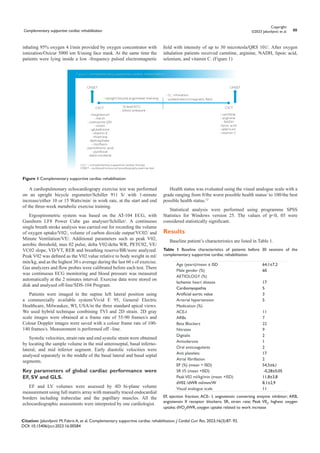
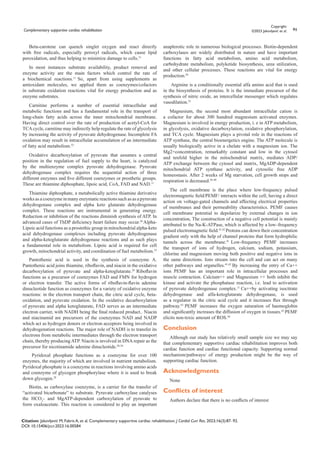
inhaling 95% oxygen 4 l/min provided by oxygen concentrator with
ionization/Oxicur 5000 ion S/using face mask. At the same time the
patients were lying inside a low -frequency pulsed electromagnetic
field with intensity of up to 30 microtesla/QRS 101/. After oxygen
inhalation patients received carnitine, arginine, NADH, lipoic acid,
selenium, and vitamin C. (Figure 1)
Figure 1 Complementary supportive cardiac rehabilitation
A cardiopulmonary echocardiograpy exercise test was performed
on an upright bicycle ergometer/Schiller 911 S/ with 1-minute
increase/either 10 or 15 Watts/min/ in work rate, at the start and end
of the three-week metabolic exercise training.
Ergospirometric system was based on the AT-104 ECG, with
Ganshorn LF8 Power Cube gas analyser/Schiller/. A continuous
single breath stroke analysis was carried out for recording the volume
of oxygen uptake/V02/, volume of carbon dioxide output/VC02/ and
Minute Ventilation/VE/. Additional parameters such as peak V02,
aerobic threshold, max 02 pulse, delta V02/delta WR, PETC02, VE/
VC02 slope, VD/VT, RER and breathing reserve/BR/were analyzed.
Peak V02 was defined as the V02 value relative to body weight in ml/
min/kg, and as the highest 30 s average during the last 60 s of exercise.
Gas analyzers and flow probes were calibrated before each test. There
was continuous ECG monitoring and blood pressure was measured
automatically at the 2 minutes interval. Exercise data were stored on
disk and analysed off-line/SDS-104 Program.
Patients were imaged in the supine left lateral position using
a commercially available system/Vivid E 95, General Electric
Healthcare, Milwaukee, WI, USA/in the three standard apical views.
We used hybrid technique combining TVI and 2D strain. 2D gray
scale images were obtained at a frame rate of 55-90 frames/s and
Colour Doppler images were saved with a colour frame rate of 100-
140 frames/s. Measurement is performed off –line.
Systolic velocities, strain rate and end systolic strain were obtained
by locating the sample volume in the mid anteroseptal, basal inferno-
lateral, and mid inferior segment. Early diastolic velocities were
analysed separately in the middle of the basal lateral and basal septal
segments.
Key parameters of global cardiac performance were
EF, SV and GLS.
EF and LV volumes were assessed by 4D bi-plane volume
measurement using full matrix array with manually traced endocardial
borders including trabeculae and the papillary muscles. All the
echocardiographic assessments were interpreted by one cardiologist.
Health status was evaluated using the visual analogue scale with a
grade ranging from 0/the worst possible health status/ to 100/the best
possible health status.12
Statistical analysis were performed using programme SPSS
Statistics for Windows version 25. The values of p<0, 05 were
considered statistically significant.
Results
Baseline patient’s characteristics are listed in Table 1.
Table 1 Baseline characteristics of patients before 30 sessions of the
complementary supportive cardiac rehabilitation
Age (years)/mean ± lSD 64,1±7,2
Male gender (%) 60
AETIOLOGY (%)
lschemic heart disease 17
Cardiomyopathia 5
Artificial aortic value 3
Arterial hypertension 5
Medication (%)
ACE-I 11
ARBs 7
Beta Blockers 22
Nitrates 9
Digitalis 2
Amiodarone 1
Oral anticoagulants 2
Anti platelets 17
Atrial fibrillation 2
EF (%) (mean + lSD) 54,5±6,l
SR l/S (mean +lSD) -0,28±0,05
PeakV02 ml/kg/min (mean +lSD) 11,8±3,8
dV02 /dWR ml/mm/W 8,1±2,9
Visual analogue scale 11
EF, ejection fraction; ACE- I, angiotensin converting enzyme inhibitor; ARB,
angiotensin II receptor blockers; SR, strain rate; Peak V02
, highest oxygen
uptake; dVO2
dWR, oxygen uptake related to work increase
Complementary supportive cardiac rehabilitation 89
Copyright:
©2023 Jakovljević et al.
Citation: Jakovljević M, Fabris A, et al. Complementary supportive cardiac rehabilitation. J Cardiol Curr Res. 2023;16(3):87‒92.
DOI: 10.15406/jccr.2023.16.00584
All patients have completed the study, and exercise program
compliance was 100%. Arithmetic means of most Ergospiro
echocardiographic parameters are lower before and higher after
rehabilitation. Exceptions are the values VE/VC02, VD/VT, BR and
E/e’, where the ratio of arithmetic means is reversed. The correlation
coefficients for all 20 pairs of cardiopulmonary echocardiographic
variables before and after rehabilitation range from 0, 568 to 0, 952.
Most of them are closer to the number 1, that is, most of them show a
strong positive association. p values are less than 0, 05 for all 20 pairs
of cardiopulmonary echocardiographic variables.
Table 2 Cardiopulmonary echocardiography exercise test values before and after 30 complementary supportive cardiac rehabilitation sessions
Arithmetic mean Correlation coefficient t value p value
Before After
Duration, sec 371 469 0,939 -6,368 <0,001***
Load,W 74 95 0,941 -3,942 <0,001***
PeakV02 ml/ kg/ min 11,8 13,9 0,928 -4,824 <0,001***
PeakV02 (%) 52,3 59,8 0,834 -3,750 0,002**
ATV02 ml/ kg/ min 8,8 11,l 0,801 -4,102 0,001***
dVO2
W R ml/min/W 8,1 11,2 0,635 -3,781 0,001***
02 pulse ml/beat t 9,4 11,6 0,834 -3,214 0,005**
Peak R ER 0,98 1,01 0,673 -2,334 -0,033*
PET C02 mmHg 33,9 37,12 0,618 -2,768 0,012*
VE/VC02 slope 34,l 24,9 0,628 5,994 <0,001***
VD/VT 0,32 0,23 0,568 3,482 0,003**
- statistical significance up to 5%, ** - statistical significance up to 1%, *** - statistical significance up to 0,1%
Table 2a Cardiopulmonary echocardiography exercise test values before and after 30 complementary supportive cardiac rehabilitation sessions
Arithmetic mean Coefficient t value p value
Before After
BR (%) 53 41 0,912 4,817 <0,001***
VE I/m in 34,8 39,9 0,952 -3,840 <0,001***
LVEF % 54,5 62,8 0,828 -6,281 <0,001***
LVSV ml 52,8 64,2 0,712 -6,334 <0,001***
LV GLS% -16,2 -16,9 0,756 2,783 0,017*
Vs cm/sec 3,73 4,38 0,891 -4,931 <0,001***
SR 1/S -0,28 -0,38 0,878 -4,021 0,001***
Ve' cm/s 6,82 7,96 0,889 -5,683 <0,001***
E/e' 12,l 9,04 0,838 4,321 0,001***
VAS 63,72 84,3 0,881 -4,328 <0,001***
- statistical significance up to 5%, ** - statistical significance up to 1%, *** - statistical significance up to 0,1% PV02, highest oxygen uptake,ATV02 oxygen uptake
at anaerobic threshold; dV02
/dWR, oxygen uptake related to work increase, p02 pulse. oxygen pulse at peak exercise; pRER, peak respiratory exchange ratio;
PETC02, end-tidal partial pressure of carbon dioxide;VENC02 slope, minute ventilation to carbon dioxide output slope; pVD/VT dead space/tidal volume ratio;
BR,breathing reserve;EF,ejection fraction;SV,stroke volume;GLS,lobal longitudinal strain;Vs,systolic myocardial velocity;SR,strain rate;Ve.Early mitral diastolic
annular velocity; E/e, LV, filling pressure; LV, left ventricular;VAS, visual analogue scale
This means that complementary supportive cardiac rehabilitation
statistically significantly improved the results of measurement
compared to the results before the rehabilitation.
Discussion
Apart from reducing numerous cardiovascular risk factors
including diabetes mellitus, hyperlipidemia and hypertension chronic
exercise evokes important molecular, structural, and functional
changes.10
Responses of the heart to chronic exercise can be organ-
level reponses, cellular reponses and response in signaling pathways.
Cardiac remodeling at the tissue level caused by exercise training
can increase left ventricular mass by 20% or more. Exercise-induced
“physiological hypertrophy” is believed to be cardioprotective
while disease-associated “pathological hypertrophy” is part of an
adverse remodeling process including cardiac fibrosis, electrical
remodeling, and activation of a fetal gene program.10
Exercise
improves cardiomyocite contractility and Ca2+ sensitivity.13
Powering
this contractile activity requires chemical energy. Normally, 70%
to 90% of cardiac ATP is produced by the oxidation of fatty acids,
which is the pivotal process for the heart’s energy production.14
During pathological remodeling of the heart cardiomyocytes revert
to a fetal metabolic state, reducing metabolism of fatty acids and
shifting back toward glycolisis as the primary pathway for energy
production.15
Most approaches that are used to manipulate myocardial
energy metabolism involve either stimulating glucose metabolism or
inhibiting fatty acid metabolism.16
In our study we accepted the general concept that the flux through
energy-providing pathways determines the functional state of the
tissue.11
Our concept was not to act on one specific enzyme or protein
or particular pathway but “to improve the flux” supporting normal
mechanism of energy production without increased generation of
mitochondrial reactive oxygen species.
Regulation and control of flux through a metabolic pathway is a
shared property of many different intra- and extracellular effectors
and cannot be achieved by any single enzyme acting in isolation. In
addition to product inhibition there are other factors which need to
be taken into account such as the overall activity of the enzyme and
availability of cofactors for the reaction.11
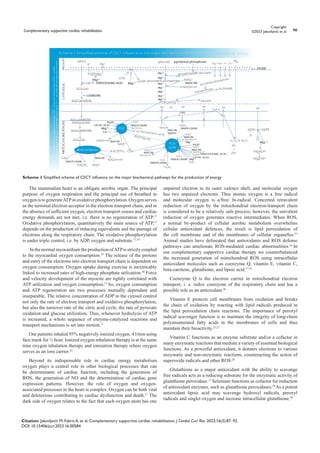
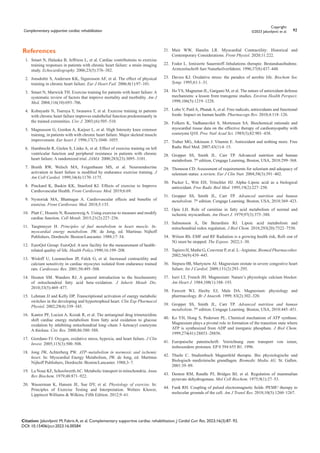
(Scheme 1)
Complementary supportive cardiac rehabilitation 90
Copyright:
©2023 Jakovljević et al.
Citation: Jakovljević M, Fabris A, et al. Complementary supportive cardiac rehabilitation. J Cardiol Curr Res. 2023;16(3):87‒92.
DOI: 10.15406/jccr.2023.16.00584
Scheme 1 Simplified scheme of CSCT influence on the major biochemical pathways for the production of energy
The mammalian heart is an obligate aerobic organ. The principal
purpose of oxygen respiration and the principal use of breathed in
oxygen is to generateATPin oxidative phosphorylation. Oxygen serves
as the terminal electron acceptor in the electron transport chain, and in
the absence of sufficient oxygen, electron transport ceases and cardiac
energy demands are not met, i.e. there is no regeneration of ATP.17
Oxidative phosphorylation, quantitatively the main source of ATP,11
depends on the production of reducing equivalents and the passage of
electrons along the respiratory chain. The oxidative phosphorylation
is under triple control, i.e. by ADP, oxygen and substrate.17,18
In the normal myocardium the production ofATPis strictly coupled
to the myocardial oxygen consumption.19
The release of the protons
and entry of the electrons into electron transport chain is dependent on
oxygen consumption. Oxygen uptake during exercise is inextricably
linked to increased rates of high-energy phosphate utilization.20
Force
and velocity development of the myocite are tightly correlated with
ATP utilization and oxygen consumption.21
So, oxygen consumption
and ATP regeneration are two processes mutually dependant and
inseparable. The relative concentration of ADP in the cytosol control
not only the rate of electron transport and oxidative phosphorylation,
but also the turnover rate of the citric acid cycle, the rate of pyruvate
oxidation and glucose utilization. Thus, whenever hydrolysis of ATP
is increased, a whole sequence of enzyme-catalyzed reactions and
transport mechanisms is set into motion.11
Our patients inhaled 95% negatively ionized oxygen, 4 l/min using
face mask for ½ hour. Ionized oxygen inhalation therapy is at the same
time oxygen inhalation therapy and ionization therapy where oxygen
serves as an ions carrier.22
Beyond its indispensable role in cardiac energy metabolism
oxygen plays a central role in other biological processes that can
be determinants of cardiac function, including the generation of
ROS, the generation of NO and the determination of cardiac gene
expression patterns. However, the role of oxygen and oxygen-
associated processes in the heart is complex. Oxygen can be both vital
and deleterious contributing to cardiac dysfunction and death.17
The
dark side of oxygen relates to the fact that each oxygen atom has one
unpaired electron in its outer valence shell, and molecular oxygen
has two unpaired electrons. Thus atomic oxygen is a free radical
and molecular oxygen is a/free/ bi-radical. Concerted tetravalent
reduction of oxygen by the mitochondrial electron-transport chain
is considered to be a relatively safe process; however, the univalent
reduction of oxygen generates reactive intermediates. When ROS,
a normal by-product of cellular aerobic metabolism overwhelms
cellular antioxidant defences, the result is lipid peroxidation of
the cell membrane and of the membranes of cellular organelles.23
Animal studies have delineated that antioxidants and ROS defense
pathways can ameliorate ROS-mediated cardiac abnormalities.24
In
our complementary supportive cardiac therapy we counterbalanced
the increased generation of mitochondrial ROS using intracellular
antioxidant molecules such as coenzyme Q, vitamin E, vitamin C,
beta-carotene, glutathione, and lipoic acid.17,25
Coenzyme Q is the electron carrier in mitochondrial electron
transport, i. e. redox coenzyme of the respiratory chain and has a
possible role as an antioxidant.26
Vitamin E protects cell membranes from oxidation and breaks
the chain of oxidation by reacting with lipid radicals produced in
the lipid peroxidation chain reactions. The importance of peroxyl
radical scavenger function is to maintain the integrity of long-chain
polyunsaturated fatty acids in the membranes of cells and thus
maintain their bioactivity.25,27
Vitamin C functions as an enzyme substrate and/or a cofactor in
many enzymatic reactions that mediate a variety of essential biological
functions. As a powerful antioxidant, it donates electrons to various
enzymatic and non-enzymatic reactions, counteracting the action of
superoxide radicals and other ROS.28
Glutathione as a major antioxidant with the ability to scavange
free radicals acts as a reducing substrate for the enzymatic activity of
glutathione peroxidase.17
Selenium functions as cofactor for reduction
of antioxidant enzymes, such as glutathione peroxidases.29
As a potent
antioxidant lipoic acid may scavenge hydroxyl radicals, peroxyl
radicals and singlet oxygen and increase intracellular glutathione.30
Complementary supportive cardiac rehabilitation 91
Copyright:
©2023 Jakovljević et al.
Citation: Jakovljević M, Fabris A, et al. Complementary supportive cardiac rehabilitation. J Cardiol Curr Res. 2023;16(3):87‒92.
DOI: 10.15406/jccr.2023.16.00584
Beta-carotene can quench singlet oxygen and react directly
with free radicals, especially peroxyl radicals, which cause lipid
peroxidation, and thus helping to minimize damage to cells.31
In most instances substrate availability, product removal and
enzyme activity are the main factors which control the rate of
a biochemical reactions.11
So, apart from using supplements as
antioxidant molecules, we applied them as coenzymes/cofactors
in substrate oxidation reactions vital for energy production and as
enzyme substrates.
Carnitine performs a number of essential intracellular and
metabolic functions and has a fundamental role in the transport of
long-chain fatty acids across the inner mitochondrial membrane.
Having direct control over the rate of production of acetyl-CoA for
TCAcycle, carnitine may indirectly help regulate the rate of glycolysis
by increasing the activity of pyruvate dehydrogenase. Incomplete FA
oxidation may result in intracellular accumulation of an intermediate
of fatty acid metabolism.32
Oxidative decarboxylation of pyruvate that assumes a central
position in the regulation of fuel supply to the heart, is catalyzed
by the multienzyme complex pyruvate dehydrogenase. Pyruvate
dehydrogenase complex requires the sequential action of three
different enzymes and five different coenzymes or prosthetic groups.
These are thiamine diphosphate, lipoic acid, CoA, FAD and NAD.11
Thiamine diphosphate, a metabolically active thiamine derivative
works asacoenzymeinmanyenzymaticreactionssuchasasapyruvate
dehydrogenase complex and alpha keto glutarate dehydrogenase
complex. These reactions are instrumental in generating energy.
Reduction or inhibition of the reactions diminish synthesis of ATP. In
advanced cases of ThDP deficiency heart failure may occur.28
Alpha-
Lipoic acid functions as a prostethic group in mitochondrial alpha-keto
acid dehydrogenase complexes including pyruvate dehydrogenase
and alpha-ketoglutarate dehydrogenase reactions and as such plays
a fundamental role in metabolism. Lipoic acid is required for cell
growth, mitochondrial activity, and coordination of fuel metabolism.33
Pantothenic acid is used in the synthesis of coenzyme A.
Pantothenic acid joins thiamine, riboflavin, and niacin in the oxidative
decarboxylation of pyruvate and alpha-ketoglutarate.28
Riboflavin
functions as a precursor of coenzymes FAD and FMN for hydrogen
or electron transfer. The active forms of riboflavin-flavin adenine
dinucleotide function as coenzymes for a variety of oxidative enzyme
reactions: in the electron transport chain, the citric acid cycle, beta-
oxidation, and pyruvate oxidation. In the oxidative decarboxylation
of pyruvate and alpha ketoglutarate, FAD serves as an intermediate
electron carrier, with NADH being the final reduced product.. Niacin
and niacinamid are precursors of the coenzymes NAD and NADP
which act as hydrogen donors or electron acceptors being involved in
dehydrogenation reactions. The major role of NADH is to transfer its
electrons from metabolic intermediates through the electron transport
chain, thereby producing ATP. Niacin is involved in DNA repair as the
precursor for nicotinamide adenine dinucleotide.28,34
Pyridoxal phosphate functions as a coenzyme for over 100
enzymes, the majority of which are involved in nutrient metabolism.
Pyridoxal phosphate is a coenzyme in reactions involving amino acids
and coenzyme of glycogen phosphorylase where it is used to break
down glycogen.28
Biotin, as carboxylase coenzyme, is a carrier for the transfer of
“activated bicarbonate” to substrate. Pyruvate carboxylase catalyses
the HCO3
- and MgATP-dependent carboxylation of pyruvate to
form oxaloacetate. This reaction is considered to play an important
anaplerotic role in numerous biological processes. Biotin-dependent
carboxylases are widely distributed in nature and have important
functions in fatty acid metabolism, amino acid metabolism,
carbohydrate metabolism, polyketide biosynthesis, urea utilization,
and other cellular processes. These reactions are vital for energy
production.28
Arginine is a conditionally essential alfa amino acid that is used
in the biosynthesis of proteins. It is the immediate precursor of the
synthesis of nitric oxide, an intercellular messenger which regulates
vasodilation.35
Magnesium, the second most abundant intracellular cation is
a cofactor for about 300 hundred magnesium activated enzymes.
Magnesium is involved in energy production, i. e in ATP metabolism,
in glycolysis, oxidative decarboxylation, oxidative phosphorylation,
and TCA cycle. Magnesium plays a pivotal role in the reactions of
ATP synthase, the central bioenergetics engine. The ATP molecule is
usually biologically active in a chelate with a magnesium ion. The
Mg2+concentration, remarkably constant and low in the cytosol
and tenfold higher in the mitochondrial matrix, mediates ADP/
ATP exchange between the cytosol and matrix, MgADP-dependent
mitochondrial ATP synthase activity, and cytosolic free ADP
homeostasis. After 2 weeks of Mg starvation, cell growth stops and
respiration is decreased.36-40
The cell membrane is the place where low-frequency pulsed
electromagnetic field/PEMF/ interacts within the cell, having a direct
action on voltage-gated channels and affecting electrical properties
of membranes and their permeability characteristics. PEMF causes
cell membrane potential to depolarize by external changes in ion
concentration, The construction of a negative cell potential is mainly
attributed to the Na-K-ATPase, which is affected by a low–frequency
pulsed electromagnetic field.41,42
Protons can down their concentration
gradient only with the help of channel proteins that form hydrophilic
tunnels across the membrane.41
Low-frequency PEMF increases
the transport of ions of hydrogen, calcium, sodium, potassium,
chlorine and magnesium moving both positive and negative ions in
the same directions. Ions stream into the cell and can act on many
other pathways and organelles.41,42
By increasing the entry of Ca++
ions PEMF has an important role in intracellular processes and
muscle contraction. Calcium++ and Magnesium ++ both inhibit the
kinase and activate the phosphatase reaction, i.e. lead to activation
of pyruvate dehydrogenase complex.11
Ca++by activating isocitrate
dehydrogenase and alfa-ketoglutarate dehydrogenase, is used
as a regulator in the citric acid cycle and it increases flux through
pathway.43
PEMF increases the oxygen saturation of haemoglobin
and significantly increases the diffusion of oxygen in tissues.42
PEMF
elicits non-toxic amount of ROS.44
Conclusion
Although our study has relatively small sample size we may say
that complementary supportive cardiac rehabilitation improves both
cardiac function and cardiac functional capacity. Supporting normal
mechanism/pathways/ of energy production might be the way of
supporting cardiac function.
Acknowledgments
None
Conflicts of interest
Authors declare that there is no conflicts of interest
Complementary supportive cardiac rehabilitation 92
Copyright:
©2023 Jakovljević et al.
Citation: Jakovljević M, Fabris A, et al. Complementary supportive cardiac rehabilitation. J Cardiol Curr Res. 2023;16(3):87‒92.
DOI: 10.15406/jccr.2023.16.00584
References
1. Smart N, Haluska B, Jeffriess L, et al. Cardiac contributions to exercise
training responses in patients with chronic heart failure: a strain imaging
study. Echocardiography. 2006;23(5):376–382.
2. Jonsdottir S, Andersen KK, Sigurosson AF, et al. The effect of physical
training in chronic heart failure. Eur J Heart Fail. 2006;8(1):97–101.
3. Smart N, Marwick TH. Exercise training for patients with heart failure: A
systematic review of factors that improve mortality and morbidity. Am J
Med. 2004;116(10):693–706.
4. Kobayashi N, Tsuruya Y, Iwasawa T, et al. Exercise training in patients
with chronic heart failure improves endothelial function predominantly in
the trained extremities. Circ J. 2003;(6):505–510.
5. Magnusson G, Gordon A, Kaijser L, et al. High Intensity knee extensor
training, in patients with with chronic heart failure. Major skeletal muscle
improvement. Eur heart J. 1996;17(7):1048–1055.
6. Hambrecht R, Gielen S, Linke A, et al. Effect of exercise training on left
ventricular function and peripheral resistance in patients with chronic
heart failure: A randomized trial. JAMA. 2000;283(23):3095–3101.
7. Braith RW, Welsch MA, Feigenbaum MS, et al. Neuroendocrine
activation in heart failure is modified by endurance exercise training. J
Am Coll Cardiol. 1999;34(4):1170–1175.
8. Pinckard K, Baskin KK, Stanford KI. Effects of exercise to Improve
Cardiovascular Health. Front Cardiovasc Med. 2019;6:69.
9. Nystoriak MA, Bhatnagar A. Cardiovascular effects and benefits of
exercise. Front Cardiovasc Med. 2018;5:135.
10. Platt C, Houstis N, Rosenzweig A. Using exercise to measure and modify
cardiac function. Cell Metab. 2015;21(2):227–236.
11. Taegtmeyer H. Principles of fuel metabolism in heart muscle. In:
myocardial energy metabolism. JW. de Jong, ed. Martinus Nijhoff
Publishers, Dordrecht /Boston/Lancaster. 1988;17–34.
12. EuroQol Group: EuroQol: A new facility for the measurement of health–
related quality of life. Health Policy.1990;16:199–208.
13. Wisloff U, Loennechen JP, Falck G, et al. Increased contractility and
calcium sensitivity in cardiac myocytes isolated from endurance trained
rats. Cardiovasc Res. 2001;50:495–508.
14. Houten SM. Wanders RJ. A general introduction to the biochemistry
of mitochondrial fatty acid beta–oxidation. J Inherit Metab Dis.
2010;33(5):469–477.
15. Lehman JJ and Kelly DP. Transcriptional activation of energy metabolic
switches in the developing and hypertrophied heart. Clin Exp Pharmacol
Physiol. 2002;29(4):339–345.
16. Kantor PF, Lucien A, Kozak R, et al. The antianginal drug trimetazidine
shift cardiac energy metabolism from fatty acid oxidation to glucose
oxidation by inhibiting mitochondrial long–chain 3–ketoacyl coenzyme
A thiolase. Circ Res. 2000;86:580–588.
17. Giordano FJ. Oxygen, oxidative stress, hypoxia, and heart failure. J Clin
Invest. 2005;115(3):500–508.
18. Jong JW, Achterberg PW. ATP–metabolism in normoxic and ischemic
heart. In: Myocardial Energy Metabolism, JW. de Jong, ed. Martinus
Nijhoff Publishers, Dordrecht /Boston/Lancaster. 1988;3–7.
19. La Noue KF, SchoolwerthAC. Metabolic transport in mitochondria. Annu
Rev Biochem. 1979;48:871–922.
20. Wasserman K, Hansen JE, Sue DY, et al. Physiology of exercise. In:
Principles of Exercise Testing and Interpretation. Wolters Kluwer,
Lippincot Williams & Wilkins, Fifth Edition. 2012;9–61.
21. Muir WW, Hamlin LR. Myocardial Contractility: Historical and
Contemporary Considerations. Front Physiol. 2020;11:222.
22. Fodor L. Ionisierte Sauerstoff–Inhalations–therapie. Bestandsaufnahme.
Arztezeitschrift fuer Naturheilverfahren. 1996;37(8):437–448.
23. Davies KJ. Oxidative stress: the paradox of aerobic life. Biochem Soc
Symp. 1995;61:1–31.
24. Ho YS, Magnenat JL, Gargano M, et al. The nature of antioxidant defense
mechanisms: a lesson from transgenic studies. Environ Health Perspect.
1998;106(5):1219–1228.
25. Lobo V, Patil A, Phatak A, et al. Free radicals, antioxidants and functional
foods: Impact on human health. Pharmacogn Rev. 2010;4:118–126.
26. Folkers K, Vadhanavikit S, Mortensen SA. Biochemical rationale and
myocardial tissue data on the effective therapy of cardiomyopathy with
coenzyme Q10. Proc Natl Acad Sci. 1985(3);82:901–438.
27. Traber MG, Atkinson J. Vitamin E. Antioxidant and nothing more. Free
Radic Biol Med. 2007;43(1):4–15.
28. Gropper SS, Smith JL. Carr TP. Advanced nutrition and human
metabolism. 7th
edition, Cengage Learning, Boston, USA, 2018:299–368.
29. Thomson CD. Assessment of requirements for selenium and adequacy of
selenium status: a review. Eur J Clin Nutr. 2004;58(3):391–402.
30. Packer L, Witt EH, Tritschler HJ. Alpha–Lipoic acid as a biological
antioxidant. Free Radic Biol Med. 1995;19(2):227–250.
31. Gropper SS, Smith JL, Carr TP. Advanced nutrition and human
metabolism. 7th
edition. Cengage Learning. Boston, USA, 2018:369–423.
32. Opie LH. Role of carnitine in fatty acid metabolism of normal and
ischemic myocardium. Am Heart J. 1979;97(3):375–388.
33. Salmonson A, De Berardinis RJ. Lipoic acid metabolism and
mitochondrial redox regulation. J Biol Chem. 2018;293(20):7522–7530.
34. Wilson Rh. EMF and RF Radiation is a growing health risk, Roll–out of
5G must be stopped. The Expose. 2022;1–30.
35. Tapiero H, Mathe G, Couvreur P, et al. L–Arginine. Biomed Pharmacother.
2002;56(9):439–445.
36. Stepura 0B, Martynow AI. Magnesium orotate in severe congestive heart
failure. Int J Cardiol. 2009;131(2):293–295.
37. Iseri LT, French JH. Magnesium: Nature’s physiologic calcium blocker.
Am Heart J. 1984;108(1):188–193.
38. Fawcett WJ, Haxby EJ, Male DA. Magnesium: physiology and
pharmacology. Br J Anaesth. 1999; 83(2):302–320.
39. Gropper SS, Smith JL, Carr TP. Advanced nutrition and human
metabolism. 7th
edition. Cengage Learning. Boston, USA, 2018:445–451.
40. Ko YH, Hong S, Pedersen PL. Chemical mechanism of ATP synthase.
Magnesium plays a pivotal role in formation of the transition state where
ATP is synthesized from ADP and inorganic phosphate. J Biol Chem.
1999;274(41):28853–28856.
41. Europaische patentschrift: Vorrichtung zum transport von ionen,
insbesondere protonen. EP 0 594 655 B1. 1996.
42. Thuile C. Studienbuch Magnetfeld therapie. Bio physiologische und
Biologisch–medizinische grundlagen. Biomedic Media AG. St. Gallen.
2001:39–89.
43. Denton RM, Randle PJ, Bridges BJ, et al. Regulation of mammalian
pyruvate dehydrogenase. Mol Cell Biochem. 1975;9(1):27–53.
44. Funk RH. Coupling of pulsed electromagnetic fields /PEMF/ therapy to
molecular grounds of the cell. Am J Transl Res. 2018;10(5):1260–1267.

Complementary supportive cardiac rehabilitation

  • 2.
    Submit Manuscript |http://medcraveonline.com Abbreviations: PDC, pyruvate dehydrogenase complex; TCA cycle, tricarboxylic acid cycle;NEFA, nonesterified fatty acids; PEMF, pulsed electromagnetic field; ATP, adenosine triphosphate; ADP, adenosine diphosphate; AC, adenylate cyclase; CoA, coenzyme A; NAD, nicotinamide adenine dinucleotide; FAD, flavin adenine dinucleotide; ThDP, thiamine diphosphat Introduction Prolongedperiodofexercisetrainingcanleadtoimpressiveincrease in cardiac exercise capacity but the contribution of cardiac responses is less clear.1-3 The improvement in functional capacity observed in the training group seems to be related to peripheral factors rather than in central cardiovascular performance./1, 2/ Exercise has a favourable effects on endothelial function,4 strengthens muscles5 enhances skeletal muscle aerobic metabolism,6 reverses resting neuroendocrine hyperactivity in heart failure patients.6,7 Exercise causes the release of myokines from skeletal muscle, increases mitochondrial biogenesis, improves fatty acid oxidation8 and increases the availability of nitric oxide.9 Some studies have shown improvement in V02peak after exercise training1,5 but others have not.2,4 Hambrecht et al have reported favourable effects on remodeling, considering the improvements in LV stroke volume and decrease in LV end diastolic diameter and volume as secondary effects of exercise therapy related to improved peripheral vasodilation.6 Platt C et al.10 highlight vascular response associated with improved cardiac function during chronic exercise. The contribution of myocardial function to the training response, and indeed the benefits of training on myocardial performance have been debated.1 Since the energy metabolism is closely linked to cardiac function11 we assessed impact of the metabolic support on cardiac function during cardiovascular rehabilitation. We assumed that cardiac metabolic therapeutic approach must be integrative, improving the complete substrate oxidation, i.e. supporting normal mechanism of energy production without increased generation of reactive oxygen species. Complementary supportive cardiac rehabilitation The work load on the bicycle started with 50% of the peak work load from the cardiopulmonary echocardiography exercise test, and then gradually increased by either 10 or 15 W/min. Heart rate and rhythm were recorded continuously by 12-lead ECG and blood pressure was measured automatically at the 2 minutes interval. Exercise was symptom, blood pressure, heart rate and arrhythmias limited. Before each exercise training the patients received magnesium, niacin, coenzyme Q10, biotin, glutathione, vitamin E, thiamine diphosphate, riboflavin, pantothenic acid, pyridoxal and beta carotene. Immediately after supervised exercise training patients were J Cardiol Curr Res. 2023;16(3):87‒92. 87 ©2023 Jakovljevic et al. This is an open access article distributed under the terms of the Creative Commons Attribution License, which permits unrestricted use, distribution, and build upon your work non-commercially. Complementary supportive cardiac rehabilitation Volume 16 Issue 3 - 2023 Mila Jakovljević,Ana Fabris Polyclinic for Cardiovascular Diseases and Prevention Sveti Nikola Korčula, Croatia Correspondence: Mila Jakovljević, Polyclinic for Cardiovascular Diseases and Prevention, Korčula, Croatia, Email Received: August 03, 2023 | Published: September 08, 2023 Abstract Aim: Physical training increases cardiac exercise capacity, but generally does not affect cardiac function. Since energy metabolism is closely linked to cardiac function, we assessed the impact of the integrative metabolic approach on the cardiac function during cardiovascular rehabilitation. Our concept was not to act on one specific enzyme, protein or particular metabolic pathway, but “to improve the flux” supporting normal mechanisms for energy production without increased generation of mitochondrial reactive oxygen species. Methods: 3 weeks exercise training was undertaken on an upright bicycle ergometer in 30 complementary supportive cardiac rehabilitation sessions. Before each exercise training the patients received magnesium, niacin, coenzyme Q10, biotin, glutathione, vitamin E, thiamine diphosphate, riboflavin, pantothenic acid, pyridoxal, and beta-carotene. Following the exercise training the patients inhaled 95% oxygen 4 l/min provided by oxygen concentrator with ionization lying inside a low frequency pulsed electromagnetic field with intensity of up to 30 microtesla. After oxygen inhalation, the patients received carnitine, arginine, NADH, lipoic acid, selenium, and vitamin C.Acardiopulmonary echocardiograpy exercise test was performed at the start and the end of the three-week session and the patients were asked to evaluate the visual analogue scale. Results: Arithmetic means of most Ergospiro echocardiographic parameters are lower before and higher after rehabilitation. Exceptions are the values VE/VC02, VD/VT, BR and E/e’, where the ratio of arithmetic means is reversed. The correlation coefficients for all 20 pairs of cardiopulmonary echocardiographic variables before and after rehabilitation range from 0, 568 to 0, 952. Most of them are closer to the number 1, that is, most of them show a strong positive association. p values are less than 0, 05 for all 20 pairs of cardiopulmonary echocardiographic variables This means that CSCR statistically significantly improved the results of measurement compared to the results before the rehabilitation. Conclusion: supporting normal mechanisms/pathways/ for energy production might be the way of supporting cardiac function during cardiac rehabilitation. Keywords: cardiac rehabilitation, complementary supportive cardiac therapy Journal of Cardiology & Current Research Research Article Open Access
  • 3.
    Complementary supportive cardiacrehabilitation 88 Copyright: ©2023 Jakovljević et al. Citation: Jakovljević M, Fabris A, et al. Complementary supportive cardiac rehabilitation. J Cardiol Curr Res. 2023;16(3):87‒92. DOI: 10.15406/jccr.2023.16.00584 inhaling 95% oxygen 4 l/min provided by oxygen concentrator with ionization/Oxicur 5000 ion S/using face mask. At the same time the patients were lying inside a low -frequency pulsed electromagnetic field with intensity of up to 30 microtesla/QRS 101/. After oxygen inhalation patients received carnitine, arginine, NADH, lipoic acid, selenium, and vitamin C. (Figure 1) Figure 1 Complementary supportive cardiac rehabilitation A cardiopulmonary echocardiograpy exercise test was performed on an upright bicycle ergometer/Schiller 911 S/ with 1-minute increase/either 10 or 15 Watts/min/ in work rate, at the start and end of the three-week metabolic exercise training. Ergospirometric system was based on the AT-104 ECG, with Ganshorn LF8 Power Cube gas analyser/Schiller/. A continuous single breath stroke analysis was carried out for recording the volume of oxygen uptake/V02/, volume of carbon dioxide output/VC02/ and Minute Ventilation/VE/. Additional parameters such as peak V02, aerobic threshold, max 02 pulse, delta V02/delta WR, PETC02, VE/ VC02 slope, VD/VT, RER and breathing reserve/BR/were analyzed. Peak V02 was defined as the V02 value relative to body weight in ml/ min/kg, and as the highest 30 s average during the last 60 s of exercise. Gas analyzers and flow probes were calibrated before each test. There was continuous ECG monitoring and blood pressure was measured automatically at the 2 minutes interval. Exercise data were stored on disk and analysed off-line/SDS-104 Program. Patients were imaged in the supine left lateral position using a commercially available system/Vivid E 95, General Electric Healthcare, Milwaukee, WI, USA/in the three standard apical views. We used hybrid technique combining TVI and 2D strain. 2D gray scale images were obtained at a frame rate of 55-90 frames/s and Colour Doppler images were saved with a colour frame rate of 100- 140 frames/s. Measurement is performed off –line. Systolic velocities, strain rate and end systolic strain were obtained by locating the sample volume in the mid anteroseptal, basal inferno- lateral, and mid inferior segment. Early diastolic velocities were analysed separately in the middle of the basal lateral and basal septal segments. Key parameters of global cardiac performance were EF, SV and GLS. EF and LV volumes were assessed by 4D bi-plane volume measurement using full matrix array with manually traced endocardial borders including trabeculae and the papillary muscles. All the echocardiographic assessments were interpreted by one cardiologist. Health status was evaluated using the visual analogue scale with a grade ranging from 0/the worst possible health status/ to 100/the best possible health status.12 Statistical analysis were performed using programme SPSS Statistics for Windows version 25. The values of p<0, 05 were considered statistically significant. Results Baseline patient’s characteristics are listed in Table 1. Table 1 Baseline characteristics of patients before 30 sessions of the complementary supportive cardiac rehabilitation Age (years)/mean ± lSD 64,1±7,2 Male gender (%) 60 AETIOLOGY (%) lschemic heart disease 17 Cardiomyopathia 5 Artificial aortic value 3 Arterial hypertension 5 Medication (%) ACE-I 11 ARBs 7 Beta Blockers 22 Nitrates 9 Digitalis 2 Amiodarone 1 Oral anticoagulants 2 Anti platelets 17 Atrial fibrillation 2 EF (%) (mean + lSD) 54,5±6,l SR l/S (mean +lSD) -0,28±0,05 PeakV02 ml/kg/min (mean +lSD) 11,8±3,8 dV02 /dWR ml/mm/W 8,1±2,9 Visual analogue scale 11 EF, ejection fraction; ACE- I, angiotensin converting enzyme inhibitor; ARB, angiotensin II receptor blockers; SR, strain rate; Peak V02 , highest oxygen uptake; dVO2 dWR, oxygen uptake related to work increase
  • 4.
    Complementary supportive cardiacrehabilitation 89 Copyright: ©2023 Jakovljević et al. Citation: Jakovljević M, Fabris A, et al. Complementary supportive cardiac rehabilitation. J Cardiol Curr Res. 2023;16(3):87‒92. DOI: 10.15406/jccr.2023.16.00584 All patients have completed the study, and exercise program compliance was 100%. Arithmetic means of most Ergospiro echocardiographic parameters are lower before and higher after rehabilitation. Exceptions are the values VE/VC02, VD/VT, BR and E/e’, where the ratio of arithmetic means is reversed. The correlation coefficients for all 20 pairs of cardiopulmonary echocardiographic variables before and after rehabilitation range from 0, 568 to 0, 952. Most of them are closer to the number 1, that is, most of them show a strong positive association. p values are less than 0, 05 for all 20 pairs of cardiopulmonary echocardiographic variables. Table 2 Cardiopulmonary echocardiography exercise test values before and after 30 complementary supportive cardiac rehabilitation sessions Arithmetic mean Correlation coefficient t value p value Before After Duration, sec 371 469 0,939 -6,368 <0,001*** Load,W 74 95 0,941 -3,942 <0,001*** PeakV02 ml/ kg/ min 11,8 13,9 0,928 -4,824 <0,001*** PeakV02 (%) 52,3 59,8 0,834 -3,750 0,002** ATV02 ml/ kg/ min 8,8 11,l 0,801 -4,102 0,001*** dVO2 W R ml/min/W 8,1 11,2 0,635 -3,781 0,001*** 02 pulse ml/beat t 9,4 11,6 0,834 -3,214 0,005** Peak R ER 0,98 1,01 0,673 -2,334 -0,033* PET C02 mmHg 33,9 37,12 0,618 -2,768 0,012* VE/VC02 slope 34,l 24,9 0,628 5,994 <0,001*** VD/VT 0,32 0,23 0,568 3,482 0,003** - statistical significance up to 5%, ** - statistical significance up to 1%, *** - statistical significance up to 0,1% Table 2a Cardiopulmonary echocardiography exercise test values before and after 30 complementary supportive cardiac rehabilitation sessions Arithmetic mean Coefficient t value p value Before After BR (%) 53 41 0,912 4,817 <0,001*** VE I/m in 34,8 39,9 0,952 -3,840 <0,001*** LVEF % 54,5 62,8 0,828 -6,281 <0,001*** LVSV ml 52,8 64,2 0,712 -6,334 <0,001*** LV GLS% -16,2 -16,9 0,756 2,783 0,017* Vs cm/sec 3,73 4,38 0,891 -4,931 <0,001*** SR 1/S -0,28 -0,38 0,878 -4,021 0,001*** Ve' cm/s 6,82 7,96 0,889 -5,683 <0,001*** E/e' 12,l 9,04 0,838 4,321 0,001*** VAS 63,72 84,3 0,881 -4,328 <0,001*** - statistical significance up to 5%, ** - statistical significance up to 1%, *** - statistical significance up to 0,1% PV02, highest oxygen uptake,ATV02 oxygen uptake at anaerobic threshold; dV02 /dWR, oxygen uptake related to work increase, p02 pulse. oxygen pulse at peak exercise; pRER, peak respiratory exchange ratio; PETC02, end-tidal partial pressure of carbon dioxide;VENC02 slope, minute ventilation to carbon dioxide output slope; pVD/VT dead space/tidal volume ratio; BR,breathing reserve;EF,ejection fraction;SV,stroke volume;GLS,lobal longitudinal strain;Vs,systolic myocardial velocity;SR,strain rate;Ve.Early mitral diastolic annular velocity; E/e, LV, filling pressure; LV, left ventricular;VAS, visual analogue scale This means that complementary supportive cardiac rehabilitation statistically significantly improved the results of measurement compared to the results before the rehabilitation. Discussion Apart from reducing numerous cardiovascular risk factors including diabetes mellitus, hyperlipidemia and hypertension chronic exercise evokes important molecular, structural, and functional changes.10 Responses of the heart to chronic exercise can be organ- level reponses, cellular reponses and response in signaling pathways. Cardiac remodeling at the tissue level caused by exercise training can increase left ventricular mass by 20% or more. Exercise-induced “physiological hypertrophy” is believed to be cardioprotective while disease-associated “pathological hypertrophy” is part of an adverse remodeling process including cardiac fibrosis, electrical remodeling, and activation of a fetal gene program.10 Exercise improves cardiomyocite contractility and Ca2+ sensitivity.13 Powering this contractile activity requires chemical energy. Normally, 70% to 90% of cardiac ATP is produced by the oxidation of fatty acids, which is the pivotal process for the heart’s energy production.14 During pathological remodeling of the heart cardiomyocytes revert to a fetal metabolic state, reducing metabolism of fatty acids and shifting back toward glycolisis as the primary pathway for energy production.15 Most approaches that are used to manipulate myocardial energy metabolism involve either stimulating glucose metabolism or inhibiting fatty acid metabolism.16 In our study we accepted the general concept that the flux through energy-providing pathways determines the functional state of the tissue.11 Our concept was not to act on one specific enzyme or protein or particular pathway but “to improve the flux” supporting normal mechanism of energy production without increased generation of mitochondrial reactive oxygen species. Regulation and control of flux through a metabolic pathway is a shared property of many different intra- and extracellular effectors and cannot be achieved by any single enzyme acting in isolation. In addition to product inhibition there are other factors which need to be taken into account such as the overall activity of the enzyme and availability of cofactors for the reaction.11 (Scheme 1)
  • 5.
    Complementary supportive cardiacrehabilitation 90 Copyright: ©2023 Jakovljević et al. Citation: Jakovljević M, Fabris A, et al. Complementary supportive cardiac rehabilitation. J Cardiol Curr Res. 2023;16(3):87‒92. DOI: 10.15406/jccr.2023.16.00584 Scheme 1 Simplified scheme of CSCT influence on the major biochemical pathways for the production of energy The mammalian heart is an obligate aerobic organ. The principal purpose of oxygen respiration and the principal use of breathed in oxygen is to generateATPin oxidative phosphorylation. Oxygen serves as the terminal electron acceptor in the electron transport chain, and in the absence of sufficient oxygen, electron transport ceases and cardiac energy demands are not met, i.e. there is no regeneration of ATP.17 Oxidative phosphorylation, quantitatively the main source of ATP,11 depends on the production of reducing equivalents and the passage of electrons along the respiratory chain. The oxidative phosphorylation is under triple control, i.e. by ADP, oxygen and substrate.17,18 In the normal myocardium the production ofATPis strictly coupled to the myocardial oxygen consumption.19 The release of the protons and entry of the electrons into electron transport chain is dependent on oxygen consumption. Oxygen uptake during exercise is inextricably linked to increased rates of high-energy phosphate utilization.20 Force and velocity development of the myocite are tightly correlated with ATP utilization and oxygen consumption.21 So, oxygen consumption and ATP regeneration are two processes mutually dependant and inseparable. The relative concentration of ADP in the cytosol control not only the rate of electron transport and oxidative phosphorylation, but also the turnover rate of the citric acid cycle, the rate of pyruvate oxidation and glucose utilization. Thus, whenever hydrolysis of ATP is increased, a whole sequence of enzyme-catalyzed reactions and transport mechanisms is set into motion.11 Our patients inhaled 95% negatively ionized oxygen, 4 l/min using face mask for ½ hour. Ionized oxygen inhalation therapy is at the same time oxygen inhalation therapy and ionization therapy where oxygen serves as an ions carrier.22 Beyond its indispensable role in cardiac energy metabolism oxygen plays a central role in other biological processes that can be determinants of cardiac function, including the generation of ROS, the generation of NO and the determination of cardiac gene expression patterns. However, the role of oxygen and oxygen- associated processes in the heart is complex. Oxygen can be both vital and deleterious contributing to cardiac dysfunction and death.17 The dark side of oxygen relates to the fact that each oxygen atom has one unpaired electron in its outer valence shell, and molecular oxygen has two unpaired electrons. Thus atomic oxygen is a free radical and molecular oxygen is a/free/ bi-radical. Concerted tetravalent reduction of oxygen by the mitochondrial electron-transport chain is considered to be a relatively safe process; however, the univalent reduction of oxygen generates reactive intermediates. When ROS, a normal by-product of cellular aerobic metabolism overwhelms cellular antioxidant defences, the result is lipid peroxidation of the cell membrane and of the membranes of cellular organelles.23 Animal studies have delineated that antioxidants and ROS defense pathways can ameliorate ROS-mediated cardiac abnormalities.24 In our complementary supportive cardiac therapy we counterbalanced the increased generation of mitochondrial ROS using intracellular antioxidant molecules such as coenzyme Q, vitamin E, vitamin C, beta-carotene, glutathione, and lipoic acid.17,25 Coenzyme Q is the electron carrier in mitochondrial electron transport, i. e. redox coenzyme of the respiratory chain and has a possible role as an antioxidant.26 Vitamin E protects cell membranes from oxidation and breaks the chain of oxidation by reacting with lipid radicals produced in the lipid peroxidation chain reactions. The importance of peroxyl radical scavenger function is to maintain the integrity of long-chain polyunsaturated fatty acids in the membranes of cells and thus maintain their bioactivity.25,27 Vitamin C functions as an enzyme substrate and/or a cofactor in many enzymatic reactions that mediate a variety of essential biological functions. As a powerful antioxidant, it donates electrons to various enzymatic and non-enzymatic reactions, counteracting the action of superoxide radicals and other ROS.28 Glutathione as a major antioxidant with the ability to scavange free radicals acts as a reducing substrate for the enzymatic activity of glutathione peroxidase.17 Selenium functions as cofactor for reduction of antioxidant enzymes, such as glutathione peroxidases.29 As a potent antioxidant lipoic acid may scavenge hydroxyl radicals, peroxyl radicals and singlet oxygen and increase intracellular glutathione.30
  • 6.
    Complementary supportive cardiacrehabilitation 91 Copyright: ©2023 Jakovljević et al. Citation: Jakovljević M, Fabris A, et al. Complementary supportive cardiac rehabilitation. J Cardiol Curr Res. 2023;16(3):87‒92. DOI: 10.15406/jccr.2023.16.00584 Beta-carotene can quench singlet oxygen and react directly with free radicals, especially peroxyl radicals, which cause lipid peroxidation, and thus helping to minimize damage to cells.31 In most instances substrate availability, product removal and enzyme activity are the main factors which control the rate of a biochemical reactions.11 So, apart from using supplements as antioxidant molecules, we applied them as coenzymes/cofactors in substrate oxidation reactions vital for energy production and as enzyme substrates. Carnitine performs a number of essential intracellular and metabolic functions and has a fundamental role in the transport of long-chain fatty acids across the inner mitochondrial membrane. Having direct control over the rate of production of acetyl-CoA for TCAcycle, carnitine may indirectly help regulate the rate of glycolysis by increasing the activity of pyruvate dehydrogenase. Incomplete FA oxidation may result in intracellular accumulation of an intermediate of fatty acid metabolism.32 Oxidative decarboxylation of pyruvate that assumes a central position in the regulation of fuel supply to the heart, is catalyzed by the multienzyme complex pyruvate dehydrogenase. Pyruvate dehydrogenase complex requires the sequential action of three different enzymes and five different coenzymes or prosthetic groups. These are thiamine diphosphate, lipoic acid, CoA, FAD and NAD.11 Thiamine diphosphate, a metabolically active thiamine derivative works asacoenzymeinmanyenzymaticreactionssuchasasapyruvate dehydrogenase complex and alpha keto glutarate dehydrogenase complex. These reactions are instrumental in generating energy. Reduction or inhibition of the reactions diminish synthesis of ATP. In advanced cases of ThDP deficiency heart failure may occur.28 Alpha- Lipoic acid functions as a prostethic group in mitochondrial alpha-keto acid dehydrogenase complexes including pyruvate dehydrogenase and alpha-ketoglutarate dehydrogenase reactions and as such plays a fundamental role in metabolism. Lipoic acid is required for cell growth, mitochondrial activity, and coordination of fuel metabolism.33 Pantothenic acid is used in the synthesis of coenzyme A. Pantothenic acid joins thiamine, riboflavin, and niacin in the oxidative decarboxylation of pyruvate and alpha-ketoglutarate.28 Riboflavin functions as a precursor of coenzymes FAD and FMN for hydrogen or electron transfer. The active forms of riboflavin-flavin adenine dinucleotide function as coenzymes for a variety of oxidative enzyme reactions: in the electron transport chain, the citric acid cycle, beta- oxidation, and pyruvate oxidation. In the oxidative decarboxylation of pyruvate and alpha ketoglutarate, FAD serves as an intermediate electron carrier, with NADH being the final reduced product.. Niacin and niacinamid are precursors of the coenzymes NAD and NADP which act as hydrogen donors or electron acceptors being involved in dehydrogenation reactions. The major role of NADH is to transfer its electrons from metabolic intermediates through the electron transport chain, thereby producing ATP. Niacin is involved in DNA repair as the precursor for nicotinamide adenine dinucleotide.28,34 Pyridoxal phosphate functions as a coenzyme for over 100 enzymes, the majority of which are involved in nutrient metabolism. Pyridoxal phosphate is a coenzyme in reactions involving amino acids and coenzyme of glycogen phosphorylase where it is used to break down glycogen.28 Biotin, as carboxylase coenzyme, is a carrier for the transfer of “activated bicarbonate” to substrate. Pyruvate carboxylase catalyses the HCO3 - and MgATP-dependent carboxylation of pyruvate to form oxaloacetate. This reaction is considered to play an important anaplerotic role in numerous biological processes. Biotin-dependent carboxylases are widely distributed in nature and have important functions in fatty acid metabolism, amino acid metabolism, carbohydrate metabolism, polyketide biosynthesis, urea utilization, and other cellular processes. These reactions are vital for energy production.28 Arginine is a conditionally essential alfa amino acid that is used in the biosynthesis of proteins. It is the immediate precursor of the synthesis of nitric oxide, an intercellular messenger which regulates vasodilation.35 Magnesium, the second most abundant intracellular cation is a cofactor for about 300 hundred magnesium activated enzymes. Magnesium is involved in energy production, i. e in ATP metabolism, in glycolysis, oxidative decarboxylation, oxidative phosphorylation, and TCA cycle. Magnesium plays a pivotal role in the reactions of ATP synthase, the central bioenergetics engine. The ATP molecule is usually biologically active in a chelate with a magnesium ion. The Mg2+concentration, remarkably constant and low in the cytosol and tenfold higher in the mitochondrial matrix, mediates ADP/ ATP exchange between the cytosol and matrix, MgADP-dependent mitochondrial ATP synthase activity, and cytosolic free ADP homeostasis. After 2 weeks of Mg starvation, cell growth stops and respiration is decreased.36-40 The cell membrane is the place where low-frequency pulsed electromagnetic field/PEMF/ interacts within the cell, having a direct action on voltage-gated channels and affecting electrical properties of membranes and their permeability characteristics. PEMF causes cell membrane potential to depolarize by external changes in ion concentration, The construction of a negative cell potential is mainly attributed to the Na-K-ATPase, which is affected by a low–frequency pulsed electromagnetic field.41,42 Protons can down their concentration gradient only with the help of channel proteins that form hydrophilic tunnels across the membrane.41 Low-frequency PEMF increases the transport of ions of hydrogen, calcium, sodium, potassium, chlorine and magnesium moving both positive and negative ions in the same directions. Ions stream into the cell and can act on many other pathways and organelles.41,42 By increasing the entry of Ca++ ions PEMF has an important role in intracellular processes and muscle contraction. Calcium++ and Magnesium ++ both inhibit the kinase and activate the phosphatase reaction, i.e. lead to activation of pyruvate dehydrogenase complex.11 Ca++by activating isocitrate dehydrogenase and alfa-ketoglutarate dehydrogenase, is used as a regulator in the citric acid cycle and it increases flux through pathway.43 PEMF increases the oxygen saturation of haemoglobin and significantly increases the diffusion of oxygen in tissues.42 PEMF elicits non-toxic amount of ROS.44 Conclusion Although our study has relatively small sample size we may say that complementary supportive cardiac rehabilitation improves both cardiac function and cardiac functional capacity. Supporting normal mechanism/pathways/ of energy production might be the way of supporting cardiac function. Acknowledgments None Conflicts of interest Authors declare that there is no conflicts of interest
  • 7.
    Complementary supportive cardiacrehabilitation 92 Copyright: ©2023 Jakovljević et al. Citation: Jakovljević M, Fabris A, et al. Complementary supportive cardiac rehabilitation. J Cardiol Curr Res. 2023;16(3):87‒92. DOI: 10.15406/jccr.2023.16.00584 References 1. Smart N, Haluska B, Jeffriess L, et al. Cardiac contributions to exercise training responses in patients with chronic heart failure: a strain imaging study. Echocardiography. 2006;23(5):376–382. 2. Jonsdottir S, Andersen KK, Sigurosson AF, et al. The effect of physical training in chronic heart failure. Eur J Heart Fail. 2006;8(1):97–101. 3. Smart N, Marwick TH. Exercise training for patients with heart failure: A systematic review of factors that improve mortality and morbidity. Am J Med. 2004;116(10):693–706. 4. Kobayashi N, Tsuruya Y, Iwasawa T, et al. Exercise training in patients with chronic heart failure improves endothelial function predominantly in the trained extremities. Circ J. 2003;(6):505–510. 5. Magnusson G, Gordon A, Kaijser L, et al. High Intensity knee extensor training, in patients with with chronic heart failure. Major skeletal muscle improvement. Eur heart J. 1996;17(7):1048–1055. 6. Hambrecht R, Gielen S, Linke A, et al. Effect of exercise training on left ventricular function and peripheral resistance in patients with chronic heart failure: A randomized trial. JAMA. 2000;283(23):3095–3101. 7. Braith RW, Welsch MA, Feigenbaum MS, et al. Neuroendocrine activation in heart failure is modified by endurance exercise training. J Am Coll Cardiol. 1999;34(4):1170–1175. 8. Pinckard K, Baskin KK, Stanford KI. Effects of exercise to Improve Cardiovascular Health. Front Cardiovasc Med. 2019;6:69. 9. Nystoriak MA, Bhatnagar A. Cardiovascular effects and benefits of exercise. Front Cardiovasc Med. 2018;5:135. 10. Platt C, Houstis N, Rosenzweig A. Using exercise to measure and modify cardiac function. Cell Metab. 2015;21(2):227–236. 11. Taegtmeyer H. Principles of fuel metabolism in heart muscle. In: myocardial energy metabolism. JW. de Jong, ed. Martinus Nijhoff Publishers, Dordrecht /Boston/Lancaster. 1988;17–34. 12. EuroQol Group: EuroQol: A new facility for the measurement of health– related quality of life. Health Policy.1990;16:199–208. 13. Wisloff U, Loennechen JP, Falck G, et al. Increased contractility and calcium sensitivity in cardiac myocytes isolated from endurance trained rats. Cardiovasc Res. 2001;50:495–508. 14. Houten SM. Wanders RJ. A general introduction to the biochemistry of mitochondrial fatty acid beta–oxidation. J Inherit Metab Dis. 2010;33(5):469–477. 15. Lehman JJ and Kelly DP. Transcriptional activation of energy metabolic switches in the developing and hypertrophied heart. Clin Exp Pharmacol Physiol. 2002;29(4):339–345. 16. Kantor PF, Lucien A, Kozak R, et al. The antianginal drug trimetazidine shift cardiac energy metabolism from fatty acid oxidation to glucose oxidation by inhibiting mitochondrial long–chain 3–ketoacyl coenzyme A thiolase. Circ Res. 2000;86:580–588. 17. Giordano FJ. Oxygen, oxidative stress, hypoxia, and heart failure. J Clin Invest. 2005;115(3):500–508. 18. Jong JW, Achterberg PW. ATP–metabolism in normoxic and ischemic heart. In: Myocardial Energy Metabolism, JW. de Jong, ed. Martinus Nijhoff Publishers, Dordrecht /Boston/Lancaster. 1988;3–7. 19. La Noue KF, SchoolwerthAC. Metabolic transport in mitochondria. Annu Rev Biochem. 1979;48:871–922. 20. Wasserman K, Hansen JE, Sue DY, et al. Physiology of exercise. In: Principles of Exercise Testing and Interpretation. Wolters Kluwer, Lippincot Williams & Wilkins, Fifth Edition. 2012;9–61. 21. Muir WW, Hamlin LR. Myocardial Contractility: Historical and Contemporary Considerations. Front Physiol. 2020;11:222. 22. Fodor L. Ionisierte Sauerstoff–Inhalations–therapie. Bestandsaufnahme. Arztezeitschrift fuer Naturheilverfahren. 1996;37(8):437–448. 23. Davies KJ. Oxidative stress: the paradox of aerobic life. Biochem Soc Symp. 1995;61:1–31. 24. Ho YS, Magnenat JL, Gargano M, et al. The nature of antioxidant defense mechanisms: a lesson from transgenic studies. Environ Health Perspect. 1998;106(5):1219–1228. 25. Lobo V, Patil A, Phatak A, et al. Free radicals, antioxidants and functional foods: Impact on human health. Pharmacogn Rev. 2010;4:118–126. 26. Folkers K, Vadhanavikit S, Mortensen SA. Biochemical rationale and myocardial tissue data on the effective therapy of cardiomyopathy with coenzyme Q10. Proc Natl Acad Sci. 1985(3);82:901–438. 27. Traber MG, Atkinson J. Vitamin E. Antioxidant and nothing more. Free Radic Biol Med. 2007;43(1):4–15. 28. Gropper SS, Smith JL. Carr TP. Advanced nutrition and human metabolism. 7th edition, Cengage Learning, Boston, USA, 2018:299–368. 29. Thomson CD. Assessment of requirements for selenium and adequacy of selenium status: a review. Eur J Clin Nutr. 2004;58(3):391–402. 30. Packer L, Witt EH, Tritschler HJ. Alpha–Lipoic acid as a biological antioxidant. Free Radic Biol Med. 1995;19(2):227–250. 31. Gropper SS, Smith JL, Carr TP. Advanced nutrition and human metabolism. 7th edition. Cengage Learning. Boston, USA, 2018:369–423. 32. Opie LH. Role of carnitine in fatty acid metabolism of normal and ischemic myocardium. Am Heart J. 1979;97(3):375–388. 33. Salmonson A, De Berardinis RJ. Lipoic acid metabolism and mitochondrial redox regulation. J Biol Chem. 2018;293(20):7522–7530. 34. Wilson Rh. EMF and RF Radiation is a growing health risk, Roll–out of 5G must be stopped. The Expose. 2022;1–30. 35. Tapiero H, Mathe G, Couvreur P, et al. L–Arginine. Biomed Pharmacother. 2002;56(9):439–445. 36. Stepura 0B, Martynow AI. Magnesium orotate in severe congestive heart failure. Int J Cardiol. 2009;131(2):293–295. 37. Iseri LT, French JH. Magnesium: Nature’s physiologic calcium blocker. Am Heart J. 1984;108(1):188–193. 38. Fawcett WJ, Haxby EJ, Male DA. Magnesium: physiology and pharmacology. Br J Anaesth. 1999; 83(2):302–320. 39. Gropper SS, Smith JL, Carr TP. Advanced nutrition and human metabolism. 7th edition. Cengage Learning. Boston, USA, 2018:445–451. 40. Ko YH, Hong S, Pedersen PL. Chemical mechanism of ATP synthase. Magnesium plays a pivotal role in formation of the transition state where ATP is synthesized from ADP and inorganic phosphate. J Biol Chem. 1999;274(41):28853–28856. 41. Europaische patentschrift: Vorrichtung zum transport von ionen, insbesondere protonen. EP 0 594 655 B1. 1996. 42. Thuile C. Studienbuch Magnetfeld therapie. Bio physiologische und Biologisch–medizinische grundlagen. Biomedic Media AG. St. Gallen. 2001:39–89. 43. Denton RM, Randle PJ, Bridges BJ, et al. Regulation of mammalian pyruvate dehydrogenase. Mol Cell Biochem. 1975;9(1):27–53. 44. Funk RH. Coupling of pulsed electromagnetic fields /PEMF/ therapy to molecular grounds of the cell. Am J Transl Res. 2018;10(5):1260–1267.