Communication Skills
Communication skillsare the abilities that allow you to share information with
others effectively.
Importance:
Building Relationships: It helps you connect with others, making it easier to
build and maintain personal and professional relationships.
Efficiency: When you communicate well, you can share information quickly
and accurately, reducing misunderstandings and saving time.
Confidence: Being able to express yourself clearly boosts your self-esteem.
3.
Session 1: Introductionto Communication
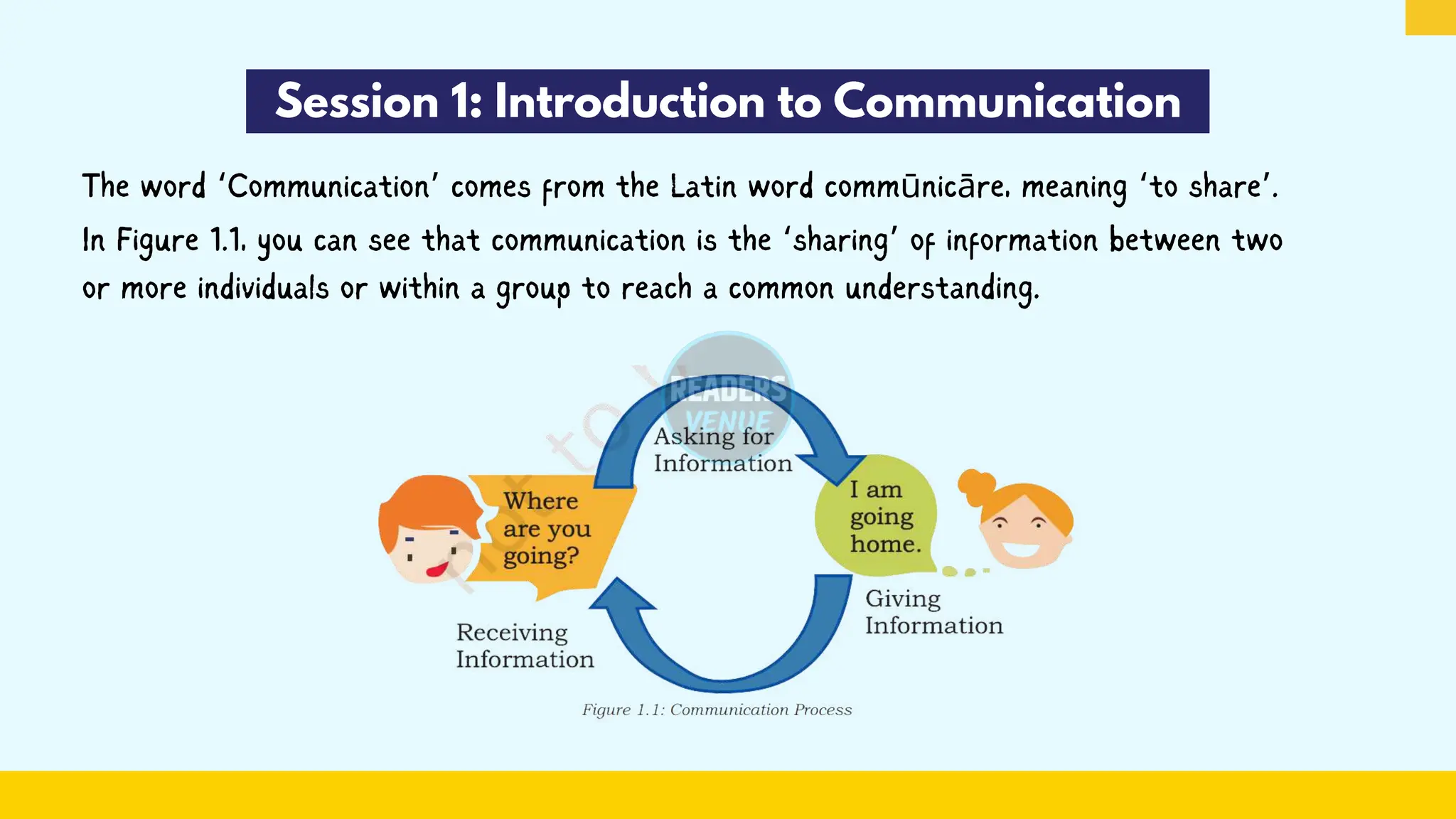
The word ‘Communication’ comes from the Latin word commūnicāre, meaning ‘to share’.
In Figure 1.1, you can see that communication is the ‘sharing’ of information between two
or more individuals or within a group to reach a common understanding.
4.
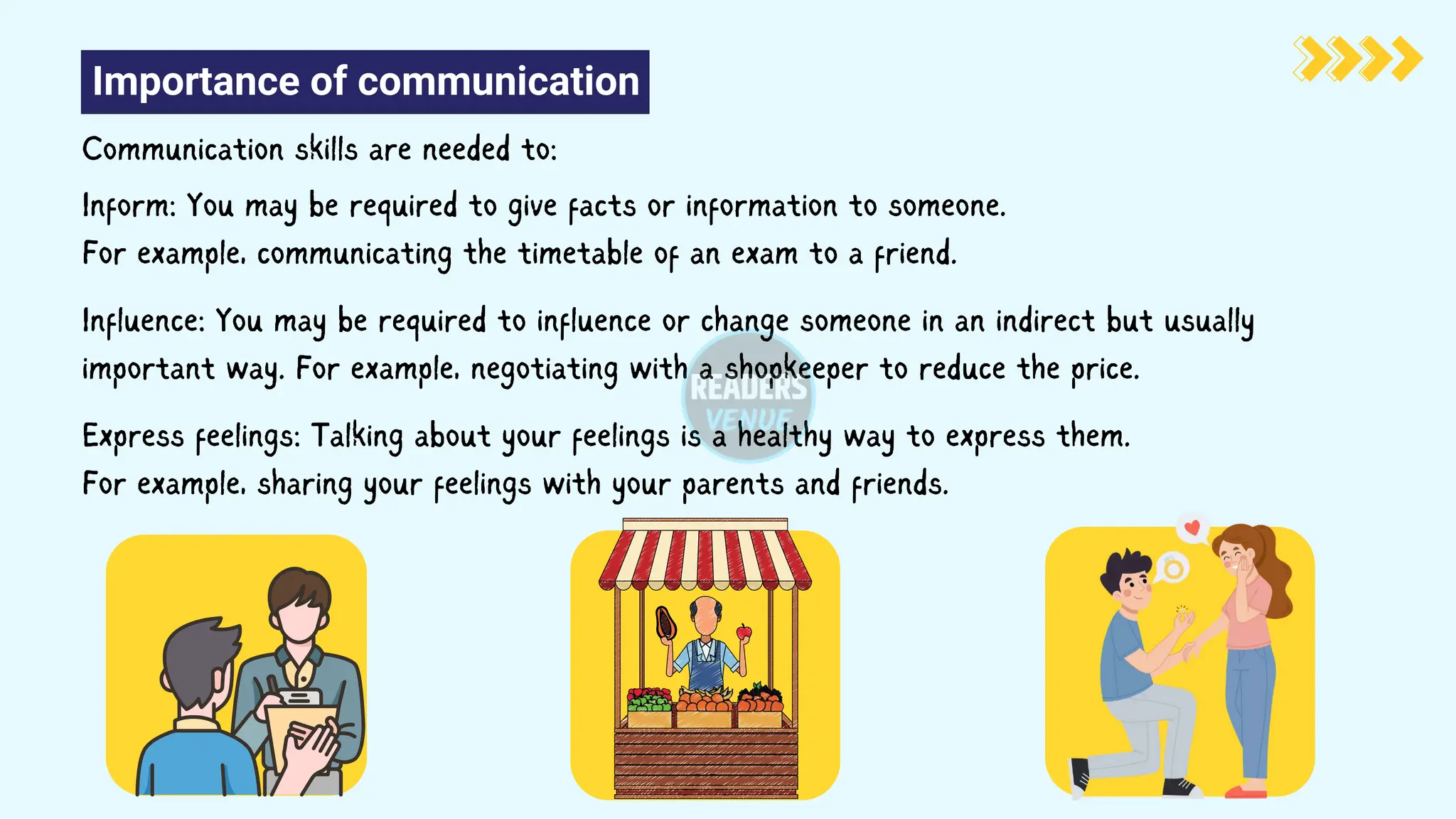
Express feelings: Talkingabout your feelings is a healthy way to express them.
For example, sharing your feelings with your parents and friends.
Importance of communication
Communication skills are needed to:
Inform: You may be required to give facts or information to someone.
For example, communicating the timetable of an exam to a friend.
Influence: You may be required to influence or change someone in an indirect but usually
important way. For example, negotiating with a shopkeeper to reduce the price.
5.
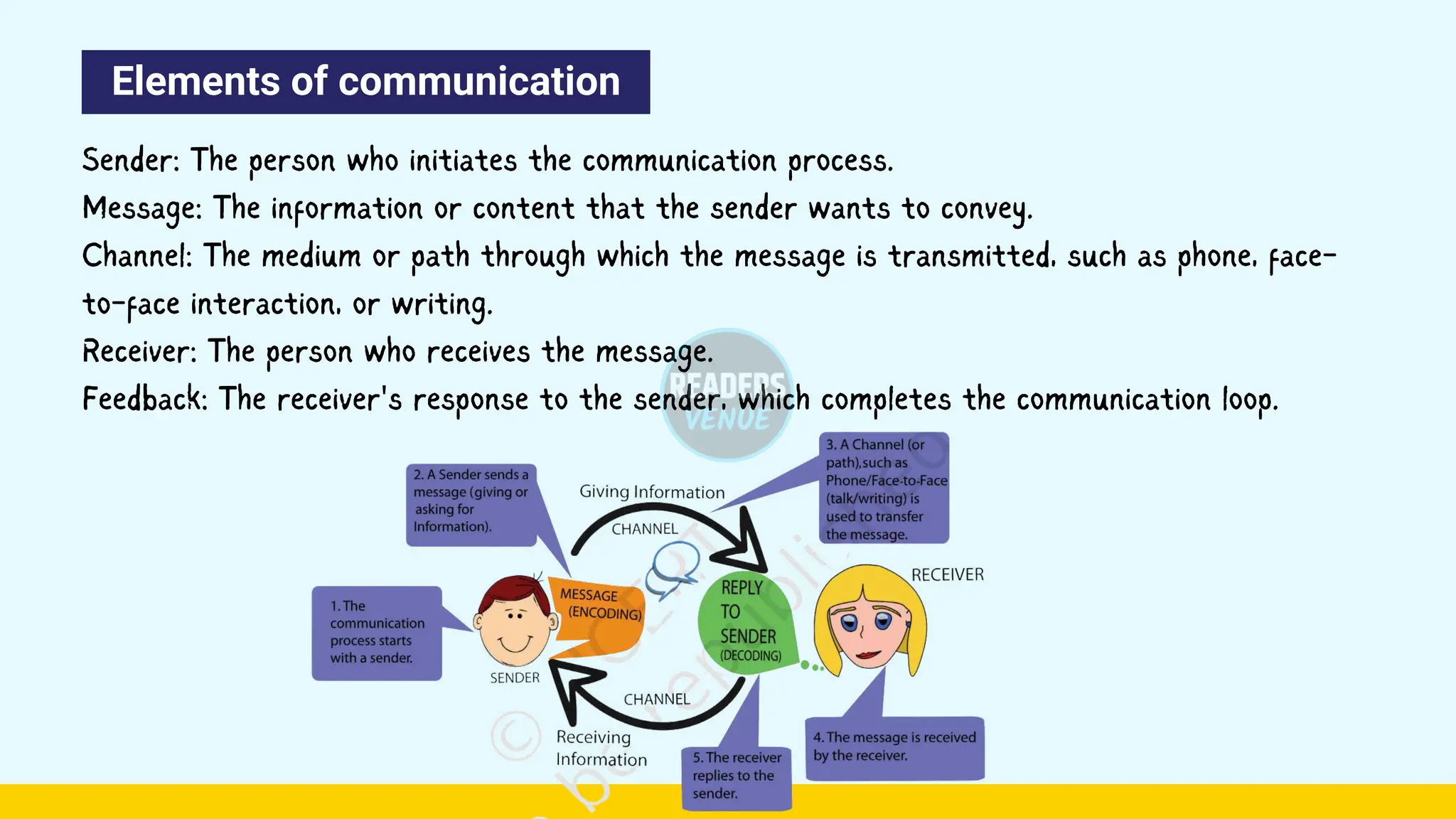
Elements of communication
Sender:The person who initiates the communication process.
Message: The information or content that the sender wants to convey.
Channel: The medium or path through which the message is transmitted, such as phone, face-
to-face interaction, or writing.
Receiver: The person who receives the message.
Feedback: The receiver's response to the sender, which completes the communication loop.
6.
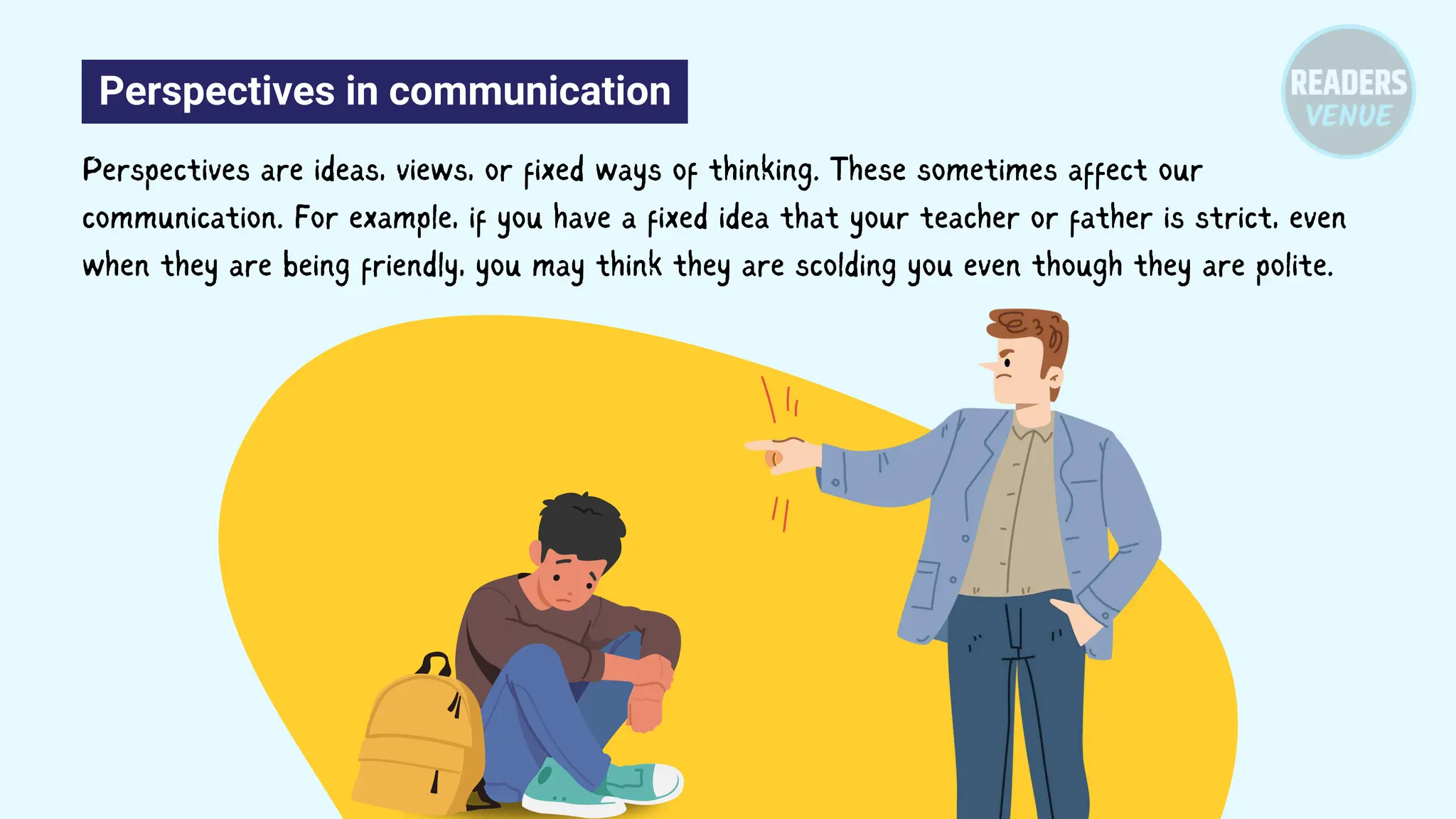
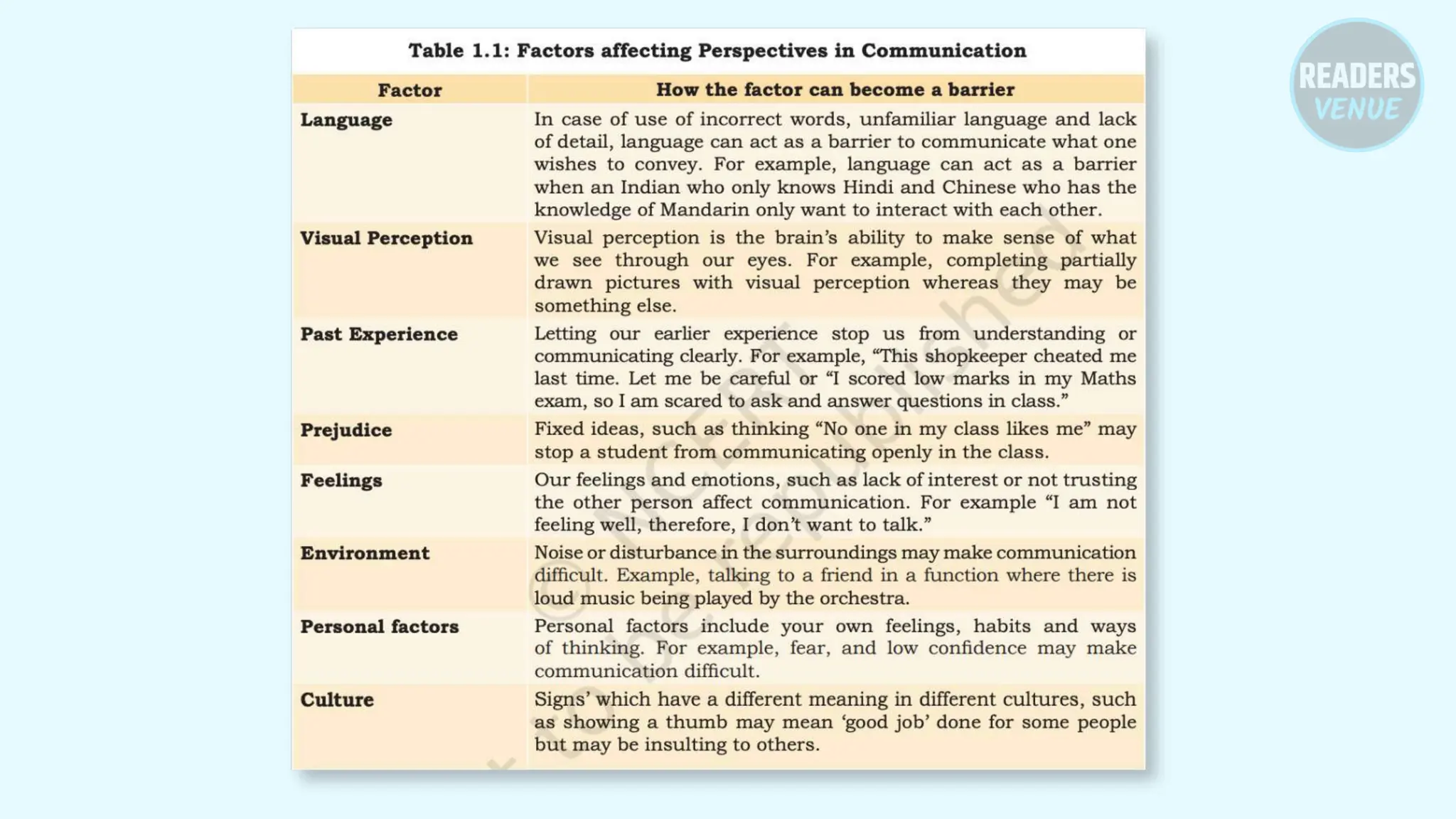
Perspectives in communication
Perspectivesare ideas, views, or fixed ways of thinking. These sometimes affect our
communication. For example, if you have a fixed idea that your teacher or father is strict, even
when they are being friendly, you may think they are scolding you even though they are polite.
8.
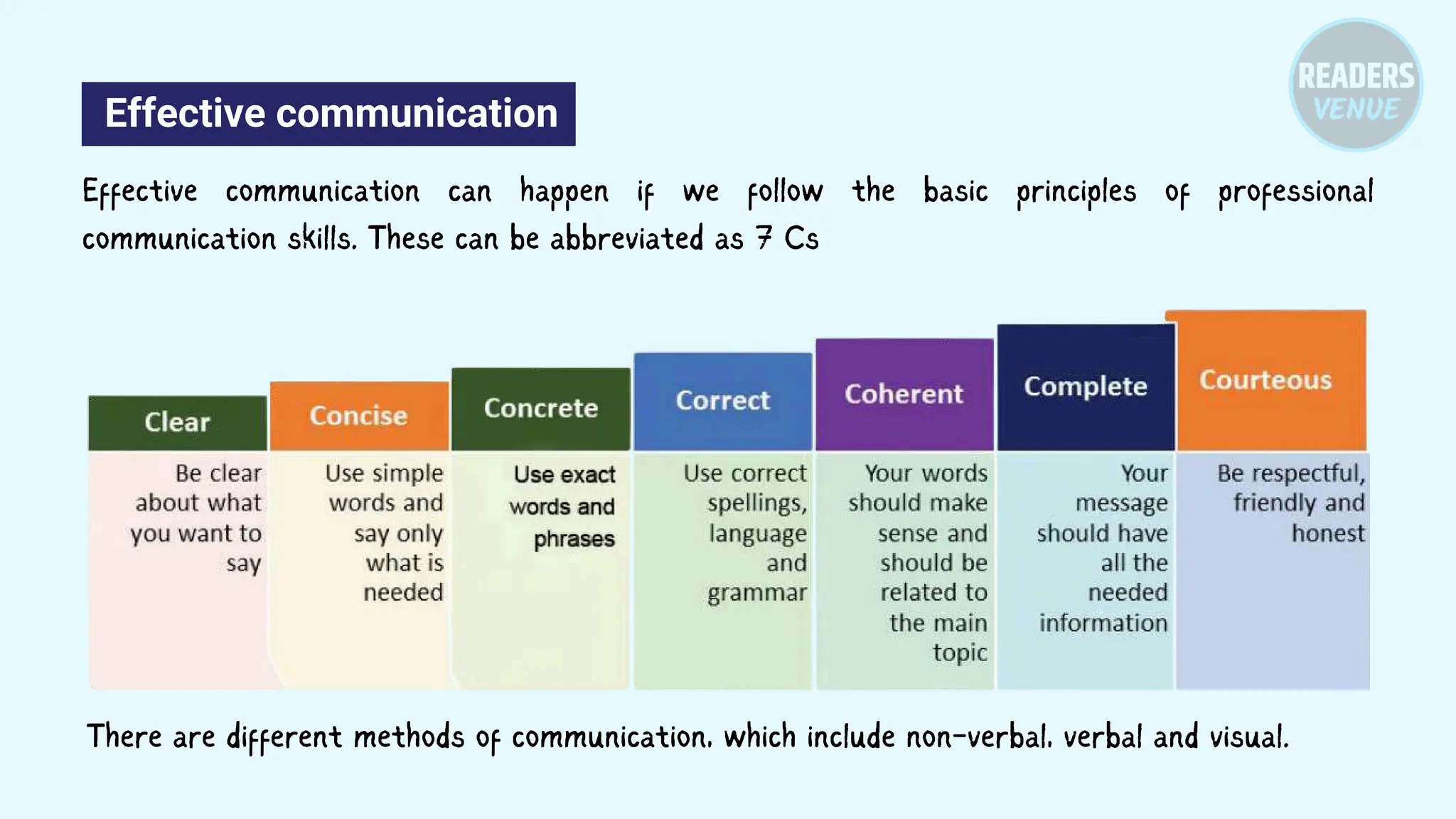
Effective communication
Effective communicationcan happen if we follow the basic principles of professional
communication skills. These can be abbreviated as 7 Cs
There are different methods of communication, which include non-verbal, verbal and visual.
9.
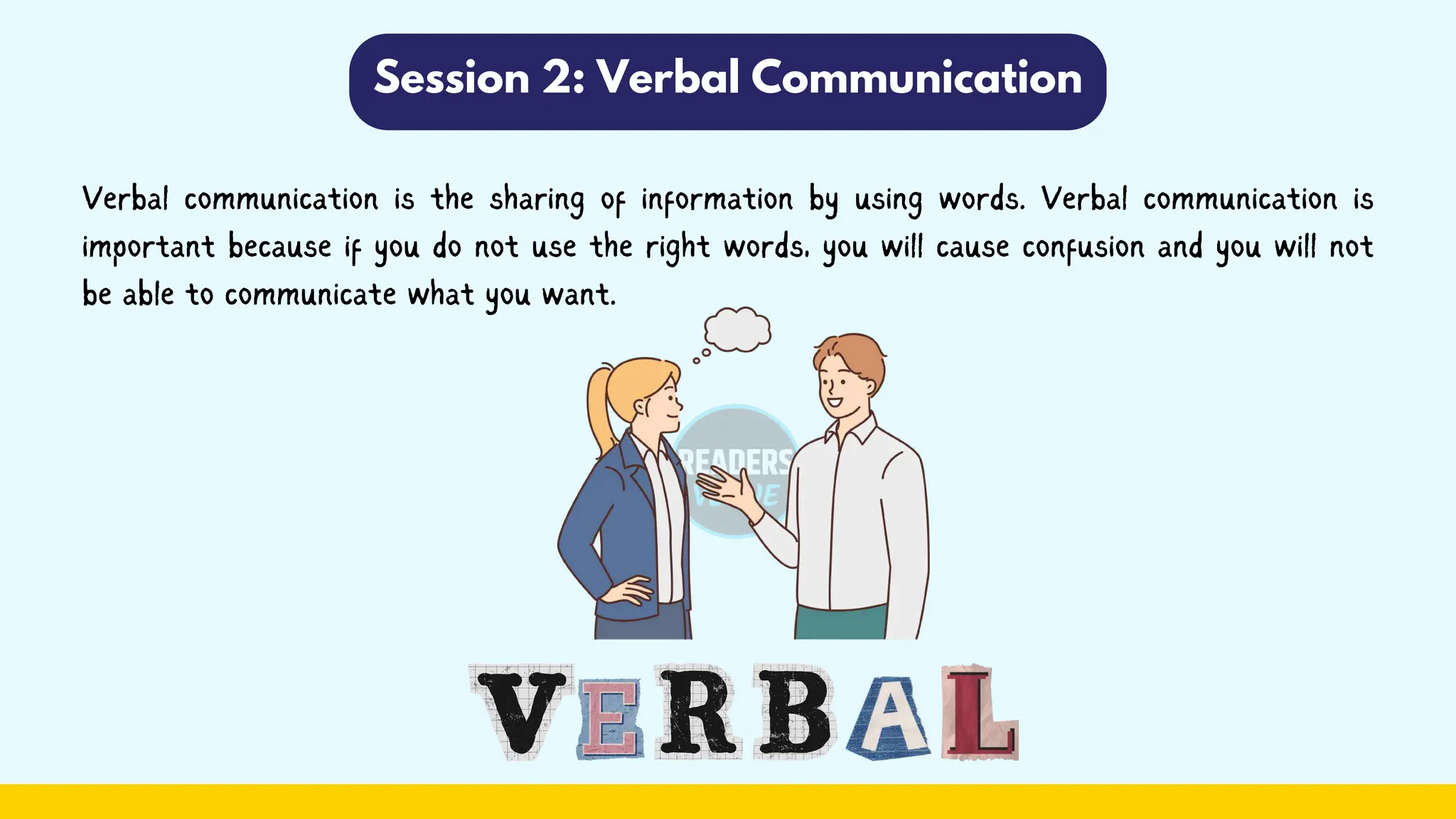
Session 2: VerbalCommunication
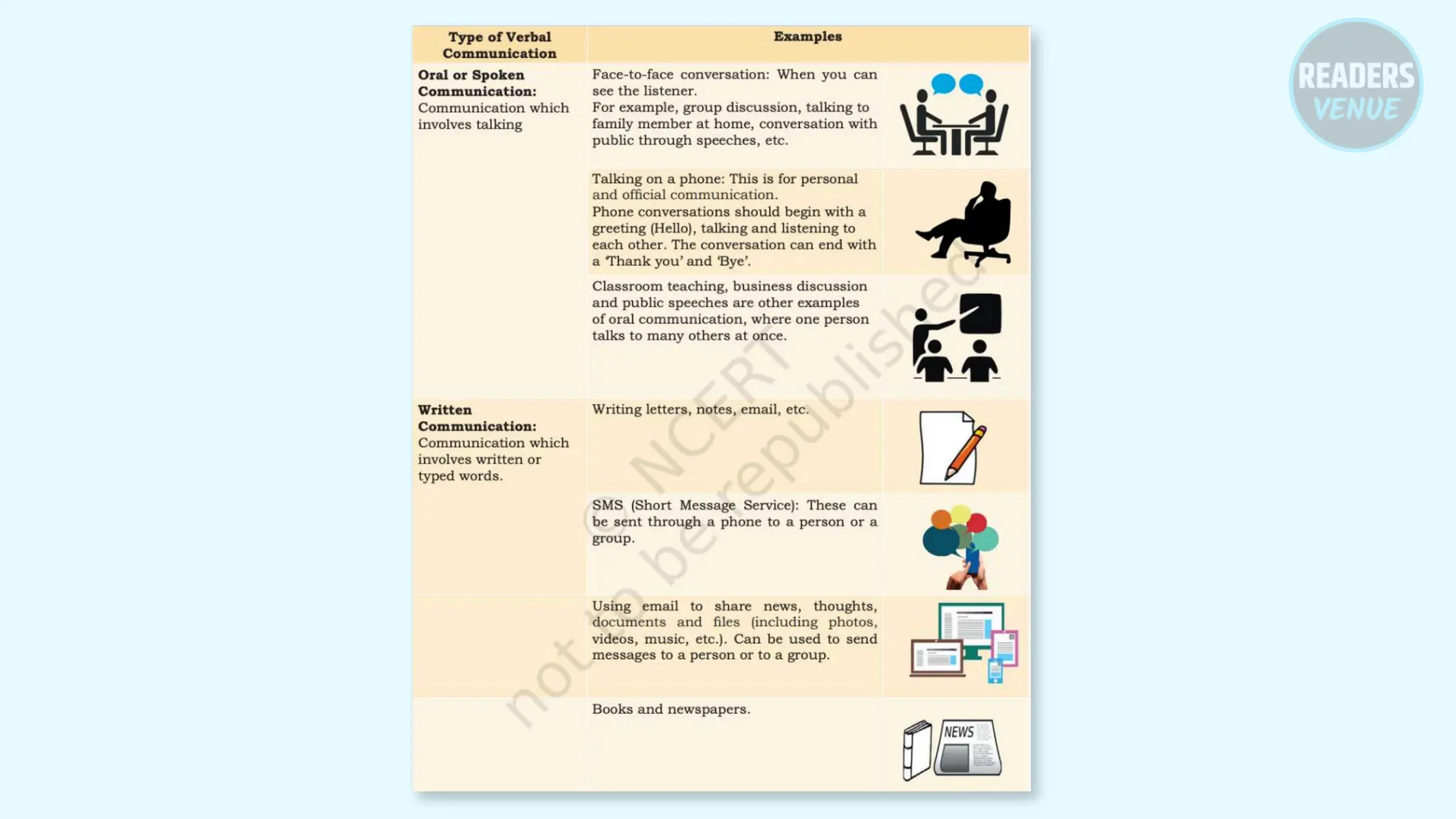
Verbal communication is the sharing of information by using words. Verbal communication is
important because if you do not use the right words, you will cause confusion and you will not
be able to communicate what you want.
11.
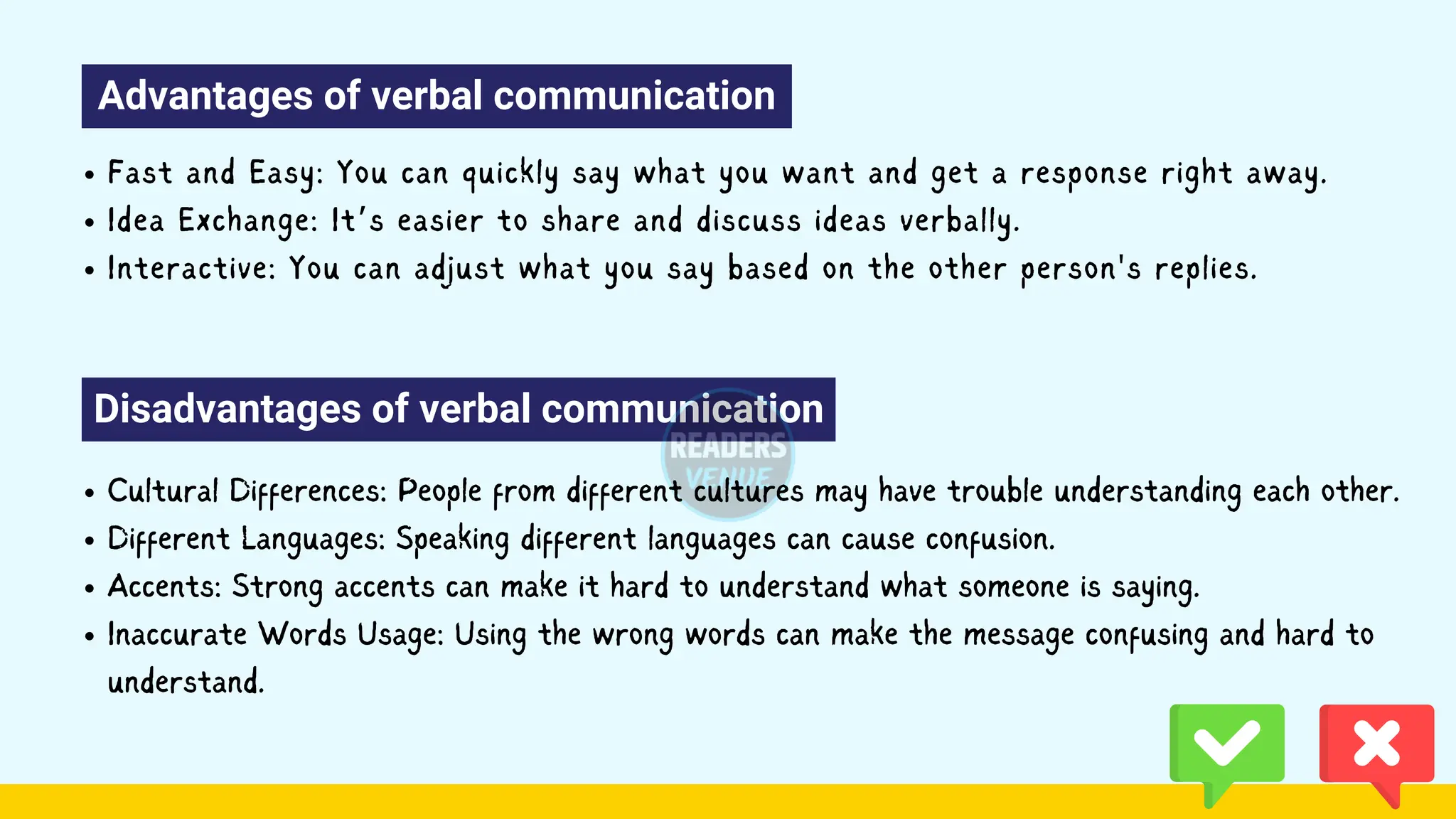
Advantages of verbalcommunication
Disadvantages of verbal communication
Cultural Differences: People from different cultures may have trouble understanding each other.
Different Languages: Speaking different languages can cause confusion.
Accents: Strong accents can make it hard to understand what someone is saying.
Inaccurate Words Usage: Using the wrong words can make the message confusing and hard to
understand.
Fast and Easy: You can quickly say what you want and get a response right away.
Idea Exchange: It’s easier to share and discuss ideas verbally.
Interactive: You can adjust what you say based on the other person's replies.
12.
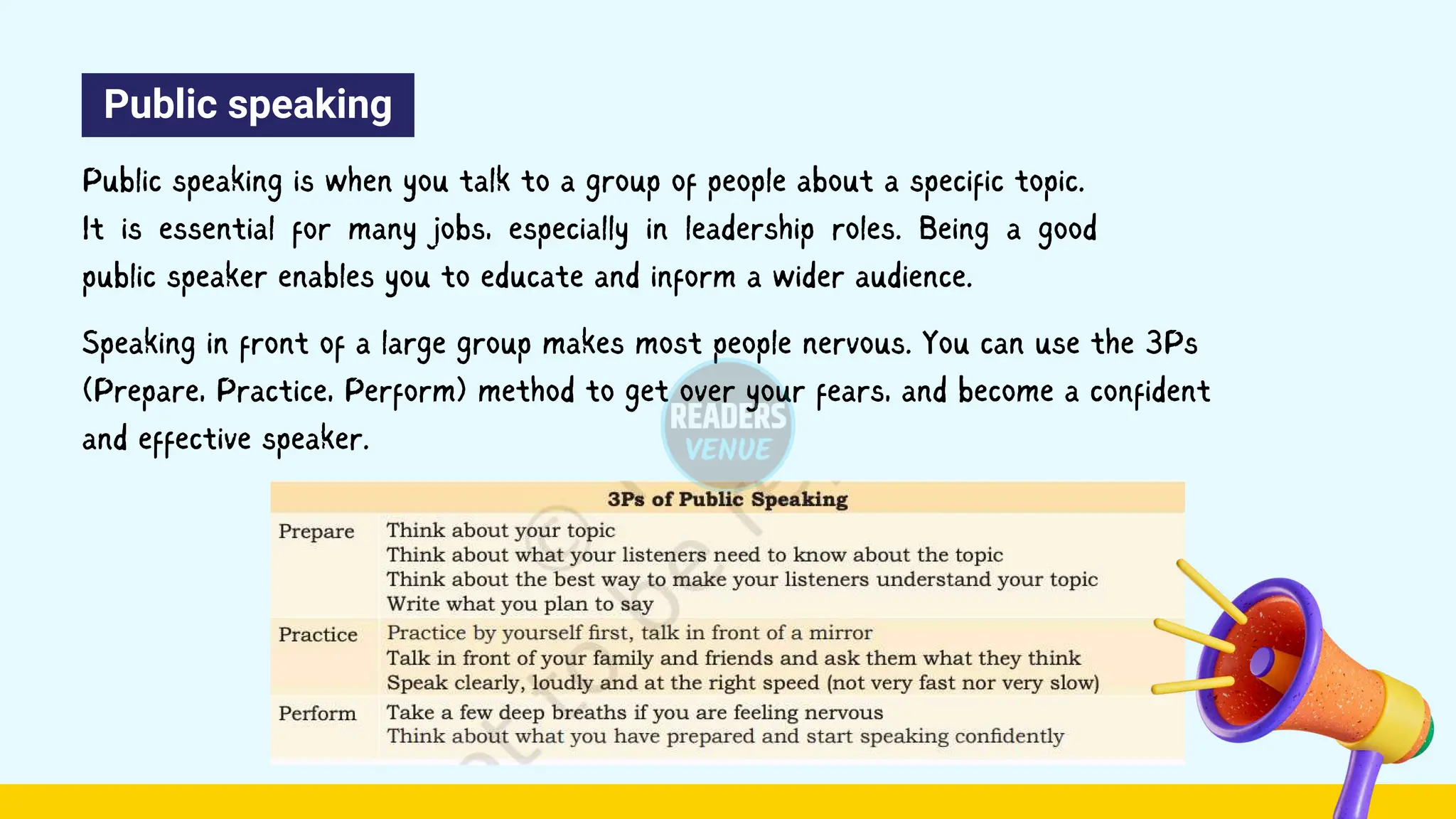
Public speaking
Public speakingis when you talk to a group of people about a specific topic.
It is essential for many jobs, especially in leadership roles. Being a good
public speaker enables you to educate and inform a wider audience.
Speaking in front of a large group makes most people nervous. You can use the 3Ps
(Prepare, Practice, Perform) method to get over your fears, and become a confident
and effective speaker.
13.
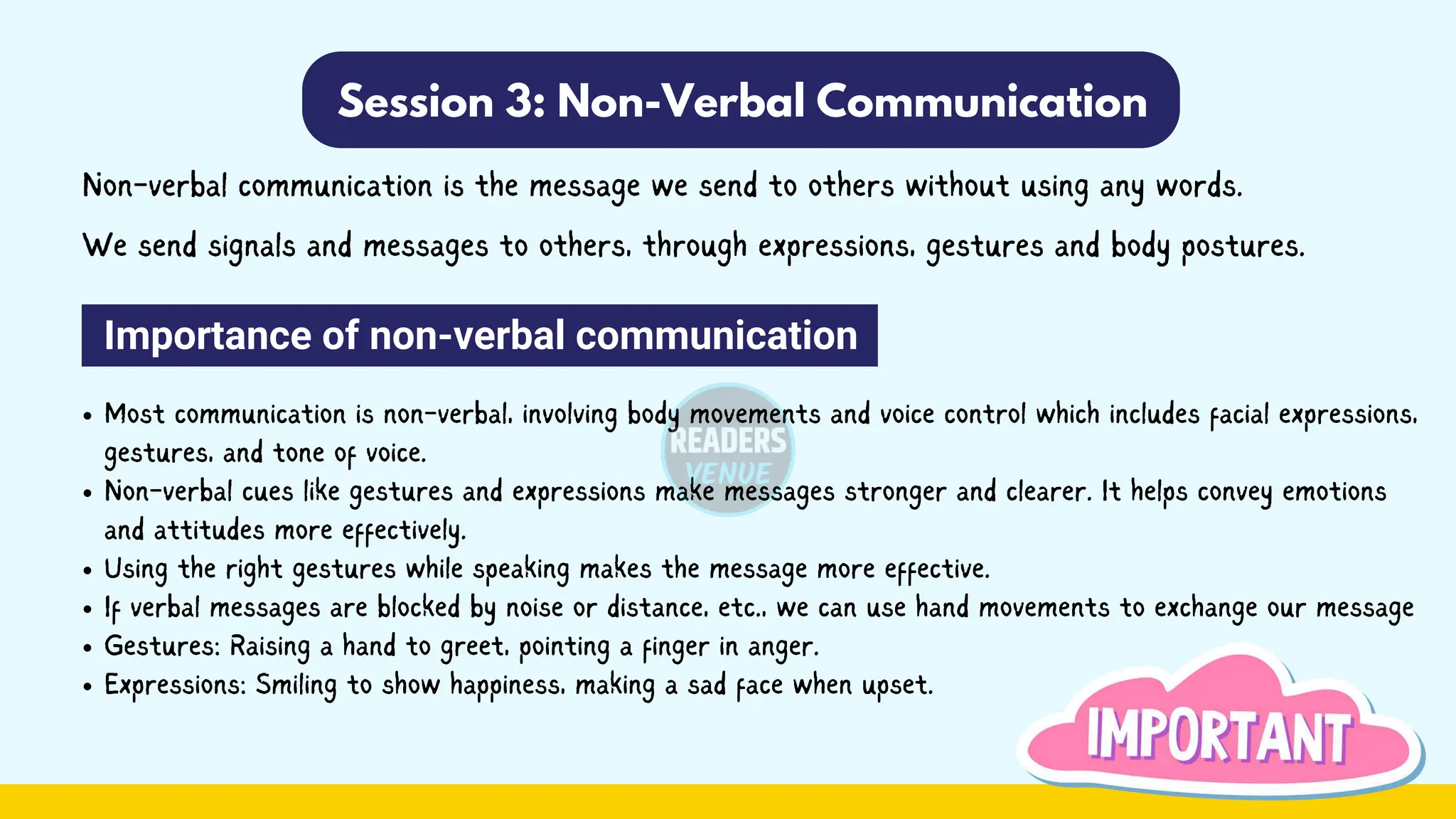
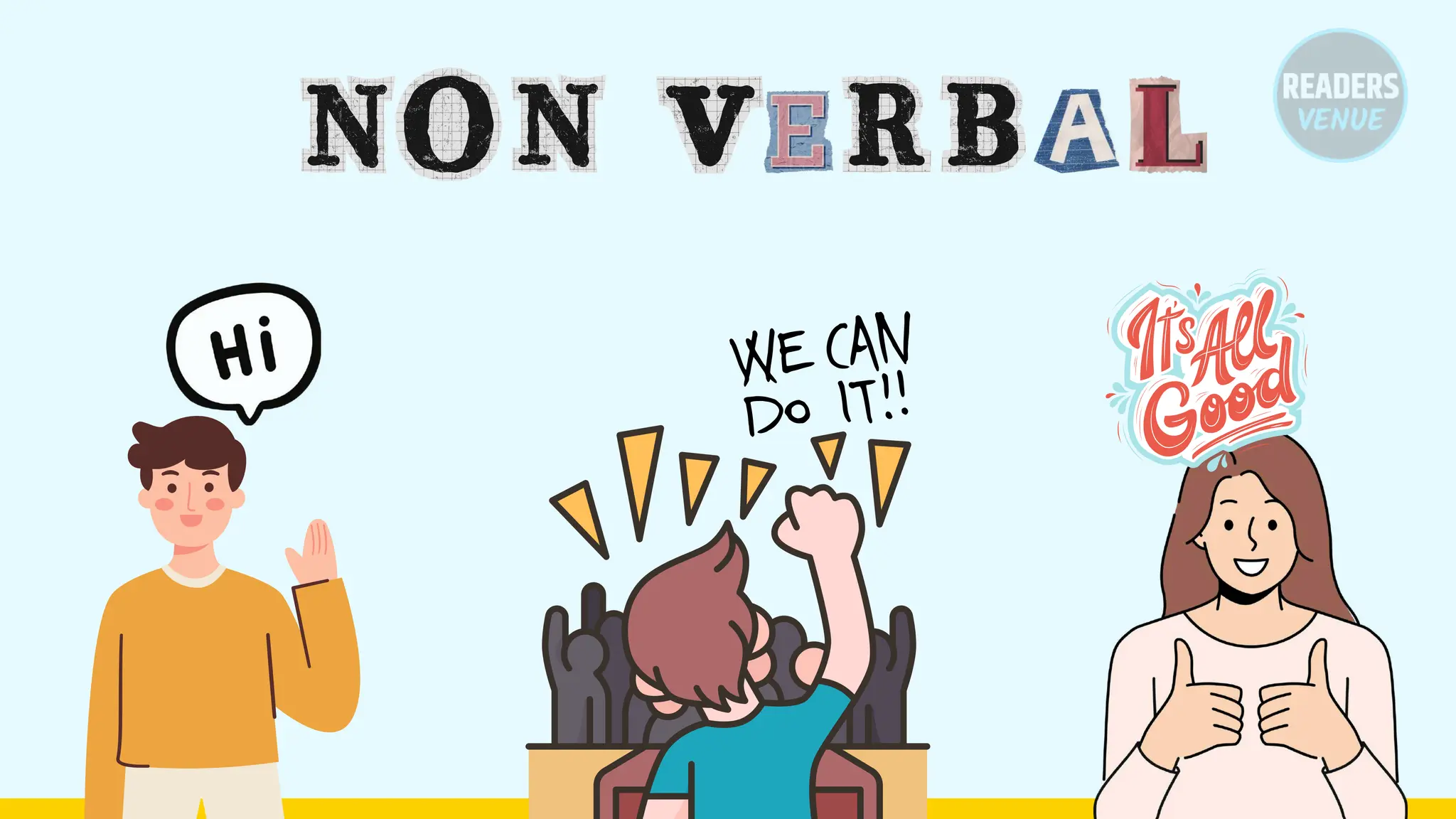
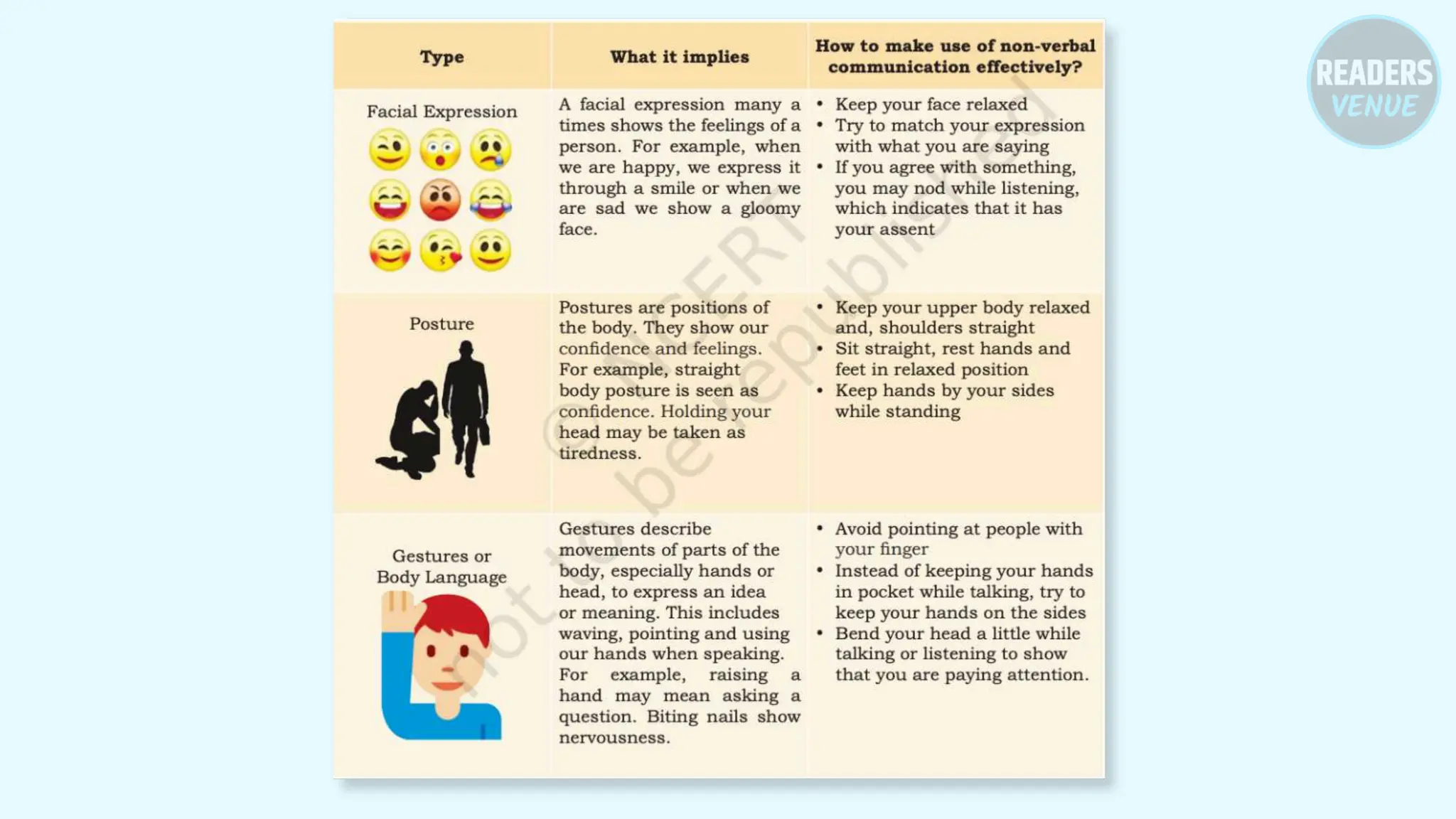
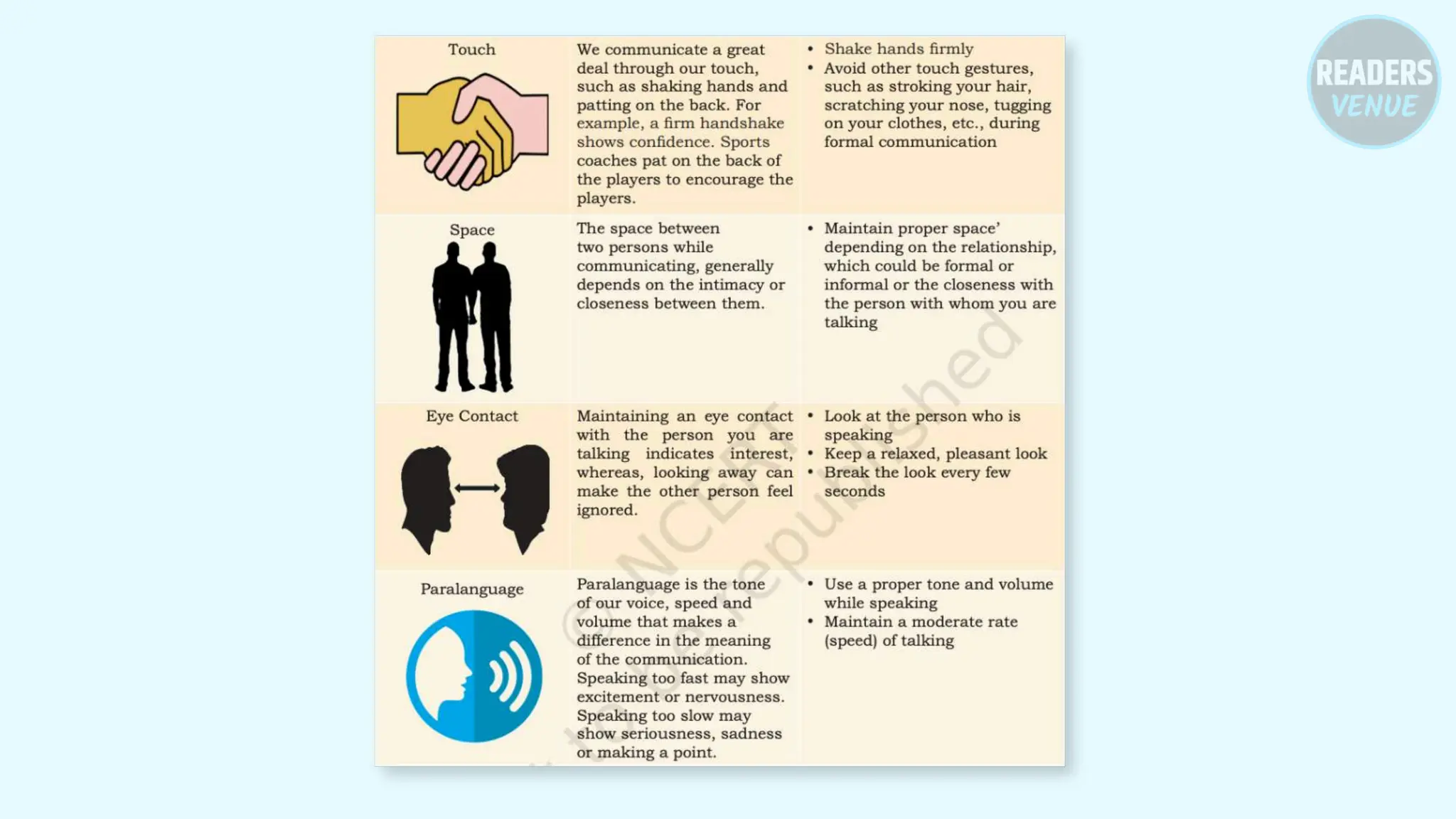
Session 3: Non-VerbalCommunication
Non-verbal communication is the message we send to others without using any words.
We send signals and messages to others, through expressions, gestures and body postures.
Importance of non-verbal communication
Most communication is non-verbal, involving body movements and voice control which includes facial expressions,
gestures, and tone of voice.
Non-verbal cues like gestures and expressions make messages stronger and clearer. It helps convey emotions
and attitudes more effectively.
Using the right gestures while speaking makes the message more effective.
If verbal messages are blocked by noise or distance, etc., we can use hand movements to exchange our message
Gestures: Raising a hand to greet, pointing a finger in anger.
Expressions: Smiling to show happiness, making a sad face when upset.
17.
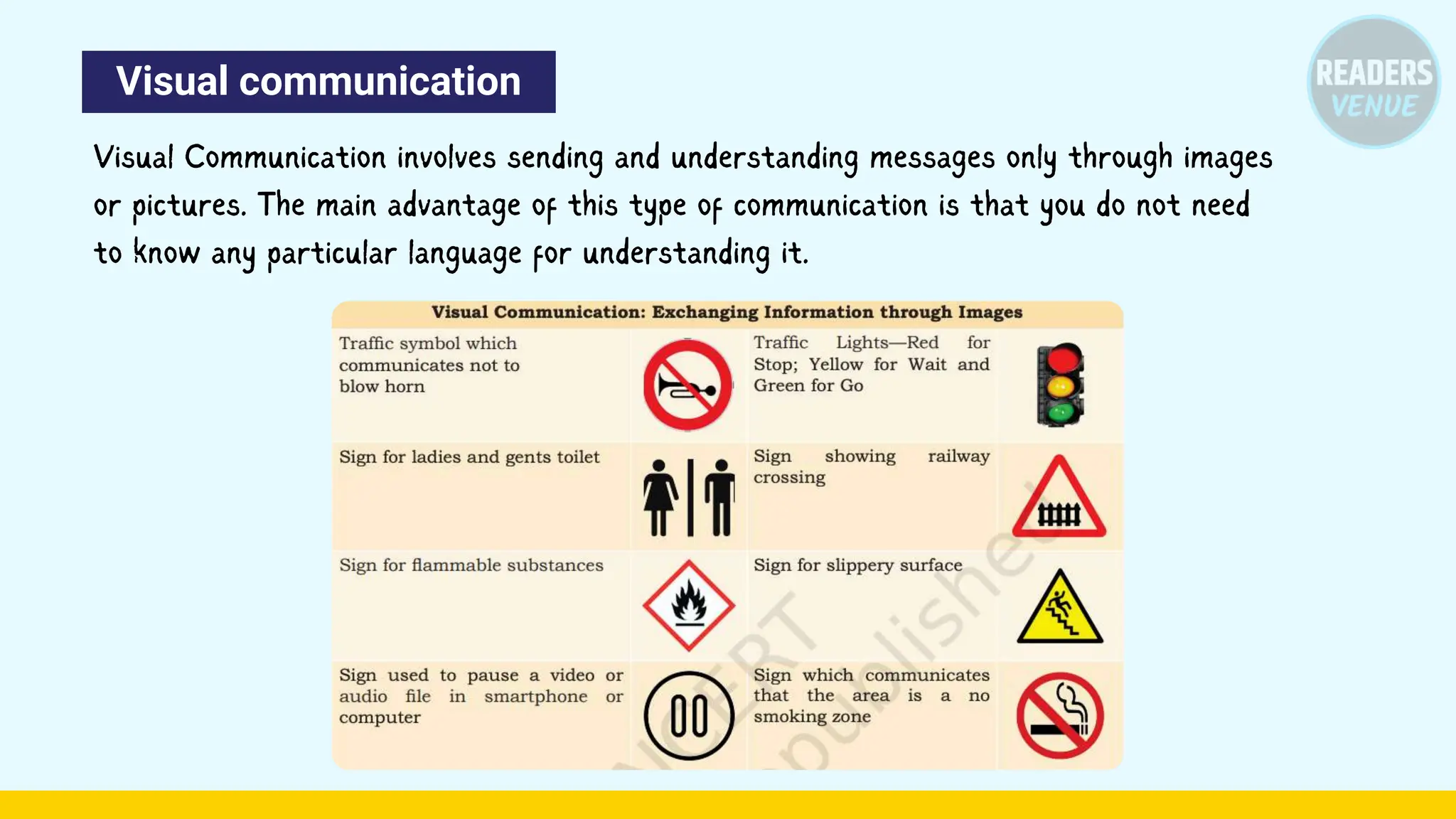
Visual communication
Visual Communicationinvolves sending and understanding messages only through images
or pictures. The main advantage of this type of communication is that you do not need
to know any particular language for understanding it.
18.
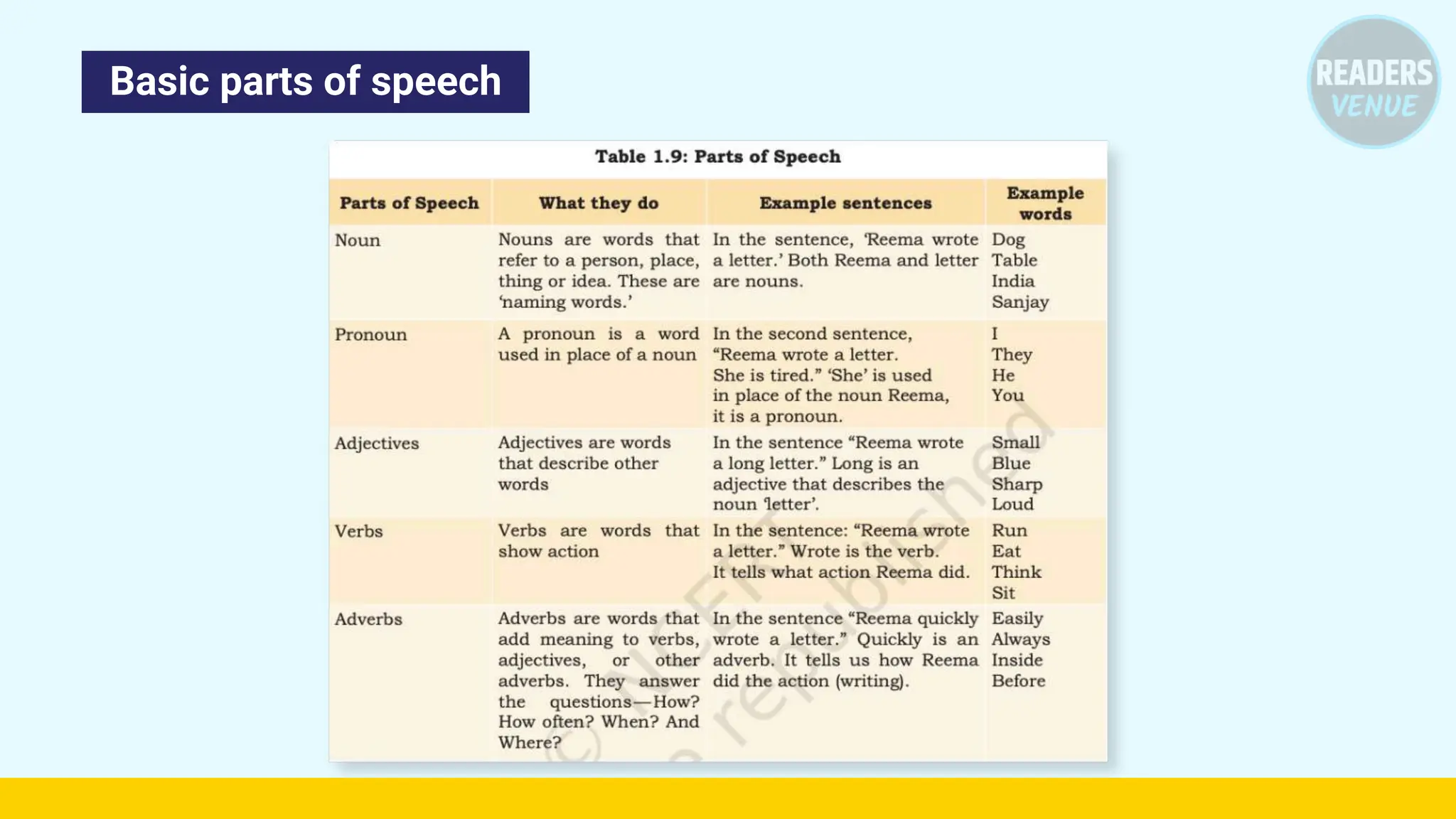
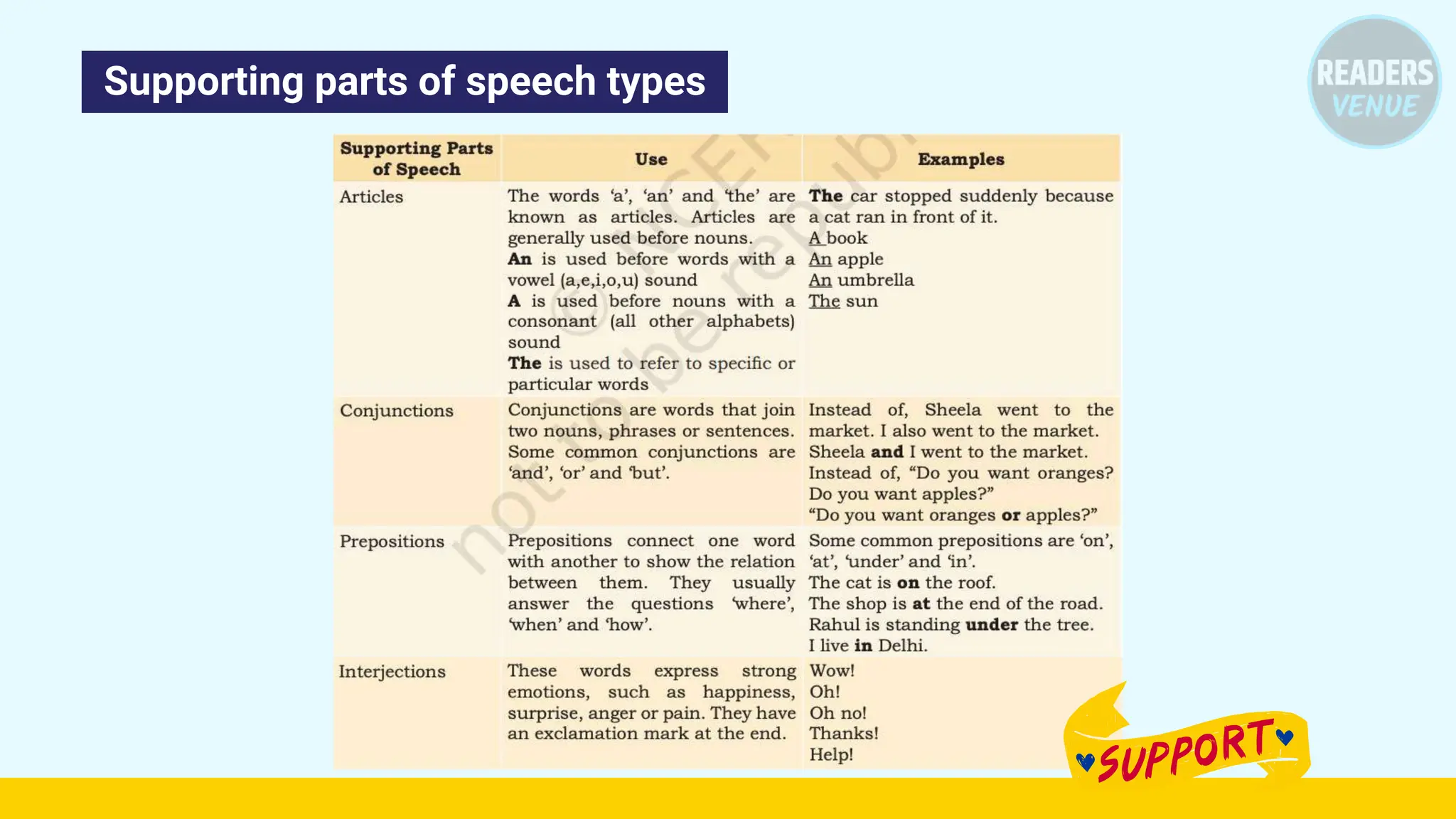
Session 4: WritingSkills: Parts of Speech
When we talk or write in English, we use sentences to express ourselves. Sentences are
important because if you do not clearly write sentences then, the meaning of the same cannot
be understood clearly.
A sentence is a group of words that communicates a complete thought (Example: Raju goes to
school). A group of words, which does not make complete sense, is known as a phrase (Example:
Raju goes).
A sentence always begins with a capital letter, and it always ends with a question mark, full
stop or exclamation mark.
19.
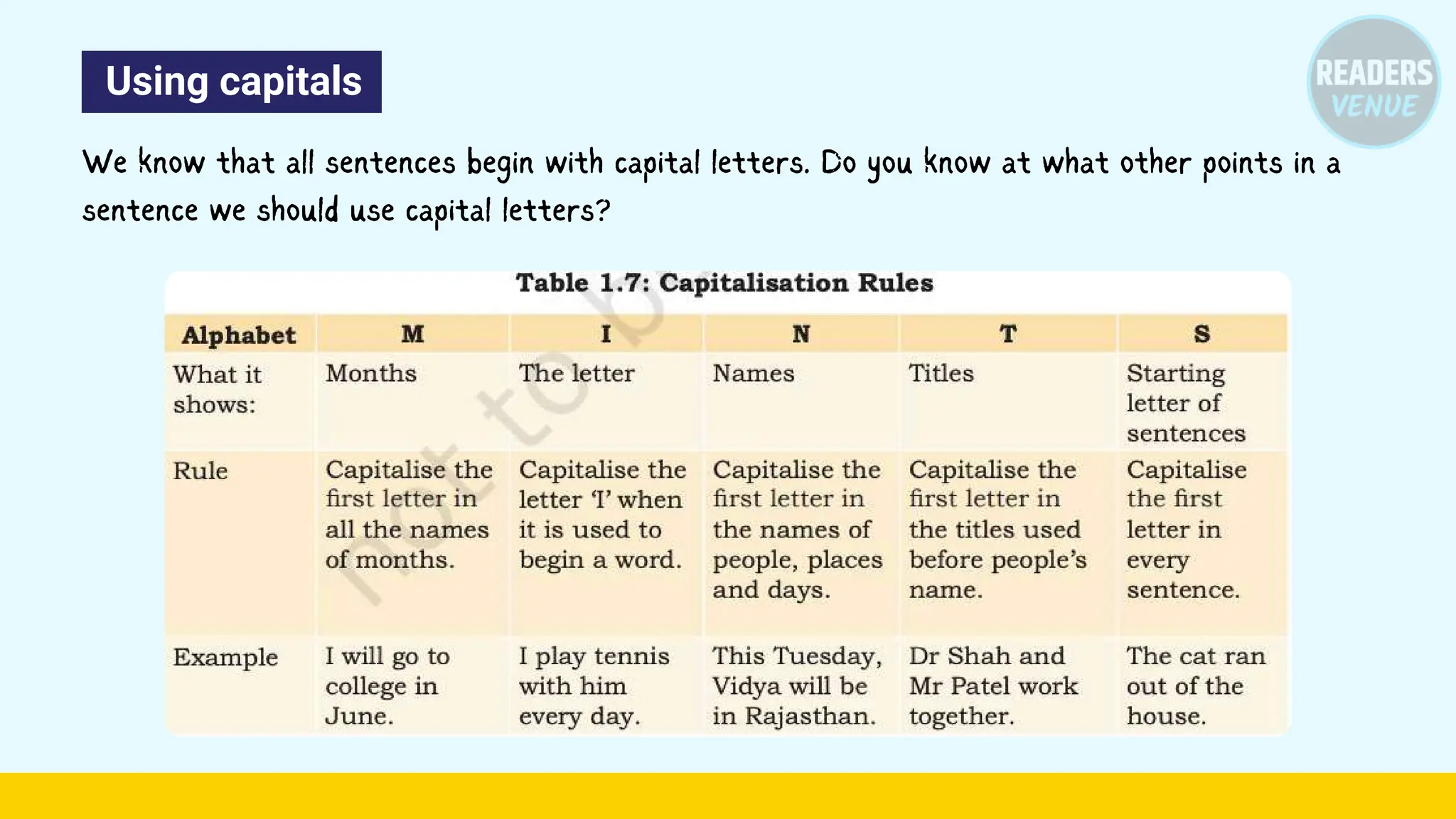
Using capitals
We knowthat all sentences begin with capital letters. Do you know at what other points in a
sentence we should use capital letters?
Session 5: WritingSkills: Sentences
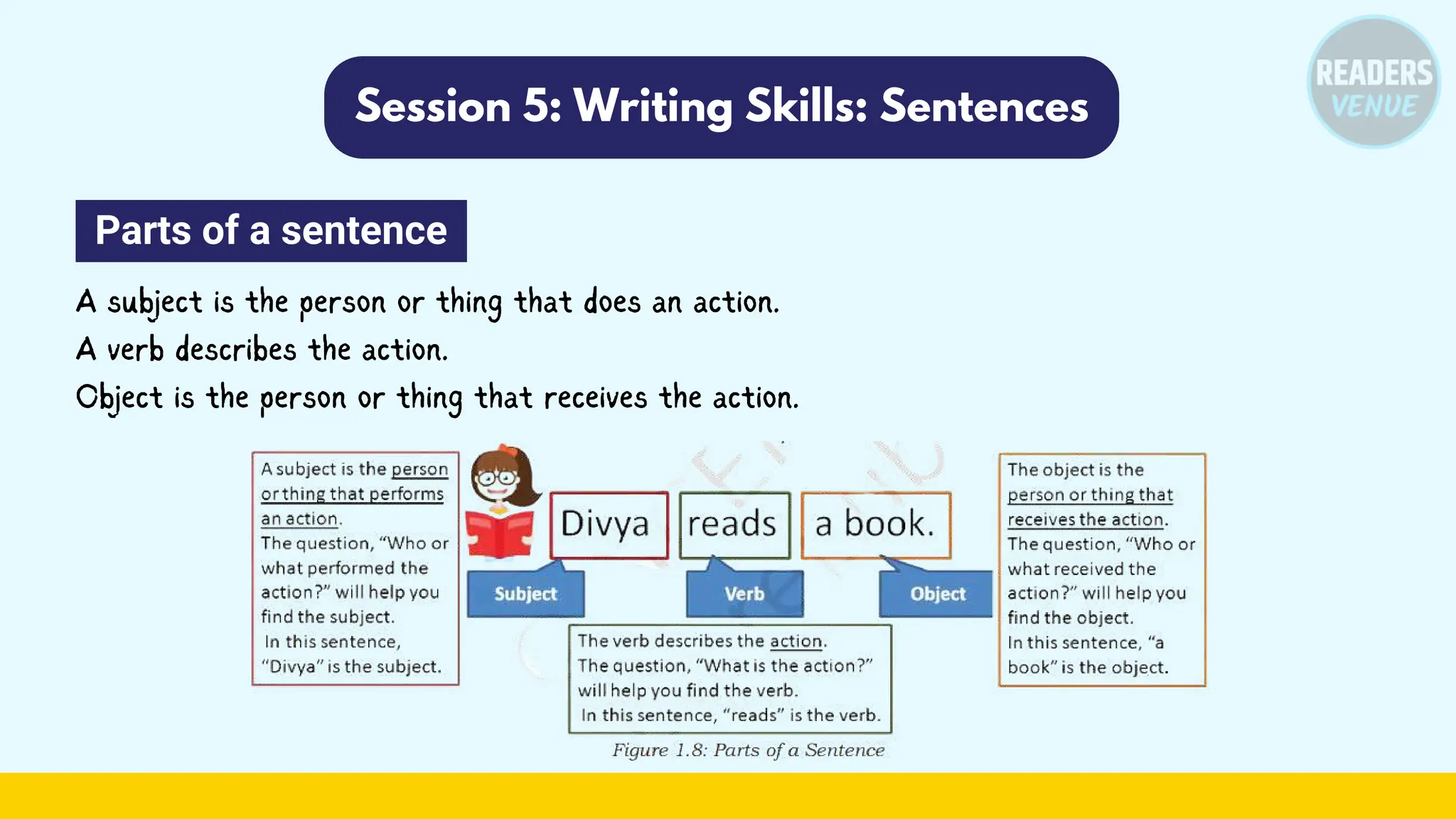
Parts of a sentence
A subject is the person or thing that does an action.
A verb describes the action.
Object is the person or thing that receives the action.
24.
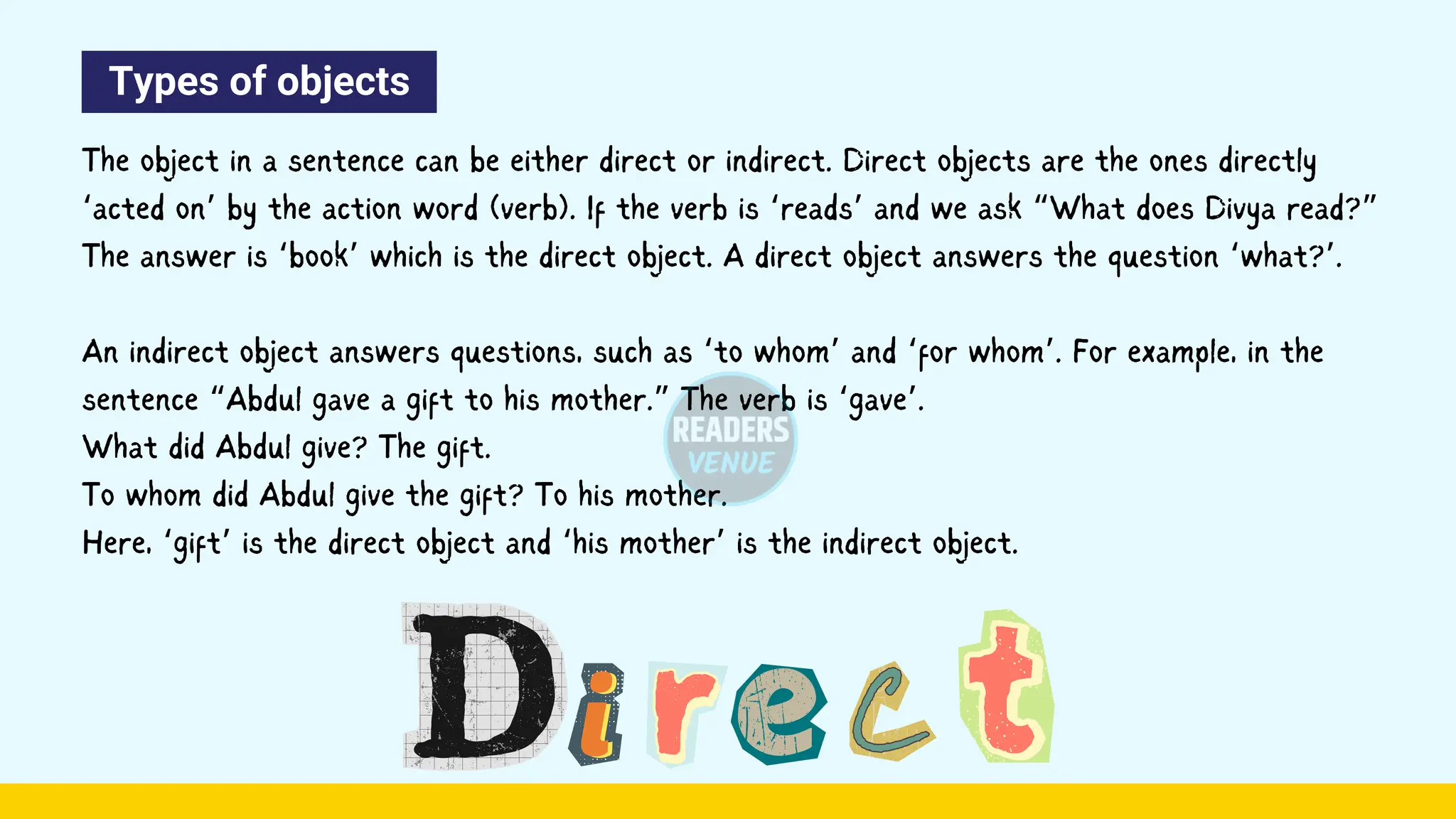
Types of objects
Theobject in a sentence can be either direct or indirect. Direct objects are the ones directly
‘acted on’ by the action word (verb). If the verb is ‘reads’ and we ask “What does Divya read?”
The answer is ‘book’ which is the direct object. A direct object answers the question ‘what?’.
An indirect object answers questions, such as ‘to whom’ and ‘for whom’. For example, in the
sentence “Abdul gave a gift to his mother.” The verb is ‘gave’.
What did Abdul give? The gift.
To whom did Abdul give the gift? To his mother.
Here, ‘gift’ is the direct object and ‘his mother’ is the indirect object.
25.
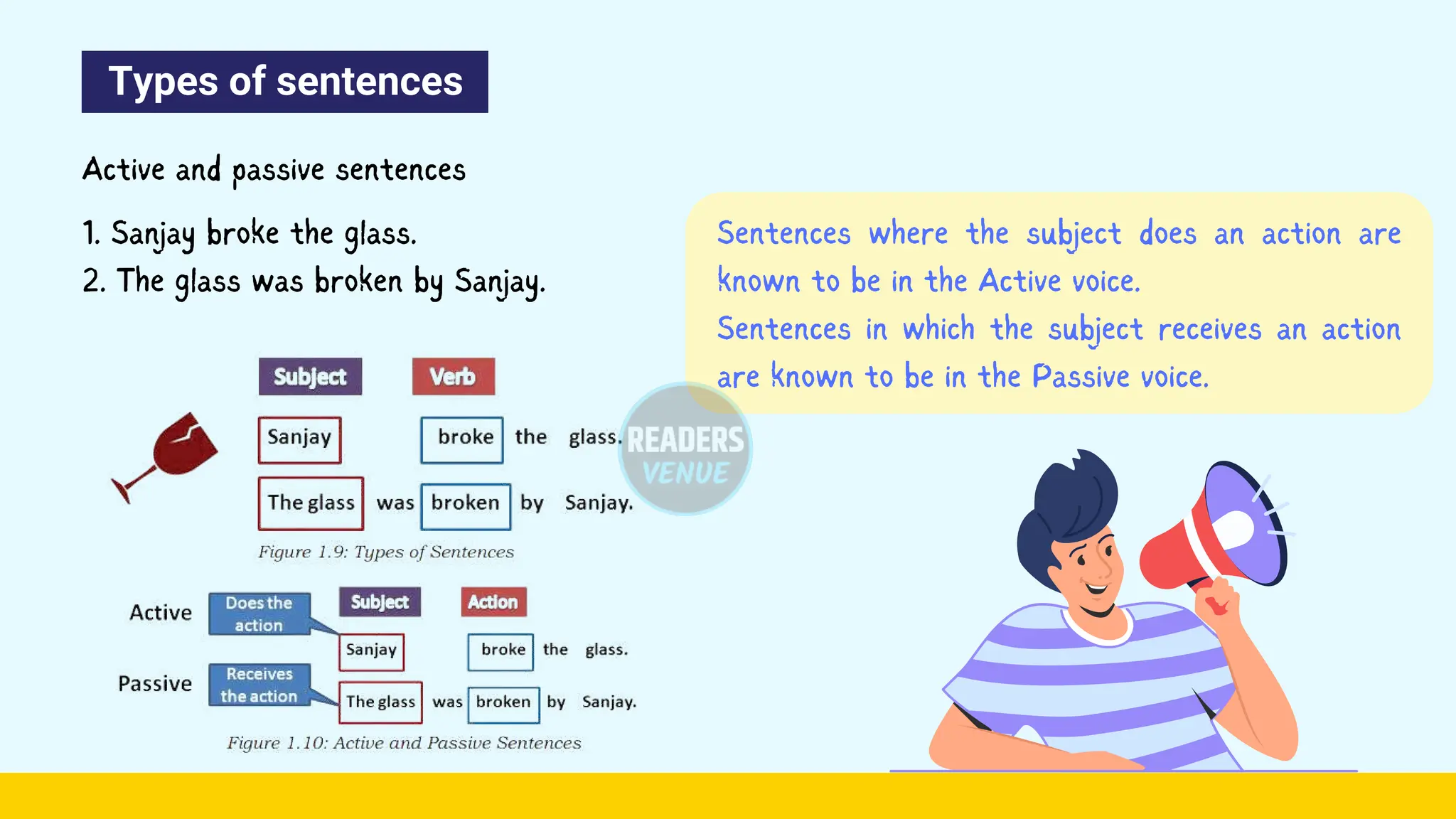
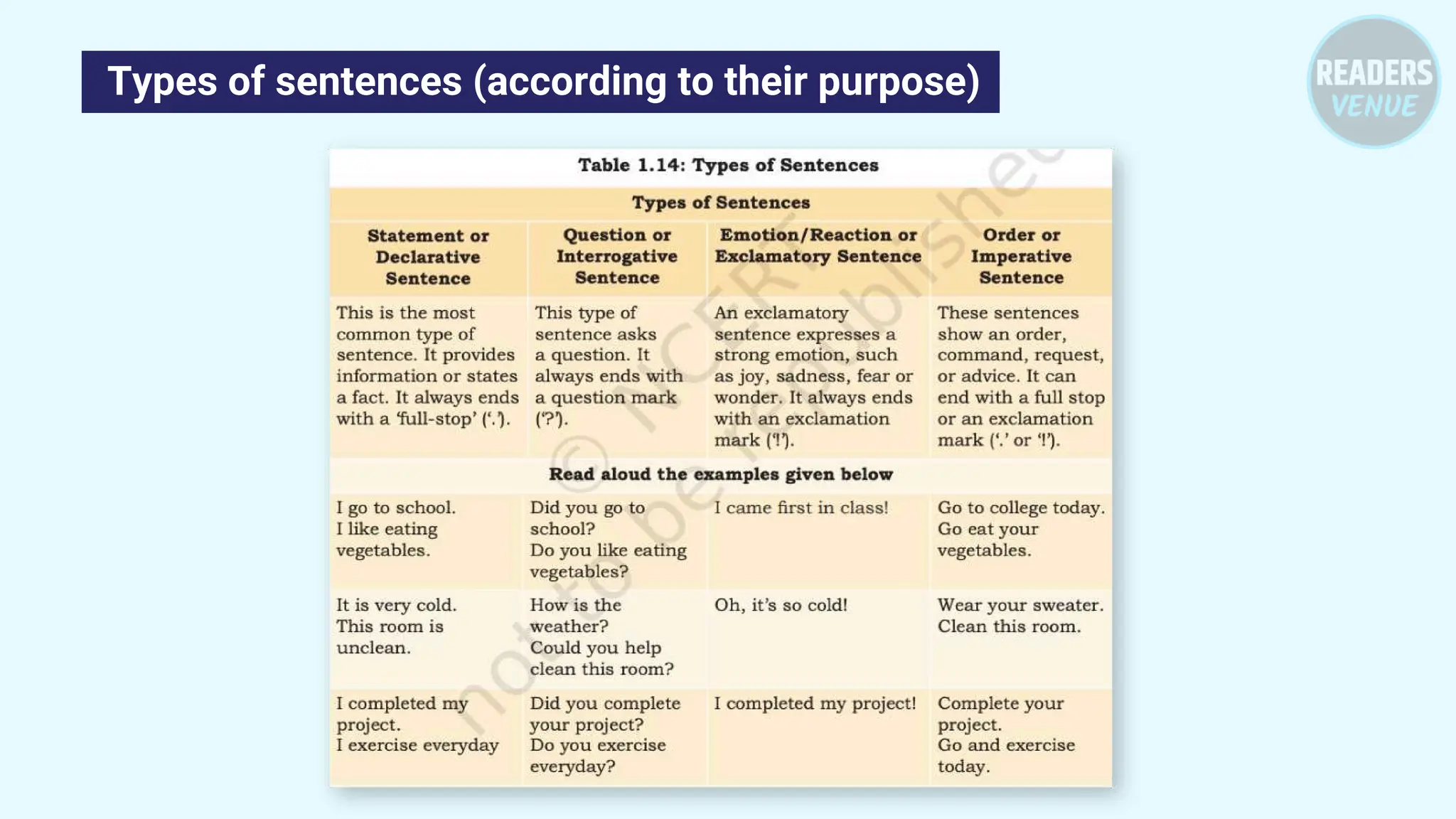
Types of sentences
Activeand passive sentences
1. Sanjay broke the glass.
2. The glass was broken by Sanjay.
Sentences where the subject does an action are
known to be in the Active voice.
Sentences in which the subject receives an action
are known to be in the Passive voice.
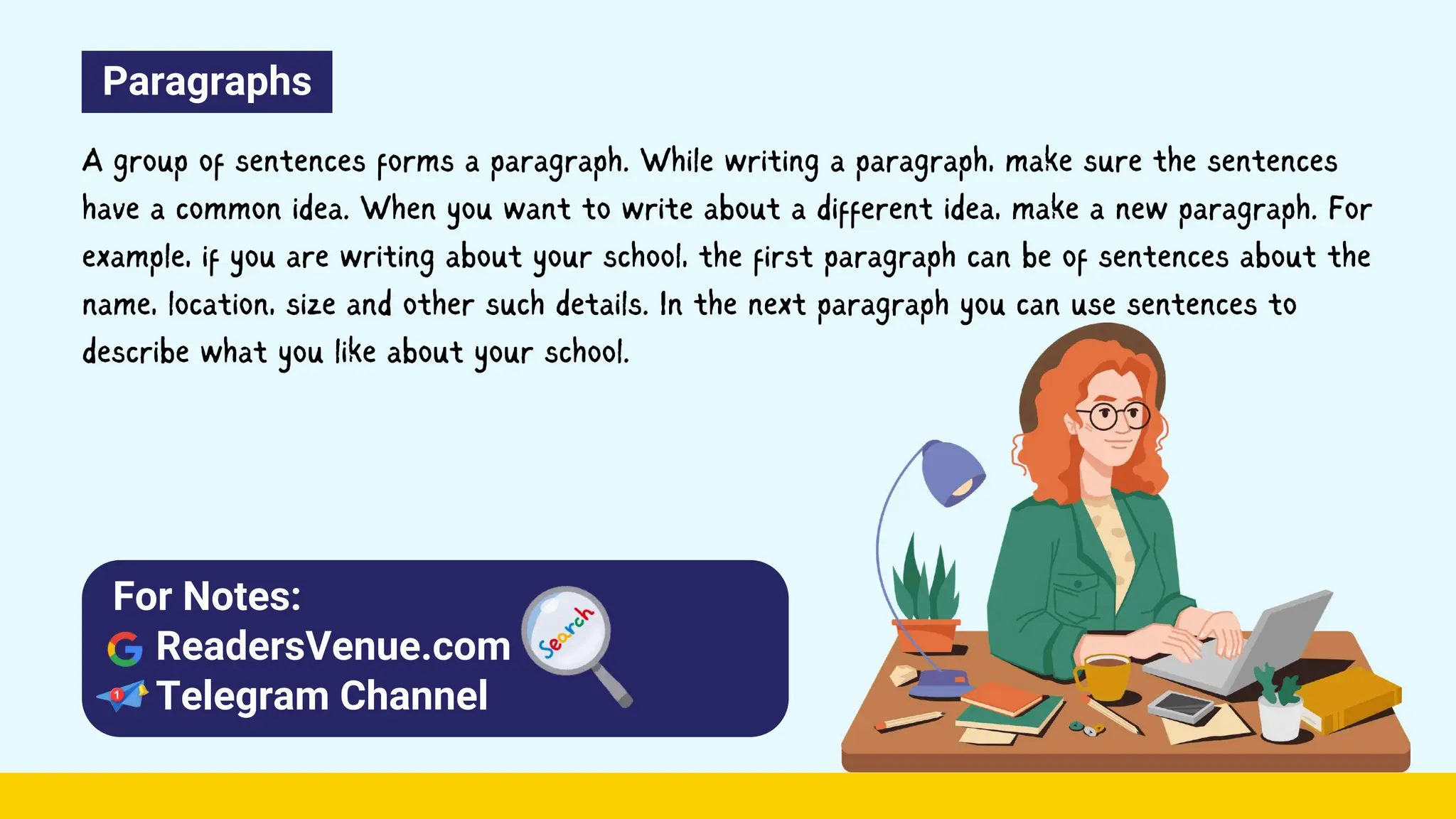
Paragraphs
A group ofsentences forms a paragraph. While writing a paragraph, make sure the sentences
have a common idea. When you want to write about a different idea, make a new paragraph. For
example, if you are writing about your school, the first paragraph can be of sentences about the
name, location, size and other such details. In the next paragraph you can use sentences to
describe what you like about your school.
For Notes:
ReadersVenue.com
Telegram Channel
28.
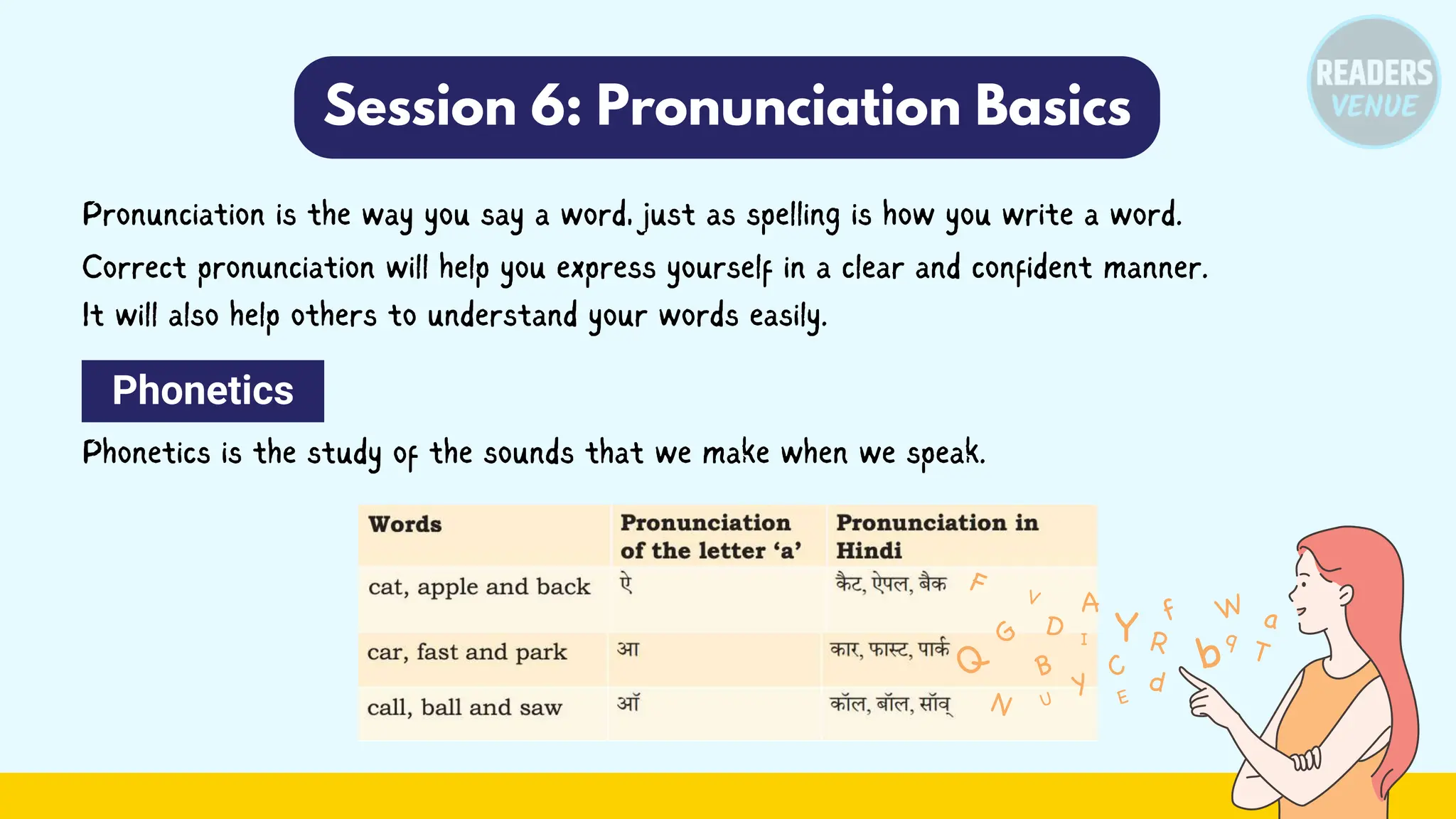
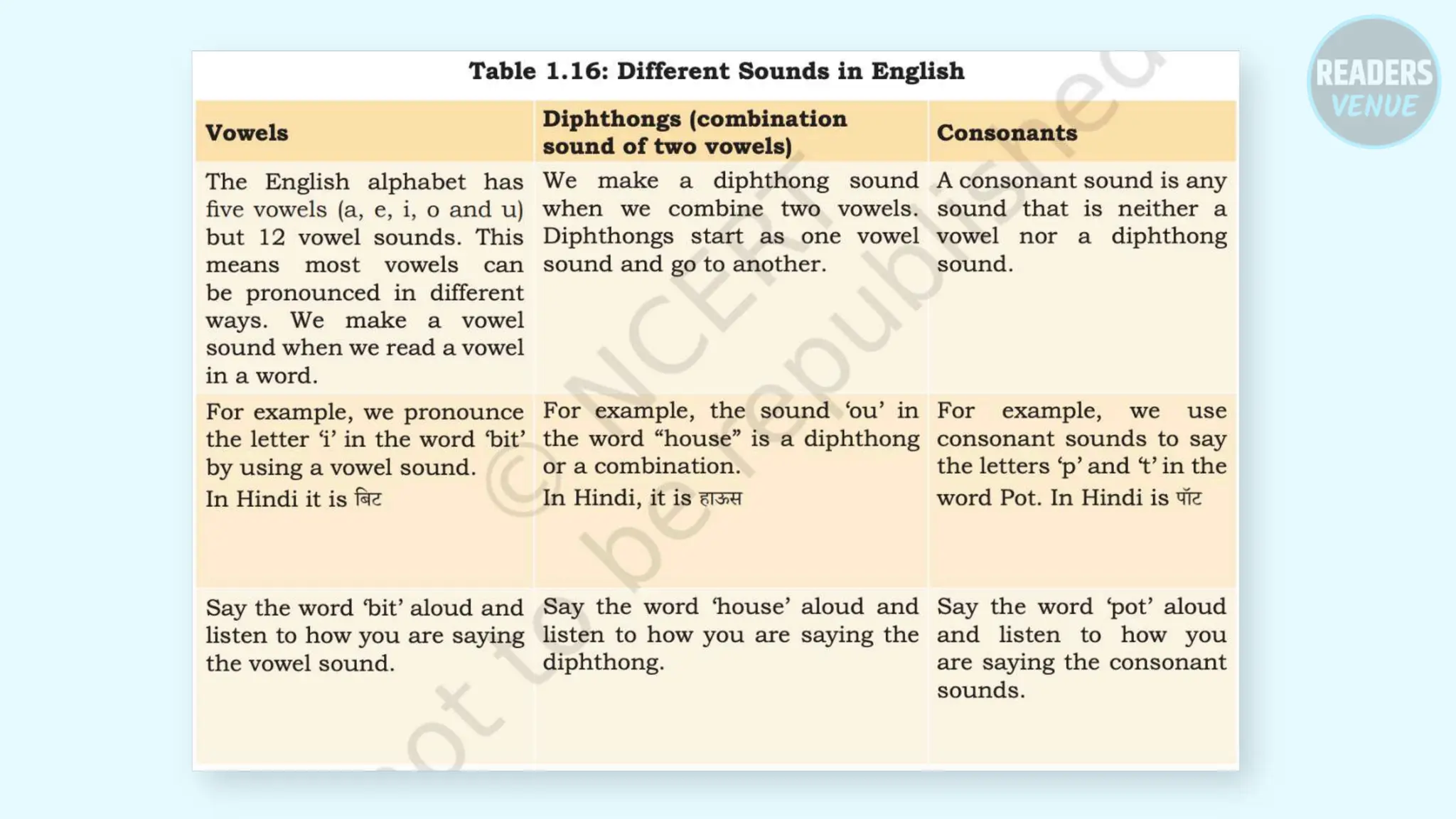
Session 6: PronunciationBasics
Pronunciation is the way you say a word, just as spelling is how you write a word.
Correct pronunciation will help you express yourself in a clear and confident manner.
It will also help others to understand your words easily.
Phonetics
Phonetics is the study of the sounds that we make when we speak.
30.
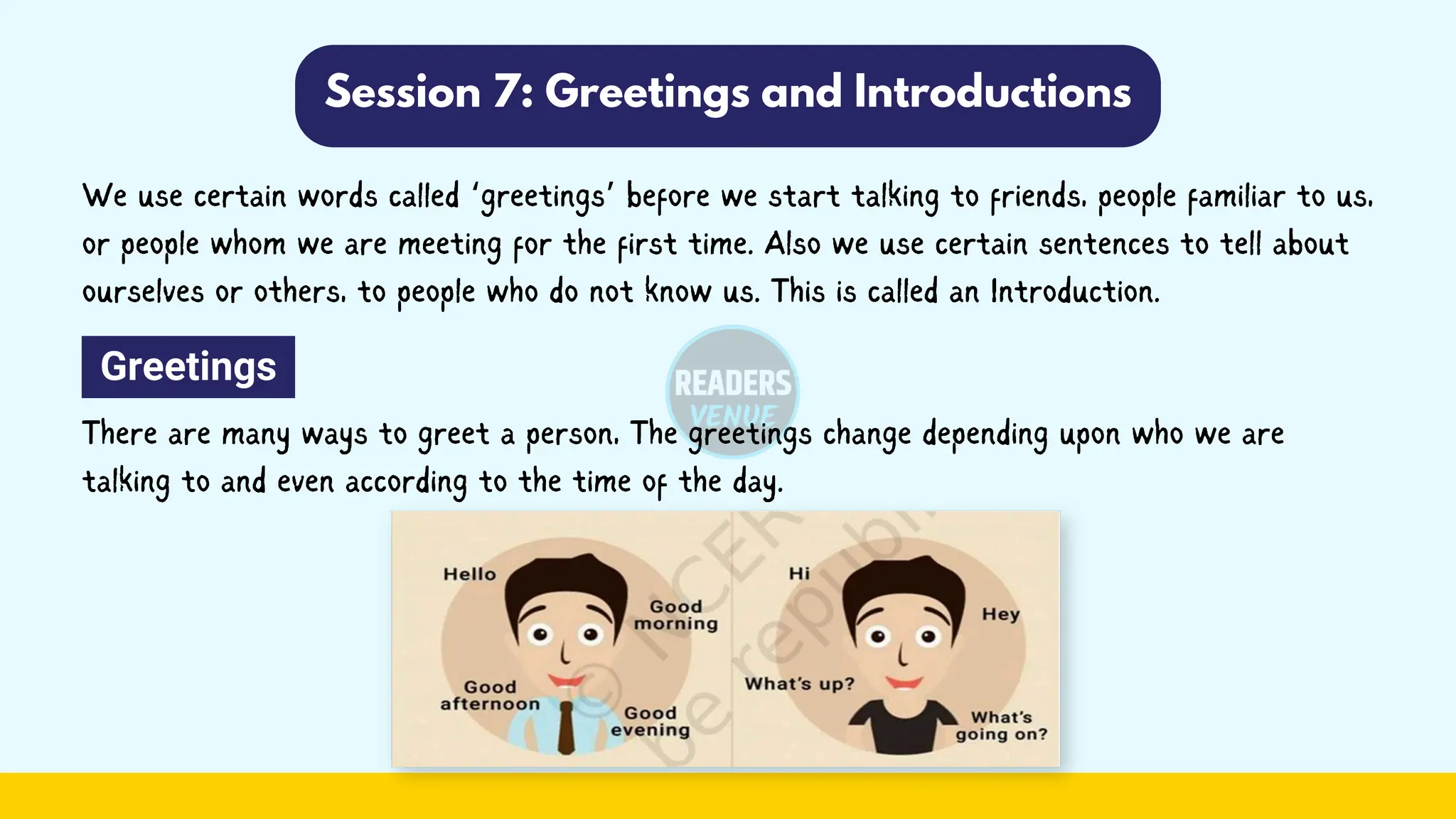
Session 7: Greetingsand Introductions
We use certain words called ‘greetings’ before we start talking to friends, people familiar to us,
or people whom we are meeting for the first time. Also we use certain sentences to tell about
ourselves or others, to people who do not know us. This is called an Introduction.
Greetings
There are many ways to greet a person, The greetings change depending upon who we are
talking to and even according to the time of the day.
31.
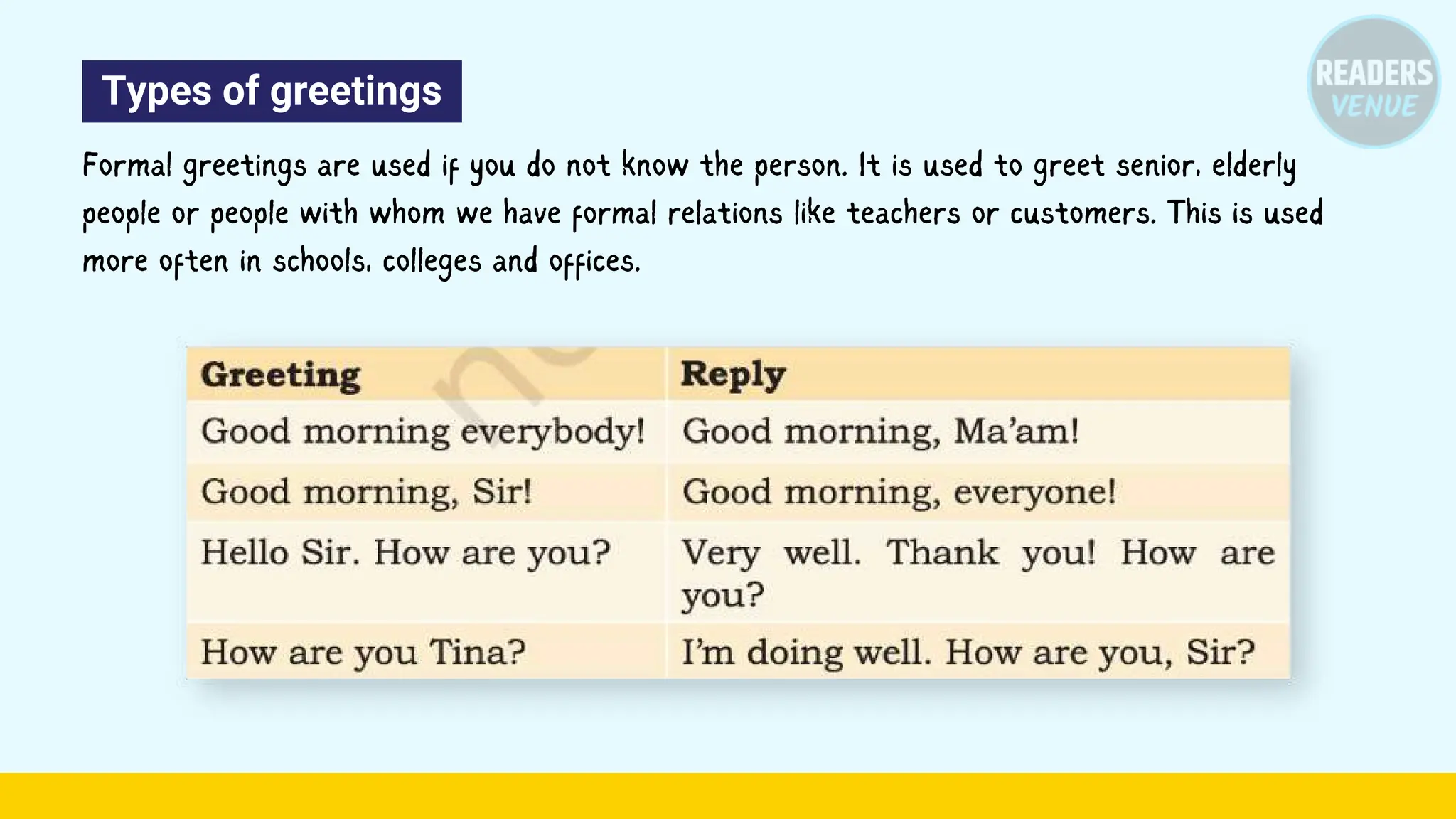
Types of greetings
Formalgreetings are used if you do not know the person. It is used to greet senior, elderly
people or people with whom we have formal relations like teachers or customers. This is used
more often in schools, colleges and offices.
32.
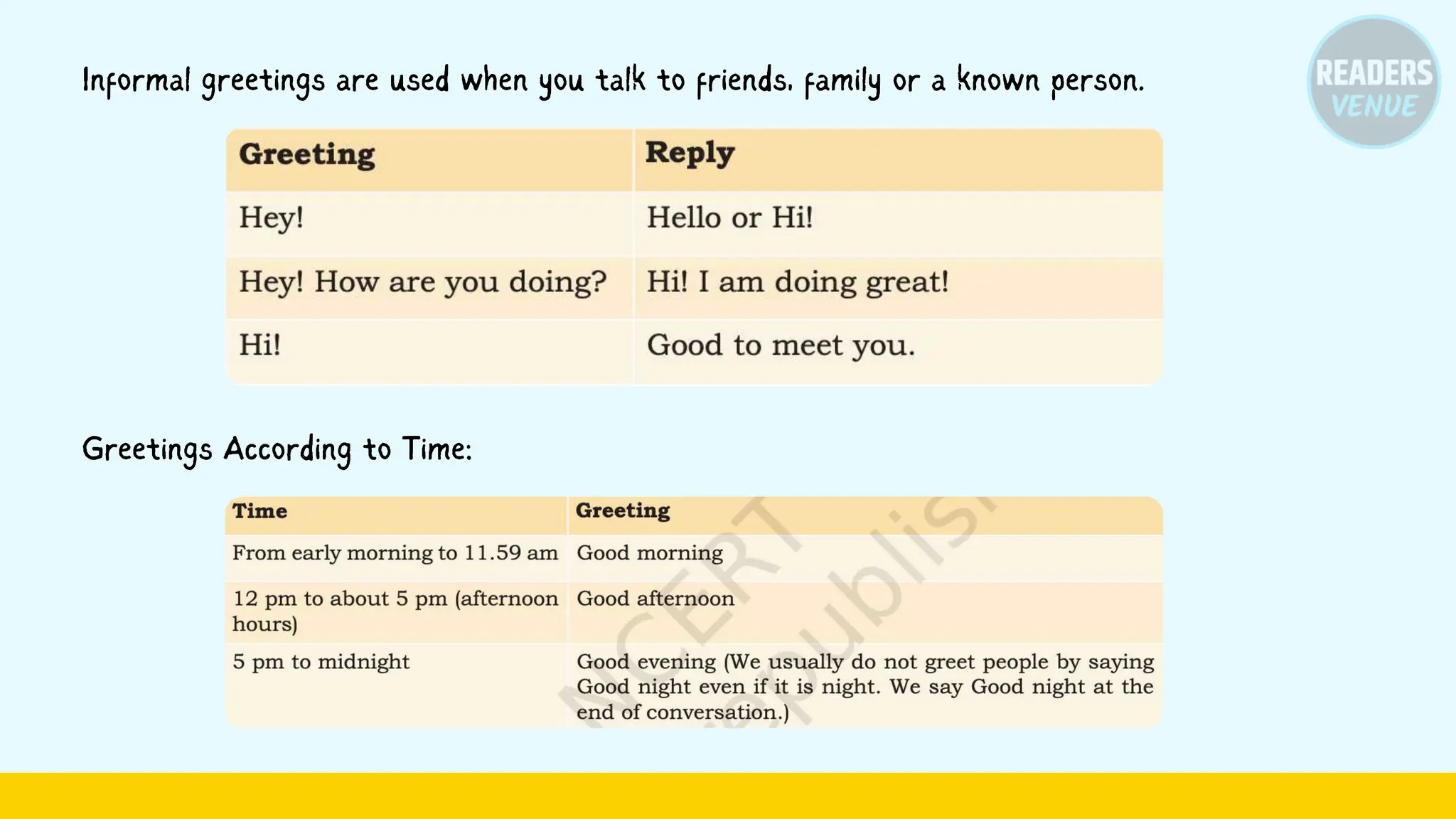
Informal greetings areused when you talk to friends, family or a known person.
Greetings According to Time:
33.
Introducing yourself andothers
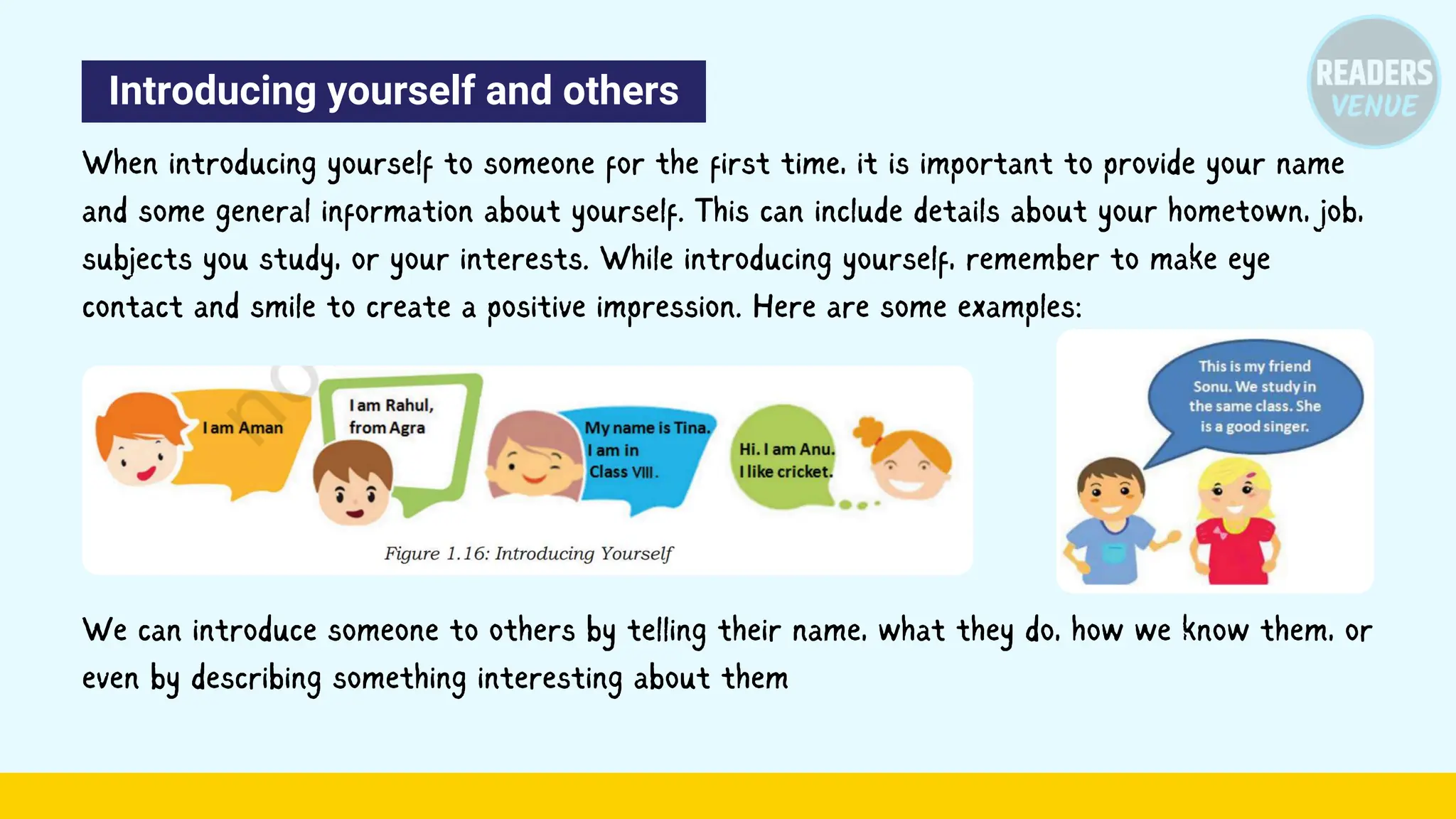
When introducing yourself to someone for the first time, it is important to provide your name
and some general information about yourself. This can include details about your hometown, job,
subjects you study, or your interests. While introducing yourself, remember to make eye
contact and smile to create a positive impression. Here are some examples:
We can introduce someone to others by telling their name, what they do, how we know them, or
even by describing something interesting about them
34.
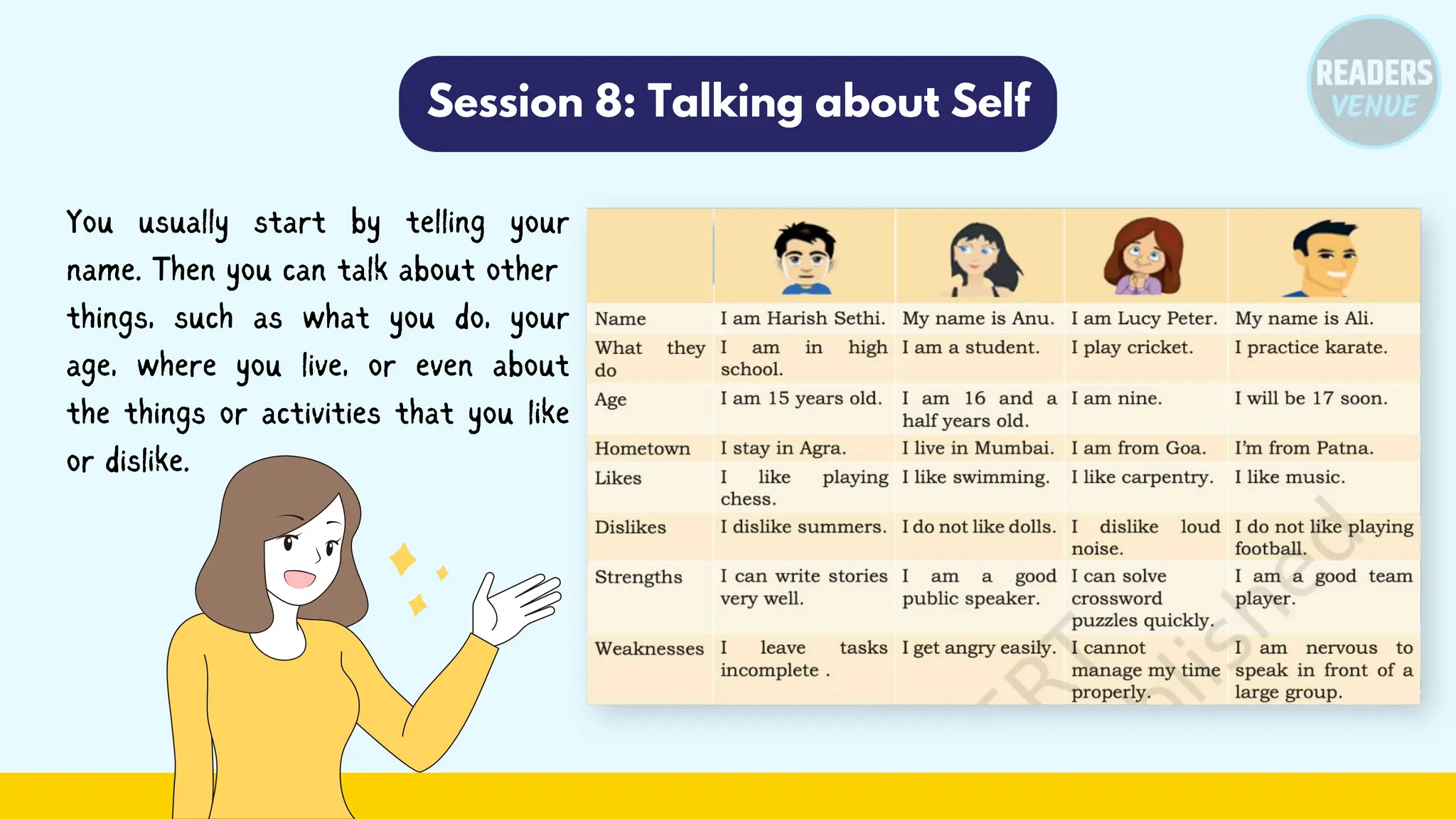
Session 8: Talkingabout Self
You usually start by telling your
name. Then you can talk about other
things, such as what you do, your
age, where you live, or even about
the things or activities that you like
or dislike.
35.
Filling a form
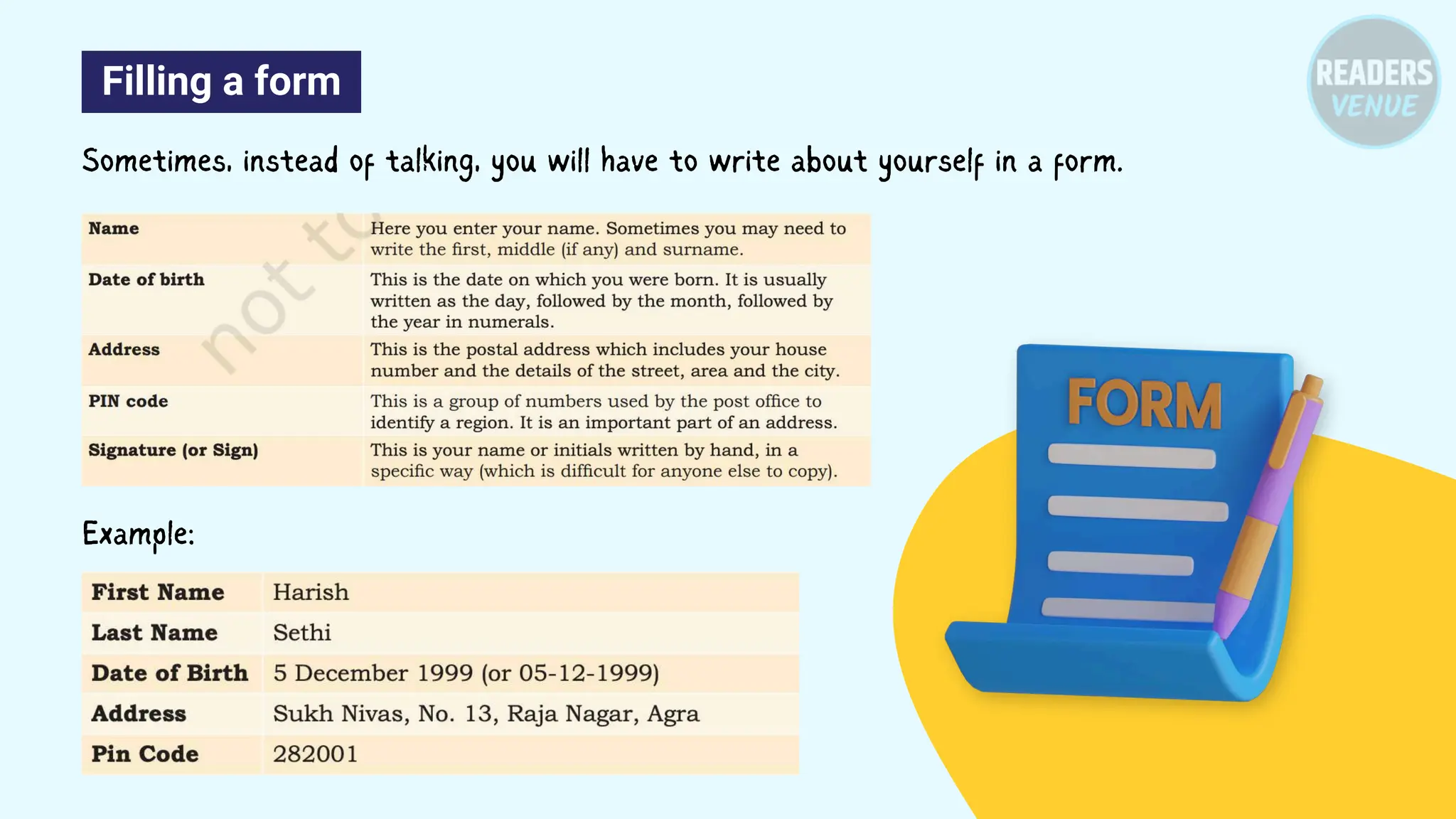
Sometimes,instead of talking, you will have to write about yourself in a form.
Example:
36.
Session 9: AskingQuestions I
Need for asking questions
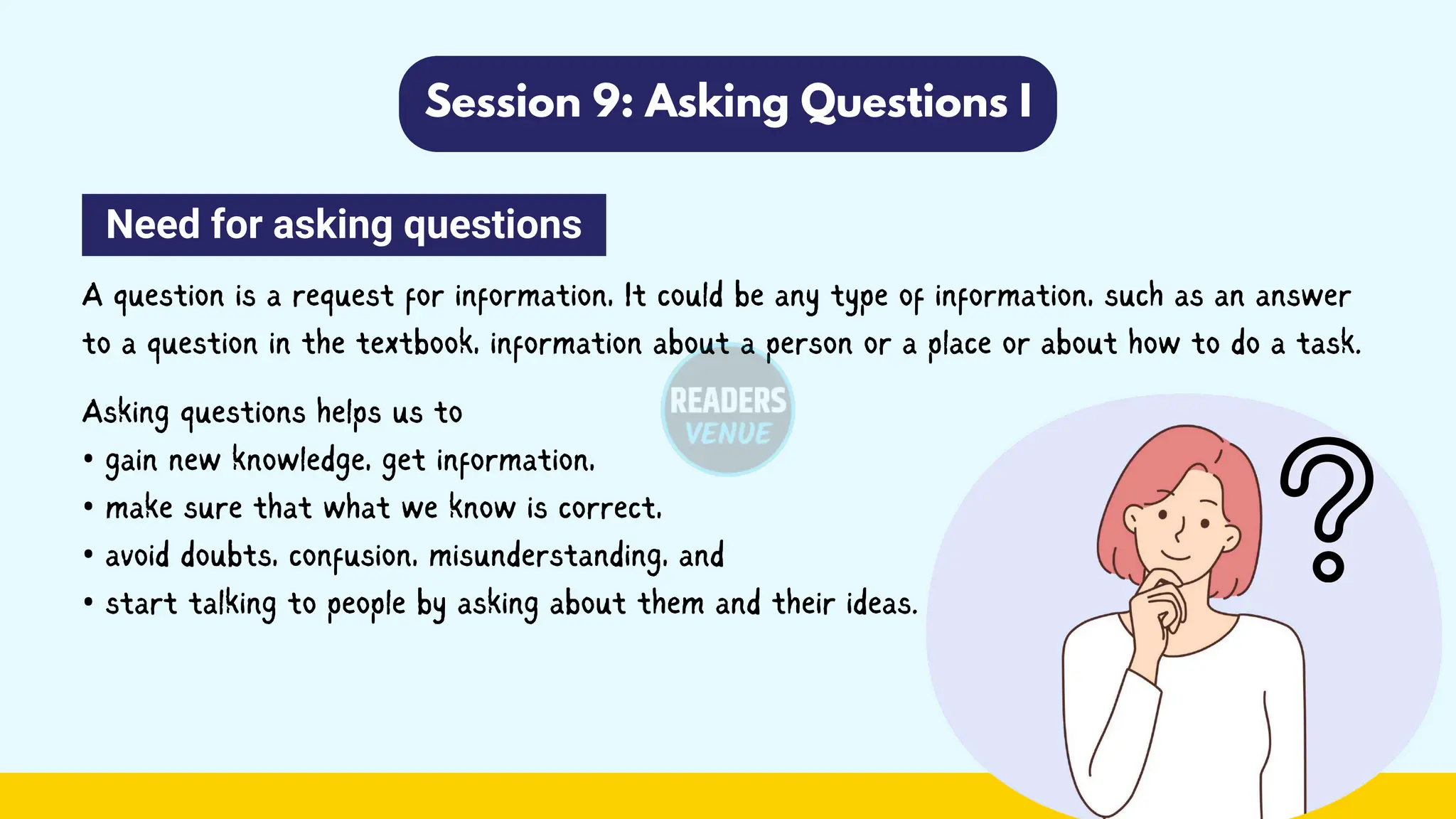
A question is a request for information, It could be any type of information, such as an answer
to a question in the textbook, information about a person or a place or about how to do a task.
Asking questions helps us to
• gain new knowledge, get information,
• make sure that what we know is correct,
• avoid doubts, confusion, misunderstanding, and
• start talking to people by asking about them and their ideas.
37.
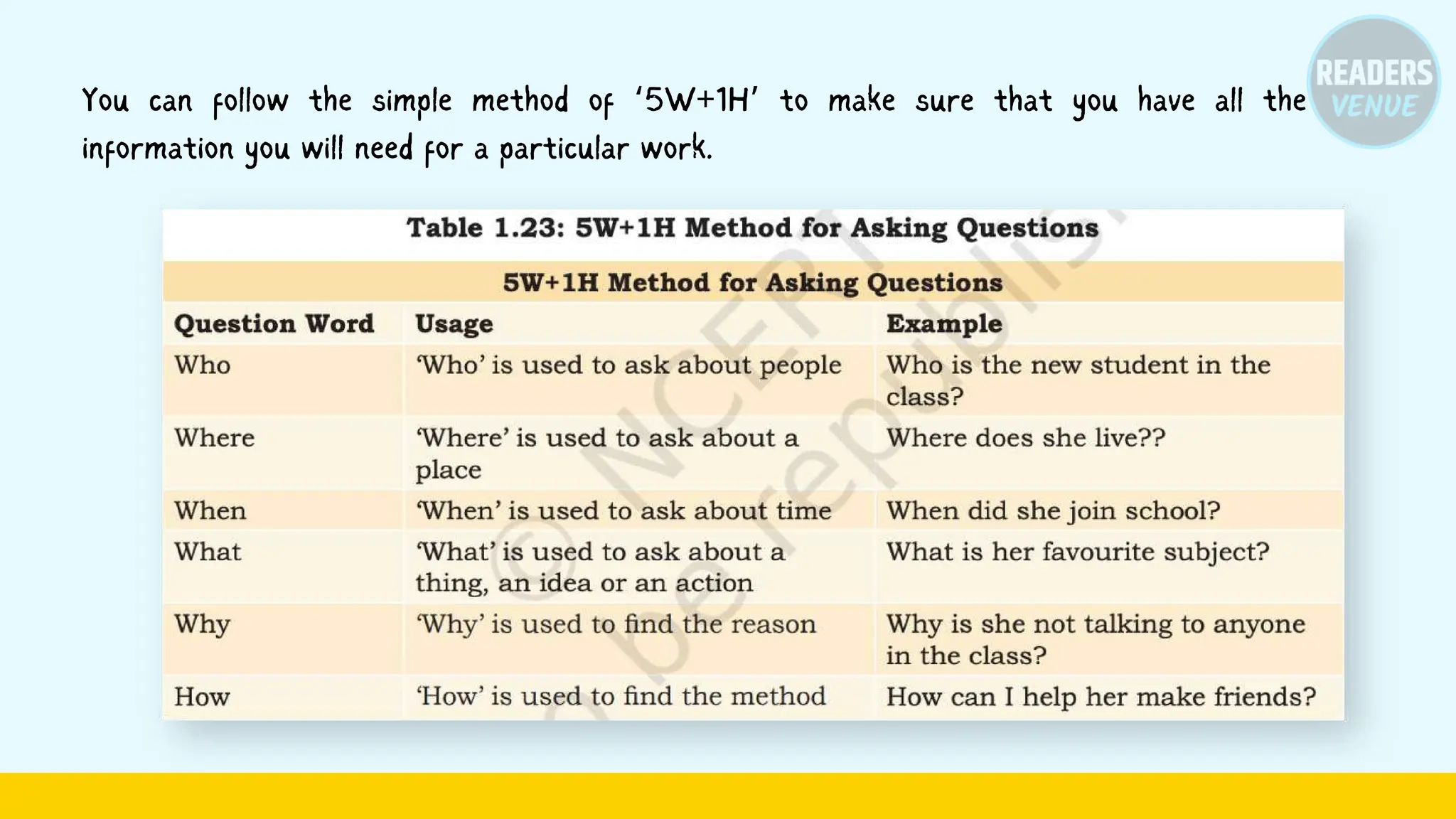
You can followthe simple method of ‘5W+1H’ to make sure that you have all the
information you will need for a particular work.
38.
Session 10: AskingQuestions II
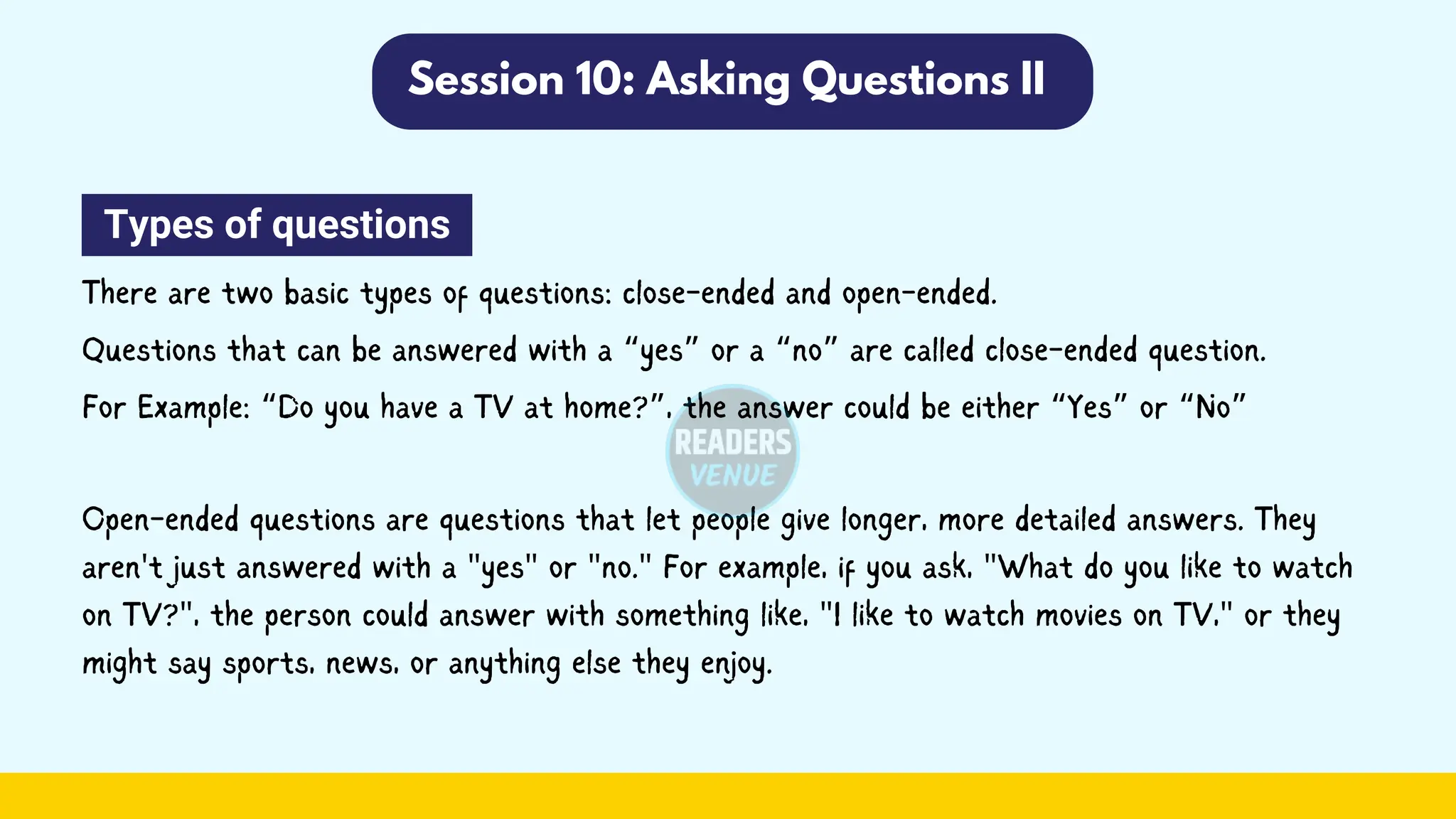
Types of questions
There are two basic types of questions: close-ended and open-ended.
Questions that can be answered with a “yes” or a “no” are called close-ended question.
For Example: “Do you have a TV at home?”, the answer could be either “Yes” or “No”
Open-ended questions are questions that let people give longer, more detailed answers. They
aren't just answered with a "yes" or "no." For example, if you ask, "What do you like to watch
on TV?", the person could answer with something like, "I like to watch movies on TV," or they
might say sports, news, or anything else they enjoy.
39.
Framing (or forming)questions
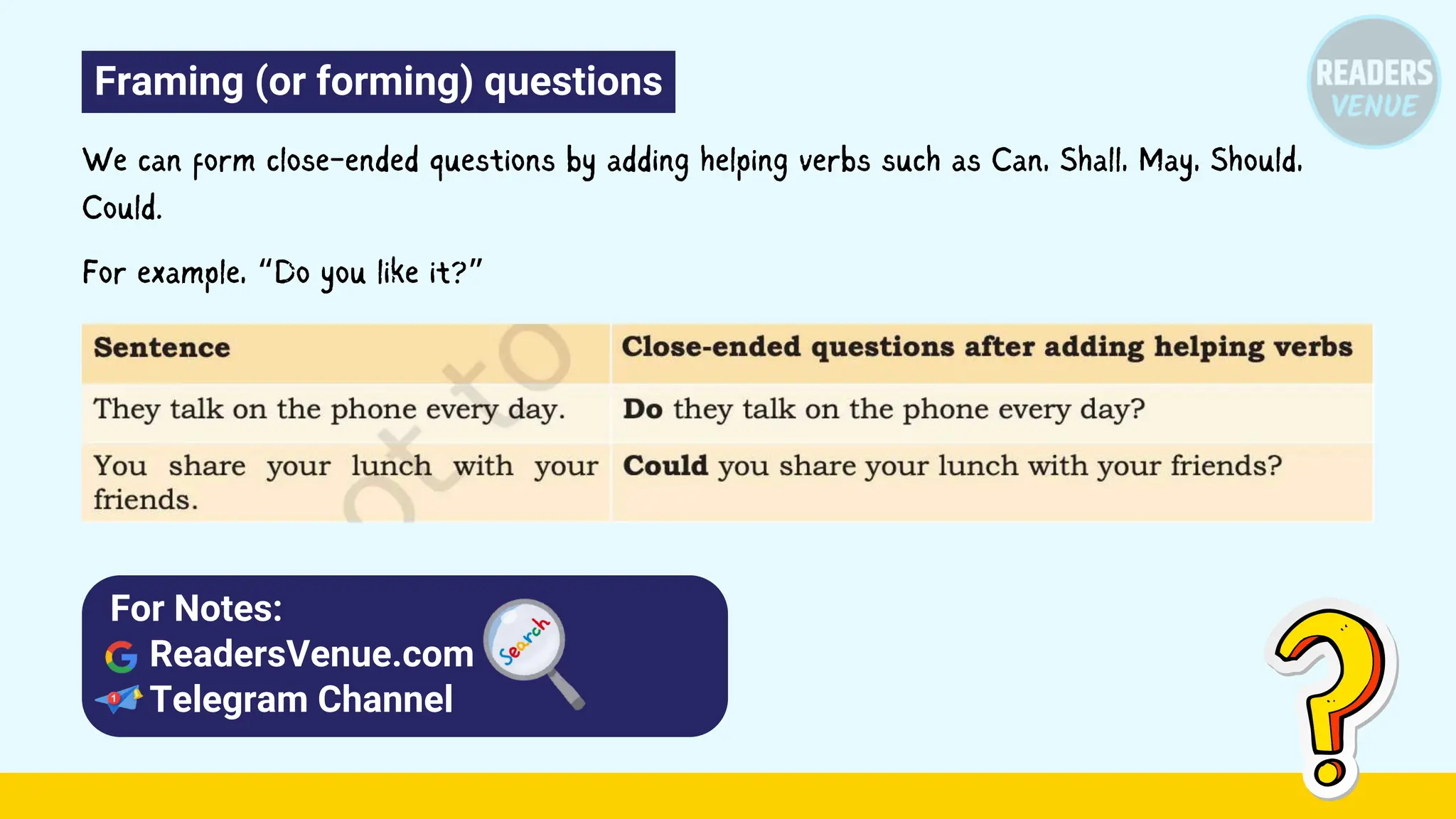
We can form close-ended questions by adding helping verbs such as Can, Shall, May, Should,
Could.
For example, “Do you like it?”
For Notes:
ReadersVenue.com
Telegram Channel
40.
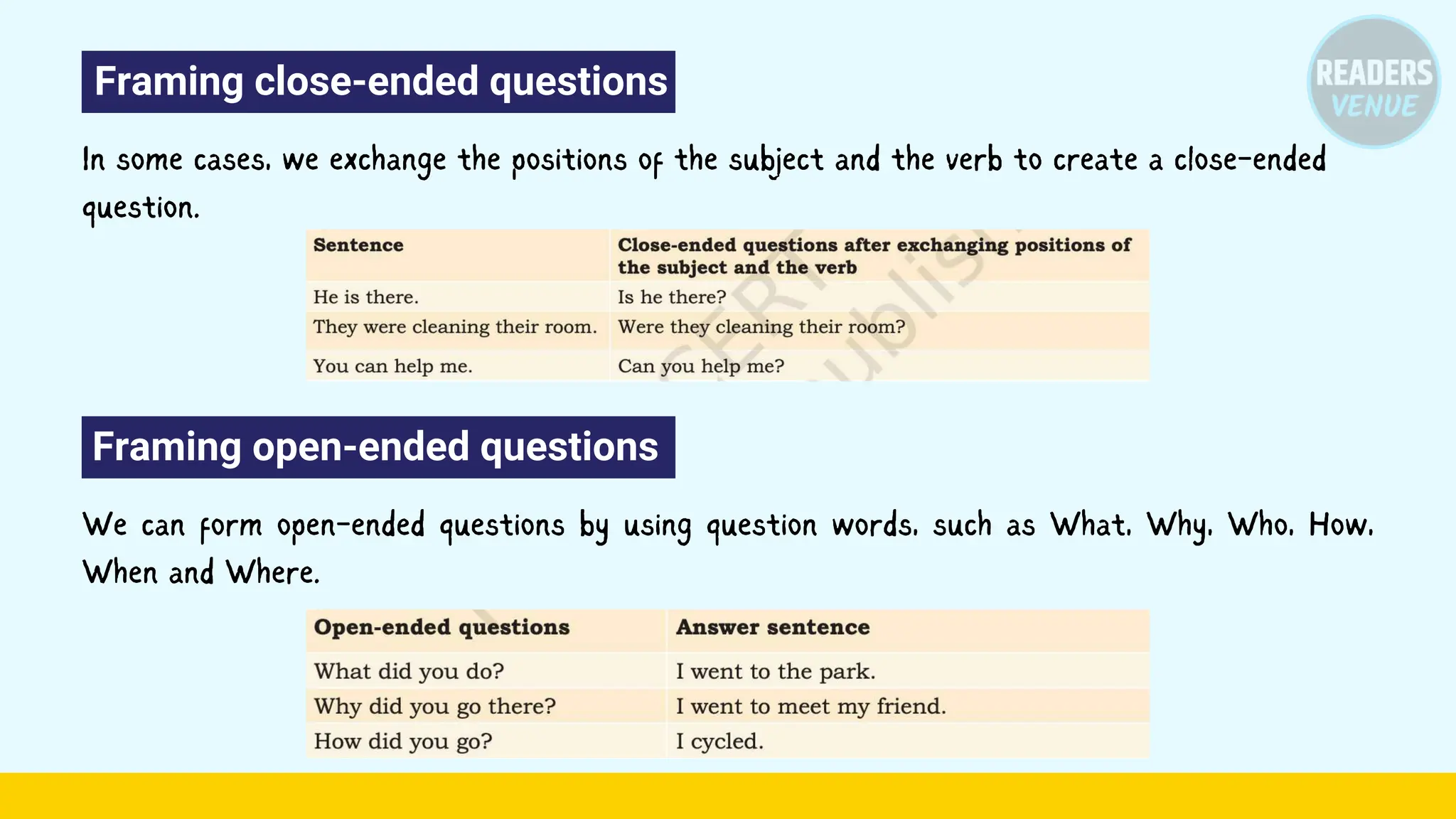
Framing close-ended questions
Insome cases, we exchange the positions of the subject and the verb to create a close-ended
question.
Framing open-ended questions
We can form open-ended questions by using question words, such as What, Why, Who, How,
When and Where.



![[DSC Europe 25] Jovan Bogicevic - Legacy to AI-Driven Defense: Transforming D...](https://cdn.slidesharecdn.com/ss_thumbnails/rsarluadt563hntyfc8q-3-251211083849-3e7bc4c0-thumbnail.jpg?width=640&height=640&fit=bounds)
![[DSC Europe 25] Hans Kleinsman - The Compliance Gearbox: How Tax Tech Mediate...](https://cdn.slidesharecdn.com/ss_thumbnails/dxdytie1toel0hr90bjs-2-251212103250-174fdbe7-thumbnail.jpg?width=640&height=640&fit=bounds)


![[DSC Europe 25] Branko Dzakula - From Defense to Attack: How AI Redefines Cyb...](https://cdn.slidesharecdn.com/ss_thumbnails/80bdzdxpr3ky2g0qvyk9-8-251211083048-ce5fc1ee-thumbnail.jpg?width=640&height=640&fit=bounds)
![[DSC Europe 25] Debmalya Biswas - Agentification: the art of transforming man...](https://cdn.slidesharecdn.com/ss_thumbnails/r5azlggvtqiaiiusrqdr-4-251212103249-5a12c89b-thumbnail.jpg?width=640&height=640&fit=bounds)
![[DSC Europe 25] Tatevik Maytesyan - How to actually use AI in marketing: gett...](https://cdn.slidesharecdn.com/ss_thumbnails/tjo626lsqdgfntbgl2mw-4-251216103155-e36cd239-thumbnail.jpg?width=640&height=640&fit=bounds)


![[DSC Europe 25] Uros Pesic - The Reality of AI in Marketing.pdf](https://cdn.slidesharecdn.com/ss_thumbnails/rtkodnmtycovsllvzsyn-9-251215095918-b0c6bfe3-thumbnail.jpg?width=640&height=640&fit=bounds)


![[DSC Europe 25] Jon Dajci - Bridging TradFi and DeFi: Building the Future of ...](https://cdn.slidesharecdn.com/ss_thumbnails/fqmhfvlbqhkihjvqvhmu-7-251211083849-6af7e325-thumbnail.jpg?width=640&height=640&fit=bounds)
![[DSC Europe 25] Dusan Nesic - Securing Tomorrow’s Infrastructure: Why Cyber-P...](https://cdn.slidesharecdn.com/ss_thumbnails/qikbszfftyowjm2q6duw-1-251211083848-8f2ead6b-thumbnail.jpg?width=640&height=640&fit=bounds)