SPECIFIC LEARNING OBJECTIVES
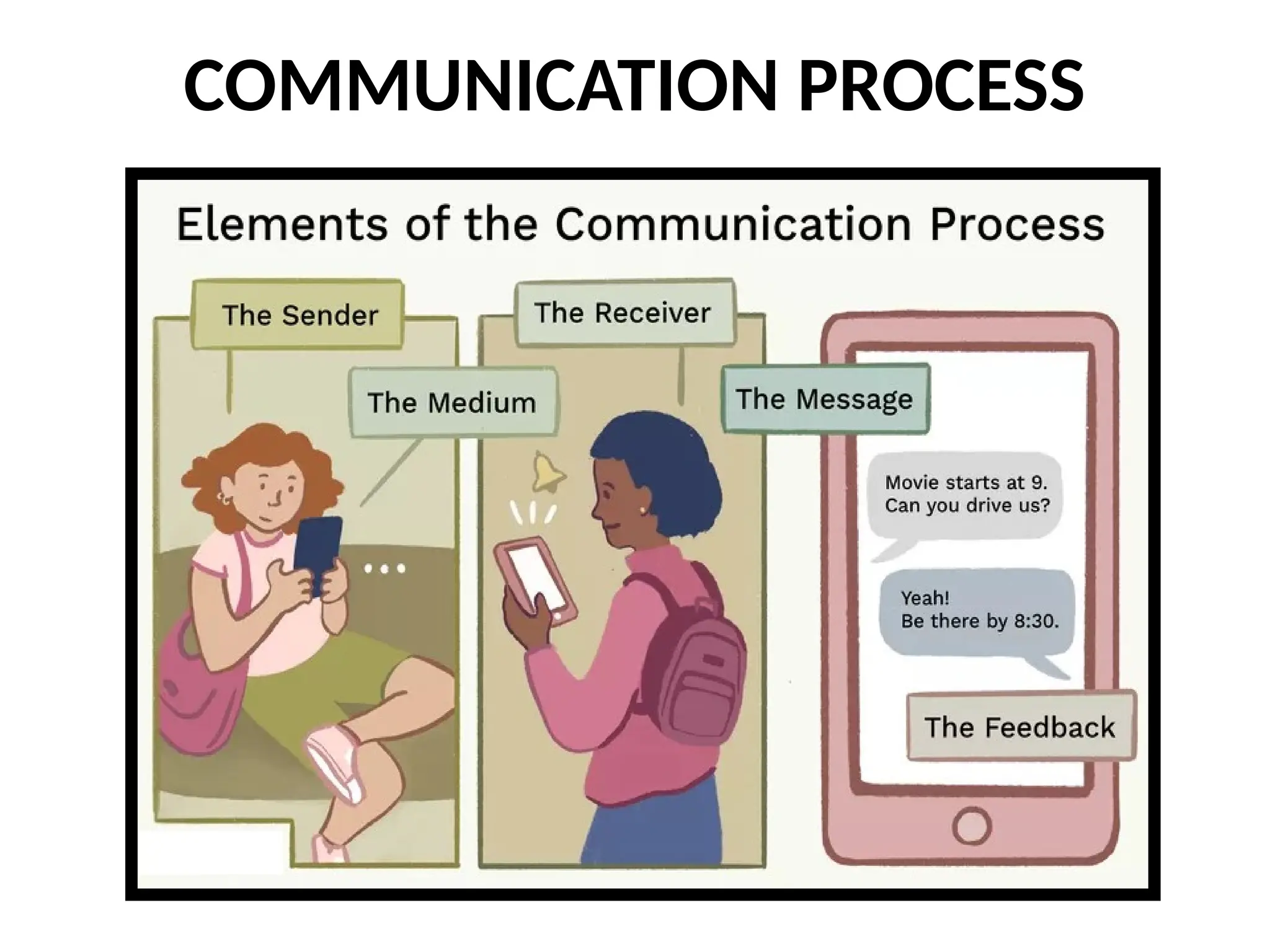
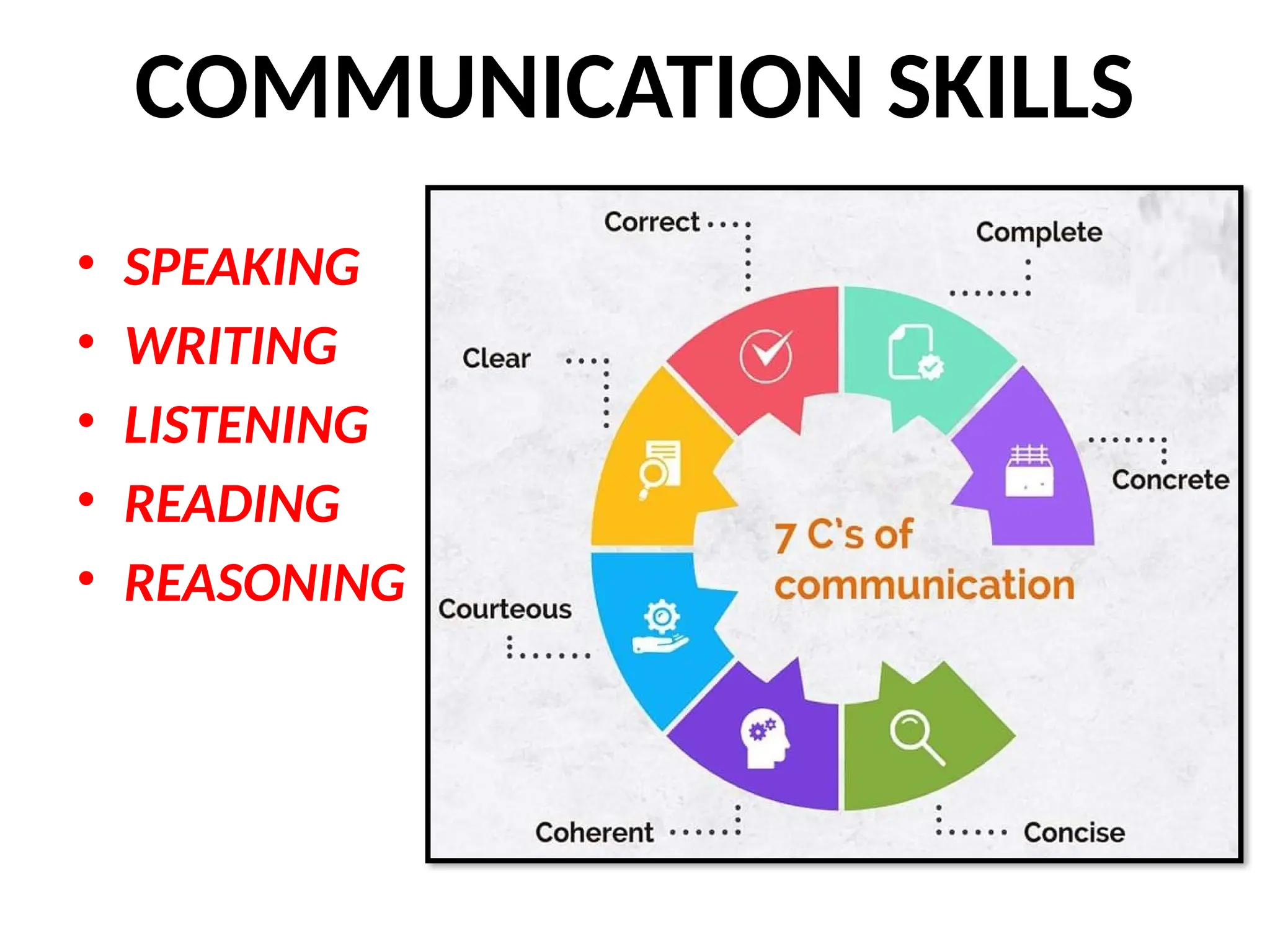
1.Describe the basic elements of communication skills
2. Explain the importance of listening & empathy in
communication
3. Explain the importance of good communication
skills in medicine
4. Observe patient & family interactions
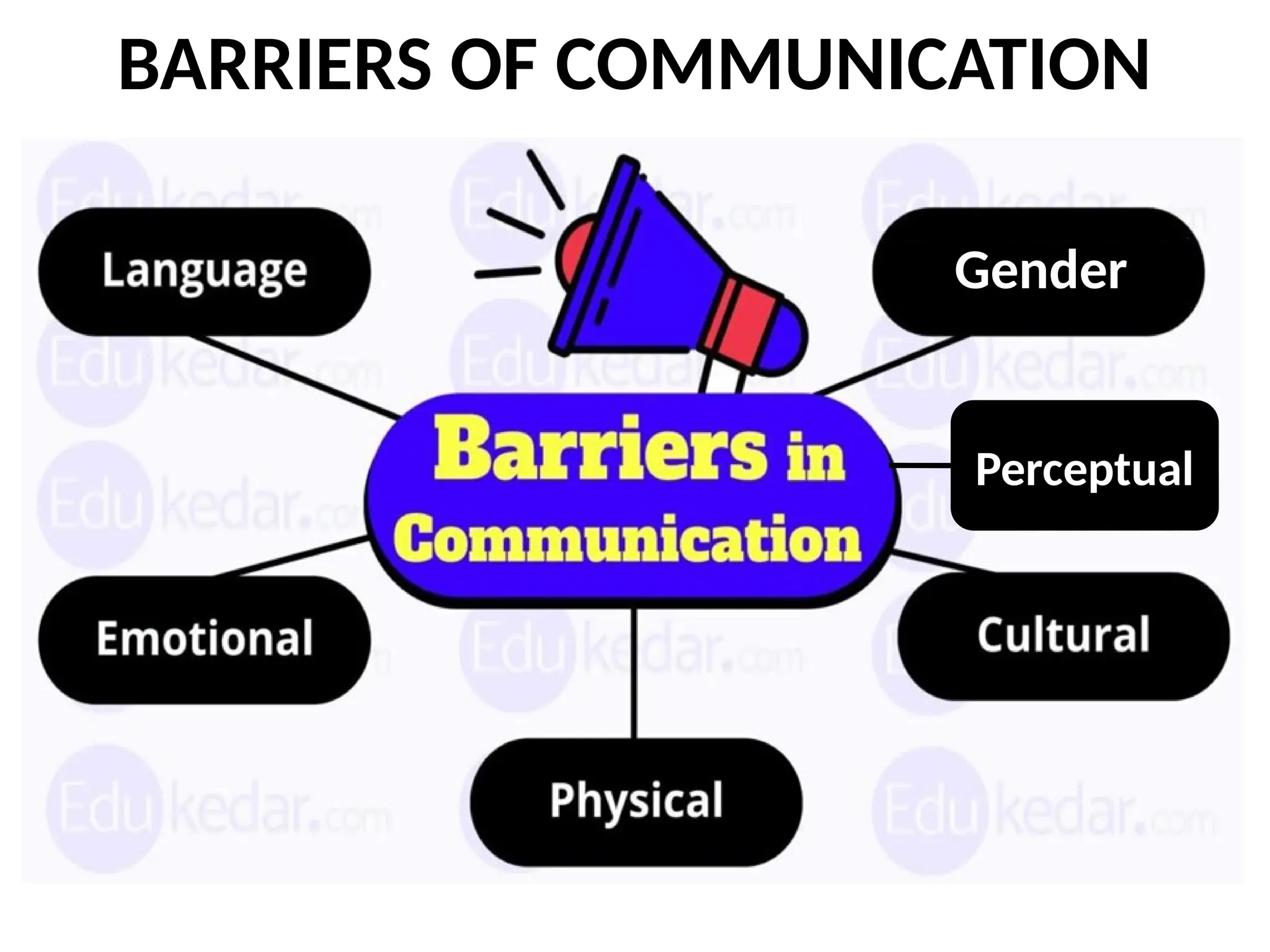
5. Recognise the common barriers to communication
6. Reflect on the appropriate ways to respond
3.
COMMUNICATION
• ‘’the countlessways that humans have of keeping in
touch with one another’’
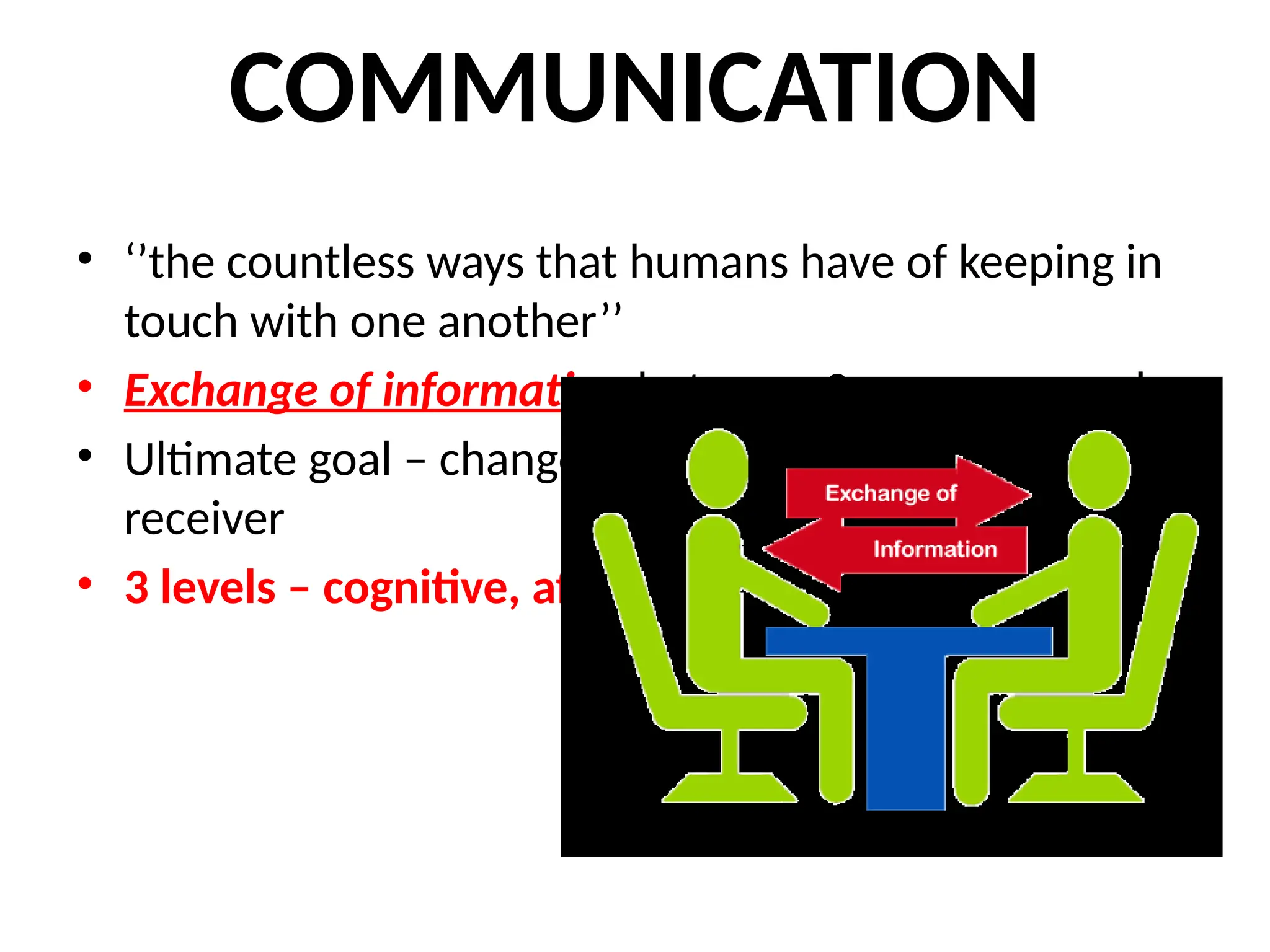
• Exchange of information between 2 or more people
• Ultimate goal – change in the desired direction of the
receiver
• 3 levels – cognitive, affective & Psychomotor
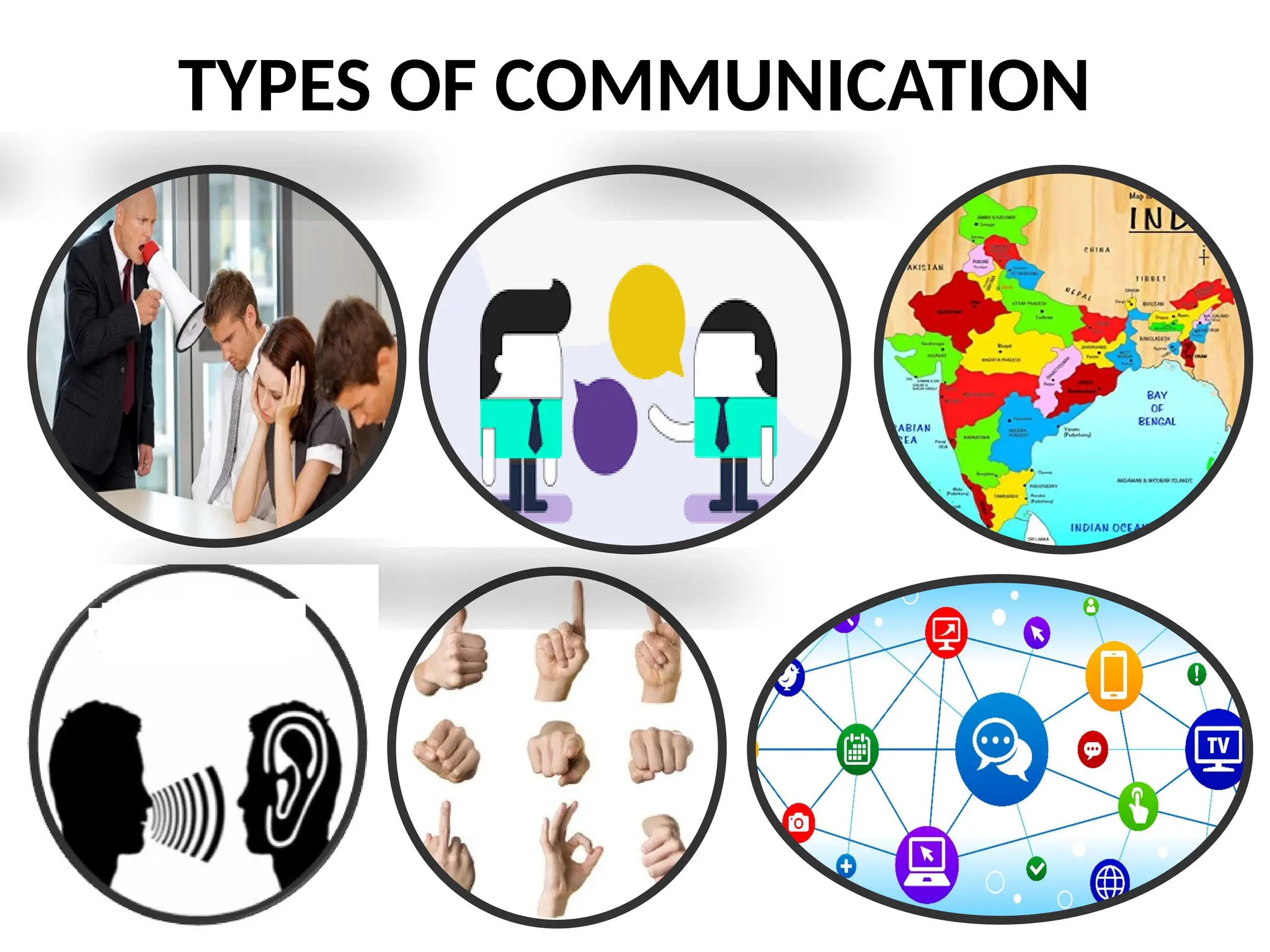
TYPES OF COMMUNICATION
•One – way communication (Didactic Method)
• Two – way communication (Socratic Method)
• Verbal communication
• Non – verbal communication
• Formal & informal communication
• Visual communication
• Telecommunication& internet
4 WAYS TOIMPROVE YOUR
COMMUNICATION SKILLS
1. Listen with empathy
2. Speak up
3. Prepare what you're going to say
4. Be ready for different answers
9.
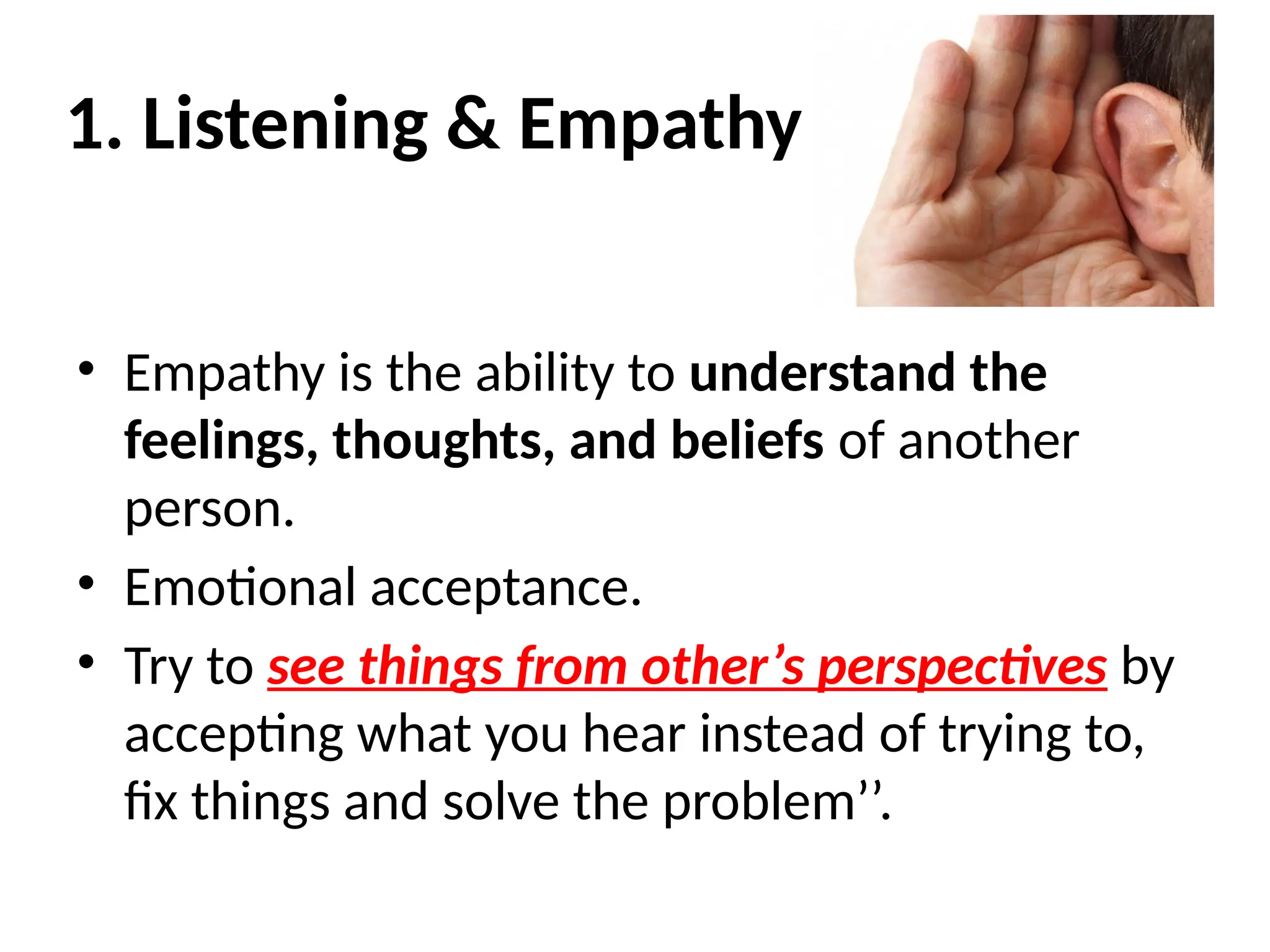
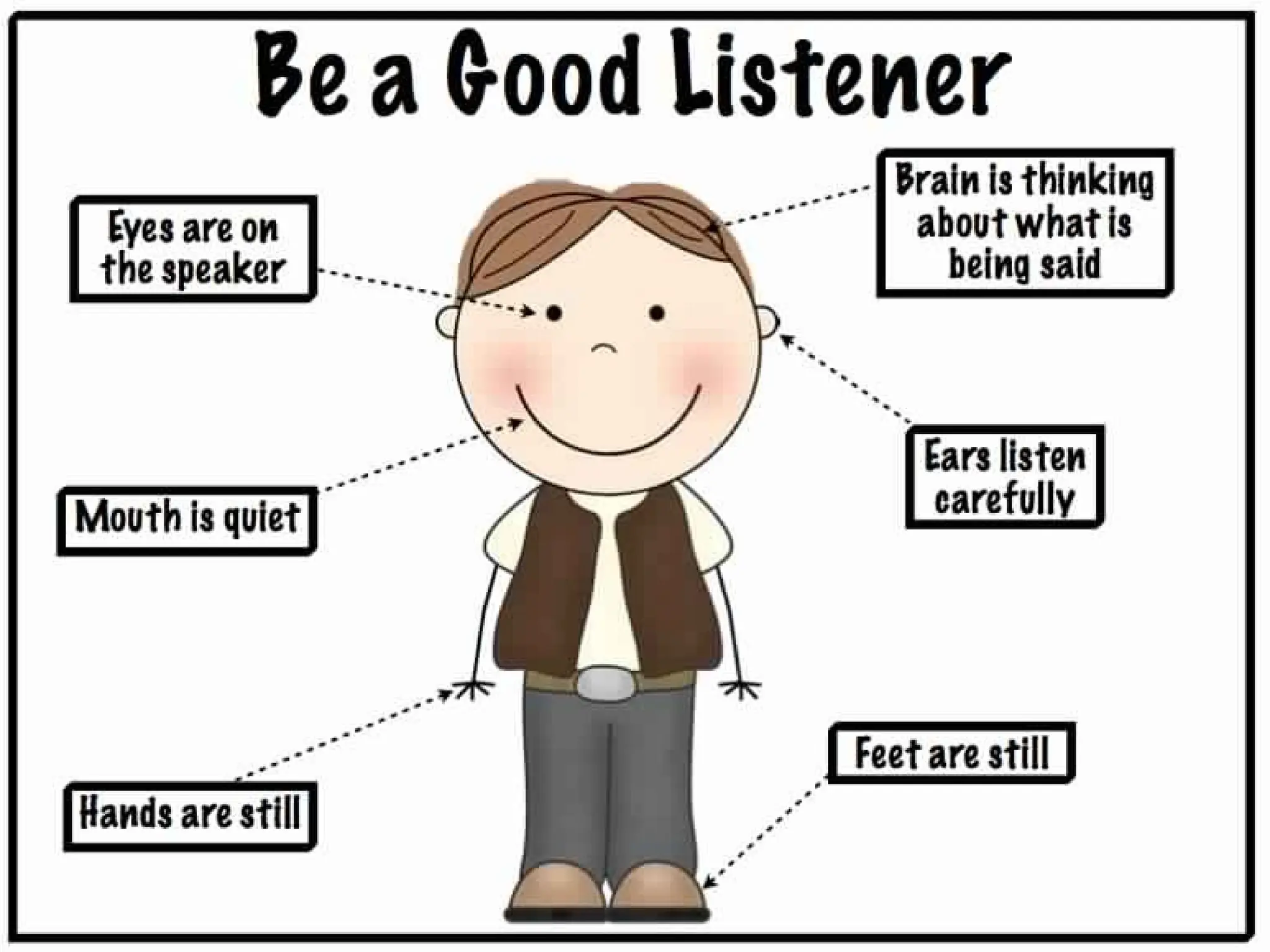
1. Listening &Empathy
• Empathy is the ability to understand the
feelings, thoughts, and beliefs of another
person.
• Emotional acceptance.
• Try to see things from other’s perspectives by
accepting what you hear instead of trying to,
fix things and solve the problem’’.
11.
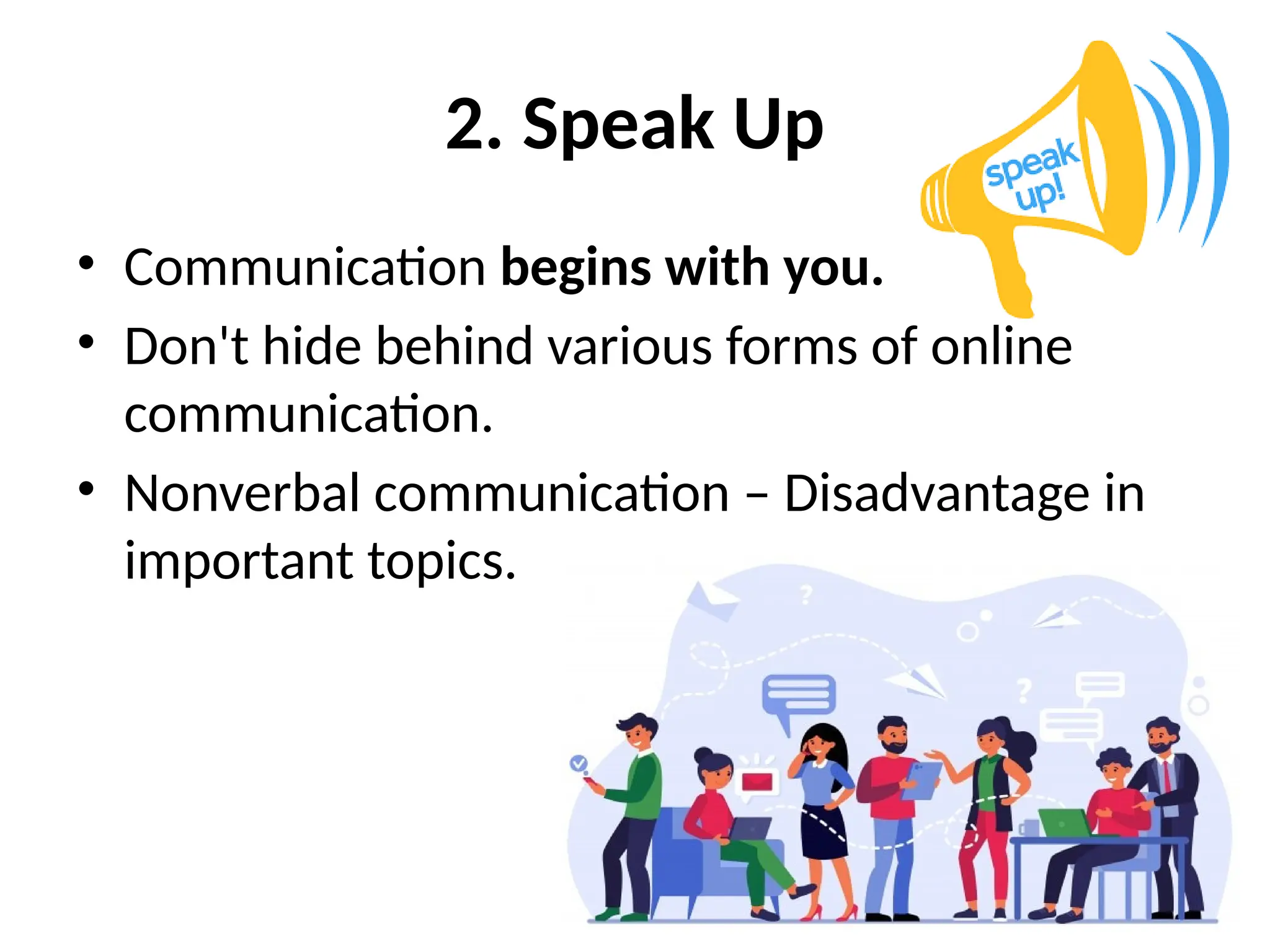
2. Speak Up
•Communication begins with you.
• Don't hide behind various forms of online
communication.
• Nonverbal communication – Disadvantage in
important topics.
12.
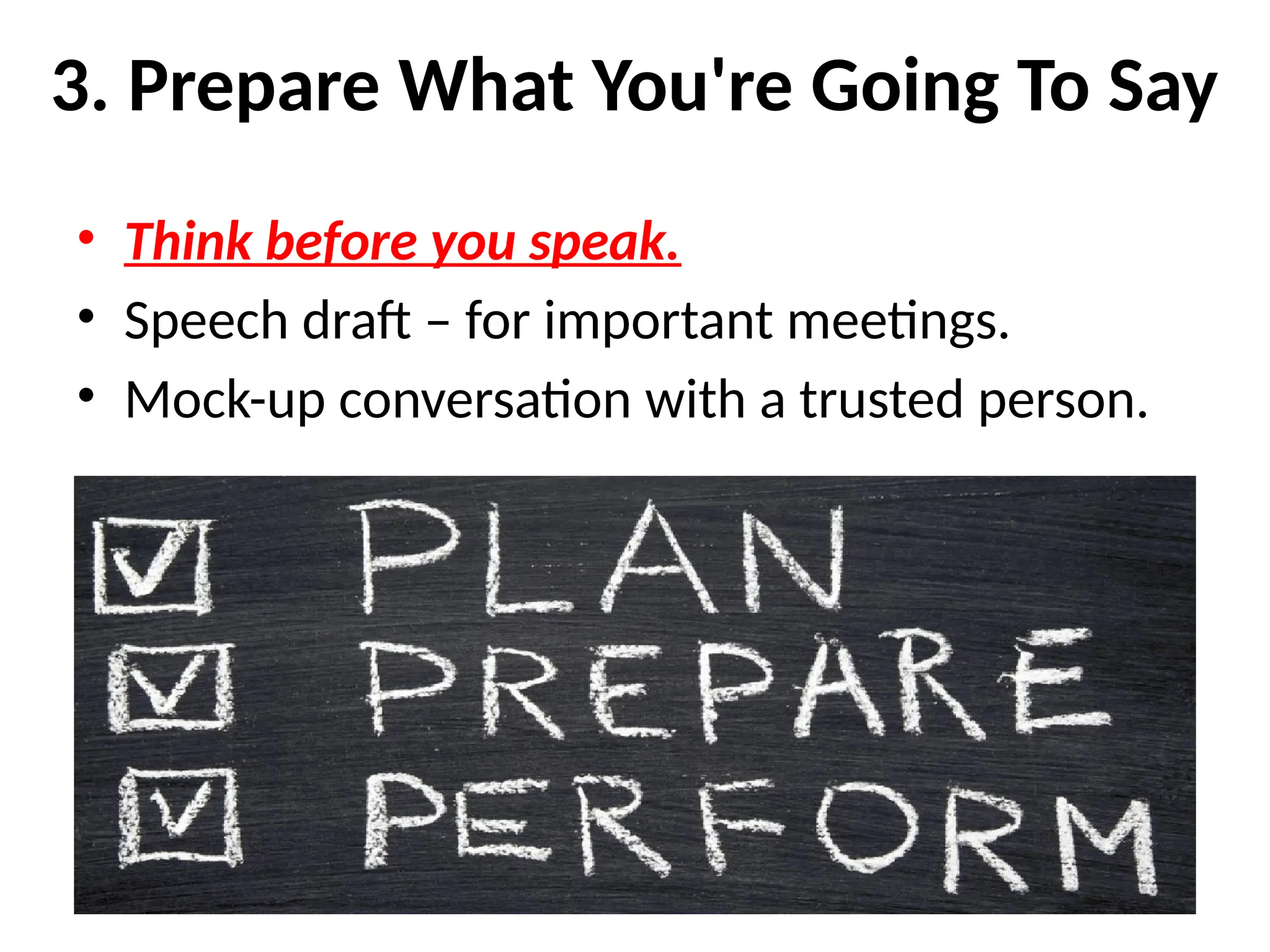
3. Prepare WhatYou're Going To Say
• Think before you speak.
• Speech draft – for important meetings.
• Mock-up conversation with a trusted person.
13.
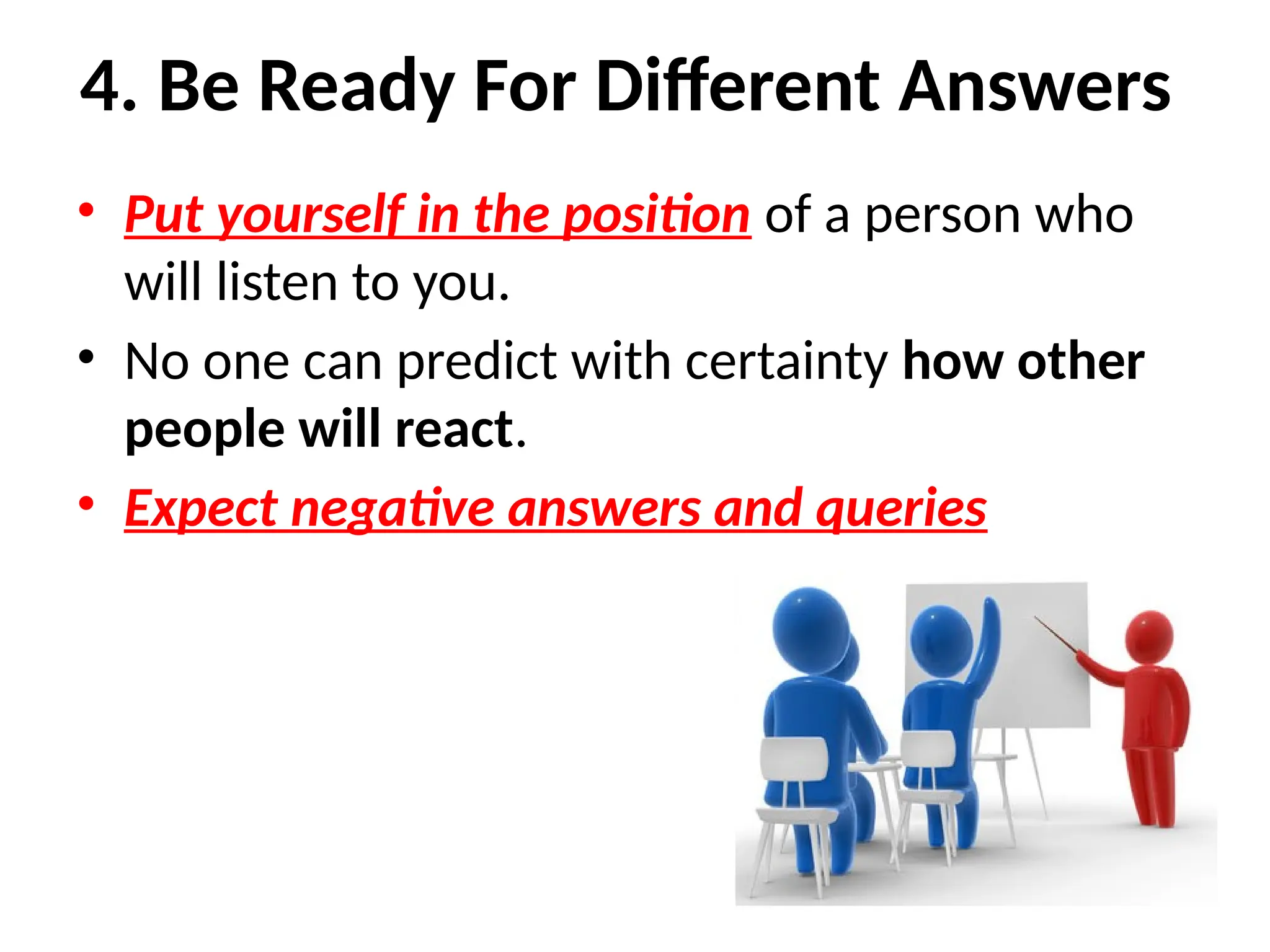
4. Be ReadyFor Different Answers
• Put yourself in the position of a person who
will listen to you.
• No one can predict with certainty how other
people will react.
• Expect negative answers and queries
15.
DO DOCTORS NEEDCOMMUNICATION SKILLS?
• Patients are humans with sensitive needs
• To practice medicine
• Poor communication medico-legal & ethical
problems
16.
Communication: With whom?
•Patients & Care-givers
• Nurses & auxiliary
• Staffs
• Colleagues
• Administrators
• Evidence in court
• Reporting research findings
• Talking to the media
• Public & legislature
17.
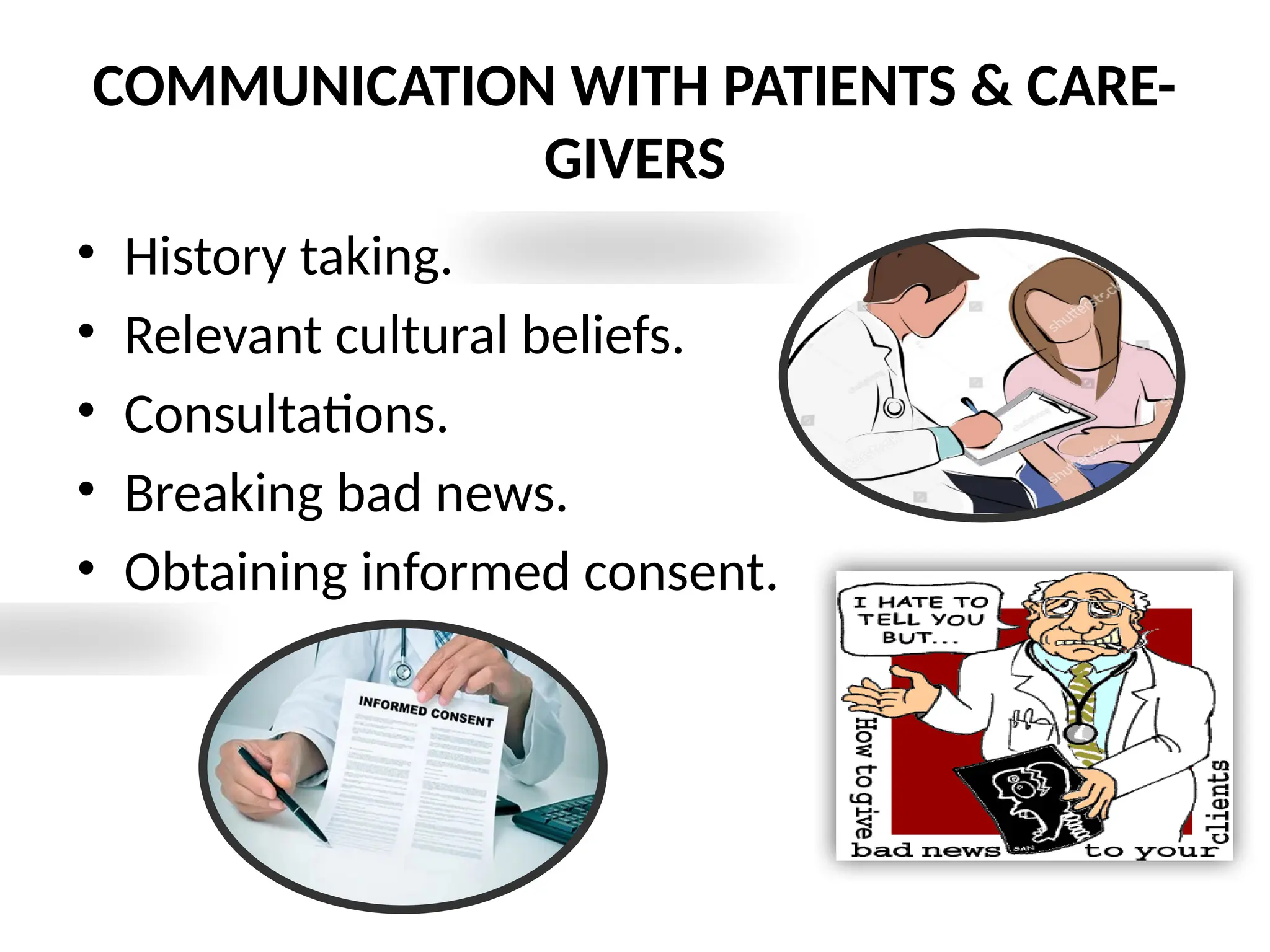
COMMUNICATION WITH PATIENTS& CARE-
GIVERS
• History taking.
• Relevant cultural beliefs.
• Consultations.
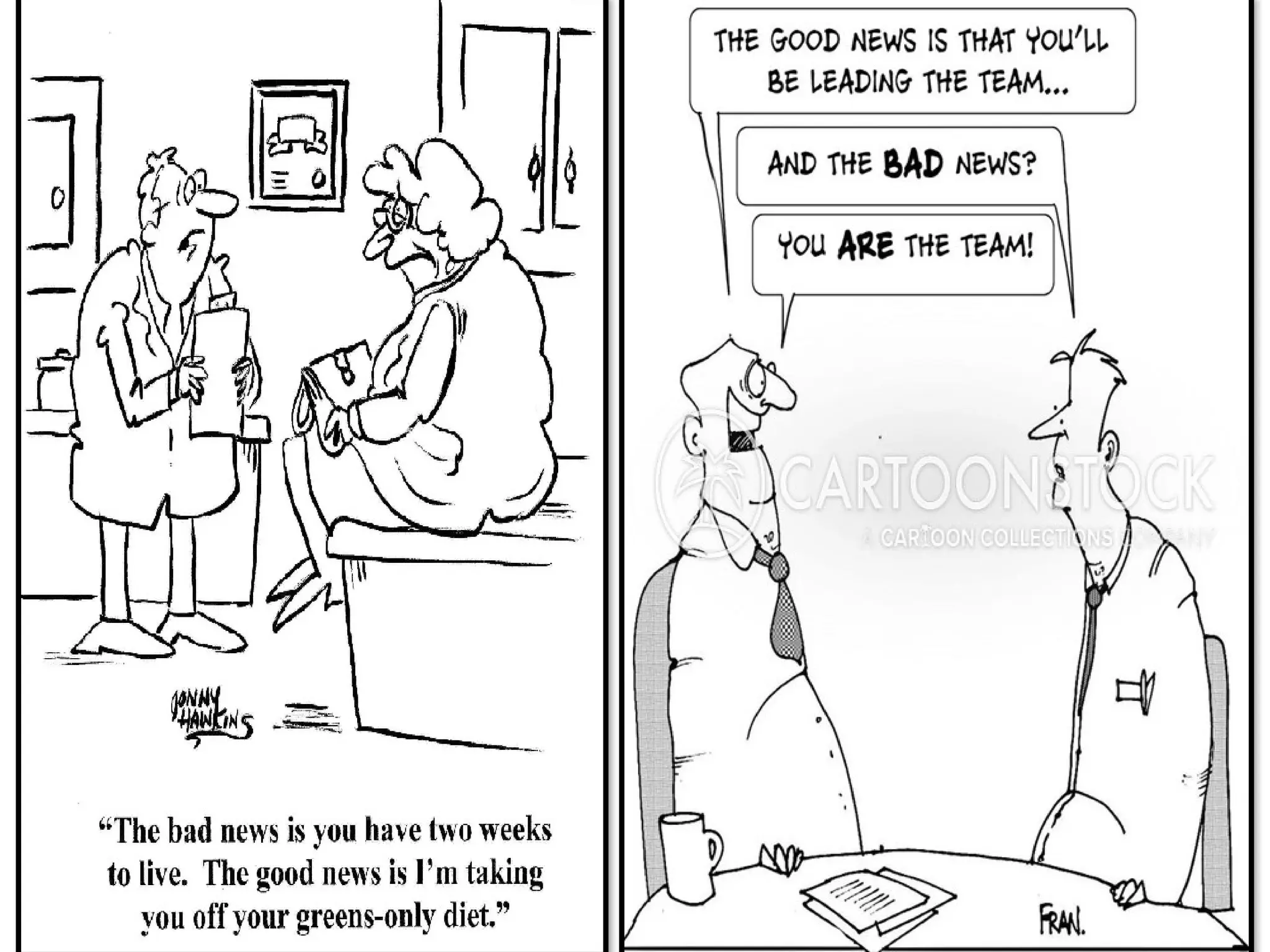
• Breaking bad news.
• Obtaining informed consent.
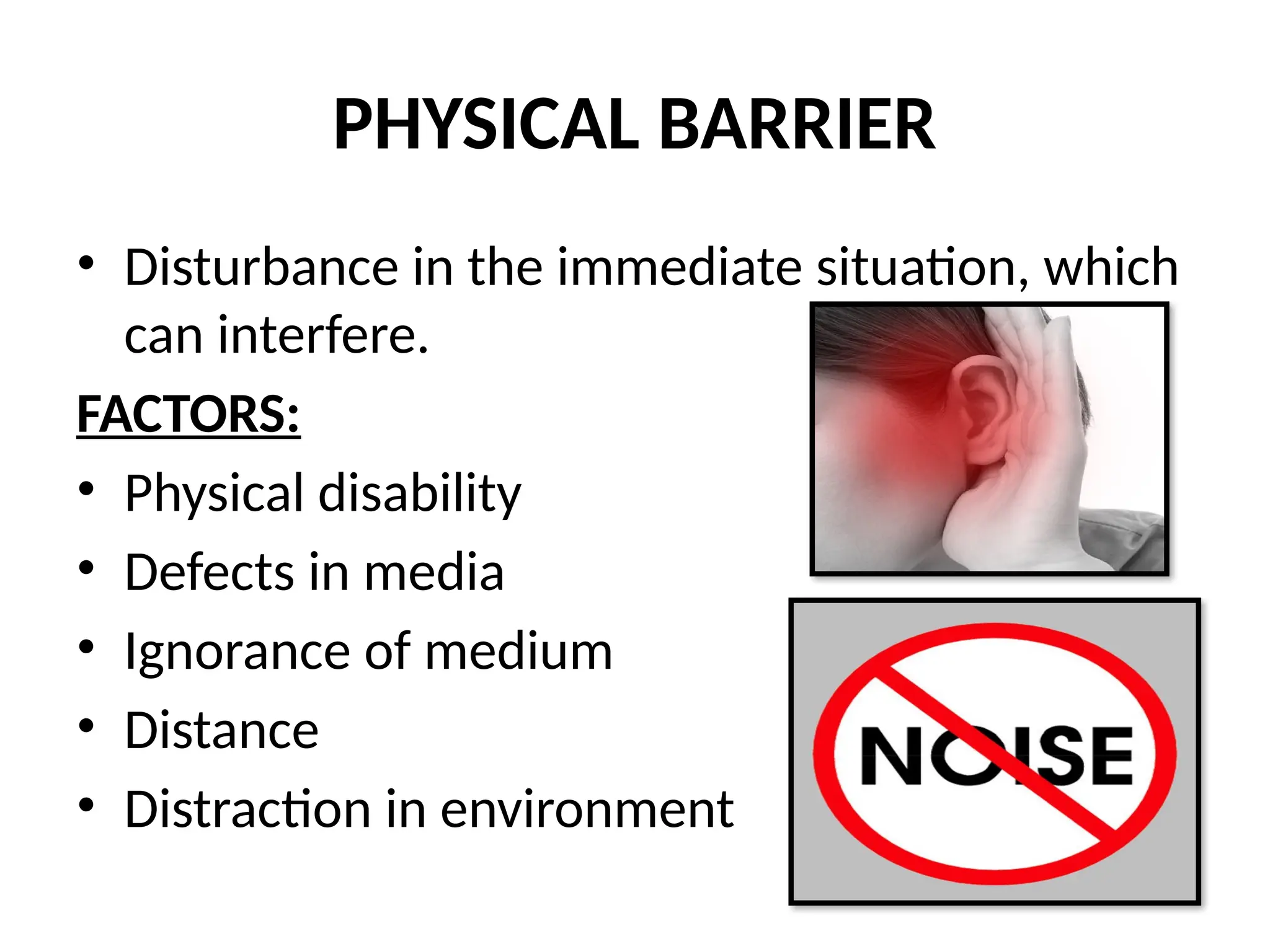
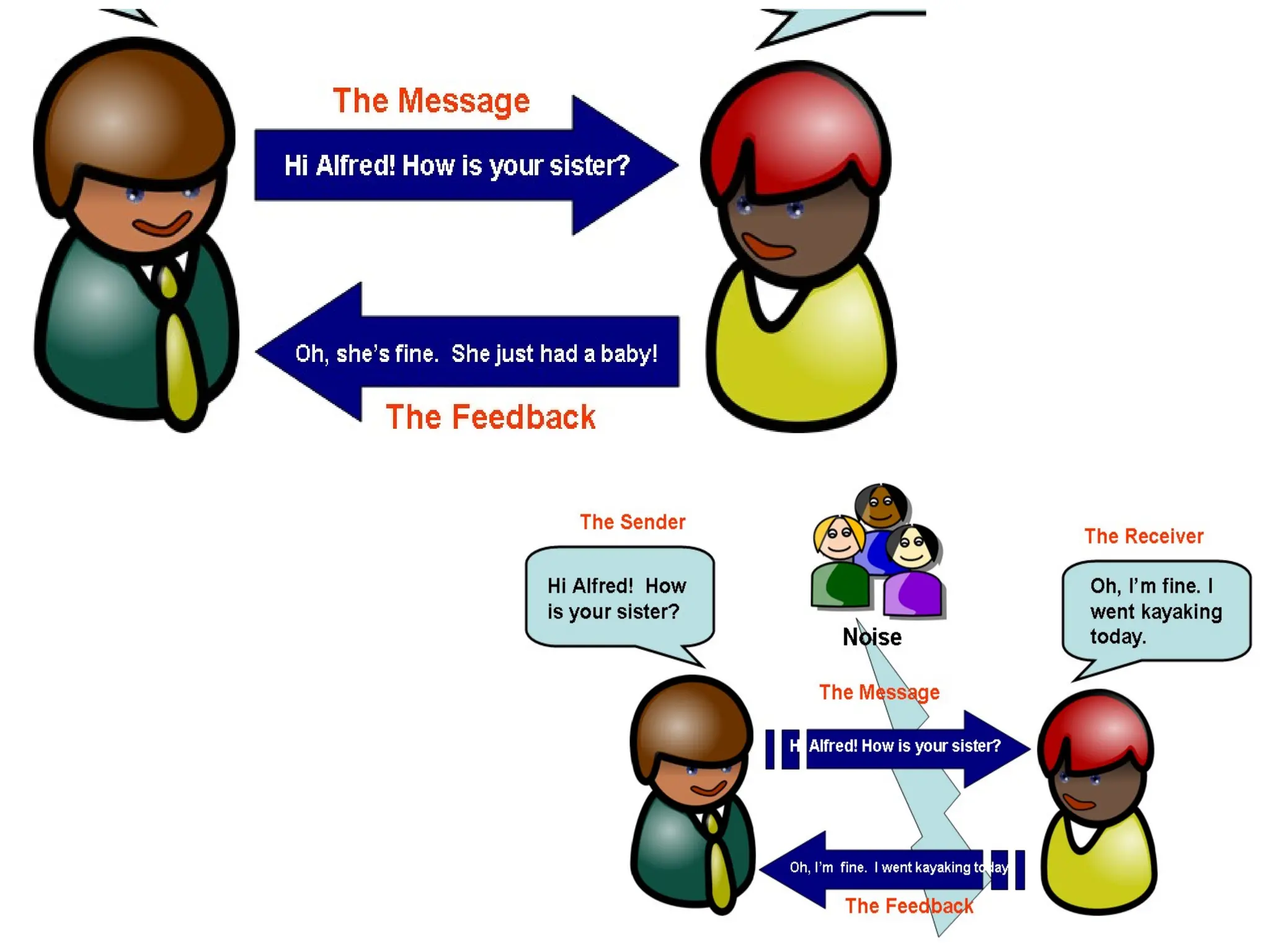
PHYSICAL BARRIER
• Disturbancein the immediate situation, which
can interfere.
FACTORS:
• Physical disability
• Defects in media
• Ignorance of medium
• Distance
• Distraction in environment
24.
HOW TO OVERCOME?
•Removing obstacle.
• To be updated with latest technologies.
• Choosing a suitable environment.
• Making signs easier to read.
• Self motivation.
25.
CULTURAL BARRIER
• Culturesprovide people ways of thinking –
ways of seeing, hearing and interpreting the
world.
• Similar words can mean different things to
people from different cultures, even when
they talk the ‘’same’’ language.
26.
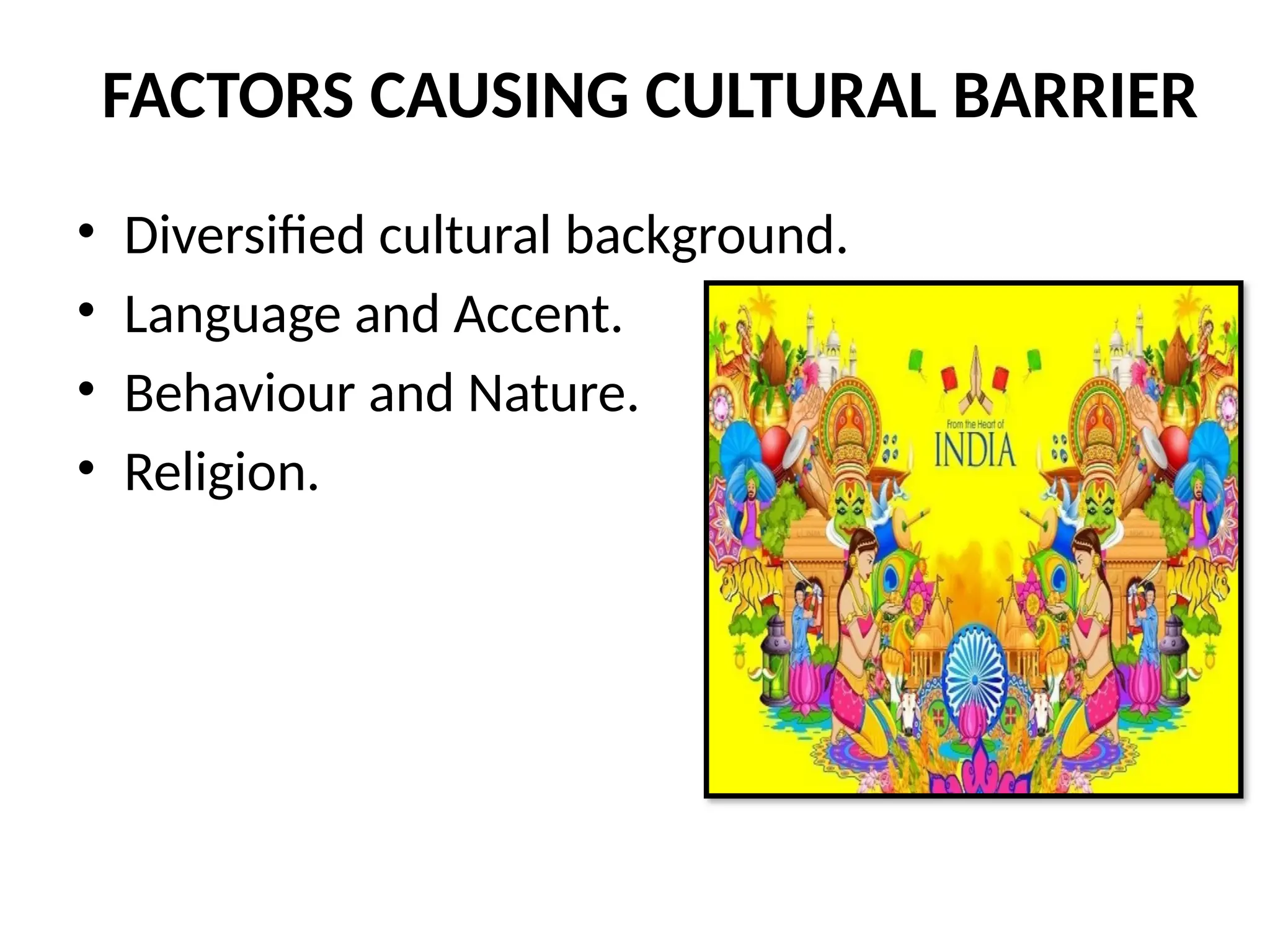
FACTORS CAUSING CULTURALBARRIER
• Diversified cultural background.
• Language and Accent.
• Behaviour and Nature.
• Religion.
27.
HOW TO OVERCOME?
•Cross culture environment.
• Have a thorough knowledge of your
counterpart’s culture background.
• Work in groups and run frequent meeting.
28.
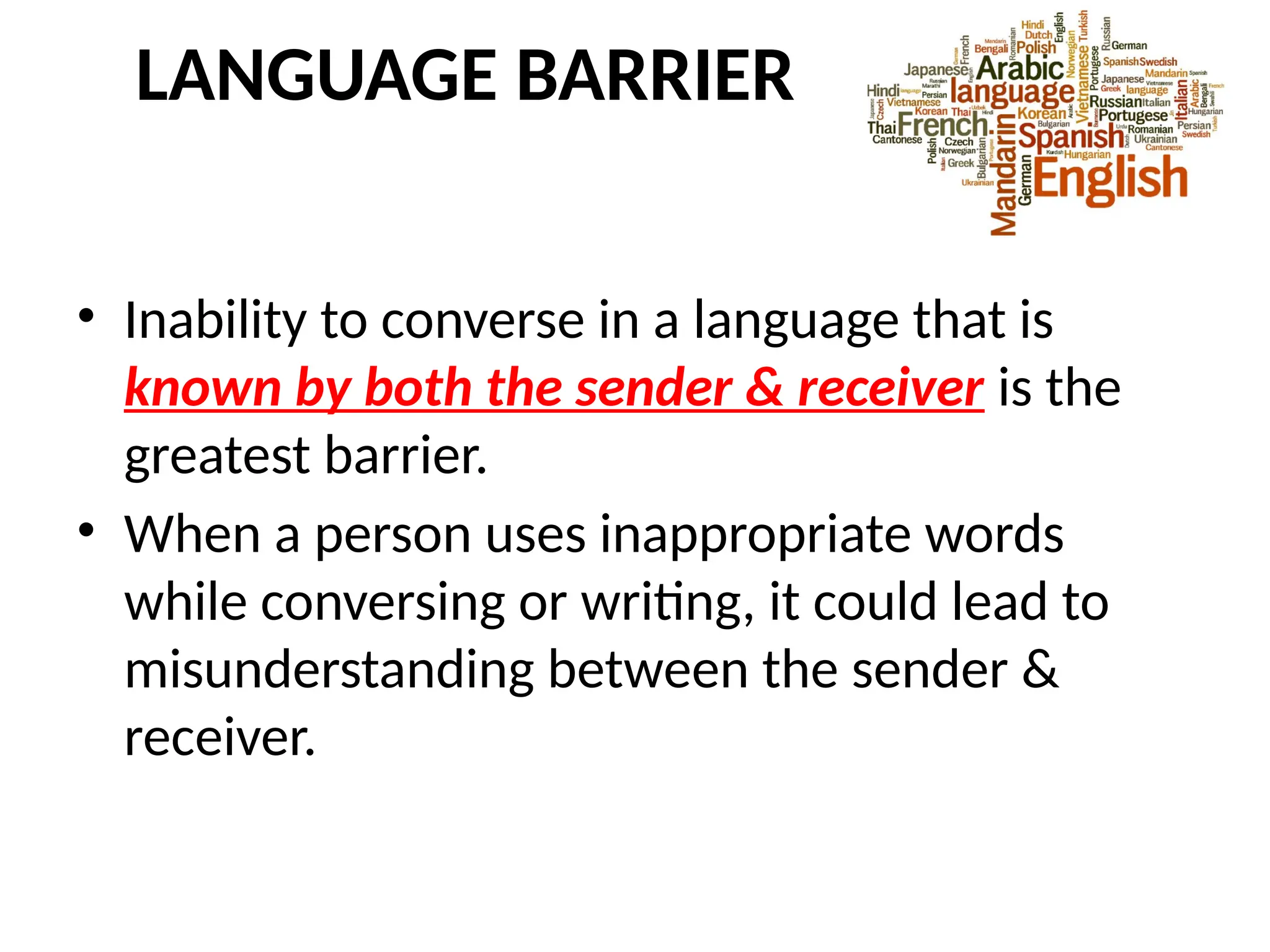
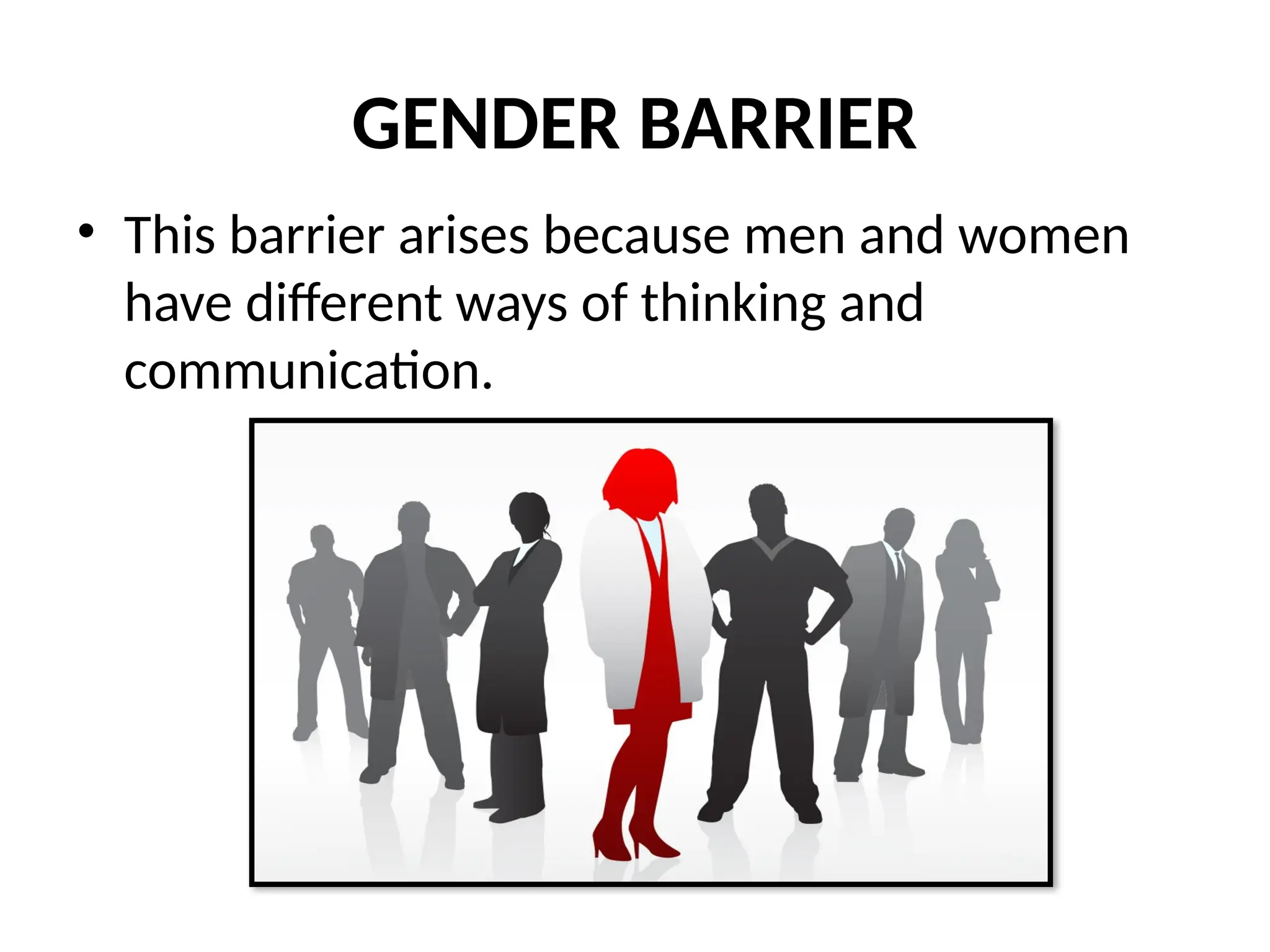
LANGUAGE BARRIER
• Inabilityto converse in a language that is
known by both the sender & receiver is the
greatest barrier.
• When a person uses inappropriate words
while conversing or writing, it could lead to
misunderstanding between the sender &
receiver.
HOW TO OVERCOME?
•Speak slowly and clearly.
• Ask for clarification.
• Frequently check for understanding.
• Be specific.
• Choose your medium of communication
effectively.
• Be patient.
31.
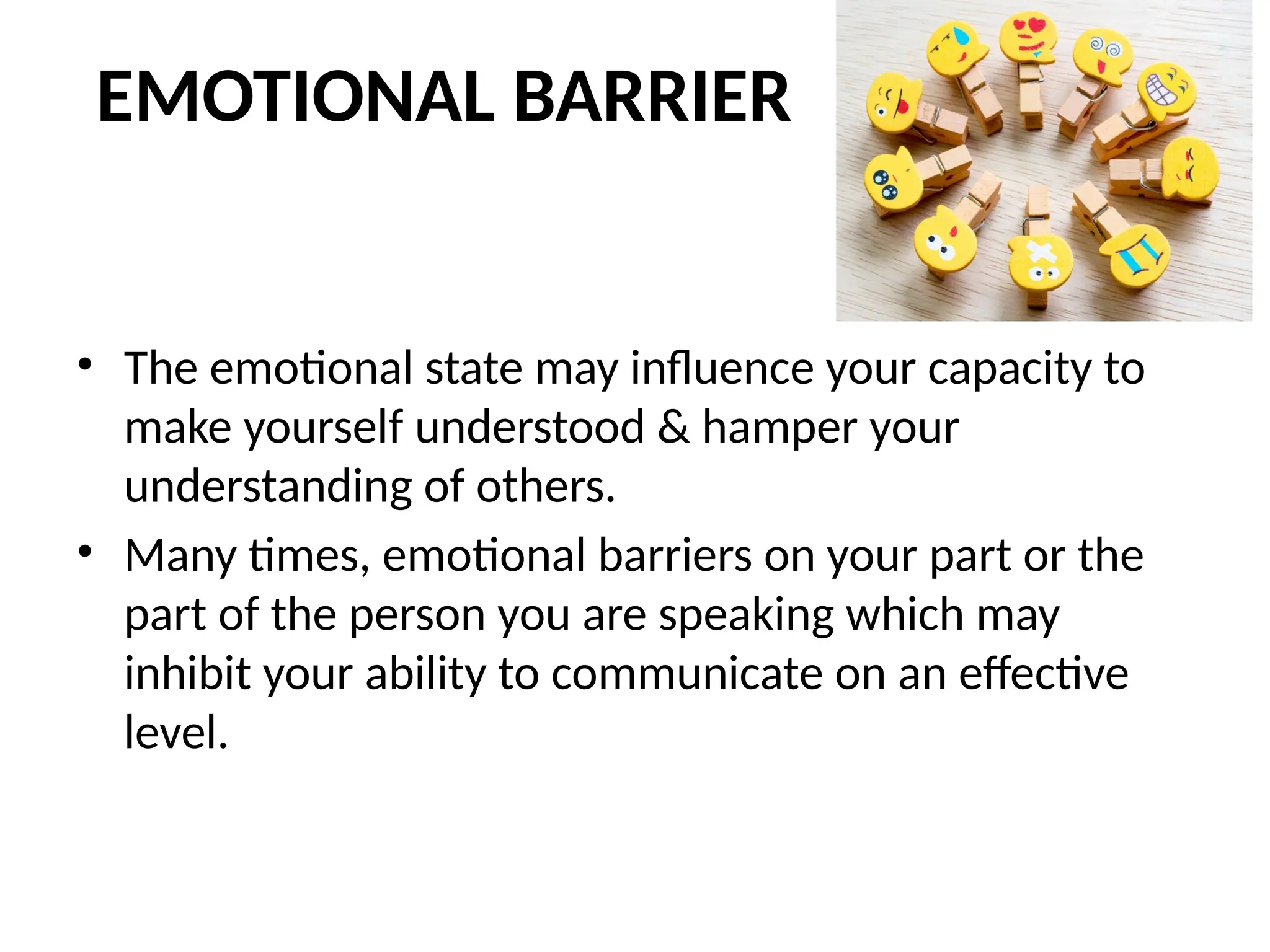
EMOTIONAL BARRIER
• Theemotional state may influence your capacity to
make yourself understood & hamper your
understanding of others.
• Many times, emotional barriers on your part or the
part of the person you are speaking which may
inhibit your ability to communicate on an effective
level.
HOW TO OVERCOME?
•Can be made clear with a great patience and
understanding that only time and attention
will teach.
37.
PERCEPTUAL BARRIER
• Peoplehave different opinions.
• We all have our own preferences, values,
attitudes, origins and life experiences that act
as ‘filters’ on our experience of people, events
& information.
38.
• Difference inunderstanding.
• Difference in perception of reality.
• Difference in values, attitudes & opinions.
FACTORS CAUSING PERCEPTUAL BARRIER
39.
HOW TO OVERCOME?
•Start by listening to others.
• Clarify if there is confusion.
• Stay calm and be positive.
40.
TAKE HOME MESSAGE
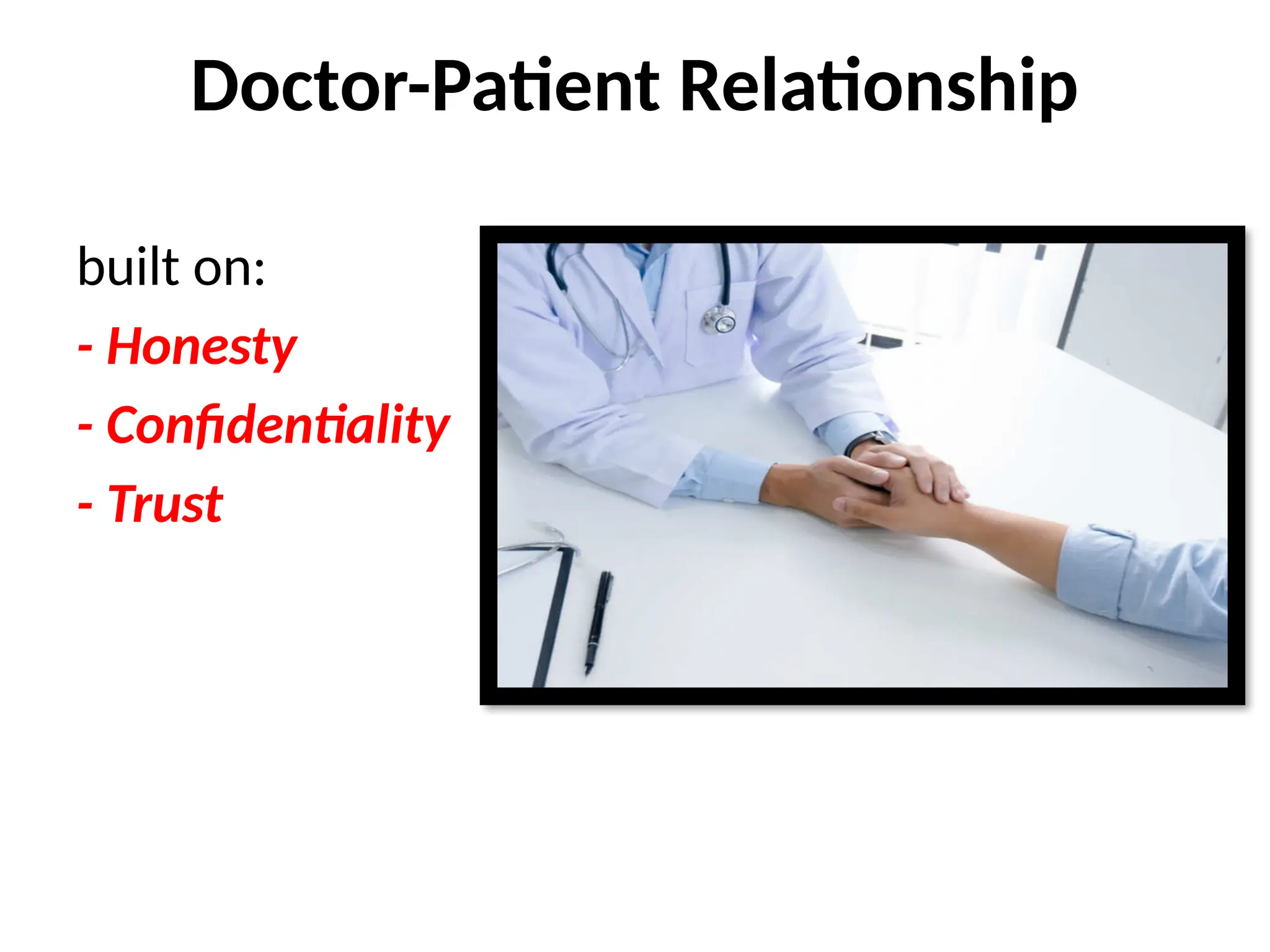
•Good communication is essential for proper
doctor-patient relationship and helps to avoid
problems of misunderstanding.
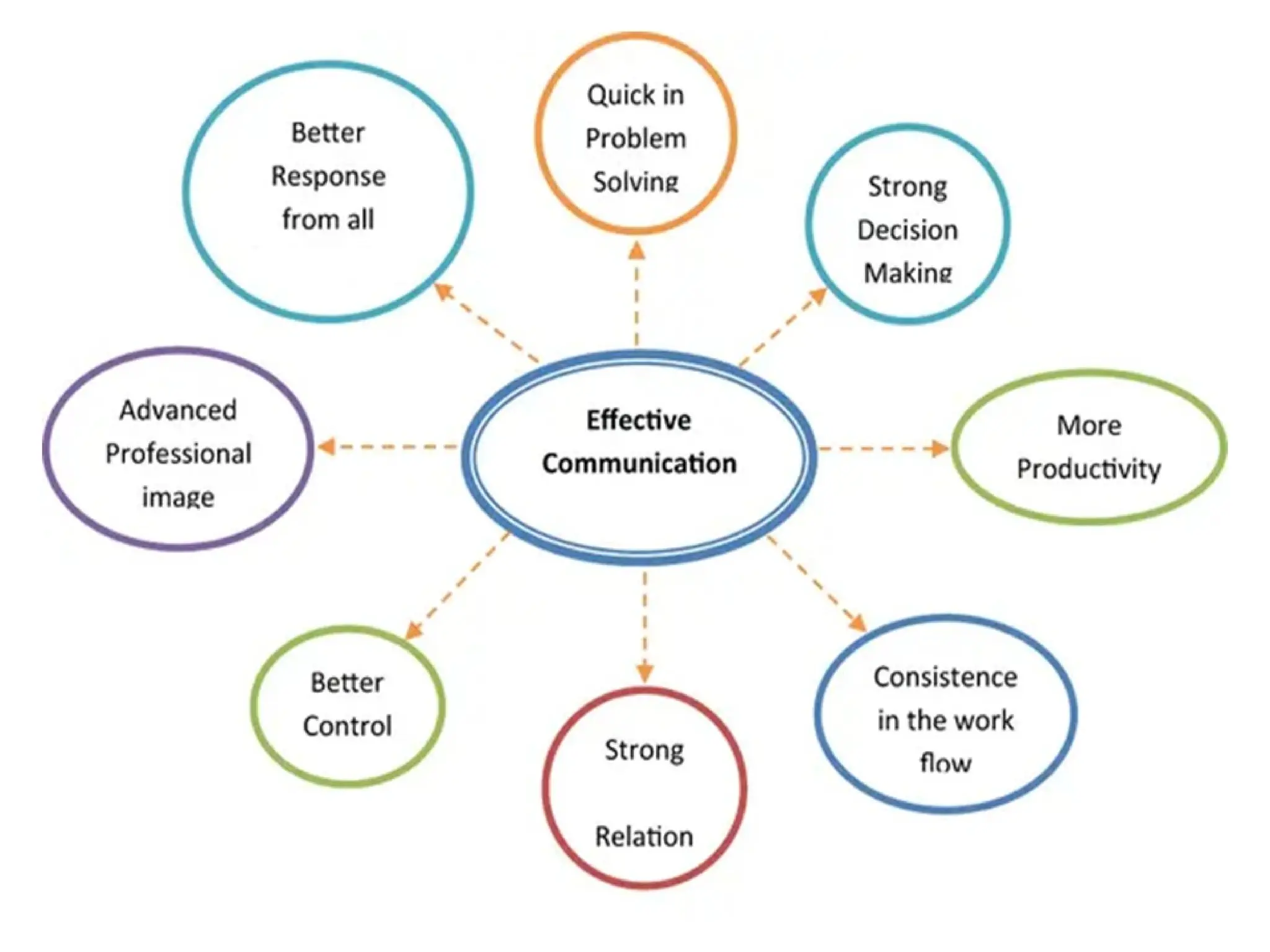
• Effective communication is the key to success
in professional career.
41.
Without Communication anindividual could
never become a human being,
Without mass communication, he could never
become a part of modern society.