1
 If your cat sitting on that porch is constantly scratching,
licking or rubbing against the hard furniture, then the
culprit for this condition of your feline friend is the skin
problem.
 Being cat skin quite sensitive, they are highly
susceptible to allergies, skin infections, parasites and many
other conditions that pave the way to skin conditions.
 To help you figure out the most common skin problems
in cats and how well you can treat them as well as how to
protect your kitty from these health conditions, here we go.
2BudgetVetCare.com
3BudgetVetCare.com
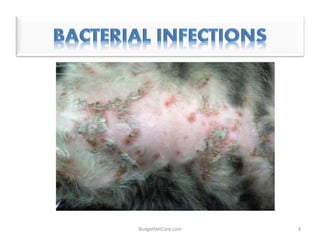
 Normally, a bacterial infection is the result of other
skin problems. For e.g., a rash when left untreated can
gradually lead to bacterial infections, which when becomes
severe is quite difficult to tackle.
 Antibiotics usually work best and are given for treating
these infections.
 However, it is quite important to find that underlying
skin problem in order to control the recurrence or further
deterioration.
4BudgetVetCare.com
5BudgetVetCare.com
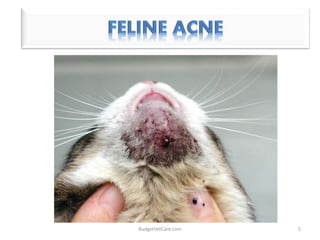
 ACNE – it is not only your date night disaster, but cats do
also suffer from this.
 They primarily get these pimples on and around their
chin.
 And, the most common causes for pimples to appear
on felines are stress, a reaction to a medication, poor
grooming and underlying skin condition.
 It can even be the plastic bowl that you put out for her
food or water.
6BudgetVetCare.com
7BudgetVetCare.com
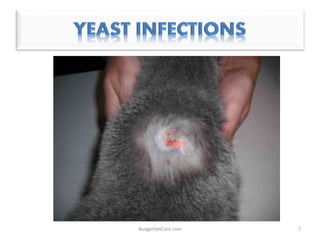
 Cat ear is the most common spot that suffers from
yeast infection.
 Normally, this is caused by a fungus and is also more
likely in cats that have the medical history of other skin
problems.
 Yellow discharge, redness of the ear flap and persistent
ear scratching are some of the common signs of yeast
infection.
 It can be treated well with antifungal medication such
as Epi-otic Ear Cleaner for cats.
 However, it is always a wise choice to refer to your
veterinarian before giving any oral medicine.
8BudgetVetCare.com
9BudgetVetCare.com
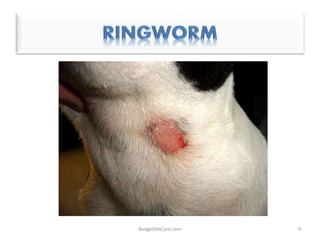
 Ringworm affects cats especially under the age of 1.
 It is yet another type of fungus that may cause circular
lesions on a cat’s ears, head, and forelimbs as well as any
other part of the body.
 Being contagious and zoonotic by nature, ringworm can
spread to other pets in the home as well as humans.
 Treatment depends on severity but there can be
specialized shampoos, ointments or oral medications
available for this skin problem.
10BudgetVetCare.com
11BudgetVetCare.com
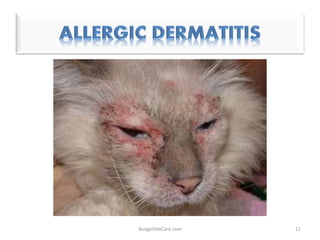
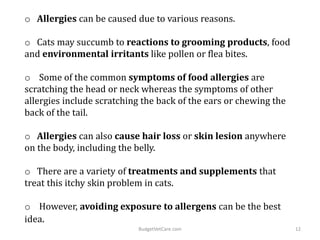
o Allergies can be caused due to various reasons.
o Cats may succumb to reactions to grooming products, food
and environmental irritants like pollen or flea bites.
o Some of the common symptoms of food allergies are
scratching the head or neck whereas the symptoms of other
allergies include scratching the back of the ears or chewing the
back of the tail.
o Allergies can also cause hair loss or skin lesion anywhere
on the body, including the belly.
o There are a variety of treatments and supplements that
treat this itchy skin problem in cats.
o However, avoiding exposure to allergens can be the best
idea.
12BudgetVetCare.com
13BudgetVetCare.com
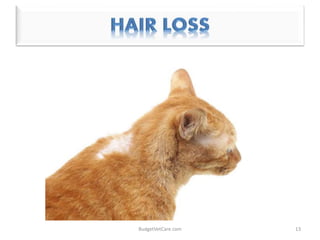
 With cat living with you, it is natural for you
to deal with hair everywhere in the house.
 But, the real shock comes when you find that
your cat is losing hair unusually with baldness or
small batches without hair everywhere or at
specific places.
14BudgetVetCare.com
15BudgetVetCare.com
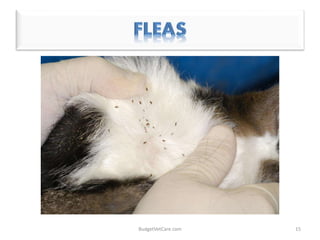
 If you think that fleas would not affect your cat’s skin
condition, then be ready to break your own myth.
 These tiny critters instigate persistent scratching, crusty
lesions, and red rashes.
 To remove that, you need to provide flea treatments for
your cat.
 Furthermore, in order to control future flea infestations,
it is crucial that you need to keep her on monthly flea
preventives as well as treat her bedding, furniture, and
rugs.
 In case, you have other pets in your house, it is crucial
that you treat them also to completely protect against flea
infestations. 16BudgetVetCare.com
17BudgetVetCare.com
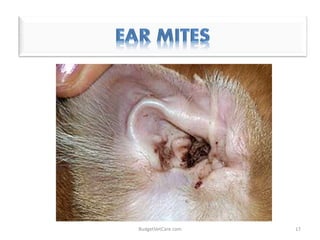
 Apart from fleas, the other parasite that usually attacks
cats is ear mites.
 These tiny parasites mostly depend on wax and oil inside a
cat’s ear.
 Feeding on these things, they cause inflammation, which
can gradually lead to severe skin as well as ear infections.
 Due to the presence of ear mites, cats can continuously
scratch the ears, shake head and at times, this can even result
in a dark discharge from the ears and bad odor.
 If you suspect ear mites, it is crucial to treat your cat for
the same because ear mites not only deteriorate the skin
condition of your furry pal but are also contagious and can
spread to other animals. 18BudgetVetCare.com
 Skin problems in cats can be effectively handled
and treated if you take care of your kitty.
 Proper grooming, nourishment, healthy diet,
monthly flea, and ear mite treatments along with skin
care supplements can profusely aid in keeping your
cat’s skin healthy and glowing.
19BudgetVetCare.com

Common Skin Problems in Cats

  • 1.
  • 2.
     If yourcat sitting on that porch is constantly scratching, licking or rubbing against the hard furniture, then the culprit for this condition of your feline friend is the skin problem.  Being cat skin quite sensitive, they are highly susceptible to allergies, skin infections, parasites and many other conditions that pave the way to skin conditions.  To help you figure out the most common skin problems in cats and how well you can treat them as well as how to protect your kitty from these health conditions, here we go. 2BudgetVetCare.com
  • 3.
  • 4.
     Normally, abacterial infection is the result of other skin problems. For e.g., a rash when left untreated can gradually lead to bacterial infections, which when becomes severe is quite difficult to tackle.  Antibiotics usually work best and are given for treating these infections.  However, it is quite important to find that underlying skin problem in order to control the recurrence or further deterioration. 4BudgetVetCare.com
  • 5.
  • 6.
     ACNE –it is not only your date night disaster, but cats do also suffer from this.  They primarily get these pimples on and around their chin.  And, the most common causes for pimples to appear on felines are stress, a reaction to a medication, poor grooming and underlying skin condition.  It can even be the plastic bowl that you put out for her food or water. 6BudgetVetCare.com
  • 7.
  • 8.
     Cat earis the most common spot that suffers from yeast infection.  Normally, this is caused by a fungus and is also more likely in cats that have the medical history of other skin problems.  Yellow discharge, redness of the ear flap and persistent ear scratching are some of the common signs of yeast infection.  It can be treated well with antifungal medication such as Epi-otic Ear Cleaner for cats.  However, it is always a wise choice to refer to your veterinarian before giving any oral medicine. 8BudgetVetCare.com
  • 9.
  • 10.
     Ringworm affectscats especially under the age of 1.  It is yet another type of fungus that may cause circular lesions on a cat’s ears, head, and forelimbs as well as any other part of the body.  Being contagious and zoonotic by nature, ringworm can spread to other pets in the home as well as humans.  Treatment depends on severity but there can be specialized shampoos, ointments or oral medications available for this skin problem. 10BudgetVetCare.com
  • 11.
  • 12.
    o Allergies canbe caused due to various reasons. o Cats may succumb to reactions to grooming products, food and environmental irritants like pollen or flea bites. o Some of the common symptoms of food allergies are scratching the head or neck whereas the symptoms of other allergies include scratching the back of the ears or chewing the back of the tail. o Allergies can also cause hair loss or skin lesion anywhere on the body, including the belly. o There are a variety of treatments and supplements that treat this itchy skin problem in cats. o However, avoiding exposure to allergens can be the best idea. 12BudgetVetCare.com
  • 13.
  • 14.
     With catliving with you, it is natural for you to deal with hair everywhere in the house.  But, the real shock comes when you find that your cat is losing hair unusually with baldness or small batches without hair everywhere or at specific places. 14BudgetVetCare.com
  • 15.
  • 16.
     If youthink that fleas would not affect your cat’s skin condition, then be ready to break your own myth.  These tiny critters instigate persistent scratching, crusty lesions, and red rashes.  To remove that, you need to provide flea treatments for your cat.  Furthermore, in order to control future flea infestations, it is crucial that you need to keep her on monthly flea preventives as well as treat her bedding, furniture, and rugs.  In case, you have other pets in your house, it is crucial that you treat them also to completely protect against flea infestations. 16BudgetVetCare.com
  • 17.
  • 18.
     Apart fromfleas, the other parasite that usually attacks cats is ear mites.  These tiny parasites mostly depend on wax and oil inside a cat’s ear.  Feeding on these things, they cause inflammation, which can gradually lead to severe skin as well as ear infections.  Due to the presence of ear mites, cats can continuously scratch the ears, shake head and at times, this can even result in a dark discharge from the ears and bad odor.  If you suspect ear mites, it is crucial to treat your cat for the same because ear mites not only deteriorate the skin condition of your furry pal but are also contagious and can spread to other animals. 18BudgetVetCare.com
  • 19.
     Skin problemsin cats can be effectively handled and treated if you take care of your kitty.  Proper grooming, nourishment, healthy diet, monthly flea, and ear mite treatments along with skin care supplements can profusely aid in keeping your cat’s skin healthy and glowing. 19BudgetVetCare.com