www.budgetvetcare.com
HOW TO
RECOGNIZE
HEARTWORMS
IN DOGS?
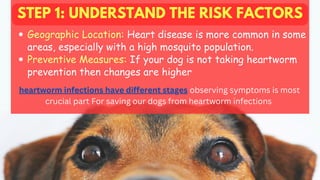
STEP 1: UNDERSTAND THE RISK FACTORS
Geographic Location: Heart disease is more common in some
areas, especially with a high mosquito population.
Preventive Measures: If your dog is not taking heartworm
prevention then changes are higher
heartworm infections have different stages observing symptoms is most
crucial part For saving our dogs from heartworm infections
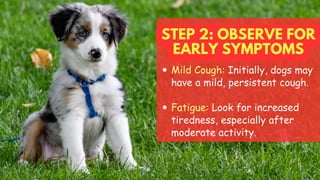
STEP 2: OBSERVE FOR
EARLY SYMPTOMS
Mild Cough: Initially, dogs may
have a mild, persistent cough.
Fatigue: Look for increased
tiredness, especially after
moderate activity.
STEP 3: CHECK FOR ADVANCED
SYMPTOMS
Severe cough: As the disease progresses, coughing may
become more severe and frequent.
Difficulty Breathing: Notice any signs of labored or rapid
breathing.
Lethargy: Dogs may become lethargic, unwilling to play or
exercise.
Weight Loss: Unexplained weight loss is a common sign.
Decreased Appetite: Dogs might eat less than usual.
Swollen Belly: In advanced stages, fluid accumulation in
the abdomen can cause a swollen appearance.
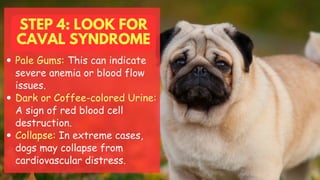
STEP 4: LOOK FOR
CAVAL SYNDROME
Pale Gums: This can indicate
severe anemia or blood flow
issues.
Dark or Coffee-colored Urine:
A sign of red blood cell
destruction.
Collapse: In extreme cases,
dogs may collapse from
cardiovascular distress.
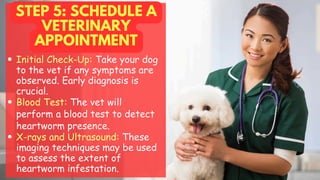
STEP 5: SCHEDULE A
VETERINARY
APPOINTMENT
Initial Check-Up: Take your dog
to the vet if any symptoms are
observed. Early diagnosis is
crucial.
Blood Test: The vet will
perform a blood test to detect
heartworm presence.
X-rays and Ultrasound: These
imaging techniques may be used
to assess the extent of
heartworm infestation.
STEP 6: FOLLOW
VETERINARY ADVICE
Treatment Plan: If
heartworms are detected,
follow the vet’s treatment
plan, which may include
medication, activity
restriction, and possibly
surgery for severe cases.
Prevention: Once treated,
ensure your dog is on a
regular heartworm preventive
to avoid future infestations.
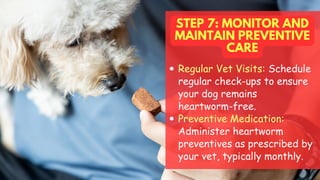
STEP 7: MONITOR AND
MAINTAIN PREVENTIVE
CARE
Regular Vet Visits: Schedule
regular check-ups to ensure
your dog remains
heartworm-free.
Preventive Medication:
Administer heartworm
preventives as prescribed by
your vet, typically monthly.
EXPLORE THE BEST HEARTWORM
PREVENTION FOR DOGS ON
BUDGET
Heartgard Plus
Chewables Nuheart
Simparica TRIO
THANK YOU!
I hope you learn
something new today!
Visit
For More
For More
For More

How to Recognize Heartworms in Dogs? Explore all

  • 1.
  • 2.
    STEP 1: UNDERSTANDTHE RISK FACTORS Geographic Location: Heart disease is more common in some areas, especially with a high mosquito population. Preventive Measures: If your dog is not taking heartworm prevention then changes are higher heartworm infections have different stages observing symptoms is most crucial part For saving our dogs from heartworm infections
  • 3.
    STEP 2: OBSERVEFOR EARLY SYMPTOMS Mild Cough: Initially, dogs may have a mild, persistent cough. Fatigue: Look for increased tiredness, especially after moderate activity.
  • 4.
    STEP 3: CHECKFOR ADVANCED SYMPTOMS Severe cough: As the disease progresses, coughing may become more severe and frequent. Difficulty Breathing: Notice any signs of labored or rapid breathing. Lethargy: Dogs may become lethargic, unwilling to play or exercise. Weight Loss: Unexplained weight loss is a common sign. Decreased Appetite: Dogs might eat less than usual. Swollen Belly: In advanced stages, fluid accumulation in the abdomen can cause a swollen appearance.
  • 5.
    STEP 4: LOOKFOR CAVAL SYNDROME Pale Gums: This can indicate severe anemia or blood flow issues. Dark or Coffee-colored Urine: A sign of red blood cell destruction. Collapse: In extreme cases, dogs may collapse from cardiovascular distress.
  • 6.
    STEP 5: SCHEDULEA VETERINARY APPOINTMENT Initial Check-Up: Take your dog to the vet if any symptoms are observed. Early diagnosis is crucial. Blood Test: The vet will perform a blood test to detect heartworm presence. X-rays and Ultrasound: These imaging techniques may be used to assess the extent of heartworm infestation.
  • 7.
    STEP 6: FOLLOW VETERINARYADVICE Treatment Plan: If heartworms are detected, follow the vet’s treatment plan, which may include medication, activity restriction, and possibly surgery for severe cases. Prevention: Once treated, ensure your dog is on a regular heartworm preventive to avoid future infestations.
  • 8.
    STEP 7: MONITORAND MAINTAIN PREVENTIVE CARE Regular Vet Visits: Schedule regular check-ups to ensure your dog remains heartworm-free. Preventive Medication: Administer heartworm preventives as prescribed by your vet, typically monthly.
  • 9.
    EXPLORE THE BESTHEARTWORM PREVENTION FOR DOGS ON BUDGET Heartgard Plus Chewables Nuheart Simparica TRIO
  • 10.
    THANK YOU! I hopeyou learn something new today! Visit For More For More For More