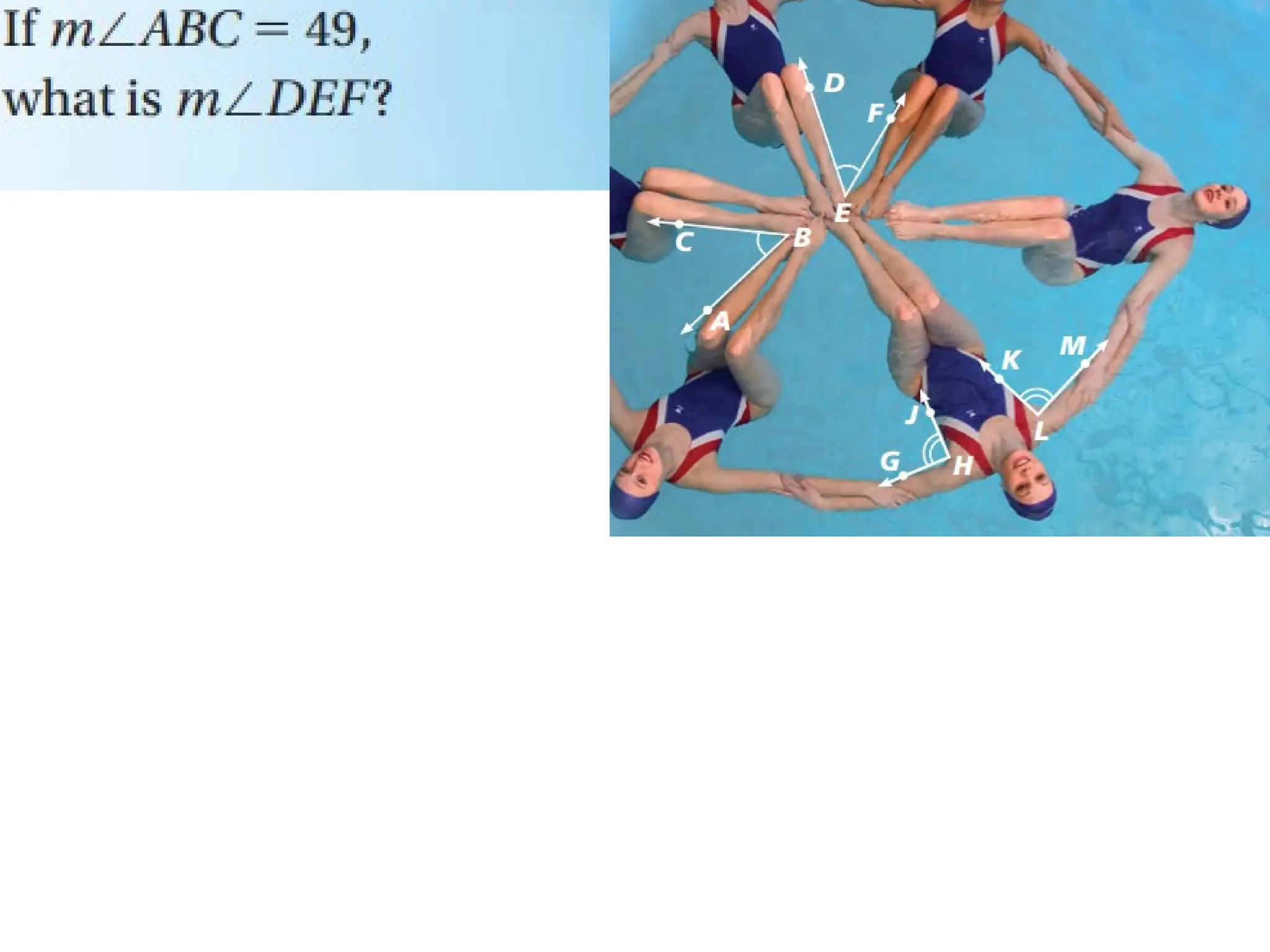
1-4
Measuring Angles
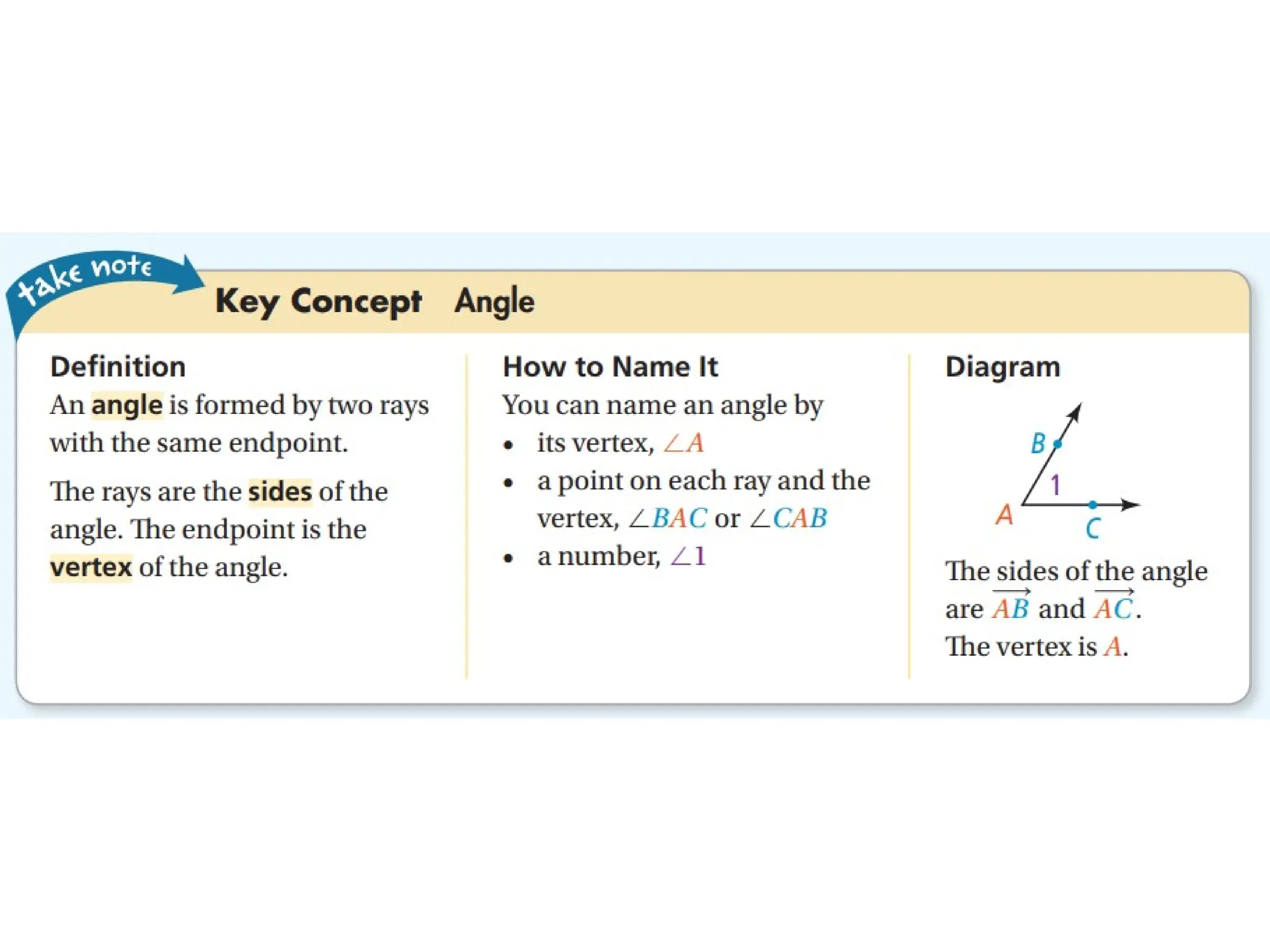
Angles are what we get when we put two
rays together with the same endpoint.
They are made up of a vertex, the shared
endpoint, and two sides, the rays. We have
ways of measuring, naming, and comparing
angles.
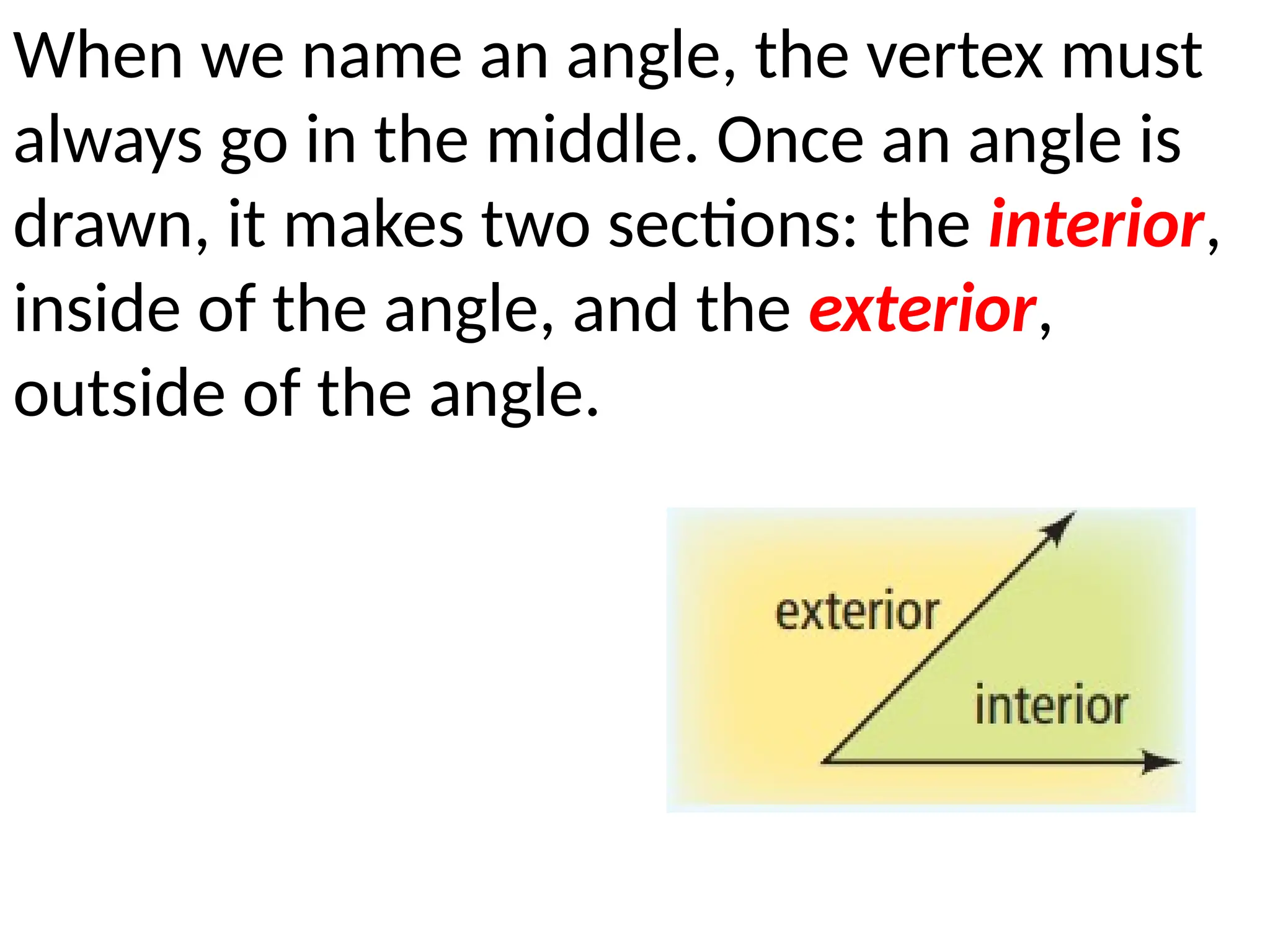
When we name an angle, the vertex must
always go in the middle. Once an angle is
drawn, it makes two sections: the interior,
inside of the angle, and the exterior,
outside of the angle.
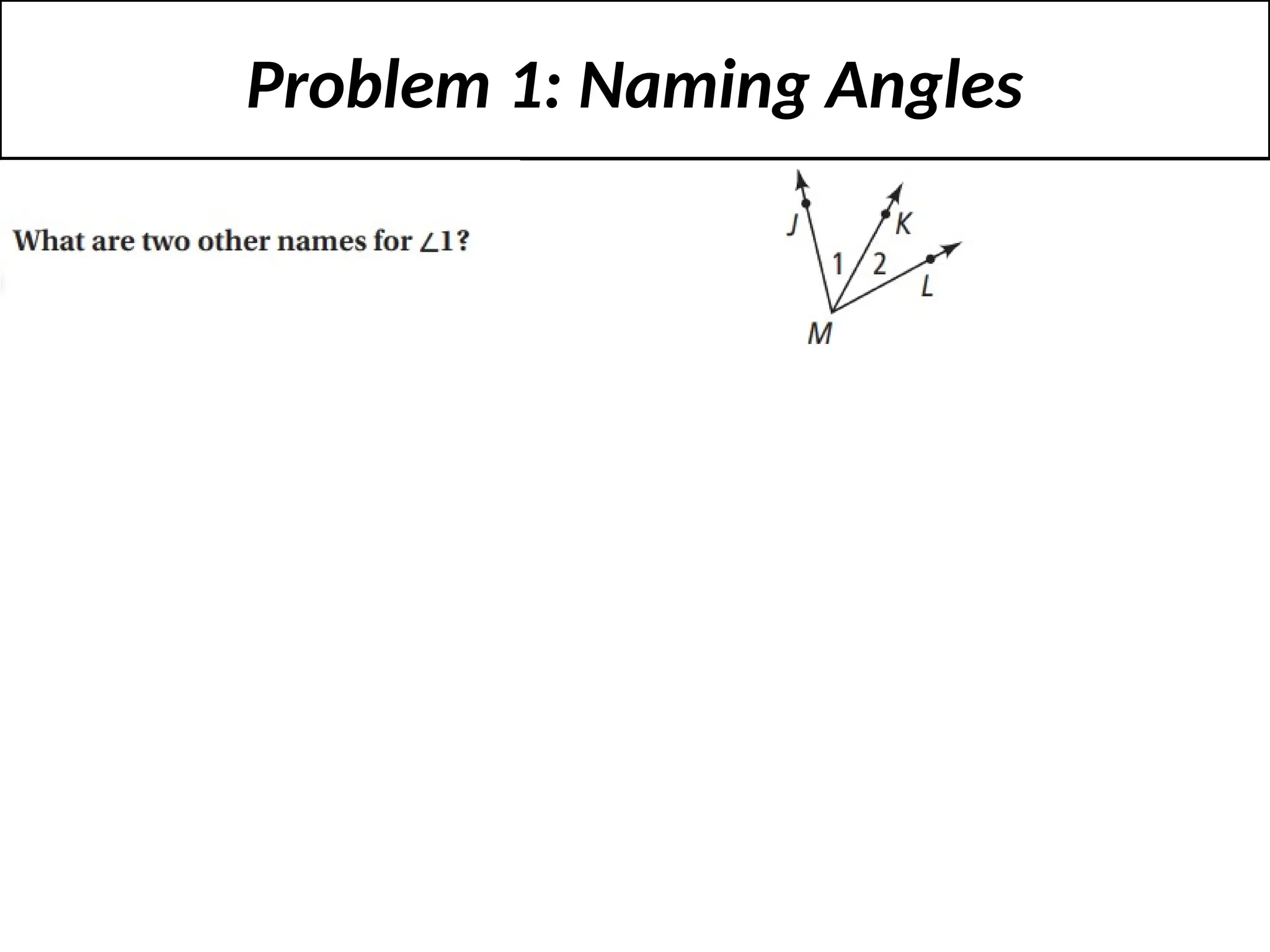
Problem 1: Naming Angles
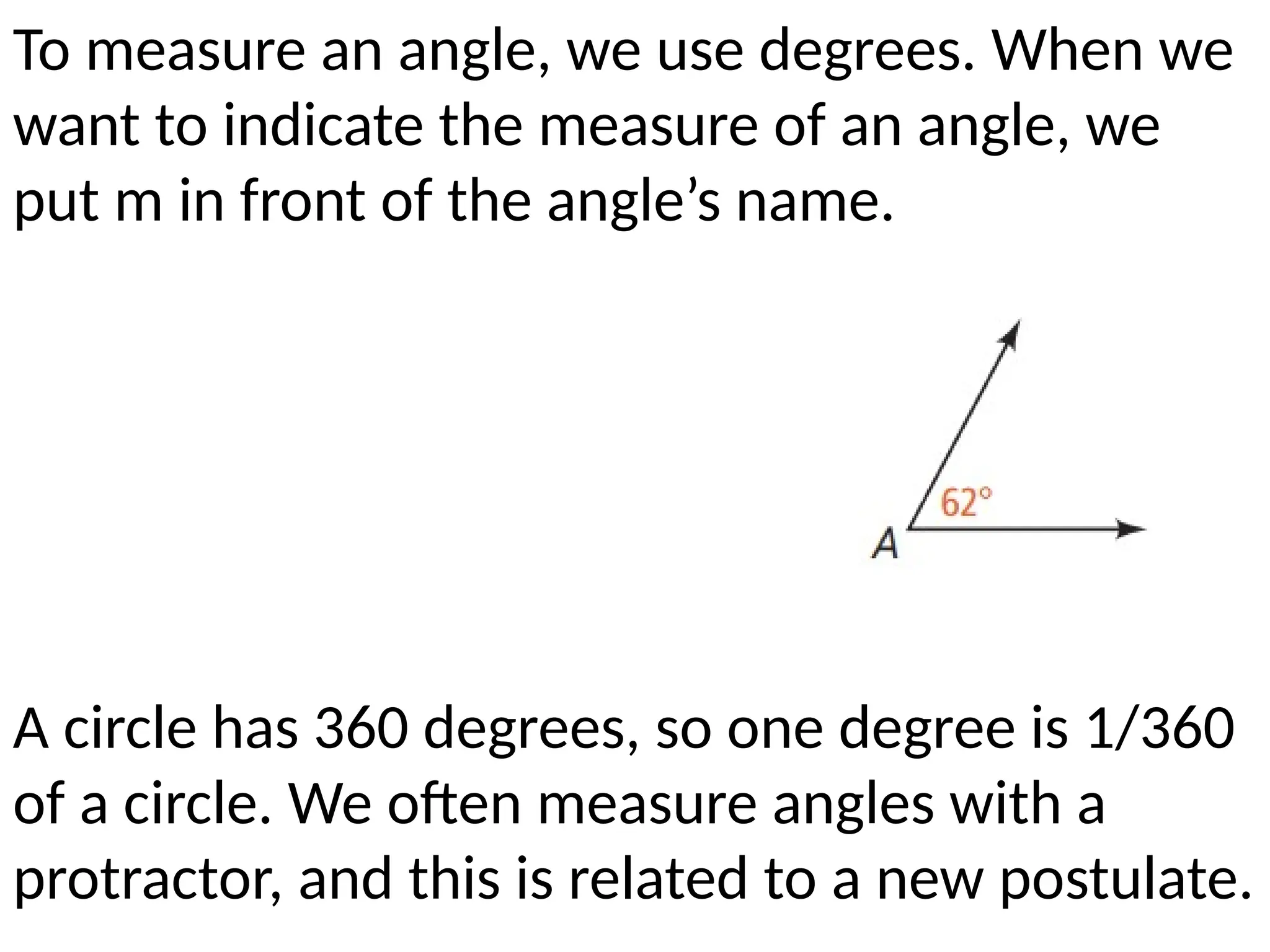
To measure an angle, we use degrees. When we
want to indicate the measure of an angle, we
put m in front of the angle’s name.
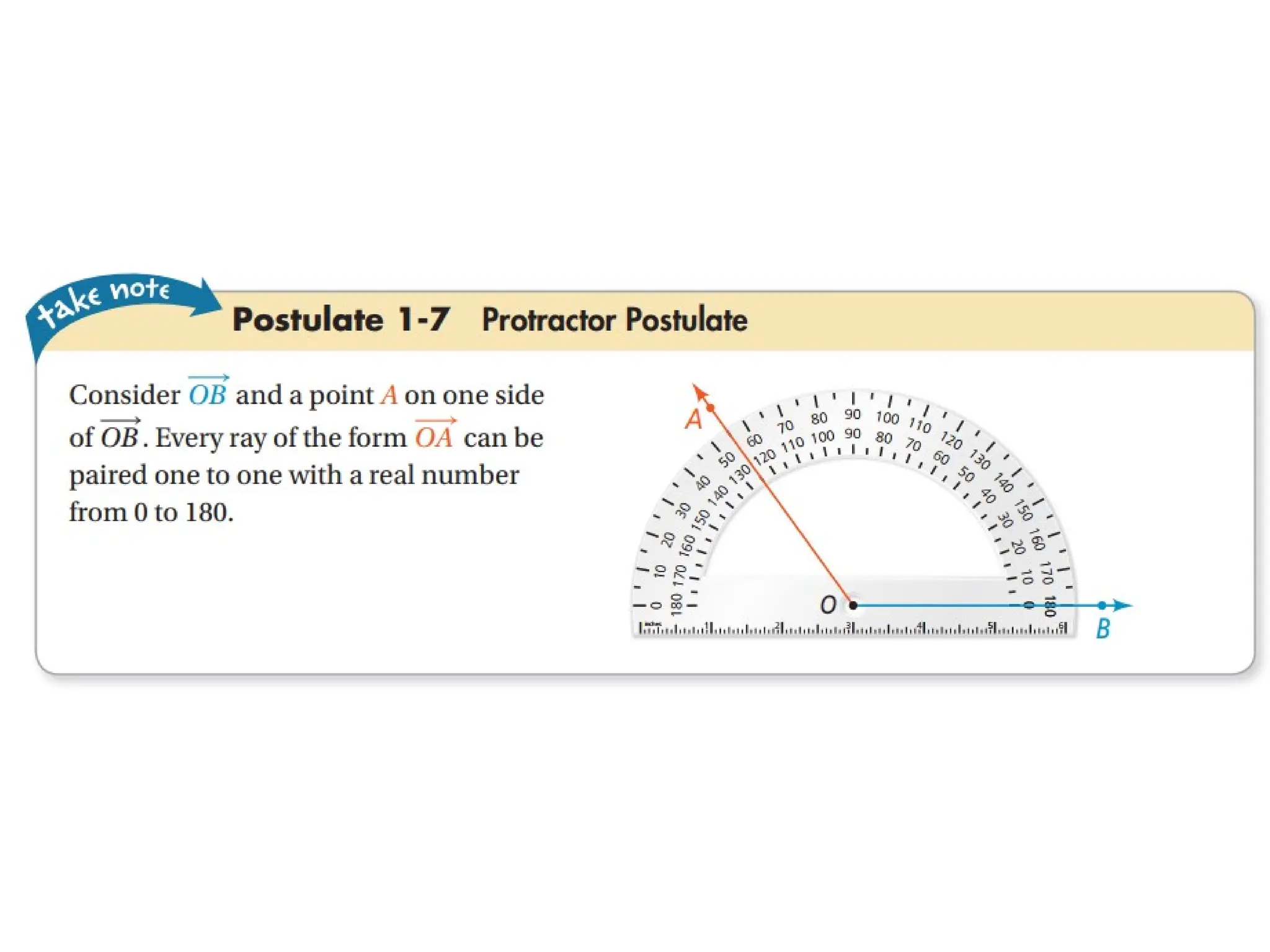
A circle has 360 degrees, so one degree is 1/360
of a circle. We often measure angles with a
protractor, and this is related to a new postulate.
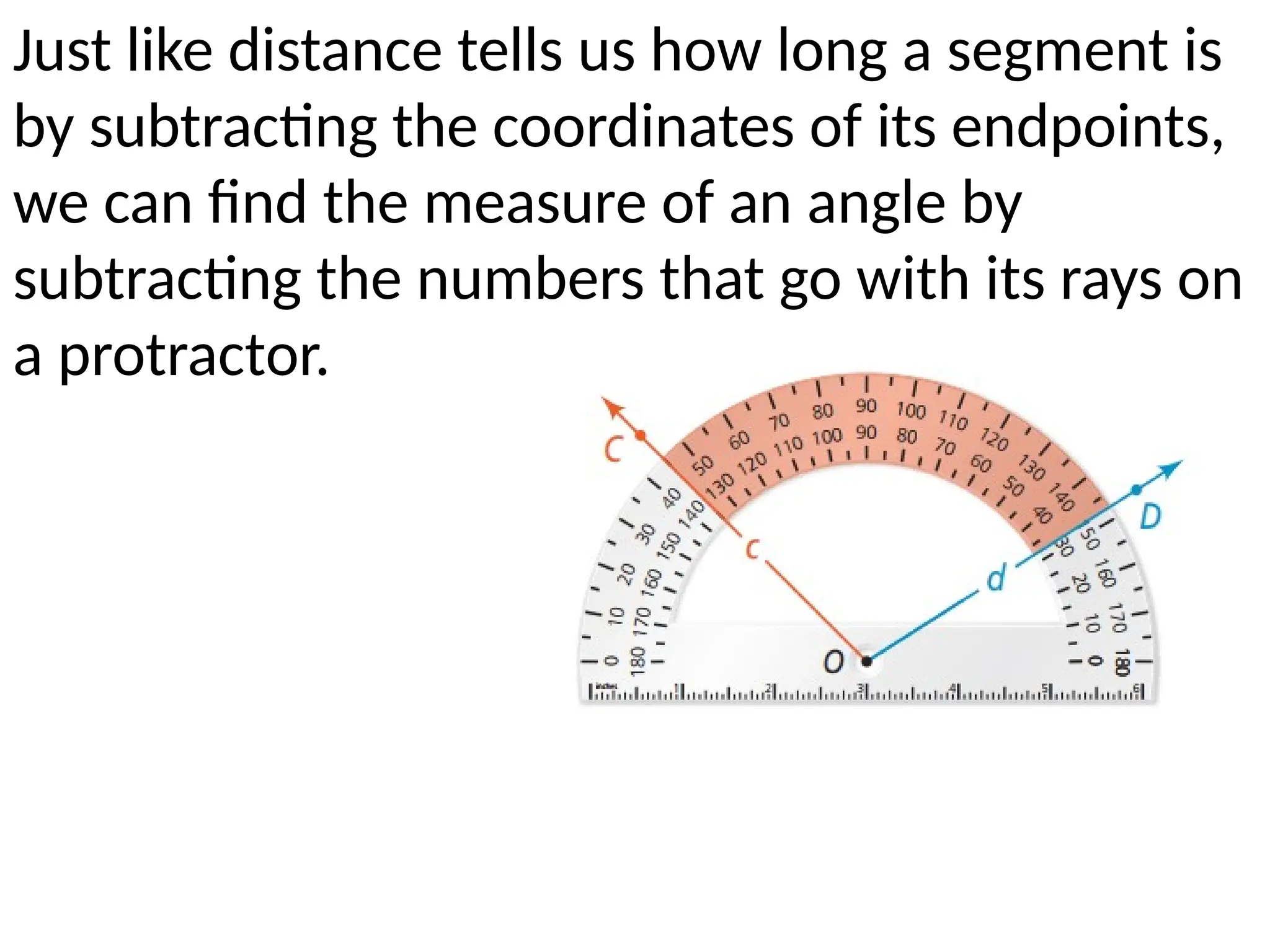
Just like distance tells us how long a segment is
by subtracting the coordinates of its endpoints,
we can find the measure of an angle by
subtracting the numbers that go with its rays on
a protractor.
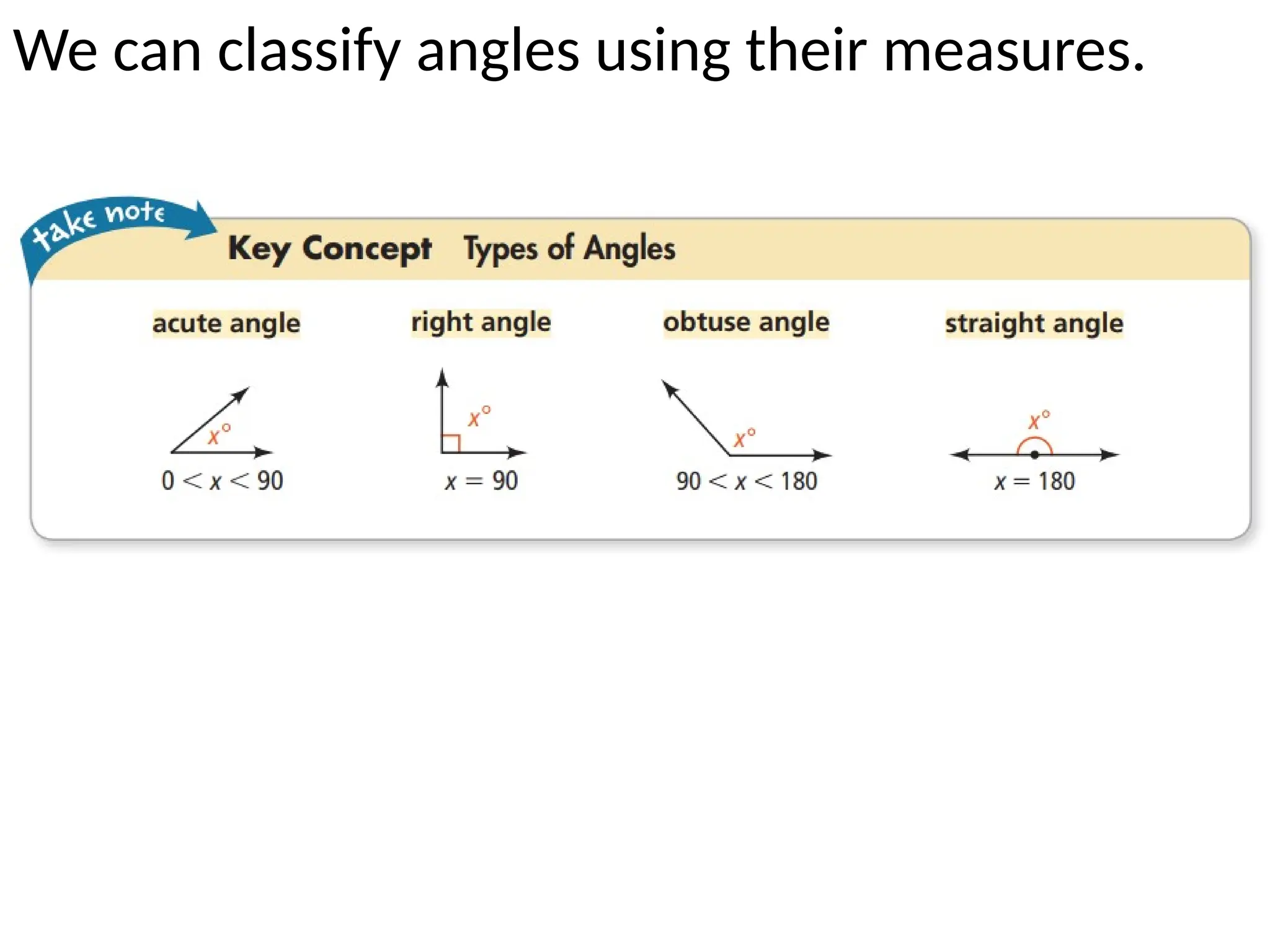
We can classify angles using their measures.
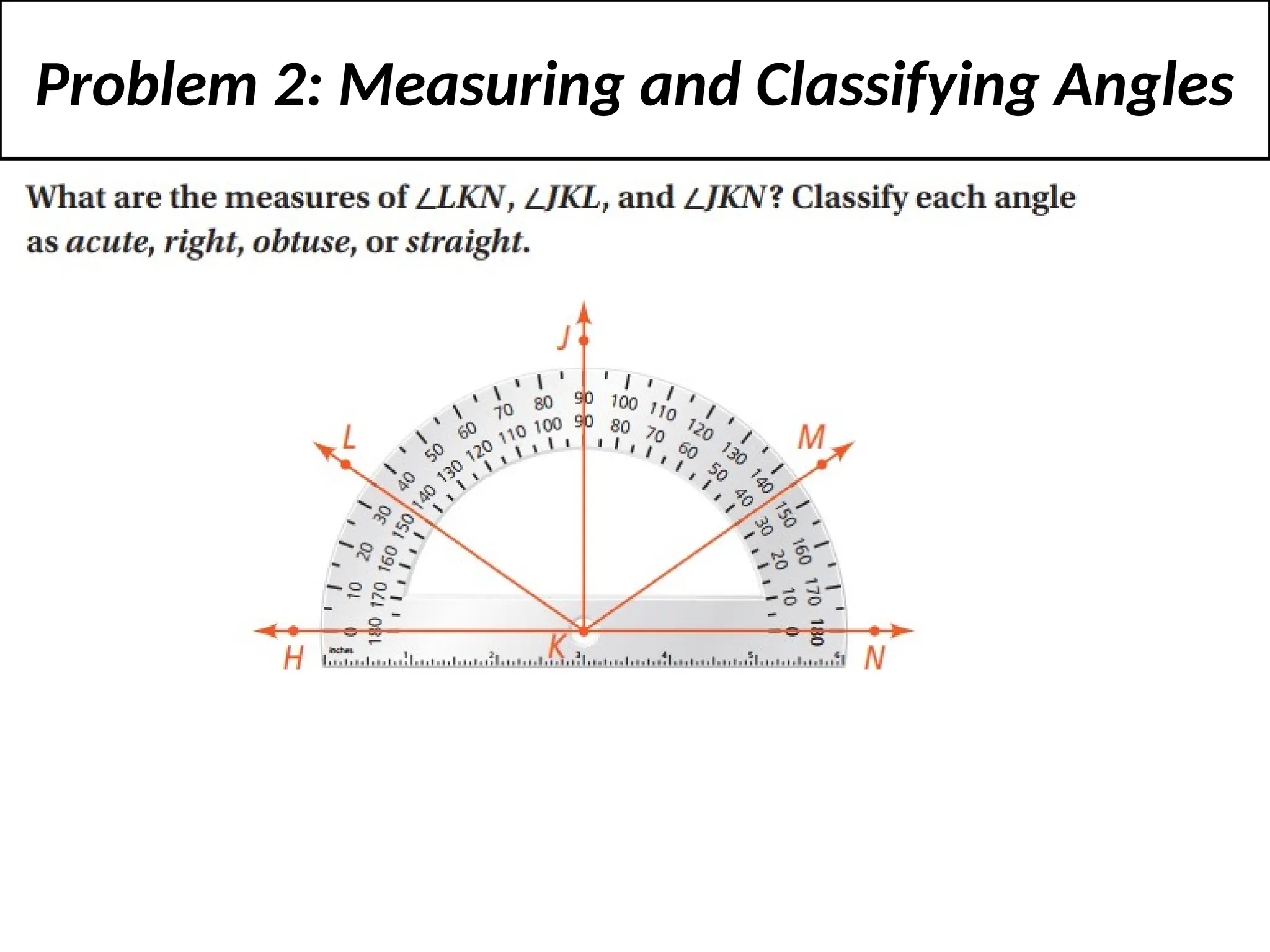
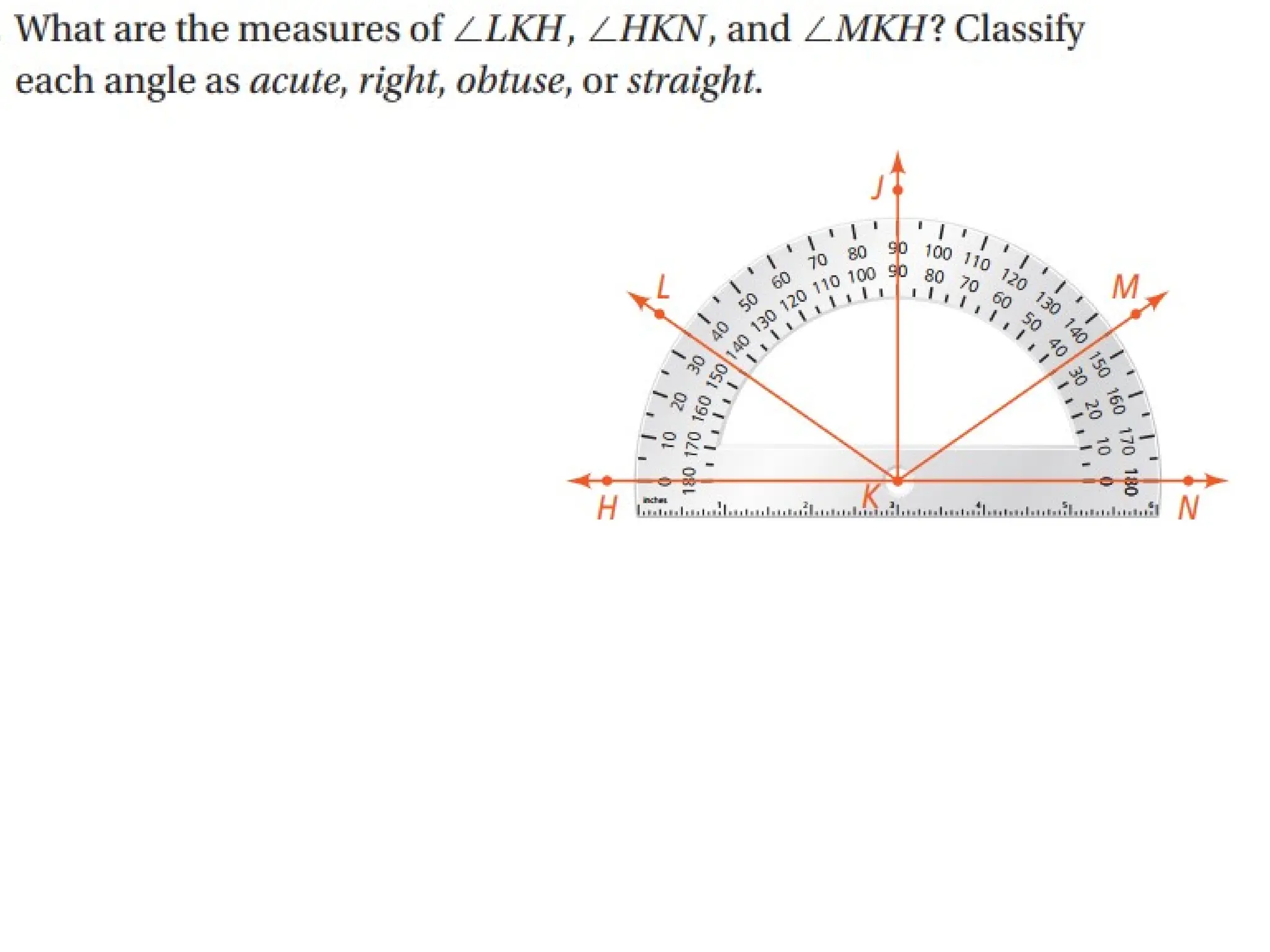
Problem 2: Measuring and Classifying Angles
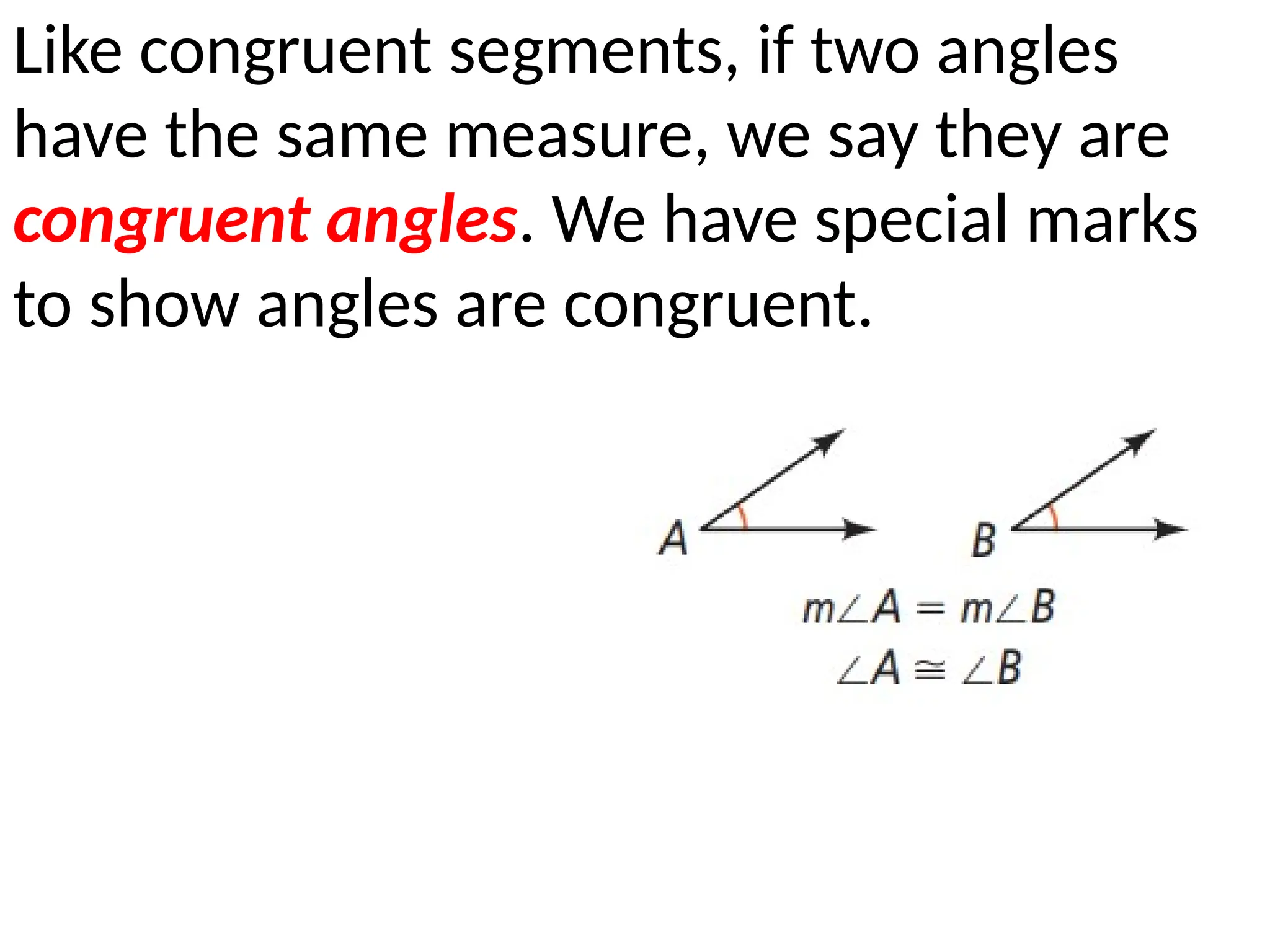
Like congruent segments, if two angles
have the same measure, we say they are
congruent angles. We have special marks
to show angles are congruent.
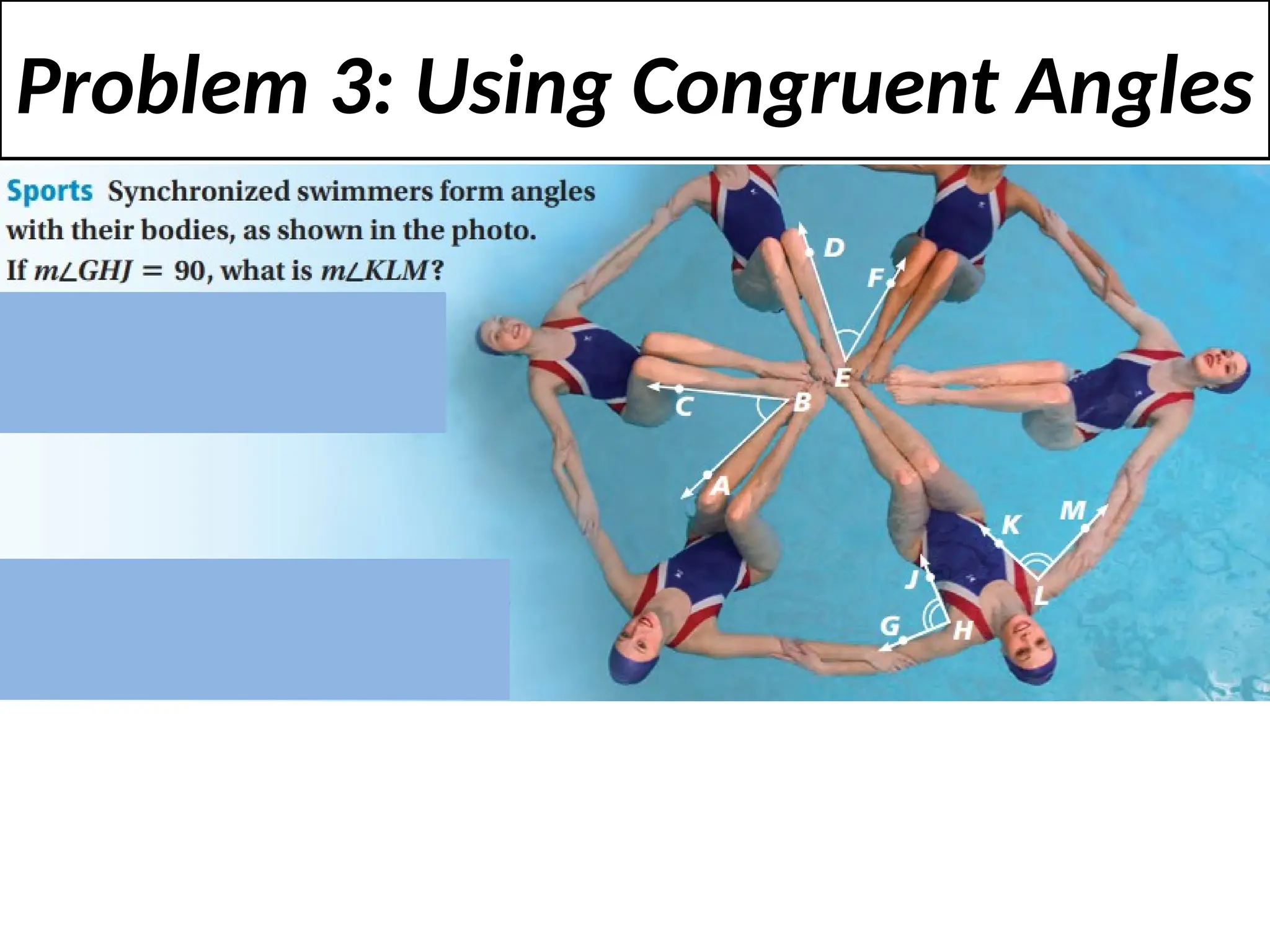
Problem 3: Using Congruent Angles
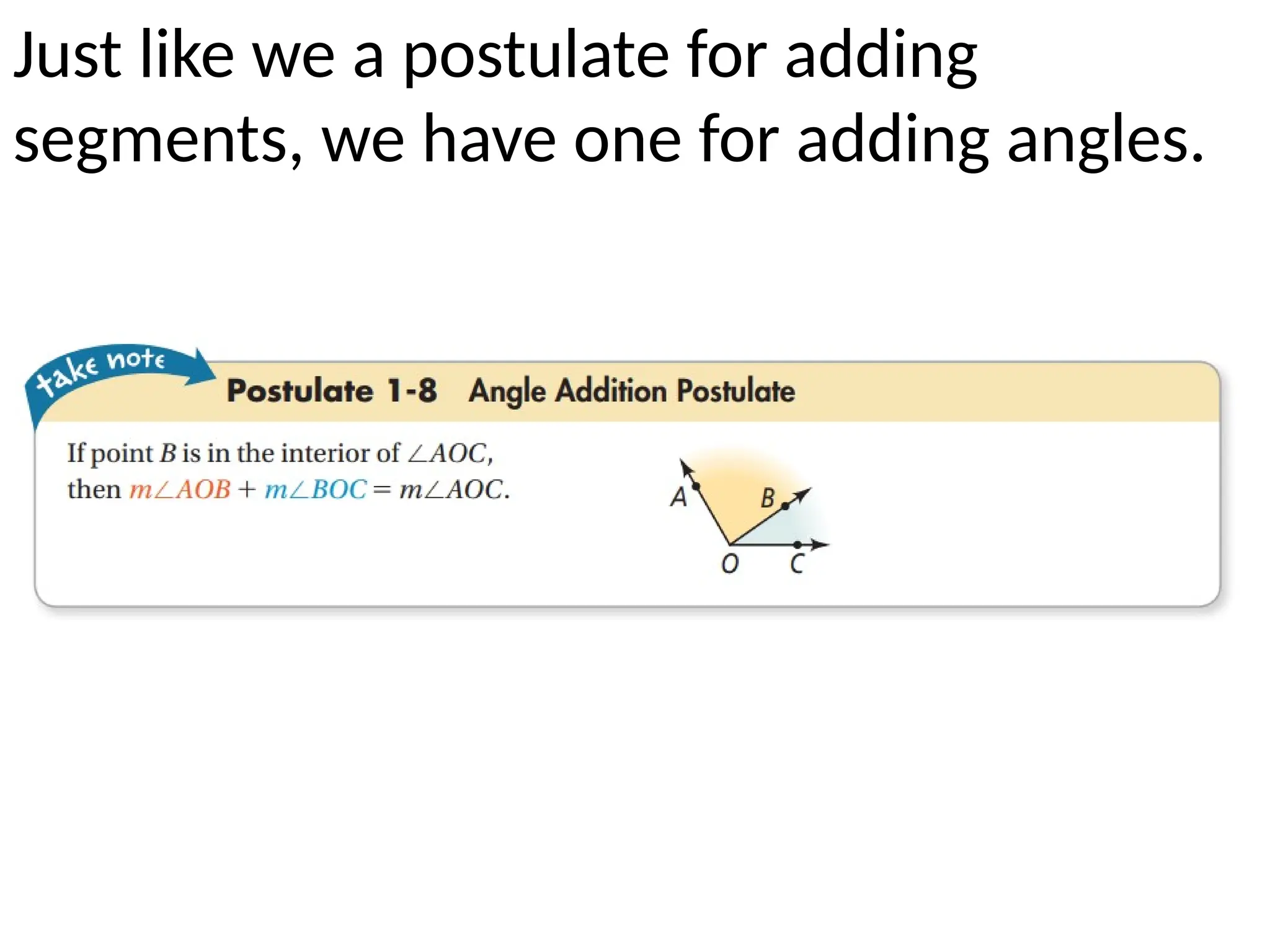
Just like we a postulate for adding
segments, we have one for adding angles.
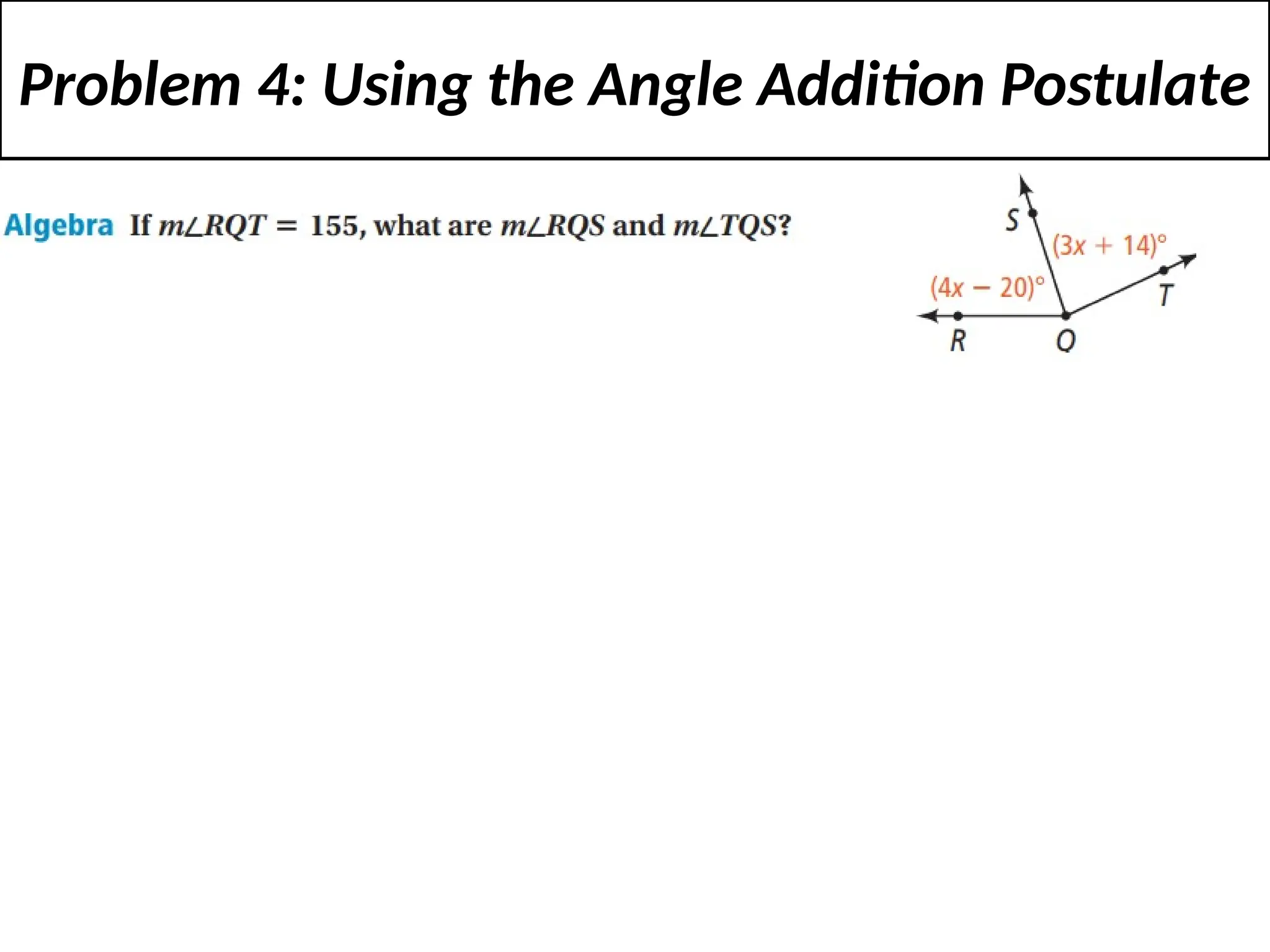
Problem 4: Using the Angle Addition Postulate
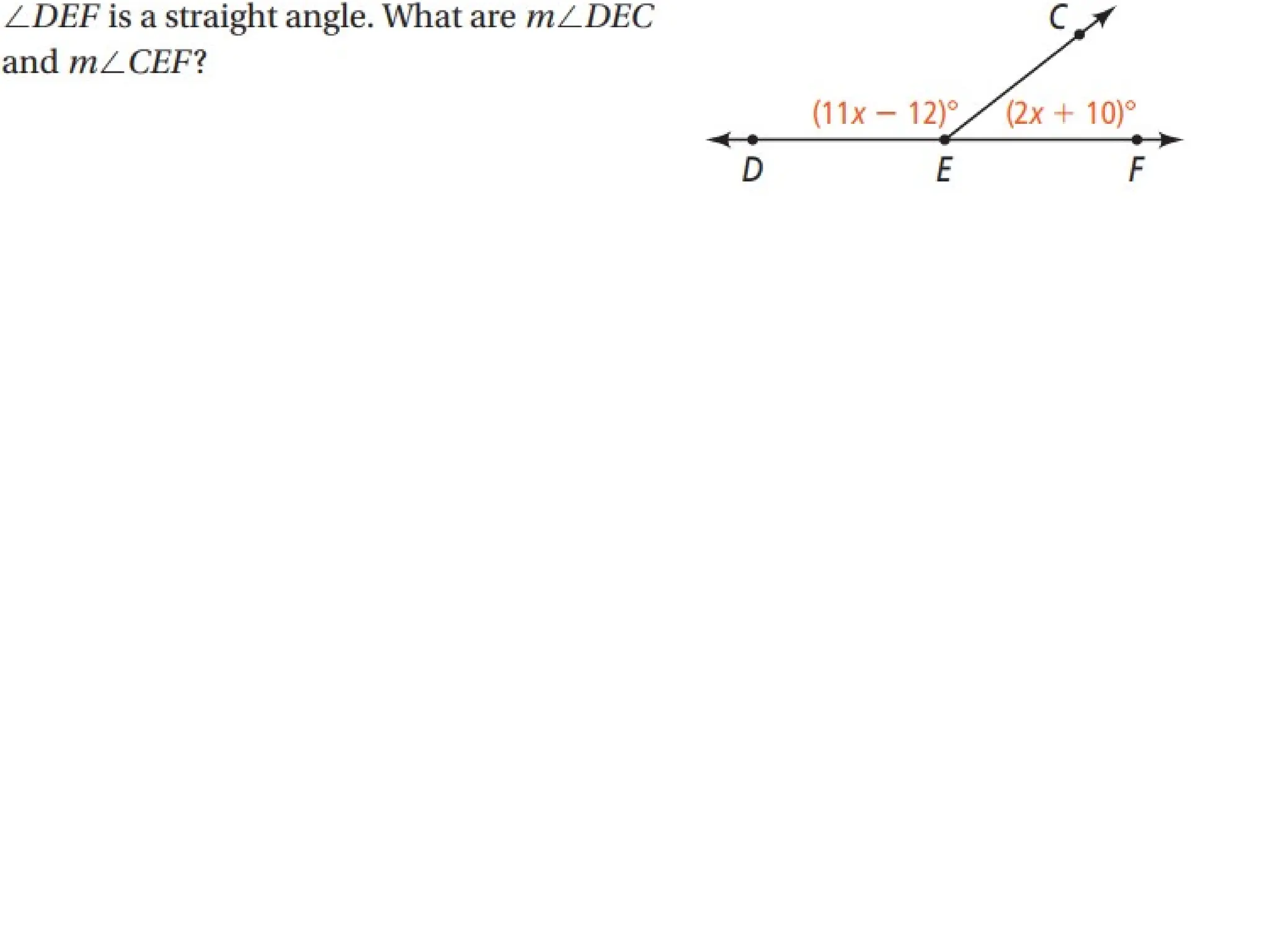
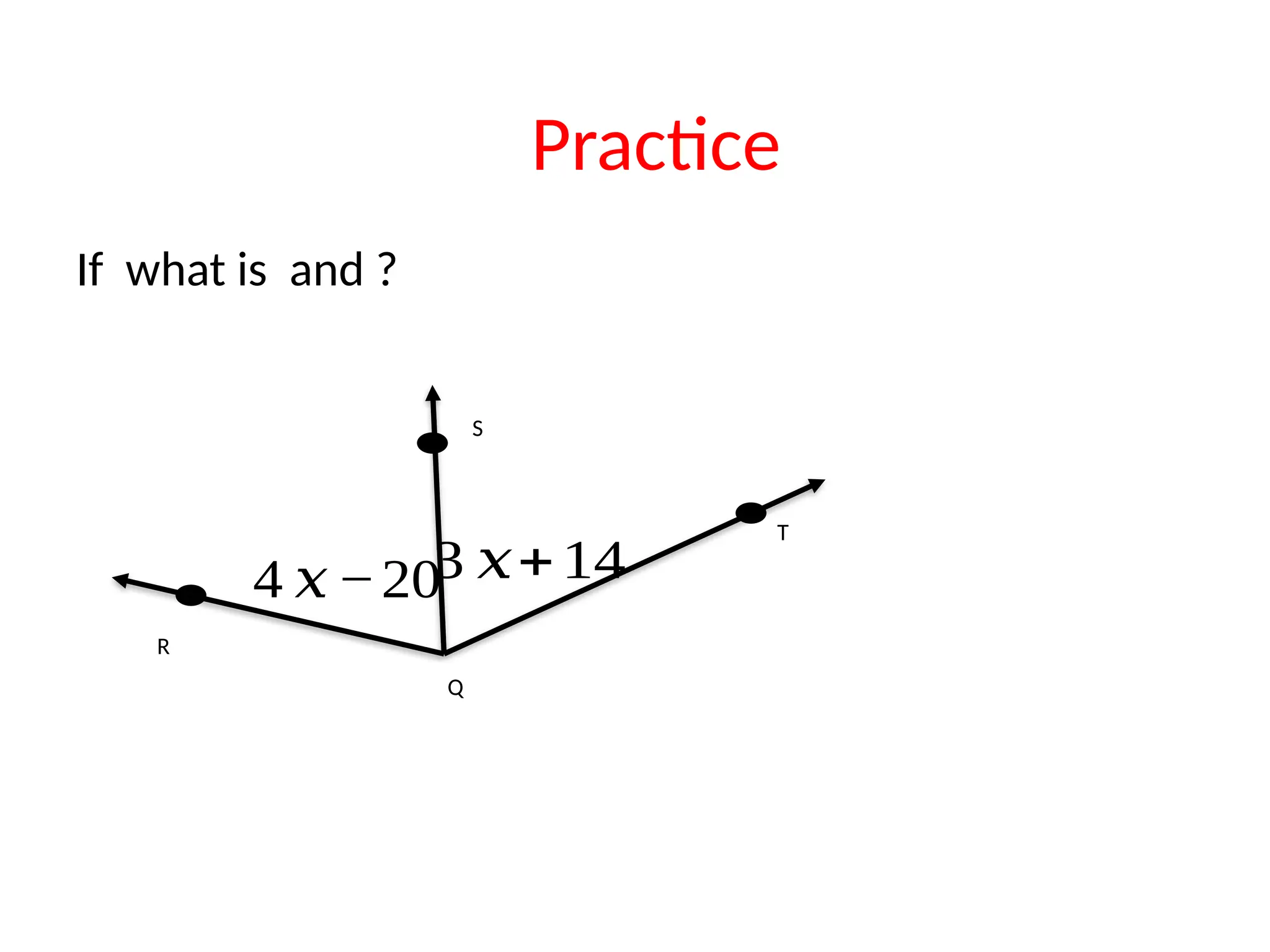
If what is and ?
4 𝑥−203 𝑥+14
Q
T
S
R
Practice
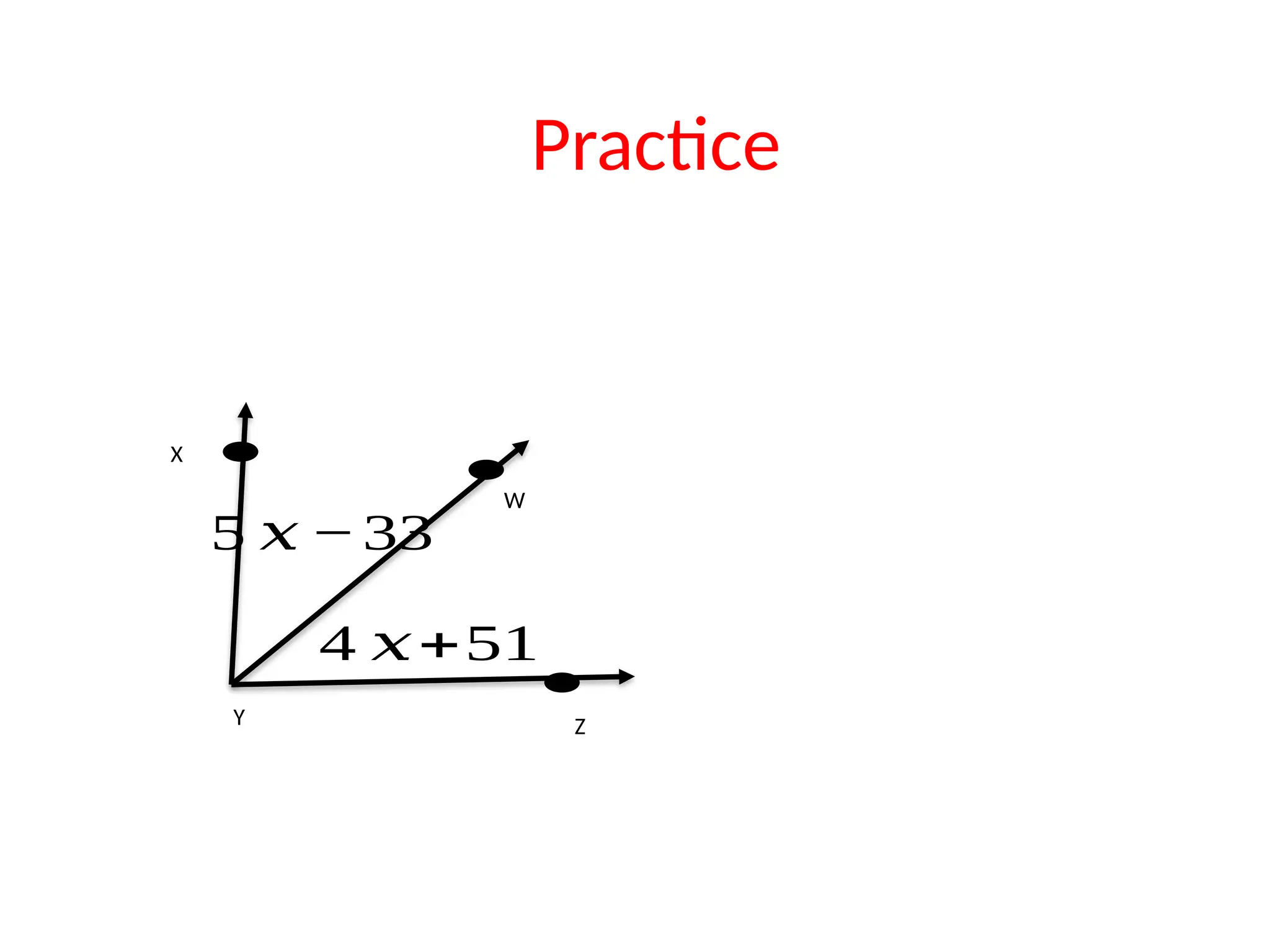
5 𝑥 −33
4 𝑥+51
Y Z
W
X
Practice
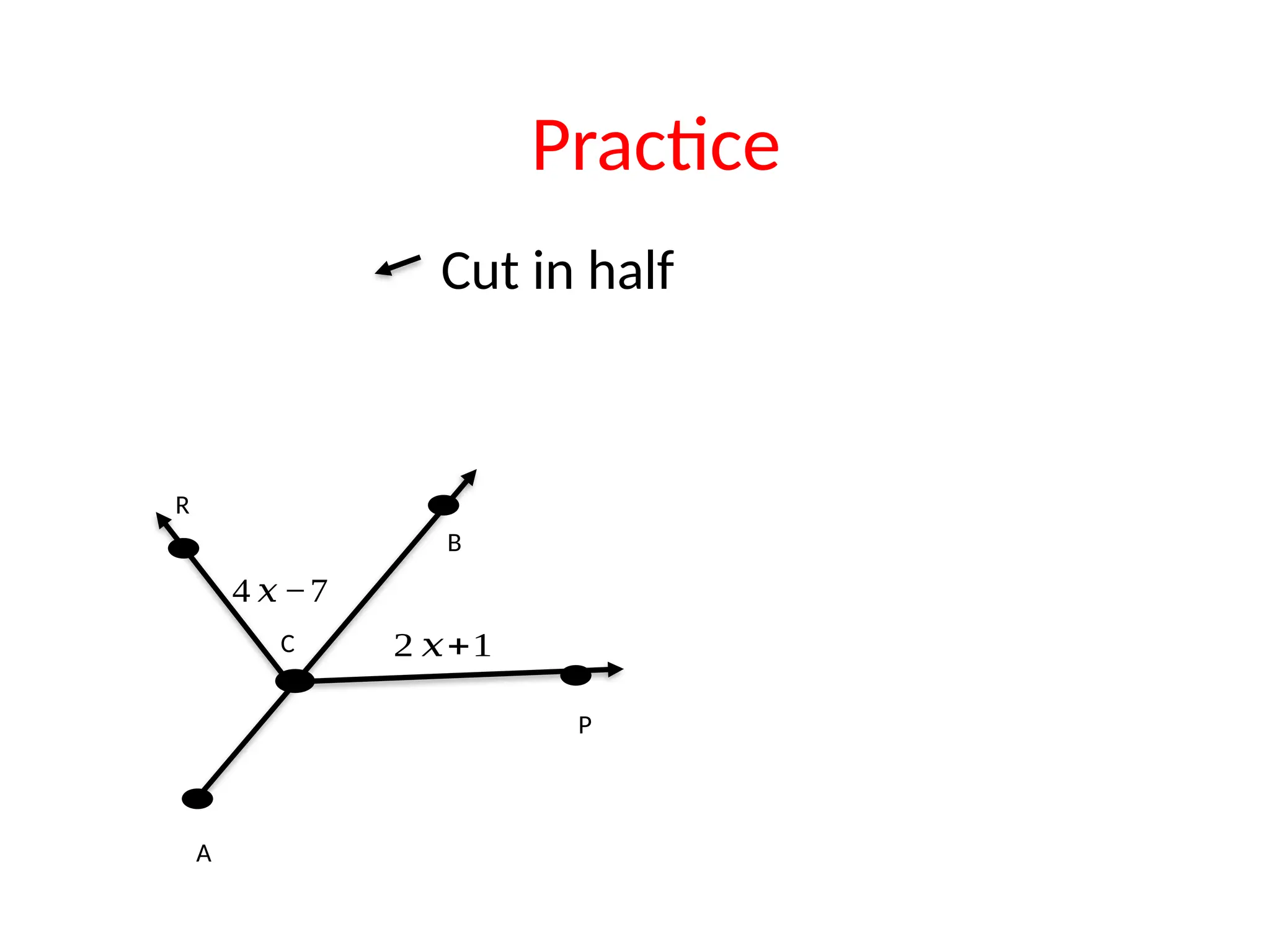
Cut in half
R
P
C
A
B
4 𝑥−7
2 𝑥+1
Practice

Common Core Geometry: 1-4 Measuring Angles

  • 1.
  • 2.
    Angles are whatwe get when we put two rays together with the same endpoint. They are made up of a vertex, the shared endpoint, and two sides, the rays. We have ways of measuring, naming, and comparing angles.
  • 4.
    When we namean angle, the vertex must always go in the middle. Once an angle is drawn, it makes two sections: the interior, inside of the angle, and the exterior, outside of the angle.
  • 5.
  • 7.
    To measure anangle, we use degrees. When we want to indicate the measure of an angle, we put m in front of the angle’s name. A circle has 360 degrees, so one degree is 1/360 of a circle. We often measure angles with a protractor, and this is related to a new postulate.
  • 9.
    Just like distancetells us how long a segment is by subtracting the coordinates of its endpoints, we can find the measure of an angle by subtracting the numbers that go with its rays on a protractor.
  • 10.
    We can classifyangles using their measures.
  • 11.
    Problem 2: Measuringand Classifying Angles
  • 13.
    Like congruent segments,if two angles have the same measure, we say they are congruent angles. We have special marks to show angles are congruent.
  • 14.
    Problem 3: UsingCongruent Angles
  • 16.
    Just like wea postulate for adding segments, we have one for adding angles.
  • 17.
    Problem 4: Usingthe Angle Addition Postulate
  • 19.
    If what isand ? 4 𝑥−203 𝑥+14 Q T S R Practice
  • 20.
    5 𝑥 −33 4𝑥+51 Y Z W X Practice
  • 21.
    Cut in half R P C A B 4𝑥−7 2 𝑥+1 Practice