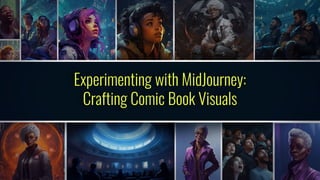
Experimenting with MidJourney:
Crafting Comic Book Visuals
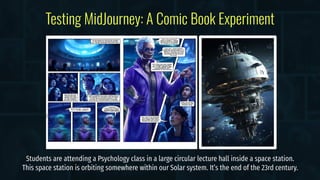
Testing MidJourney: A Comic Book Experiment
Students are attending a Psychology class in a large circular lecture hall inside a space station.
This space station is orbiting somewhere within our Solar system. It’s the end of the 23rd century.
● Visual Storytelling: Control the consistency.
● Panel Sequencing: Keep the proper story unfolding.
● Speech Balloons: Keep it short.
More frames + less text = reader’s satisfaction
● Captions and Sound Effects: Don’t overdo.
● Artistic Style: Consistent character design and backgrounds.
● Page Layout: Create ambience - manage flow of the story.
Basic Principles of Comicbooks
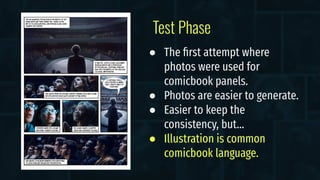
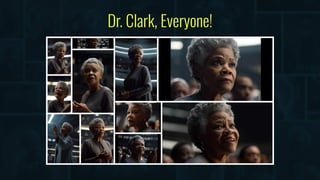
Test Phase
● The first attempt where
photos were used for
comicbook panels.
● Photos are easier to generate.
● Easier to keep the
consistency, but…
● Illustration is common
comicbook language.
Dr. Clark, Everyone!
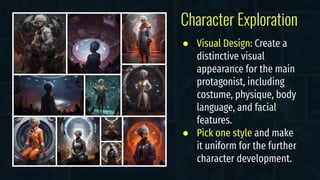
Character Exploration
● Visual Design: Create a
distinctive visual
appearance for the main
protagonist, including
costume, physique, body
language, and facial
features.
● Pick one style and make
it uniform for the further
character development.
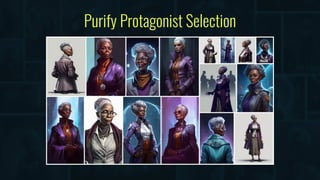
Purify Protagonist Selection
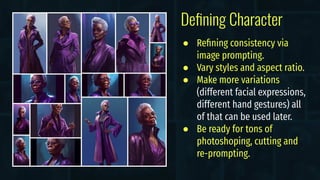
Defining Character
● Refining consistency via
image prompting.
● Vary styles and aspect ratio.
● Make more variations
(different facial expressions,
different hand gestures) all
of that can be used later.
● Be ready for tons of
photoshoping, cutting and
re-prompting.
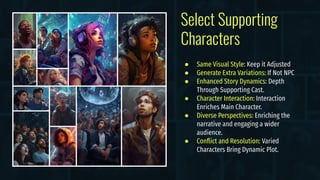
Select Supporting
Characters
● Same Visual Style: Keep it Adjusted
● Generate Extra Variations: If Not NPC
● Enhanced Story Dynamics: Depth
Through Supporting Cast.
● Character Interaction: Interaction
Enriches Main Character.
● Diverse Perspectives: Enriching the
narrative and engaging a wider
audience.
● Conflict and Resolution: Varied
Characters Bring Dynamic Plot.
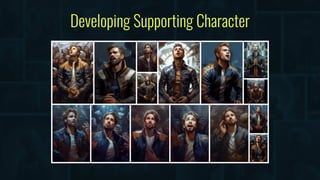
Developing Supporting Character
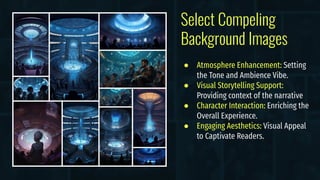
Select Compeling
Background Images
● Atmosphere Enhancement: Setting
the Tone and Ambience Vibe.
● Visual Storytelling Support:
Providing context of the narrative
● Character Interaction: Enriching the
Overall Experience.
● Engaging Aesthetics: Visual Appeal
to Captivate Readers.
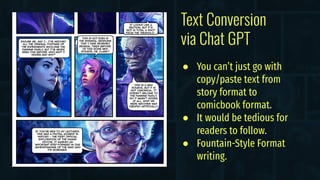
Text Conversion
via Chat GPT
● You can’t just go with
copy/paste text from
story format to
comicbook format.
● It would be tedious for
readers to follow.
● Fountain-Style Format
writing.
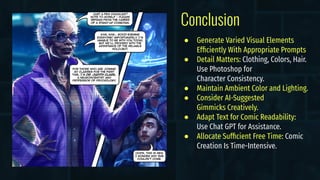
Conclusion
● Generate Varied Visual Elements
Efficiently With Appropriate Prompts
● Detail Matters: Clothing, Colors, Hair.
Use Photoshop for
Character Consistency.
● Maintain Ambient Color and Lighting.
● Consider AI-Suggested
Gimmicks Creatively.
● Adapt Text for Comic Readability:
Use Chat GPT for Assistance.
● Allocate Sufficient Free Time: Comic
Creation Is Time-Intensive.
The End

Comicbook Experiment Made With Midjourney

  • 1.
  • 2.
    Testing MidJourney: AComic Book Experiment Students are attending a Psychology class in a large circular lecture hall inside a space station. This space station is orbiting somewhere within our Solar system. It’s the end of the 23rd century.
  • 3.
    ● Visual Storytelling:Control the consistency. ● Panel Sequencing: Keep the proper story unfolding. ● Speech Balloons: Keep it short. More frames + less text = reader’s satisfaction ● Captions and Sound Effects: Don’t overdo. ● Artistic Style: Consistent character design and backgrounds. ● Page Layout: Create ambience - manage flow of the story. Basic Principles of Comicbooks
  • 4.
    Test Phase ● Thefirst attempt where photos were used for comicbook panels. ● Photos are easier to generate. ● Easier to keep the consistency, but… ● Illustration is common comicbook language.
  • 5.
  • 6.
    Character Exploration ● VisualDesign: Create a distinctive visual appearance for the main protagonist, including costume, physique, body language, and facial features. ● Pick one style and make it uniform for the further character development.
  • 7.
  • 8.
    Defining Character ● Refiningconsistency via image prompting. ● Vary styles and aspect ratio. ● Make more variations (different facial expressions, different hand gestures) all of that can be used later. ● Be ready for tons of photoshoping, cutting and re-prompting.
  • 9.
    Select Supporting Characters ● SameVisual Style: Keep it Adjusted ● Generate Extra Variations: If Not NPC ● Enhanced Story Dynamics: Depth Through Supporting Cast. ● Character Interaction: Interaction Enriches Main Character. ● Diverse Perspectives: Enriching the narrative and engaging a wider audience. ● Conflict and Resolution: Varied Characters Bring Dynamic Plot.
  • 10.
  • 11.
    Select Compeling Background Images ●Atmosphere Enhancement: Setting the Tone and Ambience Vibe. ● Visual Storytelling Support: Providing context of the narrative ● Character Interaction: Enriching the Overall Experience. ● Engaging Aesthetics: Visual Appeal to Captivate Readers.
  • 12.
    Text Conversion via ChatGPT ● You can’t just go with copy/paste text from story format to comicbook format. ● It would be tedious for readers to follow. ● Fountain-Style Format writing.
  • 13.
    Conclusion ● Generate VariedVisual Elements Efficiently With Appropriate Prompts ● Detail Matters: Clothing, Colors, Hair. Use Photoshop for Character Consistency. ● Maintain Ambient Color and Lighting. ● Consider AI-Suggested Gimmicks Creatively. ● Adapt Text for Comic Readability: Use Chat GPT for Assistance. ● Allocate Sufficient Free Time: Comic Creation Is Time-Intensive.
  • 14.