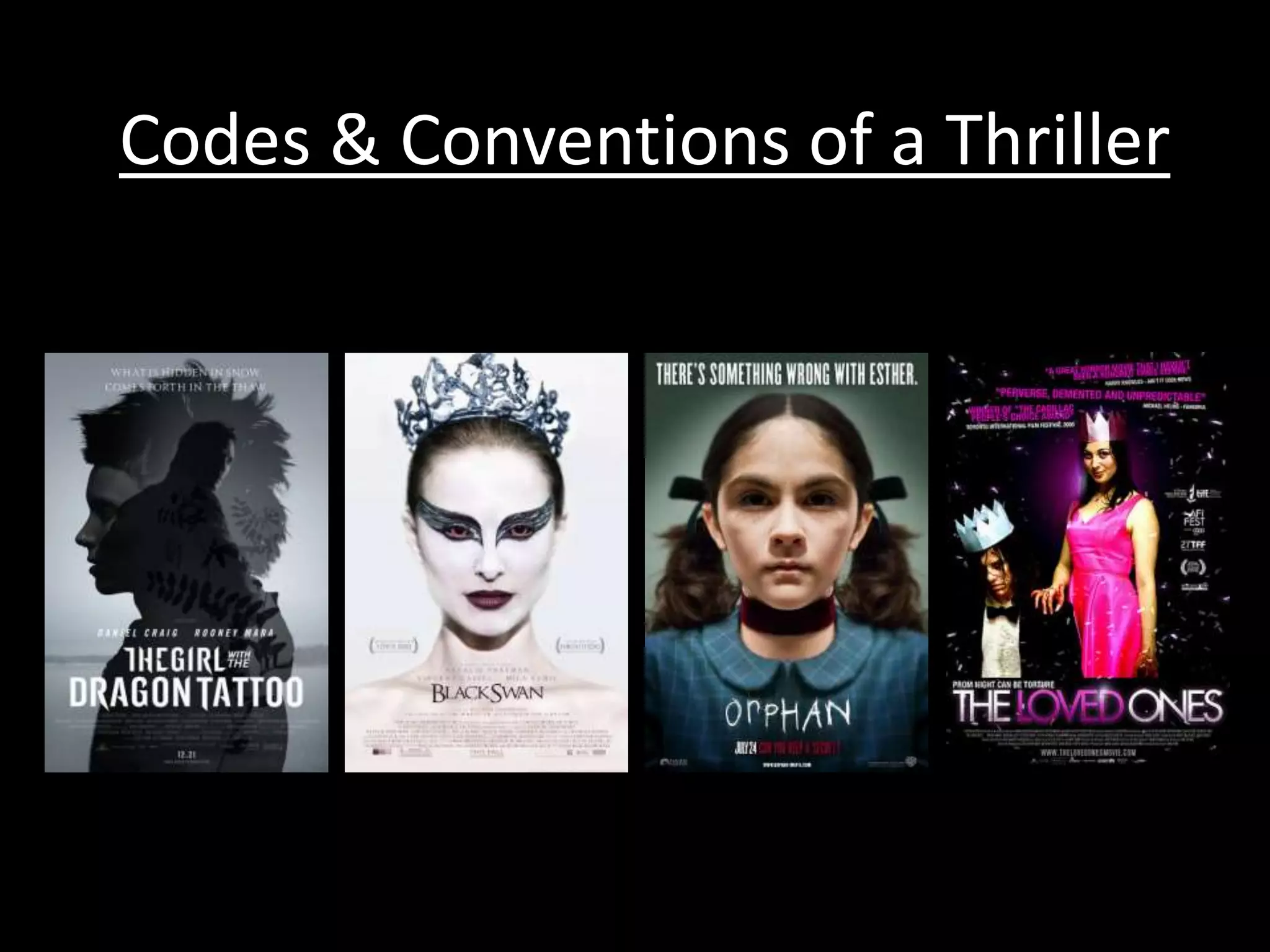
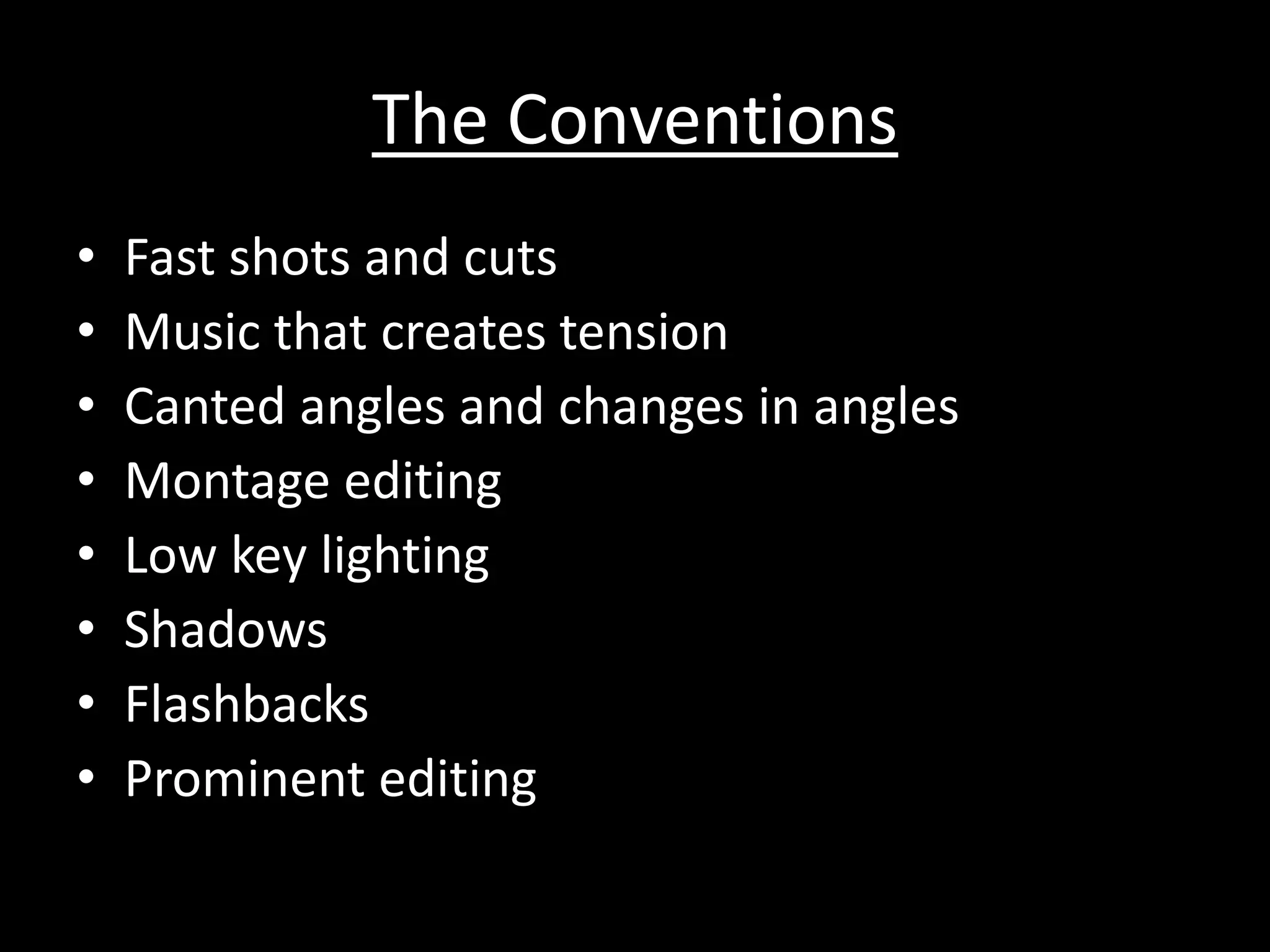
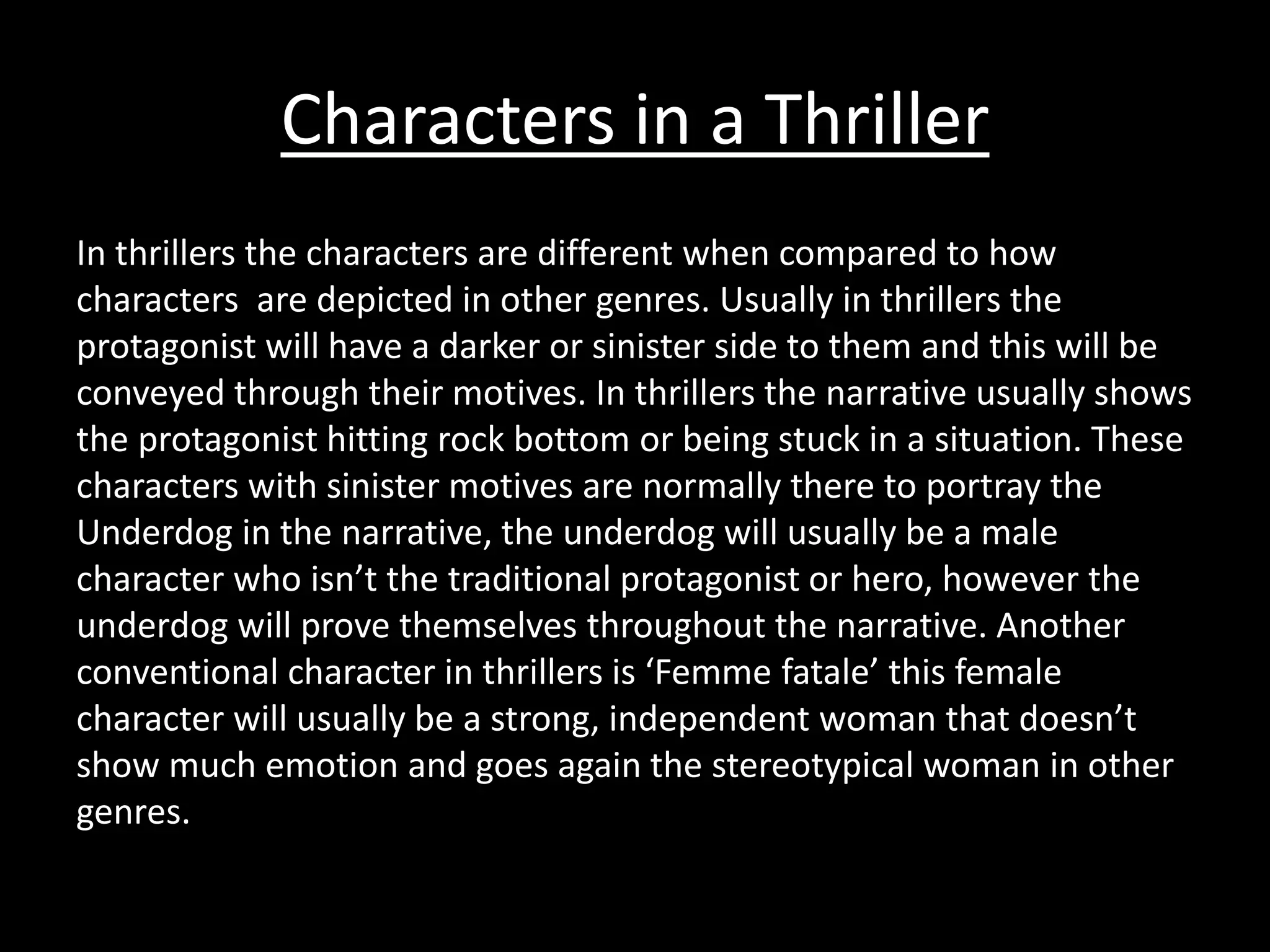
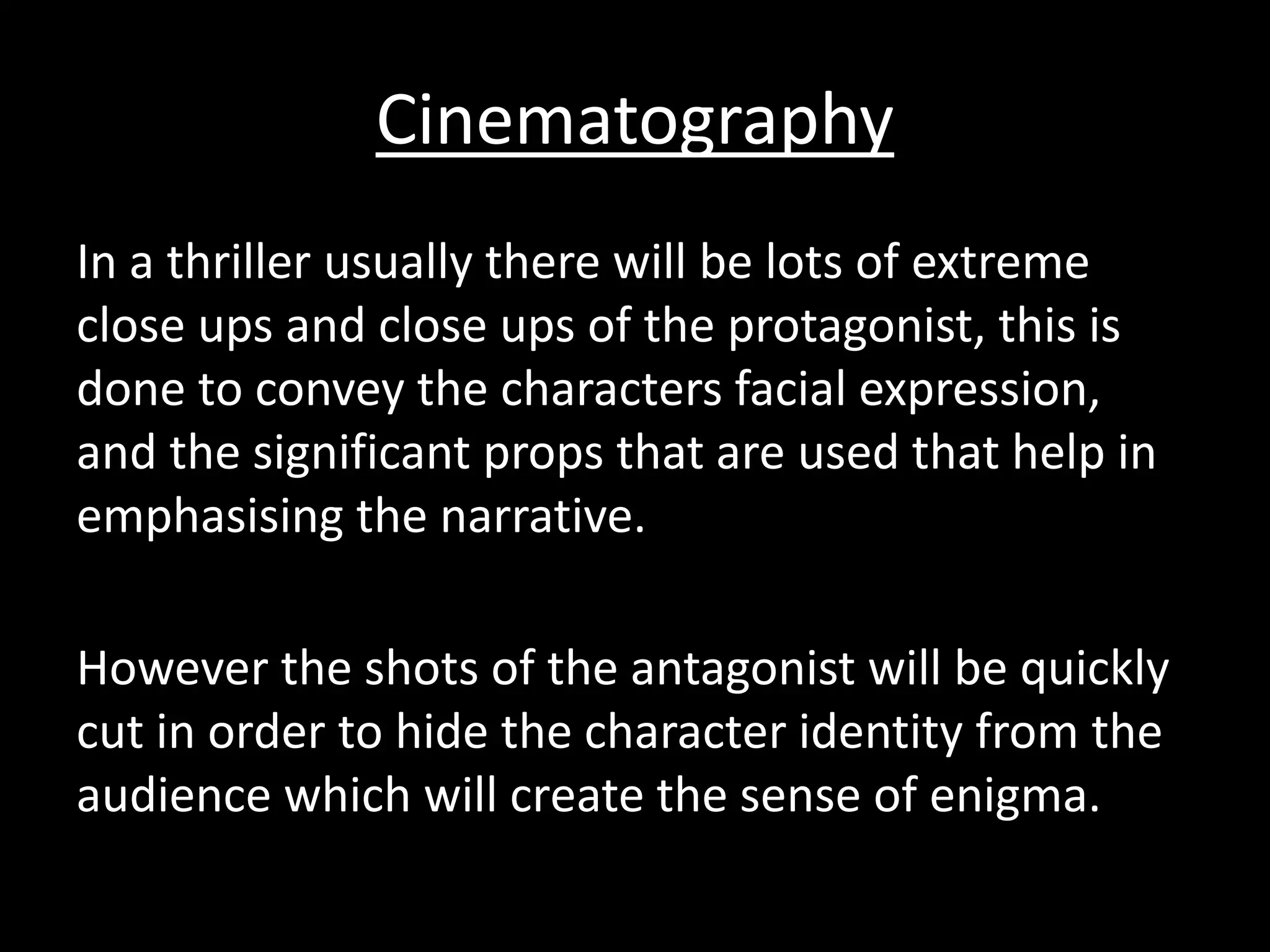
Codes & Conventions of a Thriller
The Conventions 
• Fast shots and cuts 
• Music that creates tension 
• Canted angles and changes in angles 
• Montage editing 
• Low key lighting 
• Shadows 
• Flashbacks 
• Prominent editing
Characters in a Thriller 
In thrillers the characters are different when compared to how 
characters are depicted in other genres. Usually in thrillers the 
protagonist will have a darker or sinister side to them and this will be 
conveyed through their motives. In thrillers the narrative usually shows 
the protagonist hitting rock bottom or being stuck in a situation. These 
characters with sinister motives are normally there to portray the 
Underdog in the narrative, the underdog will usually be a male 
character who isn’t the traditional protagonist or hero, however the 
underdog will prove themselves throughout the narrative. Another 
conventional character in thrillers is ‘Femme fatale’ this female 
character will usually be a strong, independent woman that doesn’t 
show much emotion and goes again the stereotypical woman in other 
genres.
Cinematography 
In a thriller usually there will be lots of extreme 
close ups and close ups of the protagonist, this is 
done to convey the characters facial expression, 
and the significant props that are used that help in 
emphasising the narrative. 
However the shots of the antagonist will be quickly 
cut in order to hide the character identity from the 
audience which will create the sense of enigma.
Sound in Thrillers 
Sound plays a very important role in thrillers both 
diegetic and non-diegetic as they add suspense and 
tension. For example in this clip from the film inception 
the intensity of the music builds as more action happens 
in the scene which adds tension to the scene and 
suspense.
Editing 
Editing also has huge significance in a thriller genre film. When 
editing a thriller you want to create an atmosphere full of 
suspense and tension, so that you are able to shock your target 
audience. By having this consistent atmosphere of suspense and 
enigma the tension will increase. Jump cuts and cross cutting 
will allow you to create this suspense.

Codes & Conventions of a Thriller

  • 1.
    Codes & Conventionsof a Thriller
  • 2.
    The Conventions •Fast shots and cuts • Music that creates tension • Canted angles and changes in angles • Montage editing • Low key lighting • Shadows • Flashbacks • Prominent editing
  • 3.
    Characters in aThriller In thrillers the characters are different when compared to how characters are depicted in other genres. Usually in thrillers the protagonist will have a darker or sinister side to them and this will be conveyed through their motives. In thrillers the narrative usually shows the protagonist hitting rock bottom or being stuck in a situation. These characters with sinister motives are normally there to portray the Underdog in the narrative, the underdog will usually be a male character who isn’t the traditional protagonist or hero, however the underdog will prove themselves throughout the narrative. Another conventional character in thrillers is ‘Femme fatale’ this female character will usually be a strong, independent woman that doesn’t show much emotion and goes again the stereotypical woman in other genres.
  • 4.
    Cinematography In athriller usually there will be lots of extreme close ups and close ups of the protagonist, this is done to convey the characters facial expression, and the significant props that are used that help in emphasising the narrative. However the shots of the antagonist will be quickly cut in order to hide the character identity from the audience which will create the sense of enigma.
  • 5.
    Sound in Thrillers Sound plays a very important role in thrillers both diegetic and non-diegetic as they add suspense and tension. For example in this clip from the film inception the intensity of the music builds as more action happens in the scene which adds tension to the scene and suspense.
  • 6.
    Editing Editing alsohas huge significance in a thriller genre film. When editing a thriller you want to create an atmosphere full of suspense and tension, so that you are able to shock your target audience. By having this consistent atmosphere of suspense and enigma the tension will increase. Jump cuts and cross cutting will allow you to create this suspense.