Coaching and Counseling
Introduction:
 Counseling and coaching are viewed as
developmental programs and are considered positive
approaches in aligning employee behavior with
employer’s expectations, goals and organizational
vision, an element of a continuing process of
employee discipline.
Counseling
Definition: Counseling
 Employee Counseling is defined as a discussion
between the employer and the employee about the
real or perceived performance deficiency or job-
related behavior; the employee's perception of the
identified behavior and the employer’s involvement
in helping the employee correct these behaviors; and
the employee's attempt to reduce or eliminate the
misconduct or incompetence.
Advantages of counseling:
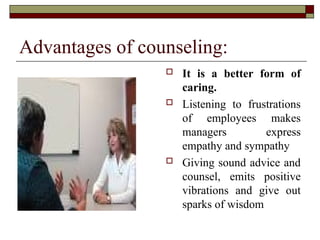
 It is a better form of
caring.
 Listening to frustrations
of employees makes
managers express
empathy and sympathy
 Giving sound advice and
counsel, emits positive
vibrations and give out
sparks of wisdom
Advantages of counseling:
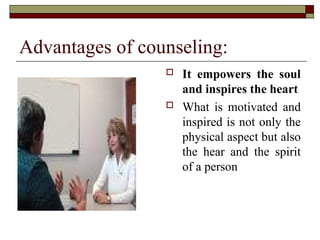
 It empowers the soul
and inspires the heart
 What is motivated and
inspired is not only the
physical aspect but also
the hear and the spirit
of a person
Advantages of counseling:
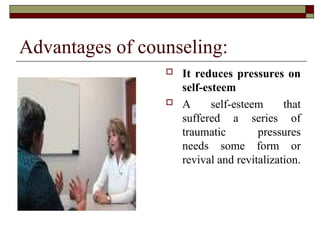
 It reduces pressures on
self-esteem
 A self-esteem that
suffered a series of
traumatic pressures
needs some form or
revival and revitalization.
Advantages of counseling:
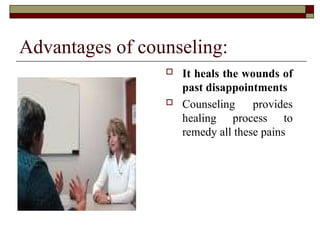
 It heals the wounds of
past disappointments
 Counseling provides
healing process to
remedy all these pains
Advantages of counseling:
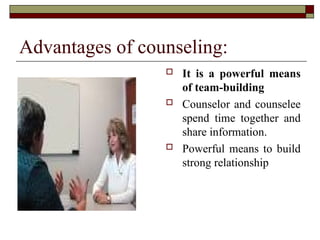
 It is a powerful means
of team-building
 Counselor and counselee
spend time together and
share information.
 Powerful means to build
strong relationship
Advantages of counseling:
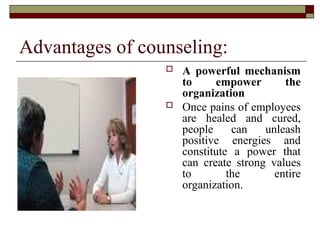
 A powerful mechanism
to empower the
organization
 Once pains of employees
are healed and cured,
people can unleash
positive energies and
constitute a power that
can create strong values
to the entire
organization.
Steps in counseling:
 Listen, observe and analyze.
 Empathize
 Identify the problems / issues
 Generate the alternatives
 Assess each alternative
 Let the person choose his alternative
 Assist the person in implementing it
Coaching
Coaching
 Coaching is a process where a peer or
manager works with an employee to motivate
her, help develop her skills and provide
reinforcement and feedback
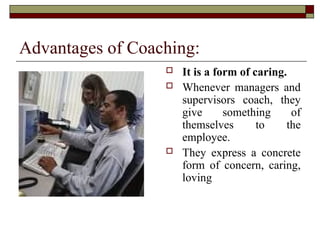
Advantages of Coaching:
 It is a form of caring.
 Whenever managers and
supervisors coach, they
give something of
themselves to the
employee.
 They express a concrete
form of concern, caring,
loving
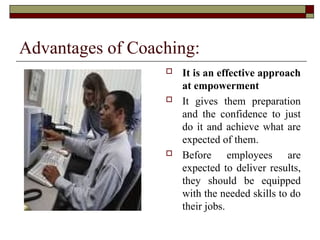
Advantages of Coaching:
 It is an effective approach
at empowerment
 It gives them preparation
and the confidence to just
do it and achieve what are
expected of them.
 Before employees are
expected to deliver results,
they should be equipped
with the needed skills to do
their jobs.
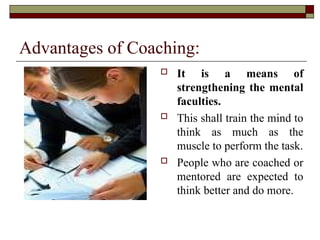
Advantages of Coaching:
 It is a means of
strengthening the mental
faculties.
 This shall train the mind to
think as much as the
muscle to perform the task.
 People who are coached or
mentored are expected to
think better and do more.
Advantages of Coaching:
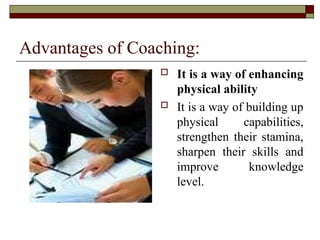
 It is a way of enhancing
physical ability
 It is a way of building up
physical capabilities,
strengthen their stamina,
sharpen their skills and
improve knowledge
level.
Advantages of Coaching:
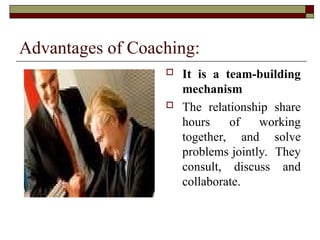
 It is a team-building
mechanism
 The relationship share
hours of working
together, and solve
problems jointly. They
consult, discuss and
collaborate.
Advantages of Coaching:
 It is a way of
democratizing power.
 To create a really
powerful organization,
every single member of
the organization should
have more knowledge
and more competence.
Advantages of Coaching / Mentoring:
 It is a way of strengthening the whole
organization
 When even the lowliest clerk has competence, the
whole organization stands to benefit.
 Whenever one resigns or retires, another equally
competent guy is ready to take over.
 The organization will not crumble when one leaves
because everyone is ready to fill the gap.
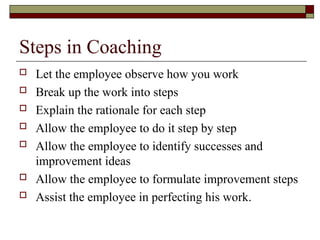
Steps in Coaching
 Let the employee observe how you work
 Break up the work into steps
 Explain the rationale for each step
 Allow the employee to do it step by step
 Allow the employee to identify successes and
improvement ideas
 Allow the employee to formulate improvement steps
 Assist the employee in perfecting his work.

Coaching-counseling.pptsdfaaaaaaaaaaaaaaaa

  • 1.
  • 2.
    Introduction:  Counseling andcoaching are viewed as developmental programs and are considered positive approaches in aligning employee behavior with employer’s expectations, goals and organizational vision, an element of a continuing process of employee discipline.
  • 3.
  • 4.
    Definition: Counseling  EmployeeCounseling is defined as a discussion between the employer and the employee about the real or perceived performance deficiency or job- related behavior; the employee's perception of the identified behavior and the employer’s involvement in helping the employee correct these behaviors; and the employee's attempt to reduce or eliminate the misconduct or incompetence.
  • 5.
    Advantages of counseling: It is a better form of caring.  Listening to frustrations of employees makes managers express empathy and sympathy  Giving sound advice and counsel, emits positive vibrations and give out sparks of wisdom
  • 6.
    Advantages of counseling: It empowers the soul and inspires the heart  What is motivated and inspired is not only the physical aspect but also the hear and the spirit of a person
  • 7.
    Advantages of counseling: It reduces pressures on self-esteem  A self-esteem that suffered a series of traumatic pressures needs some form or revival and revitalization.
  • 8.
    Advantages of counseling: It heals the wounds of past disappointments  Counseling provides healing process to remedy all these pains
  • 9.
    Advantages of counseling: It is a powerful means of team-building  Counselor and counselee spend time together and share information.  Powerful means to build strong relationship
  • 10.
    Advantages of counseling: A powerful mechanism to empower the organization  Once pains of employees are healed and cured, people can unleash positive energies and constitute a power that can create strong values to the entire organization.
  • 11.
    Steps in counseling: Listen, observe and analyze.  Empathize  Identify the problems / issues  Generate the alternatives  Assess each alternative  Let the person choose his alternative  Assist the person in implementing it
  • 12.
  • 13.
    Coaching  Coaching isa process where a peer or manager works with an employee to motivate her, help develop her skills and provide reinforcement and feedback
  • 14.
    Advantages of Coaching: It is a form of caring.  Whenever managers and supervisors coach, they give something of themselves to the employee.  They express a concrete form of concern, caring, loving
  • 15.
    Advantages of Coaching: It is an effective approach at empowerment  It gives them preparation and the confidence to just do it and achieve what are expected of them.  Before employees are expected to deliver results, they should be equipped with the needed skills to do their jobs.
  • 16.
    Advantages of Coaching: It is a means of strengthening the mental faculties.  This shall train the mind to think as much as the muscle to perform the task.  People who are coached or mentored are expected to think better and do more.
  • 17.
    Advantages of Coaching: It is a way of enhancing physical ability  It is a way of building up physical capabilities, strengthen their stamina, sharpen their skills and improve knowledge level.
  • 18.
    Advantages of Coaching: It is a team-building mechanism  The relationship share hours of working together, and solve problems jointly. They consult, discuss and collaborate.
  • 19.
    Advantages of Coaching: It is a way of democratizing power.  To create a really powerful organization, every single member of the organization should have more knowledge and more competence.
  • 20.
    Advantages of Coaching/ Mentoring:  It is a way of strengthening the whole organization  When even the lowliest clerk has competence, the whole organization stands to benefit.  Whenever one resigns or retires, another equally competent guy is ready to take over.  The organization will not crumble when one leaves because everyone is ready to fill the gap.
  • 21.
    Steps in Coaching Let the employee observe how you work  Break up the work into steps  Explain the rationale for each step  Allow the employee to do it step by step  Allow the employee to identify successes and improvement ideas  Allow the employee to formulate improvement steps  Assist the employee in perfecting his work.