Machining Defects Analysis and
Troubleshooting
• Chatter Marks | Built-Up Edge | Step Marks |
Chip Formation | Dent in Machining
Introduction
• Objective:
• Understand defects, analyze causes, enable
troubleshooting
• Scope:
• Turning, Milling, Drilling
• Focus on surface finish, tool wear, process
stability
Classification of Machining Defects
• Surface Defects: Chatter, dents, step marks
• Tool-Related Defects: Built-up edge, excessive
wear
• Chip Formation Defects: Irregular chips, poor
evacuation
Chatter Marks
• Definition: Vibrations causing wavy surface finish
• Causes:
• Improper spindle speed or feed
• Tool overhang or instability
• Machine resonance
• Identification: Wavy, repetitive pattern
• Prevention:
• Optimize speed/feed
• Use rigid tooling
• Dampen vibrations
Built-Up Edge (BUE)
• Definition: Material sticks to cutting edge causing poor
finish
• Causes:
• - Low cutting speed
• - High friction
• - Inadequate coolant
• Effects: Poor finish, dimensional inaccuracy, tool damage
• Prevention:
• - Increase cutting speed
• - Use proper coolant
• - Select suitable tool material
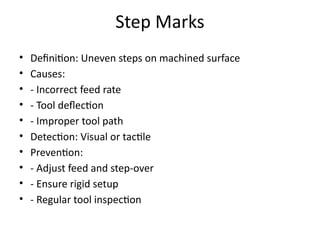
Step Marks
• Definition: Uneven steps on machined surface
• Causes:
• - Incorrect feed rate
• - Tool deflection
• - Improper tool path
• Detection: Visual or tactile
• Prevention:
• - Adjust feed and step-over
• - Ensure rigid setup
• - Regular tool inspection
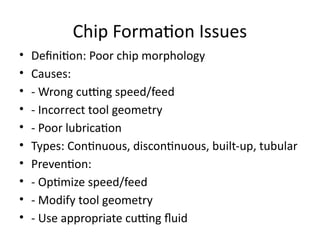
Chip Formation Issues
• Definition: Poor chip morphology
• Causes:
• - Wrong cutting speed/feed
• - Incorrect tool geometry
• - Poor lubrication
• Types: Continuous, discontinuous, built-up, tubular
• Prevention:
• - Optimize speed/feed
• - Modify tool geometry
• - Use appropriate cutting fluid
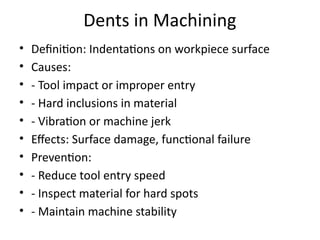
Dents in Machining
• Definition: Indentations on workpiece surface
• Causes:
• - Tool impact or improper entry
• - Hard inclusions in material
• - Vibration or machine jerk
• Effects: Surface damage, functional failure
• Prevention:
• - Reduce tool entry speed
• - Inspect material for hard spots
• - Maintain machine stability
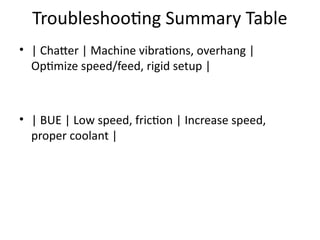
Troubleshooting Summary Table
• | Chatter | Machine vibrations, overhang |
Optimize speed/feed, rigid setup |
• | BUE | Low speed, friction | Increase speed,
proper coolant |
Troubleshooting Summary Table
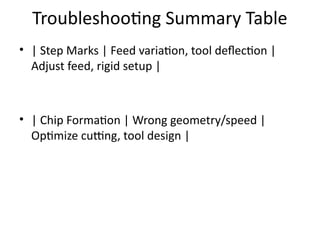
• | Step Marks | Feed variation, tool deflection |
Adjust feed, rigid setup |
• | Chip Formation | Wrong geometry/speed |
Optimize cutting, tool design |
Troubleshooting Summary Table
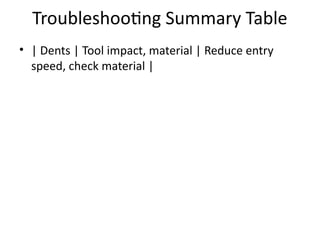
• | Dents | Tool impact, material | Reduce entry
speed, check material |
Case Study / Practical Example
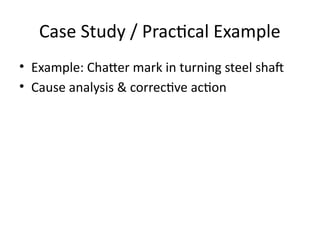
• Example: Chatter mark in turning steel shaft
• Cause analysis & corrective action
Key Takeaways
• Defects reduce productivity and quality
• Most defects are preventable
• Continuous monitoring & corrective actions
improve efficiency

CNC Machining_Defects_Analysis Ana Troubleshooting

  • 1.
    Machining Defects Analysisand Troubleshooting • Chatter Marks | Built-Up Edge | Step Marks | Chip Formation | Dent in Machining
  • 2.
    Introduction • Objective: • Understanddefects, analyze causes, enable troubleshooting • Scope: • Turning, Milling, Drilling • Focus on surface finish, tool wear, process stability
  • 3.
    Classification of MachiningDefects • Surface Defects: Chatter, dents, step marks • Tool-Related Defects: Built-up edge, excessive wear • Chip Formation Defects: Irregular chips, poor evacuation
  • 4.
    Chatter Marks • Definition:Vibrations causing wavy surface finish • Causes: • Improper spindle speed or feed • Tool overhang or instability • Machine resonance • Identification: Wavy, repetitive pattern • Prevention: • Optimize speed/feed • Use rigid tooling • Dampen vibrations
  • 5.
    Built-Up Edge (BUE) •Definition: Material sticks to cutting edge causing poor finish • Causes: • - Low cutting speed • - High friction • - Inadequate coolant • Effects: Poor finish, dimensional inaccuracy, tool damage • Prevention: • - Increase cutting speed • - Use proper coolant • - Select suitable tool material
  • 6.
    Step Marks • Definition:Uneven steps on machined surface • Causes: • - Incorrect feed rate • - Tool deflection • - Improper tool path • Detection: Visual or tactile • Prevention: • - Adjust feed and step-over • - Ensure rigid setup • - Regular tool inspection
  • 7.
    Chip Formation Issues •Definition: Poor chip morphology • Causes: • - Wrong cutting speed/feed • - Incorrect tool geometry • - Poor lubrication • Types: Continuous, discontinuous, built-up, tubular • Prevention: • - Optimize speed/feed • - Modify tool geometry • - Use appropriate cutting fluid
  • 8.
    Dents in Machining •Definition: Indentations on workpiece surface • Causes: • - Tool impact or improper entry • - Hard inclusions in material • - Vibration or machine jerk • Effects: Surface damage, functional failure • Prevention: • - Reduce tool entry speed • - Inspect material for hard spots • - Maintain machine stability
  • 9.
    Troubleshooting Summary Table •| Chatter | Machine vibrations, overhang | Optimize speed/feed, rigid setup | • | BUE | Low speed, friction | Increase speed, proper coolant |
  • 10.
    Troubleshooting Summary Table •| Step Marks | Feed variation, tool deflection | Adjust feed, rigid setup | • | Chip Formation | Wrong geometry/speed | Optimize cutting, tool design |
  • 11.
    Troubleshooting Summary Table •| Dents | Tool impact, material | Reduce entry speed, check material |
  • 12.
    Case Study /Practical Example • Example: Chatter mark in turning steel shaft • Cause analysis & corrective action
  • 13.
    Key Takeaways • Defectsreduce productivity and quality • Most defects are preventable • Continuous monitoring & corrective actions improve efficiency