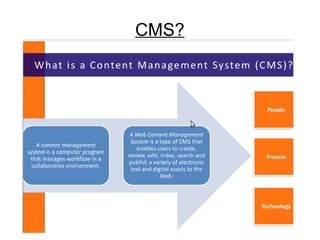
CMS CMS  –  C ontent  M anagement  S ystem Content Management System is a type of web-based software that plugs into the website in such a way that updating the content is much easier than without it.
CMS?
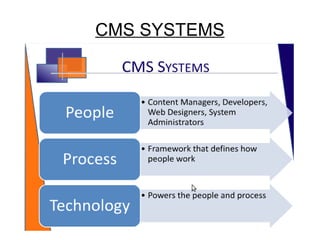
CMS SYSTEMS
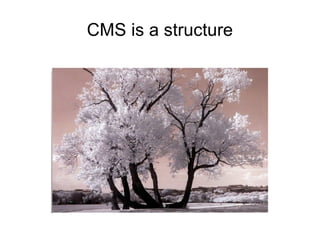
CMS is a structure
WP has structure
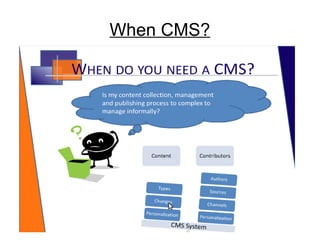
When CMS?
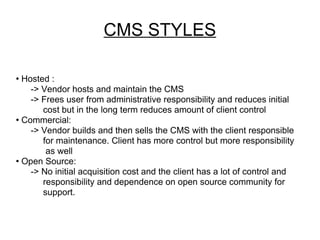
CMS STYLES Hosted : -> Vendor hosts and maintain the CMS -> Frees user from administrative responsibility and reduces initial  cost but in the long term reduces amount of client control Commercial: -> Vendor builds and then sells the CMS with the client responsible  for maintenance. Client has more control but more responsibility  as well Open Source: -> No initial acquisition cost and the client has a lot of control and  responsibility and dependence on open source community for  support.
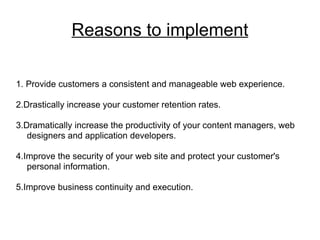
Reasons to implement 1. Provide customers a consistent and manageable web experience. 2.Drastically increase your customer retention rates. 3.Dramatically increase the productivity of your content managers, web designers and application developers. 4.Improve the security of your web site and protect your customer's personal information. 5.Improve business continuity and execution.
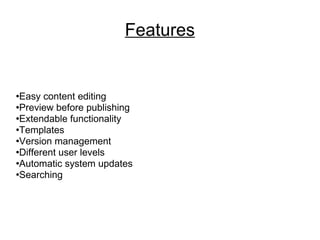
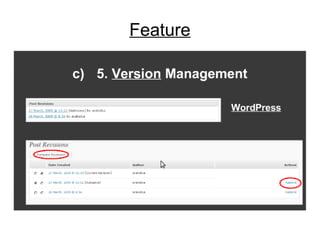
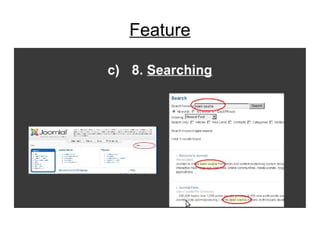
Features Easy content editing Preview before publishing Extendable functionality Templates Version management Different user levels Automatic system updates Searching
Feature
Feature
Advantages Low start up costs gives a competitive advantage. The changes made in design, will not affect the content. Novice computer users can create a website almost like  expert webmasters.
Disadvantages ->  Unless you are expert webmaster, you cannot alter the  design and features as much as you need.  -> The changes can be made as much as given CMS or its  theme allow.

Cms

  • 1.
    CMS CMS – C ontent M anagement S ystem Content Management System is a type of web-based software that plugs into the website in such a way that updating the content is much easier than without it.
  • 2.
  • 3.
  • 4.
    CMS is astructure
  • 5.
  • 6.
  • 7.
    CMS STYLES Hosted: -> Vendor hosts and maintain the CMS -> Frees user from administrative responsibility and reduces initial cost but in the long term reduces amount of client control Commercial: -> Vendor builds and then sells the CMS with the client responsible for maintenance. Client has more control but more responsibility as well Open Source: -> No initial acquisition cost and the client has a lot of control and responsibility and dependence on open source community for support.
  • 8.
    Reasons to implement1. Provide customers a consistent and manageable web experience. 2.Drastically increase your customer retention rates. 3.Dramatically increase the productivity of your content managers, web designers and application developers. 4.Improve the security of your web site and protect your customer's personal information. 5.Improve business continuity and execution.
  • 9.
    Features Easy contentediting Preview before publishing Extendable functionality Templates Version management Different user levels Automatic system updates Searching
  • 10.
  • 11.
  • 12.
    Advantages Low startup costs gives a competitive advantage. The changes made in design, will not affect the content. Novice computer users can create a website almost like expert webmasters.
  • 13.
    Disadvantages -> Unless you are expert webmaster, you cannot alter the design and features as much as you need. -> The changes can be made as much as given CMS or its theme allow.