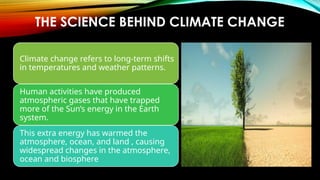
THE SCIENCE BEHIND CLIMATE CHANGE
Climate change refers to long-term shifts
in temperatures and weather patterns.
Human activities have produced
atmospheric gases that have trapped
more of the Sun’s energy in the Earth
system.
This extra energy has warmed the
atmosphere, ocean, and land , causing
widespread changes in the atmosphere,
ocean and biosphere
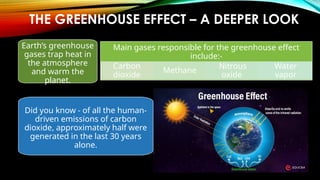
Earth’s greenhouse
gases trap heat in
the atmosphere
and warm the
planet.
Main gases responsible for the greenhouse effect
include:-
Carbon
dioxide
Methane
Nitrous
oxide
Water
vapor
THE GREENHOUSE EFFECT – A DEEPER LOOK
Did you know - of all the human-
driven emissions of carbon
dioxide, approximately half were
generated in the last 30 years
alone.
EFFECTS ON HUMAN’S AND THEIR HEALTH
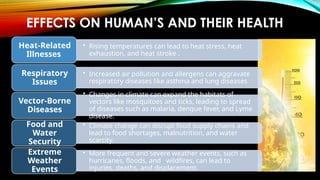
• Rising temperatures can lead to heat stress, heat
exhaustion, and heat stroke .
Heat-Related
Illnesses
• Increased air pollution and allergens can aggravate
respiratory diseases like asthma and lung diseases
Respiratory
Issues
• Changes in climate can expand the habitats of
vectors like mosquitoes and ticks, leading to spread
of diseases such as malaria, dengue fever, and Lyme
disease.
Vector-Borne
Diseases
• Climate change can disrupt food supply chains and
lead to food shortages, malnutrition, and water
scarcity.
Food and
Water
Security
• More frequent and severe weather events, such as
hurricanes, floods, and wildfires, can lead to
injuries, deaths, and displacement.
Extreme
Weather
Events
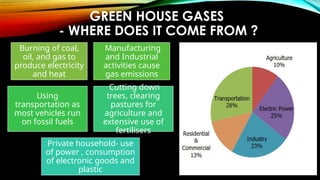
GREEN HOUSE GASES
- WHERE DOES IT COME FROM ?
Burning of coal,
oil, and gas to
produce electricity
and heat
Manufacturing
and Industrial
activities cause
gas emissions
Using
transportation as
most vehicles run
on fossil fuels
Cutting down
trees, clearing
pastures for
agriculture and
extensive use of
fertilisers
Private household- use
of power , consumption
of electronic goods and
plastic
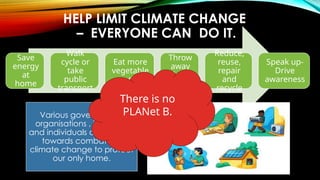
HELP LIMIT CLIMATE CHANGE
– EVERYONE CAN DO IT.
Save
energy
at
home
Walk
cycle or
take
public
transport
Eat more
vegetable
s
Throw
away
less
food
Reduce,
reuse,
repair
and
recycle
Speak up-
Drive
awareness
Various governments,
organisations , industries
and individuals are working
towards combatting
climate change to protect
our only home.
There is no
PLANet B.
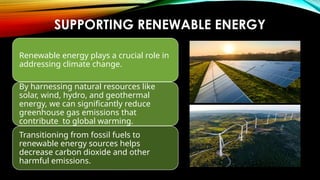
SUPPORTING RENEWABLE ENERGY
Renewable energy plays a crucial role in
addressing climate change.
By harnessing natural resources like
solar, wind, hydro, and geothermal
energy, we can significantly reduce
greenhouse gas emissions that
contribute to global warming.
Transitioning from fossil fuels to
renewable energy sources helps
decrease carbon dioxide and other
harmful emissions.
Climate change and its impactonsociety.pptx

Climate change and its impactonsociety.pptx

  • 2.
    THE SCIENCE BEHINDCLIMATE CHANGE Climate change refers to long-term shifts in temperatures and weather patterns. Human activities have produced atmospheric gases that have trapped more of the Sun’s energy in the Earth system. This extra energy has warmed the atmosphere, ocean, and land , causing widespread changes in the atmosphere, ocean and biosphere
  • 3.
    Earth’s greenhouse gases trapheat in the atmosphere and warm the planet. Main gases responsible for the greenhouse effect include:- Carbon dioxide Methane Nitrous oxide Water vapor THE GREENHOUSE EFFECT – A DEEPER LOOK Did you know - of all the human- driven emissions of carbon dioxide, approximately half were generated in the last 30 years alone.
  • 4.
    EFFECTS ON HUMAN’SAND THEIR HEALTH • Rising temperatures can lead to heat stress, heat exhaustion, and heat stroke . Heat-Related Illnesses • Increased air pollution and allergens can aggravate respiratory diseases like asthma and lung diseases Respiratory Issues • Changes in climate can expand the habitats of vectors like mosquitoes and ticks, leading to spread of diseases such as malaria, dengue fever, and Lyme disease. Vector-Borne Diseases • Climate change can disrupt food supply chains and lead to food shortages, malnutrition, and water scarcity. Food and Water Security • More frequent and severe weather events, such as hurricanes, floods, and wildfires, can lead to injuries, deaths, and displacement. Extreme Weather Events
  • 5.
    GREEN HOUSE GASES -WHERE DOES IT COME FROM ? Burning of coal, oil, and gas to produce electricity and heat Manufacturing and Industrial activities cause gas emissions Using transportation as most vehicles run on fossil fuels Cutting down trees, clearing pastures for agriculture and extensive use of fertilisers Private household- use of power , consumption of electronic goods and plastic
  • 6.
    HELP LIMIT CLIMATECHANGE – EVERYONE CAN DO IT. Save energy at home Walk cycle or take public transport Eat more vegetable s Throw away less food Reduce, reuse, repair and recycle Speak up- Drive awareness Various governments, organisations , industries and individuals are working towards combatting climate change to protect our only home. There is no PLANet B.
  • 7.
    SUPPORTING RENEWABLE ENERGY Renewableenergy plays a crucial role in addressing climate change. By harnessing natural resources like solar, wind, hydro, and geothermal energy, we can significantly reduce greenhouse gas emissions that contribute to global warming. Transitioning from fossil fuels to renewable energy sources helps decrease carbon dioxide and other harmful emissions.