How can we solve the Climate Change Debate?  Learning Objectives 1. To be able to evaluate the potential solutions to the Climate Change debate 2. To be able to apply your knowledge of the Climate Change Debate to suggest solutions. Do now: See next slide
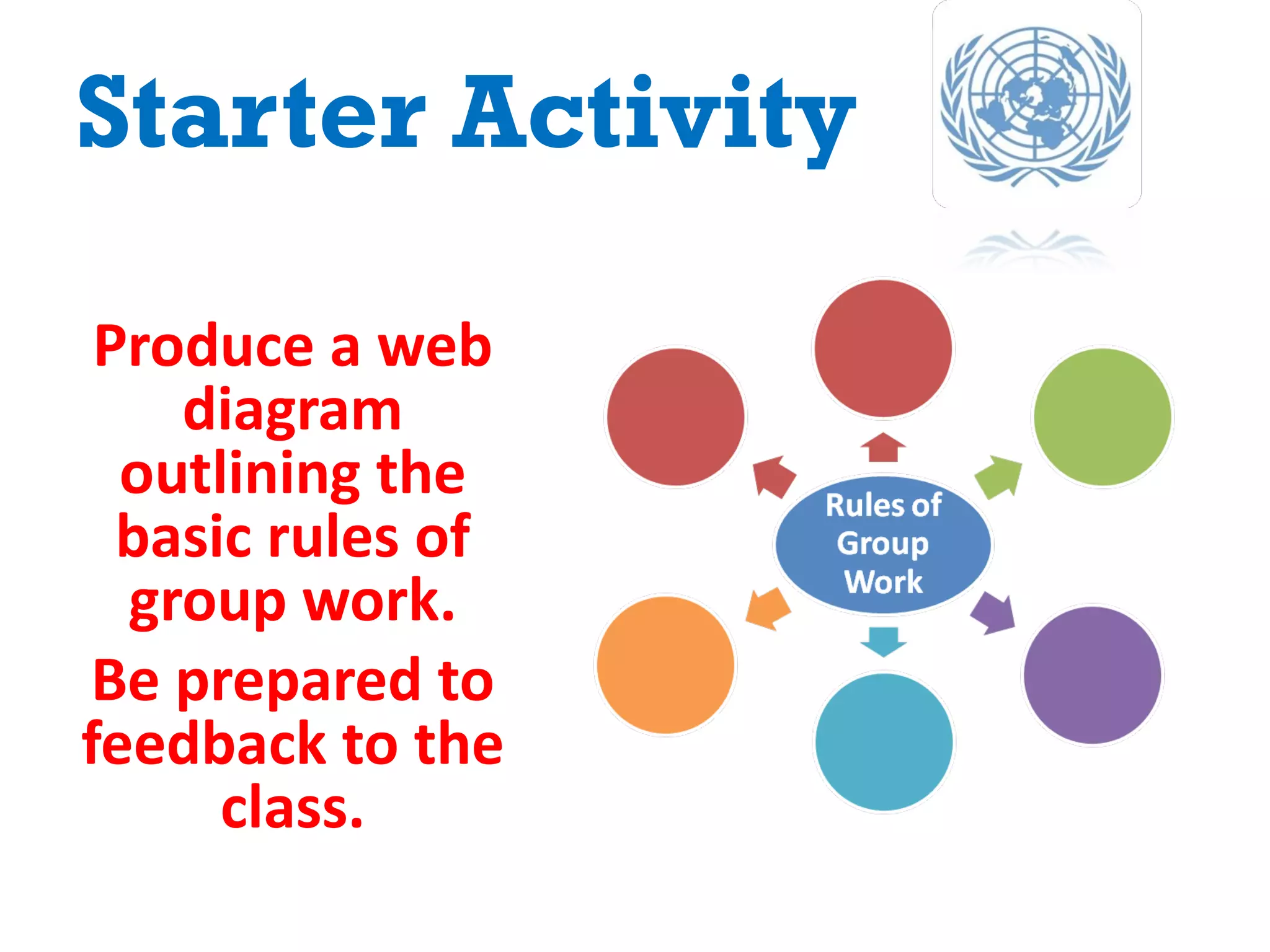
Starter Activity Produce a web diagram outlining the basic rules of group work. Be prepared to feedback to the class.
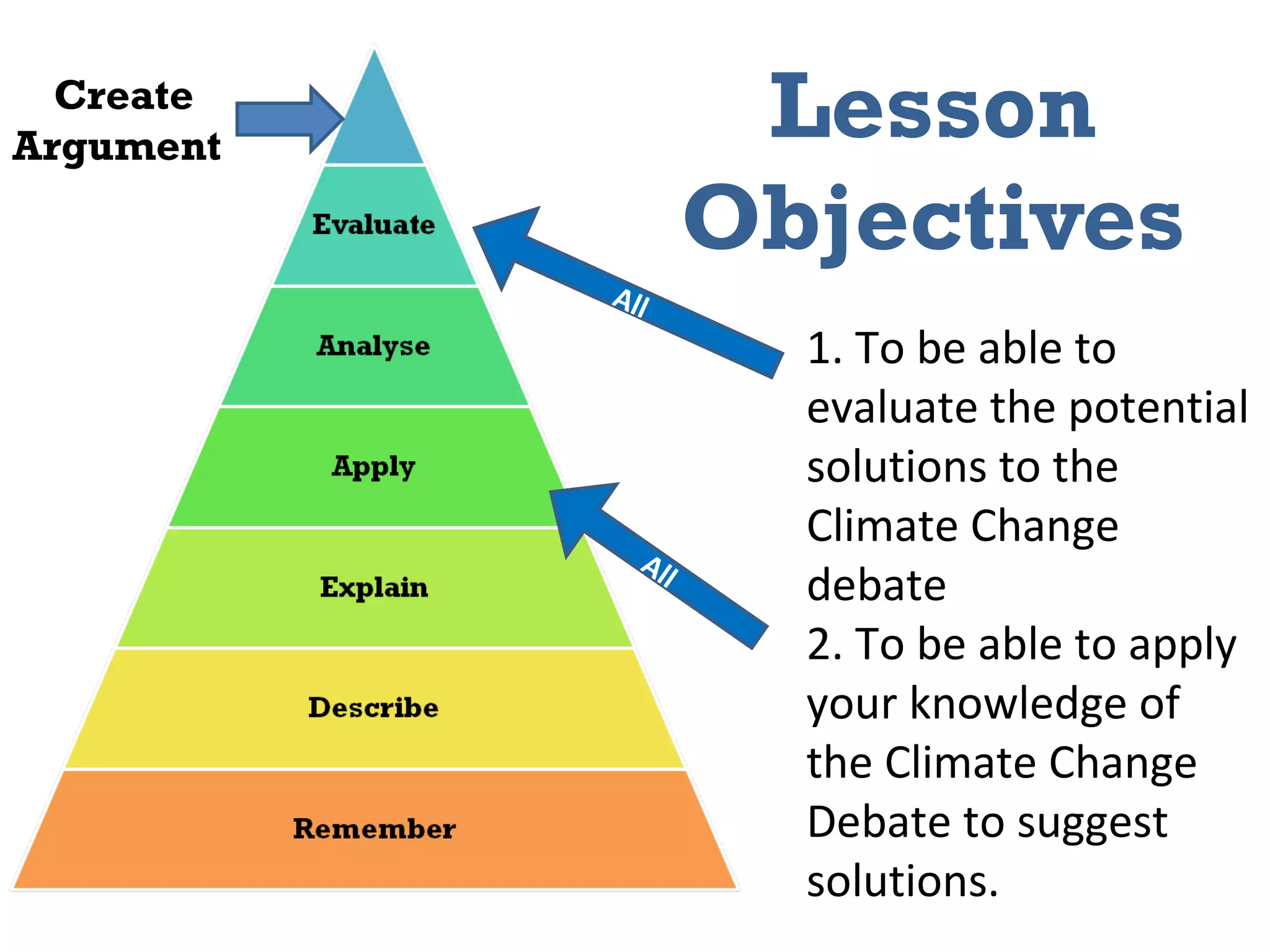
Lesson Objectives All 1. To be able to evaluate the potential solutions to the Climate Change debate 2. To be able to apply your knowledge of the Climate Change Debate to suggest solutions. All Create Argument
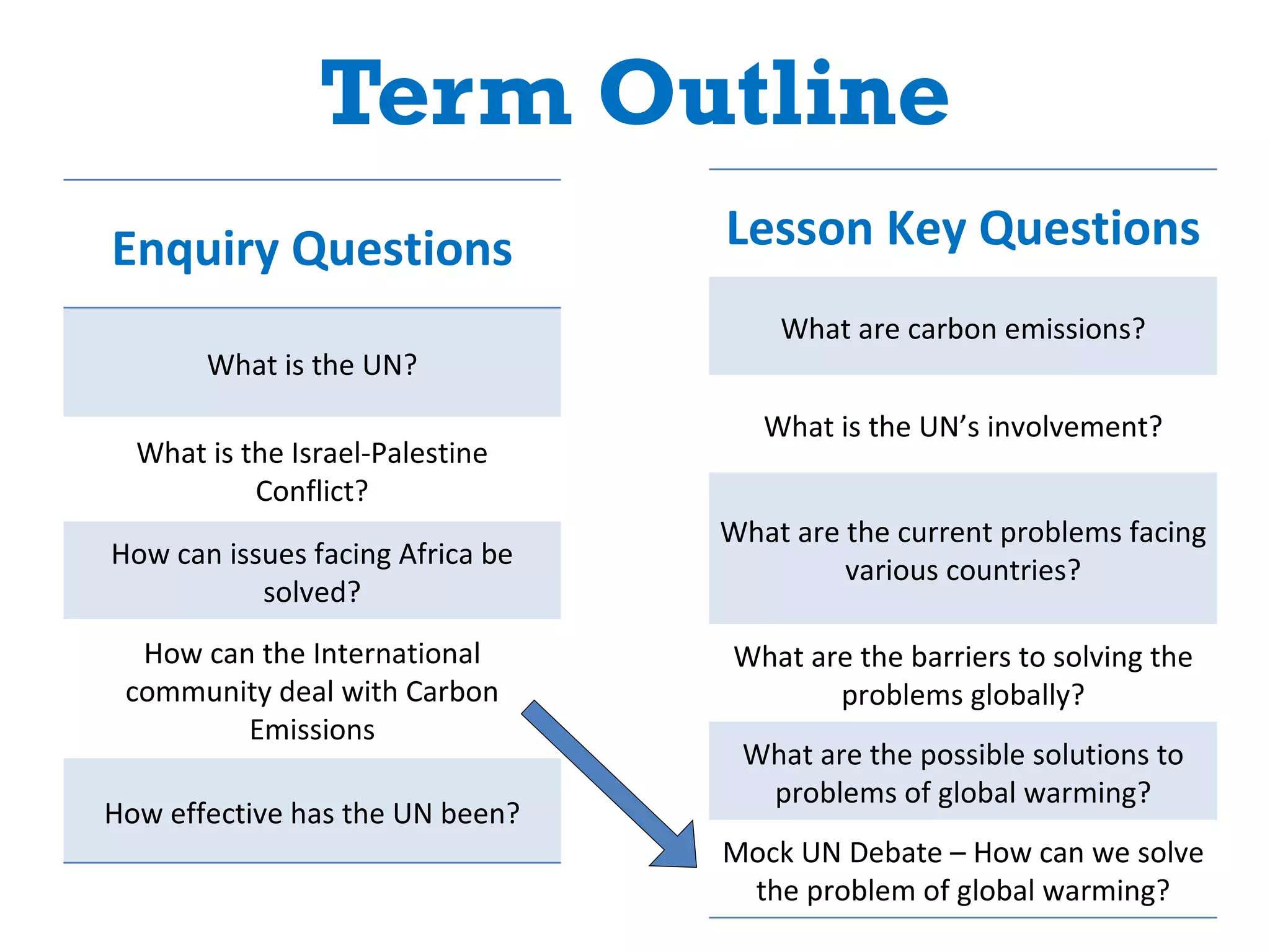
Term Outline Enquiry Questions What is the UN? What is the Israel-Palestine Conflict? How can issues facing Africa be solved? How can the International community deal with Carbon Emissions How effective has the UN been? Lesson Key Questions What are carbon emissions? What is the UN’s involvement? What are the current problems facing various countries? What are the barriers to solving the problems globally? What are the possible solutions to problems of global warming? Mock UN Debate – How can we solve the problem of global warming?
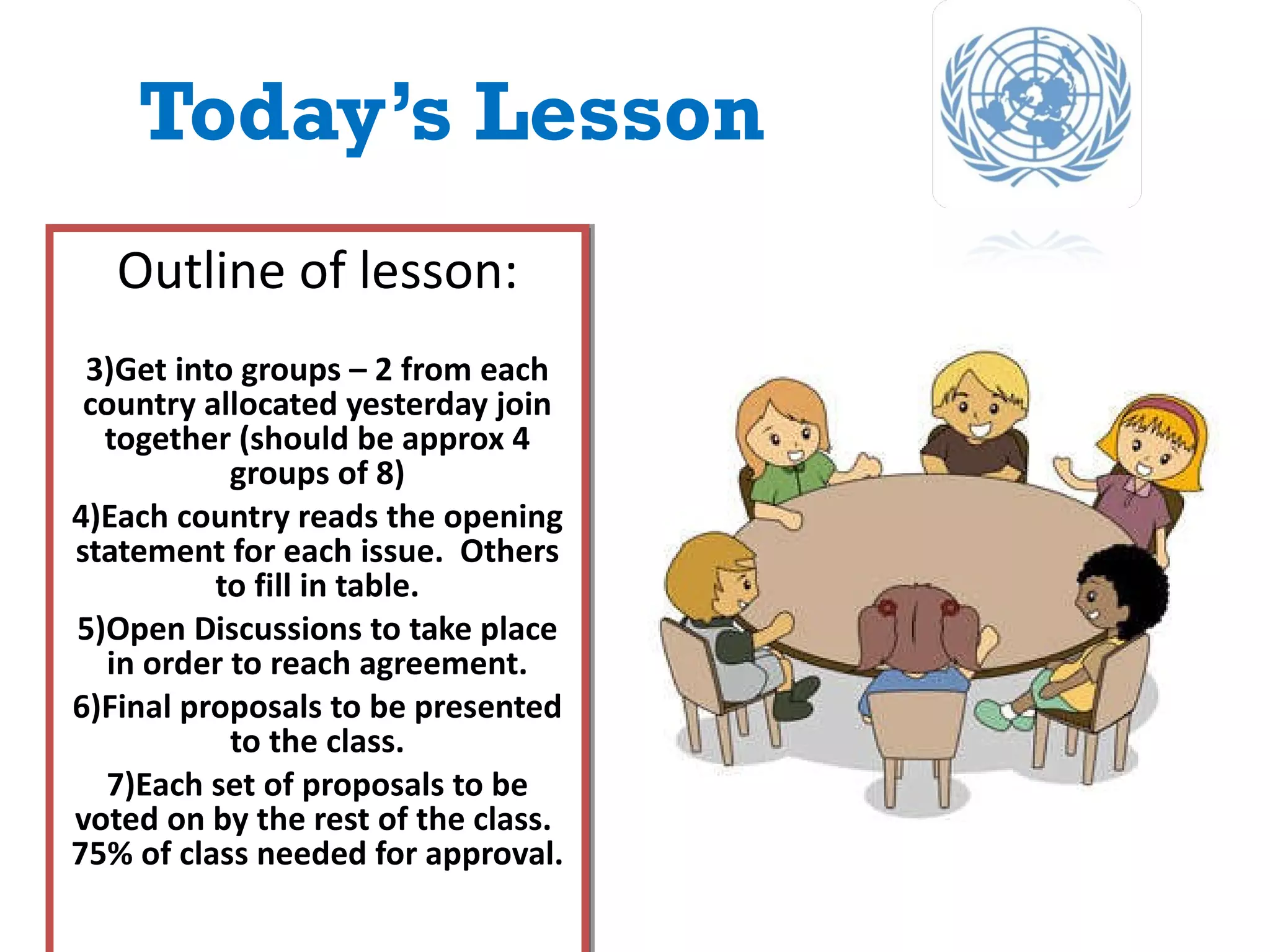
Today’s Lesson Outline of lesson: Get into groups – 2 from each country allocated yesterday join together (should be approx 4 groups of 8) Each country reads the opening statement for each issue.  Others to fill in table. Open Discussions to take place in order to reach agreement. Final proposals to be presented to the class. Each set of proposals to be voted on by the rest of the class.  75% of class needed for approval.
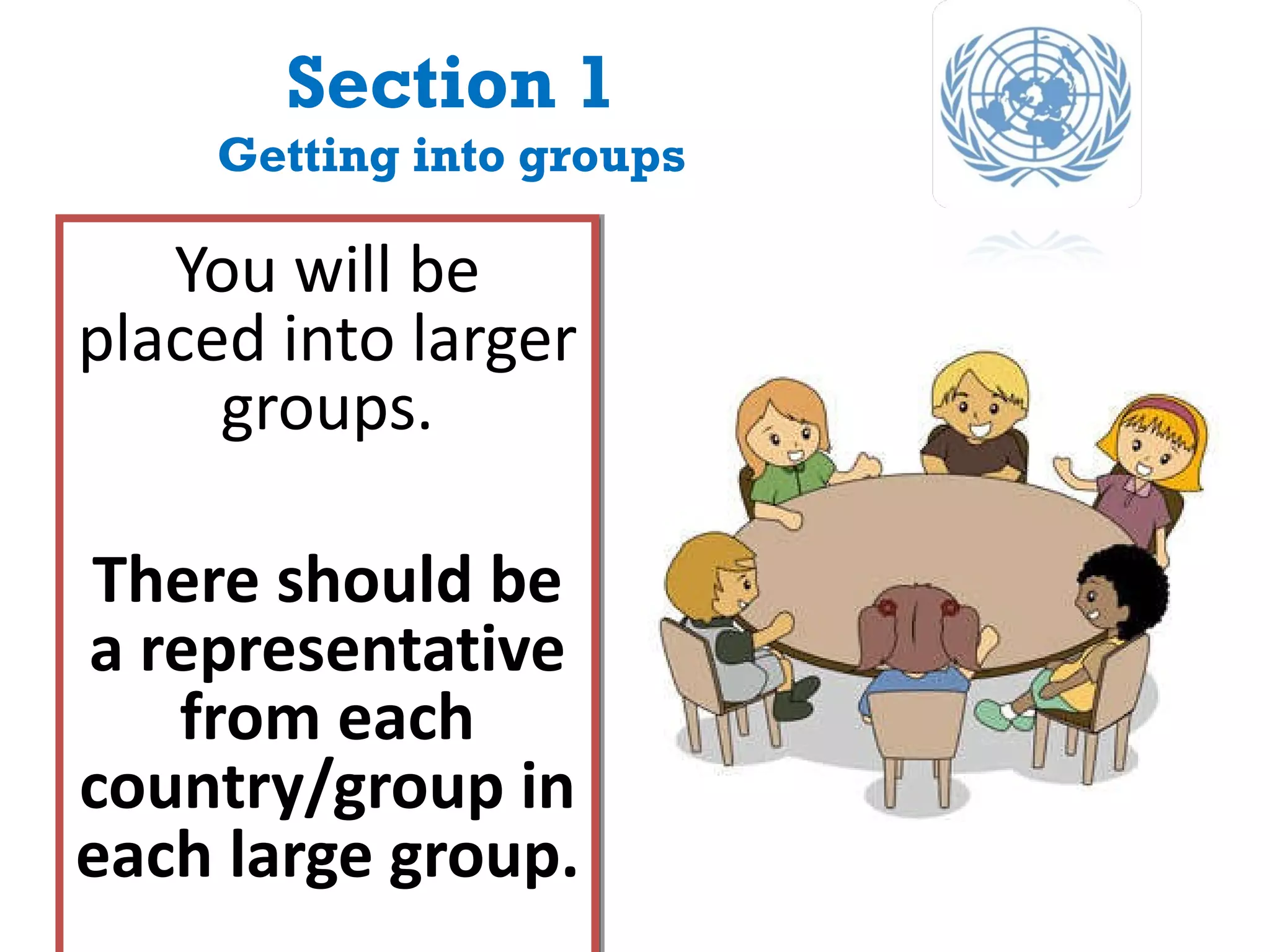
Section 1 Getting into groups You will be placed into larger groups. There should be a representative from each country/group in each large group.
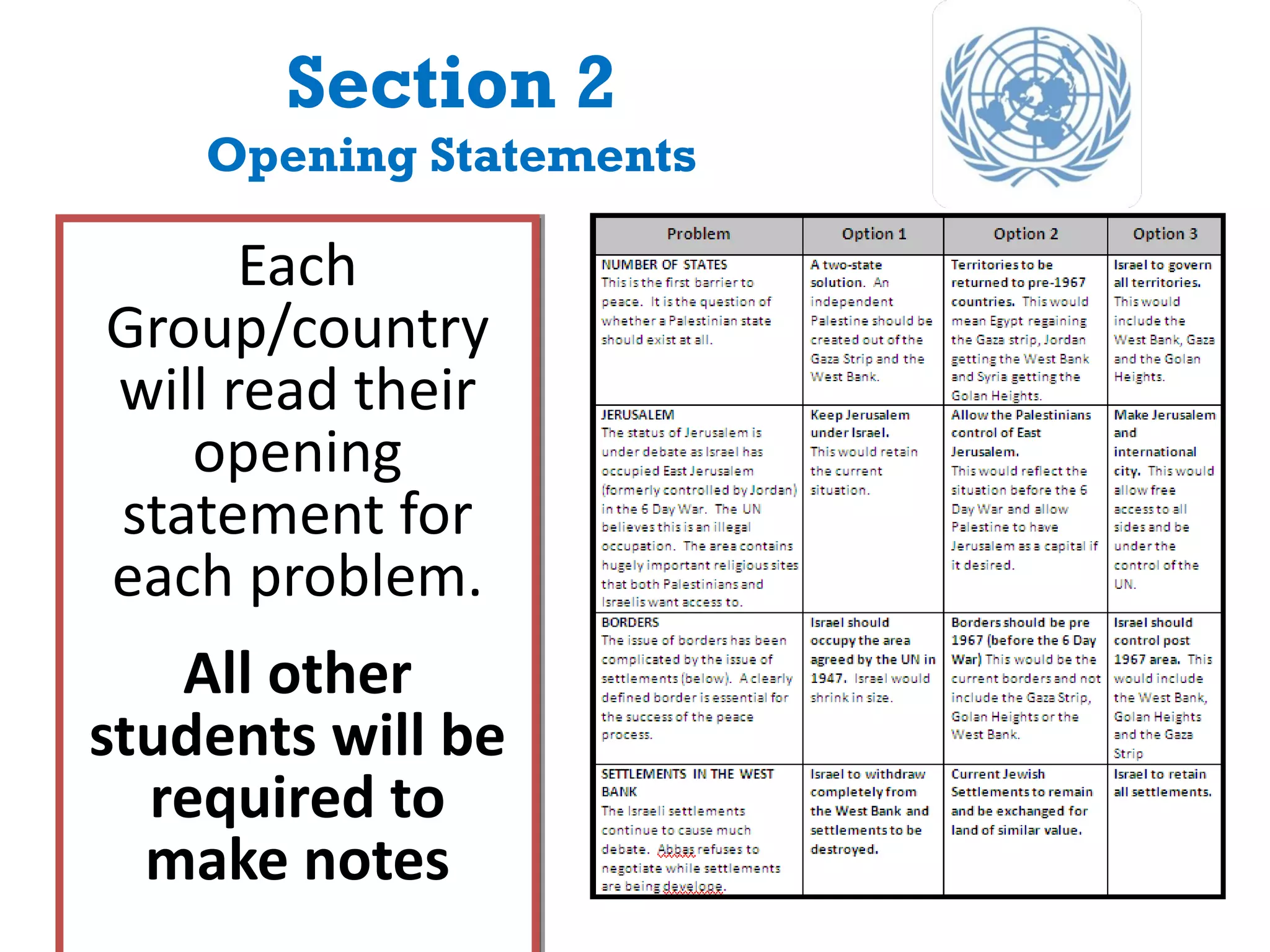
Section 2 Opening Statements Each Group/country will read their opening statement for each problem. All other students will be required to make notes
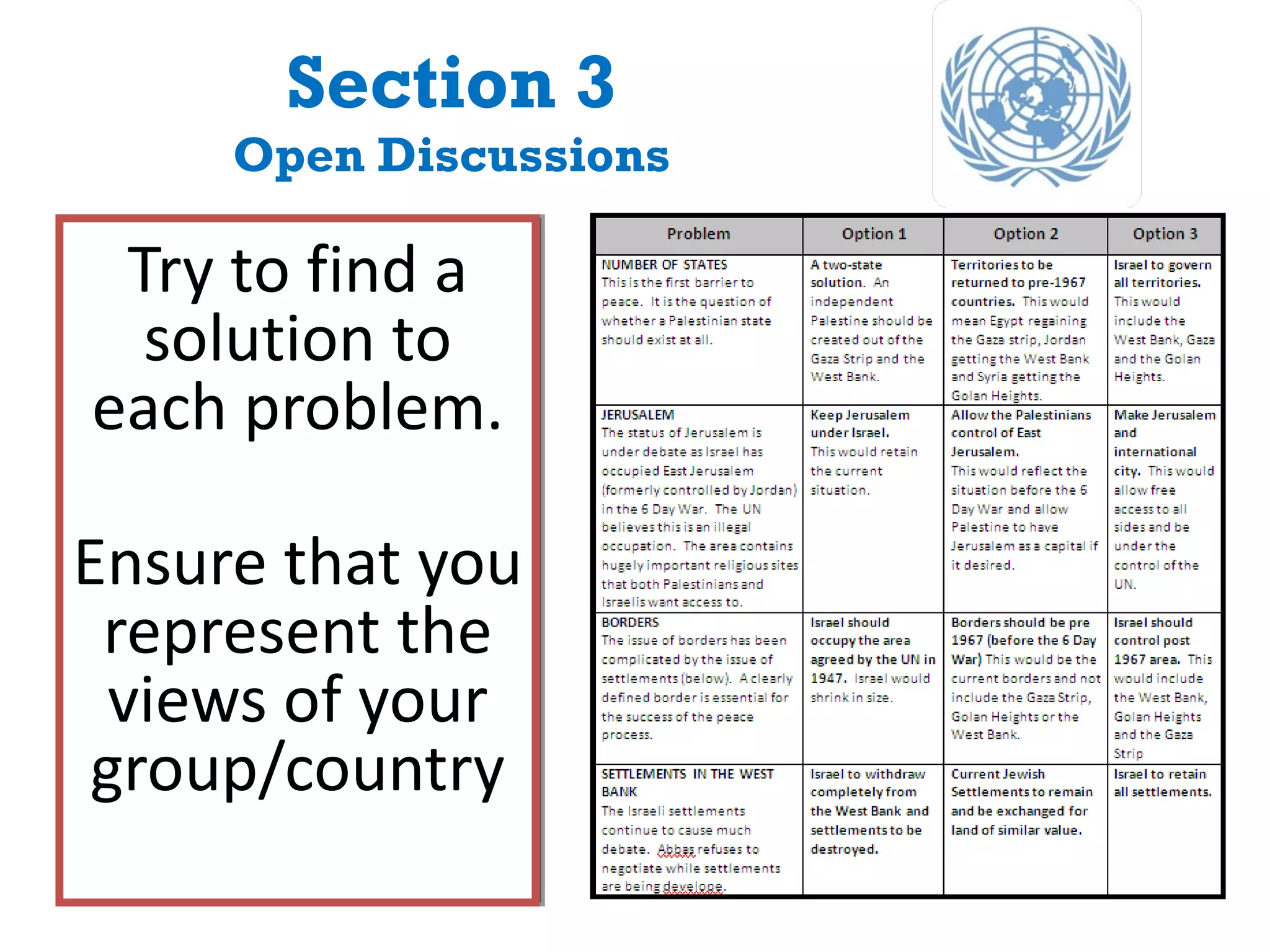
Section 3 Open Discussions Try to find a solution to each problem. Ensure that you represent the views of your group/country
Section 4 and 5 Presentations and votes Present your solution to the class. The rest of the group will then vote on whether they accept your proposals.  75% is needed for the resolution to be successful

Climate Change 6

  • 1.
    How can wesolve the Climate Change Debate? Learning Objectives 1. To be able to evaluate the potential solutions to the Climate Change debate 2. To be able to apply your knowledge of the Climate Change Debate to suggest solutions. Do now: See next slide
  • 2.
    Starter Activity Producea web diagram outlining the basic rules of group work. Be prepared to feedback to the class.
  • 3.
    Lesson Objectives All1. To be able to evaluate the potential solutions to the Climate Change debate 2. To be able to apply your knowledge of the Climate Change Debate to suggest solutions. All Create Argument
  • 4.
    Term Outline EnquiryQuestions What is the UN? What is the Israel-Palestine Conflict? How can issues facing Africa be solved? How can the International community deal with Carbon Emissions How effective has the UN been? Lesson Key Questions What are carbon emissions? What is the UN’s involvement? What are the current problems facing various countries? What are the barriers to solving the problems globally? What are the possible solutions to problems of global warming? Mock UN Debate – How can we solve the problem of global warming?
  • 5.
    Today’s Lesson Outlineof lesson: Get into groups – 2 from each country allocated yesterday join together (should be approx 4 groups of 8) Each country reads the opening statement for each issue. Others to fill in table. Open Discussions to take place in order to reach agreement. Final proposals to be presented to the class. Each set of proposals to be voted on by the rest of the class. 75% of class needed for approval.
  • 6.
    Section 1 Gettinginto groups You will be placed into larger groups. There should be a representative from each country/group in each large group.
  • 7.
    Section 2 OpeningStatements Each Group/country will read their opening statement for each problem. All other students will be required to make notes
  • 8.
    Section 3 OpenDiscussions Try to find a solution to each problem. Ensure that you represent the views of your group/country
  • 9.
    Section 4 and5 Presentations and votes Present your solution to the class. The rest of the group will then vote on whether they accept your proposals. 75% is needed for the resolution to be successful