Introduction to ClassroomOfficers
● What are classroom officers?
● Why do we need them?
● How can you become a classroom
officer?
● What qualities make a good classroom
leader?
3.
The MAYOR
● Leadsthe class
● Represents the class in school
events
● Conducts class meetings
● What would you do if you were
class president?
4.
The VICE-MAYOR
● Assiststhe president
● Takes over when the president is
absent
● Helps organize class activities
● How can a vice president support
their president?
5.
The Class Secretary
●Records minutes during class meetings
● Manages class correspondence and
announcements
● Record attendance
● Keeps track of important dates and deadlines
● Helps create and distribute class newsletters
● Why is staying organized crucial for a
secretary?
6.
The Class Treasurer
●Manages the class budget and funds
● Keeps accurate records of income and
expenses
● Reports on financial matters to the class
● Helps plan fundraising activities
● How can a treasurer ensure financial
transparency?
7.
The Class Auditor
●Reviews financial records for accuracy
● Ensures proper use of class funds
● Reports any discrepancies to officers
and advisors
● Helps create financial reports
● Why is the auditor's role important for
accountability?
8.
The Business Manager
●Oversees class projects and initiatives
● Coordinates with local businesses for
sponsorships
● Helps manage class merchandise or product
sales
● Assists in creating business plans for class
activities
● What business skills could you develop in this
role?
9.
The Public InformationOfficer (PIO)
● Manages class social media accounts
● Creates and distributes promotional materials
● Keeps the class informed about school events
● Liaises with school newspaper and yearbook
teams
● How would you engage your classmates as
PIO?
10.
The Peace Officers
●Maintain order during class meetings
and events
● Mediate conflicts between classmates
● Promote a positive and respectful class
environment
● Assist in enforcing class and school
rules
● What qualities make a good peace
officer?
11.
Working as aTeam
● Importance of communication between officers
● Regular officer meetings and planning sessions
● Supporting each other's initiatives and ideas
● Resolving conflicts professionally
● How can officers build a strong team dynamic?
12.
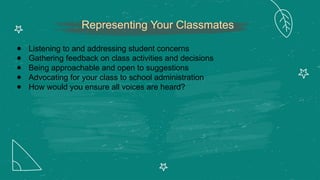
Representing Your Classmates
●Listening to and addressing student concerns
● Gathering feedback on class activities and decisions
● Being approachable and open to suggestions
● Advocating for your class to school administration
● How would you ensure all voices are heard?
13.
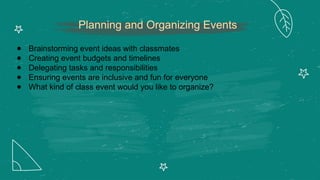
Planning and OrganizingEvents
● Brainstorming event ideas with classmates
● Creating event budgets and timelines
● Delegating tasks and responsibilities
● Ensuring events are inclusive and fun for everyone
● What kind of class event would you like to organize?
14.
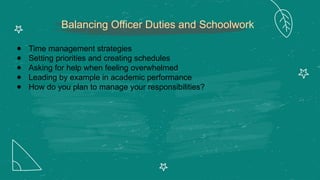
Balancing Officer Dutiesand Schoolwork
● Time management strategies
● Setting priorities and creating schedules
● Asking for help when feeling overwhelmed
● Leading by example in academic performance
● How do you plan to manage your responsibilities?
15.
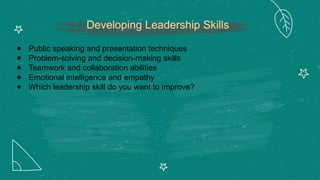
Developing Leadership Skills
●Public speaking and presentation techniques
● Problem-solving and decision-making skills
● Teamwork and collaboration abilities
● Emotional intelligence and empathy
● Which leadership skill do you want to improve?
16.
Creating a PositiveClass Culture
● Promoting inclusivity and respect
● Organizing team-building activities
● Recognizing and celebrating classmates' achievements
● Addressing bullying and negative behaviors
● How can you contribute to a positive class environment?
Editor's Notes
#2 Why do we need classroom officers?
We need classroom officers because they:
Promote order and teamwork in the classroom.
Help the teacher manage tasks like collecting assignments or leading group activities.
Encourage responsibility among students.
Give students a voice, as officers can speak on behalf of the class.
Build leadership skills that are useful in school and life.
How can you become a classroom officer?
You can become a classroom officer by:
Volunteering or being nominated during the class election.
Campaigning, where you share your goals and how you plan to help the class.
Earning your classmates’ votes during the election.
Showing interest and commitment to serve and lead responsibly.
What qualities make a good classroom leader?
A good classroom leader is someone who is:
Responsible – does their tasks on time and takes their duties seriously.
Respectful – treats everyone fairly and kindly.
Honest – tells the truth and is trustworthy.
Helpful – ready to assist both classmates and teachers.
Confident – can speak up and make decisions for the good of the class.
Team player – works well with others and listens to different opinions.
#3 ✅ Responsibilities:
Leads the Class
Guides classmates during activities and classroom routines.
Sets a good example in behavior, punctuality, and participation.
Conducts Class Meetings
Leads discussions about class concerns, plans, or problems.
Makes sure everyone has a chance to share their ideas.
Represents the Class in School Events
Acts as the class spokesperson during assemblies, contests, and programs.
Delivers messages or reports from the class when needed.
Helps Maintain Order
Encourages classmates to follow rules and be respectful.
Assists in keeping the classroom a safe, clean, and peaceful space.
Coordinates with the Teacher
Communicates class needs or concerns to the teacher.
Helps plan classroom activities or projects.
🌱 Why is this role important?
Being a Mayor teaches leadership, responsibility, and service. The class president plays a big part in creating a positive and respectful classroom environment where everyone feels included and supported.
What would you do if you were class president?
If I were class president, I would:
Listen to my classmates and bring their concerns to the teacher.
Organize clean-up drives and make sure everyone is involved.
Encourage teamwork so no one feels left out.
Promote respect and kindness in the classroom.
Support the teacher with announcements and activities.
#4 Role:
The Vice President is the second-in-command in the class leadership team. This student works closely with the President (Mayor) to help lead the class and takes charge when the President is not around.
✅ Responsibilities:
Assists the President
Helps carry out plans and decisions made during class meetings.
Supports the President in leading activities and managing tasks.
Takes Over When the President is Absent
Steps in to lead meetings or class tasks when the President is unavailable.
Ensures leadership continues smoothly.
Helps Organize Class Activities
Helps plan events, group work, celebrations, and special tasks.
Coordinates with other officers to make sure everything runs well.
💡 How can a Vice President support their President?
A Vice President can support their President by:
Being dependable – always ready to help with tasks or decisions.
Communicating clearly – discussing class matters with the President.
Offering suggestions – sharing ideas to improve class activities.
Working as a team – cooperating with all officers to lead fairly.
Stepping up when needed – taking responsibility if the President is absent.
#5 📝 Secretary
Role:
The Secretary is in charge of class records and communication. This officer ensures that important information is written down, shared, and remembered by everyone in the class.
✅ Responsibilities:
Records Minutes During Class Meetings
Writes down what was discussed and decided during meetings.
Keeps a clear record for future reference.
Manages Class Correspondence and Announcements
Shares updates and messages from the teacher or other officers.
Posts or announces reminders for the class.
Records Attendance
Keeps track of who is present or absent each day.
Submits attendance to the teacher as needed.
Keeps Track of Important Dates and Deadlines
Reminds the class of upcoming tests, projects, or events.
Helps everyone stay on schedule.
Helps Create and Distribute Class Newsletters
Assists in making newsletters or bulletin board updates.
Shares highlights and important class news.
❓Why is staying organized crucial for a Secretary?
Staying organized is important for a Secretary because:
📋 They handle many tasks at once – like notes, attendance, and announcements.
🕒 Deadlines must be tracked carefully so the class doesn’t miss important events.
💬 Clear communication depends on accuracy, and that starts with neat records.
📁 An organized secretary helps the class run smoothly, avoids confusion, and supports the teacher and officers with correct information.
#6 💰 Treasurer
Role:
The Treasurer is responsible for managing the class’s money. This officer ensures that all class funds are used properly, recorded accurately, and reported clearly.
✅ Responsibilities:
Manages the Class Budget and Funds
Keeps all the money collected for class activities, projects, or events.
Plans how funds will be used responsibly.
Keeps Accurate Records of Income and Expenses
Records how much money comes in and how much is spent.
Updates the class on the current financial status.
Reports on Financial Matters to the Class
Shares updates during class meetings on where the money went.
Prepares reports with receipts or records if needed.
Helps Plan Fundraising Activities
Suggests and assists with fundraising ideas like contests or events.
Makes sure money raised is counted and recorded properly.
❓ How can a Treasurer ensure financial transparency?
A Treasurer can ensure financial transparency by:
✅ Keeping detailed and honest records of all money received and spent.
📂 Organizing receipts and documentation for every transaction.
📢 Reporting regularly to the class so everyone knows how funds are used.
👀 Allowing classmates and teachers to review financial records when needed.
🤝 Being open and honest about the class's financial situation to build trust.
#7 📊 Auditor
Role:
The Auditor is the class officer who reviews and checks the Treasurer’s records to make sure all financial matters are accurate, honest, and transparent. This officer plays an important part in keeping everyone accountable.
✅ Responsibilities:
Reviews Financial Records for Accuracy
Double-checks the Treasurer’s income and expense reports.
Makes sure that all money collected and spent is recorded correctly.
Ensures Proper Use of Class Funds
Confirms that funds are used only for approved class purposes.
Helps prevent misuse or loss of money.
Reports Any Discrepancies to Officers and Advisors
Identifies and shares any mistakes or missing details in financial records.
Works with the Treasurer to correct issues immediately.
Helps Create Financial Reports
Assists in preparing clear, honest reports to share with the class and teacher.
Makes sure reports are neat, complete, and easy to understand.
❓ Why is the Auditor's role important for accountability?
The Auditor's role is important because:
🔍 They serve as a financial checker—making sure the class’s money is handled properly.
🛡 They protect the class from mistakes or misuse of funds by reviewing all records.
📈 They help build trust by ensuring reports are accurate and nothing is hidden.
👥 They promote fairness and honesty, which are key to being responsible leaders.
🤝 Their presence reminds all officers to manage class resources with care and integrity.
#8 Business Manager
Role:
The Business Manager helps the class by overseeing business-related tasks, especially during fundraising activities, school projects, or product sales. This officer ensures that class initiatives are well-planned, organized, and financially successful.
✅ Responsibilities:
Oversees Class Projects and Initiatives
Helps organize class enterprises like food sales, t-shirt printing, or charity drives.
Makes sure projects are realistic, well-planned, and profitable.
Coordinates with Local Businesses for Sponsorships
Reaches out to potential partners for support or donations.
Writes letters or meets with business owners for sponsorships or materials.
Helps Manage Class Merchandise or Product Sales
Assists in pricing, promoting, and selling items.
Makes sure sales run smoothly and earnings are recorded.
Assists in Creating Business Plans for Class Activities
Helps set goals, estimate costs, and forecast profits for class projects.
Works closely with the Treasurer and other officers to ensure success.
❓ What business skills could you develop in this role?
As a Business Manager, you can develop valuable business skills such as:
💼 Planning and organizing – creating business plans and schedules.
🗣 Communication – writing proposals, negotiating, and talking to sponsors.
💡 Marketing – promoting class products or events to attract buyers or sponsors.
💵 Basic budgeting and pricing – helping determine fair prices and estimating profit.
🤝 Teamwork and leadership – working with officers to lead successful projects.
📊 Sales tracking and reporting – monitoring product sales and reporting outcomes.
#9 Public Information Officer (PIO)
Role:
The PIO is responsible for sharing news, updates, and announcements with the class. This officer helps promote class activities and ensures that classmates are informed and involved.
✅ Responsibilities:
Manages Class Social Media Accounts
Posts updates about class events, reminders, and achievements.
Uses creative visuals and captions to keep classmates engaged.
Creates and Distributes Promotional Materials
Designs posters, flyers, and digital content for class or school activities.
Shares information in an eye-catching and clear way.
Keeps the Class Informed About School Events
Announces upcoming activities, deadlines, and school programs.
Makes sure everyone knows what’s happening and how to get involved.
Liaises with School Newspaper and Yearbook Teams
Sends in class updates or photos for publication.
Represents the class when sharing achievements or special moments.
❓ How would you engage your classmates as PIO?
As PIO, I would engage my classmates by:
🎨 Creating fun and colorful posters or social media posts to make announcements more exciting.
📱 Posting reminders and updates regularly, using friendly and positive language.
📸 Highlighting class achievements through photos and short stories to build class pride.
🎤 Interviewing classmates or featuring student voices in updates to make everyone feel involved.
💬 Encouraging classmates to share their ideas and feedback, making communication two-way, not just one-way.
#10 🕊️ Peace Officer
Role:
The Peace Officer is in charge of helping maintain peace, order, and discipline in the classroom. This student leader helps ensure that everyone feels safe, respected, and supported.
✅ Responsibilities:
Maintain Order During Class Meetings and Events
Helps keep classmates focused and well-behaved during discussions or activities.
Assists in organizing the class into lines or groups peacefully.
Mediate Conflicts Between Classmates
Listens to both sides during disagreements.
Helps find fair and respectful solutions with support from the teacher if needed.
Promote a Positive and Respectful Class Environment
Encourages kindness, inclusion, and teamwork.
Leads by example in showing good behavior.
Assist in Enforcing Class and School Rules
Reminds classmates to follow rules calmly and respectfully.
Helps teachers with discipline in a gentle and fair way.
❓ What qualities make a good peace officer?
A good peace officer should be:
🤝 Fair and neutral – treats everyone equally, without taking sides.
🧘 Calm under pressure – doesn’t panic or lose temper during conflicts.
👂 A good listener – listens to all opinions before helping solve problems.
🤗 Respectful and kind – shows empathy and care for others.
💪 Confident and brave – can speak up for what is right, even if it’s difficult.
🌟 Role model – sets a good example in following rules and showing good behavior.
#11 ✅ Key Elements of a Strong Officer Team:
Importance of Communication Between Officers
Sharing updates, plans, and concerns clearly and regularly.
Using group chats, meetings, or written notes to stay connected.
Regular Officer Meetings and Planning Sessions
Meeting regularly to organize upcoming activities.
Discussing problems and brainstorming solutions as a group.
Supporting Each Other’s Initiatives and Ideas
Encouraging one another’s projects or suggestions.
Offering help when someone is struggling or overloaded.
Resolving Conflicts Professionally
Talking calmly when disagreements happen.
Listening with respect and focusing on solutions, not blame.
❓ How can officers build a strong team dynamic?
Officers can build a strong team dynamic by:
🗣 Practicing open and honest communication – always updating one another and listening to everyone’s ideas.
🧠 Respecting each role – understanding that each officer has unique duties and strengths.
🎯 Setting common goals – working toward shared values like fairness, respect, and class improvement.
🤲 Helping one another – offering support, especially during busy times or challenging tasks.
🤗 Celebrating successes together – recognizing achievements to build trust and motivation.
🧩 Solving problems as a team – staying calm and respectful when conflicts arise, focusing on solutions.
#12 ✅ Responsibilities:
Listening to and Addressing Student Concerns
Pays attention to classmates’ worries or problems.
Shares these concerns with the class officers or teacher in a respectful way.
Gathering Feedback on Class Activities and Decisions
Asks classmates how they feel about recent events or plans.
Collects suggestions to improve future activities.
Being Approachable and Open to Suggestions
Makes classmates feel comfortable speaking up.
Keeps communication respectful and private when needed.
Advocating for the Class to School Administration
Represents the class during school council or committee meetings.
Speaks up about student needs and ideas to the proper authorities.
❓ How would you ensure all voices are heard?
To ensure all voices are heard, I would:
🧏 Create anonymous suggestion boxes or surveys so even shy classmates can share.
🤝 Have regular “check-in” times where students can talk freely about class issues.
💬 Listen actively and without judgment, showing classmates that their opinions matter.
📢 Bring every concern to the proper officer or teacher, whether big or small.
🤲 Make sure no one is left out, especially quiet or less confident classmates.
🔁 Give feedback after action, letting students know their voices led to real change.