Before we get started-- In the chat
box, please write your first name and
tell us if you consider yourself a:
1. Galactic Explorer or Artist
2. Animal Lover or World Traveler
3. Healer or Helper
Citizen Science
Kids Can Do At Home
With AnnMarie Kolakowski
Youth Services Librarian
Pasadena Public Library
Friday, May 8, 2020
What is “citizen science”?
Find lots of great projects on
SciStarter.org or Zooniverse.org!
Citizen Science for
Galactic Explorers
(and Artists, too!)
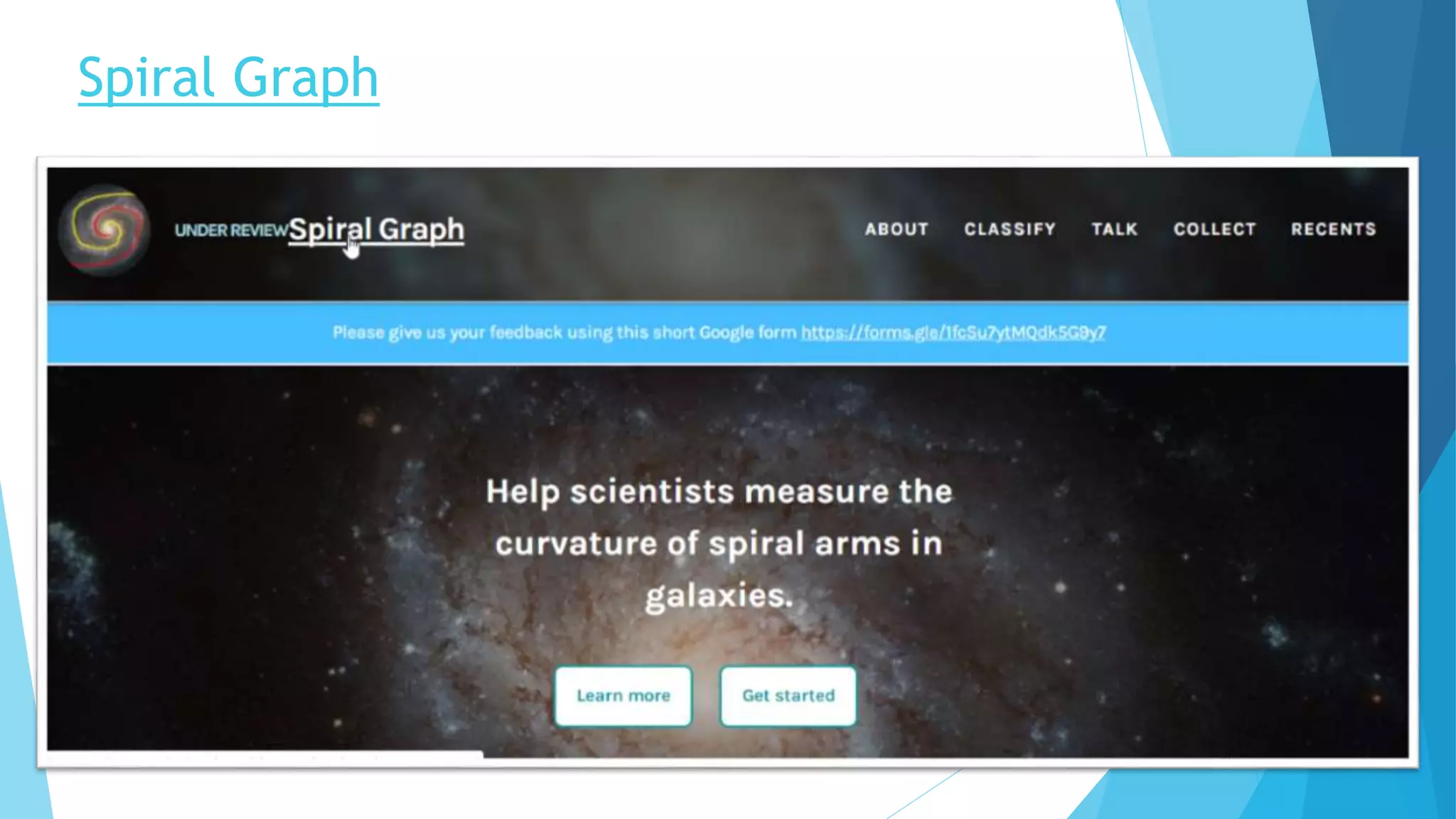
Spiral Graph
Help scientists
determine the
shape, size and
structure of
galaxies, and
draw the spiral
arms that might
be hard for
their computers
to spot.
You’ll be asked first to
say how structured the
galaxy is. You’ll call it
“smooth” if it just
looks like a big ball of
light.
Is this galaxy smooth,
or structured? Write
your answer in the
chat!
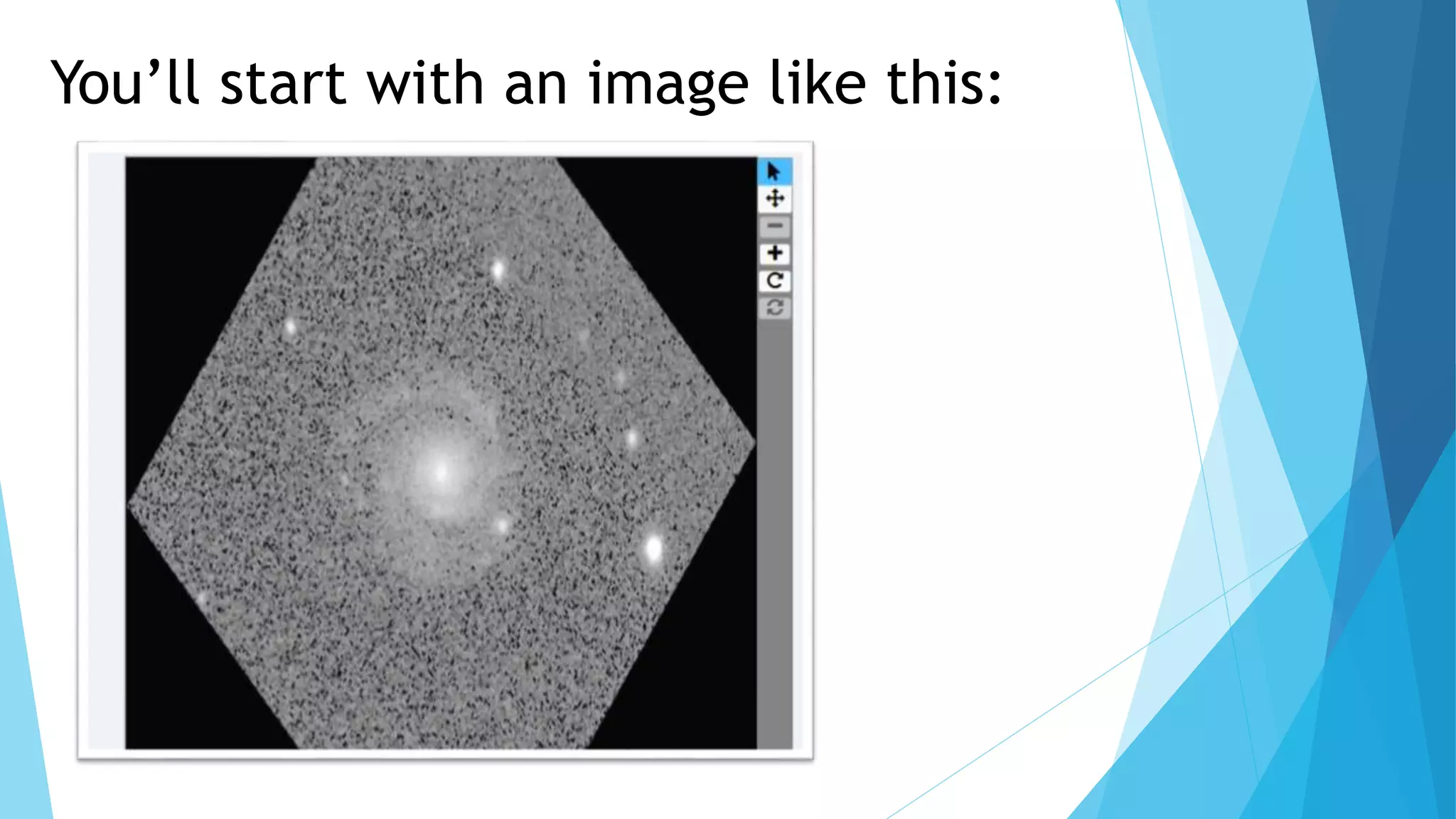
You’ll start with an image like this:
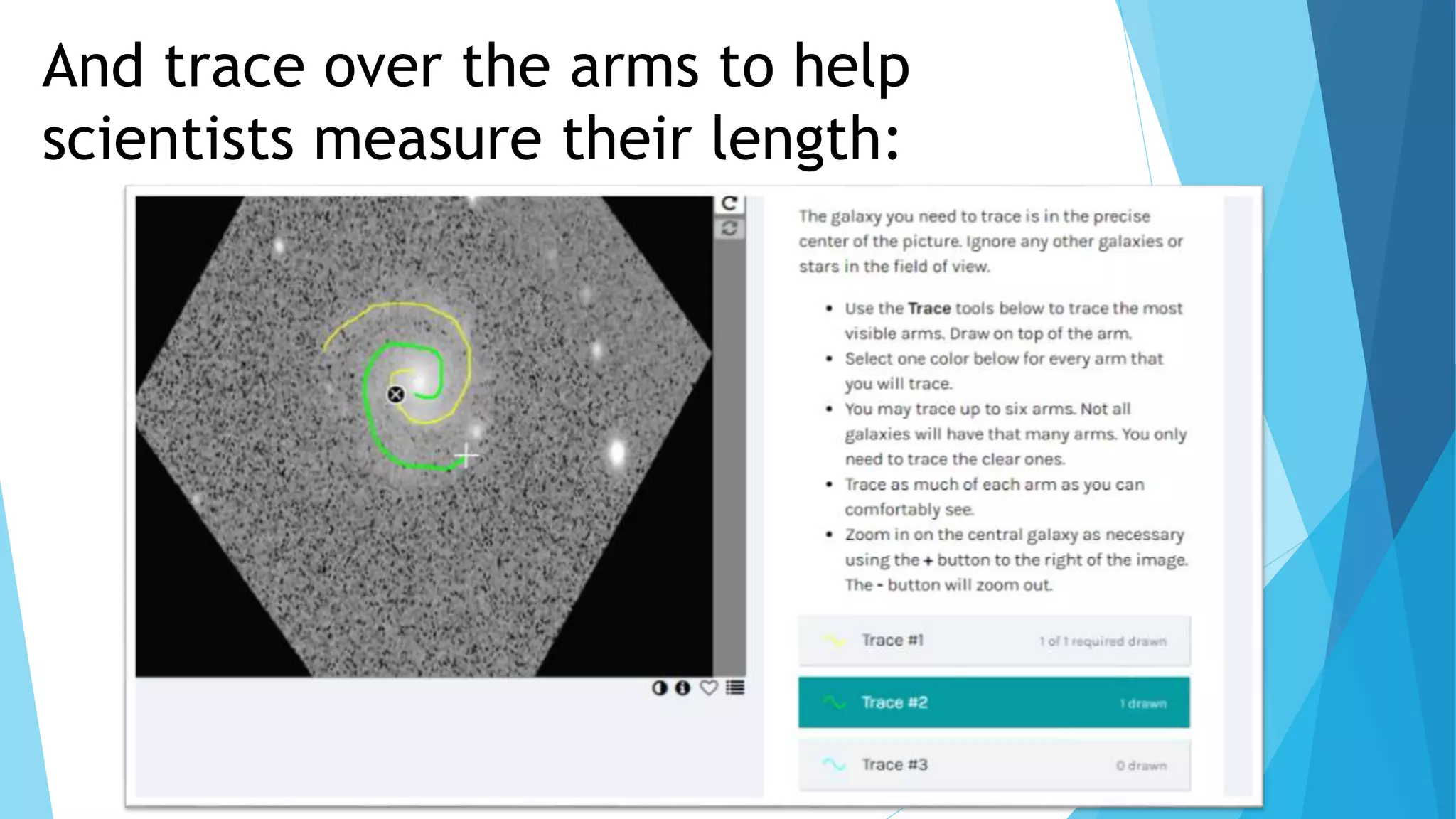
And trace over the arms to help
scientists measure their length:
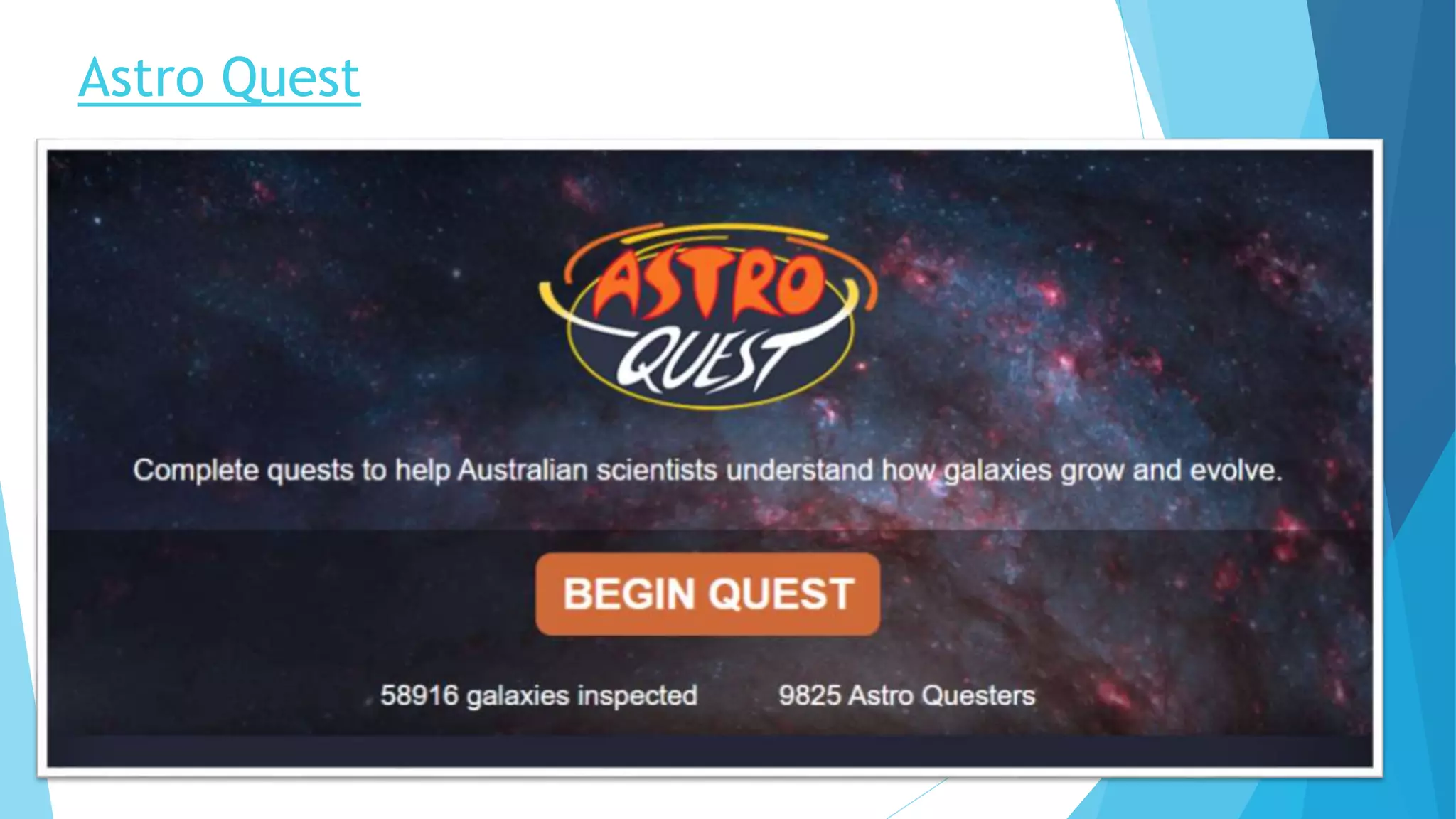
Astro Quest
Help a computer
map galaxies.
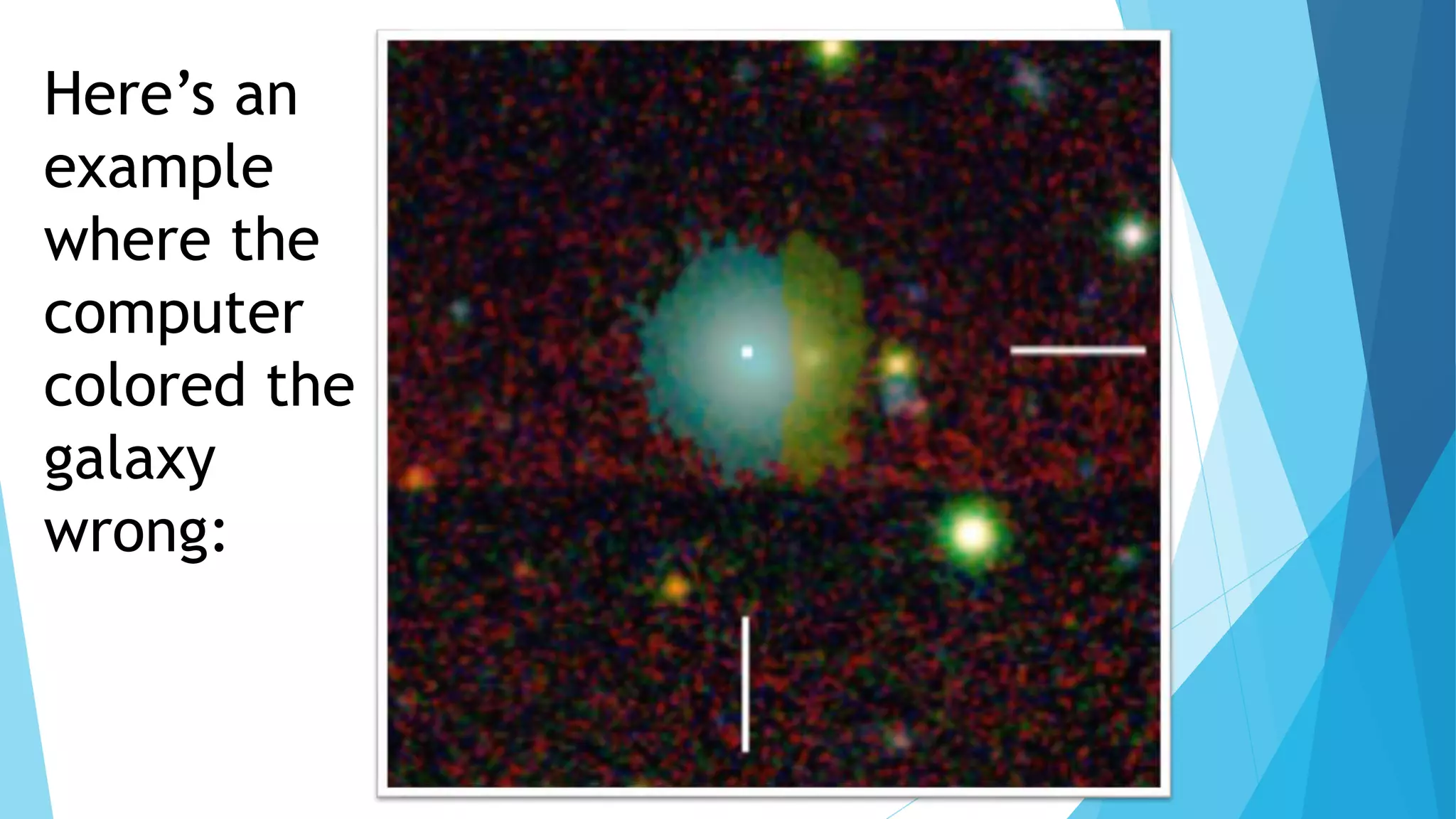
Check to see that
it covered the
entire galaxy in
one color. And
make sure any
overlapping
galaxies or stars
are shown in a
different color.
Here’s an
example
where the
computer
colored the
galaxy
wrong:
So we edit it…
…until the
whole galaxy is
covered and
there is just a
small circle
showing the
overlapping
star:
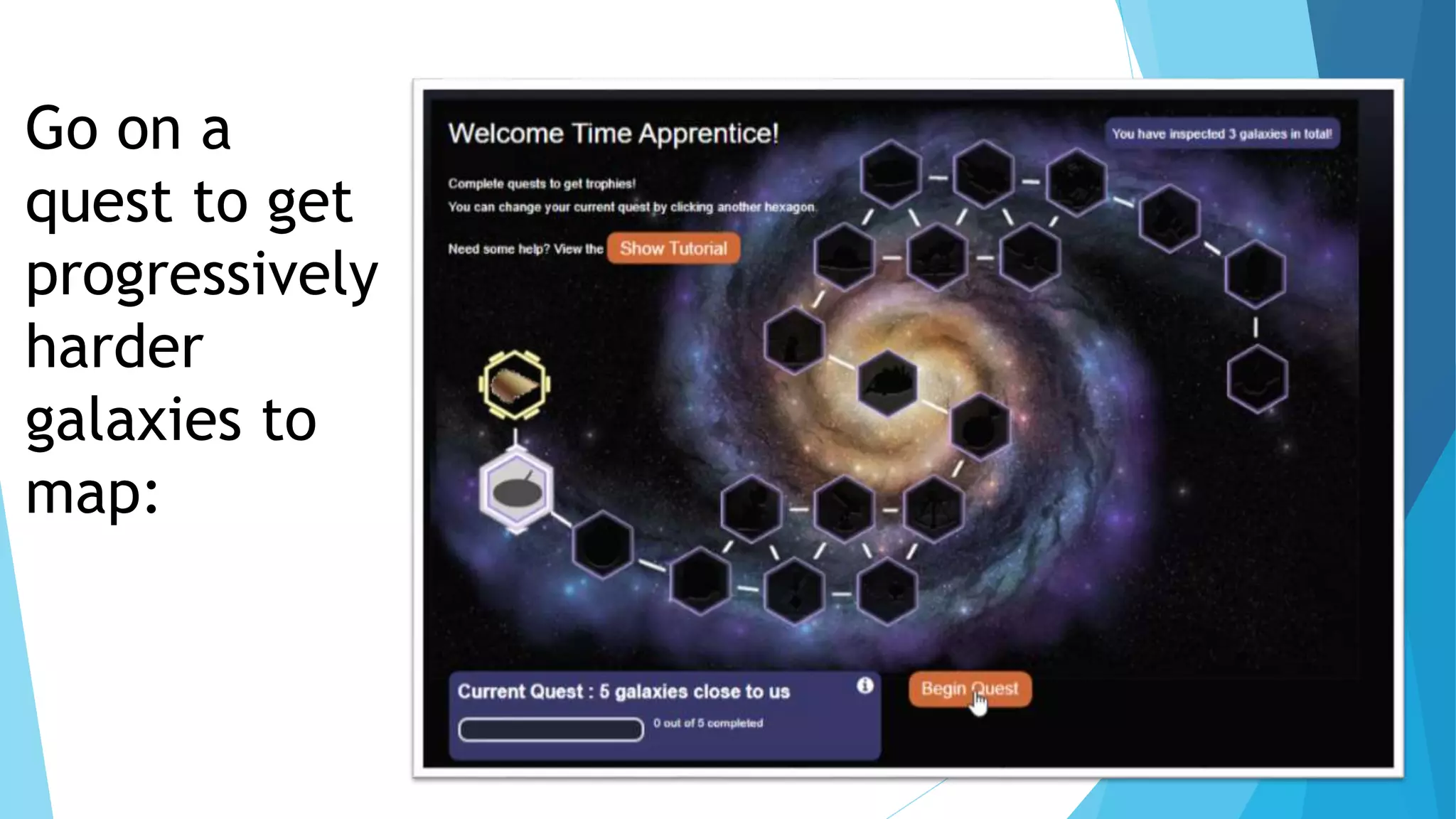
Go on a
quest to get
progressively
harder
galaxies to
map:
Earn trophies
along the
way, and see
your name
rise up in the
leaderboard!
You get lots of information about each galaxy
you complete—like how big it is, how fast it’s
growing, and how many years it took for the
light to reach us.
There are
lots of
visual ways
to explore
your galaxy
in more
depth:
Citizen Science for
Animal Lovers
(and World Travelers!)
Osa Camera Trap Network
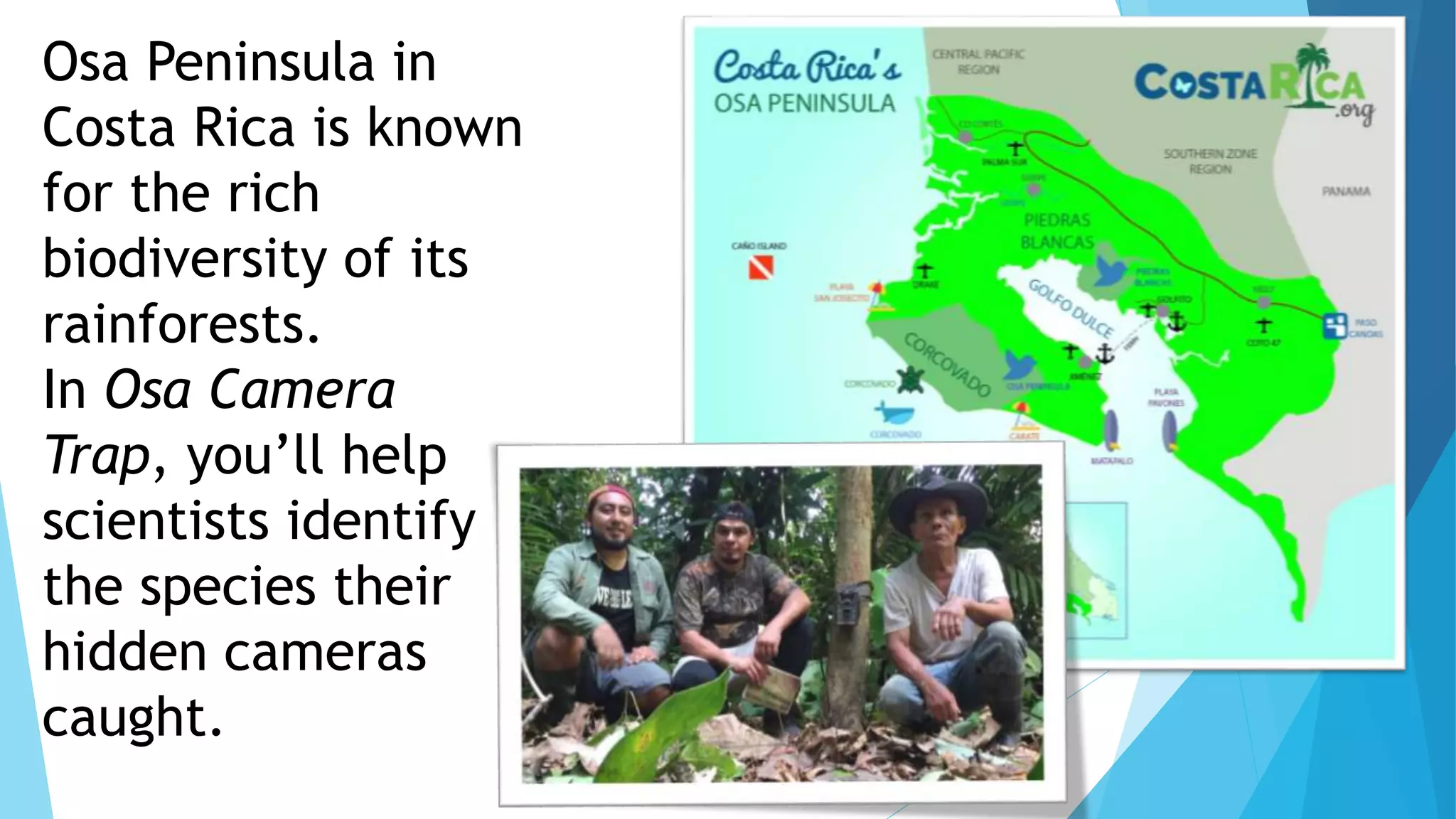
Osa Peninsula in
Costa Rica is known
for the rich
biodiversity of its
rainforests.
In Osa Camera
Trap, you’ll help
scientists identify
the species their
hidden cameras
caught.
Many of the photos will be of big cats such as
pumas, jaguars, ocelots and margays:
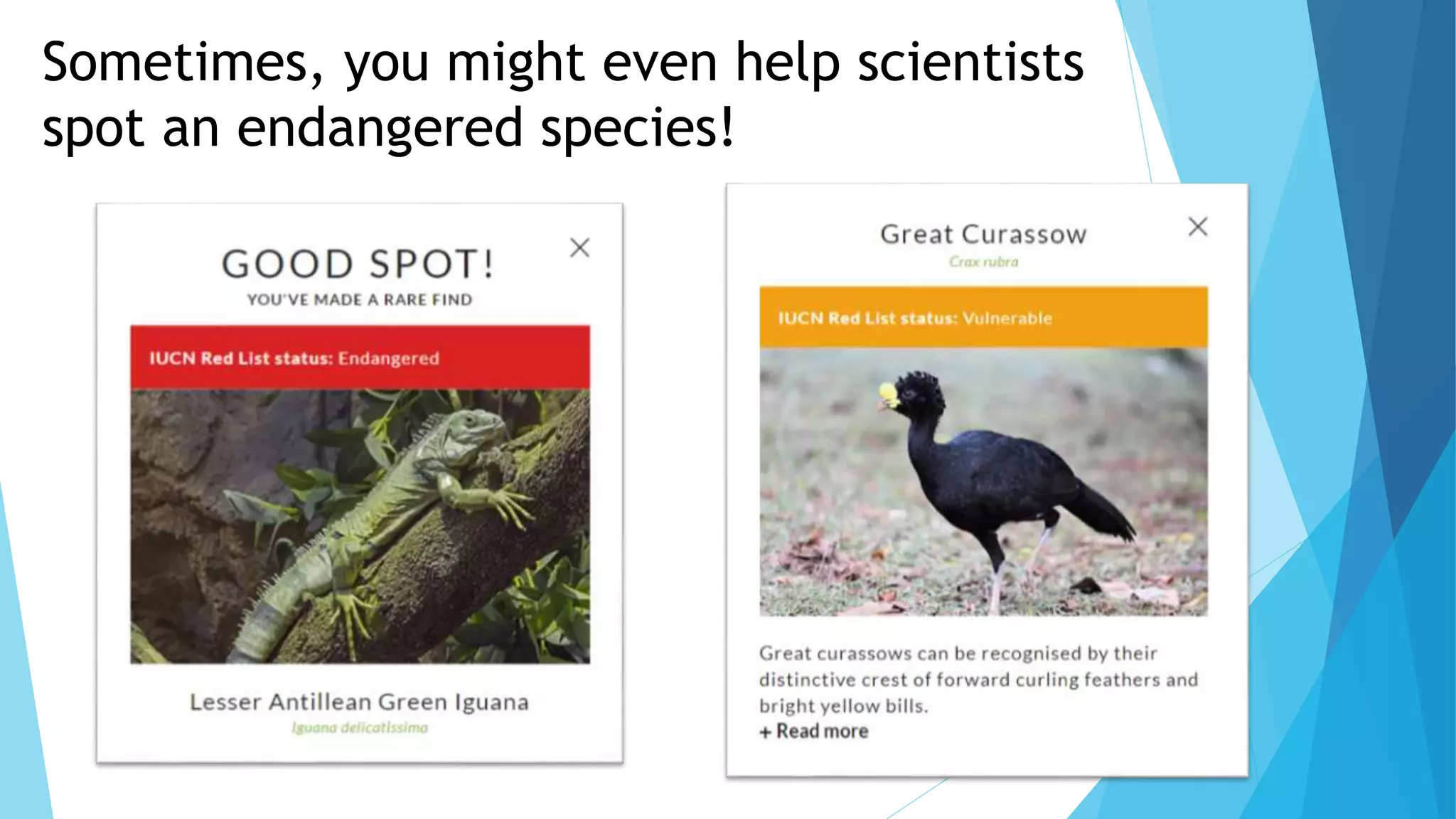
Sometimes, you might even help scientists
spot an endangered species!
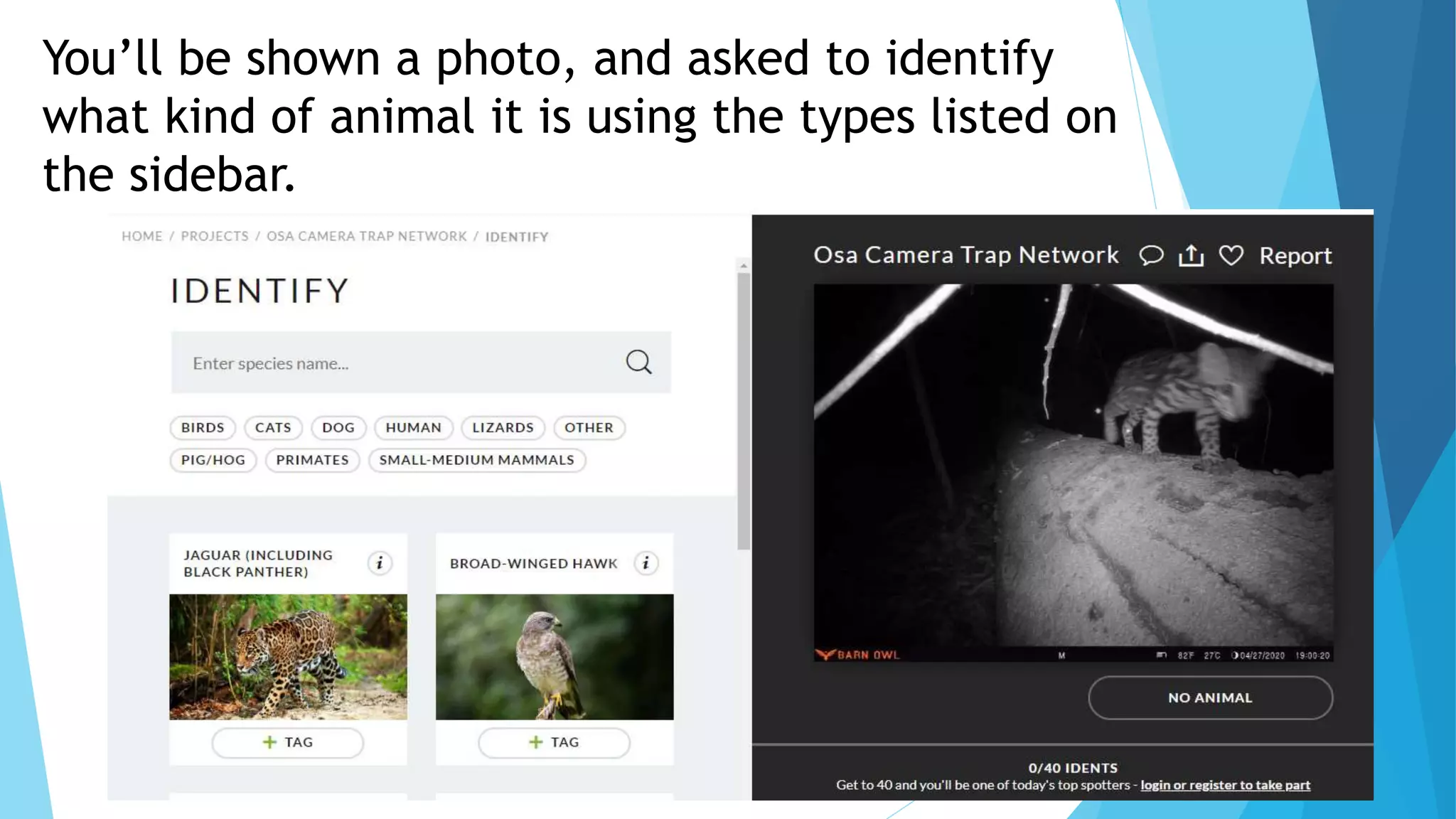
You’ll be shown a photo, and asked to identify
what kind of animal it is using the types listed on
the sidebar.
Can you find the animal in the picture to the
right? What kind of animal do you think it is:
an ocelot, or an agouti? Write it in the chat!
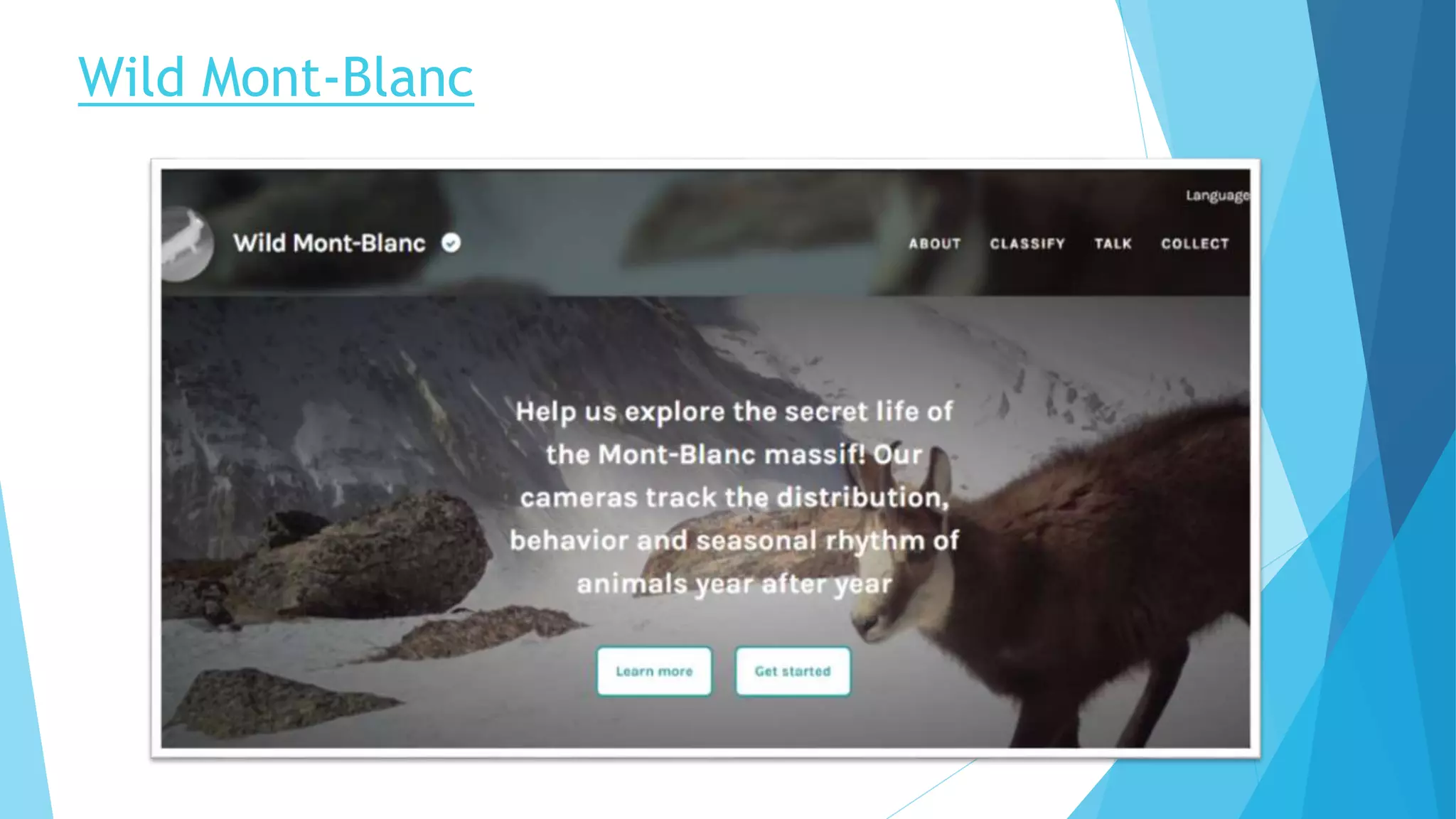
Wild Mont-Blanc
Mont-Blanc Massif is a mountain
range in the Alps, bordering the
countries of France, Switzerland
and Italy. The region is home to
animals like the ibex, the chamois,
the red deer and the roe deer.
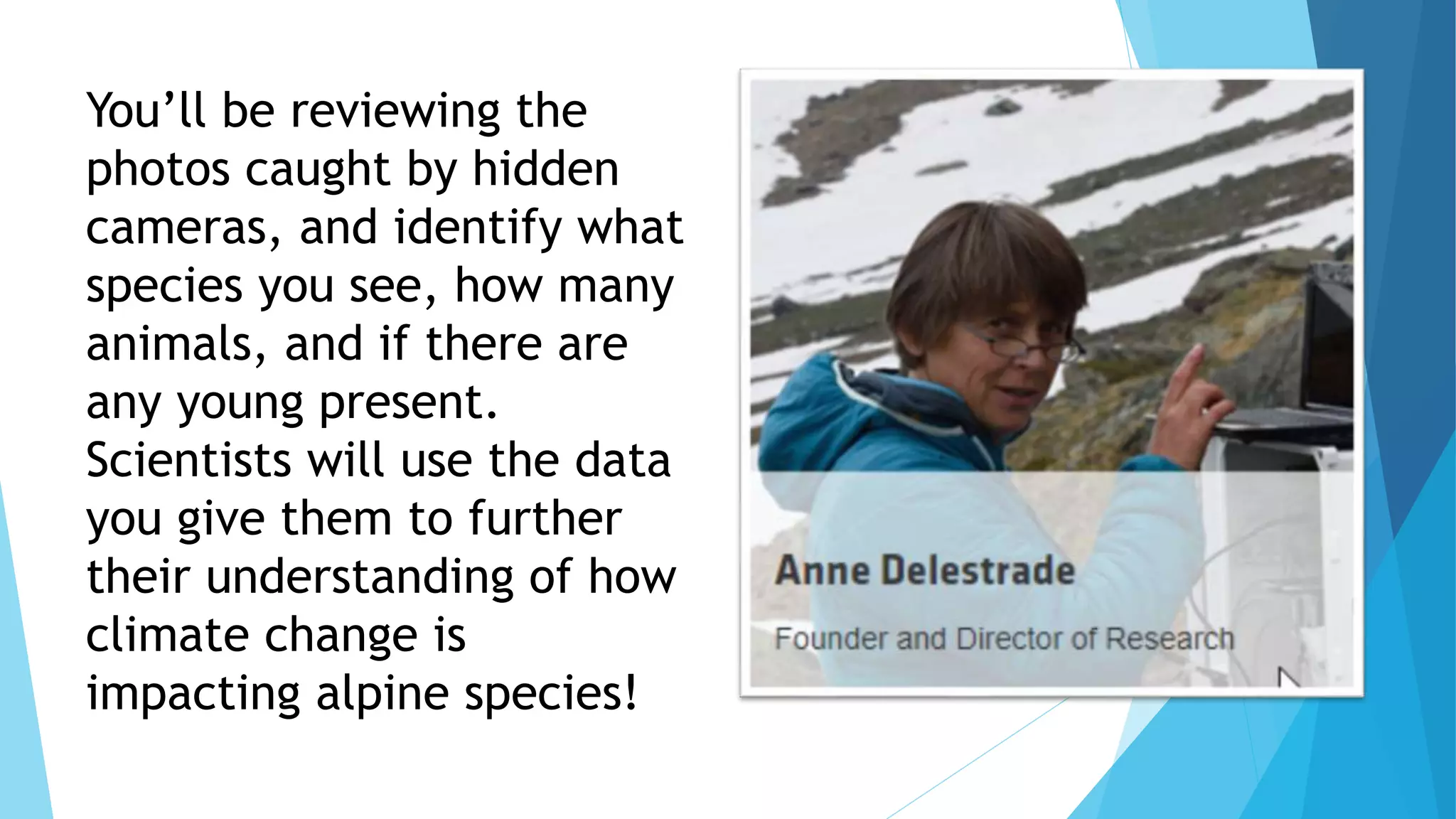
You’ll be reviewing the
photos caught by hidden
cameras, and identify what
species you see, how many
animals, and if there are
any young present.
Scientists will use the data
you give them to further
their understanding of how
climate change is
impacting alpine species!
Use the information they give you to
determine what kind of animal it is:
Once you’ve decided the species, note how
many you see and what they are doing:
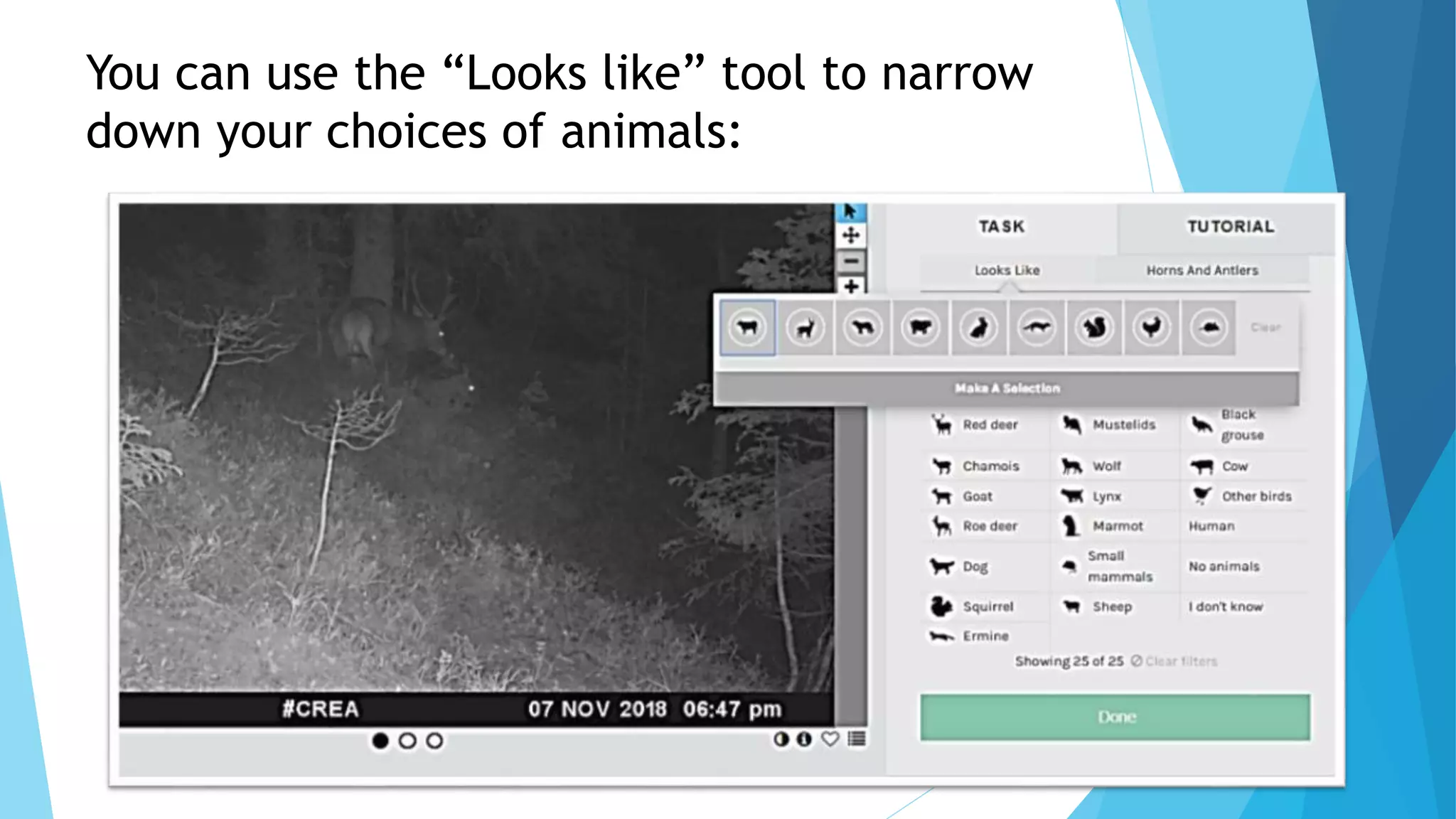
You can use the “Looks like” tool to narrow
down your choices of animals:
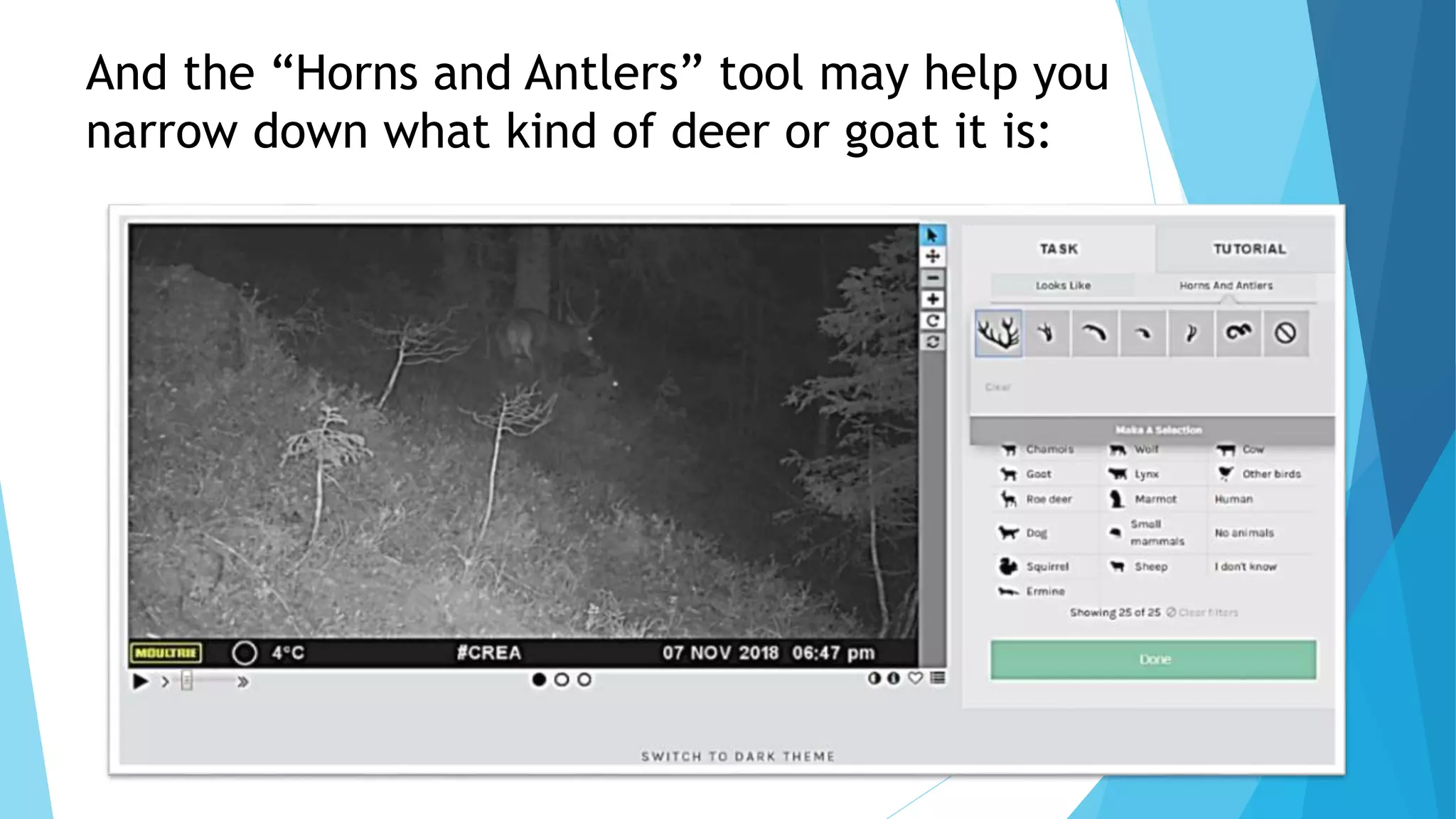
And the “Horns and Antlers” tool may help you
narrow down what kind of deer or goat it is:
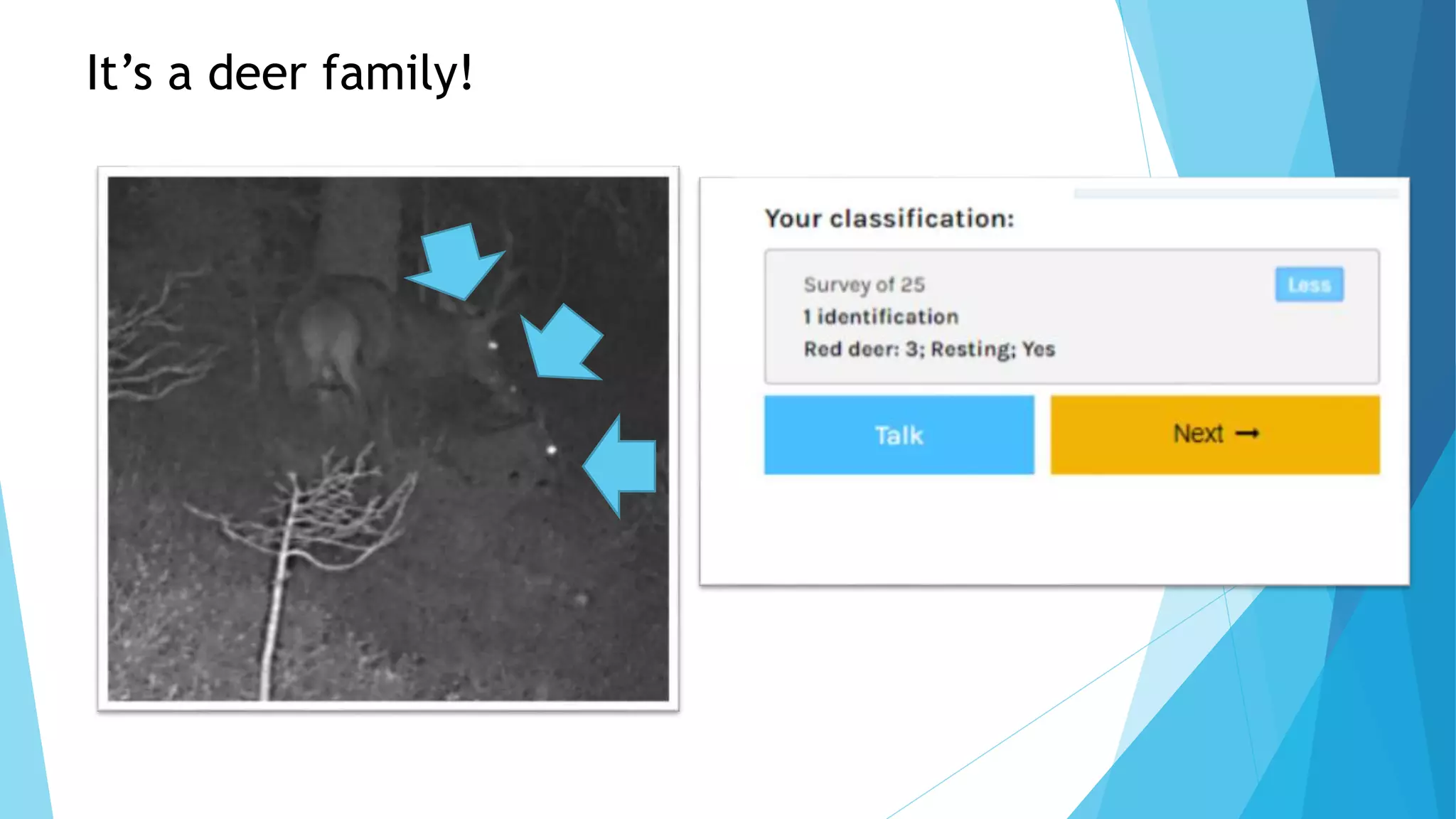
Can you write in the chat how many deer you
see here?
It’s a deer family!
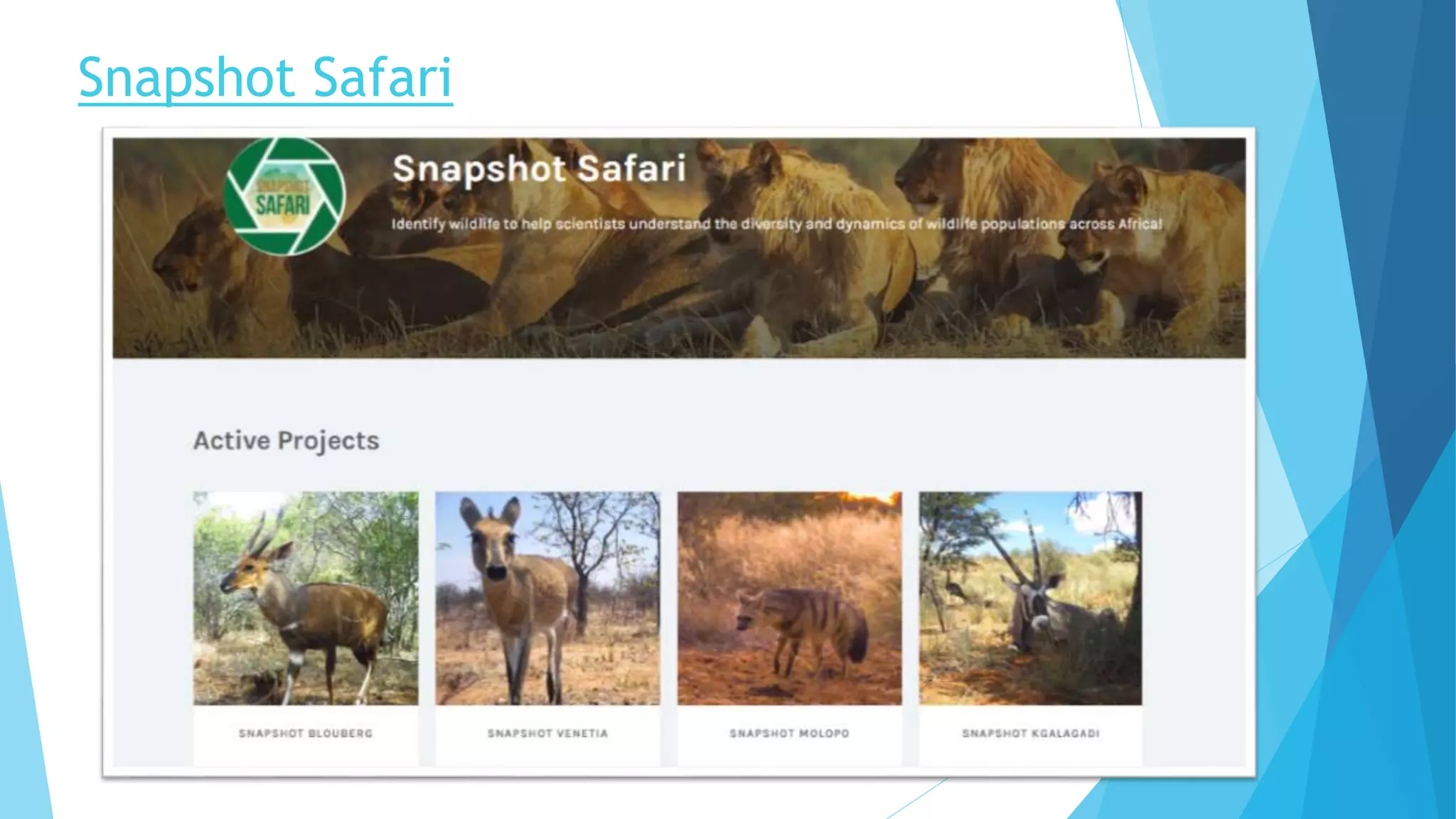
Snapshot Safari
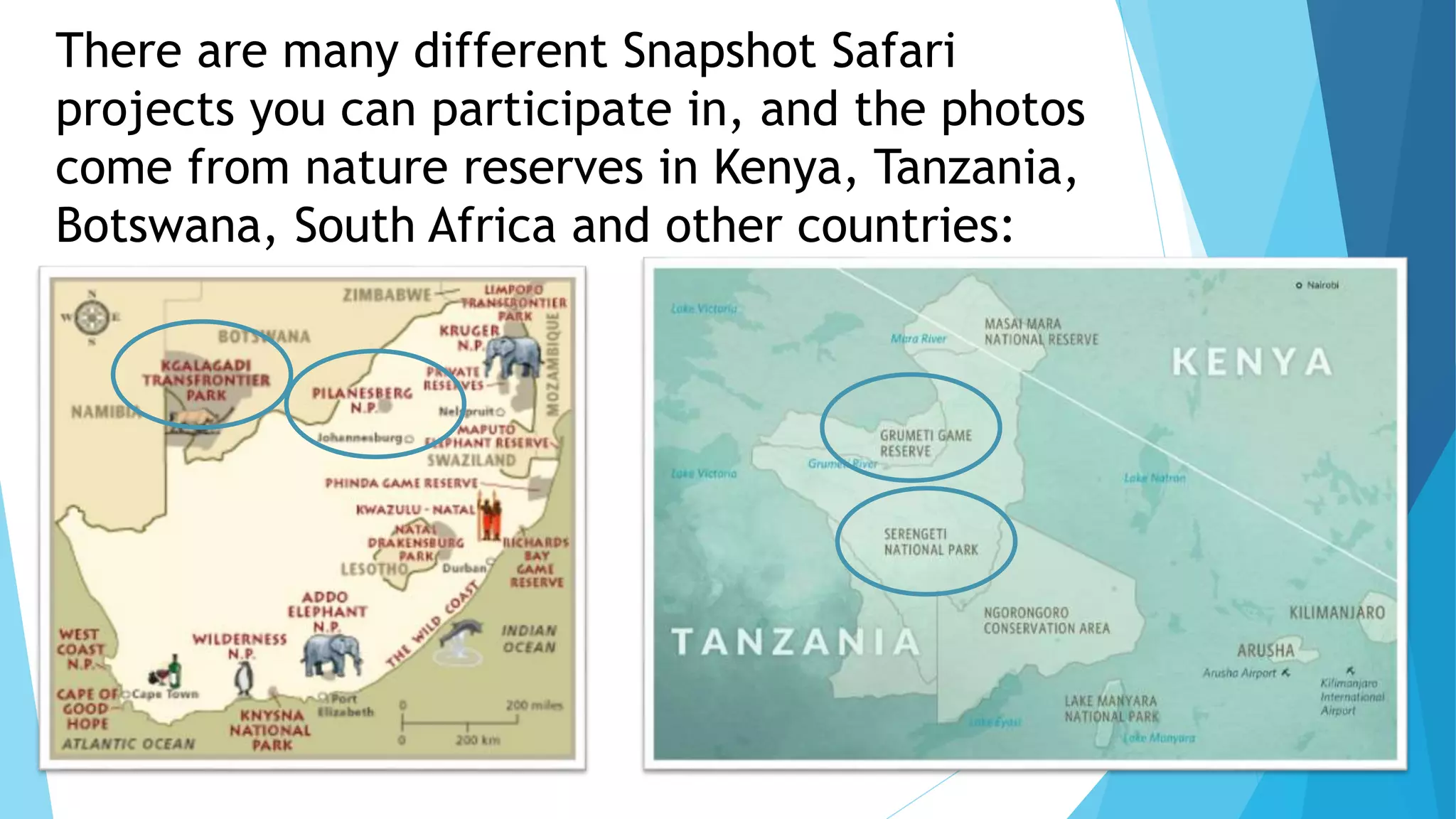
There are many different Snapshot Safari
projects you can participate in, and the photos
come from nature reserves in Kenya, Tanzania,
Botswana, South Africa and other countries:
You’ll be tagging photos captured by scientists’
hidden cameras to help them understand changes
in animal populations and habitats, and to aid in
their conservation and anti-poaching efforts.
Can you find the animal?
How about this one? Write what you see in the chat.
Citizen Science for
Healers and Helpers
Stall Catchers
Contribute to
Alzheimer’s
research by
watching videos of
blood flowing
through a subject’s
brain, and catching
if there are any
“stalls”: dark spots
that don’t light up
when they’re
supposed to.
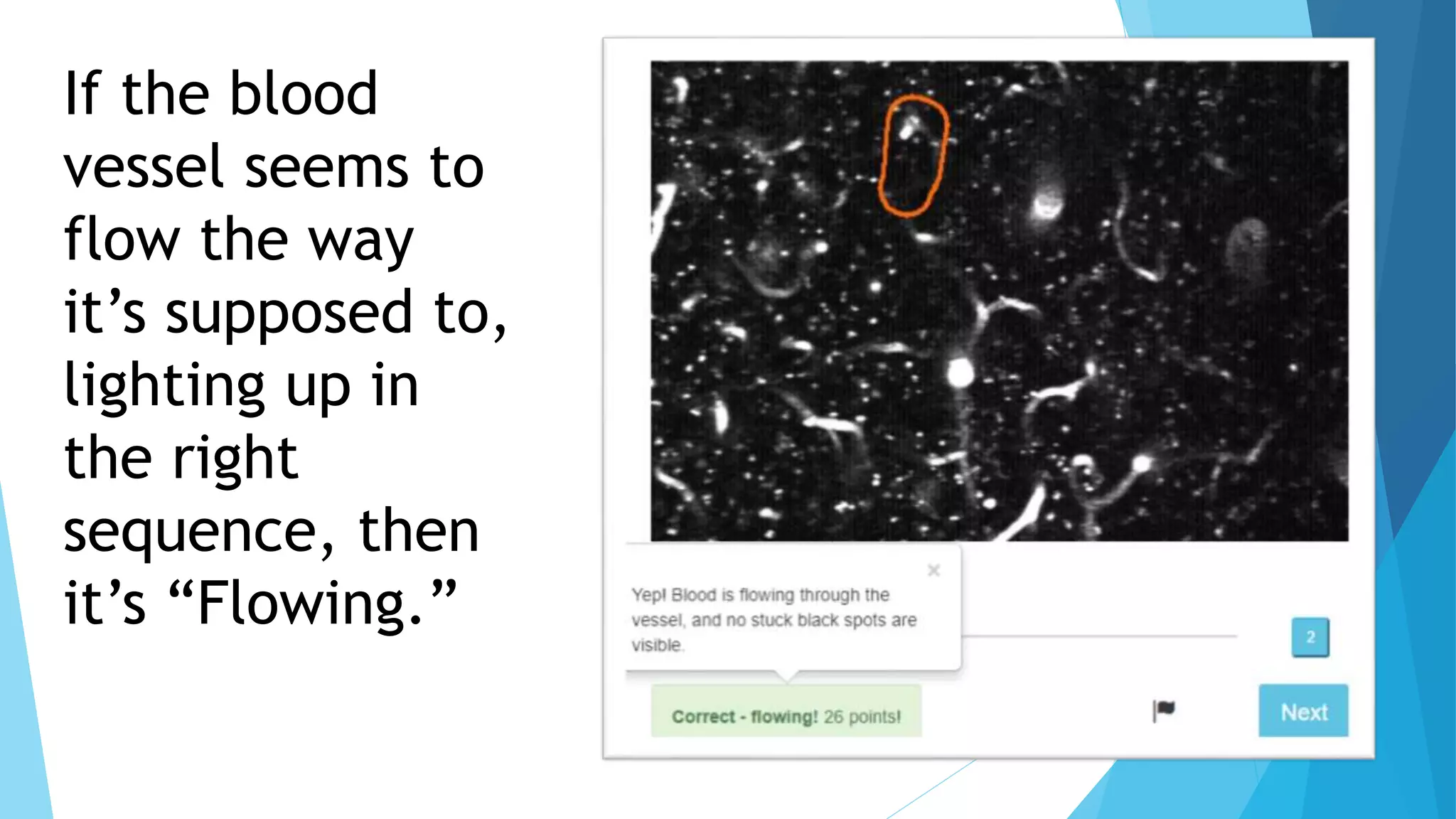
If the blood
vessel seems to
flow the way
it’s supposed to,
lighting up in
the right
sequence, then
it’s “Flowing.”
See your points
rack up with
each challenge
and your name
rise in the
leaderboard.
There’s me! I made it
to 10th place! LOL!
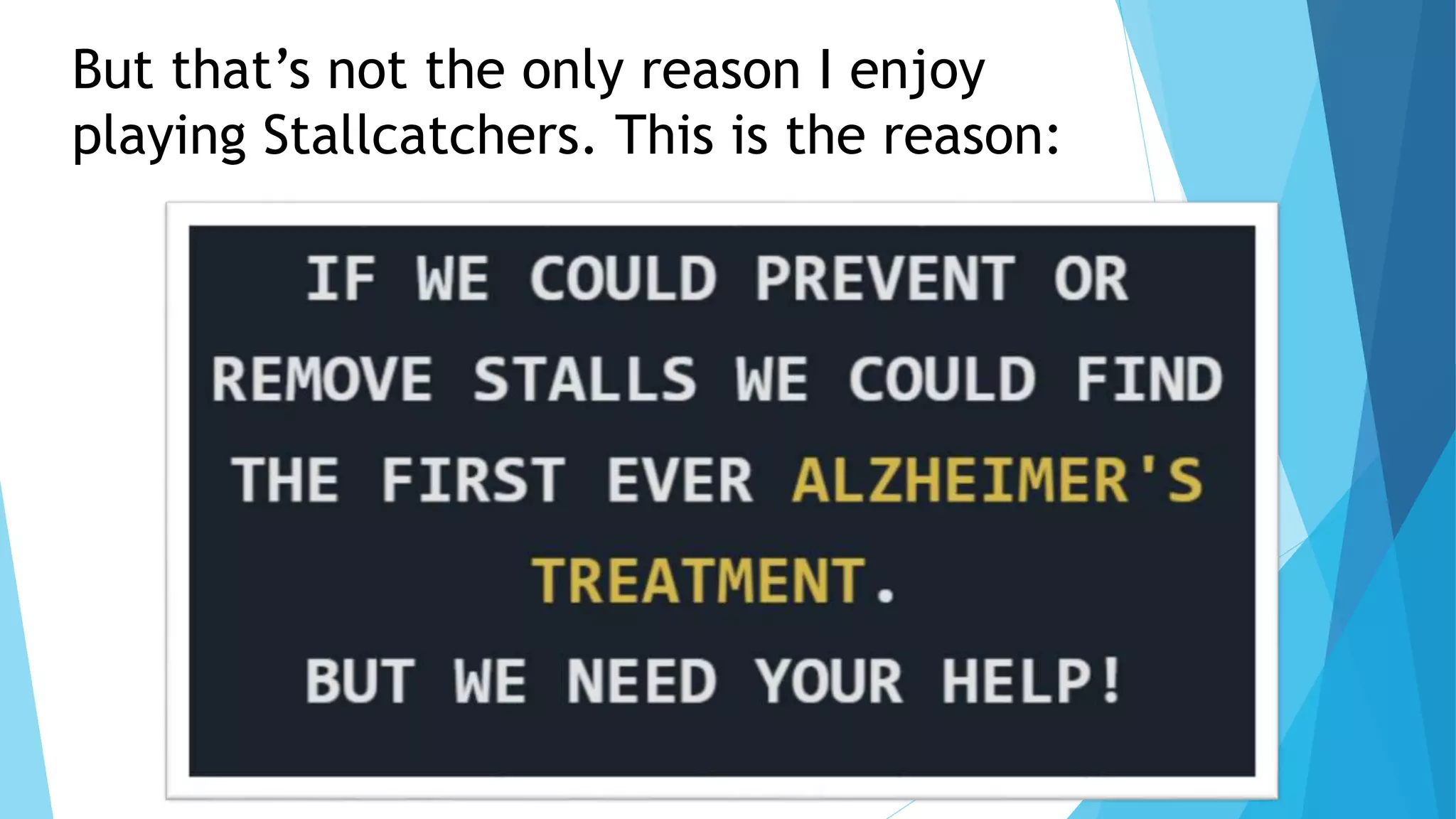
But that’s not the only reason I enjoy
playing Stallcatchers. This is the reason:
Let’s try it!
Even More Citizen
Science Projects to Try!
Seek App by iNaturalist
Go around your
neighborhood
with your phone
camera, and aim
it at different
plants. Then let
the app tell you
what species
you’re looking at!
Loss of the Night App by GLOBE
Look for certain
stars in the night
sky and tell
scientists if you
are able to see
them or not.
NeMO-Net App by NASA
Kind of like
AstroQuest, paint
the coral that
you see to help
scientists map
the coral reefs.
Learn about
marine life and
get badges along
the way!
Digital Fishers by Ocean Networks
Canada
Describe the wildlife
you see in these
deep-sea videos from
Canada. Help
scientists track and
count the animals on
the ocean floor. Earn
badges and advance
in levels!
Floating Forests by Zooniverse
Look through
satellite photos
and circle the
green areas to
identify them as
kelp patches.
Help scientists
track changes
from climate
change.
Keep track of all your
projects by making an
account on SciStarter.org:
Out of all the projects we
looked at, which one are you
most interested in joining?
Write your answer in the chat!
• Spiral Graph
• Astro Quest
• Osa Camera Trap
• Wild Mont-Blanc
• Snapshot Safari
• Stall Catchers
• Seek app
• Loss of the Night app
• NeMO-Net app
• Digital Fishers
• Floating Forests
Join us on Monday for more
Citizen Science – and learn how
you can join in the fight to stop
COVID-19!
Monday, May 11 at 3 pm
Sign up HERE
Before you go and check out
these great projects, please
take our survey:
https://bit.ly/NS2PSurvey

Citizen Science Kids Can Do at Home

  • 1.
    Before we getstarted-- In the chat box, please write your first name and tell us if you consider yourself a: 1. Galactic Explorer or Artist 2. Animal Lover or World Traveler 3. Healer or Helper
  • 2.
    Citizen Science Kids CanDo At Home With AnnMarie Kolakowski Youth Services Librarian Pasadena Public Library Friday, May 8, 2020
  • 3.
    What is “citizenscience”?
  • 4.
    Find lots ofgreat projects on SciStarter.org or Zooniverse.org!
  • 5.
    Citizen Science for GalacticExplorers (and Artists, too!)
  • 6.
  • 7.
    Help scientists determine the shape,size and structure of galaxies, and draw the spiral arms that might be hard for their computers to spot.
  • 8.
    You’ll be askedfirst to say how structured the galaxy is. You’ll call it “smooth” if it just looks like a big ball of light. Is this galaxy smooth, or structured? Write your answer in the chat!
  • 9.
    You’ll start withan image like this:
  • 10.
    And trace overthe arms to help scientists measure their length:
  • 11.
  • 12.
    Help a computer mapgalaxies. Check to see that it covered the entire galaxy in one color. And make sure any overlapping galaxies or stars are shown in a different color.
  • 13.
  • 14.
  • 15.
    …until the whole galaxyis covered and there is just a small circle showing the overlapping star:
  • 16.
    Go on a questto get progressively harder galaxies to map:
  • 17.
    Earn trophies along the way,and see your name rise up in the leaderboard!
  • 18.
    You get lotsof information about each galaxy you complete—like how big it is, how fast it’s growing, and how many years it took for the light to reach us.
  • 19.
    There are lots of visualways to explore your galaxy in more depth:
  • 20.
    Citizen Science for AnimalLovers (and World Travelers!)
  • 21.
  • 22.
    Osa Peninsula in CostaRica is known for the rich biodiversity of its rainforests. In Osa Camera Trap, you’ll help scientists identify the species their hidden cameras caught.
  • 23.
    Many of thephotos will be of big cats such as pumas, jaguars, ocelots and margays:
  • 24.
    Sometimes, you mighteven help scientists spot an endangered species!
  • 25.
    You’ll be showna photo, and asked to identify what kind of animal it is using the types listed on the sidebar.
  • 26.
    Can you findthe animal in the picture to the right? What kind of animal do you think it is: an ocelot, or an agouti? Write it in the chat!
  • 27.
  • 28.
    Mont-Blanc Massif isa mountain range in the Alps, bordering the countries of France, Switzerland and Italy. The region is home to animals like the ibex, the chamois, the red deer and the roe deer.
  • 29.
    You’ll be reviewingthe photos caught by hidden cameras, and identify what species you see, how many animals, and if there are any young present. Scientists will use the data you give them to further their understanding of how climate change is impacting alpine species!
  • 30.
    Use the informationthey give you to determine what kind of animal it is:
  • 31.
    Once you’ve decidedthe species, note how many you see and what they are doing:
  • 32.
    You can usethe “Looks like” tool to narrow down your choices of animals:
  • 33.
    And the “Hornsand Antlers” tool may help you narrow down what kind of deer or goat it is:
  • 34.
    Can you writein the chat how many deer you see here?
  • 35.
  • 36.
  • 37.
    There are manydifferent Snapshot Safari projects you can participate in, and the photos come from nature reserves in Kenya, Tanzania, Botswana, South Africa and other countries:
  • 38.
    You’ll be taggingphotos captured by scientists’ hidden cameras to help them understand changes in animal populations and habitats, and to aid in their conservation and anti-poaching efforts.
  • 39.
    Can you findthe animal?
  • 40.
    How about thisone? Write what you see in the chat.
  • 41.
  • 42.
  • 43.
    Contribute to Alzheimer’s research by watchingvideos of blood flowing through a subject’s brain, and catching if there are any “stalls”: dark spots that don’t light up when they’re supposed to.
  • 44.
    If the blood vesselseems to flow the way it’s supposed to, lighting up in the right sequence, then it’s “Flowing.”
  • 45.
    See your points rackup with each challenge and your name rise in the leaderboard. There’s me! I made it to 10th place! LOL!
  • 46.
    But that’s notthe only reason I enjoy playing Stallcatchers. This is the reason:
  • 47.
  • 48.
    Even More Citizen ScienceProjects to Try!
  • 49.
    Seek App byiNaturalist Go around your neighborhood with your phone camera, and aim it at different plants. Then let the app tell you what species you’re looking at!
  • 50.
    Loss of theNight App by GLOBE Look for certain stars in the night sky and tell scientists if you are able to see them or not.
  • 51.
    NeMO-Net App byNASA Kind of like AstroQuest, paint the coral that you see to help scientists map the coral reefs. Learn about marine life and get badges along the way!
  • 52.
    Digital Fishers byOcean Networks Canada Describe the wildlife you see in these deep-sea videos from Canada. Help scientists track and count the animals on the ocean floor. Earn badges and advance in levels!
  • 53.
    Floating Forests byZooniverse Look through satellite photos and circle the green areas to identify them as kelp patches. Help scientists track changes from climate change.
  • 54.
    Keep track ofall your projects by making an account on SciStarter.org:
  • 55.
    Out of allthe projects we looked at, which one are you most interested in joining? Write your answer in the chat! • Spiral Graph • Astro Quest • Osa Camera Trap • Wild Mont-Blanc • Snapshot Safari • Stall Catchers • Seek app • Loss of the Night app • NeMO-Net app • Digital Fishers • Floating Forests
  • 56.
    Join us onMonday for more Citizen Science – and learn how you can join in the fight to stop COVID-19! Monday, May 11 at 3 pm Sign up HERE
  • 57.
    Before you goand check out these great projects, please take our survey: https://bit.ly/NS2PSurvey