in collaboration with
initiated by supported by
Welcome
Jürg Stuker
juerg@kickstart-innovation.com
+41 79 252 67 01
Dr. Maja Wiprächtiger
wipraechtiger@realcycle.ch
+41 44 537 82 81
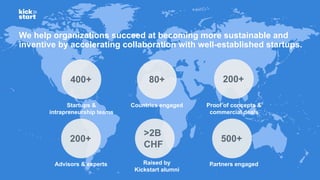
400+ 80+ 200+
200+
>2B
CHF
500+
Startups &
intrapreneurship teams
Countries engaged Proof of concepts &
commercial deals
Advisors & experts Raised by
Kickstart alumni
Partners engaged
We help organizations succeed at becoming more sustainable and
inventive by accelerating collaboration with well-established startups.
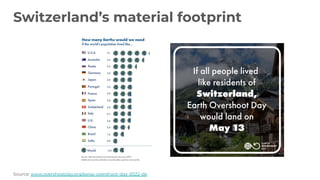
Switzerland’s material footprint
Source: www.overshootday.org/swiss-overshoot-day-2022-de
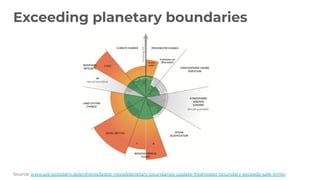
Exceeding planetary boundaries
Source: www.pik-potsdam.de/en/news/latest-news/planetary-boundaries-update-freshwater-boundary-exceeds-safe-limits
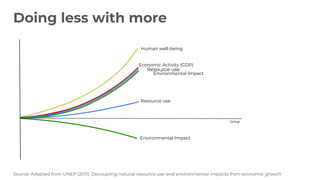
Source: Adapted from UNEP (2011). Decoupling natural resource use and environmental impacts from economic growth
time
Resource use
Human well-being
Economic Activity (GDP)
Environmental Impact
Resource use
Environmental Impact
Doing less with more
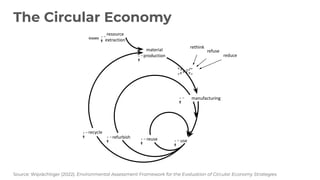
material
production
use
resource
extraction
(re)manufacturing
refurbish reuse
recycle
refuse
losses
rethink
reduce
The Circular Economy
Source: Wiprächtiger (2022). Environmental Assessment Framework for the Evaluation of Circular Economy Strategies
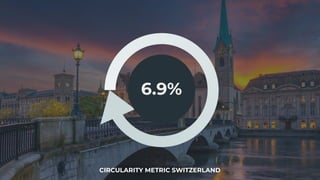
CIRCULARITY METRIC SWITZERLAND
6.9%
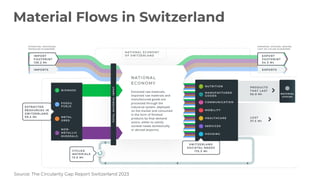
Material Flows in Switzerland
Source: The Circularity Gap Report Switzerland 2023
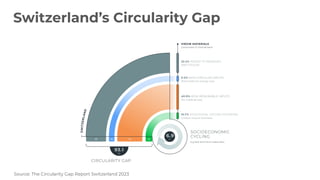
Switzerland’s Circularity Gap
Source: The Circularity Gap Report Switzerland 2023
How are those insights used
to drive action?
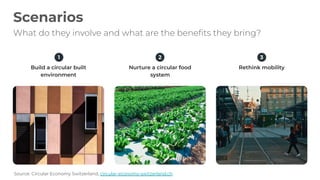
Build a circular built
environment
Scenarios
What do they involve and what are the benefits they bring?
Nurture a circular food
system
Rethink mobility
1 2 3
Source: Circular Economy Switzerland, circular-economy-switzerland.ch
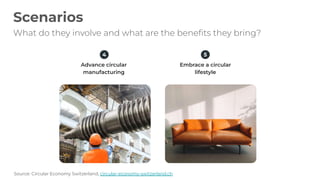
Advance circular
manufacturing
Embrace a circular
lifestyle
4 5
Scenarios
What do they involve and what are the benefits they bring?
Source: Circular Economy Switzerland, circular-economy-switzerland.ch
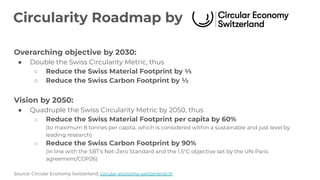
Circularity Roadmap by
Overarching objective by 2030:
● Double the Swiss Circularity Metric, thus
○ Reduce the Swiss Material Footprint by ⅓
○ Reduce the Swiss Carbon Footprint by ½
Source: Circular Economy Switzerland, circular-economy-switzerland.ch
Vision by 2050:
● Quadruple the Swiss Circularity Metric by 2050, thus
○ Reduce the Swiss Material Footprint per capita by 60%
(to maximum 8 tonnes per capita, which is considered within a sustainable and just level by
leading research)
○ Reduce the Swiss Carbon Footprint by 90%
(in line with the SBT’s Net-Zero Standard and the 1.5°C objective set by the UN-Paris
agreement/COP26)
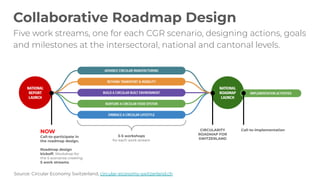
Collaborative Roadmap Design
Five work streams, one for each CGR scenario, designing actions, goals
and milestones at the intersectoral, national and cantonal levels.
NATIONAL
REPORT
LAUNCH
NOW
Call-to-participate in
the roadmap design.
Roadmap design
kickoff. Workshop for
the 5 scenarios creating
5 work streams.
ADVANCE CIRCULAR MANUFACTURING
RETHINK TRANSPORT & MOBILITY
BUILD A CIRCULAR BUILT ENVIRONMENT
NURTURE A CIRCULAR FOOD SYSTEM
EMBRACE A CIRCULAR LIFESTYLE
NATIONAL
ROADMAP
LAUNCH
CIRCULARITY
ROADMAP FOR
SWITZERLAND
IMPLEMENTATION ACTIVITIES
Call-to-implementation
3-5 workshops
for each work stream
Source: Circular Economy Switzerland, circular-economy-switzerland.ch
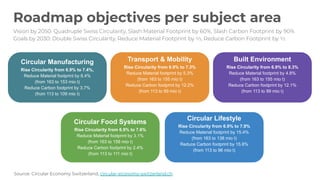
Roadmap objectives per subject area
Vision by 2050: Quadruple Swiss Circularity, Slash Material Footprint by 60%, Slash Carbon Footprint by 90%
Goals by 2030: Double Swiss Circularity, Reduce Material Footprint by ⅓, Reduce Carbon Footprint by ½
Source: Circular Economy Switzerland, circular-economy-switzerland.ch
Circular Manufacturing
Rise Circularity from 6.9% to 7.4%,
Reduce Material footprint by 6.4%
(from 163 to 153 mio t)
Reduce Carbon footprint by 3.7%
(from 113 to 109 mio t)
Transport & Mobility
Rise Circularity from 6.9% to 7.3%
Reduce Material footprint by 5.3%
(from 163 to 155 mio t)
Reduce Carbon footprint by 12.2%
(from 113 to 99 mio t)
Built Environment
Rise Circularity from 6.9% to 8.3%
Reduce Material footprint by 4.8%
(from 163 to 155 mio t)
Reduce Carbon footprint by 12.1%
(from 113 to 99 mio t)
Circular Food Systems
Rise Circularity from 6.9% to 7.6%
Reduce Material footprint by 3.1%
(from 163 to 158 mio t)
Reduce Carbon footprint by 2.4%
(from 113 to 111 mio t)
Circular Lifestyle
Rise Circularity from 6.9% to 7.9%
Reduce Material footprint by 15.4%
(from 163 to 138 mio t)
Reduce Carbon footprint by 15.8%
(from 113 to 96 mio t)
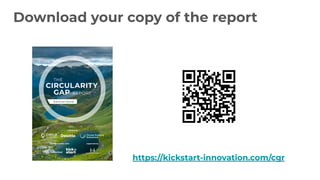
Download your copy of the report
https://kickstart-innovation.com/cgr
initiated by supported by
Let’s make it happen!
in collaboration with

Circularity Gap Report Switzerland 2023

  • 1.
  • 2.
    Welcome Jürg Stuker juerg@kickstart-innovation.com +41 79252 67 01 Dr. Maja Wiprächtiger wipraechtiger@realcycle.ch +41 44 537 82 81
  • 3.
    400+ 80+ 200+ 200+ >2B CHF 500+ Startups& intrapreneurship teams Countries engaged Proof of concepts & commercial deals Advisors & experts Raised by Kickstart alumni Partners engaged We help organizations succeed at becoming more sustainable and inventive by accelerating collaboration with well-established startups.
  • 6.
    Switzerland’s material footprint Source:www.overshootday.org/swiss-overshoot-day-2022-de
  • 7.
    Exceeding planetary boundaries Source:www.pik-potsdam.de/en/news/latest-news/planetary-boundaries-update-freshwater-boundary-exceeds-safe-limits
  • 8.
    Source: Adapted fromUNEP (2011). Decoupling natural resource use and environmental impacts from economic growth time Resource use Human well-being Economic Activity (GDP) Environmental Impact Resource use Environmental Impact Doing less with more
  • 9.
    material production use resource extraction (re)manufacturing refurbish reuse recycle refuse losses rethink reduce The CircularEconomy Source: Wiprächtiger (2022). Environmental Assessment Framework for the Evaluation of Circular Economy Strategies
  • 10.
  • 11.
    Material Flows inSwitzerland Source: The Circularity Gap Report Switzerland 2023
  • 12.
    Switzerland’s Circularity Gap Source:The Circularity Gap Report Switzerland 2023
  • 13.
    How are thoseinsights used to drive action?
  • 14.
    Build a circularbuilt environment Scenarios What do they involve and what are the benefits they bring? Nurture a circular food system Rethink mobility 1 2 3 Source: Circular Economy Switzerland, circular-economy-switzerland.ch
  • 15.
    Advance circular manufacturing Embrace acircular lifestyle 4 5 Scenarios What do they involve and what are the benefits they bring? Source: Circular Economy Switzerland, circular-economy-switzerland.ch
  • 16.
    Circularity Roadmap by Overarchingobjective by 2030: ● Double the Swiss Circularity Metric, thus ○ Reduce the Swiss Material Footprint by ⅓ ○ Reduce the Swiss Carbon Footprint by ½ Source: Circular Economy Switzerland, circular-economy-switzerland.ch Vision by 2050: ● Quadruple the Swiss Circularity Metric by 2050, thus ○ Reduce the Swiss Material Footprint per capita by 60% (to maximum 8 tonnes per capita, which is considered within a sustainable and just level by leading research) ○ Reduce the Swiss Carbon Footprint by 90% (in line with the SBT’s Net-Zero Standard and the 1.5°C objective set by the UN-Paris agreement/COP26)
  • 17.
    Collaborative Roadmap Design Fivework streams, one for each CGR scenario, designing actions, goals and milestones at the intersectoral, national and cantonal levels. NATIONAL REPORT LAUNCH NOW Call-to-participate in the roadmap design. Roadmap design kickoff. Workshop for the 5 scenarios creating 5 work streams. ADVANCE CIRCULAR MANUFACTURING RETHINK TRANSPORT & MOBILITY BUILD A CIRCULAR BUILT ENVIRONMENT NURTURE A CIRCULAR FOOD SYSTEM EMBRACE A CIRCULAR LIFESTYLE NATIONAL ROADMAP LAUNCH CIRCULARITY ROADMAP FOR SWITZERLAND IMPLEMENTATION ACTIVITIES Call-to-implementation 3-5 workshops for each work stream Source: Circular Economy Switzerland, circular-economy-switzerland.ch
  • 18.
    Roadmap objectives persubject area Vision by 2050: Quadruple Swiss Circularity, Slash Material Footprint by 60%, Slash Carbon Footprint by 90% Goals by 2030: Double Swiss Circularity, Reduce Material Footprint by ⅓, Reduce Carbon Footprint by ½ Source: Circular Economy Switzerland, circular-economy-switzerland.ch Circular Manufacturing Rise Circularity from 6.9% to 7.4%, Reduce Material footprint by 6.4% (from 163 to 153 mio t) Reduce Carbon footprint by 3.7% (from 113 to 109 mio t) Transport & Mobility Rise Circularity from 6.9% to 7.3% Reduce Material footprint by 5.3% (from 163 to 155 mio t) Reduce Carbon footprint by 12.2% (from 113 to 99 mio t) Built Environment Rise Circularity from 6.9% to 8.3% Reduce Material footprint by 4.8% (from 163 to 155 mio t) Reduce Carbon footprint by 12.1% (from 113 to 99 mio t) Circular Food Systems Rise Circularity from 6.9% to 7.6% Reduce Material footprint by 3.1% (from 163 to 158 mio t) Reduce Carbon footprint by 2.4% (from 113 to 111 mio t) Circular Lifestyle Rise Circularity from 6.9% to 7.9% Reduce Material footprint by 15.4% (from 163 to 138 mio t) Reduce Carbon footprint by 15.8% (from 113 to 96 mio t)
  • 19.
    Download your copyof the report https://kickstart-innovation.com/cgr
  • 20.
    initiated by supportedby Let’s make it happen! in collaboration with