Chinese Musical
Instruments
China's rich musical heritage boasts a vast array of instruments, each
with its unique sound and cultural significance. Explore the captivating
world of Chinese music through its instruments, both traditional and
modern.
sA
by salba Arshad
Traditional Instruments: Guqin
The Guqin
A seven-stringed zither, the guqin is
a revered instrument symbolizing
ancient Chinese culture. Played with
fingertips, it creates a soothing,
meditative sound.
Origins and History
Dating back thousands of years, the
guqin has evolved over time,
reflecting changes in Chinese
society. It's often associated with
Confucian philosophy.
Musical Style
Known for its expressive, melodic
pieces, the guqin is played in a slow,
deliberate manner, focusing on
tranquility and inner peace.
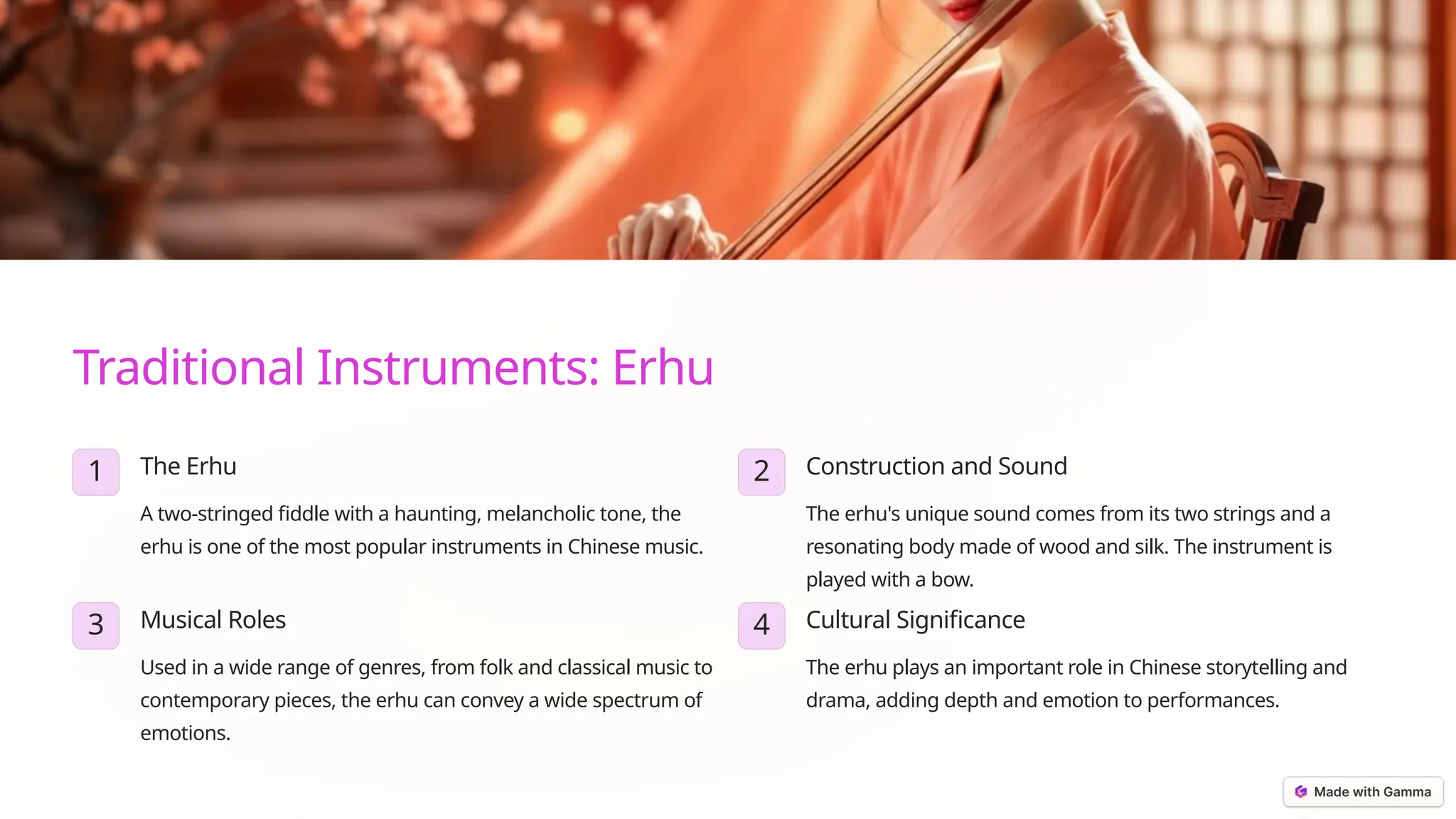
Traditional Instruments: Erhu
1 The Erhu
A two-stringed fiddle with a haunting, melancholic tone, the
erhu is one of the most popular instruments in Chinese music.
2 Construction and Sound
The erhu's unique sound comes from its two strings and a
resonating body made of wood and silk. The instrument is
played with a bow.
3 Musical Roles
Used in a wide range of genres, from folk and classical music to
contemporary pieces, the erhu can convey a wide spectrum of
emotions.
4 Cultural Significance
The erhu plays an important role in Chinese storytelling and
drama, adding depth and emotion to performances.
Traditional Instruments: Pipa
The Pipa
A four-stringed lute with a vibrant, melodic sound, the
pipa is known for its lively and energetic performance
style.
Played with a plectrum, the pipa's distinctive shape and
sound are widely recognized in Chinese music.
The pipa has played a vital role in Chinese court music,
folk music, and popular music, evolving alongside
Chinese culture.
Traditional Instruments: Dizi
The Dizi
A transverse bamboo flute
with a sweet, melodious
sound, the dizi is a versatile
instrument used in a wide
range of musical genres.
Construction and
Materials
Made from bamboo and
often adorned with
decorative carvings, the dizi's
length and number of finger
holes influence its range and
tone.
Musical Styles
The dizi features in folk music, opera, and contemporary
compositions, adding a touch of elegance and emotion to
performances.
Modern Instruments: Yangqin
Instrument Type Hammered Dulcimer
Origin Chinese
Key Range Typically 4-5 octaves
Playing Technique Played with two small hammers
Musical Style Used in various genres,
including folk, classical, and
contemporary music
Modern Instruments: Ruan
Sound
The ruan produces a warm,
mellow sound that is often
described as being similar to a
guitar or ukulele.
Construction
The ruan is made with a wooden
body and a long neck, and it is
typically played with a plectrum.
Musical Roles
The ruan is used in both solo and
ensemble settings, and it is often
featured in traditional Chinese
music and contemporary
compositions.
Popularity
The ruan has become increasingly
popular in recent years,
particularly among young
musicians.
Contemporary Innovations
Contemporary Chinese musicians continue to push the boundaries of
musical expression, incorporating elements of traditional music with
modern influences. This creates a unique and evolving sound
landscape.

Chinese-Musical-Instruments equipment use in music of china.pptx

  • 1.
    Chinese Musical Instruments China's richmusical heritage boasts a vast array of instruments, each with its unique sound and cultural significance. Explore the captivating world of Chinese music through its instruments, both traditional and modern. sA by salba Arshad
  • 2.
    Traditional Instruments: Guqin TheGuqin A seven-stringed zither, the guqin is a revered instrument symbolizing ancient Chinese culture. Played with fingertips, it creates a soothing, meditative sound. Origins and History Dating back thousands of years, the guqin has evolved over time, reflecting changes in Chinese society. It's often associated with Confucian philosophy. Musical Style Known for its expressive, melodic pieces, the guqin is played in a slow, deliberate manner, focusing on tranquility and inner peace.
  • 3.
    Traditional Instruments: Erhu 1The Erhu A two-stringed fiddle with a haunting, melancholic tone, the erhu is one of the most popular instruments in Chinese music. 2 Construction and Sound The erhu's unique sound comes from its two strings and a resonating body made of wood and silk. The instrument is played with a bow. 3 Musical Roles Used in a wide range of genres, from folk and classical music to contemporary pieces, the erhu can convey a wide spectrum of emotions. 4 Cultural Significance The erhu plays an important role in Chinese storytelling and drama, adding depth and emotion to performances.
  • 4.
    Traditional Instruments: Pipa ThePipa A four-stringed lute with a vibrant, melodic sound, the pipa is known for its lively and energetic performance style. Played with a plectrum, the pipa's distinctive shape and sound are widely recognized in Chinese music. The pipa has played a vital role in Chinese court music, folk music, and popular music, evolving alongside Chinese culture.
  • 5.
    Traditional Instruments: Dizi TheDizi A transverse bamboo flute with a sweet, melodious sound, the dizi is a versatile instrument used in a wide range of musical genres. Construction and Materials Made from bamboo and often adorned with decorative carvings, the dizi's length and number of finger holes influence its range and tone. Musical Styles The dizi features in folk music, opera, and contemporary compositions, adding a touch of elegance and emotion to performances.
  • 6.
    Modern Instruments: Yangqin InstrumentType Hammered Dulcimer Origin Chinese Key Range Typically 4-5 octaves Playing Technique Played with two small hammers Musical Style Used in various genres, including folk, classical, and contemporary music
  • 7.
    Modern Instruments: Ruan Sound Theruan produces a warm, mellow sound that is often described as being similar to a guitar or ukulele. Construction The ruan is made with a wooden body and a long neck, and it is typically played with a plectrum. Musical Roles The ruan is used in both solo and ensemble settings, and it is often featured in traditional Chinese music and contemporary compositions. Popularity The ruan has become increasingly popular in recent years, particularly among young musicians.
  • 8.
    Contemporary Innovations Contemporary Chinesemusicians continue to push the boundaries of musical expression, incorporating elements of traditional music with modern influences. This creates a unique and evolving sound landscape.