


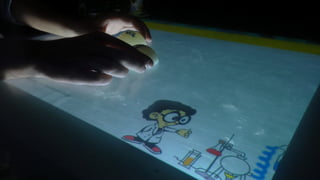

Tangible Interaction Approach for learning Chemical Bonding
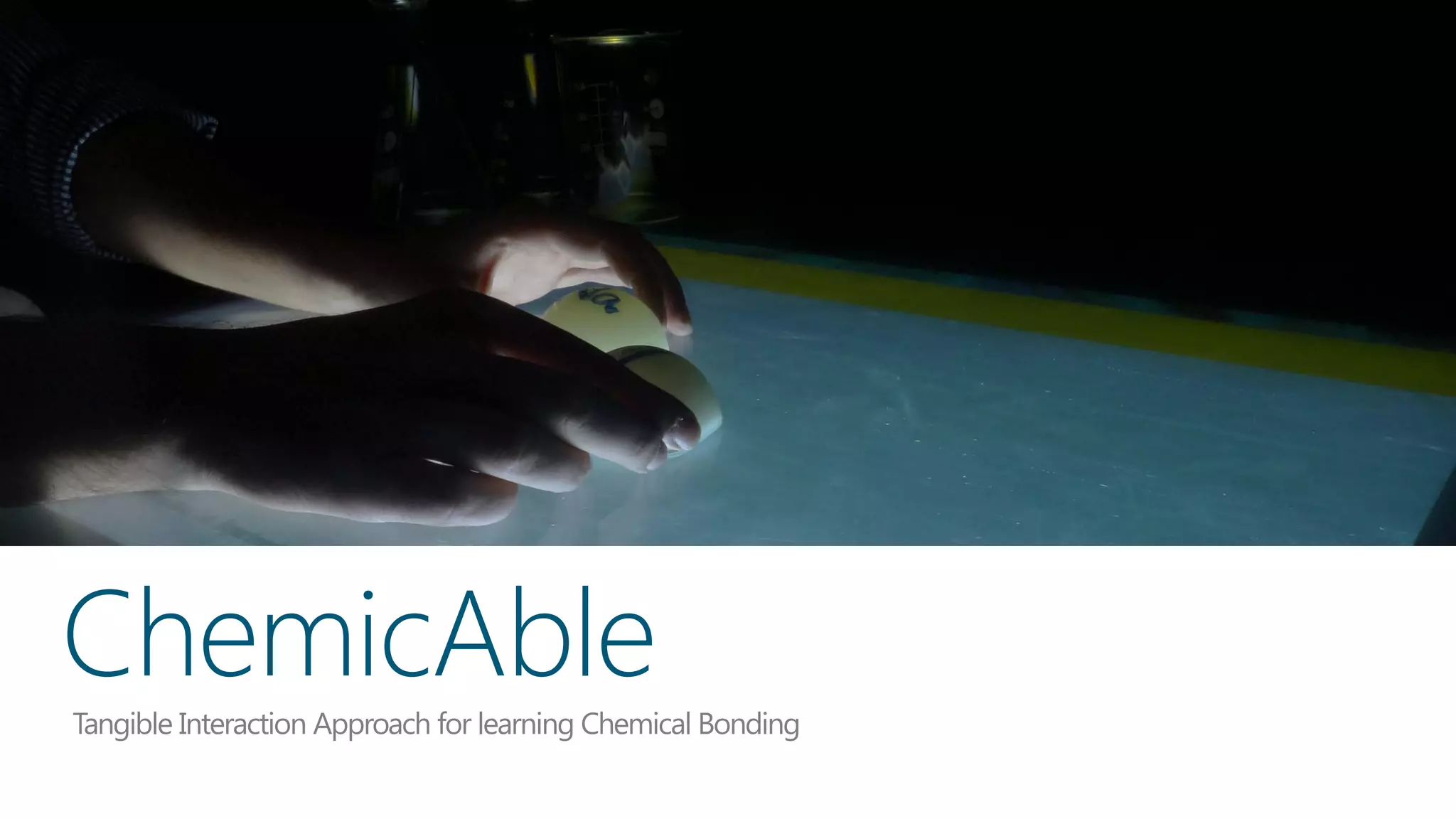
ChemicAble
Current system of teaching chemistry
Alternative Methods of Teaching
ChemicAble
System design considerations
How it works
Discussion
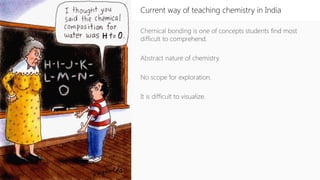
Current way of teaching chemistry in India
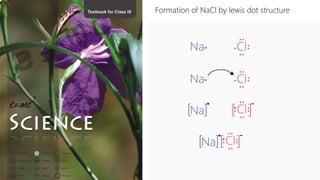
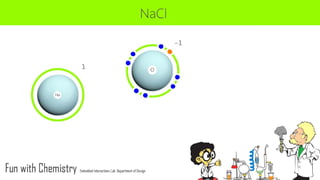
Lewis structure forms the base for understanding the concept of electron
transfer for students of grade 8 and 9 in India.
Formation of NaCl by lewis dot structure
Current way of teaching chemistry in India
The task of understanding the Lewis model and the electron transfer with
the help of just text and figures is a really herculean one for kids.
Lets take a look at alternative methods of teaching
Manipulating physical objects supports and develops thinking in children and
hence tangible user interfaces might bring about expedited natural learning.
- Piaget’s developmental theory
Piaget, J. The language and thought of the child. Psychology Press, 1998
Tangible User Interfaces
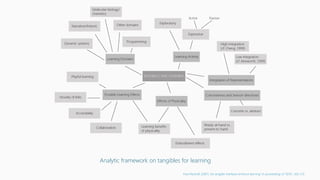
Analytic framework on tangibles for learning
Paul Marshall (2007). Do tangible interfaces enhance learning? In proceedings of TEI'07, 163-170
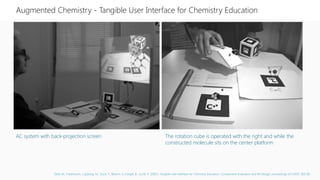
AC system with back-projection screen The rotation cube is operated with the right and while the
constructed molecule sits on the center platform
Augmented Chemistry - Tangible User Interface for Chemistry Education
Fjeld, M., Fredriksson, J.,Ejdestig, M., Duca, F., Bötschi, K.,Voegtli, B., Juchli, P. (2007). Tangible User Interface for Chemistry Education: Comparative Evaluation and Re-Design, proceedings of CHI’07, 805-80
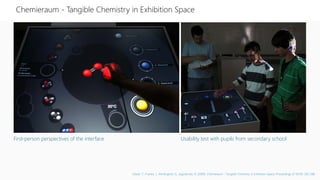
First-person perspectives of the interface Usability test with pupils from secondary school
Chemieraum - Tangible Chemistry in Exhibition Space
Gläser, T., Franke, J., Wintergerst, G., Jagodzinski, R. (2009). Chemieraum - Tangible Chemistry in Exhibition Space, Proceedings of TEI’09, 285-288
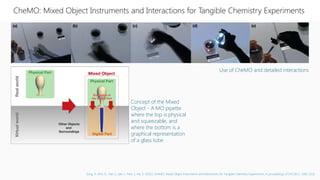
Concept of the Mixed
Object - A MO pipette
where the top is physical
and squeezable, and
where the bottom is a
graphical representation
of a glass tube
Use of CheMO and detailed interactions
CheMO: Mixed Object Instruments and Interactions for Tangible Chemistry Experiments
Song, K., Kim, G., Han, I., Lee, J., Park, J., Ha, S. (2011). CheMO: Mixed Object Instruments and Interactions for Tangible Chemistry Experiments, in proceedings of CHI 2011, 2305-2310
There hasn’t been any significant work done in this direction specifically for
the Indian context.
We try to leverage the concept of Lewis dot structure taught to Indian
students and build upon that to develop a system particularly relevant for
the Indian education system.
There hasn’t been any significant work done in this direction specifically for
the Indian context.
Introducing
ChemicAble
ChemicAble
A tangible user interface that helps children understand ionic
compound formation.
A tangible user interface that helps children understand ionic
compound formation.
Exploratory in nature and promotes collaborative learning with fun.
A tangible user interface that helps children understand ionic
compound formation.
Exploratory in nature and promotes collaborative learning with fun.
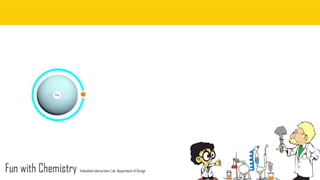
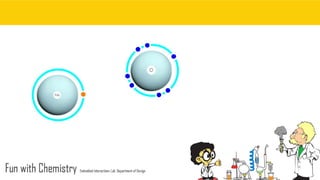
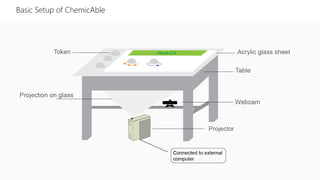
Interactive table-top interface in which first 20 elements of the
periodic table are represented by 20 tokens.
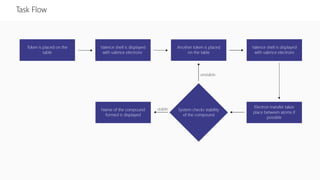
Here is how it works
Task Flow
System Design Consideration
For Indian students
Learning through exploration, trials and failure.
Collaboration
Proceed in small steps
Feedback
Basic Setup of ChemicAble
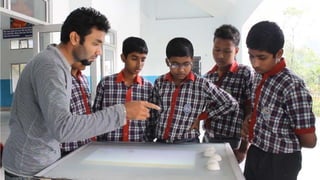
Aim of the testing was to observe and measure ease,
engagement and understanding of the system for students of
grade 8-10.
4 point likert scale was used in the questionnaire to be
answered by the students and detailed observations were made.
User Testing
Basic Setup of ChemicAble
Interaction with Dr. LN Gupta
It was presented to Dr L.N. Gupta, the chemistry teacher at
Kendriya Vidyalaya.
He found it very useful and suggested addition of covalent and
co-ordination compound formation to the system.
He also suggested showing a real ionic compound formation
visually as opposed to showing that just through text and colour
based feedback.
Discussion
Collaboration- Students enjoyed exploration and they grasped the
method of interacting with the table better when in groups than
when alone.
Exercise Tool- Students used their prior knowledge of chemical
bonding taught in class to figure out which atom to bring next.
Discussion (positive points)
Display penultimate shell in metals
Students found problems in deciding whether a metal had become
stable or not.
The cause for this was that only the valence shell of the atoms is
displayed on the table. So when a metal loses electrons its valence
shell becomes empty and the octet stability of its penultimate shell
is not visible.
Discussion (point for improvement)
Addition of covalent and co-ordination compound.
Multi-modal feedback – accompanied by haptic and auditory
response.
Transfer dependent on proximity of atoms.
Future Work
Thank You!!
Department of Design, IIT Guwahati

Chemic able

  • 1.
    Tangible Interaction Approachfor learning Chemical Bonding ChemicAble
  • 2.
    Current system ofteaching chemistry Alternative Methods of Teaching ChemicAble System design considerations How it works Discussion
  • 3.
    Current way ofteaching chemistry in India
  • 4.
    Lewis structure formsthe base for understanding the concept of electron transfer for students of grade 8 and 9 in India.
  • 5.
    Formation of NaClby lewis dot structure
  • 6.
    Current way ofteaching chemistry in India
  • 7.
    The task ofunderstanding the Lewis model and the electron transfer with the help of just text and figures is a really herculean one for kids.
  • 8.
    Lets take alook at alternative methods of teaching
  • 9.
    Manipulating physical objectssupports and develops thinking in children and hence tangible user interfaces might bring about expedited natural learning. - Piaget’s developmental theory Piaget, J. The language and thought of the child. Psychology Press, 1998
  • 10.
  • 11.
    Analytic framework ontangibles for learning Paul Marshall (2007). Do tangible interfaces enhance learning? In proceedings of TEI'07, 163-170
  • 12.
    AC system withback-projection screen The rotation cube is operated with the right and while the constructed molecule sits on the center platform Augmented Chemistry - Tangible User Interface for Chemistry Education Fjeld, M., Fredriksson, J.,Ejdestig, M., Duca, F., Bötschi, K.,Voegtli, B., Juchli, P. (2007). Tangible User Interface for Chemistry Education: Comparative Evaluation and Re-Design, proceedings of CHI’07, 805-80
  • 13.
    First-person perspectives ofthe interface Usability test with pupils from secondary school Chemieraum - Tangible Chemistry in Exhibition Space Gläser, T., Franke, J., Wintergerst, G., Jagodzinski, R. (2009). Chemieraum - Tangible Chemistry in Exhibition Space, Proceedings of TEI’09, 285-288
  • 14.
    Concept of theMixed Object - A MO pipette where the top is physical and squeezable, and where the bottom is a graphical representation of a glass tube Use of CheMO and detailed interactions CheMO: Mixed Object Instruments and Interactions for Tangible Chemistry Experiments Song, K., Kim, G., Han, I., Lee, J., Park, J., Ha, S. (2011). CheMO: Mixed Object Instruments and Interactions for Tangible Chemistry Experiments, in proceedings of CHI 2011, 2305-2310
  • 15.
    There hasn’t beenany significant work done in this direction specifically for the Indian context.
  • 16.
    We try toleverage the concept of Lewis dot structure taught to Indian students and build upon that to develop a system particularly relevant for the Indian education system. There hasn’t been any significant work done in this direction specifically for the Indian context.
  • 17.
  • 18.
  • 19.
  • 20.
    A tangible userinterface that helps children understand ionic compound formation.
  • 21.
    A tangible userinterface that helps children understand ionic compound formation. Exploratory in nature and promotes collaborative learning with fun.
  • 22.
    A tangible userinterface that helps children understand ionic compound formation. Exploratory in nature and promotes collaborative learning with fun. Interactive table-top interface in which first 20 elements of the periodic table are represented by 20 tokens.
  • 23.
    Here is howit works
  • 24.
    Here is howit works
  • 26.
    Here is howit works
  • 27.
    Here is howit works
  • 28.
  • 30.
  • 31.
  • 32.
    Learning through exploration,trials and failure.
  • 33.
  • 34.
  • 35.
  • 36.
    Basic Setup ofChemicAble
  • 37.
    Aim of thetesting was to observe and measure ease, engagement and understanding of the system for students of grade 8-10. 4 point likert scale was used in the questionnaire to be answered by the students and detailed observations were made. User Testing
  • 38.
    Basic Setup ofChemicAble
  • 39.
    Interaction with Dr.LN Gupta It was presented to Dr L.N. Gupta, the chemistry teacher at Kendriya Vidyalaya. He found it very useful and suggested addition of covalent and co-ordination compound formation to the system. He also suggested showing a real ionic compound formation visually as opposed to showing that just through text and colour based feedback. Discussion
  • 40.
    Collaboration- Students enjoyedexploration and they grasped the method of interacting with the table better when in groups than when alone. Exercise Tool- Students used their prior knowledge of chemical bonding taught in class to figure out which atom to bring next. Discussion (positive points)
  • 41.
    Display penultimate shellin metals Students found problems in deciding whether a metal had become stable or not. The cause for this was that only the valence shell of the atoms is displayed on the table. So when a metal loses electrons its valence shell becomes empty and the octet stability of its penultimate shell is not visible. Discussion (point for improvement)
  • 42.
    Addition of covalentand co-ordination compound. Multi-modal feedback – accompanied by haptic and auditory response. Transfer dependent on proximity of atoms. Future Work
  • 43.
    Thank You!! Department ofDesign, IIT Guwahati