Cheatsheet for
Optimizing a
BigCommerce
Website
Presented by - Website Speedy
Introduction
In today's digital age, having an online presence is crucial for businesses of all sizes.
BigCommerce, a popular e-commerce platform, provides a robust framework for creating and
managing online stores. However, to succeed in the competitive e-commerce landscape, it's
essential to optimize your BigCommerce website if you want to boost performance, user
experience, and search engine visibility. This cheat sheet will guide you through the key steps to
achieve these goals and ensure your BigCommerce website's success.
01
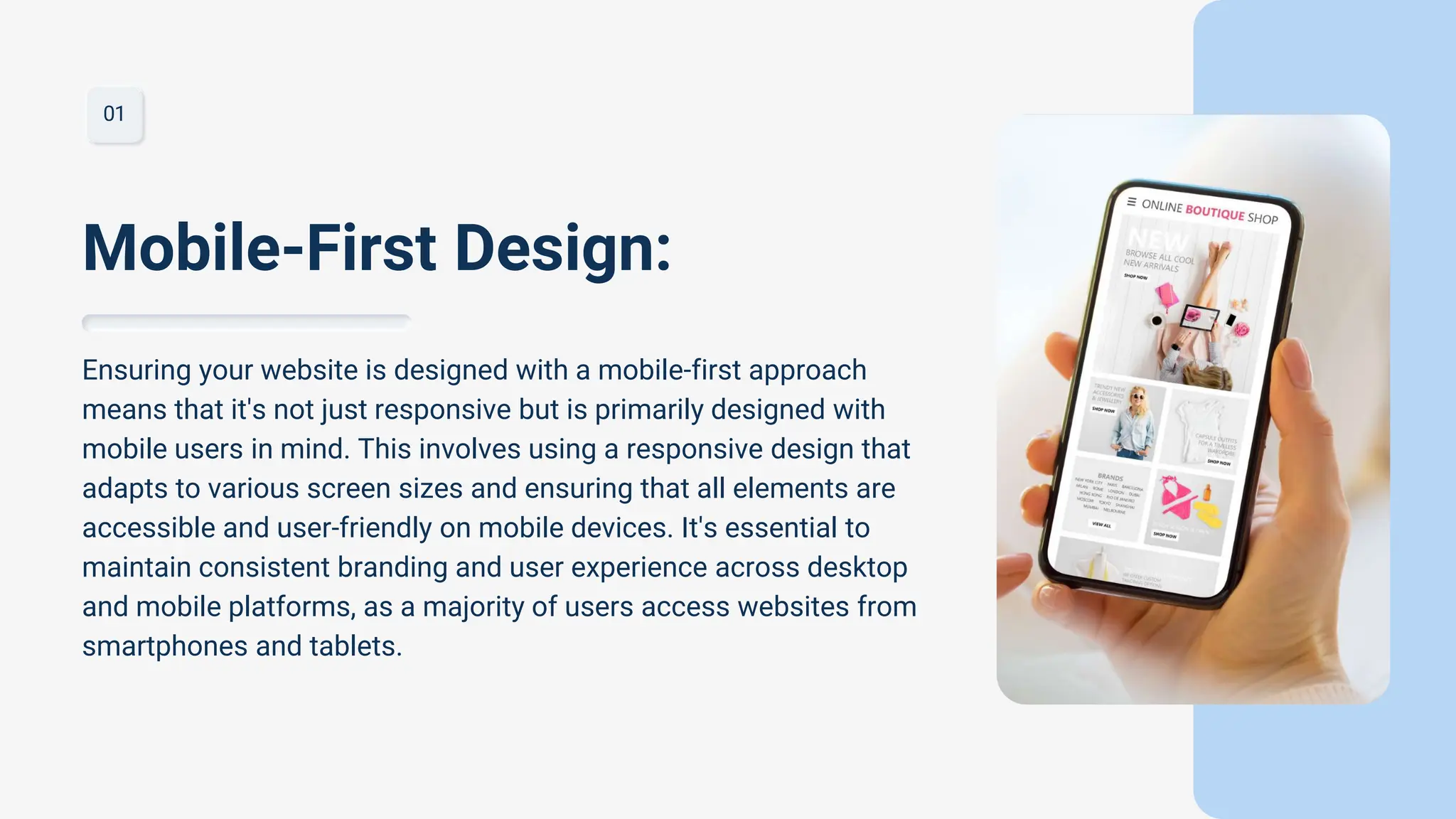
Ensuring your website is designed with a mobile-first approach
means that it's not just responsive but is primarily designed with
mobile users in mind. This involves using a responsive design that
adapts to various screen sizes and ensuring that all elements are
accessible and user-friendly on mobile devices. It's essential to
maintain consistent branding and user experience across desktop
and mobile platforms, as a majority of users access websites from
smartphones and tablets.
Mobile-First Design:
02
Page load times significantly impact user experience and search
engine rankings. To optimize page speed, start by compressing
images to reduce their file sizes, which can be done through image
optimization tools. Employing a Content Delivery Network (CDN)
ensures that website content is delivered to users from the nearest
server, reducing latency. Minimize code and scripts to decrease
HTTP requests, enable browser caching to save resources, and
reduce server response time by choosing a reliable hosting
provider.
Page Speed Optimization:
03
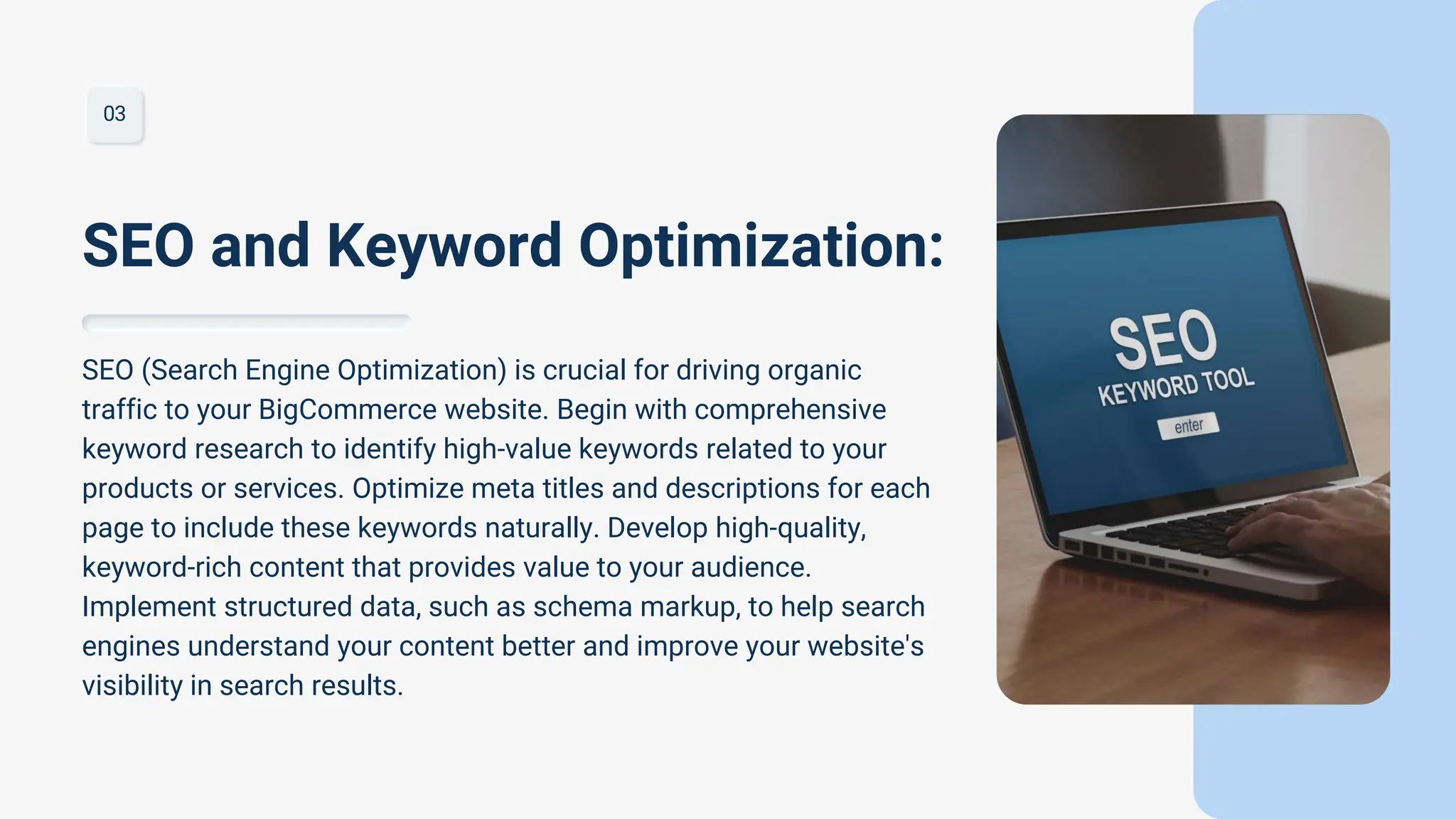
SEO (Search Engine Optimization) is crucial for driving organic
traffic to your BigCommerce website. Begin with comprehensive
keyword research to identify high-value keywords related to your
products or services. Optimize meta titles and descriptions for each
page to include these keywords naturally. Develop high-quality,
keyword-rich content that provides value to your audience.
Implement structured data, such as schema markup, to help search
engines understand your content better and improve your website's
visibility in search results.
SEO and Keyword Optimization:
04
Online security is paramount to protect both your business and
customer data. Utilize HTTPS (SSL) to encrypt data transmission,
and regularly update your software and plugins to patch
vulnerabilities. Implement strong password policies and encourage
customers to do the same to enhance account security. Regularly
scan your website for malware and vulnerabilities, and take
immediate action to address any threats that arise.
Secure Your Website:
05
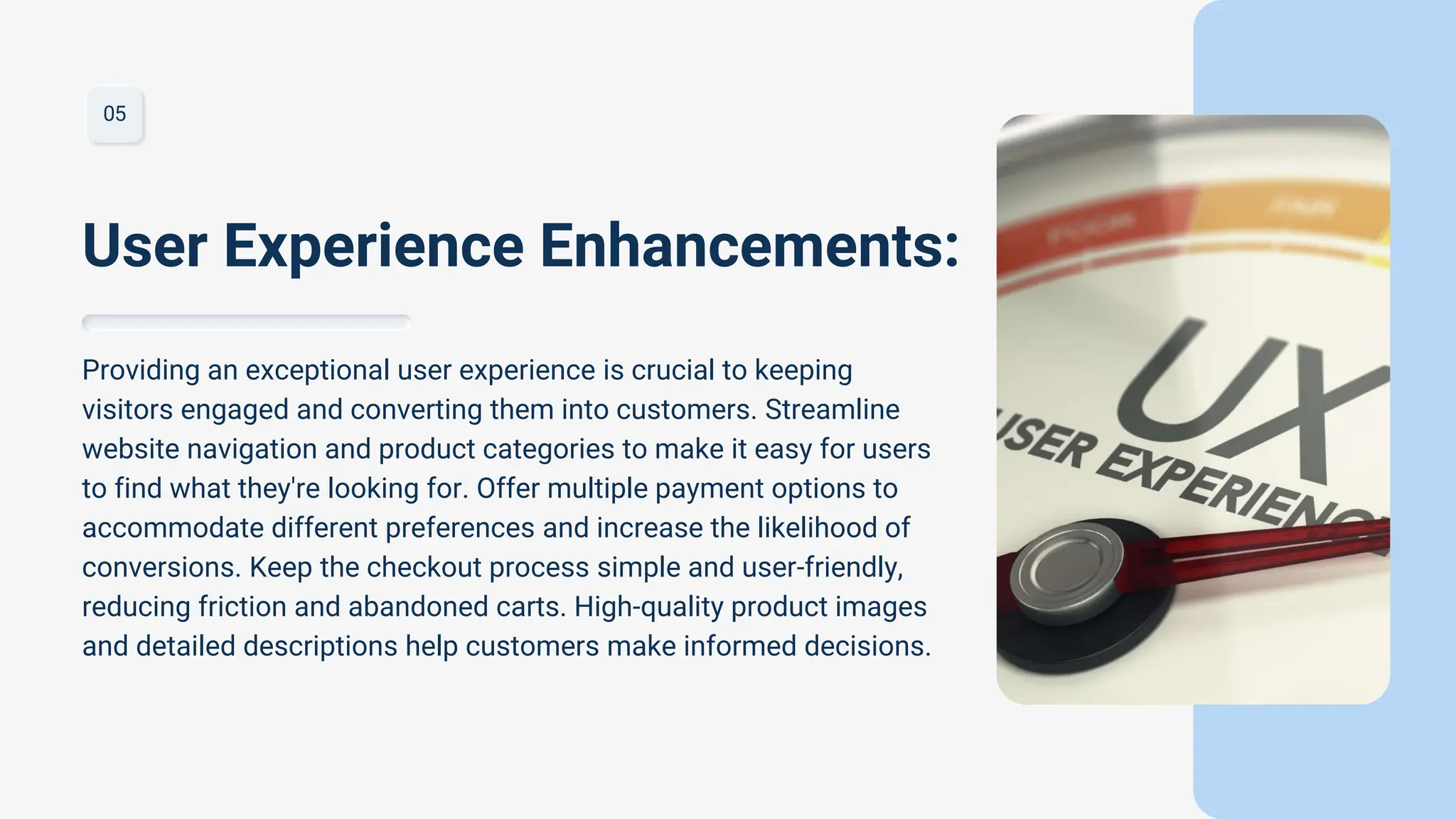
Providing an exceptional user experience is crucial to keeping
visitors engaged and converting them into customers. Streamline
website navigation and product categories to make it easy for users
to find what they're looking for. Offer multiple payment options to
accommodate different preferences and increase the likelihood of
conversions. Keep the checkout process simple and user-friendly,
reducing friction and abandoned carts. High-quality product images
and detailed descriptions help customers make informed decisions.
User Experience Enhancements:
06
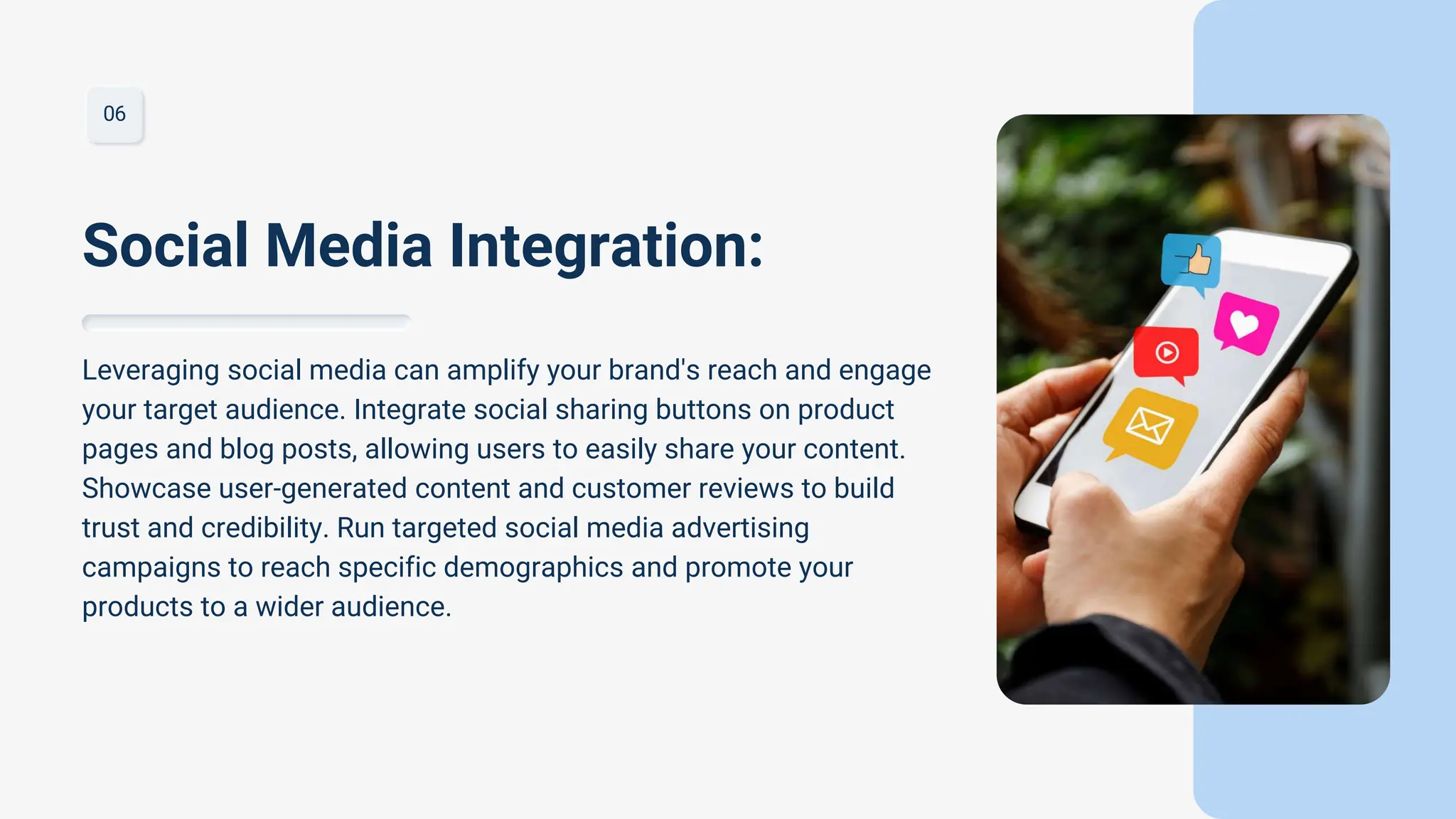
Leveraging social media can amplify your brand's reach and engage
your target audience. Integrate social sharing buttons on product
pages and blog posts, allowing users to easily share your content.
Showcase user-generated content and customer reviews to build
trust and credibility. Run targeted social media advertising
campaigns to reach specific demographics and promote your
products to a wider audience.
Social Media Integration:
07
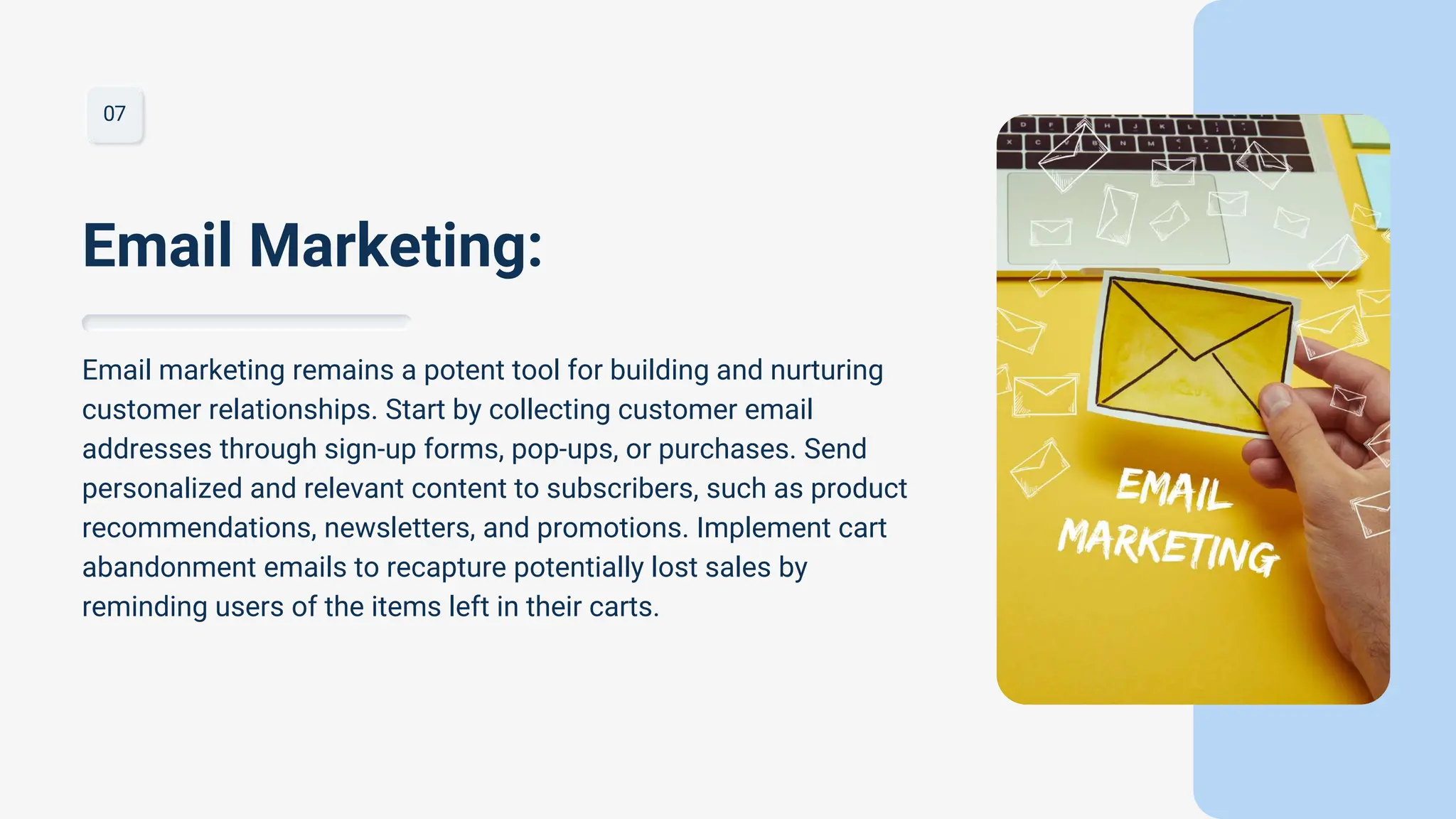
Email marketing remains a potent tool for building and nurturing
customer relationships. Start by collecting customer email
addresses through sign-up forms, pop-ups, or purchases. Send
personalized and relevant content to subscribers, such as product
recommendations, newsletters, and promotions. Implement cart
abandonment emails to recapture potentially lost sales by
reminding users of the items left in their carts.
Email Marketing:
08
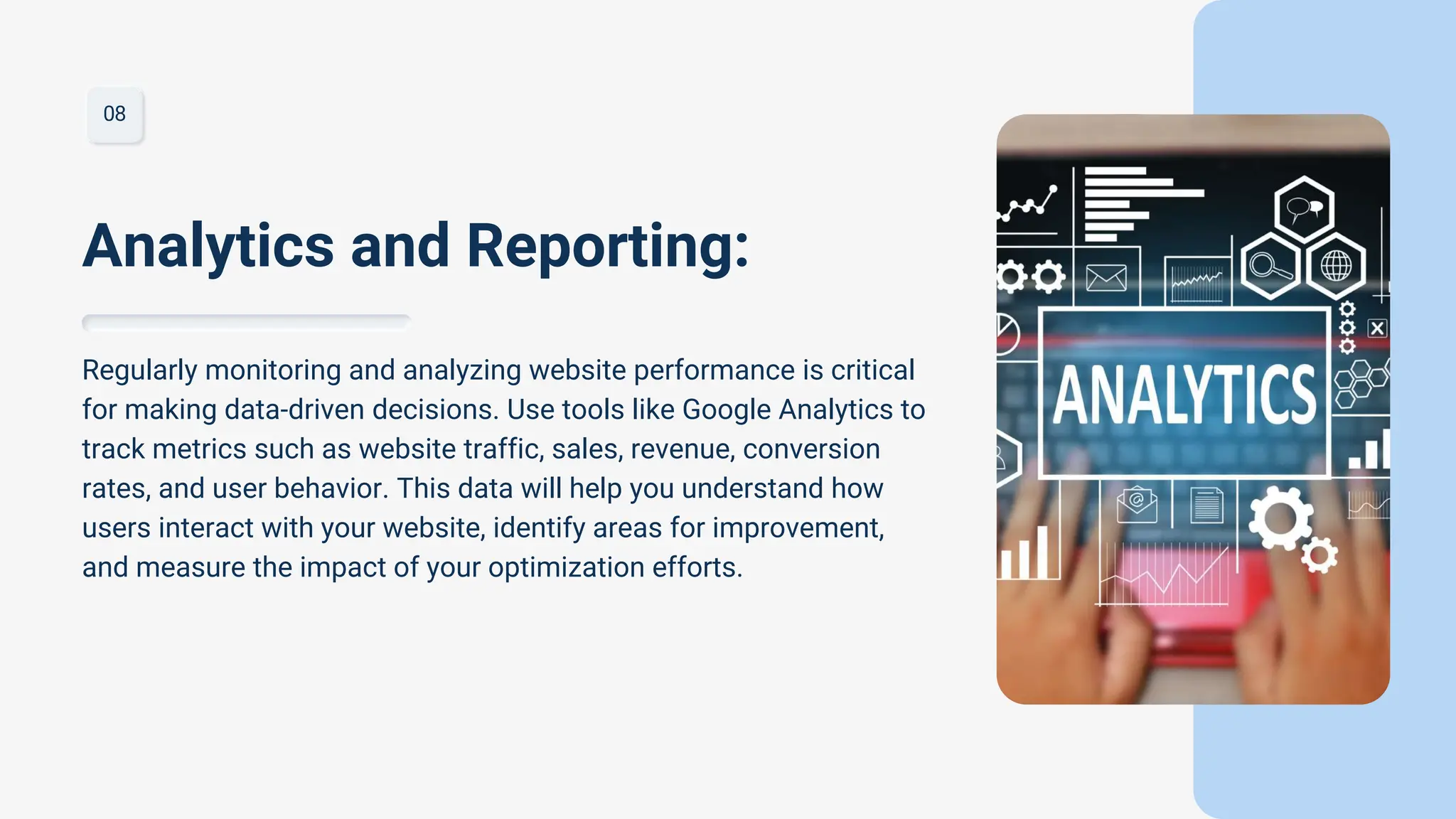
Regularly monitoring and analyzing website performance is critical
for making data-driven decisions. Use tools like Google Analytics to
track metrics such as website traffic, sales, revenue, conversion
rates, and user behavior. This data will help you understand how
users interact with your website, identify areas for improvement,
and measure the impact of your optimization efforts.
Analytics and Reporting:
09
For added convenience and features, consider developing a
dedicated mobile app for your e-commerce store or integrating with
third-party apps that enhance your user experience. Mobile apps
can provide features like push notifications, in-app purchases, and
loyalty programs, which can boost customer engagement and
retention.
Mobile App Integration:
10
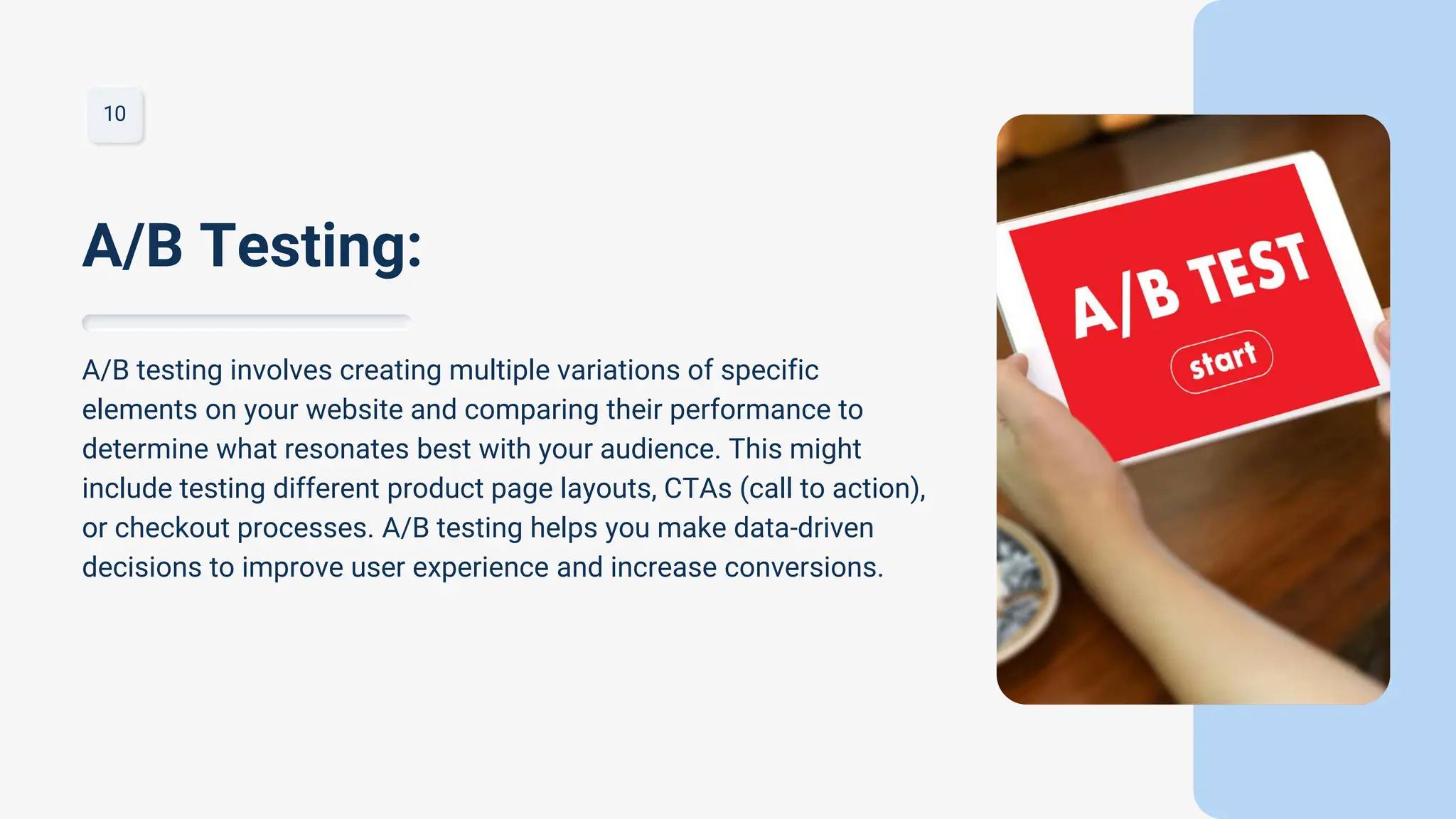
A/B testing involves creating multiple variations of specific
elements on your website and comparing their performance to
determine what resonates best with your audience. This might
include testing different product page layouts, CTAs (call to action),
or checkout processes. A/B testing helps you make data-driven
decisions to improve user experience and increase conversions.
A/B Testing:
11
Customer reviews and testimonials are powerful trust-building
tools. Encourage satisfied customers to leave reviews and
testimonials on your product pages. Positive reviews not only
provide social proof but also help potential buyers make informed
decisions. Respond to reviews, engage with customers, and
address any negative feedback professionally to build trust and
credibility.
Customer Reviews & Testimonials:
12
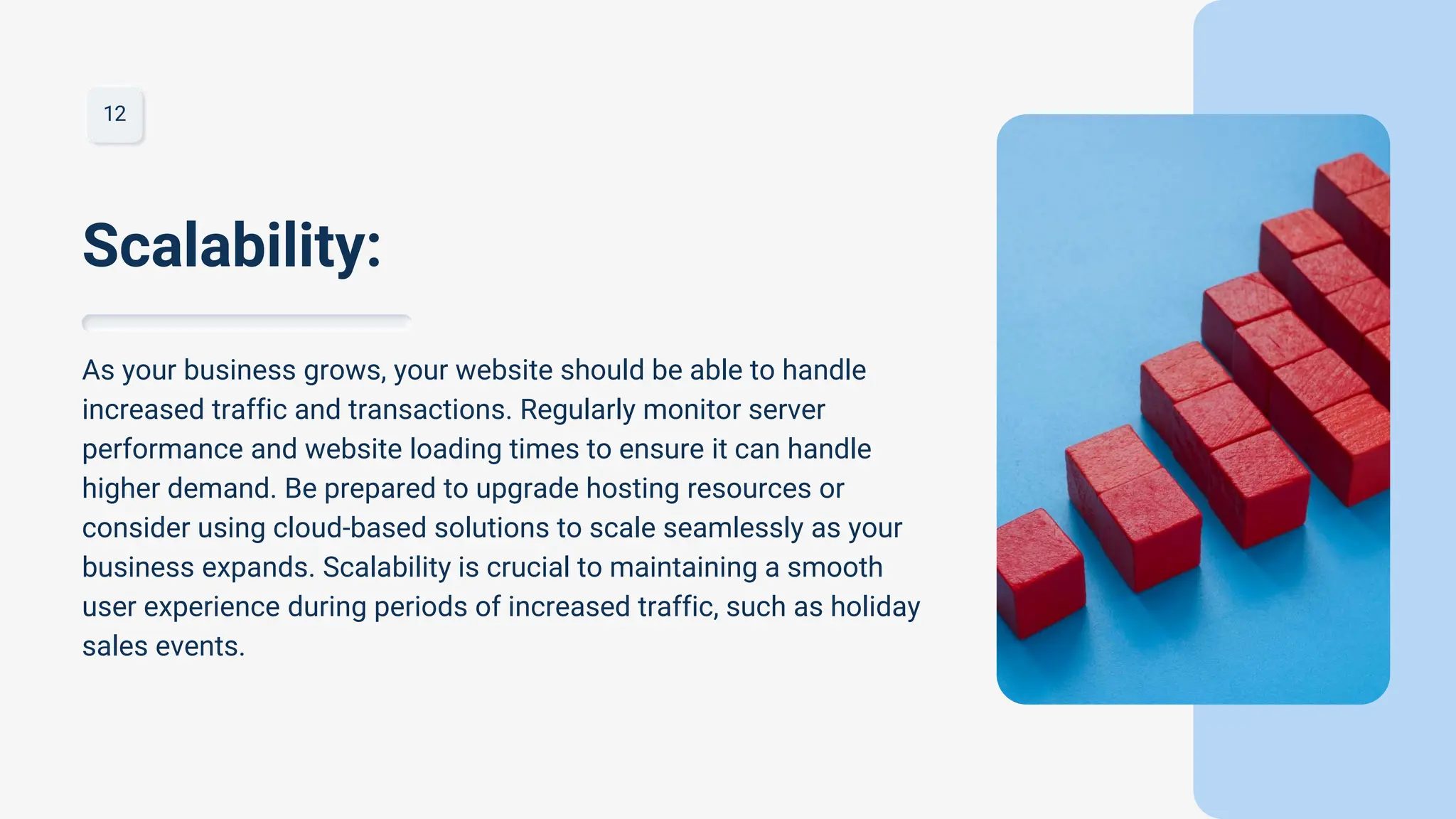
As your business grows, your website should be able to handle
increased traffic and transactions. Regularly monitor server
performance and website loading times to ensure it can handle
higher demand. Be prepared to upgrade hosting resources or
consider using cloud-based solutions to scale seamlessly as your
business expands. Scalability is crucial to maintaining a smooth
user experience during periods of increased traffic, such as holiday
sales events.
Scalability:
Conclusion
Optimizing a BigCommerce website is a multifaceted process that involves a combination of
technical, design, and marketing strategies. By implementing these detailed steps, you can
create a high-performing, secure, and customer-friendly online store that not only meets user
expectations but also stands out in the competitive e-commerce landscape. Regularly review
and update your website based on customer feedback and market trends to maintain a strong
online presence and drive sales over time.
Contact Us
support@websitespeedy.com
Chat Support
websitespeedy.com
Thank you!

Cheatsheet for Optimizing a BigCommerce Website

  • 1.
  • 2.
    Introduction In today's digitalage, having an online presence is crucial for businesses of all sizes. BigCommerce, a popular e-commerce platform, provides a robust framework for creating and managing online stores. However, to succeed in the competitive e-commerce landscape, it's essential to optimize your BigCommerce website if you want to boost performance, user experience, and search engine visibility. This cheat sheet will guide you through the key steps to achieve these goals and ensure your BigCommerce website's success.
  • 3.
    01 Ensuring your websiteis designed with a mobile-first approach means that it's not just responsive but is primarily designed with mobile users in mind. This involves using a responsive design that adapts to various screen sizes and ensuring that all elements are accessible and user-friendly on mobile devices. It's essential to maintain consistent branding and user experience across desktop and mobile platforms, as a majority of users access websites from smartphones and tablets. Mobile-First Design:
  • 4.
    02 Page load timessignificantly impact user experience and search engine rankings. To optimize page speed, start by compressing images to reduce their file sizes, which can be done through image optimization tools. Employing a Content Delivery Network (CDN) ensures that website content is delivered to users from the nearest server, reducing latency. Minimize code and scripts to decrease HTTP requests, enable browser caching to save resources, and reduce server response time by choosing a reliable hosting provider. Page Speed Optimization:
  • 5.
    03 SEO (Search EngineOptimization) is crucial for driving organic traffic to your BigCommerce website. Begin with comprehensive keyword research to identify high-value keywords related to your products or services. Optimize meta titles and descriptions for each page to include these keywords naturally. Develop high-quality, keyword-rich content that provides value to your audience. Implement structured data, such as schema markup, to help search engines understand your content better and improve your website's visibility in search results. SEO and Keyword Optimization:
  • 6.
    04 Online security isparamount to protect both your business and customer data. Utilize HTTPS (SSL) to encrypt data transmission, and regularly update your software and plugins to patch vulnerabilities. Implement strong password policies and encourage customers to do the same to enhance account security. Regularly scan your website for malware and vulnerabilities, and take immediate action to address any threats that arise. Secure Your Website:
  • 7.
    05 Providing an exceptionaluser experience is crucial to keeping visitors engaged and converting them into customers. Streamline website navigation and product categories to make it easy for users to find what they're looking for. Offer multiple payment options to accommodate different preferences and increase the likelihood of conversions. Keep the checkout process simple and user-friendly, reducing friction and abandoned carts. High-quality product images and detailed descriptions help customers make informed decisions. User Experience Enhancements:
  • 8.
    06 Leveraging social mediacan amplify your brand's reach and engage your target audience. Integrate social sharing buttons on product pages and blog posts, allowing users to easily share your content. Showcase user-generated content and customer reviews to build trust and credibility. Run targeted social media advertising campaigns to reach specific demographics and promote your products to a wider audience. Social Media Integration:
  • 9.
    07 Email marketing remainsa potent tool for building and nurturing customer relationships. Start by collecting customer email addresses through sign-up forms, pop-ups, or purchases. Send personalized and relevant content to subscribers, such as product recommendations, newsletters, and promotions. Implement cart abandonment emails to recapture potentially lost sales by reminding users of the items left in their carts. Email Marketing:
  • 10.
    08 Regularly monitoring andanalyzing website performance is critical for making data-driven decisions. Use tools like Google Analytics to track metrics such as website traffic, sales, revenue, conversion rates, and user behavior. This data will help you understand how users interact with your website, identify areas for improvement, and measure the impact of your optimization efforts. Analytics and Reporting:
  • 11.
    09 For added convenienceand features, consider developing a dedicated mobile app for your e-commerce store or integrating with third-party apps that enhance your user experience. Mobile apps can provide features like push notifications, in-app purchases, and loyalty programs, which can boost customer engagement and retention. Mobile App Integration:
  • 12.
    10 A/B testing involvescreating multiple variations of specific elements on your website and comparing their performance to determine what resonates best with your audience. This might include testing different product page layouts, CTAs (call to action), or checkout processes. A/B testing helps you make data-driven decisions to improve user experience and increase conversions. A/B Testing:
  • 13.
    11 Customer reviews andtestimonials are powerful trust-building tools. Encourage satisfied customers to leave reviews and testimonials on your product pages. Positive reviews not only provide social proof but also help potential buyers make informed decisions. Respond to reviews, engage with customers, and address any negative feedback professionally to build trust and credibility. Customer Reviews & Testimonials:
  • 14.
    12 As your businessgrows, your website should be able to handle increased traffic and transactions. Regularly monitor server performance and website loading times to ensure it can handle higher demand. Be prepared to upgrade hosting resources or consider using cloud-based solutions to scale seamlessly as your business expands. Scalability is crucial to maintaining a smooth user experience during periods of increased traffic, such as holiday sales events. Scalability:
  • 15.
    Conclusion Optimizing a BigCommercewebsite is a multifaceted process that involves a combination of technical, design, and marketing strategies. By implementing these detailed steps, you can create a high-performing, secure, and customer-friendly online store that not only meets user expectations but also stands out in the competitive e-commerce landscape. Regularly review and update your website based on customer feedback and market trends to maintain a strong online presence and drive sales over time.
  • 16.
  • 17.