Chapter 4,
Basic
Economics
Problem
What is Basic Economic Problem?
The economic problem – sometimes called the
basic or central economic problem – asserts
that an economy's finite resources are
insufficient to satisfy all human wants and
needs. It assumes that human wants are
unlimited, but the means to satisfy human wants
are limited.
Main Economic Problem
1. Poverty
2. Unemployment
3. Inflation
3
1. Poverty
Types of poverty:
1. Absolute poverty
2. Relative Poverty
Poverty means the
economic situation of
the individual or
social group in which
they cannot satisfy a
certain range of
minimum requirement.
4
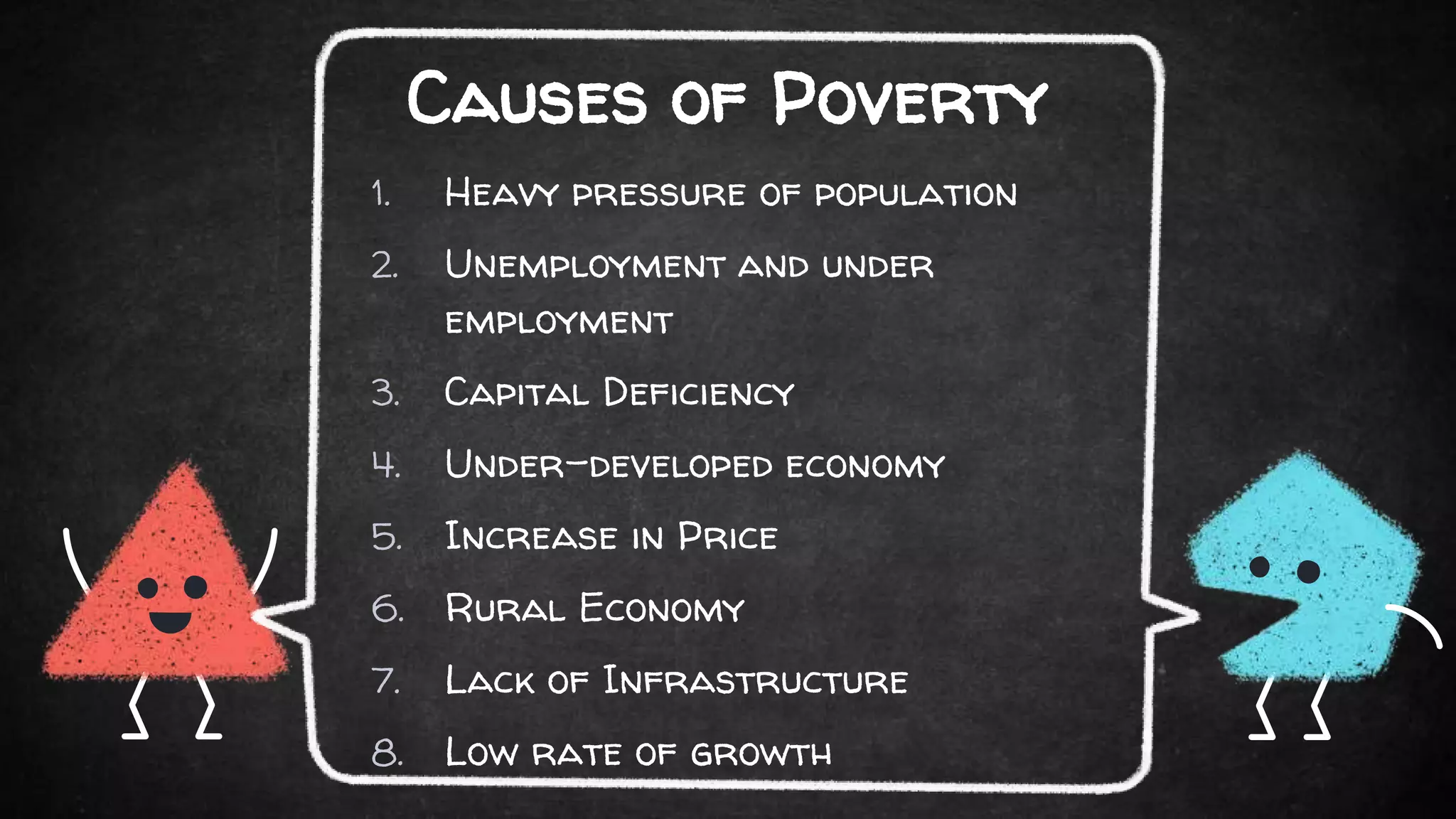
Causes of Poverty
1. Heavy pressure of population
2. Unemployment and under
employment
3. Capital Deficiency
4. Under-developed economy
5. Increase in Price
6. Rural Economy
7. Lack of Infrastructure
8. Low rate of growth
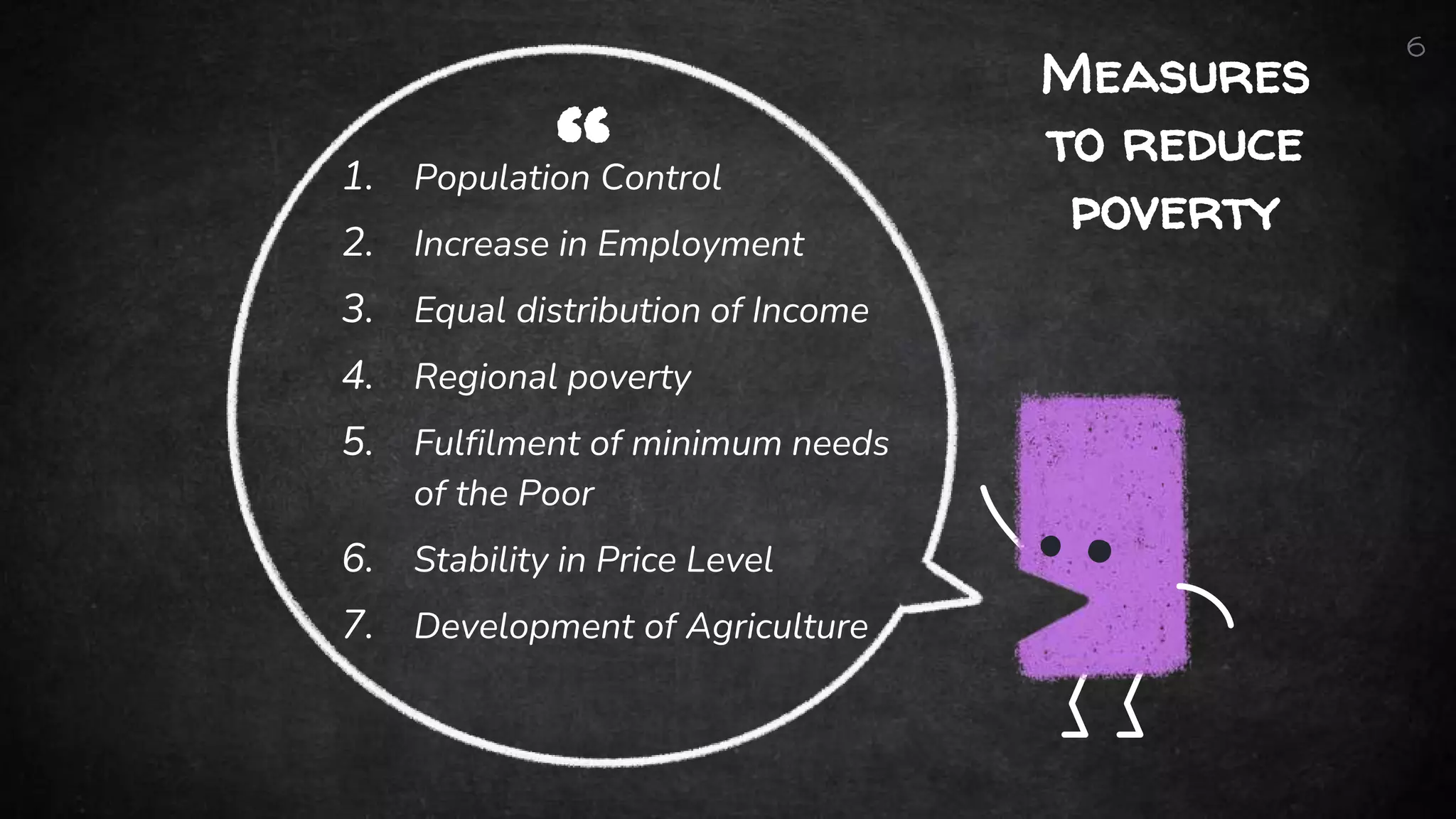
“
1. Population Control
2. Increase in Employment
3. Equal distribution of Income
4. Regional poverty
5. Fulfilment of minimum needs
of the Poor
6. Stability in Price Level
7. Development of Agriculture
6
Measures
to reduce
poverty
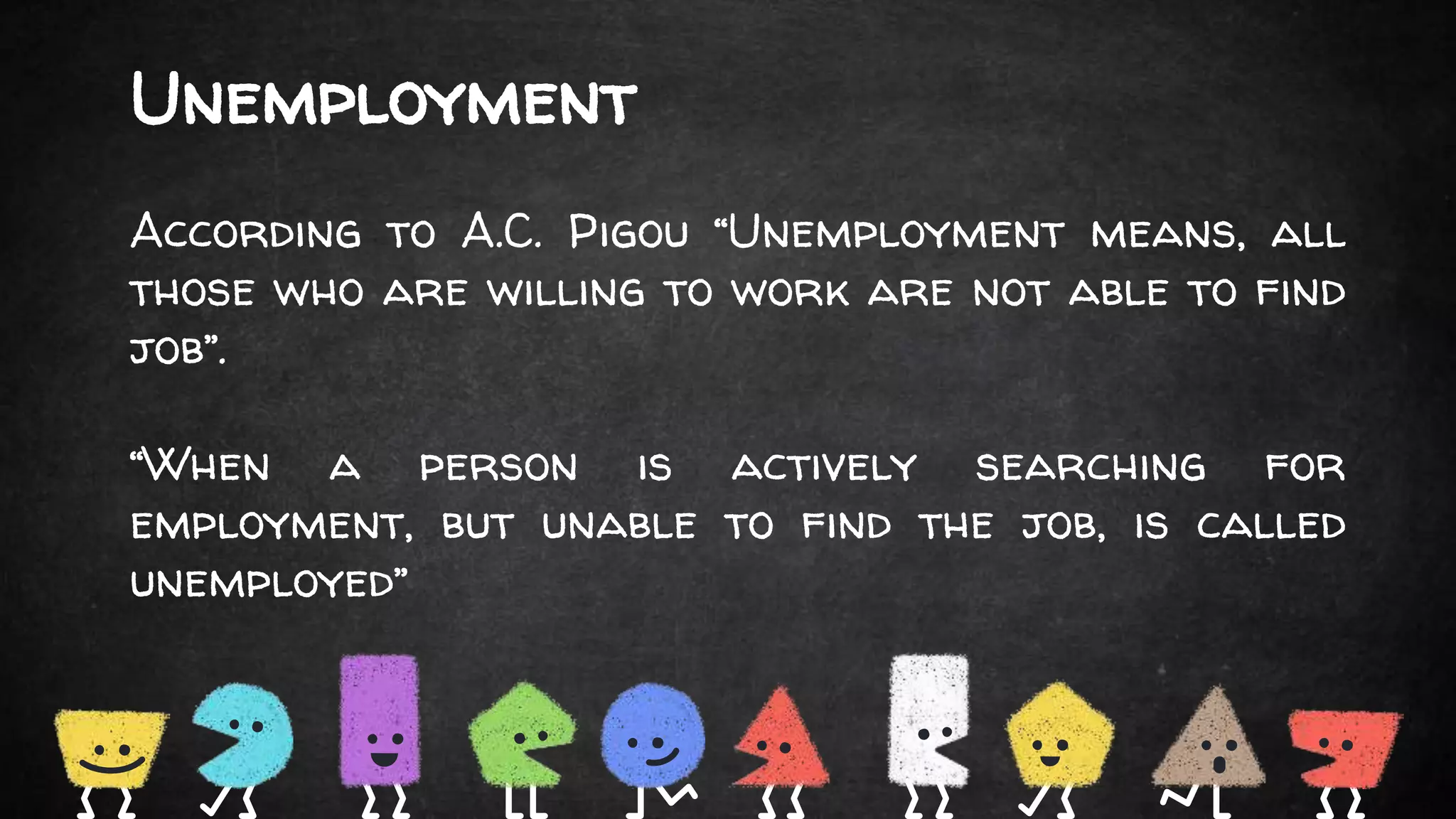
Unemployment
According to A.C. Pigou “Unemployment means, all
those who are willing to work are not able to find
job”.
“When a person is actively searching for
employment, but unable to find the job, is called
unemployed”
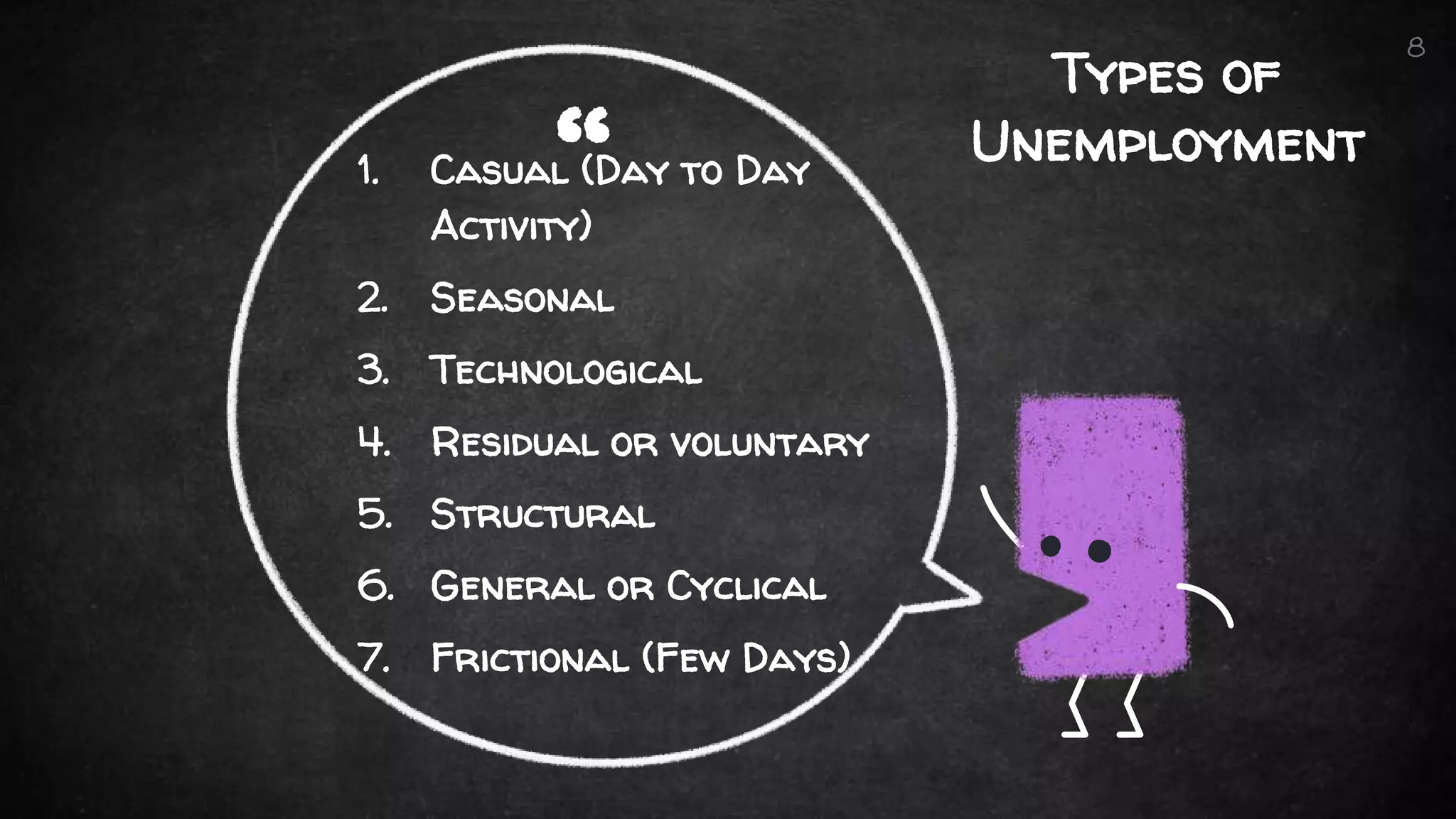
“
1. Casual (Day to Day
Activity)
2. Seasonal
3. Technological
4. Residual or voluntary
5. Structural
6. General or Cyclical
7. Frictional (Few Days)
8
Types of
Unemployment
Causes of unemployment
➜ Caste System
➜ Slow Economic Growth
➜ Increase in Population
➜ Agriculture is a Seasonal Occupation
➜ Joint Family System
➜ Fall of Cottage and Small industries
➜ Less Savings and Investment
➜ Inadequate Irrigation Facilities
➜ Immobility of labour
10
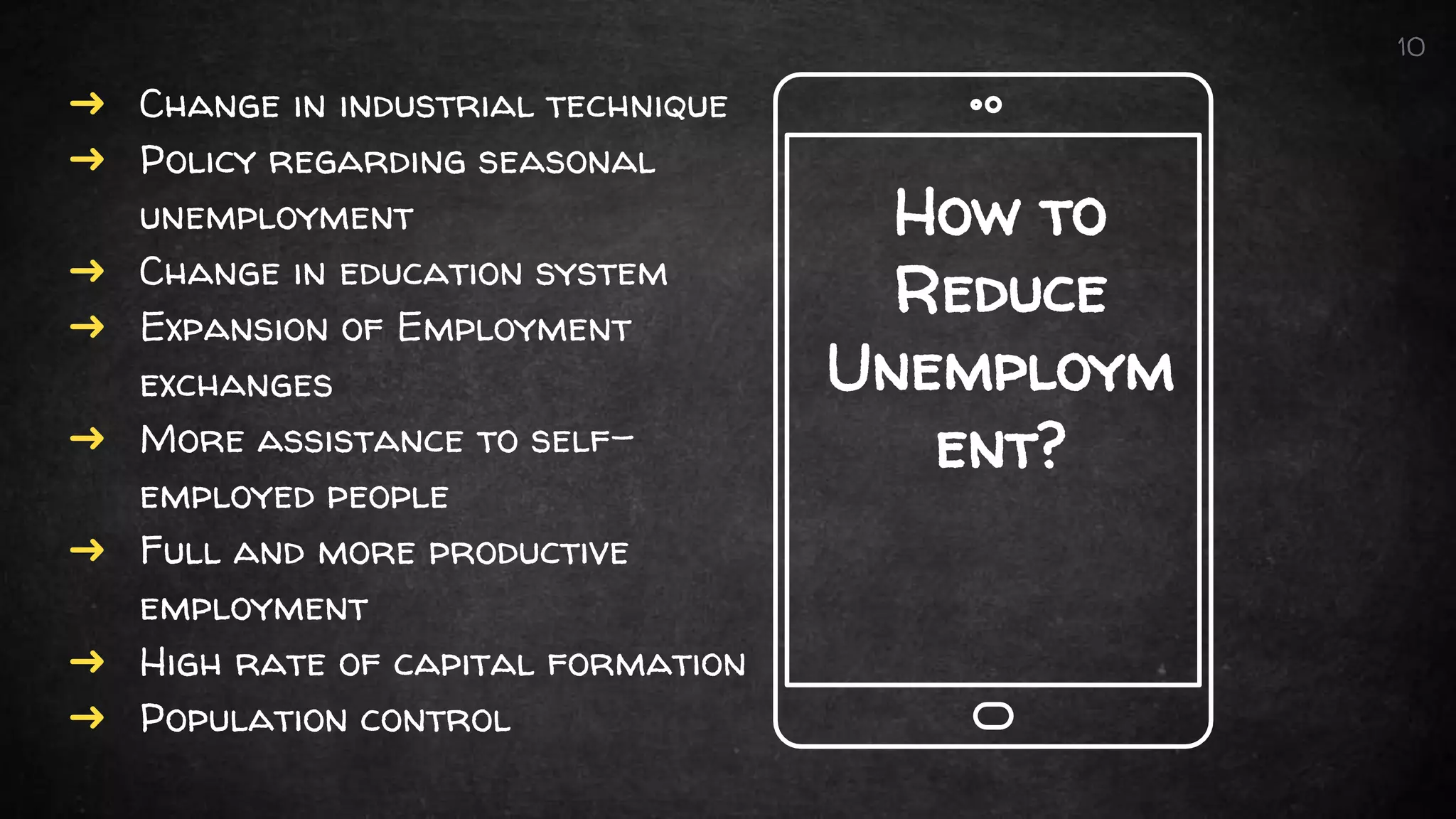
➜ Change in industrial technique
➜ Policy regarding seasonal
unemployment
➜ Change in education system
➜ Expansion of Employment
exchanges
➜ More assistance to self-
employed people
➜ Full and more productive
employment
➜ High rate of capital formation
➜ Population control
How to
Reduce
Unemploym
ent?
Inflation
“The word inflation in the broadest
possible sense refers to any increase in
the general price-level which is
sustained and non-seasonal in
character”- Peterson.
According to Coulborn inflation can be
defined as, “too much money chasing too
few goods.”
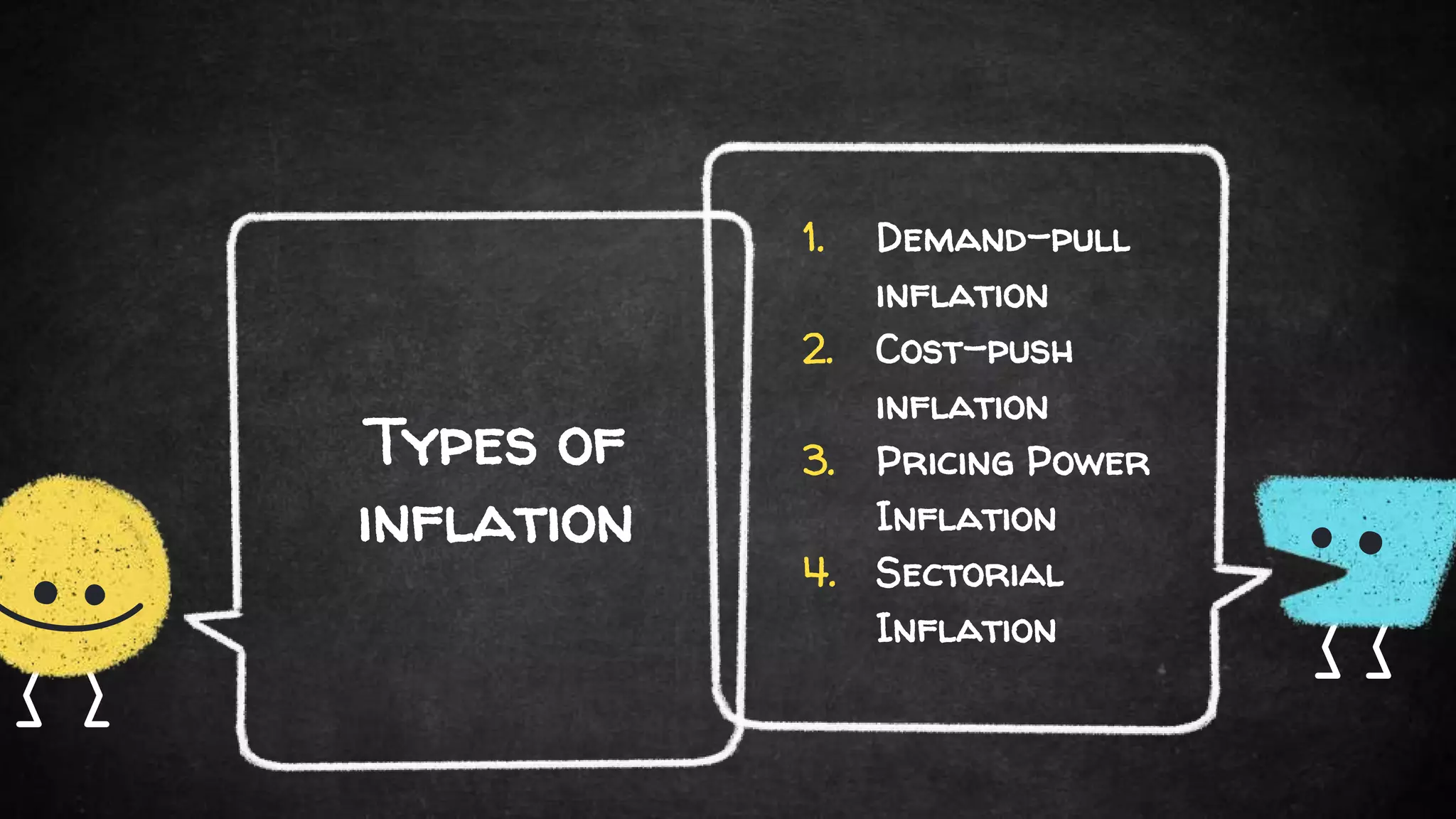
1. Demand-pull
inflation
2. Cost-push
inflation
3. Pricing Power
Inflation
4. Sectorial
Inflation
Types of
inflation
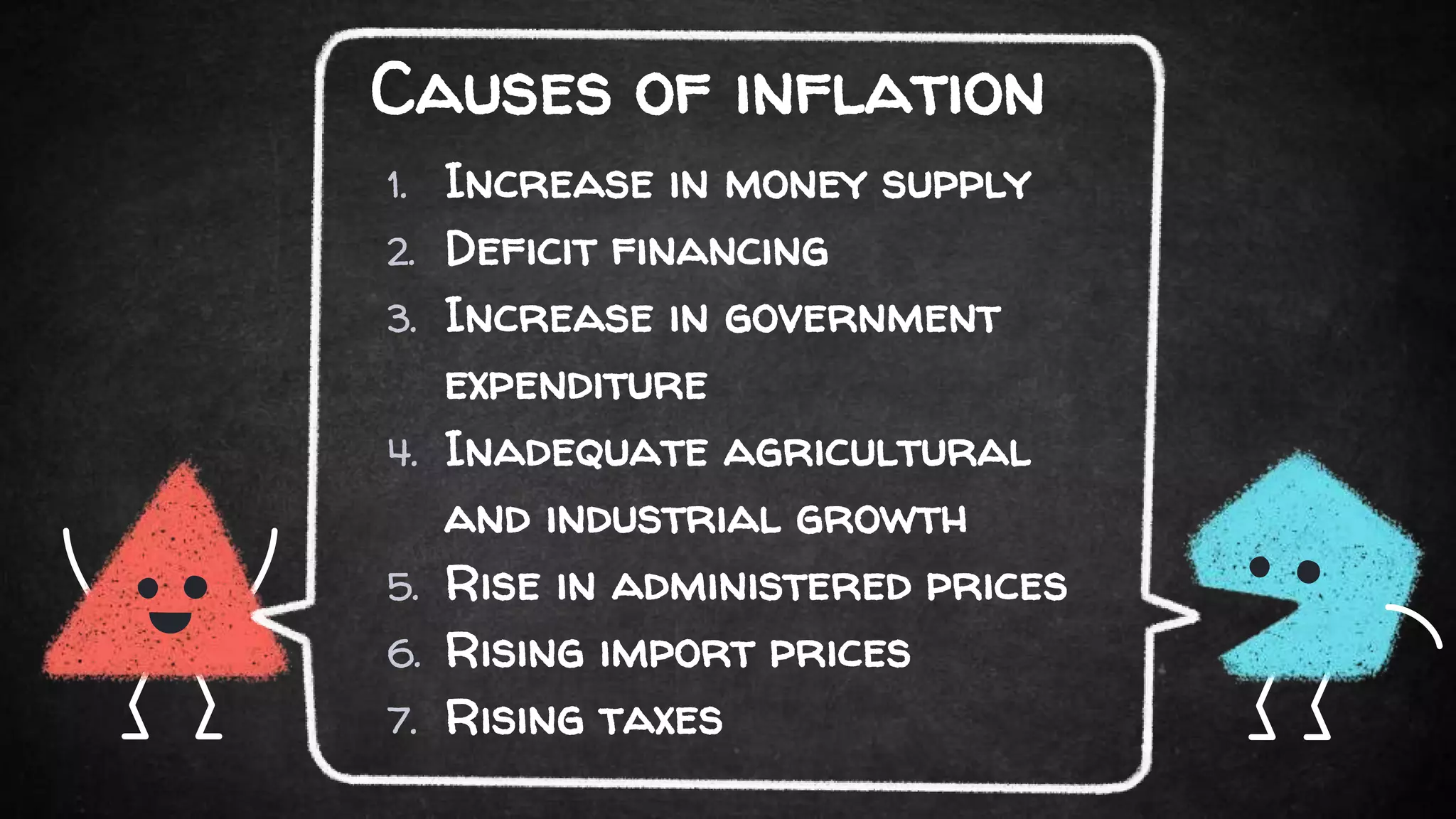
Causes of inflation
1. Increase in money supply
2. Deficit financing
3. Increase in government
expenditure
4. Inadequate agricultural
and industrial growth
5. Rise in administered prices
6. Rising import prices
7. Rising taxes
14
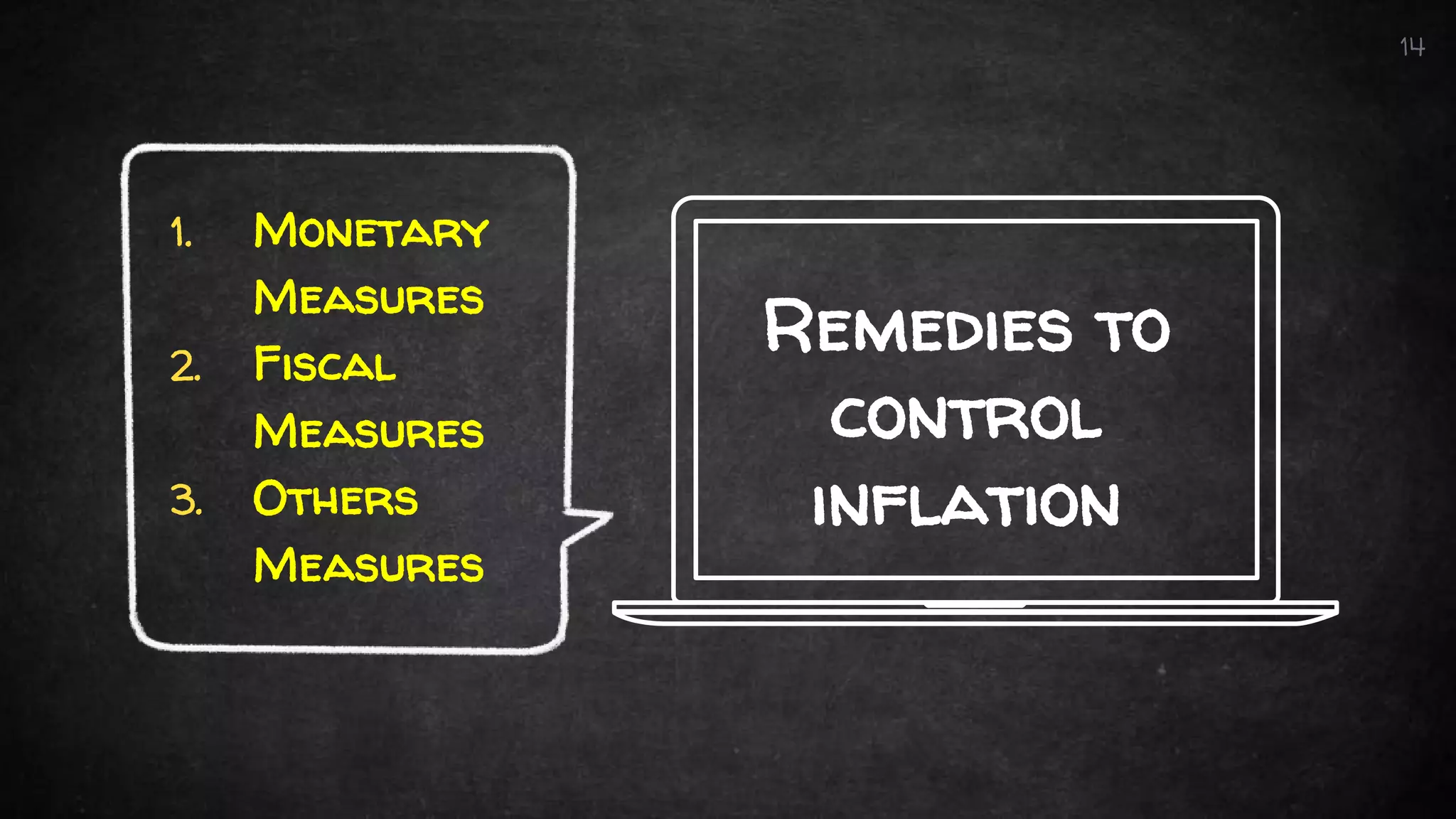
1. Monetary
Measures
2. Fiscal
Measures
3. Others
Measures
Remedies to
control
inflation
15
➜ Credit Control
➜ Demonetization of
Currency
➜ Issue of New Currency
1.
Monetary
Measures
16
➜ Reduction in Unnecessary
Expenditure
➜ Increase in Taxes
➜ Increase in Savings
2. Fiscal
Measures
17
➜ To Increase Production
➜ Rational Wage Policy
➜ Price Control
3.
Other
Measures
Important questions:
Q.1 What is poverty? Explain the types of poverty
Q.2 Explain the causes of poverty.
Q.3 Explain the measures of poverty.
Q.4 What is Unemployment? Explain the types of
unemployment.
Q.5 Explain the causes of unemployment.
Q.6 What is inflation? Explain the types of inflation.
Q.7 Explain the causes and remedies of inflation.
18
Thank You

Chapter+4,+Basic+Economics+Problems.pptx

  • 1.
  • 2.
    What is BasicEconomic Problem? The economic problem – sometimes called the basic or central economic problem – asserts that an economy's finite resources are insufficient to satisfy all human wants and needs. It assumes that human wants are unlimited, but the means to satisfy human wants are limited.
  • 3.
    Main Economic Problem 1.Poverty 2. Unemployment 3. Inflation 3
  • 4.
    1. Poverty Types ofpoverty: 1. Absolute poverty 2. Relative Poverty Poverty means the economic situation of the individual or social group in which they cannot satisfy a certain range of minimum requirement. 4
  • 5.
    Causes of Poverty 1.Heavy pressure of population 2. Unemployment and under employment 3. Capital Deficiency 4. Under-developed economy 5. Increase in Price 6. Rural Economy 7. Lack of Infrastructure 8. Low rate of growth
  • 6.
    “ 1. Population Control 2.Increase in Employment 3. Equal distribution of Income 4. Regional poverty 5. Fulfilment of minimum needs of the Poor 6. Stability in Price Level 7. Development of Agriculture 6 Measures to reduce poverty
  • 7.
    Unemployment According to A.C.Pigou “Unemployment means, all those who are willing to work are not able to find job”. “When a person is actively searching for employment, but unable to find the job, is called unemployed”
  • 8.
    “ 1. Casual (Dayto Day Activity) 2. Seasonal 3. Technological 4. Residual or voluntary 5. Structural 6. General or Cyclical 7. Frictional (Few Days) 8 Types of Unemployment
  • 9.
    Causes of unemployment ➜Caste System ➜ Slow Economic Growth ➜ Increase in Population ➜ Agriculture is a Seasonal Occupation ➜ Joint Family System ➜ Fall of Cottage and Small industries ➜ Less Savings and Investment ➜ Inadequate Irrigation Facilities ➜ Immobility of labour
  • 10.
    10 ➜ Change inindustrial technique ➜ Policy regarding seasonal unemployment ➜ Change in education system ➜ Expansion of Employment exchanges ➜ More assistance to self- employed people ➜ Full and more productive employment ➜ High rate of capital formation ➜ Population control How to Reduce Unemploym ent?
  • 11.
    Inflation “The word inflationin the broadest possible sense refers to any increase in the general price-level which is sustained and non-seasonal in character”- Peterson. According to Coulborn inflation can be defined as, “too much money chasing too few goods.”
  • 12.
    1. Demand-pull inflation 2. Cost-push inflation 3.Pricing Power Inflation 4. Sectorial Inflation Types of inflation
  • 13.
    Causes of inflation 1.Increase in money supply 2. Deficit financing 3. Increase in government expenditure 4. Inadequate agricultural and industrial growth 5. Rise in administered prices 6. Rising import prices 7. Rising taxes
  • 14.
    14 1. Monetary Measures 2. Fiscal Measures 3.Others Measures Remedies to control inflation
  • 15.
    15 ➜ Credit Control ➜Demonetization of Currency ➜ Issue of New Currency 1. Monetary Measures
  • 16.
    16 ➜ Reduction inUnnecessary Expenditure ➜ Increase in Taxes ➜ Increase in Savings 2. Fiscal Measures
  • 17.
    17 ➜ To IncreaseProduction ➜ Rational Wage Policy ➜ Price Control 3. Other Measures
  • 18.
    Important questions: Q.1 Whatis poverty? Explain the types of poverty Q.2 Explain the causes of poverty. Q.3 Explain the measures of poverty. Q.4 What is Unemployment? Explain the types of unemployment. Q.5 Explain the causes of unemployment. Q.6 What is inflation? Explain the types of inflation. Q.7 Explain the causes and remedies of inflation. 18
  • 19.