Periodontal Disease
Chapter 14
Copyright © 2009, 2006 by Saunders, an imprint of Elsevier Inc. All rights reserved.
Chapter 14
Lesson 14.1
Copyright © 2009, 2006 by Saunders, an imprint of Elsevier Inc. All rights reserved.
Learning Objectives
 Pronounce, define, and spell the Key Terms.
 Name and describe the tissues of the
periodontium.
 Name the structures that make up the
periodontium.
 Describe the prevalence of periodontal
disease.
(Cont’d)
Copyright © 2009, 2006 by Saunders, an imprint of Elsevier Inc. All rights reserved.
Learning Objectives
(Cont’d)
 Describe the systemic conditions that are
linked to periodontal disease.
 Identify systemic factors influencing
periodontal disease.
 Explain the significance of plaque and
calculus in periodontal disease.
(Cont’d)
Copyright © 2009, 2006 by Saunders, an imprint of Elsevier Inc. All rights reserved.
Learning Objectives
(Cont’d)
 Identify the risk factors that contribute to
periodontal disease.
 Identify and describe the two main types of
periodontal disease.
 Describe the clinical characteristics of
gingivitis.
 Describe the progression of periodontitis.
Copyright © 2009, 2006 by Saunders, an imprint of Elsevier Inc. All rights reserved.
Introduction
Periodontal disease is an infectious disease
process that involves inflammation.
Periodontal diseases involve the structures of
the periodontium.
Periodontal disease can cause a breakdown of
the periodontium, resulting in loss of tissue
attachment and destruction of the alveolar
bone.
Copyright © 2009, 2006 by Saunders, an imprint of Elsevier Inc. All rights reserved.
Prevalence of Periodontal Disease
 Periodontal disease is the leading cause of
tooth loss in adults.
 Almost 75% of American adults have some
form of periodontal disease, and most are
unaware of the condition.
 Almost all adults and many children have
calculus on their teeth.
 Fortunately, with the early detection and
treatment of periodontal disease, most people
can keep their teeth for life.
Copyright © 2009, 2006 by Saunders, an imprint of Elsevier Inc. All rights reserved.
Systemic Conditions:
Links to Periodontal Disease
 Certain systemic conditions increase the
patient’s susceptibility to periodontal disease,
and periodontal disease may actually
increase a patient’s susceptibility to certain
systemic conditions:
 Cardiovascular disease
 Preterm birth and low birthweight
 Respiratory disease
Copyright © 2009, 2006 by Saunders, an imprint of Elsevier Inc. All rights reserved.
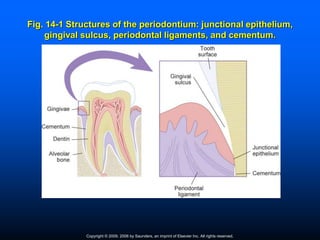
Fig. 14-1 Structures of the periodontium: junctional epithelium,
gingival sulcus, periodontal ligaments, and cementum.
Copyright © 2009, 2006 by Saunders, an imprint of Elsevier Inc. All rights reserved.
Periodontal Disease
 Periodontal diseases are infectious diseases
and are the leading cause of tooth loss in
adults.
 Nearly 75% of American adults suffer from
various forms of periodontal disease and
most are unaware of it.
 Almost all adults have calculus on their teeth.
 With the early detection and treatment of
periodontal disease, it is possible for most
people to keep their teeth for a lifetime.
Copyright © 2009, 2006 by Saunders, an imprint of Elsevier Inc. All rights reserved.
Causes of Periodontal Disease
 Dental plaque is the major factor in
periodontal disease.
 Dental calculus provides a surface to which
plaque can attach.
 Subgingival calculus
 Supragingival calculus
Copyright © 2009, 2006 by Saunders, an imprint of Elsevier Inc. All rights reserved.
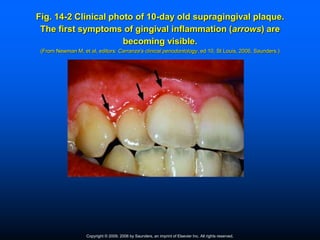
Fig. 14-2 Clinical photo of 10-day old supragingival plaque.
The first symptoms of gingival inflammation (arrows) are
becoming visible.
(From Newman M, et al, editors: Carranza's clinical periodontology, ed 10, St Louis, 2006, Saunders.)
Copyright © 2009, 2006 by Saunders, an imprint of Elsevier Inc. All rights reserved.
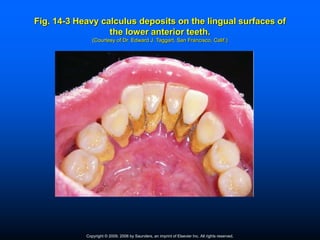
Fig. 14-3 Heavy calculus deposits on the lingual surfaces of
the lower anterior teeth.
(Courtesy of Dr. Edward J. Taggart, San Francisco, Calif.)
Copyright © 2009, 2006 by Saunders, an imprint of Elsevier Inc. All rights reserved.
Types of Periodontal Disease
 “Periodontal disease” is an inclusive term
describing any disease of the periodontium.
 Gingival diseases and periodontitis are the
two basic forms of periodontal disease, and
each has a variety of forms.
Copyright © 2009, 2006 by Saunders, an imprint of Elsevier Inc. All rights reserved.
Gingival Disease
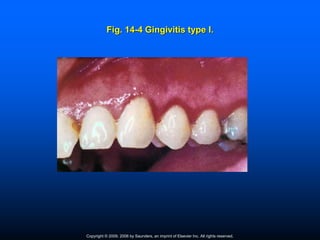
 Gingivitis is inflammation of the gingival
tissue.
 Gingivitis is characterized by areas of
redness and swelling, and there is a tendency
for the gingiva to bleed easily.
 Gingivitis is limited to the epithelium and
gingival connective tissues.
 It is important to note that there is no tissue
recession or loss of connective tissue or bone.
Copyright © 2009, 2006 by Saunders, an imprint of Elsevier Inc. All rights reserved.
Fig. 14-4 Gingivitis type I.
Copyright © 2009, 2006 by Saunders, an imprint of Elsevier Inc. All rights reserved.
Other Types of Gingivitis
 Other types of gingivitis are associated with:
 Puberty
 Pregnancy
 Use of birth-control medications
 Gingivitis is painless and often goes
unrecognized until a dental professional
emphasizes its importance. Improved daily
oral hygiene will reverse gingivitis.
Copyright © 2009, 2006 by Saunders, an imprint of Elsevier Inc. All rights reserved.
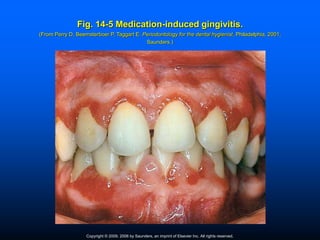
Fig. 14-5 Medication-induced gingivitis.
(From Perry D, Beemsterboer P, Taggart E: Periodontology for the dental hygienist, Philadelphia, 2001,
Saunders.)
Copyright © 2009, 2006 by Saunders, an imprint of Elsevier Inc. All rights reserved.
Periodontitis
 “Periodontitis” means “inflammation of the
supporting tissues of the teeth.”
 Periodontitis is the extension of the
inflammatory process from the gingiva into
the connective tissue and alveolar bone that
supports the teeth.
 The progression of periodontitis involves the
destruction of connective-tissue attachment at
the most apical portion of a periodontal
pocket.
Copyright © 2009, 2006 by Saunders, an imprint of Elsevier Inc. All rights reserved.
Risk Factors for Periodontal Disease
 Smoking
 Diabetes
 Poor oral hygiene
 Osteoporosis
 HIV/AIDS
 Medications
 Stress
Copyright © 2009, 2006 by Saunders, an imprint of Elsevier Inc. All rights reserved.
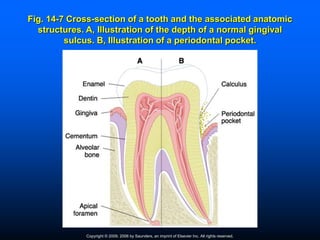
Fig. 14-7 Cross-section of a tooth and the associated anatomic
structures. A, Illustration of the depth of a normal gingival
sulcus. B, Illustration of a periodontal pocket.
Copyright © 2009, 2006 by Saunders, an imprint of Elsevier Inc. All rights reserved.
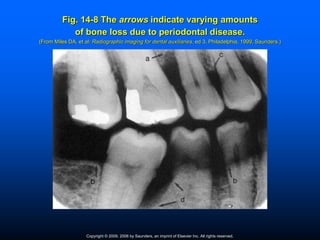
Fig. 14-8 The arrows indicate varying amounts
of bone loss due to periodontal disease.
(From Miles DA, et al: Radiographic imaging for dental auxiliaries, ed 3, Philadelphia, 1999, Saunders.)
Copyright © 2009, 2006 by Saunders, an imprint of Elsevier Inc. All rights reserved.
Signs and Symptoms of Periodontal
Disease
 Red, swollen, or tender gingiva
 Bleeding of gingiva during brushing or
flossing
 Loose or separating teeth
 Pain or pressure when chewing
 Pus around the teeth or gingiva
Copyright © 2009, 2006 by Saunders, an imprint of Elsevier Inc. All rights reserved.

Chapter_014_LO.ppt

  • 1.
    Periodontal Disease Chapter 14 Copyright© 2009, 2006 by Saunders, an imprint of Elsevier Inc. All rights reserved.
  • 2.
    Chapter 14 Lesson 14.1 Copyright© 2009, 2006 by Saunders, an imprint of Elsevier Inc. All rights reserved.
  • 3.
    Learning Objectives  Pronounce,define, and spell the Key Terms.  Name and describe the tissues of the periodontium.  Name the structures that make up the periodontium.  Describe the prevalence of periodontal disease. (Cont’d) Copyright © 2009, 2006 by Saunders, an imprint of Elsevier Inc. All rights reserved.
  • 4.
    Learning Objectives (Cont’d)  Describethe systemic conditions that are linked to periodontal disease.  Identify systemic factors influencing periodontal disease.  Explain the significance of plaque and calculus in periodontal disease. (Cont’d) Copyright © 2009, 2006 by Saunders, an imprint of Elsevier Inc. All rights reserved.
  • 5.
    Learning Objectives (Cont’d)  Identifythe risk factors that contribute to periodontal disease.  Identify and describe the two main types of periodontal disease.  Describe the clinical characteristics of gingivitis.  Describe the progression of periodontitis. Copyright © 2009, 2006 by Saunders, an imprint of Elsevier Inc. All rights reserved.
  • 6.
    Introduction Periodontal disease isan infectious disease process that involves inflammation. Periodontal diseases involve the structures of the periodontium. Periodontal disease can cause a breakdown of the periodontium, resulting in loss of tissue attachment and destruction of the alveolar bone. Copyright © 2009, 2006 by Saunders, an imprint of Elsevier Inc. All rights reserved.
  • 7.
    Prevalence of PeriodontalDisease  Periodontal disease is the leading cause of tooth loss in adults.  Almost 75% of American adults have some form of periodontal disease, and most are unaware of the condition.  Almost all adults and many children have calculus on their teeth.  Fortunately, with the early detection and treatment of periodontal disease, most people can keep their teeth for life. Copyright © 2009, 2006 by Saunders, an imprint of Elsevier Inc. All rights reserved.
  • 8.
    Systemic Conditions: Links toPeriodontal Disease  Certain systemic conditions increase the patient’s susceptibility to periodontal disease, and periodontal disease may actually increase a patient’s susceptibility to certain systemic conditions:  Cardiovascular disease  Preterm birth and low birthweight  Respiratory disease Copyright © 2009, 2006 by Saunders, an imprint of Elsevier Inc. All rights reserved.
  • 9.
    Fig. 14-1 Structuresof the periodontium: junctional epithelium, gingival sulcus, periodontal ligaments, and cementum. Copyright © 2009, 2006 by Saunders, an imprint of Elsevier Inc. All rights reserved.
  • 10.
    Periodontal Disease  Periodontaldiseases are infectious diseases and are the leading cause of tooth loss in adults.  Nearly 75% of American adults suffer from various forms of periodontal disease and most are unaware of it.  Almost all adults have calculus on their teeth.  With the early detection and treatment of periodontal disease, it is possible for most people to keep their teeth for a lifetime. Copyright © 2009, 2006 by Saunders, an imprint of Elsevier Inc. All rights reserved.
  • 11.
    Causes of PeriodontalDisease  Dental plaque is the major factor in periodontal disease.  Dental calculus provides a surface to which plaque can attach.  Subgingival calculus  Supragingival calculus Copyright © 2009, 2006 by Saunders, an imprint of Elsevier Inc. All rights reserved.
  • 12.
    Fig. 14-2 Clinicalphoto of 10-day old supragingival plaque. The first symptoms of gingival inflammation (arrows) are becoming visible. (From Newman M, et al, editors: Carranza's clinical periodontology, ed 10, St Louis, 2006, Saunders.) Copyright © 2009, 2006 by Saunders, an imprint of Elsevier Inc. All rights reserved.
  • 13.
    Fig. 14-3 Heavycalculus deposits on the lingual surfaces of the lower anterior teeth. (Courtesy of Dr. Edward J. Taggart, San Francisco, Calif.) Copyright © 2009, 2006 by Saunders, an imprint of Elsevier Inc. All rights reserved.
  • 14.
    Types of PeriodontalDisease  “Periodontal disease” is an inclusive term describing any disease of the periodontium.  Gingival diseases and periodontitis are the two basic forms of periodontal disease, and each has a variety of forms. Copyright © 2009, 2006 by Saunders, an imprint of Elsevier Inc. All rights reserved.
  • 15.
    Gingival Disease  Gingivitisis inflammation of the gingival tissue.  Gingivitis is characterized by areas of redness and swelling, and there is a tendency for the gingiva to bleed easily.  Gingivitis is limited to the epithelium and gingival connective tissues.  It is important to note that there is no tissue recession or loss of connective tissue or bone. Copyright © 2009, 2006 by Saunders, an imprint of Elsevier Inc. All rights reserved.
  • 16.
    Fig. 14-4 Gingivitistype I. Copyright © 2009, 2006 by Saunders, an imprint of Elsevier Inc. All rights reserved.
  • 17.
    Other Types ofGingivitis  Other types of gingivitis are associated with:  Puberty  Pregnancy  Use of birth-control medications  Gingivitis is painless and often goes unrecognized until a dental professional emphasizes its importance. Improved daily oral hygiene will reverse gingivitis. Copyright © 2009, 2006 by Saunders, an imprint of Elsevier Inc. All rights reserved.
  • 18.
    Fig. 14-5 Medication-inducedgingivitis. (From Perry D, Beemsterboer P, Taggart E: Periodontology for the dental hygienist, Philadelphia, 2001, Saunders.) Copyright © 2009, 2006 by Saunders, an imprint of Elsevier Inc. All rights reserved.
  • 19.
    Periodontitis  “Periodontitis” means“inflammation of the supporting tissues of the teeth.”  Periodontitis is the extension of the inflammatory process from the gingiva into the connective tissue and alveolar bone that supports the teeth.  The progression of periodontitis involves the destruction of connective-tissue attachment at the most apical portion of a periodontal pocket. Copyright © 2009, 2006 by Saunders, an imprint of Elsevier Inc. All rights reserved.
  • 20.
    Risk Factors forPeriodontal Disease  Smoking  Diabetes  Poor oral hygiene  Osteoporosis  HIV/AIDS  Medications  Stress Copyright © 2009, 2006 by Saunders, an imprint of Elsevier Inc. All rights reserved.
  • 21.
    Fig. 14-7 Cross-sectionof a tooth and the associated anatomic structures. A, Illustration of the depth of a normal gingival sulcus. B, Illustration of a periodontal pocket. Copyright © 2009, 2006 by Saunders, an imprint of Elsevier Inc. All rights reserved.
  • 22.
    Fig. 14-8 Thearrows indicate varying amounts of bone loss due to periodontal disease. (From Miles DA, et al: Radiographic imaging for dental auxiliaries, ed 3, Philadelphia, 1999, Saunders.) Copyright © 2009, 2006 by Saunders, an imprint of Elsevier Inc. All rights reserved.
  • 23.
    Signs and Symptomsof Periodontal Disease  Red, swollen, or tender gingiva  Bleeding of gingiva during brushing or flossing  Loose or separating teeth  Pain or pressure when chewing  Pus around the teeth or gingiva Copyright © 2009, 2006 by Saunders, an imprint of Elsevier Inc. All rights reserved.