Chapter
Ten
Social Responsibility: Legal Issues, Managing Diversity, and
Career Challenges
Objectives
After reading this chapter, you should be able to
1. Discuss the role of training partnerships in developing skills
and contributing to local communities.
2. Discuss the potential legal issues that relate to training.
3. Develop a program for effectively managing diversity.
4. Design a program for preparing employees for cross-cultural
assignments.
5. Discuss the importance of career paths and dual career paths
for employees and companies.
6. Develop policies to help employees achieve work-life
balance.
7. Describe how companies are helping veterans develop skills
and find employment.
8. Explain the value of phased retirement programs for older
employees.
Training Partnerships Pay Off in Skills and Jobs
Companies, job seekers, and federal and local governments are
hoping that training programs can help develop the workforce
with the skills necessary for today’s jobs. Central Iowa Works
(CIW) is a partnership between employers and workers, public
and private funding, and relevant community partners. The
purpose of CIW is to close the skills gap from both the
employer’s and the job seeker’s perspective. For employers,
CIW helps them to recruit and hire qualified workers for jobs in
central Iowa. Job seekers get trained and hired for real jobs with
opportunities for career advancement. CIW works in
partnerships with energy and financial services companies to
provide apprenticeship programs. After participating in
classroom training and paid work experiences that are part of
the apprenticeship programs (sometimes called “earn as you
learn”), employees have the skills they need for page 457entry-
level jobs. Companies benefit by finding better trained
employees who are likely to be motivated and reducing
turnover.
Techtonic Group, an IT firm in Boulder, Colorado, struggled to
fill software development positions because of the lack of
individuals with the available skills. Techtonic relied on
offshoring app development work to Armenia but found that
time zone and language differences and rising salaries made
continuing these arrangements difficult and costly. Techtonic
saw this as an opportunity to try and build a pipeline of local
diverse talent. Techtonic Group created Techtonic Academy to
give women, veterans, high school and college dropouts, and at-
risk youth who have been historically excluded from technology
careers the opportunity to develop skills needed for software
development jobs. The company works with Denver and Boulder
county workforce agencies to identify applicants. There are over
400 applicants for 15 openings in the program, which runs
several times each year. Applicants have to successfully
demonstrate that they have the ability to understand
fundamental basic software concepts. For applicants who have
no software experience, the company offers three online courses
prior to their technical screening to help them become familiar
with software skills. Techtonic Academy includes five weeks of
classes on basic coding literacy (e.g., fundamental
computational thinking and logic structures). The classes help
identify individuals with logic and problem-solving skills and
those who can work in a project environment and interact with
users. The classes are free but the City of Boulder helps
subsidize them. Techtonic received a Work Act Grant from the
State of Colorado to help fund and grow the program to reach
its goal of having 40 apprentices complete the program in 2017.
Academy graduates are eligible for an eight-month paid
internship in information technology and software development.
Of the 35 individuals who have completed the Academy, 32
were selected for the apprenticeship program. Apprentices work
for the Tectonic Group and with the company’s clients and
business partners. Also, apprentices who started as junior
developers are mentoring new students and helping screen
applicants to the Academy program.
Sources: Based on Central Iowa Works, from
www.centraliowaworks.org, accessed March 21, 2018;
T. Bingham and P. Galagan, “Offshore No More,”
TD (December 2017), pp. 26–31; and C. Magyar, “In
Search of Apprentices,”
TD (December 2017), pp. 32–36.
INTRODUCTION
Training and development should help companies achieve their
business goals, resulting in profits and, for publicly traded
companies, positive returns to stockholders. But stockholders
represent only one of the parties (or stakeholders) that have an
interest in a company’s success. Other important stakeholders
include the page 458local community and employees who can
also benefit from training and development. Companies have a
social responsibility to help improve the communities where
they are located by protecting the environment, supporting
cultural activities, and helping reduce poverty and
unemployment. For example, companies can develop
partnerships with schools, community colleges, and universities
to design programs that increase the skills of the workforce.
These partnerships benefit the company because they provide a
source of skilled employees. They also contribute to the local
community because they improve the skill level of the local
labor market. This helps keep employers from moving to other
locations in the United States and abroad to find the skills they
need and can help attract new employers. This chapter’s
opening vignette highlights training partnerships designed to
help job seekers find jobs and companies find skilled workers.
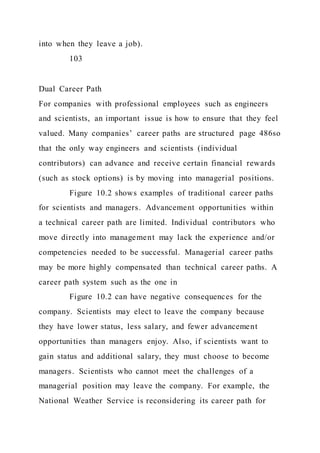
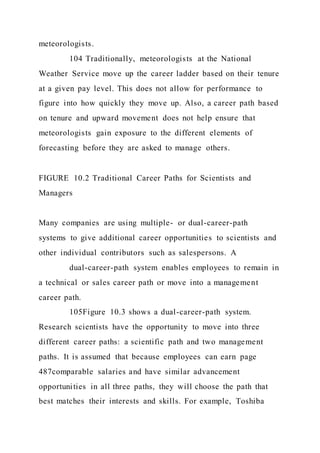
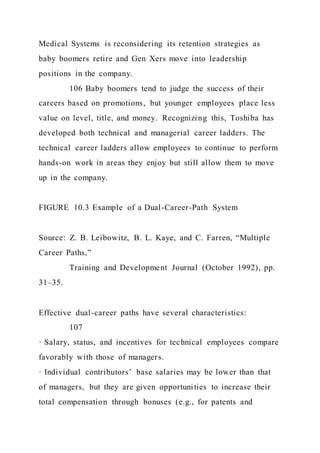
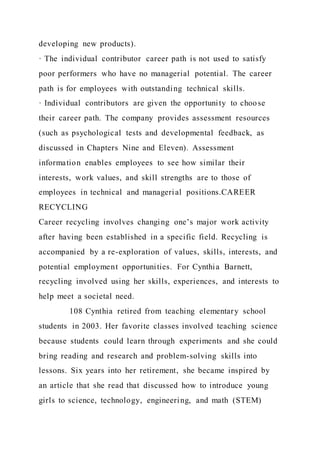
(Recall the discussion in
Chapter One, “Introduction to Employee Training and
Development,” of the mismatch between the skills available in
the workforce and the skills that companies need.) The first
section of this chapter discusses the different types of training
partnerships that companies are participating in with schools,
unions, and nonprofit organizations to provide them with skilled
workers.
Social responsibility also means that companies need to comply
with laws and regulations. Perhaps more importantly, companies
need to take actions and create conditions to help all employees
grow, develop, and contribute to company goals, regardless of
their background and career issues they are facing. The second
section of the chapter discusses how laws and regulations
influence training and development and how to ensure the
talents and skills of a diverse workforce are best used. This
includes managing diversity and inclusion, melting the glass
ceiling that women face in trying to achieve higher-level
management positions, and preparing employees to work in
cross-cultural assignments. The final section of the chapter
discusses specific career challenges that employees face—
balancing work and life, career breaks, coping with job loss, job
hopping and recycling careers, and retirement—and what
employers can do to help them manage and cope.
Training Partnerships
Government agencies, trade groups, foundations, and companies
are working with schools to develop employee skills and
provide jobs.
Sector partnerships refer to government agencies and
industry trade groups that help identify the skills that local
employers require and work with community colleges,
universities, and other educational institutions to provide
qualified employees. Sector partnerships can focus on jobs that
require more than a high school diploma but less than a four-
year college degree, and some provide skills that are needed for
professional employees such as engineers. Through such
partnerships, workforce skill needs can be met faster than if
individual employers worked alone. Job Corps is a career and
technical training program funded by Congress and
administered by the U.S. Department of Labor.
1 Job Corps trains young people between the ages of 16
and 24 in academic, information technology, and vocational
skills needed in jobs such as masonry, carpentry, and nursing.
Education, training, and support services are provided to
students at 119 Job Corps center campuses located throughout
the United States and Puerto Rico and through private
contractors. Troy Carter dreamed of becoming a music industry
success and received his GED from a Job Corps center in
Maryland. Now the CEO of Coalition Media Group, a Beverly
Hills, California, artist management and digital marketing
company, he has worked with Sean “Diddy” Combs, Nelly, and
Will Smith and includes Lady Gaga among his clients.
Some programs are specifically directed at helping the hard-to-
employ, such as low-income or homeless people, individuals
with a criminal record, or persons with disabilities, to escape
the poverty cycle through learning marketable skills that will
lead to employment. For example, PepsiCo is working with
Disability
Solution
s to attract and hire employees with disabilities.
2 Pepsi’s Achieving Change Together (ACT) program
includes training Pepsi leaders on best practices for hiring and
working with individuals who have disabilities, increasing their
awareness of different types of disabilities, and providing tips
and best practices for learning and productivity strategies that
could help maximize the performance of disabled employees.
The ACT program also focuses on preparing individuals with
disabilities to enter (or reenter) the workforce by focusing on
résumé building, interviewing skills, and if they are veterans,
teaching them how to represent and translate their military
skills and experiences when seeking civilian employment. While
many of the job seekers trained as a result of Pepsi ACT have
found work at PepsiCo, others have found employment
elsewhere. This has helped PepsiCo build its talent pool as well
as contribute to local communities.
Consider how the following partnerships are preparing
employees for work in specific industries or jobs or helping
displaced workers develop skills needed to obtain new jobs. The
Center for Energy Workforce Development (CEWD) has
received a grant of more than $1 million from the Bill and
Melinda Gates Foundation to work with low-income young
adults to help them find careers in the energy industry.
3Youths are placed in jobs in natural gas and electrical
utilities, construction, and manufacturing. CEWD was formed to
help utilities work together to address the coming workforce
shortage in the utility industry due to retirement and employees
leaving the industry. One estimate is that over 40 percent of the
U.S. workforce in energy will be eligible for retirement in the
next five years. It is the first partnership between utilities, their
associations, contractors, and unions to focus on the need to
build a skilled workforce pipeline to meet future industry needs.
Utility companies are also collaborating with colleges and labor
unions to develop and promote online education and other types
of training to ensure the utility industry has a skilled workforce.
For example, one partnership with Bismark State College
provides apprentices with the foundational skills needed to
understand electrical systems, electrical components, and
transformers.
4 In the Electric Power Technology program,
apprentices take online courses developed by industry experts
as part of their required technical instruction. These courses are
specifically designed to support necessary on-the-job learning
that is part of the apprenticeship program.
Aon’s mission is to empower economic and human possibility.
5 Aon is partnering with the City College of Chicago’s
Harold Washington College to offer apprenticeship programs in
insurance, technology, and human resources. During the
apprenticeship, students are regular, full-time Aon employees,
working in real jobs. Aon supports the apprentices by providing
a paid tuition benefit and work hours that allow them to pursue
an associate’s degree. Students spend about 20 hours in class
and 20 hours working each week for two years. Coalfield
Development Corporation, a West Virginia nonprofit
organization, helps laid-off workers and coal miners in the
Appalachia region prepare for new jobs.
6 Trainees have to complete 33 hours of paid work, si x
hours of community college classes, and three hours of life
skills classes each week in the two-year program. The goal for
trainees is to earn an associate’s degree and the professional
certification needed to get jobs in fields such as solar
installation, asbestos removal, woodworking, and agriculture
(e.g., reclaiming strip mines for farming blueberries,
blackberries, and herbs).
Business is booming at PK Controls, an Ohio maker of
automation controls, but the company is having difficulty
finding the technicians it needs.
7 PK Controls does some of its own training to develop
technicians but it also partners with Columbus State Community
College to develop employees with the skills it needs. PK
Controls, along with other Ohio companies such as Honda and
Worthington Industries, participates in Columbus page
460State’s Modern Manufacturing Program, which offers an
associate’s degree in electro-mechanical engineering. Students
spend two days a week in class and three days a week on the
job. On-the-job training starts after the students have completed
three semesters of classes, including advanced engineering.
Graduates of the program quickly get jobs that pay $50,000 to
$60,000 and the companies—including PK Controls—get
employees with the skills they need.
Federal legislation encourages partnerships between educational
institutions, employers, and labor unions. The
School-to-Work Opportunities Act is designed to assist
the states in building school-to-work systems that prepare
students for high-skill, high-wage jobs or future education. The
act encourages partnerships between educational institutions,
employers, and labor unions. The act requires that every school -
to-work system include work-based learning, school-based
learning, and connecting activities that match students with
employers and bring classrooms and workplaces together.
Wisconsin has one of the most fully developed school-to-work
programs. Apprenticeships are offered in 13 fields ranging from
tourism to engineering. Committees of employers and educators
develop the skill sets to be covered and identify appropriate
classroom and work experiences. For example, the Wisconsin
Health Science Youth Apprenticeship Program focuses on
different paths in health sciences, including therapeutic services
(dental, nursing, medical assistant), informatics (patient data
management), and ambulatory/support services (dietary,
laboratory, optometry).
8 The program provides high school juniors or seniors
with the skills and knowledge needed for these careers through
integrating classroom and on-the-job learning.
The
Workforce Innovation and Opportunity Act (WIOA) is
designed to help job seekers access employment, education,
training, and support services to succeed in the labor market and
to match employers with the skilled workers.
9 WIOA is an amendment and reauthorization of the
Workforce Investment Act of 1998. WIOA received bipartisan
support in Congress and is the first legislative reform in 15
years of the public workforce system. WIOA streamlined
workforce development systems by eliminating existing
programs and established a common set of metrics for
evaluating remaining programs. It also provides states with the
flexibility to direct funds to develop skills needed in their
region and for their workforce and supports access to on-the-job
training and development opportunities. Finally, WIOA ensures
that individuals with disabilities have the necessary skills to be
successful in employment and improves outreach to out-of-
school youth and high school dropouts. The cornerstone of the
system is One-Stop service delivery, which unifies numerous
training, education, and employment programs into a single,
customer-friendly system in each community. The underlying
notion of One-Stop is the coordination of programs, services,
and governance structures so that customers have access to a
seamless system of workforce investment services. It is
envisioned that a variety of programs could use One-Stop’s
common intake, case management, and job development
services in order to take full advantage of the system’s potential
for efficiency and effectiveness. A wide range of services,
including training and employment programs, are available to
meet the needs of employers and job seekers. The challenge in
helping One-Stop live up to its potential is to make sure that the
state and local boards can effectively coordinate and collaborate
with the network of other service agencies, including
Temporary Assistance for Needy Families (TANF) agencies,
transportation agencies and providers, metropolitan planning
organizations, child care agencies, nonprofit and community
partners, and the broad range of partners who work with youth.
page 461Electric Boat, a submarine designer and builder located
in Groton, Connecticut, recently won a large contract from the
U.S. Navy.
10 But the company can’t find enough employees with
the necessary skills. In fact, it estimates that it needs to hire
between 15,000 to 18,000 new employees by 2030. To deal with
this problem, Electric Boat has doubled its annual training
budget and is coordinating its hiring efforts with the Eastern
Connecticut Workforce Investment Board, a nonprofit agency
mandated by WIOA. Over 4,000 people have enrolled in a skills
and work-readiness training program provided by the agency.
Six hundred have completed the training and have been hired by
Electric Boat and other employers.
O*NET, the Occupational Information Network, is a unique,
comprehensive database and directory of occupational titles,
worker competencies, and job requirements and resources.
11 O*NET, which supports One-Stop service delivery,
is the primary source of occupational information in the Uni ted
States. The O*NET database includes information on skills,
abilities, knowledge, work activities, and interests associated
with occupations. O*NET information can be used to facilitate
career exploration, vocational counseling, and a variety of
human resource (HR) functions, such as developing job orders,
creating position descriptions, and aligning training with
current workplace needs. Job seekers can use O*NET to find out
which jobs fit with their interests, skills, and experience and to
identify the skills, knowledge, and abilities needed for their
dream job.
Joint Union-Management Programs
The initial goal of joint union-management programs was to
help displaced employees find new jobs by providing skill
training and outplacement assistance. Currently,
joint union-management training programs provide a
wide range of services designed to help employees learn skills
that are directly related to their jobs and also develop skills that
are “portable”—that is, valuable to employers in other
companies or industries.
12 Both employers and unions contribute money to run
the programs, and both oversee their operation. The National
Coalition for Telecommunications Education and Learning
(NACTEL) is a partnership between telecommunications
companies, including AT&T, Century Link, Frontier, and
Verizon, and labor unions, including the Communication
Workers of America (CWA) and International Brotherhood of
Electrical Workers (IBEW), that has developed online education
programs.
13 NACTEL includes courses that allow employees to
work toward associate’s degrees (e.g., in telecommunications)
and certificate programs (e.g., Introduction to
Telecommunications). The NACTEL programs are offered by
Pace University’s School of Computer Science and Information
Systems.
Siteline Interior Carpentry Inc., headquartered in Chicago,
Illinois, opened a new location in Texas because the company
believed the area had the potential to find and train carpenters.
Siteline created a three-day training program offered once a
month. The program was developed jointly with the carpenters
union in Dallas and Austin, Texas.
14 The United Auto Workers (UAW)–Chrysler National
Training Center (NTC) provides training and other programs
that improve the job skills and the personal lives of UAW
workers at Fiat Chrysler Automobiles United States (FCA US).
15 The NTC manages the World Class Manufacturing
Academy, where workers learn about the World Class
Manufacturing (WCM) production system. WCM emphasizes
worker involvement, increased productivity, and higher
automobile quality. FCA US trains over 1,200 workers each
year in WCM, creating a culture of continuous improvement and
learning. NTC also offers training courses in robotics, metal
finishing, welding, electrical troubleshooting, and computer -
assisted design. These courses help skilled tradespersons and
production workers avoid obsolescence resulting from the
introduction of new manufacturing technologies. Additionally,
NTC oversees the joint union-management tuition assistance
program that finances workers taking job-related courses at
colleges and universities. To keep workers safe, NTC works
with local unions and management on health and safety
programs. NTC also coordinates the Employee Assistance
Program, which helps workers cope with personal challenges
and improve the quality of their nonwork life.
LEGAL ISSUES AND MANAGING A DIVERSE
WORKFORCE AT HOME AND ABROAD
Legal Issues
Table 10.1 shows potential training activities and situations that
can make an employer vulnerable to legal actions and harm the
company’s reputation. The following sections describe each
situation and potential implications for training.
16
Table 10.1 Situations That May Result in Legal Action
· Failing to provide required training or providing inadequate
training
· Incurring employee injury during a training activity
· Incurring injuries to employees or others outside the training
session
· Breach of confidentiality or defamation
· Reproducing and using copyrighted material in training
classes without permission
· Excluding women, minorities, and older Americans from
training programs
· Failing to ensure equal treatment of all employees while in
training
· Requiring employees to attend training programs that they
may find offensive
· Revealing discriminatory information during a training session
· Not accommodating trainees with disabilities
· Incorrectly reporting training as an expense, failing to report
training reimbursement as income, or failing to pay employees
for attending training
Failing to Provide Training or Providing Inadequate Training
To comply with a wide range of laws and regulations,
companies are required to show that employees not only have
completed training programs, but also are applying their new
knowledge on the job. Most companies provide training to
reduce the potential for a hostile work environment for
employees protected by Title VII of the Civil Rights Act
(covering race, color, gender, religion, nationality, and national
origin), the Age Discrimination in Employment Act (ADEA,
which covers age), or the Americans with Disabilities Act
(ADA, which covers disabilities).
17 For example, the U.S. Supreme Court considers
sexual harassment training to be an important factor for
companies that wish to avoid punitive damages in sexual
harassment cases. Employers must also train employees to
comply with practices designed to prevent harassment of any
class protected by Title VII.
Federal laws may require a certain number of training hours and
types of training for employees in certain industries. For
example, initial training for flight attendants must include how
to handle passengers, use galley equipment, evacuate the
airplane, page 463and use the public address system. The safe
landing of U.S. Airways Flight 1549 on the Hudson River in
2009 was one of the rare moments when a U.S. passenger plane
completed a forced landing without loss of life of passengers or
crew. As a result, the Federal Aviation Administration (FAA)
implemented new training regulations and rules for airlines,
calling for hands-on drills on the use of emergency equipment
and procedures for all flight attendants.
18 The FAA has also introduced training standards
requiring scenario-based simulations to help pilots operate
today’s new aircraft, which have integrated systems, greater
speed, range, and altitude, and new multifunctional flight
displays.
19
Companies in health care are required to comply with the Health
Insurance Portability and Accountability Act (HIPAA);
companies in finance are required to comply with the Bank
Secrecy Act; and companies in the gaming industry (such as
casinos) are required to train employees on how to handle
money and report suspicious activity.
20 The increase in the number of incidents in the United
States in which the use of force by police officers has been
questioned has resulted in increased scrutiny of their training.
For example, a murder charge brought against a police officer in
the shooting of a fleeing man has resulted in examining whether
the 12 weeks of basic training for officers is long enough and
whether enough attention is given to when and how to use force
in dealing with the public.
21 The Dr. Chris Kirkpatrick Whistleblower Protection
Act of 2017 requires federal agencies to train their supervisors
each year on how to respond to whistleblower complaints.
22 A whistleblower is someone who alerts responsible
parties about illegal activity or unsafe practices. Dr. Kirkpatrick
reported unsafe medical practices at a Veteran’s Administration
medical center. He committed suicide after he was fired for
reporting the practices. Legislation can also require training
that is related to providing a drug-free workplace (e.g., training
about drug abuse and making counseling available) and a safe
workplace (e.g., training about the handling of hazardous
materials and the use of safety equipment as dictated by the
Occupational Safety and Health Act, or OSHA).
Incurring Employee Injury During a Training Activity
On-the-job training (OJT) and simulations often involve the use
of work tools and equipment (e.g., welding machinery, printing
press) that could cause injury if incorrectly used. Workers’
compensation laws in many states make employers responsible
for paying employees their salary and/or providing them with a
financial settlement for injuries received during any
employment-related activity such as training. Managers should
ensure that (1) employees are warned of potential dangers from
incorrectly using equipment and (2) safety equipment is used.
ncurring Injuries to Employees or Others Outside a
Training Session
Managers should ensure that trainees have the necessary level
of competence in knowledge, skills, and behaviors before they
are allowed to operate equipment or interact with customers.
Even if a company pays for training to be conducted by a
vendor, it is still liable for injuries or damages resulting from
the actions of poorly, incorrectly, or incompletely trained
employees. A company that outsources training to a vendor or
consultant should ensure that the vendor has liability insurance
and the trainers are competent, as well as determine if there has
been previous litigation against the trainer or the vendor
providing page 464the training. Also, trainers should be sure to
keep copies of notes, activities, and training manuals that show
that training procedures were correct and that the steps provi ded
by licensing or certification agencies (if appropriate) were
followed.
Incurring Breach of Confidentiality or Defamation
Managers should ensure that information placed in employees’
files regarding performance in training activities is accurate.
Also, before discussing an employee’s performance in training
with other employees or using training performance information
for promotion or salary decisions, managers should tell
employees that training performance will be used in that
manner.
Reproducing and Using Copyrighted Material in Training
Classes without Permission
Copyrights protect the expression of an idea (e.g., a training
manual for a software program) but not the ideas that the
material contains (e.g., the use of help windows in the software
program).
23 Copyrights also prohibit others from creating a
product based on the original work and from copying,
broadcasting, or publishing the product without permission.
The use of videotapes, learning aids, manuals, and other
copyrighted materials in training classes without obtaining
permission from the owner of the material is illegal. Managers
should ensure that all training materials are purchased from the
vendor or consultant who developed them, or that permission to
reproduce materials has been obtained. Material on Internet
sites is not necessarily free from copyright law.
24 Many websites and published material are governed
by the fair use doctrine, which means that you can use small
amounts of copyrighted material without asking permission or
paying a fee so long as the use meets four standards. The
standards relate to (1) the purpose for which the copyrighted
materials are being used, (2) what the copyrighted work is, (3)
the proportion of the copyrighted material you are using, and
(4) how much money the copyright owner can lose as a result of
the use. Republishing or repackaging under your own name
material that you took from the Internet can be a violation of
copyright law. For example, Crisp Learning, a small training
company, frequently finds itself in court defending copyright
issues. Crisp Learning develops and sells video and training
courses that deal with skills such as business report writing and
time management. The series of courses, known as the Fifty-
Minute series, is popular because it is easily applied and can be
completed in a short period of time. Crisp Learning has found
that copyright violators have actually retyped its books and sold
them as their own work.
Violating copyright can be expensive. Copyright violators can
end up paying expensive legal fees and paying damages that are
more expensive than what it would have cost to legally purchase
the training materials. To obtain copyright permission, you need
to directly contact the owners of the material and explain how
the material will be used and how ownership will be cited.
Another way to get copyright permission is to seek permission
from organizations such as the Copyright Clearance Center (
www.copyright.com).
Excluding Women, Minorities, and Older Employees from
Training Programs
Two pieces of legislation make it illegal for employers to
exclude women, minorities, or older persons from training
programs.
Title VII of the Civil Rights Act of 1964 (amended in
1991) makes it illegal to deny access to employment or deprive
a person of employment because of the person’s race, color,
religion, gender, or national origin. page 465The
Age Discrimination in Employment Act
(ADEA) prohibits discrimination against persons who are aged
40 or older. The Equal Employment Opportunity Commission
(EEOC) is responsible for enforcing both the Civil Rights Act
and the ADEA.
Although these two pieces of legislation have existed for
several years, a study by the U.S. Department of Labor found
that training experiences necessary for promotion are not as
available or accessible to women and minorities as they are to
white males.
25 Women, minorities, and older employees sometimes
are illegally excluded from training programs, either by not
being made aware of opportunities for training or by purposeful
exclusion from enrollment in training programs. Denial of
training opportunities and better treatment of younger
employees can be used to support claims of age discrimination.
26 Older employees may bring lawsuits against
companies based on a denied promotion or discharge. As
evidence for age discrimination, the courts will investigate
whether older workers were denied training opportunities that
were provided to younger workers. To avoid age discrimination
in training, managers and trainers need to ensure that the
organization’s culture and policies are age-neutral. Decisions
about training and development opportunities should not be
made on the basis of stereotypes about older workers and should
take into account job-relevant factors such as performance.
Managers should be held accountable for fair training and
development practices and for ensuring that all employees have
development plans. Finally, all employees should receive
training on the ADEA and on how age stereotypes can affect
treatment of older employees. Stereotypes such as “Older
workers are resistant to change” may result in exclusion of
older workers from training and development programs.
The University of Phoenix had to pay over $1 million for
demonstrating a religious bias against non-Mormon employees
who worked as enrollment counselors in the university’s Online
Division.
27 The religious bias occurred when tuition waivers for
non-Mormon employees were denied for failing to meet student
registration goals, yet waivers were provided to Mormon
employees who failed to meet the same goals.
New Prime, Inc., a large trucking company, violated federal law
by discriminating against female truck driver job applicants
when it required that they be trained only by female trainers.
28 Training was provided for male job applicants with
no delay, but female job applicants were put on a waiting list,
resulting in delaying or denying them jobs.
The Paul Hall Center for Maritime Training and Education (Paul
Hall Center) and Seafarers International (SIU) had to pay a
$625,000 settlement resulting from a EEOC charge that its age
restriction, which limited program participants to those under
age 40, violated the ADEA.
29 The age restriction was based upon the stereotype
that older individuals would not succeed in a physically and
mentally demanding apprenticeship program. The settlement
also requires the Paul Hall Center and SIU to not require any
upper age limit and to train employees in charge of recruiting,
selecting, and admitting new program participants in federal
anti-discrimination laws.
Failing to Ensure Equal Treatment of All Employees While in
Training
Equal treatment of all trainees means that conditions of the
learning environment, such as opportunities for practice,
feedback, and role playing, are available for all trainees
regardless of their background. It also means that all trainees
are given similar physical and financial resources necessary to
be successful. Also, trainers should avoid jokes, stories, and
props that might create a hostile learning environment. For
example, because of claims that female employees were being
harassed at air traffic control centers, the FAA required
employees to attend diversity training where male employees
were made to experience what it felt like to be taunted and
jeered at as they walked down the aisle in an air traffic control
facility (known as “walking the gauntlet”). One of the male
employees found the experience to be distasteful and
psychologically stressful, sued the FAA, and won.
Merrill Lynch was sued by an African American broker for race
discrimination.
30 The case was settled for $160 million, which was
distributed to 1,400 black brokers. Only 2 percent of Merrill’s
financial advisers were African Americans and they were less
likely than white brokers to be top producers. Although Merrill
ran several programs designed to help black brokers succeed by
bringing in clients, black brokers were less likely to be asked to
join teams, which limited their sales. Also, the average account
assets transferred to them as trainees for their first 28 months of
employment were significantly less compared to white brokers.
Requiring Employees to Attend Programs That Might Be
Offensive
Allstate Insurance has been the focus of several religious
discrimination lawsuits brought by insurance agents. Some
agents charged that the principles emphasized in training
programs were based on Scientology and were offensive and
counter to their religious beliefs. For example, the training
program taught concepts such as the “tone scale” that catalogs
emotions and that Scientologists believe can influence behavior.
31
Revealing Discriminatory Information During a Training
Session
At Lucky Stores, a California supermarket chain, notes taken
during a diversity training program were used as evidence of
discrimination.
32In the training session, supervisors were asked to
verbalize their stereotypes. Some comments (“Women cry
more,” “Black women are aggressive”) were derogatory toward
women and minorities. The plaintiff in the case used the notes
as evidence that the company conducted the training session. To
avoid an investigation by the EEOC, the case was settled out of
court.
Not Accommodating Trainees with Disabilities
The
Americans with Disabilities Act (ADA) prohibits
individuals with disabilities from being discriminated against in
the workplace. The ADA prohibits discrimination based on
disability in employment practices, including hiring, firing,
compensation, and training. The ADA defines a disability as a
physical or mental impairment that substantially limits one or
more major life activities, a record of having an impairment, or
being regarded as having such an impairment. This includes
serious disabilities such as epilepsy, blindness, or paralysis, as
well as persons who have a history of heart disease, mental
illness, or cancer that is currently in remission.
The ADA requires companies to provide “reasonable
accommodation” to the physical or mental condition of a person
with a disability who is otherwise qualified, unless doing so
would impose an “undue hardship” on the organization’s
operations. Determination of undue hardship is made by
analyzing the type and cost of the accommodation in relation to
the company’s financial resources. Even if the undue hardship
can be justified, the ADA requires that the person with the
disability be provided the option of paying the part of the cost
that causes the undue hardship.
page 467In the context of training,
reasonable accommodation refers to making training
facilities readily accessible to and usable by individuals with
disabilities. Reasonable accommodation may also include
modifying instructional media, adjusting training policies, and
providing trainees with readers or interpreters. Employers are
not required to make reasonable accommodation if the person
does not request them. Employers are also not required to make
reasonable accommodation if persons are not qualified to
participate in training programs (e.g., they lack the prerequisite
certification or educational requirements).
The EEOC sued The Cheesecake Factory for firing a newly
hired employee with a disability due to attendance issues.
33 The EEOC argued that the company failed to provide
adequate training (and failed to provide reasonable
accommodation for the employee’s hearing impairment) on the
company’s online scheduling system and timekeeping process,
leaving him at a disadvantage in tracking his constantly
changing work hours. The Cheesecake Factory was aware that
the employee was deaf prior to hiring him but failed to respond
to his requests for accommodation. Instead it decided to rely on
passing back and forth written notes to communicate with him
at his hiring interview, during employee orientation, and during
meetings.
The ADA has implications for most training methods, including
adventure learning and e-learning. Some adventure learning
experiences demand a high level of physical fitness. Employees
who have a disability cannot be required to attend adventure
learning training programs.
34 If it does not cause an undue hardship, employees
should be offered an alternative program for developing the
learned capabilities emphasized in the adventure learning
program. E-learning should be accessible to trainees with
visual, hearing, mobility, and cognitive disabilities.
35 Section 508 of the Rehabilitation Act requires
information and communication technology purchased by the
federal government (including e-learning) to be accessible to
individuals with disabilities. The ADA requires colleges and
universities to make online content accessible to individuals
with disabilities. Similarly, based on the ADA, several lawsuits
have been filed against private sector companies by individuals
who alleged that the companies’ websites were inaccessible to
those with disabilities. To make online learning accessible it
needs to be perceivable (presented to trainees in ways they can
recognize it), operable (trainees can navigate the online course),
understandable (trainees can comprehend the content), and
robust (training content can be interpreted by technologies that
help trainees with disabilities, such as screen readers).
It is impossible to give specific guidelines regarding the type of
accommodations that trainers and managers should make to
avoid violating the ADA. It is important to identify if the
training is related to “essential” job functions. That is, are the
tasks (or knowledge, skills, and abilities) that are the focus of
training fundamental to the position? Task analysis information
(discussed in
Chapter Three, “Needs Assessment”) can be used to
identify essential job functions. For example, tasks that are
frequently performed and critical for successful job
performance would be considered essential job functions. If
training relates to a function that may be performed in the job
but does not have to be performed by all persons (a marginal
job function), then a disability in relation to that function
cannot be used to exclude that person from training. To the
extent that the disability makes it difficult for the person to
receive the training necessary to complete essential job
functions, the trainer must explore whether it is possible to
make reasonable accommodations.
page 468
Incorrectly Reporting Training as an Expense, Failing to Report
Training Reimbursement as Income, or Failing to Pay
Employees for Attending Training
The cost of training is covered by the Internal Revenue Code.
Companies can often deduct the cost of training provided to
employees as a business expense. The Employer Assistance
Program, part of the IRS Code, allows an employer to pay an
employee up to $5,250 per year for certain educational
expenses. This amount can be deducted by the employer as a
business expense without adding the payment to the employee’s
yearly gross income. In other programs (e.g., the Educational
Reimbursement Program), the employer can decide which
training is paid for and how it is funded. Reimbursement for
training expenses that an employee incurs may be considered
part of the employee’s taxable income. Employees may be able
to deduct work-related educational expenses as itemized
deductions on their income taxes. To be deductible, the
expenses must be for training that maintains or improves skills
required in the job or that serves a business purpose of the
company and is required by the company, or by law or
regulations, in order for employees to keep their present salary,
status, or job. See
www.irs.gov for more information about business and
individual reporting of educational expenses.
The Fair Labor Standards Act requires employees to receive
compensation for all hours worked. The time that employees
spend in training should be considered working time, which
means they should be paid unless the following four conditions
are met:
36 (1) training is outside of the employee’s regular
working hours; (2) training is voluntary; (3) training is not
directly related to the employee’s job; and (4) the employee
does not perform any productive work during training.
Managing Workforce Diversity and Inclusion
Diversity can be considered any dimension that differentiates
one person from another.
37 For example, at Verizon, diversity means embracing
differences and variety, including age, ethnicity, education,
sexual orientation, work style, race, gender, and more.
Inclusionrefers to creating an environment in which
employees share a sense of belonging, mutual respect, and
commitment with others so they can perform their best work.
38 Inclusion allows companies to capitalize not only on
the diversity of employees but also the diversity of customers,
suppliers, and community partners.
Diversity training refers to learning efforts that are designed to
change employee attitudes about diversity and/or develop skills
needed to work with a diverse workforce. The goals of diversity
training are (1) to eliminate values, stereotypes, and managerial
practices that inhibit employees’ personal development; and
therefore (2) to allow employees to contribute to organizational
goals regardless of their race, sexual orientation, gender, family
status, religious orientation, or cultural background.
39 Equal Employment Opportunity (EEO) laws help
ensure that women and minorities are adequately represented in
a company’s labor force. That is, companies have focused on
ensuring equal access to jobs. However, diversity training and a
focus on EEO laws are insufficient for a company to truly
capitalize on the value of a diverse workforce.
40 They are one part of a larger emphasis on managing
diversity and inclusion.
Research shows that diversity training has the largest effect on
understanding and awareness of diversity and significant but
smaller effects on behavior and attitudes. The positive effects of
diversity training are greater when it is part of a larger
managing-diversity effort, focused on both awareness and skills
development, and sufficient time is devoted to it.
41 Also, greater benefits are found for diversity training
that uses training design features that create a page 469positive
learning environment. That is, the training program is of
sufficient length for trainees to learn (four hours or more),
managers are used as trainers, and trainees interact face to face
with the instructor, the content, and other learners using cases
and exercises. The most common area addressed through
diversity training is the pervasiveness of stereotypes,
assumptions, and biases.
42 Research has shown that men and women’s
performance can be evaluated very differently because of
unconscious bias.
Unconscious bias is a judgment outside of our
consciousness that affects decisions based on background,
culture, and personal experience. We are all subject to
unconscious bias. For example, one way unconscious bias can
affect us is through the attributions or reasons we use to explain
performance. For example, compared to men, women receive
two and one-half times more feedback about having an
aggressive communication style. Also, men tend to receive more
feedback linked to a business outcome than women. And it
doesn’t matter whether the manager conducting the performance
evaluation is a man or a woman! Many companies, including
Microsoft, Google, Facebook, and Dow Chemical, recognize the
importance of reducing unconscious bias in performance
evaluations, promotion decisions, and access to development
opportunities and are requiring employees to participate in
training programs.
43 These training programs are designed to make
employees aware of unconscious bias and reduce its impact by
slowing down decision making and carefully considering the
reasoning and language used in judgments.
Managing diversity and inclusion involves creating an
environment that allows all employees to contribute to
organizational goals and experience personal growth. This
environment includes access to jobs, as well as fair and positive
treatment of all employees. The company must develop
employees who are comfortable working with people from a
wide variety of ethnic, racial, and religious backgrounds.
Managing diversity may require changing the company culture.
It includes the company’s standards and norms about how
employees are treated, competitiveness, results orientation,
innovation, and risk taking. The value placed on diversity is
grounded in the company culture.
Managing diversity and inclusion can provide companies with a
competitive advantage in several different ways. It helps a
company develop a reputation as a favorable employer, which
attracts talented women and minority employees. Women and
minority employees will feel valued and free to contribute their
insights, which can help develop new products and improve
marketing efforts focused on specific consumer segments such
as Hispanics.
For example, companies in high-tech industries are struggling
with how to increase the diversity of their workforces.
44 As a result, they are trying to actively manage
diversity and inclusion. For example, Google recognized that its
high-tech workforce lacked diversity. It consisted of 83 percent
males, 2 percent Latinos, and 1 percent African Americans. To
increase the diversity of its workforce, Google devoted more
time to recruiting at historically black colleges and universities.
To increase the number of women in technology firms,
Facebook and Pinterest are experimenting with requiring that at
least one woman or underrepresented minority be interviewed
for available positions. Cisco is increasing the diversity of its
hiring teams by ensuring that at least one of the interviewers
with whom job candidates meet is of the same ethnicity or
gender. Cisco has found that this practice has significantly
increased the chances that the employee will be hired for the
position.
Diversity may enhance performance when organizations have an
environment that promotes learning from diversity.
45 There is no evidence to support the direct
relationship between diversity and business.
46 Rather, a company will see the success of its
diversity efforts only if it makes a long-term commitment to
managing diversity and has a zero page 470tolerance policy
toward discrimination. Successful diversity requires that it be
viewed as an opportunity for all employees to (1) learn from
each other how to better accomplish their work, (2) be provided
with a supportive and cooperative organizational culture, and
(3) be taught leadership and process skills that can facilitate
effective team functioning. Diversity is a reality in labor and
customer markets and is a social expectation and value.
Managers should focus on building an organizational
environment, HR practices, and managerial and team skills that
capitalize on diversity. As you will see in the discussion that
follows, managing diversity requires difficult cultural change,
not just slogans on the wall.
To help ensure that diversity is seen as an opportunity for all
employees, some companies are changing the membership of
their employee resource groups so that they include dissimilar
employees.
47 That is, they include a mix of employees rather than
employees who have the same nationality, race, gender, sexual
orientation, or military status. They are doing so to get more
employees motivated to care about workplace diversity, improve
problem solving by capitalizing on the expertise of employees
with different experiences and perspectives, and reduce
perceptions that women and minorities participating in
employee resource groups are lacking or behaving in ways that
make them less promotable. For example, Deloitte has opened
some women-only programs, such as mentoring programs, to
men. Deloitte also has created inclusion councils in several
offices to organize activities such as the annual LGBTQ Pride
Parade in Chicago. The inclusion councils’ membership
includes a diverse set of employees and not just those who are
members of the LGBTQ (lesbian, gay, bisexual, transgender,
queer) sexuality resource group.
Table 10.2 shows the characteristics associated with the long-
term success of diversity programs. It is critical that a diversity
program be tied to business objectives. Measuring the
effectiveness of managing diversity helps ensure that it is given
as much importance as other business outcomes such as
productivity or customer satisfaction. Diversity and
page 471inclusion goals are included in managers’ performance
objectives and they are expected to be actively involved in
promoting diversity. For example, when asked why advancing
diversity in his company was important to him, the CEO of
Merisant emphasized that employees with different lifestyles
and backgrounds challenge each other and create disagreement,
which is necessary for business innovations and creativity.
48 Bank of America includes questions about diversity
and inclusiveness on its employee engagement survey. It uses
these results to understand if employees feel they are treated
fairly. AT&T senior executives have regular meetings to discuss
diversity objectives and part of their compensation is based on
meeting those objectives.
TABLE 10.2 Characteristics Associated with Diversity
Programs’ Long-Term Succes
· Top management provides resources, personally intervenes,
and publicly advocates diversity.
· The program is structured.
· Capitalizing on a diverse workforce is defined as a business
objective.
· Capitalizing on a diverse workforce is seen as necessary to
generate revenue and profits.
· The program is evaluated using metrics such as sales,
retention, and promotion rates.
· Manager involvement is mandatory.
· The program is seen as a culture change, not a one-shot
program.
· Managers and demographic groups are not blamed for
problems.
· Behaviors and skills needed to successfully interact with
others are taught.
· Managers are rewarded on progress toward meeting diversity
goals.
· Management collects employee feedback and responds to it.
· Management creates a safe and open culture that all employees
want to belong to, in which employees can discover and
appreciate differences and where the benefits of diversity are
recognized by all employees.
Sources: Based on F. Dobbins and A. Kalev, “Why Diversity
Programs Fail,”
Harvard Business Review (July-August 2016), pp. 52–
60; B. Groysberg and K. Connolly, “Great Leaders Who Make
the Mix Work,”
Harvard Business Review (September 2013), pp. 68–76;
K. Bezrvkova, K. Jehn, and C. Spell, “Reviewing Diversity
Training: Where We Have Been and Where We Should Go,”
Academy of Management Learning and Education 11
(2012), pp. 207–227; S. Rynes and B. Rosen, “A Field Survey
of Factors Affecting the Adoption and Perceived Success of
Diversity Training,”
Personnel Psychology 48 (1995), pp. 247–270; R.
Anand and M. Winters, “A Retrospective View of Corporate
Diversity Training from 1964 to the Present,”
Academy of Management Learning and Education 7
(2008), pp. 356–372; and C. Chavez and J. Weisinger, “Beyond
Diversity Training: A Social Infusion for Cultural Inclusion,”
Human Resource Management 47 (2008), pp. 331–350.
Top management support can be demonstrated by creating a
structure to support the initiative. Consider Sodexo’s diversity
effort.
49Sodexo is the leading food and facilities management
company in the United States, Canada, and Mexico, serving 10
million customers daily. With employees in 80 countries
(representing 128 nationalities) connecting with customers on a
daily basis, a policy of inclusion is not an option or a choice —it
is a business necessity. Sodexo is focused on gender
representation, generational opportunities in the workplace, and
the inclusion of people with disabilities and from ethnic
minorities. As a result, diversity and inclusion are core
elements of the business strategy. Sodexo believes that diversity
and inclusion are fundamental business objectives focused on
employees (e.g., work culture, recruitment, talent development,
work-life effectiveness), customers, clients, and shareholders
(e.g., supplier diversity, cross-market diversity council,
diversity consulting), and communities (e.g., Sodexo
Foundation and Community Partners). For example, some of the
objectives include understanding and living the business case
for diversity and inclusion; increasing awareness of how
diversity relates to business challenges; creating and fostering a
diverse work environment by developing management practices
that drive hiring, promotion, and retention of talent; engaging in
relationship management and customer service to attract and
retain diverse clients and customers; and partnering with women
and minority businesses to deliver food and facility management
services. Diversity and inclusion are core competencies at
Sodexo. Diversity and inclusion are part of employees’ training
and managers’ annual performance reviews; new employee
orientation emphasizes Sodexo’s values and expectations
regarding diversity and inclusion.
Sodexo separates Equal Employment Opportunity (EEO) and
legal compliance training from diversity training. At Sodexo,
diversity training is part of the managing diversity strategy.
Every three years, employees are required to take EEO and
affirmative action refresher courses. Top management is also
involved in and committed to managing diversity. The senior
executives program includes ongoing classroom training that is
reinforced with community involvement, sponsoring employee
groups, and mentoring diverse employees. Executives are
engaged in learning the business case for diversity and are
personally held accountable for the company’s diversity agenda.
The Cross-Market Diversity Council (CMDC) is comprised of
managers and leaders who want to foster a more diverse and
inclusive Sodexo. The objective of this group is to collaborate
and operationalize the diversity plan within each business line;
to serve as thought leaders to advance the diversity and
inclusion strategy; and to implement diversity and inclusion at a
regional level and align with its Employee Business Resource
Groups. The one-day Spirit of Inclusion session, mandatory for
all managers, focuses on building awareness and skills around
diversity and inclusion. Every manager takes an eight-hour
introductory class (called Spirit of Diversity). Sodexo’s
diversity training involves learning labs page 472focused on
skill building and diversity awareness. Examples of these
learning labs include Generations in the Workplace, Disability
Awareness Training, Cross-Cultural Communications, and
Improving Team Effectiveness Through Inclusion. The
company’s learning and development team develops customized
learning solutions for different functions and work teams. For
example, a course related to selling to a diverse client base was
developed and offered to the sales force, and a cross-cultural
communications program was provided for recruiters.
In addition to diversity training activities, Sodexo has many
employee network groups—such as the African American
Leadership Forum, People Respecting Individuality, Diversity,
and Equality (PRIDE), Honoring Our Nation’s finest with
Opportunity and Respect (HONOR), and the Intergenerational
Network Group (IGEN). These network groups provide forums
for helping employees feel a sense of community, learn from
each other, develop their careers, and share input and ideas to
support the company’s diversity efforts. Sodexo’s “Champions
of Diversity” program rewards and recognizes employees who
advance diversity and inclusion. Employees can recognize peers
who demonstrate diversity and inclusion behaviors that help to
attract and retain diverse talent or increase brand recognition in
the community. Employees who receive this recognition are
entered into a monthly raffle in which they can win $50 reward
cards.
To emphasize the importance of diversity at Sodexo, each
manager has a diversity scorecard that evaluates his or her
success in recruitment, retention, promotion, and development
of all employees. The scorecard includes both quantitative goals
and evaluation of behaviors such as participating in training,
mentoring, and community outreach. A proportion of their pay
bonuses is determined by success in these areas.
Sodexo has found that its diversity training and efforts to
manage diversity are having a positive impact on business
results. Its mentoring program has led to increased productivity,
engagement, and retention of women and people of color. It
estimates a return on investment (ROI) of $19 for every $1
spent on the program. Sodexo has found that gender-balanced
teams, those with 40 to 60 percent women in management,
outperform nonbalanced teams on measures of engagement,
brand awareness, client retention (12 percent increase), and
profit and growth. Sodexo has been awarded several new
business contracts and retained clients because of its
involvement in managing diversity. The company also has been
recognized for its diversity and inclusion efforts, which help
attract talented employees by signaling that the company cares
about the well-being of all of its employees. Sodexo continues
to receive recognition for its efforts, earning a top ranking on
the DiversityInc 2017 Top 50 Companies for Diversity list,
marking its ninth consecutive year as a top 10 company. Sodexo
is also recognized as a top company for executive women and is
ranked among the top 10 companies for Latinos, blacks, global
diversity, and people with disabilities. Most programs that
effectively manage diversity, such as Sodexo’s diversity
program, include the key components shown in
Table 10.3.
TABLE 10.3 Key Components of Effectively Managed
Diversity Programs
Top Management Support
· Make the business case for diversity.
· Include diversity as part of the business strategy and corporate
goals.
· Participate in diversity programs, and encourage all managers
to attend.
· Ensure that the composition of the executive management
team mirrors the diversity of the workforce.
Recruitment and Hiring
· Ask search firms to identify wider arrays of candidates.
· Enhance the interviewing, selection, and hiring skills of
managers.
· Expand college recruitment at historically minority colleges.
Talent Identification and Development
· Form a partnership with internship programs that target
minority students for management careers.
· Establish a mentoring process.
· Refine the company’s global succession planning system to
improve identification of talent.
· Improve the selection and development of managers and
leaders to help ensure that they are capable of maximizing team
performance.
· Ensure that all employees, especially women and minorities,
have access to management development and leadership
programs.
Employee Support
· Form resource groups or employee network groups, including
employees with common interests, and use them to help the
company develop business goals and understand the issues they
are concerned with (e.g., Asian Pacific employees, women,
gays, lesbians, transgenders, Native Americans, veterans,
Hispanics).
· Celebrate cultural traditions, festivities, and holidays.
· Make work-life balance initiatives (such as flextime,
telecommuting, and elder care) available to all employees.
Fair Treatment
· Conduct extensive diversity training.
· Implement an alternative dispute resolution process.
· Include women and minorities on all human resources
committees throughout the company.
Manager Accountability
· Link managers’ compensation to their success in meeting
diversity goals and creating openness and inclusion in the
workplace.
· Use employee attitude or engagement surveys to track
employees’ attitudes about issues such as inclusion, fairness,
opportunities for development, work-life balance, and
perceptions of the company culture.
· Implement 360-degree feedback for all managers and
supervisors.
Relationships with External Stakeholders
· Increase marketing to diverse communities.
· Provide customer service in different languages.
· Broaden the company’s base of suppliers and vendors to
include businesses owned by minorities and women.
· Provide scholarships and educational and neighborhood grants
to diverse communities and their members.
Sources: Based on B. Groysberg and K. Connolly, “Great
Leaders Who Make the Mix Work,”
Harvard Business Review (September 2013), pp. 68–76;
R. Anand and M. Winters, “A Retrospective View of Corporate
Diversity Training from 1964 to the Present,”
Academy of Management Learning and Education 7
(2008), pp. 356–372; C. Chavez and J. Weisinger, “Beyond
Diversity Training: A Social Infusion for Cultural Inclusion,”
Human Resource Management 47 (2008), pp. 331–350;
and “Diversity & Inclusion,” Verizon’s diversity program
available at the company website,
www.verizon.com, accessed April 13, 2015.
As should be apparent from this discussion, successful diversity
programs involve more than just an effective training program.
They require an ongoing process of culture change that includes
top management support, as well as diversity policies and
practices in the areas of recruitment and hiring, training and
development, and administrative structures, such as conducting
diversity surveys and evaluating managers’ progress on
diversity goals.
50 They also focus on enhancing diversity and inclusion
with suppliers, vendors, and in the communities where the
company conducts business.
page 474Consider the actions being taken by Rockwell
Automation, National Life Group, and Blackstone Group to
manage diversity.
51 Rockwell Automation, an automation and software
company, has taken several steps to diversify its workforce.
Diversity is evaluated as part of each manager’s performance
review. White males are coached to understand and change
attitudes and behaviors that make women and minority
employees feel uncomfortable and unwelcome and prevent them
from advancing in their careers. All employees receive
unconscious bias training, potential new hires are interviewed
by employee teams that include women and minorities, and
customer and staff meetings go beyond golf outings to include
wine tastings and cooking classes. Rockwell’s efforts have
resulted in significant increases in women and minorities in
professional positions such as management and engineering.
The CEO of National Life Group doesn’t believe in diversity
quotas. But the company does ask peers and direct reports to
evaluate their manager each year on several different diversity
principles, such as the extent to which they value a diverse and
inclusive culture and encourage others to speak out. These
evaluations do not influence the manager’s bonus so they are
not viewed as punishment. Rather, managers are encouraged to
meet with their teams to get feedback about what they are doing
well and to discuss plans for improvement. To help increase the
number of women in entry-level analyst positions, Blackstone
Group LP actively seeks out female recruits in their sophomore
year of college to acquaint them with the company and help
them improve their résumé writing and interviewing skills.
Melting the Glass Ceiling
A major development issue facing companies today is how to
get women and minorities into upper-level management
positions—how to break the glass ceiling. The
glass ceiling refers to a barrier to advanceme nt to
higher-level jobs in the company that adversely affects women
and minorities. Women are underrepresented in all levels of
management positions.
52 Although women represent 46 percent of the
workforce, only 37 percent hold managerial positions, 33
percent hold senior manager or director roles, 29 percent are
vice presidents, and 19 percent hold the highest executive
positions. Men are promoted at a much higher rate than women
during their early career stages, and entry-level women are
significantly more likely than men to have spent five or more
years in the same job. One of the dilemmas is that companies
may be reluctant to treat women any differently than men from
a leadership development perspective, despite acknowledging
that women lack executive sponsors or mentors, have
insufficient experience, and need better work-life balance. This
barrier may be due to stereotypes or company systems that
adversely affect the development of women or minorities.
53 The glass ceiling is likely caused by lack of access
to training programs, appropriate developmental job
experiences, and developmental relationships (such as
mentoring).
54 For example, Mary Barra made history when she
became the first woman chief executive officer of General
Motors, a global carmaker.
55 Prior to becoming CEO, Barra was in a product
development job, an operational job critical to the company’s
success. But 55 percent of women are in functional roles such
as lawyers, chief of finance, or human resources, which may not
put them in the career path needed to become a CEO. Women
and minorities often have trouble finding mentors because of
their lack of access to the “old-boy network”—managers’
preference to interact with other managers of similar status
rather than with line employees—and intentional exclusion by
managers who have negative stereotypes about women’s and
minorities’ abilities, motivation, and job preferences.
56 Research has found no gender differences in access
to job experiences page 475involving transitions or creating
change.
57 However, male managers receive significantly more
assignments involving high levels of responsibility (high stakes,
managing business diversity, handling external pressure, etc.)
than female managers of similar ability and managerial level.
Also, female managers report experiencing more challenges due
to lack of personal support (which makes it more difficult to
cope with stress) and lack of appreciation for their
contributions, compared to male managers. Career
encouragement from peers and senior managers does help
women advance to higher management levels.
58 Managers making developmental assignments need
to carefully consider whether gender biases or stereotypes are
influencing the types of assignments given to women versus
men.
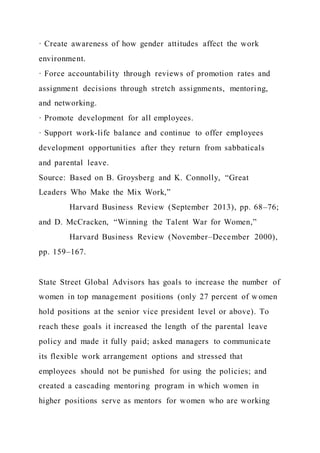
Table 10.4 provides recommendations for melting the glass
ceiling and helping retain talented women. Several companies
have put these recommendations into practice.
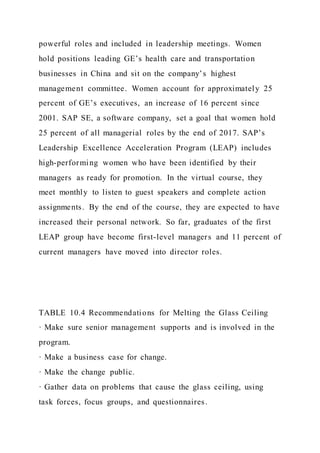
59 At General Electric, women are being placed in more
powerful roles and included in leadership meetings. Women
hold positions leading GE’s health care and transportation
businesses in China and sit on the company’s highest
management committee. Women account for approximately 25
percent of GE’s executives, an increase of 16 percent since
2001. SAP SE, a software company, set a goal that women hold
25 percent of all managerial roles by the end of 2017. SAP’s
Leadership Excellence Acceleration Program (LEAP) includes
high-performing women who have been identified by their
managers as ready for promotion. In the virtual course, they
meet monthly to listen to guest speakers and complete action
assignments. By the end of the course, they are expected to have
increased their personal network. So far, graduates of the first
LEAP group have become first-level managers and 11 percent of
current managers have moved into director roles.
TABLE 10.4 Recommendations for Melting the Glass Ceiling
· Make sure senior management supports and is involved in the
program.
· Make a business case for change.
· Make the change public.
· Gather data on problems that cause the glass ceiling, using
task forces, focus groups, and questionnaires.
· Create awareness of how gender attitudes affect the work
environment.
· Force accountability through reviews of promotion rates and
assignment decisions through stretch assignments, mentoring,
and networking.
· Promote development for all employees.
· Support work-life balance and continue to offer employees
development opportunities after they return from sabbaticals
and parental leave.
Source: Based on B. Groysberg and K. Connolly, “Great
Leaders Who Make the Mix Work,”
Harvard Business Review (September 2013), pp. 68–76;
and D. McCracken, “Winning the Talent War for Women,”
Harvard Business Review (November–December 2000),
pp. 159–167.
State Street Global Advisors has goals to increase the number of
women in top management positions (only 27 percent of w omen
hold positions at the senior vice president level or above). To
reach these goals it increased the length of the parental leave
policy and made it fully paid; asked managers to communicate
its flexible work arrangement options and stressed that
employees should not be punished for using the policies; and
created a cascading mentoring program in which women in
higher positions serve as mentors for women who are working
in a position immediately below them. Also, all managers
involved in determining promotions to executive positions are
required to attend unconscious bias training. The training has
made it more comfortable for employees to point out page
476and mutually discuss potential unconscious bias that might
limit women’s careers, such as not giving them an important
project because they are pregnant, or paying them less because
their husband has a well-paying job. The efforts to overcome
the glass ceiling seem to be working. State Street has promoted
three women out of six individuals who were promoted to
executive vice president positions, the first time in the
company’s history that women have accounted for 50 percent of
executive promotions.CROSS-CULTURAL PREPARATION
As we mentioned in
Chapter One, companies today are challenged to expand
globally. Because of the increase in global operations,
employees often work outside their country of origin or work
with employees from other countries. An
expatriate works in a country other than his or her
country of origin. The most frequently selected locations for
expatriate assignments include the United States, China, Africa,
and India. At Ernst & Young, about 2,600 of its over 167,000
employees are on an international assignment at any one time,
including 270 Americans in 30 countries including Brazil,
China, India, Russia, and South Africa.
60 Many U.S. companies are using expatriate
assignments as a training tool. For example, employees who
want top management positions, such as chief financial officer,
need to understand how cultural norms and the political
environment influence the movements in currencies and
commodities in order to build effective global financial plans.
61 Sodexo provides instructor-led courses for its global
leaders on how to build a globally competent workforce and
how to develop trust, collaboration, and effectively
communicate across cultures.
62 Sodexo also provides research summaries, TED
Talks, and articles on topics such as managing globally virtual
teams and communication across cultures that company leaders
can access “as-needed” from the company’s intranet.
Steps in Cross-Cultural Preparation
To prepare employees for cross-cultural assignments, companies
need to provide cross-cultural preparation.
Cross-cultural preparationeducates employees
(expatriates) and their families who are to be sent to a foreign
country. To successfully conduct business in the global
marketplace, employees must understand the business practices
and the cultural norms of different countries. Most U.S.
companies send employees overseas without any preparation.
This has resulted in failed overseas assignments, which means
companies don’t fully capitalize on business opportunities and
incur costs for replacing employees who leave the company
after returning to the United States.
63Cross-cultural preparation is especially important
because North American companies plan to increase the length
of expatriate assignments from two to five years.
64
To succeed overseas, expatriates need to be:
1. Competent in their areas of expertise.
2. Able to communicate verbally and nonverbally in the host
country.
3. Flexible, tolerant of ambiguity, and sensitive to cultural
differences.
4. Motivated to succeed, able to enjoy the challenge of working
in other countries, and willing to learn about the host country’s
culture, language, and customs.
5. Supported by their families.
65
page 477One reason for U.S. expatriates’ high failure rate is
that companies place more emphasis on developing employees’
technical skills than on preparing them to work within other
cultures. Research suggests that the comfort of an expatriate’s
spouse and family is the most important determinant of whether
the employee will complete the assignment.
66 Studies have also found that personality
characteristics are related to expatriates’ desire to terminate the
assignment and performance in the assignment.
67 Expatriates who are extroverted (outgoing),
agreeable (cooperative and tolerant), and conscientious
(dependable, achievement-oriented) are more likely to want to
stay with the assignment and perform well. This suggests that
cross-cultural preparation may be effective only when
expatriates’ personalities predispose them to be successful in
assignments in other cultures.
The key to a successful foreign assignment is a combination of
training and career management for the employee and family.
Cross-cultural preparation involves three phases: predeparture,
on-site, and repatriation (preparing to return home).
Predeparture Phase
Before departure, employees need to receive language training
and training focused on the new country’s culture and customs.
68 English is the common language at many
multinational companies. But failing to speak the native
language can cause employees to risk being misinterpreted or
fail to understand informal conversations. Speaking and
understanding the local language can help employees avoid
misunderstandings and gain greater respect from business
partners, subordinates, and customers. Also, it is critical that
the family be included in orientation programs.
69 Expatriates and their families need information
about housing, schools, recreation, shopping, and health-care
facilities in the areas where they will live. Expatriates also must
discuss with their managers how the foreign assignment fits into
their career plans and what types of positions they can expect
upon their return.
Cross-cultural training methods include presentational
techniques, such as lectures that expatriates and their families
attend on the customs and culture of the host country, e-
learning, immersion experiences, or actual experiences in the
home country in culturally diverse communities.
70
Consider how Iberdrola USA, Boeing, Qualcomm, and L’Oreal
prepare employees and their families for cross-cultural
assignments.
71Iberdrola USA, a global company with 5,000 U.S.
employees, is in the electricity transmission and generation
business. Iberdrola sends U.S. employees to work at its
locations in Mexico, Scotland, Brazil, and Britain and other
European Union countries. Also, it brings employees to the
United States to work for two to three years. To prepare
employees for international assignments, Iberdrola pays training
consultants $1,500 to $3,000 per day to teach employees
language and cultural basics, such as understanding preferences
for personal space. The company also has an exchange program
in which children of U.S. employees temporarily stay with host
families overseas and vice versa. At Boeing, the aerospace
company with employees in 28 countries, employees and their
families going on an international assignment are provided with
one-on-one cultural sensitivity training and orientation. Boeing
also provides “lunch and learn” cultural talks and rotation
programs that allow overseas staff to work up to nine months in
the United States. For companies with a global presence,
developing global leaders who can be effective with employees
from different cultures and countries is essential to their
success. Qualcomm, the semiconductor and telecommunications
company, helps leaders prepare for global assignments by
matching them with a mentor who
has expertise about the country where the job is located.
L’Oreal, known for its cosmetics, asks its leaders to complete a
cultural assessment that gives them information about how their
leadership style would be seen in different countries. L’Oreal
uses this assessment to provide experiential-based learning,
such as overseas assignments and serving on a project team
including members from around the world.
Research suggests that the degree of difference between the
United States and the host country (cultural novelty), the
amount of interaction with host country citizens and host
nationals (interaction), and the familiarity with new job tasks
and the work environment (job novelty) all influence the “rigor”
of the cross-cultural training method used.
72 Hands-on and group-building methods are most
effective (and most needed) in assignments with a high level of
cultural and job novelty that require a good deal of
interpersonal interaction with host nationals.
On-Site Phase
On-site training involves continued orientation to the host
country and its customs and cultures through formal programs
or through a mentoring relationship. Expatriates and their
families may be paired with an employee from the host country,
who helps them understand the new, unfamiliar work
environment and community.
73 Additionally, expatriates should be encouraged to
develop social relationships both inside and outside the
workplace.
74 Companies are also using websites and social media
to help employees on expatriate assignments get answers to
questions such as, “How do I conduct a meeting here?” or
“What religious or business philosophy might have influenced
today’s negotiation behavior?”
75 Companies also are using websites and social media
to help employees who are not expatriates but who interact with
clients around the world or who work on cross-cultural teams
requiring limited travel. IBM uses social networking tools to
connect its employees around the world. IBM’s site, known as
w3, contributes to the global integration of the company. The
w3 On Demand Workplace is a powerful productivity and
collaboration tool for 400,000 IBM employees in 75 countries.
The w3 can be used by employees to find resources and
knowledge from peers around the world to help clients innovate
and succeed. Employees can create personal profiles, bookmark
websites and stories they are interested in, comment on
company blogs, contribute to wikis, share files, and read and
review position papers, videos, and podcasts.
A major reason that employees refuse expatriate assignments is
that they can’t afford to lose their spouse’s income or are
concerned that their spouse’s career could be derailed by being
out of the workforce for a few years.
76 To avoid these problems companies are introducing
more flexible expatriate assignments. This can include reducing
the amount of time on the assignment, commuting between the
parent country and host country assignment, and rotational
assignments in which employees alternate between working
abroad and living back home.
77 Also, to help reduce the stress expatriate
assignments can place on spouses and families who are living
apart, companies are supporting more frequent family visits to
the expatriate in their host country and expatriate visits back
home. Some “trailing” spouses decide to use the time to pursue
educational activities that could contribute to their long-term
career goals. But it is difficult to find these opportunities in an
unfamiliar place. GlaxoSmithKline’s International Service
Center, which handles all of its relocations from or to the
United States, offers a buddy system for spouses to connect
with others who have lived in the area for the past several years.
78 General Motors (GM) offers career continuation
services page 479that reimburse spouses $2,500 each year
during the expatriate assignment for maintaining professional
licenses or certifications. The World Bank manages an Internet
site dedicated to expatriates, where spouses can post résumés
and ask for job leads.
Repatriation Phase
Repatriation prepares expatriates for return to the parent
company and home country from the foreign assignment.
Expatriates and their families are likely to experience high
levels of stress and anxiety when they return because of changes
that have occurred since their departure. Employees should be
encouraged to self-manage the repatriation process.
79 Before they go on the assignment, they need to
consider what skills they want to develop and the types of jobs
that might be available in the company for an employee with
those skills. Because the company may change and colleagues,
peers, and managers may leave while the expatriate is on
assignment, they need to maintain contact with key company
and industry contacts. Otherwise, on return, their reentry shock
will be heightened when they have to deal with new colleagues,
a new job, and a company culture that may have changed. This
includes providing expatriates with company newsletters and
community newspapers and ensuring that they receive personal
and work-related mail from the United States while they are on
foreign assignment. It is also not uncommon for employees and
their families to have to readjust to a lower standard of living in
the United States than they had in the foreign country, where
they may have enjoyed maid service, a limousine, private
schools, and clubs. Salary and other compensation arrangements
should be worked out well before employees return from
overseas assignments.
Aside from reentry shock, many expatriates decide to leave the
company because the assignments they are given upon returning
to the United States have less responsibility, challenge, and
status than their foreign assignments.
80 As noted earlier, career planning discussions need to
be held before the employees leave the United States to ensure
that they understand the positions they will be eligible for upon
repatriation. For example, after completing five overseas
assignments in operations and human resources positions in
Indonesia and China, a manager for Walmart left the company
because he missed the responsibility and authority he had in
these assignments.
81 He couldn’t find a similar position with Walmart
when he completed his last international assignment. As a
result, he took a job at Kimberly-Clark’s international division
as vice president of human resources.
Consider how Deloitte, Monsanto Company, Asurion, and
L’Oreal help employees with repatriation.
82 At Deloitte, approximately 100 employees return to
the United States from a foreign assignment each year. To make
the repatriation process easier for employees and their families,
Deloitte provides checklists and videos that discuss
responsibilities at each stage of the process. These resources are
available on Deloitte’s intranet and accessible anywhere around
the world using a smartphone or computer. Expats have
designated mentors as well as global mobility advisers who can
offer advice by phone or videoconference. Deloitte addresses
potential problems that expats may feel about their skills and
experience being underutilized in their job when they return
home by having managers and employees discuss their
expectations before and during the overseas assignment. These
conversations include discussions about potential career paths.
Monsanto identifies potential return positions before employees
even begin their overseas assignment. Asurion, the phone,
electronics, and appliance insurer, assigns expatriates to higher
level managers who are responsible for finding them a new
position when they return. To help expatriates integrate back
into the company and feel welcome when they return home,
L’Oreal invites them to attend page 480orientation and
socialization programs as if they were new employees. This is
especially important for expatriates on long assignments who
are likely not familiar with changes in processes, products, and
services and for new employees.
CAREER CHALLENGES FACING A
MULTIGENERATIONAL WORKFORCE
Employees’ careers involve four stages: exploration,
establishment, maintenance, and decline.
83 In the exploration stage, employees attempt to
identify the type of work that interests them. They consider
their interests, values, and work preferences and begin pursuing
the type of education and training they need. The establishment
stage involves finding employment, making an independent
contribution, achieving more responsibility and financial
success, and establishing a suitable lifestyle. In the maintenance
stage, individuals are concerned with keeping their skills up to
date and being perceived as someone who is still contributing to
the company. They have many years of experience, much job
knowledge, and an in-depth understanding of how business is
conducted. The last stage, decline, involves individuals
preparing to phase out of work and retire. Although individuals
can go through these stages in a linear fashion and at certain
ages (e.g., exploration typically occurs before age 30), most
individuals do not because today’s careers are boundaryless and
often change.
84 This means that careers may involve identifying
more with the profession than with the present employer,
resulting in job changes. Also, at different times in their lives,
individuals reconsider their interests, values, and how to best
use their skills, resulting in one or more career changes.
It is important to recognize that there are likely generational
differences in what employees want in their careers. Generation
Xers (Gen Xers), more than previous generations, appear to
place higher importance on work-life balance, opportunities for
growth, and good work relationships.
85 Millennials and Gen Xers are more used to change
and job insecurity than baby boomers, and as a result, they are
more likely to leave jobs to develop their skills. Baby boomers
tend to be loyal to one company and therefore are more willing
to relocate for a promotion or new assignment than Gen Xers,
who want to stay in an area where they have formed social and
work relationships. Although there are generational differences,
similarities also exist. All generations share similar values
related to family, respect, and trust.
86Regardless of potential generational differences
affecting employees’ career needs, the reality is that in most
companies, the workforce includes four or five generations of
employees. As a result, to attract, motivate, and retain a
talented multigenerational workforce, companies need to
understand and manage career challenges and help employees
deal with career issues. These career challenges and issues
include helping employees balance work-life needs; providing
career ladders, career recycling, and job hopping; helping
employees cope with career breaks and job loss; and meeting
the needs of older employees, including retirement. These
career challenges and issues are discussed next.
Work-Life Balance
Maintaining a healthy work-life balance is a concern for all
employees, regardless of whether they have families, significant
others, or dependents. It is difficult for many employees to
maintain work-life balance due to long work hours, night-shift
work, and travel, in addition to being tethered to smartphones,
notebook computers, and smartwatches that bombard them on a
24/7 basis with work demands and family member requests. One
study found that 67 percent of employers think their employees
have work-life balance, but 45 percent of employees feel they
don’t have enough time each week for personal, social, and
recreational activities.
87Work-life balancerefers to helping employees deal
with the stresses, strains, and conflicts related to trying to
balance work and nonwork demands. Work-life conflict has
been found to be related to increased health risks, decreased
productivity, tardiness, turnover, and poor mental health.
88 Work-life conflict occurs due to competing time
demands and the stress of work and life roles. Work-life
conflict also can arise when there is a conflict between an
employee’s behavior in her work role (such as when a manager
is expected to be logical and impartial) and her nonwork role
(she is expected to be warm, emotional, and friendly with
family members and friends).
Social legislation has been approved to help employees balance
work and family. The
Family and Medical Leave Act (FMLA) is a federal law
that provides up to 12 weeks of unpaid leave in a one-year
period for parents with new infants or newly adopted children.
89 The FMLA also covers employees who must take a
leave of absence from work to care for a family member who is
ill or to deal with their own personal illness. Employees can
also take 26 workweeks of leave during a single 12-month
period to care for a service member with a serious injury or
illness if the eligible employee is the service member’s spouse,
son, daughter, parent, or next of kin (military caregiver leave).
Companies are required to provide employees with health-care
benefits during their leave of absence.
It is important to realize that the FMLA doesn’t apply to all
employers or workers. Many part-time workers are not eligible
and small businesses with fewer than 50 employees are not
covered. The United States is the only developed nation in the
world that does not provide for paid parental leave. If they have
short-term disability benefits from their employer, parents can
use these benefits to take time off. Some, but not all, employers
cover all or part of parents’ wages during their leave, even
though they are not required to do so. In President Trump’s
2018 budget he proposed the creation of a program to give new
parents six weeks of paid leave.
90 However, the details of the program have not yet
been determined by the U.S. Congress.
Men are often reluctant to take advantage of the FMLA or work-
life balance programs for fear that they will dead-end their
careers. For example, at Ernst & Young, although 600 men take
parental leave every year, only 90 percent use two weeks, even
though the company offers six weeks with pay.
91 Some employers still assume that men’s first priority
is work over other aspects of their lives. But both men and
women need support for their parenting roles. Several
companies are providing and supporting programs specifically
targeted at fathers.
92American Express offers a Fatherhood Breakfast
Series that encourages men to talk about issues related to
blending career and family. Deloitte offers up to 16 weeks fully
paid leave for different types of caregiving, including maternity
and paternity leave, elder care, and leave to take care of sick
family members or partners. Deloitte Dads is an employee
program in which working fathers can network and share ideas
about balancing work, making partners, and how to have a great
family life. Additionally, Deloitte has adopted a concept it calls
“work-life fit,” which allows employees to take sabbaticals,
adopt a compressed workweek, and work virtually. It even
provides adoption services and offers discounted pet health
insurance! Bandwith, a telecommunications company with 425
employees, provides new fathers with one week of paid leave,
flexible work arrangements, and additional perks such as taking
90-minute lunch and exercise breaks every day.
page 482Many companies have gone beyond relying on the
FMLA to help employees balance work and family life. Work-
family programs include paid/unpaid elder care leave, flexible
spending accounts for dependent care, elder care resources and
referrals, flexible spending accounts for elder care, and on-site
child care. Research has found that employees working at
companies that offer these programs believe that the
organization supports their family and this leads to more
positive job attitudes and better job performance.
93 Also, employees who use work-family programs
have less work-family conflict than employees who do not.
Additionally, companies are recognizing the benefits that can be
gained by providing all employees, regardless of whether they
have a spouse, children, or elders, with work-life balance
through flexible work schedules, protecting their free time, and
more productively using work time.
94 The benefits include attracting and retaining talented
employees and reducing stress, which results in healthier
employees and a rested workforce that can maximize the use of
its skills. As a result, typically companies provide programs and
practices that assist employees in coping with both family and
broader non-work-life demands.
Table 10.5 shows examples of work-life balance
practices.
TABLE 10.5 Examples of Work-Life Balance Practices
· Flexible work schedules
· Job sharing
· Child care
· Elder care
· Personal leave
· Telecommuting
· Reduced meeting times
· Reduced work hours
· Adoption support
· Paid vacation time
· Personal services (supplying meals, purchasing gifts,
arranging home and auto services)
Consider the following examples of work-family and work-life
balance practices and programs.
95 XPLANE in Portland, Oregon, has several work-life
balance programs that helped it earn recognition as a best
workplace for flexibility. XPLANE provides $200 each month
to reimburse employee expenses for babysitting, dog walking,
yoga classes, gym fees, and housekeeping. After three years of
working at XPLANE, employees can take eight weeks of
parental leave, four to six weeks of short-term disability leave,
and unpaid time off.
Telecommuting refers to a work arrangement that gives
employees flexibility in terms of both hours and where they
work. Employees at XPLANE can work at home several times
each week at their discretion if they notify their peers and
managers affected by the scheduling change. Astellas Pharma
provides employees with a variety of benefits that are relevant
to different aspects of their lives. To help deal with the daily
demands of life, employees are encouraged to take Friday
afternoons off. Full-time employees receive five paid days to
work with a charity of their choice. Astellas Pharma gives
employees access to a service that can help them find short-term
babysitters, long-term day care options, and emergency backup
when they experience an interruption to their normal child care.
It provides professional care managers to help employees
manage elderly parents. The professional managers can visit
homes and facilities to ensure that elderly parents are safe
and page 483well-cared for and provide legal services needed to
prepare wills, power of attorney, and assisted-living documents.
College admissions advising is available to help parents prepare
for their children’s college costs, review their children’s college
applications, and provide counseling on the best schools to
pursue depending on the child’s interests and academic abilities.
Fifth Third Bancorp found that turnover of employees who had
taken maternity was twice the rate of all women in the company.
To help reduce this turnover Fifth Third Bancorp makes
available maternity concierges that can help expectant
employees and those with infants. Some of the services
provided by the maternity concierges include making
recommendations about strollers, ordering breast pumps, finding
day care options, and identifying fitness options for new
mothers to get back in physical shape. The purpose of the
benefit is to provide expecting and new mothers with assistance
in dealing with the preparations before birth as well as the
demands after a new baby’s arrival so they are more likely to
return to work.
A
compressed workweek refers to a work schedule that
allows employees to work fewer days but with longer hours, for
example, four days, 10 hours each day. At Marriott
International, 87 percent of its employees are hourly workers.
To help keep hourly workers at their best at work, the company
offers many different flexibility options, including compressed
workweeks, shift swapping, and work-at-home positions. Also,
Marriott offers a cross-training program that allows employees
such as housecleaners to get trained in a different unit (such as
catering), which gives them more work opportunities from
which to choose when they are available. Employee survey
results suggest that over 75 percent of employees with access to
flexible scheduling options report that it is a major reason that
they intend to remain employed at Marriott. At Bon Secours
Health System, employees can work compressed workweeks,
with options including four 10-hour shifts or three 12-hour
shifts per week. They can also choose other options, such as
working weekends only, working four- and eight-hour shifts,
and working seven consecutive days followed by seven days off.
At U.S. Bank, tellers can choose to job-share.
Job sharing refers to having two employees divide the
hours, the responsibilities, and the benefits of a full -time job.
Companies may also use two job-sharing employees to fill one
full-time position.
96 RSM (formerly McGladrey), a consulting firm in
Rochester, Minnesota, gives employees several flextime
options, including FlexYear, which provides a schedule similar
to a teacher (work nine months with pay distributed over the
entire year), and FlexCareer, which enables employees to take
up to five years off for personal reasons and provides resources
such as training to keep employees connected with the firm and
the industry so they can more easily transition back to work at
the end of their sabbaticals.
Flextimerefers to giving employees the option of
choosing when to work during the workday, workweek, or work
year. Flexible work arrangements focused on the workweek
usually give employees the choice as to how they want to
arrange their start and ending time, so long as they work a total
of eight hours each day. They also require employees to work
during certain core hours (such as 9 a.m. to 3 p.m.).
Some companies are also providing employees with paid days
off in addition to personal and sick days and vacation time that
they can use for self-development.
97 For example, Qlik, a software company, gives
employees a “24-For-U” day dedicated to learning and self-
improvement. One employee used the time studying
documentary film while another is learning how to manage a
Christmas tree farm. Employees at outdoor outfitter REI get two
paid days each year to enjoy nature. G Adventures, a tour
operator that focuses on the niche of life-changing adventure
travel, provides employees with three paid days—one for self-
development, one for company values, and another to use for
community service. G Adventures believes that providing
employees with the three paid days away from the daily grind of
their jobs has contributed to a five percent reduction in
turnover.
There are three challenges with the use of work-life balance
policies. The first challenge is using them to help employees
achieve work-life balance without hurting business needs.
Because of this challenge IBM is ending its policy that allowed
employees to work full-time from home, and Aetna is reducing
telecommuting.
98 For example, IBM offered employees who previously
worked from home the choice to work at a local office, apply
for a new position, or leave the company. IBM has spent over
$700 million to redevelop its workplaces to encourage
teamwork, increase how quickly work gets completed, and
facilitate creative thinking and innovative ideas that can come
from high-quality face-to-face discussions and collaboration
among peers. Aetna, a health insurer, is cutting back on
telecommuting in order to make employees more accessible to
their clients. The second challenge involved is that managers
need to understand and accept the idea that employees should
not be punished for the use of work-life balance policies.
Employees’ performance and development should be based on
what they accomplish and how they do it, not whether they are
seen around the office or put in “face time” with their manager.
To help address this challenge, KKR is introducing parent leave
coaching to train parents and managers how to best carry out
month-long leaves.
99The third challenge is to ensure that work-life
balance practices are accessible to everyone and meet the needs
of all employees, not just those with families.
CAREER PATHS AND DUAL CAREER PATHS
A
career path is a sequence of job positions involving
similar types of work and skills that employees move through in
the company.
100Career paths help companies offer career options to
their employees that help them make job choices that best fit
their life situations. Providing career paths and making sure
employees understand them is especially important because lack
of career opportunities ranks after pay as the major reason
employees leave companies. One survey showed that less than
50 percent of employees believe their organization provides
useful career planning tools and opportunities to advance their
careers.
101 Also, career paths help companies build employees’
skills through a series of jobs or roles. This maximizes their
value to the company and shows employees that they don’t have
to leave the company to move to new positions with different
responsibilities and skill requirements.
Milwaukee Tool has three different career paths for sales and
marketing employees: sales, management, and marketing.
102Figure 10.1shows examples of vertical, horizontal,
and cross-functional career paths at Whirlpool. Moving along
the vertical career path requires an employee to be promoted to
new jobs, which require taking on managerial responsibilities.
The horizontal career path shows that an employee can move
from Key Account Manager to jobs that differ because they
focus on a category or a product but have similar managerial
responsibilities. From Product Development the employee needs
to be promoted into the Merchandising Manager role, which
requires additional responsibilities such as developing plans and
strategies. The cross-functional career path involves moving
from a Marketing Analyst job to a Promotions Manager role in a
specific function (e.g., merchandising). From that job an
employee can move into a Category Manager job page 485and
Global Consumer Design Lead position. Then, the employee can
again move cross-functionally to a job as a Supply Chain
Manager.
FIGURE 10.1 Examples of Career Paths at Whirlpool
Source: Based on “Mapping Out Your Career,” from
http://us.whirlpoolcareers.com, accessed April 14,
2015.
Developing career paths involves analyzing work and
information flows, providing important development
experiences, analyzing qualifications, the types of tasks
performed across jobs, and similarities and differences in
working environments, and examining the historical movement
patterns of employees into and out of jobs (i.e., what positions
company employees come from and what positions they move
into when they leave a job).
103
Dual Career Path
For companies with professional employees such as engineers
and scientists, an important issue is how to ensure that they feel
valued. Many companies’ career paths are structured page 486so
that the only way engineers and scientists (individual
contributors) can advance and receive certain financial rewards
(such as stock options) is by moving into managerial positions.
Figure 10.2 shows examples of traditional career paths
for scientists and managers. Advancement opportunities within
a technical career path are limited. Individual contributors who
move directly into management may lack the experience and/or
competencies needed to be successful. Managerial career paths
may be more highly compensated than technical career paths. A
career path system such as the one in
Figure 10.2 can have negative consequences for the
company. Scientists may elect to leave the company because
they have lower status, less salary, and fewer advancement
opportunities than managers enjoy. Also, if scientists want to
gain status and additional salary, they must choose to become
managers. Scientists who cannot meet the challenges of a
managerial position may leave the company. For example, the
National Weather Service is reconsidering its career path for
meteorologists.
104 Traditionally, meteorologists at the National
Weather Service move up the career ladder based on their tenure
at a given pay level. This does not allow for performance to
figure into how quickly they move up. Also, a career path based
on tenure and upward movement does not help ensure that
meteorologists gain exposure to the different elements of
forecasting before they are asked to manage others.
FIGURE 10.2 Traditional Career Paths for Scientists and
Managers
Many companies are using multiple- or dual-career-path
systems to give additional career opportunities to scientists and
other individual contributors such as salespersons. A
dual-career-path system enables employees to remain in
a technical or sales career path or move into a management
career path.
105Figure 10.3 shows a dual-career-path system.
Research scientists have the opportunity to move into three
different career paths: a scientific path and two management
paths. It is assumed that because employees can earn page
487comparable salaries and have similar advancement
opportunities in all three paths, they will choose the path that
best matches their interests and skills. For example, Toshiba
Medical Systems is reconsidering its retention strategies as
baby boomers retire and Gen Xers move into leadership
positions in the company.
106 Baby boomers tend to judge the success of their
careers based on promotions, but younger employees place less
value on level, title, and money. Recognizing this, Toshiba has
developed both technical and managerial career ladders. The
technical career ladders allow employees to continue to perform
hands-on work in areas they enjoy but still allow them to move
up in the company.
FIGURE 10.3 Example of a Dual-Career-Path System
Source: Z. B. Leibowitz, B. L. Kaye, and C. Farren, “Multiple
Career Paths,”
Training and Development Journal (October 1992), pp.
31–35.
Effective dual-career paths have several characteristics:
107
· Salary, status, and incentives for technical employees compare
favorably with those of managers.
· Individual contributors’ base salaries may be lower than that
of managers, but they are given opportunities to increase their
total compensation through bonuses (e.g., for patents and
developing new products).
· The individual contributor career path is not used to satisfy
poor performers who have no managerial potential. The career
path is for employees with outstanding technical skills.
· Individual contributors are given the opportunity to choose
their career path. The company provides assessment resources
(such as psychological tests and developmental feedback, as
discussed in Chapters Nine and Eleven). Assessment
information enables employees to see how similar their
interests, work values, and skill strengths are to those of
employees in technical and managerial positions.CAREER
RECYCLING
Career recycling involves changing one’s major work activity
after having been established in a specific field. Recycling is
accompanied by a re-exploration of values, skills, interests, and
potential employment opportunities. For Cynthia Barnett,
recycling involved using her skills, experiences, and interests to
help meet a societal need.
108 Cynthia retired from teaching elementary school
students in 2003. Her favorite classes involved teaching science
because students could learn through experiments and she could
bring reading and research and problem-solving skills into
lessons. Six years into her retirement, she became inspired by
an article that she read that discussed how to introduce young
girls to science, technology, engineering, and math (STEM)
subjects that could lead to rewarding careers. As a result,
Cynthia created Amazing Girls Science. The nonprofit
organization, which she runs from her home office, has 15
educational programs for girls, including camps and classes in
computer science, robotics, and coding.
Recycling is not just limited to older employees who are
nearing retirement. Many companies that face a serious shortage
of qualified employees are developing retraining programs in
hopes of filling labor shortages with employees from other
fields.
109 Companies are using these training programs to
help recycle employees into new jobs and careers. For example,
in the information technology (IT) field, companies face a
shortage of qualified staff for internal help desks and customer
service. Also, many persons with computer skills who seek
these positions lack the interpersonal skills needed to give
counsel and advice to users of software, databases, and
company intranets. The computer consulting industry is training
former stockbrokers, flight attendants, and bank tellers to work
at help desks. These training programs are referred to as “boot
camps” because the training emphasizes total immersion in the
job, one-on-one supervision, and cramming into a short training
program what knowledge and skills the employee needs to have.
It is also not uncommon for employees who are considering
recycling to conduct
informational interviews with managers or other
employees who hold jobs in functional areas that they believe
may be congruent with their interests and abilities, to gather
information about the skills, job demands, and benefits of their
jobs. For example, a manager at Level 3 Communications
received strong performance evaluations and earned awards in
her 11 years at the company.
110 She was so effective at streamlining customer
service departments after they were acquired by Level 3 and
training new hires that she was always assigned those tasks.
Because she felt bored and was not challenged in her role, she
took a new job managing a design team that was responsible for
disconnecting unneeded sections of fiber-optic cable. However,
she soon found herself training new hires and again page
489felt a lack of challenge in her work. Based on the
recommendations she took away from a leadership training
program for women that she attended, she planned to have a
conversation with her boss to ask for a chance to contribute
more. Part of her conversation with her boss included a
presentation about her experiences, her progress toward her
career goals, and her reflections on staying in her current job,
moving up to a new position, or leaving Level 3. As a result,
her manager agreed he would try and help her find a mentor and
look for other job opportunities. The manager got her a job
involving partnering with Google to provide broadband services
to U.S. Starbucks stores. She took the job and was promoted 10
months later to account manager. She feels that her new job is
the ideal job for her. She enjoys her job and feels challenged.
Her new boss really likes her motivation, attitude, and
commitment to her work.
Job Hopping
Job hopping refers to employees changing jobs, usually between
companies, every two to three years. Job hopping is prevalent
today, especially among Gen Xers and millennials, as more
employees view themselves as “free agents” who must actively
manage their own careers. It is estimated that employees in all
age groups are staying at jobs for a shorter period of time
compared to the 1980s. They recognize that they have a protean
career, which means they have to take responsibility for their
own careers because companies may lay them off if business
declines or changes in the business strategy make them
expendable. Loyalty does not guarantee job security. Employees
recognize that their employability and economic well-being
depend on their personal growth and pay, and as a result, they
will leave for another job offer if the company offers more
learning opportunities or better compensation.
111 Although job hopping was once considered
damaging to an employee’s career, today, companies are more
used to the practice. This is especially true in high-technology
industries, where talented employees are in demand and new
start-ups offer stock options that can result in substantial
financial gains if the company grows.
Is job hopping good for companies and employees? There are
advantages and disadvantages to it, for both employees and
companies.
112 For companies, job hopping results in a loss of
talent and productivity that results from turnover, retraining,
and recruitment costs. Also, job hopping makes it difficult to
create and sustain a culture that supports relationships between
employees or continuity in employee-customer relationships.
Job hopping does provide companies with the opportunity to
hire employees who have a variety of experiences in different
companies, which can allow the company to understand and
implement best practices. Hiring employees who job hop may
increase a company’s flexibility and adaptability because these
employees are capable of quickly learning different jobs. Also,
employees who job hop likely do not need or have high
expectations for job security, making it easier for the company
to downsize if necessary. For employees, in addition to better
pay and growth opportunities, job hopping can provide
opportunities to work in a variety of industries and in different-
sized companies and to gain new skills, experiences, and
personal contacts. The downside of job hopping for employees
is that they may not be staying in any one job long enough to
complete important projects, develop personal networks, or gain
relevant experiences. This may hurt their opportunity to obtain
attractive job and career opportunities in the future.
page 490Companies are unlikely to eliminate job hopping.
However, companies can reduce job hopping and attract and
retain talented employees by creating conditions for employee
engagement, providing employees with growth opportunities,
and offering incentives and rewards for good
performance.COPING WITH CAREER BREAKS
Both men and women face major problems in trying to return to
work after taking several months or years off for family-related
or other reasons.
113 This is especially the case for returning troops from
Afghanistan, who often have difficulty returning to their jobs
and finding employment. The unemployment rate for veterans
tends to be higher than the rate for the overall labor force, with
the unemployment rate for those aged 22 to 24 more than three
times as high as for nonveterans of the same age.
114 Returning troops face many obstacles to finding
employment or returning to their jobs, including lack of
experience in the workplace, incomplete skill sets and education
credentials, difficulty working in less structured situations
without clear-cut guidelines and expectations, and
psychological and physical challenges. But veterans are known
to have many characteristics and skills that are valuable for
employers, including attention to detail, self-discipline,
problem solving and decision making in stressful situations, and
teamwork.
Both the federal government and companies are involved in
helping veterans return to work or find new jobs.
115 The
Uniformed Services Employment and Reemployment
Rights Act covers deployed employees’ rights, such as
guaranteeing jobs when they return except under certain
circumstances. However, the job a service member returns to
may be different from the one he or she left, and it could
require new skills or be in a different location. Also, veterans
who return to work have to prove themselves all over again, and
some may have received disabling physical or psychological
injuries from their military service. At Kohlberg Kravis Roberts
& Co. L.P. (KKR), a global investment company, its
[email protected] initiative promotes veteran-focused career
development and supports retention practices in the U.S. private
equity portfolio companies it manages. For example, Accellent,
one of KKR’s portfolio companies, launched a military hiring
program that included training its recruiters and hiring
managers in how to better identify talent when reviewing a
military résumé. American Electric Power, one of the largest
electric utilities in the United States, is one of four U.S. electric
companies participating in the Troops to Energy Jobs program.
Developed under the Center for Energy Workforce Development
(CEWD), the Troops to Energy Jobs program provides training
in community and technical colleges and four-year universities
to help veterans complete and finish their education in order to
complement their current skill sets. The program helps veterans
get placed in internships and permanent jobs, including jobs in
engineering and security and as line workers and technicians.
The United Association Union of Plumbers, Pipefitters,
Welders, and Service Technicians has partnered with the U.S.
military to create a program that provides veterans with two
weeks of transitional training to help them adjust to civilian
life, followed by 16 weeks of accelerated technical training in
topics such as welding, piping, and heating and ventilation, and
then a four-year apprenticeship. Veterans are paid during the
training and apprenticeship and are guaranteed employment
when they complete the program. Meanwhile, the Department of
Defense and the
page 491Department of Energy are working together in the
Solar Ready Vets program to help veterans learn skills that can
prepare them for careers in the solar energy industry. The
program will be offered at 10 U.S. military bases.
COPING WITH JOB LOSS
Coping with job loss is a major career issue because of the
increased use of downsizing to deal with excess staff resulting
from corporate restructurings, mergers, acquisitions, and
takeovers. Research suggests that layoffs do not result in
improved profits, they have mixed effects on productivity, and
they have adverse effects on the morale, workload, and
commitment of employees who remain with the company.
116 Job loss also causes stress and disrupts the personal
lives of laid-off employees.
117 Because of the potential damaging effects of
downsizing, companies should first seek alternative ways to
reduce head count (the number of employees) and lower labor
costs. These alternatives may include asking employees to work
fewer hours, offering early retirement plans, delaying wage
increases, and deciding not to fill position openings created by
turnover and retirements. However, job loss may be inevitable
in the case of mergers or acquisitions (which may create
redundant positions and an excess of employees with similar
skills) or downturns in business that force the company to
reduce labor costs by eliminating employees in order to survive.
From a career management standpoint, companies and managers
have two major responsibilities. First, they are responsible for
helping employees who will lose their jobs. Second, steps must
be taken to ensure that the “survivors” of the layoff (the
remaining employees) remain productive and committed to the
organization.
To prepare employees for layoffs and reduce their potential
negative effects, companies need to provide outplacement
services. Outplacement services should include:
118
· Advance warning and an explanation for the layoff.
· Psychological, financial, and career counseling.
· Assessment of skills and interests.
· Job seeking services, such as résumé-writing assistance and
interview training.
· Job banks where job leads are posted and where out-of-town
newspapers, phone numbers, and books regarding different
occupations and geographic areas are available.
· Electronic delivery of job openings, self-directed career
management guides, and values and interest inventories.
For example, Sam’s Club recently closed several
underperforming stores as a part of its strategy to focus on
stores that have higher profits and serve customers who have
higher incomes.
119 After closing a store in New Jersey, Sam’s Club
helped the city where the store was located organize and attract
workers to a job fair where local businesses interviewed the
laid-off workers. Nokia engaged in a massive restructuring of
its mobile business that resulted in 18,000 employees losing
their jobs.
120 Committed to helping as many employees as
possible find new jobs, the company’s leadership team created
the Bridge program, which provided assistance for employees in
13 countries whose jobs were affected by the restructuring. The
Bridge program focused on helping employees find another job
either page 492at Nokia or with another company. Career
coaching, résumé workshops, career fairs, and networking
events were provided. The Bridge program also provided grants
and support for employees who wanted to start their own new
business, obtain education needed for a new career, or even
devote time to volunteer work. As a result of the program, over
60 percent of the workers who lost their jobs as a result of the
restructuring found a new opportunity.
Typically, companies devote more resources to outplacing
employees who have lost their jobs than to employees who
remain. Employees in upper-level managerial and professional
positions typically receive more personalized outplacement
services (e.g., office space, a private secretary) than do lower -
level employees.
121 Although losing a job causes grief and denial in
employees, once employees have worked through their
emotions, they are capable of carrying on a campaign to find a
new job. Laid-off employees are certain of their future, in that
they know that they need to seek alternative employment.
However, for the
survivors (employees who remain with the company
following a downsizing), uncertainty about their future remains.
Survivors feel some sense of gratification because they have
kept their jobs. However, they do not know how safe their
current job is, nor do they know in what direction the company
is heading. Also, in many cases, survivors are expected to
perform the work of the laid-off employees as well as their own.
As a result, survivors experience considerable anxiety, anger
toward top-level managers, cynicism toward reorganization and
new business plans, resentment, and resignation.
122
Survivors are more likely to view layoffs as fair if employees
are asked to cut costs to avoid layoffs; the factors used to
decide whom to lay off (e.g., performance, seniority) are
applied equally to individual contributors and management
employees; advance notice is provided; and clear and adequate
explanations are given for the layoffs.
123 Survivors need to be trained to deal with increased
workloads and job responsibilities due to the consolidation and
loss of jobs. The company also needs to provide survivors with
realistic information about their future with the company.
MEETING THE NEEDS OF OLDER WORKERS
As discussed in
Chapter One, there is a shortage of talented employees
in many industries. As a result, companies are trying to keep
talented older employees working. Many potential retirees plan
to cut back on work but not completely quit working. For
example, one study found that 80 percent of baby boomers plan
to work at least part-time during their retirement.
124 This is due to both personal preferences and
economic reasons. Because of the stock market plunge and the
decrease in home values during the last economic recession,
many recent retirees are finding themselves low on money and
looking to reenter the workforce. To meet the needs of older
workers and to avoid skill shortages, companies are offering
alternative work schedules and arrangements, including part-
time work, rehiring of retirees, and phased retirement programs
in which employees gradually reduce their work hours.
When are employees considered “older” employees? As
discussed earlier in the chapter, the Age Discrimination in
Employment Act (ADEA) begins protecting employees at age
40. Discrimination under ADEA includes denying access for
training programs and forcing employees to retire (without a
legitimate reason). Mandatory retirement ages vary according to
occupation: for air traffic controllers, it is 56; for pilots, it is
65; and for federal law enforcement officers, it is 57.
Professional football players and other professional athletes are
considered “old” at age 30. Older employees do not have higher
absenteeism rates and are not more likely to put less effort into
work as they approach retirement. However, they do likely
require more help in learning new technology, prefer hands-on
practice during training, and enjoy training programs that
involve social interaction and collaboration.
125 Older employees are as productive and customer-
savvy as younger employees, and they have valuable
experience.
Companies can take several actions to meet the needs of older
employees.
126 First, flexibility in scheduling allows older
employees to take care of sick spouses, go back to school,
travel, or work fewer hours. CVS Caremark learned that many
customers prefer to discuss their health issues with an older,
more experienced pharmacist. As a result, to retain older
pharmacists, Caremark has a program that allows them to work
in the northern U.S. states in the summer and in the warmer,
southern states in the winter.
127 Michelin North America has over 19,000 retirees
and 37 percent of Michelin employees are 50 years of age or
older.
128 The company stays connected with its older
employees by providing them with ongoing access to retirement
planning workshops and information, and by formally
acknowledging employees upon their retirement. Retirees are
offered temporary work assignments, consulting or contract
work, and telecommuting options, as well as full- and part-time
work.
At the National Institutes of Health (NIH), 47 percent of
employees are 50-plus, and the average older worker has been
with the NIH for more than 18 years.
129 Many NIH employees are researchers with
advanced degrees who are working in scientific careers. Helping
older employees is fundamental because scientific research
often takes a long time before results are known and solutions
and cures for diseases are provided. At NIH, older employees
are valued for their knowledge and experience, which they are
encouraged to pass along by mentoring less experienced and
younger scientists. Also, NIH actively recruits older scientists
to join the organization. NIH offers personal finance seminars
on topics such as estate planning and social security; investment
funds that reallocate assets depending on your age; on-site child
and grandchild care; contract and part-time work for retirees;
telecommuting; anniversary parties for its long-time workers;
and a “Fit Plus Program” health initiative.
Second, research suggests that the probability of receiving
company-sponsored training peaks at age 40 and declines as an
employee’s age increases.
130 Companies need to ensure that older employees
receive necessary training to avoid obsolescence and to be
prepared to use new technology. Third, older employees need
resources and referral help to address long-term health care and
elder care issues. Fourth, assessment and counseling are
necessary to help older employees recycle to new jobs or
careers or transition to less secure positions in which
responsibilities may not be as clearly defined. Fifth, it is
important to recognize that as older employees’ physical and
mental abilities decline, they can rely on experience and
motivation to avoid poor performance. Companies should
consider moving valuable older employees who are suffering
skill deterioration to other jobs. Bon Secours Health System in
Richmond, Virginia, credits the company’s success to its older
employees. Because 30 percent of Bon Secours’s employees are
over 50, the company tries to accommodate them. For example,
a licensed practical nurse at Bon Secours found the page
494physical aspects of her job (walking, lifting, and helping
patients to stand up) too demanding. In response, the company
moved her to the employee wellness program, where she gives
inoculations and performs less strenuous duties.
131 Finally, companies need to ensure that employees
do not hold inappropriate stereotypes about older employees
(e.g., that they fear new technology or cannot learn new skills).
Preretirement Socialization
Preretirement socialization is the process of helping employees
prepare to exit from work. It encourages employees to learn
about retirement life; plan for adequate financial, housing, and
health-care resources; and form accurate expectations about
retirement. Employees’ satisfaction with life after retirement is
influenced by their health, their feelings about their jobs, and
their level of optimism. Employees who attend preretirement
socialization programs have fewer financial and psychological
problems and experience greater satisfaction with retirement
compared to employees who do not attend these programs.
These programs typically address the following topics:
132
· Psychological aspects of retirement, such as developi ng
personal interests and activities.
· Housing, including a consideration of transportation, living
costs, and proximity to medical care.
· Health during retirement, including nutrition and exercise.
· Financial planning, insurance, and investments.
· Health-care plans.
· Estate planning.
· The collection of benefits from company pension plans and
Social Security.
Formal preretirement socialization programs are primarily for
employees who are considering retirement, but financial
planning, estate planning, and purchasing insurance need to be
done much earlier in their careers to ensure that employees will
have the financial resources necessary to live comfortably
during retirement. Preretirement socialization or retirement
planning can help employees avoid being forced to return to
work because of poor financial planning. For example, a 58-
year-old retiree took an early retirement package from GTE, the
telecommunications company.
133 He accepted a buyout from GTE after its merger
talks with Bell Atlantic. Stock market losses and his decision to
withdraw $2,000 from his retirement account each month have
made it necessary for him to seek employment again. He now
works for $10.50 an hour at a car dealership chain, loading and
delivering car parts. After paying his bills, he is able to save
$100 per week in a savings account. He is considering
retirement again at age 60, when he will begin collecting his
military pension. But the turbulence in the stock market and
rising health insurance expenses (which have increased between
$150 and $450 per quarter) may make it difficult for him to
retire until he reaches age 62, when he can collect Medicare and
Social Security benefits.
Many companies are also using phased retirement and
alternative work arrangements such as rehiring retired
employees to help employees make the transition into retirement
while continuing to use their talents.
Phased retirement involves employees transitioning
from full-time employment to full-time retirement by working
part-time. Phased retirement can benefit both companies and
their employees. It can help companies cope with page 495the
shortage of skilled employees in the labor market. It provides a
source of income for employees who have seen the value of
their retirement funds decrease during the economic recession.
There are several different phased retirement plans. An
employee can retire and return as an independent contractor,
consultant, or part-time worker. The use of phased retirement
plans is complicated by regulations regarding taxation of
retirement benefits and concerns about continued health-care
coverage (e.g., there is no legal definition of phased retirement,
and the tax code has few regulations for how to offer phased
retirement within a defined retirement benefits plan).
Consider the programs that several companies are offering to
capitalize on older employees’ skills and accommodate their
needs.
134 At Herman Miller, the Michigan-based furniture
manufacturer, employees can begin the retirement process two
years ahead of their actual retirement date by working fewer
hours. This helps ease their transition out of the job and
workplace and provides them time to share their knowledge and
help train other employees to take their job. The National
Institutes of Health (NIH) offers two phased-retirement
programs; employees can choose to gradually transition to
retirement by reducing hours or enter into a trial retirement
program that allows retirees to return to work within one year of
retiring in case they decide they aren’t ready to leave the
workforce.
Retirement
Retirement involves leaving a job and a work role and making a
transition into life without work. For some employees,
retirement involves mixing part-time employment with
meaningful social activities or community work, or recycling
into another career. Consider Don Mankin and Warren Dodge.
135 Don Mankin worked for 40 years teaching and
writing. When he retired he decided to pursue writing travel
guides and articles for his blog and magazines. This helped him
get consulting opportunities and speaking engagements. Warren
Dodge worked as an information technology and change
management expert for Accenture. After retiring, he played
golf, climbed Mount Kilimanjaro, and taught part-time at New
York University. But he got bored and realized he wasn’t
growing personally. Through a network of former colleagues, he
found consulting projects where he worked on innovation and
change for nonprofits and global companies. Now, he is a part-
time consultant for a staffing company, teaches college and
university courses, and volunteers at his local church. UPS
brings back its retirees when shipping demands are at their peak
during the holiday season.
136 The retirees often have over 25 years of experience
at the company, which means they know UPS’s culture and
procedures and don’t need training. Hiring back retirees saves
UPS millions of dollars.
By 2020, one out of four employees of the U.S. labor force will
be over 55 years old. Recent changes in the Social Security
system have led to no mandatory retirement age for most jobs,
and financial needs suggest that employees may elect to work
longer for whatever reason.
137 The youngest members of the baby boom
generation should be retiring soon because they are reaching
age 62, the earliest age for collecting Social Security benefits.
Research shows that age, financial resources, poor health, and
working in jobs with greater psychological and physical
demands are all positively related to employees’ decision to
retire.
138 Historically, over half of all employees retire
before age 63, and 80 percent leave by the time they are 70.
This may be because employees accept companies’ offers of
early retirement packages, which usually include generous
financial benefits. Also,
·
image2.png
image3.png
image4.png
image1.png
Chapter             TenSocial Responsibility Legal Issues

Chapter  TenSocial Responsibility Legal Issues

  • 1.
    Chapter Ten Social Responsibility: LegalIssues, Managing Diversity, and Career Challenges Objectives After reading this chapter, you should be able to 1. Discuss the role of training partnerships in developing skills and contributing to local communities. 2. Discuss the potential legal issues that relate to training. 3. Develop a program for effectively managing diversity. 4. Design a program for preparing employees for cross-cultural assignments. 5. Discuss the importance of career paths and dual career paths for employees and companies. 6. Develop policies to help employees achieve work-life balance. 7. Describe how companies are helping veterans develop skills and find employment. 8. Explain the value of phased retirement programs for older employees. Training Partnerships Pay Off in Skills and Jobs Companies, job seekers, and federal and local governments are hoping that training programs can help develop the workforce with the skills necessary for today’s jobs. Central Iowa Works (CIW) is a partnership between employers and workers, public and private funding, and relevant community partners. The purpose of CIW is to close the skills gap from both the employer’s and the job seeker’s perspective. For employers, CIW helps them to recruit and hire qualified workers for jobs in central Iowa. Job seekers get trained and hired for real jobs with opportunities for career advancement. CIW works in partnerships with energy and financial services companies to
  • 2.
    provide apprenticeship programs.After participating in classroom training and paid work experiences that are part of the apprenticeship programs (sometimes called “earn as you learn”), employees have the skills they need for page 457entry- level jobs. Companies benefit by finding better trained employees who are likely to be motivated and reducing turnover. Techtonic Group, an IT firm in Boulder, Colorado, struggled to fill software development positions because of the lack of individuals with the available skills. Techtonic relied on offshoring app development work to Armenia but found that time zone and language differences and rising salaries made continuing these arrangements difficult and costly. Techtonic saw this as an opportunity to try and build a pipeline of local diverse talent. Techtonic Group created Techtonic Academy to give women, veterans, high school and college dropouts, and at- risk youth who have been historically excluded from technology careers the opportunity to develop skills needed for software development jobs. The company works with Denver and Boulder county workforce agencies to identify applicants. There are over 400 applicants for 15 openings in the program, which runs several times each year. Applicants have to successfully demonstrate that they have the ability to understand fundamental basic software concepts. For applicants who have no software experience, the company offers three online courses prior to their technical screening to help them become familiar with software skills. Techtonic Academy includes five weeks of classes on basic coding literacy (e.g., fundamental computational thinking and logic structures). The classes help identify individuals with logic and problem-solving skills and those who can work in a project environment and interact with users. The classes are free but the City of Boulder helps subsidize them. Techtonic received a Work Act Grant from the State of Colorado to help fund and grow the program to reach its goal of having 40 apprentices complete the program in 2017. Academy graduates are eligible for an eight-month paid
  • 3.
    internship in informationtechnology and software development. Of the 35 individuals who have completed the Academy, 32 were selected for the apprenticeship program. Apprentices work for the Tectonic Group and with the company’s clients and business partners. Also, apprentices who started as junior developers are mentoring new students and helping screen applicants to the Academy program. Sources: Based on Central Iowa Works, from www.centraliowaworks.org, accessed March 21, 2018; T. Bingham and P. Galagan, “Offshore No More,” TD (December 2017), pp. 26–31; and C. Magyar, “In Search of Apprentices,” TD (December 2017), pp. 32–36. INTRODUCTION Training and development should help companies achieve their business goals, resulting in profits and, for publicly traded companies, positive returns to stockholders. But stockholders represent only one of the parties (or stakeholders) that have an interest in a company’s success. Other important stakeholders include the page 458local community and employees who can also benefit from training and development. Companies have a social responsibility to help improve the communities where they are located by protecting the environment, supporting cultural activities, and helping reduce poverty and unemployment. For example, companies can develop partnerships with schools, community colleges, and universities to design programs that increase the skills of the workforce. These partnerships benefit the company because they provide a source of skilled employees. They also contribute to the local community because they improve the skill level of the local labor market. This helps keep employers from moving to other locations in the United States and abroad to find the skills they need and can help attract new employers. This chapter’s opening vignette highlights training partnerships designed to help job seekers find jobs and companies find skilled workers.
  • 4.
    (Recall the discussionin Chapter One, “Introduction to Employee Training and Development,” of the mismatch between the skills available in the workforce and the skills that companies need.) The first section of this chapter discusses the different types of training partnerships that companies are participating in with schools, unions, and nonprofit organizations to provide them with skilled workers. Social responsibility also means that companies need to comply with laws and regulations. Perhaps more importantly, companies need to take actions and create conditions to help all employees grow, develop, and contribute to company goals, regardless of their background and career issues they are facing. The second section of the chapter discusses how laws and regulations influence training and development and how to ensure the talents and skills of a diverse workforce are best used. This includes managing diversity and inclusion, melting the glass ceiling that women face in trying to achieve higher-level management positions, and preparing employees to work in cross-cultural assignments. The final section of the chapter discusses specific career challenges that employees face— balancing work and life, career breaks, coping with job loss, job hopping and recycling careers, and retirement—and what employers can do to help them manage and cope. Training Partnerships Government agencies, trade groups, foundations, and companies are working with schools to develop employee skills and provide jobs. Sector partnerships refer to government agencies and industry trade groups that help identify the skills that local employers require and work with community colleges, universities, and other educational institutions to provide qualified employees. Sector partnerships can focus on jobs that require more than a high school diploma but less than a four- year college degree, and some provide skills that are needed for
  • 5.
    professional employees suchas engineers. Through such partnerships, workforce skill needs can be met faster than if individual employers worked alone. Job Corps is a career and technical training program funded by Congress and administered by the U.S. Department of Labor. 1 Job Corps trains young people between the ages of 16 and 24 in academic, information technology, and vocational skills needed in jobs such as masonry, carpentry, and nursing. Education, training, and support services are provided to students at 119 Job Corps center campuses located throughout the United States and Puerto Rico and through private contractors. Troy Carter dreamed of becoming a music industry success and received his GED from a Job Corps center in Maryland. Now the CEO of Coalition Media Group, a Beverly Hills, California, artist management and digital marketing company, he has worked with Sean “Diddy” Combs, Nelly, and Will Smith and includes Lady Gaga among his clients. Some programs are specifically directed at helping the hard-to- employ, such as low-income or homeless people, individuals with a criminal record, or persons with disabilities, to escape the poverty cycle through learning marketable skills that will lead to employment. For example, PepsiCo is working with Disability Solution s to attract and hire employees with disabilities. 2 Pepsi’s Achieving Change Together (ACT) program includes training Pepsi leaders on best practices for hiring and working with individuals who have disabilities, increasing their awareness of different types of disabilities, and providing tips
  • 6.
    and best practicesfor learning and productivity strategies that could help maximize the performance of disabled employees. The ACT program also focuses on preparing individuals with disabilities to enter (or reenter) the workforce by focusing on résumé building, interviewing skills, and if they are veterans, teaching them how to represent and translate their military skills and experiences when seeking civilian employment. While many of the job seekers trained as a result of Pepsi ACT have found work at PepsiCo, others have found employment elsewhere. This has helped PepsiCo build its talent pool as well as contribute to local communities. Consider how the following partnerships are preparing employees for work in specific industries or jobs or helping displaced workers develop skills needed to obtain new jobs. The Center for Energy Workforce Development (CEWD) has received a grant of more than $1 million from the Bill and Melinda Gates Foundation to work with low-income young adults to help them find careers in the energy industry. 3Youths are placed in jobs in natural gas and electrical utilities, construction, and manufacturing. CEWD was formed to help utilities work together to address the coming workforce shortage in the utility industry due to retirement and employees leaving the industry. One estimate is that over 40 percent of the U.S. workforce in energy will be eligible for retirement in the
  • 7.
    next five years.It is the first partnership between utilities, their associations, contractors, and unions to focus on the need to build a skilled workforce pipeline to meet future industry needs. Utility companies are also collaborating with colleges and labor unions to develop and promote online education and other types of training to ensure the utility industry has a skilled workforce. For example, one partnership with Bismark State College provides apprentices with the foundational skills needed to understand electrical systems, electrical components, and transformers. 4 In the Electric Power Technology program, apprentices take online courses developed by industry experts as part of their required technical instruction. These courses are specifically designed to support necessary on-the-job learning that is part of the apprenticeship program. Aon’s mission is to empower economic and human possibility. 5 Aon is partnering with the City College of Chicago’s Harold Washington College to offer apprenticeship programs in insurance, technology, and human resources. During the apprenticeship, students are regular, full-time Aon employees, working in real jobs. Aon supports the apprentices by providing a paid tuition benefit and work hours that allow them to pursue an associate’s degree. Students spend about 20 hours in class
  • 8.
    and 20 hoursworking each week for two years. Coalfield Development Corporation, a West Virginia nonprofit organization, helps laid-off workers and coal miners in the Appalachia region prepare for new jobs. 6 Trainees have to complete 33 hours of paid work, si x hours of community college classes, and three hours of life skills classes each week in the two-year program. The goal for trainees is to earn an associate’s degree and the professional certification needed to get jobs in fields such as solar installation, asbestos removal, woodworking, and agriculture (e.g., reclaiming strip mines for farming blueberries, blackberries, and herbs). Business is booming at PK Controls, an Ohio maker of automation controls, but the company is having difficulty finding the technicians it needs. 7 PK Controls does some of its own training to develop technicians but it also partners with Columbus State Community College to develop employees with the skills it needs. PK Controls, along with other Ohio companies such as Honda and Worthington Industries, participates in Columbus page 460State’s Modern Manufacturing Program, which offers an associate’s degree in electro-mechanical engineering. Students spend two days a week in class and three days a week on the job. On-the-job training starts after the students have completed
  • 9.
    three semesters ofclasses, including advanced engineering. Graduates of the program quickly get jobs that pay $50,000 to $60,000 and the companies—including PK Controls—get employees with the skills they need. Federal legislation encourages partnerships between educational institutions, employers, and labor unions. The School-to-Work Opportunities Act is designed to assist the states in building school-to-work systems that prepare students for high-skill, high-wage jobs or future education. The act encourages partnerships between educational institutions, employers, and labor unions. The act requires that every school - to-work system include work-based learning, school-based learning, and connecting activities that match students with employers and bring classrooms and workplaces together. Wisconsin has one of the most fully developed school-to-work programs. Apprenticeships are offered in 13 fields ranging from tourism to engineering. Committees of employers and educators develop the skill sets to be covered and identify appropriate classroom and work experiences. For example, the Wisconsin Health Science Youth Apprenticeship Program focuses on different paths in health sciences, including therapeutic services (dental, nursing, medical assistant), informatics (patient data management), and ambulatory/support services (dietary, laboratory, optometry).
  • 10.
    8 The programprovides high school juniors or seniors with the skills and knowledge needed for these careers through integrating classroom and on-the-job learning. The Workforce Innovation and Opportunity Act (WIOA) is designed to help job seekers access employment, education, training, and support services to succeed in the labor market and to match employers with the skilled workers. 9 WIOA is an amendment and reauthorization of the Workforce Investment Act of 1998. WIOA received bipartisan support in Congress and is the first legislative reform in 15 years of the public workforce system. WIOA streamlined workforce development systems by eliminating existing programs and established a common set of metrics for evaluating remaining programs. It also provides states with the flexibility to direct funds to develop skills needed in their region and for their workforce and supports access to on-the-job training and development opportunities. Finally, WIOA ensures that individuals with disabilities have the necessary skills to be successful in employment and improves outreach to out-of- school youth and high school dropouts. The cornerstone of the system is One-Stop service delivery, which unifies numerous training, education, and employment programs into a single, customer-friendly system in each community. The underlying
  • 11.
    notion of One-Stopis the coordination of programs, services, and governance structures so that customers have access to a seamless system of workforce investment services. It is envisioned that a variety of programs could use One-Stop’s common intake, case management, and job development services in order to take full advantage of the system’s potential for efficiency and effectiveness. A wide range of services, including training and employment programs, are available to meet the needs of employers and job seekers. The challenge in helping One-Stop live up to its potential is to make sure that the state and local boards can effectively coordinate and collaborate with the network of other service agencies, including Temporary Assistance for Needy Families (TANF) agencies, transportation agencies and providers, metropolitan planning organizations, child care agencies, nonprofit and community partners, and the broad range of partners who work with youth. page 461Electric Boat, a submarine designer and builder located in Groton, Connecticut, recently won a large contract from the U.S. Navy. 10 But the company can’t find enough employees with the necessary skills. In fact, it estimates that it needs to hire between 15,000 to 18,000 new employees by 2030. To deal with this problem, Electric Boat has doubled its annual training budget and is coordinating its hiring efforts with the Eastern
  • 12.
    Connecticut Workforce InvestmentBoard, a nonprofit agency mandated by WIOA. Over 4,000 people have enrolled in a skills and work-readiness training program provided by the agency. Six hundred have completed the training and have been hired by Electric Boat and other employers. O*NET, the Occupational Information Network, is a unique, comprehensive database and directory of occupational titles, worker competencies, and job requirements and resources. 11 O*NET, which supports One-Stop service delivery, is the primary source of occupational information in the Uni ted States. The O*NET database includes information on skills, abilities, knowledge, work activities, and interests associated with occupations. O*NET information can be used to facilitate career exploration, vocational counseling, and a variety of human resource (HR) functions, such as developing job orders, creating position descriptions, and aligning training with current workplace needs. Job seekers can use O*NET to find out which jobs fit with their interests, skills, and experience and to identify the skills, knowledge, and abilities needed for their dream job. Joint Union-Management Programs The initial goal of joint union-management programs was to
  • 13.
    help displaced employeesfind new jobs by providing skill training and outplacement assistance. Currently, joint union-management training programs provide a wide range of services designed to help employees learn skills that are directly related to their jobs and also develop skills that are “portable”—that is, valuable to employers in other companies or industries. 12 Both employers and unions contribute money to run the programs, and both oversee their operation. The National Coalition for Telecommunications Education and Learning (NACTEL) is a partnership between telecommunications companies, including AT&T, Century Link, Frontier, and Verizon, and labor unions, including the Communication Workers of America (CWA) and International Brotherhood of Electrical Workers (IBEW), that has developed online education programs. 13 NACTEL includes courses that allow employees to work toward associate’s degrees (e.g., in telecommunications) and certificate programs (e.g., Introduction to Telecommunications). The NACTEL programs are offered by Pace University’s School of Computer Science and Information Systems. Siteline Interior Carpentry Inc., headquartered in Chicago, Illinois, opened a new location in Texas because the company
  • 14.
    believed the areahad the potential to find and train carpenters. Siteline created a three-day training program offered once a month. The program was developed jointly with the carpenters union in Dallas and Austin, Texas. 14 The United Auto Workers (UAW)–Chrysler National Training Center (NTC) provides training and other programs that improve the job skills and the personal lives of UAW workers at Fiat Chrysler Automobiles United States (FCA US). 15 The NTC manages the World Class Manufacturing Academy, where workers learn about the World Class Manufacturing (WCM) production system. WCM emphasizes worker involvement, increased productivity, and higher automobile quality. FCA US trains over 1,200 workers each year in WCM, creating a culture of continuous improvement and learning. NTC also offers training courses in robotics, metal finishing, welding, electrical troubleshooting, and computer - assisted design. These courses help skilled tradespersons and production workers avoid obsolescence resulting from the introduction of new manufacturing technologies. Additionally, NTC oversees the joint union-management tuition assistance program that finances workers taking job-related courses at colleges and universities. To keep workers safe, NTC works with local unions and management on health and safety programs. NTC also coordinates the Employee Assistance Program, which helps workers cope with personal challenges
  • 15.
    and improve thequality of their nonwork life. LEGAL ISSUES AND MANAGING A DIVERSE WORKFORCE AT HOME AND ABROAD Legal Issues Table 10.1 shows potential training activities and situations that can make an employer vulnerable to legal actions and harm the company’s reputation. The following sections describe each situation and potential implications for training. 16 Table 10.1 Situations That May Result in Legal Action · Failing to provide required training or providing inadequate training · Incurring employee injury during a training activity · Incurring injuries to employees or others outside the training session · Breach of confidentiality or defamation · Reproducing and using copyrighted material in training classes without permission · Excluding women, minorities, and older Americans from training programs · Failing to ensure equal treatment of all employees while in training · Requiring employees to attend training programs that they may find offensive
  • 16.
    · Revealing discriminatoryinformation during a training session · Not accommodating trainees with disabilities · Incorrectly reporting training as an expense, failing to report training reimbursement as income, or failing to pay employees for attending training Failing to Provide Training or Providing Inadequate Training To comply with a wide range of laws and regulations, companies are required to show that employees not only have completed training programs, but also are applying their new knowledge on the job. Most companies provide training to reduce the potential for a hostile work environment for employees protected by Title VII of the Civil Rights Act (covering race, color, gender, religion, nationality, and national origin), the Age Discrimination in Employment Act (ADEA, which covers age), or the Americans with Disabilities Act (ADA, which covers disabilities). 17 For example, the U.S. Supreme Court considers sexual harassment training to be an important factor for companies that wish to avoid punitive damages in sexual harassment cases. Employers must also train employees to comply with practices designed to prevent harassment of any class protected by Title VII. Federal laws may require a certain number of training hours and
  • 17.
    types of trainingfor employees in certain industries. For example, initial training for flight attendants must include how to handle passengers, use galley equipment, evacuate the airplane, page 463and use the public address system. The safe landing of U.S. Airways Flight 1549 on the Hudson River in 2009 was one of the rare moments when a U.S. passenger plane completed a forced landing without loss of life of passengers or crew. As a result, the Federal Aviation Administration (FAA) implemented new training regulations and rules for airlines, calling for hands-on drills on the use of emergency equipment and procedures for all flight attendants. 18 The FAA has also introduced training standards requiring scenario-based simulations to help pilots operate today’s new aircraft, which have integrated systems, greater speed, range, and altitude, and new multifunctional flight displays. 19 Companies in health care are required to comply with the Health Insurance Portability and Accountability Act (HIPAA); companies in finance are required to comply with the Bank Secrecy Act; and companies in the gaming industry (such as casinos) are required to train employees on how to handle money and report suspicious activity. 20 The increase in the number of incidents in the United States in which the use of force by police officers has been
  • 18.
    questioned has resultedin increased scrutiny of their training. For example, a murder charge brought against a police officer in the shooting of a fleeing man has resulted in examining whether the 12 weeks of basic training for officers is long enough and whether enough attention is given to when and how to use force in dealing with the public. 21 The Dr. Chris Kirkpatrick Whistleblower Protection Act of 2017 requires federal agencies to train their supervisors each year on how to respond to whistleblower complaints. 22 A whistleblower is someone who alerts responsible parties about illegal activity or unsafe practices. Dr. Kirkpatrick reported unsafe medical practices at a Veteran’s Administration medical center. He committed suicide after he was fired for reporting the practices. Legislation can also require training that is related to providing a drug-free workplace (e.g., training about drug abuse and making counseling available) and a safe workplace (e.g., training about the handling of hazardous materials and the use of safety equipment as dictated by the Occupational Safety and Health Act, or OSHA). Incurring Employee Injury During a Training Activity On-the-job training (OJT) and simulations often involve the use of work tools and equipment (e.g., welding machinery, printing
  • 19.
    press) that couldcause injury if incorrectly used. Workers’ compensation laws in many states make employers responsible for paying employees their salary and/or providing them with a financial settlement for injuries received during any employment-related activity such as training. Managers should ensure that (1) employees are warned of potential dangers from incorrectly using equipment and (2) safety equipment is used. ncurring Injuries to Employees or Others Outside a Training Session Managers should ensure that trainees have the necessary level of competence in knowledge, skills, and behaviors before they are allowed to operate equipment or interact with customers. Even if a company pays for training to be conducted by a vendor, it is still liable for injuries or damages resulting from the actions of poorly, incorrectly, or incompletely trained employees. A company that outsources training to a vendor or consultant should ensure that the vendor has liability insurance and the trainers are competent, as well as determine if there has been previous litigation against the trainer or the vendor providing page 464the training. Also, trainers should be sure to keep copies of notes, activities, and training manuals that show that training procedures were correct and that the steps provi ded by licensing or certification agencies (if appropriate) were followed.
  • 20.
    Incurring Breach ofConfidentiality or Defamation Managers should ensure that information placed in employees’ files regarding performance in training activities is accurate. Also, before discussing an employee’s performance in training with other employees or using training performance information for promotion or salary decisions, managers should tell employees that training performance will be used in that manner. Reproducing and Using Copyrighted Material in Training Classes without Permission Copyrights protect the expression of an idea (e.g., a training manual for a software program) but not the ideas that the material contains (e.g., the use of help windows in the software program). 23 Copyrights also prohibit others from creating a product based on the original work and from copying, broadcasting, or publishing the product without permission. The use of videotapes, learning aids, manuals, and other copyrighted materials in training classes without obtaining permission from the owner of the material is illegal. Managers should ensure that all training materials are purchased from the vendor or consultant who developed them, or that permission to reproduce materials has been obtained. Material on Internet
  • 21.
    sites is notnecessarily free from copyright law. 24 Many websites and published material are governed by the fair use doctrine, which means that you can use small amounts of copyrighted material without asking permission or paying a fee so long as the use meets four standards. The standards relate to (1) the purpose for which the copyrighted materials are being used, (2) what the copyrighted work is, (3) the proportion of the copyrighted material you are using, and (4) how much money the copyright owner can lose as a result of the use. Republishing or repackaging under your own name material that you took from the Internet can be a violation of copyright law. For example, Crisp Learning, a small training company, frequently finds itself in court defending copyright issues. Crisp Learning develops and sells video and training courses that deal with skills such as business report writing and time management. The series of courses, known as the Fifty- Minute series, is popular because it is easily applied and can be completed in a short period of time. Crisp Learning has found that copyright violators have actually retyped its books and sold them as their own work. Violating copyright can be expensive. Copyright violators can end up paying expensive legal fees and paying damages that are more expensive than what it would have cost to legally purchase the training materials. To obtain copyright permission, you need
  • 22.
    to directly contactthe owners of the material and explain how the material will be used and how ownership will be cited. Another way to get copyright permission is to seek permission from organizations such as the Copyright Clearance Center ( www.copyright.com). Excluding Women, Minorities, and Older Employees from Training Programs Two pieces of legislation make it illegal for employers to exclude women, minorities, or older persons from training programs. Title VII of the Civil Rights Act of 1964 (amended in 1991) makes it illegal to deny access to employment or deprive a person of employment because of the person’s race, color, religion, gender, or national origin. page 465The Age Discrimination in Employment Act (ADEA) prohibits discrimination against persons who are aged 40 or older. The Equal Employment Opportunity Commission (EEOC) is responsible for enforcing both the Civil Rights Act and the ADEA. Although these two pieces of legislation have existed for several years, a study by the U.S. Department of Labor found that training experiences necessary for promotion are not as
  • 23.
    available or accessibleto women and minorities as they are to white males. 25 Women, minorities, and older employees sometimes are illegally excluded from training programs, either by not being made aware of opportunities for training or by purposeful exclusion from enrollment in training programs. Denial of training opportunities and better treatment of younger employees can be used to support claims of age discrimination. 26 Older employees may bring lawsuits against companies based on a denied promotion or discharge. As evidence for age discrimination, the courts will investigate whether older workers were denied training opportunities that were provided to younger workers. To avoid age discrimination in training, managers and trainers need to ensure that the organization’s culture and policies are age-neutral. Decisions about training and development opportunities should not be made on the basis of stereotypes about older workers and should take into account job-relevant factors such as performance. Managers should be held accountable for fair training and development practices and for ensuring that all employees have development plans. Finally, all employees should receive training on the ADEA and on how age stereotypes can affect treatment of older employees. Stereotypes such as “Older workers are resistant to change” may result in exclusion of older workers from training and development programs.
  • 24.
    The University ofPhoenix had to pay over $1 million for demonstrating a religious bias against non-Mormon employees who worked as enrollment counselors in the university’s Online Division. 27 The religious bias occurred when tuition waivers for non-Mormon employees were denied for failing to meet student registration goals, yet waivers were provided to Mormon employees who failed to meet the same goals. New Prime, Inc., a large trucking company, violated federal law by discriminating against female truck driver job applicants when it required that they be trained only by female trainers. 28 Training was provided for male job applicants with no delay, but female job applicants were put on a waiting list, resulting in delaying or denying them jobs. The Paul Hall Center for Maritime Training and Education (Paul Hall Center) and Seafarers International (SIU) had to pay a $625,000 settlement resulting from a EEOC charge that its age restriction, which limited program participants to those under age 40, violated the ADEA. 29 The age restriction was based upon the stereotype that older individuals would not succeed in a physically and mentally demanding apprenticeship program. The settlement
  • 25.
    also requires thePaul Hall Center and SIU to not require any upper age limit and to train employees in charge of recruiting, selecting, and admitting new program participants in federal anti-discrimination laws. Failing to Ensure Equal Treatment of All Employees While in Training Equal treatment of all trainees means that conditions of the learning environment, such as opportunities for practice, feedback, and role playing, are available for all trainees regardless of their background. It also means that all trainees are given similar physical and financial resources necessary to be successful. Also, trainers should avoid jokes, stories, and props that might create a hostile learning environment. For example, because of claims that female employees were being harassed at air traffic control centers, the FAA required employees to attend diversity training where male employees were made to experience what it felt like to be taunted and jeered at as they walked down the aisle in an air traffic control facility (known as “walking the gauntlet”). One of the male employees found the experience to be distasteful and psychologically stressful, sued the FAA, and won. Merrill Lynch was sued by an African American broker for race
  • 26.
    discrimination. 30 The casewas settled for $160 million, which was distributed to 1,400 black brokers. Only 2 percent of Merrill’s financial advisers were African Americans and they were less likely than white brokers to be top producers. Although Merrill ran several programs designed to help black brokers succeed by bringing in clients, black brokers were less likely to be asked to join teams, which limited their sales. Also, the average account assets transferred to them as trainees for their first 28 months of employment were significantly less compared to white brokers. Requiring Employees to Attend Programs That Might Be Offensive Allstate Insurance has been the focus of several religious discrimination lawsuits brought by insurance agents. Some agents charged that the principles emphasized in training programs were based on Scientology and were offensive and counter to their religious beliefs. For example, the training program taught concepts such as the “tone scale” that catalogs emotions and that Scientologists believe can influence behavior. 31 Revealing Discriminatory Information During a Training Session
  • 27.
    At Lucky Stores,a California supermarket chain, notes taken during a diversity training program were used as evidence of discrimination. 32In the training session, supervisors were asked to verbalize their stereotypes. Some comments (“Women cry more,” “Black women are aggressive”) were derogatory toward women and minorities. The plaintiff in the case used the notes as evidence that the company conducted the training session. To avoid an investigation by the EEOC, the case was settled out of court. Not Accommodating Trainees with Disabilities The Americans with Disabilities Act (ADA) prohibits individuals with disabilities from being discriminated against in the workplace. The ADA prohibits discrimination based on disability in employment practices, including hiring, firing, compensation, and training. The ADA defines a disability as a physical or mental impairment that substantially limits one or more major life activities, a record of having an impairment, or being regarded as having such an impairment. This includes serious disabilities such as epilepsy, blindness, or paralysis, as well as persons who have a history of heart disease, mental illness, or cancer that is currently in remission.
  • 28.
    The ADA requirescompanies to provide “reasonable accommodation” to the physical or mental condition of a person with a disability who is otherwise qualified, unless doing so would impose an “undue hardship” on the organization’s operations. Determination of undue hardship is made by analyzing the type and cost of the accommodation in relation to the company’s financial resources. Even if the undue hardship can be justified, the ADA requires that the person with the disability be provided the option of paying the part of the cost that causes the undue hardship. page 467In the context of training, reasonable accommodation refers to making training facilities readily accessible to and usable by individuals with disabilities. Reasonable accommodation may also include modifying instructional media, adjusting training policies, and providing trainees with readers or interpreters. Employers are not required to make reasonable accommodation if the person does not request them. Employers are also not required to make reasonable accommodation if persons are not qualified to participate in training programs (e.g., they lack the prerequisite certification or educational requirements). The EEOC sued The Cheesecake Factory for firing a newly hired employee with a disability due to attendance issues.
  • 29.
    33 The EEOCargued that the company failed to provide adequate training (and failed to provide reasonable accommodation for the employee’s hearing impairment) on the company’s online scheduling system and timekeeping process, leaving him at a disadvantage in tracking his constantly changing work hours. The Cheesecake Factory was aware that the employee was deaf prior to hiring him but failed to respond to his requests for accommodation. Instead it decided to rely on passing back and forth written notes to communicate with him at his hiring interview, during employee orientation, and during meetings. The ADA has implications for most training methods, including adventure learning and e-learning. Some adventure learning experiences demand a high level of physical fitness. Employees who have a disability cannot be required to attend adventure learning training programs. 34 If it does not cause an undue hardship, employees should be offered an alternative program for developing the learned capabilities emphasized in the adventure learning program. E-learning should be accessible to trainees with visual, hearing, mobility, and cognitive disabilities. 35 Section 508 of the Rehabilitation Act requires information and communication technology purchased by the federal government (including e-learning) to be accessible to
  • 30.
    individuals with disabilities.The ADA requires colleges and universities to make online content accessible to individuals with disabilities. Similarly, based on the ADA, several lawsuits have been filed against private sector companies by individuals who alleged that the companies’ websites were inaccessible to those with disabilities. To make online learning accessible it needs to be perceivable (presented to trainees in ways they can recognize it), operable (trainees can navigate the online course), understandable (trainees can comprehend the content), and robust (training content can be interpreted by technologies that help trainees with disabilities, such as screen readers). It is impossible to give specific guidelines regarding the type of accommodations that trainers and managers should make to avoid violating the ADA. It is important to identify if the training is related to “essential” job functions. That is, are the tasks (or knowledge, skills, and abilities) that are the focus of training fundamental to the position? Task analysis information (discussed in Chapter Three, “Needs Assessment”) can be used to identify essential job functions. For example, tasks that are frequently performed and critical for successful job performance would be considered essential job functions. If training relates to a function that may be performed in the job but does not have to be performed by all persons (a marginal
  • 31.
    job function), thena disability in relation to that function cannot be used to exclude that person from training. To the extent that the disability makes it difficult for the person to receive the training necessary to complete essential job functions, the trainer must explore whether it is possible to make reasonable accommodations. page 468 Incorrectly Reporting Training as an Expense, Failing to Report Training Reimbursement as Income, or Failing to Pay Employees for Attending Training The cost of training is covered by the Internal Revenue Code. Companies can often deduct the cost of training provided to employees as a business expense. The Employer Assistance Program, part of the IRS Code, allows an employer to pay an employee up to $5,250 per year for certain educational expenses. This amount can be deducted by the employer as a business expense without adding the payment to the employee’s yearly gross income. In other programs (e.g., the Educational Reimbursement Program), the employer can decide which training is paid for and how it is funded. Reimbursement for training expenses that an employee incurs may be considered part of the employee’s taxable income. Employees may be able to deduct work-related educational expenses as itemized
  • 32.
    deductions on theirincome taxes. To be deductible, the expenses must be for training that maintains or improves skills required in the job or that serves a business purpose of the company and is required by the company, or by law or regulations, in order for employees to keep their present salary, status, or job. See www.irs.gov for more information about business and individual reporting of educational expenses. The Fair Labor Standards Act requires employees to receive compensation for all hours worked. The time that employees spend in training should be considered working time, which means they should be paid unless the following four conditions are met: 36 (1) training is outside of the employee’s regular working hours; (2) training is voluntary; (3) training is not directly related to the employee’s job; and (4) the employee does not perform any productive work during training. Managing Workforce Diversity and Inclusion Diversity can be considered any dimension that differentiates one person from another. 37 For example, at Verizon, diversity means embracing
  • 33.
    differences and variety,including age, ethnicity, education, sexual orientation, work style, race, gender, and more. Inclusionrefers to creating an environment in which employees share a sense of belonging, mutual respect, and commitment with others so they can perform their best work. 38 Inclusion allows companies to capitalize not only on the diversity of employees but also the diversity of customers, suppliers, and community partners. Diversity training refers to learning efforts that are designed to change employee attitudes about diversity and/or develop skills needed to work with a diverse workforce. The goals of diversity training are (1) to eliminate values, stereotypes, and managerial practices that inhibit employees’ personal development; and therefore (2) to allow employees to contribute to organizational goals regardless of their race, sexual orientation, gender, family status, religious orientation, or cultural background. 39 Equal Employment Opportunity (EEO) laws help ensure that women and minorities are adequately represented in a company’s labor force. That is, companies have focused on ensuring equal access to jobs. However, diversity training and a focus on EEO laws are insufficient for a company to truly capitalize on the value of a diverse workforce. 40 They are one part of a larger emphasis on managing diversity and inclusion.
  • 34.
    Research shows thatdiversity training has the largest effect on understanding and awareness of diversity and significant but smaller effects on behavior and attitudes. The positive effects of diversity training are greater when it is part of a larger managing-diversity effort, focused on both awareness and skills development, and sufficient time is devoted to it. 41 Also, greater benefits are found for diversity training that uses training design features that create a page 469positive learning environment. That is, the training program is of sufficient length for trainees to learn (four hours or more), managers are used as trainers, and trainees interact face to face with the instructor, the content, and other learners using cases and exercises. The most common area addressed through diversity training is the pervasiveness of stereotypes, assumptions, and biases. 42 Research has shown that men and women’s performance can be evaluated very differently because of unconscious bias. Unconscious bias is a judgment outside of our consciousness that affects decisions based on background, culture, and personal experience. We are all subject to unconscious bias. For example, one way unconscious bias can affect us is through the attributions or reasons we use to explain performance. For example, compared to men, women receive
  • 35.
    two and one-halftimes more feedback about having an aggressive communication style. Also, men tend to receive more feedback linked to a business outcome than women. And it doesn’t matter whether the manager conducting the performance evaluation is a man or a woman! Many companies, including Microsoft, Google, Facebook, and Dow Chemical, recognize the importance of reducing unconscious bias in performance evaluations, promotion decisions, and access to development opportunities and are requiring employees to participate in training programs. 43 These training programs are designed to make employees aware of unconscious bias and reduce its impact by slowing down decision making and carefully considering the reasoning and language used in judgments. Managing diversity and inclusion involves creating an environment that allows all employees to contribute to organizational goals and experience personal growth. This environment includes access to jobs, as well as fair and positive treatment of all employees. The company must develop employees who are comfortable working with people from a wide variety of ethnic, racial, and religious backgrounds. Managing diversity may require changing the company culture. It includes the company’s standards and norms about how employees are treated, competitiveness, results orientation,
  • 36.
    innovation, and risktaking. The value placed on diversity is grounded in the company culture. Managing diversity and inclusion can provide companies with a competitive advantage in several different ways. It helps a company develop a reputation as a favorable employer, which attracts talented women and minority employees. Women and minority employees will feel valued and free to contribute their insights, which can help develop new products and improve marketing efforts focused on specific consumer segments such as Hispanics. For example, companies in high-tech industries are struggling with how to increase the diversity of their workforces. 44 As a result, they are trying to actively manage diversity and inclusion. For example, Google recognized that its high-tech workforce lacked diversity. It consisted of 83 percent males, 2 percent Latinos, and 1 percent African Americans. To increase the diversity of its workforce, Google devoted more time to recruiting at historically black colleges and universities. To increase the number of women in technology firms, Facebook and Pinterest are experimenting with requiring that at least one woman or underrepresented minority be interviewed for available positions. Cisco is increasing the diversity of its hiring teams by ensuring that at least one of the interviewers with whom job candidates meet is of the same ethnicity or
  • 37.
    gender. Cisco hasfound that this practice has significantly increased the chances that the employee will be hired for the position. Diversity may enhance performance when organizations have an environment that promotes learning from diversity. 45 There is no evidence to support the direct relationship between diversity and business. 46 Rather, a company will see the success of its diversity efforts only if it makes a long-term commitment to managing diversity and has a zero page 470tolerance policy toward discrimination. Successful diversity requires that it be viewed as an opportunity for all employees to (1) learn from each other how to better accomplish their work, (2) be provided with a supportive and cooperative organizational culture, and (3) be taught leadership and process skills that can facilitate effective team functioning. Diversity is a reality in labor and customer markets and is a social expectation and value. Managers should focus on building an organizational environment, HR practices, and managerial and team skills that capitalize on diversity. As you will see in the discussion that follows, managing diversity requires difficult cultural change, not just slogans on the wall. To help ensure that diversity is seen as an opportunity for all
  • 38.
    employees, some companiesare changing the membership of their employee resource groups so that they include dissimilar employees. 47 That is, they include a mix of employees rather than employees who have the same nationality, race, gender, sexual orientation, or military status. They are doing so to get more employees motivated to care about workplace diversity, improve problem solving by capitalizing on the expertise of employees with different experiences and perspectives, and reduce perceptions that women and minorities participating in employee resource groups are lacking or behaving in ways that make them less promotable. For example, Deloitte has opened some women-only programs, such as mentoring programs, to men. Deloitte also has created inclusion councils in several offices to organize activities such as the annual LGBTQ Pride Parade in Chicago. The inclusion councils’ membership includes a diverse set of employees and not just those who are members of the LGBTQ (lesbian, gay, bisexual, transgender, queer) sexuality resource group. Table 10.2 shows the characteristics associated with the long- term success of diversity programs. It is critical that a diversity program be tied to business objectives. Measuring the effectiveness of managing diversity helps ensure that it is given as much importance as other business outcomes such as
  • 39.
    productivity or customersatisfaction. Diversity and page 471inclusion goals are included in managers’ performance objectives and they are expected to be actively involved in promoting diversity. For example, when asked why advancing diversity in his company was important to him, the CEO of Merisant emphasized that employees with different lifestyles and backgrounds challenge each other and create disagreement, which is necessary for business innovations and creativity. 48 Bank of America includes questions about diversity and inclusiveness on its employee engagement survey. It uses these results to understand if employees feel they are treated fairly. AT&T senior executives have regular meetings to discuss diversity objectives and part of their compensation is based on meeting those objectives. TABLE 10.2 Characteristics Associated with Diversity Programs’ Long-Term Succes · Top management provides resources, personally intervenes, and publicly advocates diversity. · The program is structured. · Capitalizing on a diverse workforce is defined as a business objective. · Capitalizing on a diverse workforce is seen as necessary to generate revenue and profits. · The program is evaluated using metrics such as sales,
  • 40.
    retention, and promotionrates. · Manager involvement is mandatory. · The program is seen as a culture change, not a one-shot program. · Managers and demographic groups are not blamed for problems. · Behaviors and skills needed to successfully interact with others are taught. · Managers are rewarded on progress toward meeting diversity goals. · Management collects employee feedback and responds to it. · Management creates a safe and open culture that all employees want to belong to, in which employees can discover and appreciate differences and where the benefits of diversity are recognized by all employees. Sources: Based on F. Dobbins and A. Kalev, “Why Diversity Programs Fail,” Harvard Business Review (July-August 2016), pp. 52– 60; B. Groysberg and K. Connolly, “Great Leaders Who Make the Mix Work,” Harvard Business Review (September 2013), pp. 68–76; K. Bezrvkova, K. Jehn, and C. Spell, “Reviewing Diversity Training: Where We Have Been and Where We Should Go,” Academy of Management Learning and Education 11 (2012), pp. 207–227; S. Rynes and B. Rosen, “A Field Survey
  • 41.
    of Factors Affectingthe Adoption and Perceived Success of Diversity Training,” Personnel Psychology 48 (1995), pp. 247–270; R. Anand and M. Winters, “A Retrospective View of Corporate Diversity Training from 1964 to the Present,” Academy of Management Learning and Education 7 (2008), pp. 356–372; and C. Chavez and J. Weisinger, “Beyond Diversity Training: A Social Infusion for Cultural Inclusion,” Human Resource Management 47 (2008), pp. 331–350. Top management support can be demonstrated by creating a structure to support the initiative. Consider Sodexo’s diversity effort. 49Sodexo is the leading food and facilities management company in the United States, Canada, and Mexico, serving 10 million customers daily. With employees in 80 countries (representing 128 nationalities) connecting with customers on a daily basis, a policy of inclusion is not an option or a choice —it is a business necessity. Sodexo is focused on gender representation, generational opportunities in the workplace, and the inclusion of people with disabilities and from ethnic minorities. As a result, diversity and inclusion are core elements of the business strategy. Sodexo believes that diversity and inclusion are fundamental business objectives focused on employees (e.g., work culture, recruitment, talent development,
  • 42.
    work-life effectiveness), customers,clients, and shareholders (e.g., supplier diversity, cross-market diversity council, diversity consulting), and communities (e.g., Sodexo Foundation and Community Partners). For example, some of the objectives include understanding and living the business case for diversity and inclusion; increasing awareness of how diversity relates to business challenges; creating and fostering a diverse work environment by developing management practices that drive hiring, promotion, and retention of talent; engaging in relationship management and customer service to attract and retain diverse clients and customers; and partnering with women and minority businesses to deliver food and facility management services. Diversity and inclusion are core competencies at Sodexo. Diversity and inclusion are part of employees’ training and managers’ annual performance reviews; new employee orientation emphasizes Sodexo’s values and expectations regarding diversity and inclusion. Sodexo separates Equal Employment Opportunity (EEO) and legal compliance training from diversity training. At Sodexo, diversity training is part of the managing diversity strategy. Every three years, employees are required to take EEO and affirmative action refresher courses. Top management is also involved in and committed to managing diversity. The senior executives program includes ongoing classroom training that is
  • 43.
    reinforced with communityinvolvement, sponsoring employee groups, and mentoring diverse employees. Executives are engaged in learning the business case for diversity and are personally held accountable for the company’s diversity agenda. The Cross-Market Diversity Council (CMDC) is comprised of managers and leaders who want to foster a more diverse and inclusive Sodexo. The objective of this group is to collaborate and operationalize the diversity plan within each business line; to serve as thought leaders to advance the diversity and inclusion strategy; and to implement diversity and inclusion at a regional level and align with its Employee Business Resource Groups. The one-day Spirit of Inclusion session, mandatory for all managers, focuses on building awareness and skills around diversity and inclusion. Every manager takes an eight-hour introductory class (called Spirit of Diversity). Sodexo’s diversity training involves learning labs page 472focused on skill building and diversity awareness. Examples of these learning labs include Generations in the Workplace, Disability Awareness Training, Cross-Cultural Communications, and Improving Team Effectiveness Through Inclusion. The company’s learning and development team develops customized learning solutions for different functions and work teams. For example, a course related to selling to a diverse client base was developed and offered to the sales force, and a cross-cultural communications program was provided for recruiters.
  • 44.
    In addition todiversity training activities, Sodexo has many employee network groups—such as the African American Leadership Forum, People Respecting Individuality, Diversity, and Equality (PRIDE), Honoring Our Nation’s finest with Opportunity and Respect (HONOR), and the Intergenerational Network Group (IGEN). These network groups provide forums for helping employees feel a sense of community, learn from each other, develop their careers, and share input and ideas to support the company’s diversity efforts. Sodexo’s “Champions of Diversity” program rewards and recognizes employees who advance diversity and inclusion. Employees can recognize peers who demonstrate diversity and inclusion behaviors that help to attract and retain diverse talent or increase brand recognition in the community. Employees who receive this recognition are entered into a monthly raffle in which they can win $50 reward cards. To emphasize the importance of diversity at Sodexo, each manager has a diversity scorecard that evaluates his or her success in recruitment, retention, promotion, and development of all employees. The scorecard includes both quantitative goals and evaluation of behaviors such as participating in training, mentoring, and community outreach. A proportion of their pay bonuses is determined by success in these areas. Sodexo has found that its diversity training and efforts to manage diversity are having a positive impact on business
  • 45.
    results. Its mentoringprogram has led to increased productivity, engagement, and retention of women and people of color. It estimates a return on investment (ROI) of $19 for every $1 spent on the program. Sodexo has found that gender-balanced teams, those with 40 to 60 percent women in management, outperform nonbalanced teams on measures of engagement, brand awareness, client retention (12 percent increase), and profit and growth. Sodexo has been awarded several new business contracts and retained clients because of its involvement in managing diversity. The company also has been recognized for its diversity and inclusion efforts, which help attract talented employees by signaling that the company cares about the well-being of all of its employees. Sodexo continues to receive recognition for its efforts, earning a top ranking on the DiversityInc 2017 Top 50 Companies for Diversity list, marking its ninth consecutive year as a top 10 company. Sodexo is also recognized as a top company for executive women and is ranked among the top 10 companies for Latinos, blacks, global diversity, and people with disabilities. Most programs that effectively manage diversity, such as Sodexo’s diversity program, include the key components shown in Table 10.3. TABLE 10.3 Key Components of Effectively Managed
  • 46.
    Diversity Programs Top ManagementSupport · Make the business case for diversity. · Include diversity as part of the business strategy and corporate goals. · Participate in diversity programs, and encourage all managers to attend. · Ensure that the composition of the executive management team mirrors the diversity of the workforce. Recruitment and Hiring · Ask search firms to identify wider arrays of candidates. · Enhance the interviewing, selection, and hiring skills of managers. · Expand college recruitment at historically minority colleges. Talent Identification and Development · Form a partnership with internship programs that target minority students for management careers. · Establish a mentoring process. · Refine the company’s global succession planning system to improve identification of talent. · Improve the selection and development of managers and leaders to help ensure that they are capable of maximizing team performance. · Ensure that all employees, especially women and minorities, have access to management development and leadership
  • 47.
    programs. Employee Support · Formresource groups or employee network groups, including employees with common interests, and use them to help the company develop business goals and understand the issues they are concerned with (e.g., Asian Pacific employees, women, gays, lesbians, transgenders, Native Americans, veterans, Hispanics). · Celebrate cultural traditions, festivities, and holidays. · Make work-life balance initiatives (such as flextime, telecommuting, and elder care) available to all employees. Fair Treatment · Conduct extensive diversity training. · Implement an alternative dispute resolution process. · Include women and minorities on all human resources committees throughout the company. Manager Accountability · Link managers’ compensation to their success in meeting diversity goals and creating openness and inclusion in the workplace. · Use employee attitude or engagement surveys to track employees’ attitudes about issues such as inclusion, fairness, opportunities for development, work-life balance, and perceptions of the company culture. · Implement 360-degree feedback for all managers and
  • 48.
    supervisors. Relationships with ExternalStakeholders · Increase marketing to diverse communities. · Provide customer service in different languages. · Broaden the company’s base of suppliers and vendors to include businesses owned by minorities and women. · Provide scholarships and educational and neighborhood grants to diverse communities and their members. Sources: Based on B. Groysberg and K. Connolly, “Great Leaders Who Make the Mix Work,” Harvard Business Review (September 2013), pp. 68–76; R. Anand and M. Winters, “A Retrospective View of Corporate Diversity Training from 1964 to the Present,” Academy of Management Learning and Education 7 (2008), pp. 356–372; C. Chavez and J. Weisinger, “Beyond Diversity Training: A Social Infusion for Cultural Inclusion,” Human Resource Management 47 (2008), pp. 331–350; and “Diversity & Inclusion,” Verizon’s diversity program available at the company website, www.verizon.com, accessed April 13, 2015. As should be apparent from this discussion, successful diversity programs involve more than just an effective training program. They require an ongoing process of culture change that includes top management support, as well as diversity policies and
  • 49.
    practices in theareas of recruitment and hiring, training and development, and administrative structures, such as conducting diversity surveys and evaluating managers’ progress on diversity goals. 50 They also focus on enhancing diversity and inclusion with suppliers, vendors, and in the communities where the company conducts business. page 474Consider the actions being taken by Rockwell Automation, National Life Group, and Blackstone Group to manage diversity. 51 Rockwell Automation, an automation and software company, has taken several steps to diversify its workforce. Diversity is evaluated as part of each manager’s performance review. White males are coached to understand and change attitudes and behaviors that make women and minority employees feel uncomfortable and unwelcome and prevent them from advancing in their careers. All employees receive unconscious bias training, potential new hires are interviewed by employee teams that include women and minorities, and customer and staff meetings go beyond golf outings to include wine tastings and cooking classes. Rockwell’s efforts have resulted in significant increases in women and minorities in professional positions such as management and engineering. The CEO of National Life Group doesn’t believe in diversity
  • 50.
    quotas. But thecompany does ask peers and direct reports to evaluate their manager each year on several different diversity principles, such as the extent to which they value a diverse and inclusive culture and encourage others to speak out. These evaluations do not influence the manager’s bonus so they are not viewed as punishment. Rather, managers are encouraged to meet with their teams to get feedback about what they are doing well and to discuss plans for improvement. To help increase the number of women in entry-level analyst positions, Blackstone Group LP actively seeks out female recruits in their sophomore year of college to acquaint them with the company and help them improve their résumé writing and interviewing skills. Melting the Glass Ceiling A major development issue facing companies today is how to get women and minorities into upper-level management positions—how to break the glass ceiling. The glass ceiling refers to a barrier to advanceme nt to higher-level jobs in the company that adversely affects women and minorities. Women are underrepresented in all levels of management positions. 52 Although women represent 46 percent of the workforce, only 37 percent hold managerial positions, 33 percent hold senior manager or director roles, 29 percent are vice presidents, and 19 percent hold the highest executive
  • 51.
    positions. Men arepromoted at a much higher rate than women during their early career stages, and entry-level women are significantly more likely than men to have spent five or more years in the same job. One of the dilemmas is that companies may be reluctant to treat women any differently than men from a leadership development perspective, despite acknowledging that women lack executive sponsors or mentors, have insufficient experience, and need better work-life balance. This barrier may be due to stereotypes or company systems that adversely affect the development of women or minorities. 53 The glass ceiling is likely caused by lack of access to training programs, appropriate developmental job experiences, and developmental relationships (such as mentoring). 54 For example, Mary Barra made history when she became the first woman chief executive officer of General Motors, a global carmaker. 55 Prior to becoming CEO, Barra was in a product development job, an operational job critical to the company’s success. But 55 percent of women are in functional roles such as lawyers, chief of finance, or human resources, which may not put them in the career path needed to become a CEO. Women and minorities often have trouble finding mentors because of their lack of access to the “old-boy network”—managers’ preference to interact with other managers of similar status
  • 52.
    rather than withline employees—and intentional exclusion by managers who have negative stereotypes about women’s and minorities’ abilities, motivation, and job preferences. 56 Research has found no gender differences in access to job experiences page 475involving transitions or creating change. 57 However, male managers receive significantly more assignments involving high levels of responsibility (high stakes, managing business diversity, handling external pressure, etc.) than female managers of similar ability and managerial level. Also, female managers report experiencing more challenges due to lack of personal support (which makes it more difficult to cope with stress) and lack of appreciation for their contributions, compared to male managers. Career encouragement from peers and senior managers does help women advance to higher management levels. 58 Managers making developmental assignments need to carefully consider whether gender biases or stereotypes are influencing the types of assignments given to women versus men. Table 10.4 provides recommendations for melting the glass ceiling and helping retain talented women. Several companies have put these recommendations into practice. 59 At General Electric, women are being placed in more
  • 53.
    powerful roles andincluded in leadership meetings. Women hold positions leading GE’s health care and transportation businesses in China and sit on the company’s highest management committee. Women account for approximately 25 percent of GE’s executives, an increase of 16 percent since 2001. SAP SE, a software company, set a goal that women hold 25 percent of all managerial roles by the end of 2017. SAP’s Leadership Excellence Acceleration Program (LEAP) includes high-performing women who have been identified by their managers as ready for promotion. In the virtual course, they meet monthly to listen to guest speakers and complete action assignments. By the end of the course, they are expected to have increased their personal network. So far, graduates of the first LEAP group have become first-level managers and 11 percent of current managers have moved into director roles. TABLE 10.4 Recommendations for Melting the Glass Ceiling · Make sure senior management supports and is involved in the program. · Make a business case for change. · Make the change public. · Gather data on problems that cause the glass ceiling, using task forces, focus groups, and questionnaires.
  • 54.
    · Create awarenessof how gender attitudes affect the work environment. · Force accountability through reviews of promotion rates and assignment decisions through stretch assignments, mentoring, and networking. · Promote development for all employees. · Support work-life balance and continue to offer employees development opportunities after they return from sabbaticals and parental leave. Source: Based on B. Groysberg and K. Connolly, “Great Leaders Who Make the Mix Work,” Harvard Business Review (September 2013), pp. 68–76; and D. McCracken, “Winning the Talent War for Women,” Harvard Business Review (November–December 2000), pp. 159–167. State Street Global Advisors has goals to increase the number of women in top management positions (only 27 percent of w omen hold positions at the senior vice president level or above). To reach these goals it increased the length of the parental leave policy and made it fully paid; asked managers to communicate its flexible work arrangement options and stressed that employees should not be punished for using the policies; and created a cascading mentoring program in which women in higher positions serve as mentors for women who are working
  • 55.
    in a positionimmediately below them. Also, all managers involved in determining promotions to executive positions are required to attend unconscious bias training. The training has made it more comfortable for employees to point out page 476and mutually discuss potential unconscious bias that might limit women’s careers, such as not giving them an important project because they are pregnant, or paying them less because their husband has a well-paying job. The efforts to overcome the glass ceiling seem to be working. State Street has promoted three women out of six individuals who were promoted to executive vice president positions, the first time in the company’s history that women have accounted for 50 percent of executive promotions.CROSS-CULTURAL PREPARATION As we mentioned in Chapter One, companies today are challenged to expand globally. Because of the increase in global operations, employees often work outside their country of origin or work with employees from other countries. An expatriate works in a country other than his or her country of origin. The most frequently selected locations for expatriate assignments include the United States, China, Africa, and India. At Ernst & Young, about 2,600 of its over 167,000 employees are on an international assignment at any one time, including 270 Americans in 30 countries including Brazil, China, India, Russia, and South Africa.
  • 56.
    60 Many U.S.companies are using expatriate assignments as a training tool. For example, employees who want top management positions, such as chief financial officer, need to understand how cultural norms and the political environment influence the movements in currencies and commodities in order to build effective global financial plans. 61 Sodexo provides instructor-led courses for its global leaders on how to build a globally competent workforce and how to develop trust, collaboration, and effectively communicate across cultures. 62 Sodexo also provides research summaries, TED Talks, and articles on topics such as managing globally virtual teams and communication across cultures that company leaders can access “as-needed” from the company’s intranet. Steps in Cross-Cultural Preparation To prepare employees for cross-cultural assignments, companies need to provide cross-cultural preparation. Cross-cultural preparationeducates employees (expatriates) and their families who are to be sent to a foreign country. To successfully conduct business in the global marketplace, employees must understand the business practices and the cultural norms of different countries. Most U.S. companies send employees overseas without any preparation.
  • 57.
    This has resultedin failed overseas assignments, which means companies don’t fully capitalize on business opportunities and incur costs for replacing employees who leave the company after returning to the United States. 63Cross-cultural preparation is especially important because North American companies plan to increase the length of expatriate assignments from two to five years. 64 To succeed overseas, expatriates need to be: 1. Competent in their areas of expertise. 2. Able to communicate verbally and nonverbally in the host country. 3. Flexible, tolerant of ambiguity, and sensitive to cultural differences. 4. Motivated to succeed, able to enjoy the challenge of working in other countries, and willing to learn about the host country’s culture, language, and customs. 5. Supported by their families. 65 page 477One reason for U.S. expatriates’ high failure rate is that companies place more emphasis on developing employees’ technical skills than on preparing them to work within other cultures. Research suggests that the comfort of an expatriate’s spouse and family is the most important determinant of whether the employee will complete the assignment.
  • 58.
    66 Studies havealso found that personality characteristics are related to expatriates’ desire to terminate the assignment and performance in the assignment. 67 Expatriates who are extroverted (outgoing), agreeable (cooperative and tolerant), and conscientious (dependable, achievement-oriented) are more likely to want to stay with the assignment and perform well. This suggests that cross-cultural preparation may be effective only when expatriates’ personalities predispose them to be successful in assignments in other cultures. The key to a successful foreign assignment is a combination of training and career management for the employee and family. Cross-cultural preparation involves three phases: predeparture, on-site, and repatriation (preparing to return home). Predeparture Phase Before departure, employees need to receive language training and training focused on the new country’s culture and customs. 68 English is the common language at many multinational companies. But failing to speak the native language can cause employees to risk being misinterpreted or fail to understand informal conversations. Speaking and understanding the local language can help employees avoid misunderstandings and gain greater respect from business
  • 59.
    partners, subordinates, andcustomers. Also, it is critical that the family be included in orientation programs. 69 Expatriates and their families need information about housing, schools, recreation, shopping, and health-care facilities in the areas where they will live. Expatriates also must discuss with their managers how the foreign assignment fits into their career plans and what types of positions they can expect upon their return. Cross-cultural training methods include presentational techniques, such as lectures that expatriates and their families attend on the customs and culture of the host country, e- learning, immersion experiences, or actual experiences in the home country in culturally diverse communities. 70 Consider how Iberdrola USA, Boeing, Qualcomm, and L’Oreal prepare employees and their families for cross-cultural assignments. 71Iberdrola USA, a global company with 5,000 U.S. employees, is in the electricity transmission and generation business. Iberdrola sends U.S. employees to work at its locations in Mexico, Scotland, Brazil, and Britain and other European Union countries. Also, it brings employees to the United States to work for two to three years. To prepare employees for international assignments, Iberdrola pays training
  • 60.
    consultants $1,500 to$3,000 per day to teach employees language and cultural basics, such as understanding preferences for personal space. The company also has an exchange program in which children of U.S. employees temporarily stay with host families overseas and vice versa. At Boeing, the aerospace company with employees in 28 countries, employees and their families going on an international assignment are provided with one-on-one cultural sensitivity training and orientation. Boeing also provides “lunch and learn” cultural talks and rotation programs that allow overseas staff to work up to nine months in the United States. For companies with a global presence, developing global leaders who can be effective with employees from different cultures and countries is essential to their success. Qualcomm, the semiconductor and telecommunications company, helps leaders prepare for global assignments by matching them with a mentor who has expertise about the country where the job is located. L’Oreal, known for its cosmetics, asks its leaders to complete a cultural assessment that gives them information about how their leadership style would be seen in different countries. L’Oreal uses this assessment to provide experiential-based learning, such as overseas assignments and serving on a project team including members from around the world. Research suggests that the degree of difference between the
  • 61.
    United States andthe host country (cultural novelty), the amount of interaction with host country citizens and host nationals (interaction), and the familiarity with new job tasks and the work environment (job novelty) all influence the “rigor” of the cross-cultural training method used. 72 Hands-on and group-building methods are most effective (and most needed) in assignments with a high level of cultural and job novelty that require a good deal of interpersonal interaction with host nationals. On-Site Phase On-site training involves continued orientation to the host country and its customs and cultures through formal programs or through a mentoring relationship. Expatriates and their families may be paired with an employee from the host country, who helps them understand the new, unfamiliar work environment and community. 73 Additionally, expatriates should be encouraged to develop social relationships both inside and outside the workplace. 74 Companies are also using websites and social media to help employees on expatriate assignments get answers to questions such as, “How do I conduct a meeting here?” or “What religious or business philosophy might have influenced
  • 62.
    today’s negotiation behavior?” 75Companies also are using websites and social media to help employees who are not expatriates but who interact with clients around the world or who work on cross-cultural teams requiring limited travel. IBM uses social networking tools to connect its employees around the world. IBM’s site, known as w3, contributes to the global integration of the company. The w3 On Demand Workplace is a powerful productivity and collaboration tool for 400,000 IBM employees in 75 countries. The w3 can be used by employees to find resources and knowledge from peers around the world to help clients innovate and succeed. Employees can create personal profiles, bookmark websites and stories they are interested in, comment on company blogs, contribute to wikis, share files, and read and review position papers, videos, and podcasts. A major reason that employees refuse expatriate assignments is that they can’t afford to lose their spouse’s income or are concerned that their spouse’s career could be derailed by being out of the workforce for a few years. 76 To avoid these problems companies are introducing more flexible expatriate assignments. This can include reducing the amount of time on the assignment, commuting between the parent country and host country assignment, and rotational assignments in which employees alternate between working
  • 63.
    abroad and livingback home. 77 Also, to help reduce the stress expatriate assignments can place on spouses and families who are living apart, companies are supporting more frequent family visits to the expatriate in their host country and expatriate visits back home. Some “trailing” spouses decide to use the time to pursue educational activities that could contribute to their long-term career goals. But it is difficult to find these opportunities in an unfamiliar place. GlaxoSmithKline’s International Service Center, which handles all of its relocations from or to the United States, offers a buddy system for spouses to connect with others who have lived in the area for the past several years. 78 General Motors (GM) offers career continuation services page 479that reimburse spouses $2,500 each year during the expatriate assignment for maintaining professional licenses or certifications. The World Bank manages an Internet site dedicated to expatriates, where spouses can post résumés and ask for job leads. Repatriation Phase Repatriation prepares expatriates for return to the parent company and home country from the foreign assignment. Expatriates and their families are likely to experience high levels of stress and anxiety when they return because of changes
  • 64.
    that have occurredsince their departure. Employees should be encouraged to self-manage the repatriation process. 79 Before they go on the assignment, they need to consider what skills they want to develop and the types of jobs that might be available in the company for an employee with those skills. Because the company may change and colleagues, peers, and managers may leave while the expatriate is on assignment, they need to maintain contact with key company and industry contacts. Otherwise, on return, their reentry shock will be heightened when they have to deal with new colleagues, a new job, and a company culture that may have changed. This includes providing expatriates with company newsletters and community newspapers and ensuring that they receive personal and work-related mail from the United States while they are on foreign assignment. It is also not uncommon for employees and their families to have to readjust to a lower standard of living in the United States than they had in the foreign country, where they may have enjoyed maid service, a limousine, private schools, and clubs. Salary and other compensation arrangements should be worked out well before employees return from overseas assignments. Aside from reentry shock, many expatriates decide to leave the company because the assignments they are given upon returning to the United States have less responsibility, challenge, and
  • 65.
    status than theirforeign assignments. 80 As noted earlier, career planning discussions need to be held before the employees leave the United States to ensure that they understand the positions they will be eligible for upon repatriation. For example, after completing five overseas assignments in operations and human resources positions in Indonesia and China, a manager for Walmart left the company because he missed the responsibility and authority he had in these assignments. 81 He couldn’t find a similar position with Walmart when he completed his last international assignment. As a result, he took a job at Kimberly-Clark’s international division as vice president of human resources. Consider how Deloitte, Monsanto Company, Asurion, and L’Oreal help employees with repatriation. 82 At Deloitte, approximately 100 employees return to the United States from a foreign assignment each year. To make the repatriation process easier for employees and their families, Deloitte provides checklists and videos that discuss responsibilities at each stage of the process. These resources are available on Deloitte’s intranet and accessible anywhere around the world using a smartphone or computer. Expats have designated mentors as well as global mobility advisers who can offer advice by phone or videoconference. Deloitte addresses
  • 66.
    potential problems thatexpats may feel about their skills and experience being underutilized in their job when they return home by having managers and employees discuss their expectations before and during the overseas assignment. These conversations include discussions about potential career paths. Monsanto identifies potential return positions before employees even begin their overseas assignment. Asurion, the phone, electronics, and appliance insurer, assigns expatriates to higher level managers who are responsible for finding them a new position when they return. To help expatriates integrate back into the company and feel welcome when they return home, L’Oreal invites them to attend page 480orientation and socialization programs as if they were new employees. This is especially important for expatriates on long assignments who are likely not familiar with changes in processes, products, and services and for new employees. CAREER CHALLENGES FACING A MULTIGENERATIONAL WORKFORCE Employees’ careers involve four stages: exploration, establishment, maintenance, and decline. 83 In the exploration stage, employees attempt to identify the type of work that interests them. They consider their interests, values, and work preferences and begin pursuing the type of education and training they need. The establishment stage involves finding employment, making an independent
  • 67.
    contribution, achieving moreresponsibility and financial success, and establishing a suitable lifestyle. In the maintenance stage, individuals are concerned with keeping their skills up to date and being perceived as someone who is still contributing to the company. They have many years of experience, much job knowledge, and an in-depth understanding of how business is conducted. The last stage, decline, involves individuals preparing to phase out of work and retire. Although individuals can go through these stages in a linear fashion and at certain ages (e.g., exploration typically occurs before age 30), most individuals do not because today’s careers are boundaryless and often change. 84 This means that careers may involve identifying more with the profession than with the present employer, resulting in job changes. Also, at different times in their lives, individuals reconsider their interests, values, and how to best use their skills, resulting in one or more career changes. It is important to recognize that there are likely generational differences in what employees want in their careers. Generation Xers (Gen Xers), more than previous generations, appear to place higher importance on work-life balance, opportunities for growth, and good work relationships. 85 Millennials and Gen Xers are more used to change and job insecurity than baby boomers, and as a result, they are
  • 68.
    more likely toleave jobs to develop their skills. Baby boomers tend to be loyal to one company and therefore are more willing to relocate for a promotion or new assignment than Gen Xers, who want to stay in an area where they have formed social and work relationships. Although there are generational differences, similarities also exist. All generations share similar values related to family, respect, and trust. 86Regardless of potential generational differences affecting employees’ career needs, the reality is that in most companies, the workforce includes four or five generations of employees. As a result, to attract, motivate, and retain a talented multigenerational workforce, companies need to understand and manage career challenges and help employees deal with career issues. These career challenges and issues include helping employees balance work-life needs; providing career ladders, career recycling, and job hopping; helping employees cope with career breaks and job loss; and meeting the needs of older employees, including retirement. These career challenges and issues are discussed next. Work-Life Balance Maintaining a healthy work-life balance is a concern for all employees, regardless of whether they have families, significant others, or dependents. It is difficult for many employees to
  • 69.
    maintain work-life balancedue to long work hours, night-shift work, and travel, in addition to being tethered to smartphones, notebook computers, and smartwatches that bombard them on a 24/7 basis with work demands and family member requests. One study found that 67 percent of employers think their employees have work-life balance, but 45 percent of employees feel they don’t have enough time each week for personal, social, and recreational activities. 87Work-life balancerefers to helping employees deal with the stresses, strains, and conflicts related to trying to balance work and nonwork demands. Work-life conflict has been found to be related to increased health risks, decreased productivity, tardiness, turnover, and poor mental health. 88 Work-life conflict occurs due to competing time demands and the stress of work and life roles. Work-life conflict also can arise when there is a conflict between an employee’s behavior in her work role (such as when a manager is expected to be logical and impartial) and her nonwork role (she is expected to be warm, emotional, and friendly with family members and friends). Social legislation has been approved to help employees balance work and family. The Family and Medical Leave Act (FMLA) is a federal law that provides up to 12 weeks of unpaid leave in a one-year
  • 70.
    period for parentswith new infants or newly adopted children. 89 The FMLA also covers employees who must take a leave of absence from work to care for a family member who is ill or to deal with their own personal illness. Employees can also take 26 workweeks of leave during a single 12-month period to care for a service member with a serious injury or illness if the eligible employee is the service member’s spouse, son, daughter, parent, or next of kin (military caregiver leave). Companies are required to provide employees with health-care benefits during their leave of absence. It is important to realize that the FMLA doesn’t apply to all employers or workers. Many part-time workers are not eligible and small businesses with fewer than 50 employees are not covered. The United States is the only developed nation in the world that does not provide for paid parental leave. If they have short-term disability benefits from their employer, parents can use these benefits to take time off. Some, but not all, employers cover all or part of parents’ wages during their leave, even though they are not required to do so. In President Trump’s 2018 budget he proposed the creation of a program to give new parents six weeks of paid leave. 90 However, the details of the program have not yet been determined by the U.S. Congress.
  • 71.
    Men are oftenreluctant to take advantage of the FMLA or work- life balance programs for fear that they will dead-end their careers. For example, at Ernst & Young, although 600 men take parental leave every year, only 90 percent use two weeks, even though the company offers six weeks with pay. 91 Some employers still assume that men’s first priority is work over other aspects of their lives. But both men and women need support for their parenting roles. Several companies are providing and supporting programs specifically targeted at fathers. 92American Express offers a Fatherhood Breakfast Series that encourages men to talk about issues related to blending career and family. Deloitte offers up to 16 weeks fully paid leave for different types of caregiving, including maternity and paternity leave, elder care, and leave to take care of sick family members or partners. Deloitte Dads is an employee program in which working fathers can network and share ideas about balancing work, making partners, and how to have a great family life. Additionally, Deloitte has adopted a concept it calls “work-life fit,” which allows employees to take sabbaticals, adopt a compressed workweek, and work virtually. It even provides adoption services and offers discounted pet health insurance! Bandwith, a telecommunications company with 425 employees, provides new fathers with one week of paid leave, flexible work arrangements, and additional perks such as taking
  • 72.
    90-minute lunch andexercise breaks every day. page 482Many companies have gone beyond relying on the FMLA to help employees balance work and family life. Work- family programs include paid/unpaid elder care leave, flexible spending accounts for dependent care, elder care resources and referrals, flexible spending accounts for elder care, and on-site child care. Research has found that employees working at companies that offer these programs believe that the organization supports their family and this leads to more positive job attitudes and better job performance. 93 Also, employees who use work-family programs have less work-family conflict than employees who do not. Additionally, companies are recognizing the benefits that can be gained by providing all employees, regardless of whether they have a spouse, children, or elders, with work-life balance through flexible work schedules, protecting their free time, and more productively using work time. 94 The benefits include attracting and retaining talented employees and reducing stress, which results in healthier employees and a rested workforce that can maximize the use of its skills. As a result, typically companies provide programs and practices that assist employees in coping with both family and broader non-work-life demands. Table 10.5 shows examples of work-life balance
  • 73.
    practices. TABLE 10.5 Examplesof Work-Life Balance Practices · Flexible work schedules · Job sharing · Child care · Elder care · Personal leave · Telecommuting · Reduced meeting times · Reduced work hours · Adoption support · Paid vacation time · Personal services (supplying meals, purchasing gifts, arranging home and auto services) Consider the following examples of work-family and work-life balance practices and programs. 95 XPLANE in Portland, Oregon, has several work-life balance programs that helped it earn recognition as a best workplace for flexibility. XPLANE provides $200 each month to reimburse employee expenses for babysitting, dog walking, yoga classes, gym fees, and housekeeping. After three years of working at XPLANE, employees can take eight weeks of parental leave, four to six weeks of short-term disability leave, and unpaid time off.
  • 74.
    Telecommuting refers toa work arrangement that gives employees flexibility in terms of both hours and where they work. Employees at XPLANE can work at home several times each week at their discretion if they notify their peers and managers affected by the scheduling change. Astellas Pharma provides employees with a variety of benefits that are relevant to different aspects of their lives. To help deal with the daily demands of life, employees are encouraged to take Friday afternoons off. Full-time employees receive five paid days to work with a charity of their choice. Astellas Pharma gives employees access to a service that can help them find short-term babysitters, long-term day care options, and emergency backup when they experience an interruption to their normal child care. It provides professional care managers to help employees manage elderly parents. The professional managers can visit homes and facilities to ensure that elderly parents are safe and page 483well-cared for and provide legal services needed to prepare wills, power of attorney, and assisted-living documents. College admissions advising is available to help parents prepare for their children’s college costs, review their children’s college applications, and provide counseling on the best schools to pursue depending on the child’s interests and academic abilities. Fifth Third Bancorp found that turnover of employees who had taken maternity was twice the rate of all women in the company. To help reduce this turnover Fifth Third Bancorp makes
  • 75.
    available maternity conciergesthat can help expectant employees and those with infants. Some of the services provided by the maternity concierges include making recommendations about strollers, ordering breast pumps, finding day care options, and identifying fitness options for new mothers to get back in physical shape. The purpose of the benefit is to provide expecting and new mothers with assistance in dealing with the preparations before birth as well as the demands after a new baby’s arrival so they are more likely to return to work. A compressed workweek refers to a work schedule that allows employees to work fewer days but with longer hours, for example, four days, 10 hours each day. At Marriott International, 87 percent of its employees are hourly workers. To help keep hourly workers at their best at work, the company offers many different flexibility options, including compressed workweeks, shift swapping, and work-at-home positions. Also, Marriott offers a cross-training program that allows employees such as housecleaners to get trained in a different unit (such as catering), which gives them more work opportunities from which to choose when they are available. Employee survey results suggest that over 75 percent of employees with access to flexible scheduling options report that it is a major reason that
  • 76.
    they intend toremain employed at Marriott. At Bon Secours Health System, employees can work compressed workweeks, with options including four 10-hour shifts or three 12-hour shifts per week. They can also choose other options, such as working weekends only, working four- and eight-hour shifts, and working seven consecutive days followed by seven days off. At U.S. Bank, tellers can choose to job-share. Job sharing refers to having two employees divide the hours, the responsibilities, and the benefits of a full -time job. Companies may also use two job-sharing employees to fill one full-time position. 96 RSM (formerly McGladrey), a consulting firm in Rochester, Minnesota, gives employees several flextime options, including FlexYear, which provides a schedule similar to a teacher (work nine months with pay distributed over the entire year), and FlexCareer, which enables employees to take up to five years off for personal reasons and provides resources such as training to keep employees connected with the firm and the industry so they can more easily transition back to work at the end of their sabbaticals. Flextimerefers to giving employees the option of choosing when to work during the workday, workweek, or work year. Flexible work arrangements focused on the workweek usually give employees the choice as to how they want to arrange their start and ending time, so long as they work a total
  • 77.
    of eight hourseach day. They also require employees to work during certain core hours (such as 9 a.m. to 3 p.m.). Some companies are also providing employees with paid days off in addition to personal and sick days and vacation time that they can use for self-development. 97 For example, Qlik, a software company, gives employees a “24-For-U” day dedicated to learning and self- improvement. One employee used the time studying documentary film while another is learning how to manage a Christmas tree farm. Employees at outdoor outfitter REI get two paid days each year to enjoy nature. G Adventures, a tour operator that focuses on the niche of life-changing adventure travel, provides employees with three paid days—one for self- development, one for company values, and another to use for community service. G Adventures believes that providing employees with the three paid days away from the daily grind of their jobs has contributed to a five percent reduction in turnover. There are three challenges with the use of work-life balance policies. The first challenge is using them to help employees achieve work-life balance without hurting business needs. Because of this challenge IBM is ending its policy that allowed employees to work full-time from home, and Aetna is reducing
  • 78.
    telecommuting. 98 For example,IBM offered employees who previously worked from home the choice to work at a local office, apply for a new position, or leave the company. IBM has spent over $700 million to redevelop its workplaces to encourage teamwork, increase how quickly work gets completed, and facilitate creative thinking and innovative ideas that can come from high-quality face-to-face discussions and collaboration among peers. Aetna, a health insurer, is cutting back on telecommuting in order to make employees more accessible to their clients. The second challenge involved is that managers need to understand and accept the idea that employees should not be punished for the use of work-life balance policies. Employees’ performance and development should be based on what they accomplish and how they do it, not whether they are seen around the office or put in “face time” with their manager. To help address this challenge, KKR is introducing parent leave coaching to train parents and managers how to best carry out month-long leaves. 99The third challenge is to ensure that work-life balance practices are accessible to everyone and meet the needs of all employees, not just those with families. CAREER PATHS AND DUAL CAREER PATHS A career path is a sequence of job positions involving
  • 79.
    similar types ofwork and skills that employees move through in the company. 100Career paths help companies offer career options to their employees that help them make job choices that best fit their life situations. Providing career paths and making sure employees understand them is especially important because lack of career opportunities ranks after pay as the major reason employees leave companies. One survey showed that less than 50 percent of employees believe their organization provides useful career planning tools and opportunities to advance their careers. 101 Also, career paths help companies build employees’ skills through a series of jobs or roles. This maximizes their value to the company and shows employees that they don’t have to leave the company to move to new positions with different responsibilities and skill requirements. Milwaukee Tool has three different career paths for sales and marketing employees: sales, management, and marketing. 102Figure 10.1shows examples of vertical, horizontal, and cross-functional career paths at Whirlpool. Moving along the vertical career path requires an employee to be promoted to new jobs, which require taking on managerial responsibilities. The horizontal career path shows that an employee can move from Key Account Manager to jobs that differ because they
  • 80.
    focus on acategory or a product but have similar managerial responsibilities. From Product Development the employee needs to be promoted into the Merchandising Manager role, which requires additional responsibilities such as developing plans and strategies. The cross-functional career path involves moving from a Marketing Analyst job to a Promotions Manager role in a specific function (e.g., merchandising). From that job an employee can move into a Category Manager job page 485and Global Consumer Design Lead position. Then, the employee can again move cross-functionally to a job as a Supply Chain Manager. FIGURE 10.1 Examples of Career Paths at Whirlpool Source: Based on “Mapping Out Your Career,” from http://us.whirlpoolcareers.com, accessed April 14, 2015. Developing career paths involves analyzing work and information flows, providing important development experiences, analyzing qualifications, the types of tasks performed across jobs, and similarities and differences in working environments, and examining the historical movement patterns of employees into and out of jobs (i.e., what positions company employees come from and what positions they move
  • 81.
    into when theyleave a job). 103 Dual Career Path For companies with professional employees such as engineers and scientists, an important issue is how to ensure that they feel valued. Many companies’ career paths are structured page 486so that the only way engineers and scientists (individual contributors) can advance and receive certain financial rewards (such as stock options) is by moving into managerial positions. Figure 10.2 shows examples of traditional career paths for scientists and managers. Advancement opportunities within a technical career path are limited. Individual contributors who move directly into management may lack the experience and/or competencies needed to be successful. Managerial career paths may be more highly compensated than technical career paths. A career path system such as the one in Figure 10.2 can have negative consequences for the company. Scientists may elect to leave the company because they have lower status, less salary, and fewer advancement opportunities than managers enjoy. Also, if scientists want to gain status and additional salary, they must choose to become managers. Scientists who cannot meet the challenges of a managerial position may leave the company. For example, the National Weather Service is reconsidering its career path for
  • 82.
    meteorologists. 104 Traditionally, meteorologistsat the National Weather Service move up the career ladder based on their tenure at a given pay level. This does not allow for performance to figure into how quickly they move up. Also, a career path based on tenure and upward movement does not help ensure that meteorologists gain exposure to the different elements of forecasting before they are asked to manage others. FIGURE 10.2 Traditional Career Paths for Scientists and Managers Many companies are using multiple- or dual-career-path systems to give additional career opportunities to scientists and other individual contributors such as salespersons. A dual-career-path system enables employees to remain in a technical or sales career path or move into a management career path. 105Figure 10.3 shows a dual-career-path system. Research scientists have the opportunity to move into three different career paths: a scientific path and two management paths. It is assumed that because employees can earn page 487comparable salaries and have similar advancement opportunities in all three paths, they will choose the path that best matches their interests and skills. For example, Toshiba
  • 83.
    Medical Systems isreconsidering its retention strategies as baby boomers retire and Gen Xers move into leadership positions in the company. 106 Baby boomers tend to judge the success of their careers based on promotions, but younger employees place less value on level, title, and money. Recognizing this, Toshiba has developed both technical and managerial career ladders. The technical career ladders allow employees to continue to perform hands-on work in areas they enjoy but still allow them to move up in the company. FIGURE 10.3 Example of a Dual-Career-Path System Source: Z. B. Leibowitz, B. L. Kaye, and C. Farren, “Multiple Career Paths,” Training and Development Journal (October 1992), pp. 31–35. Effective dual-career paths have several characteristics: 107 · Salary, status, and incentives for technical employees compare favorably with those of managers. · Individual contributors’ base salaries may be lower than that of managers, but they are given opportunities to increase their total compensation through bonuses (e.g., for patents and
  • 84.
    developing new products). ·The individual contributor career path is not used to satisfy poor performers who have no managerial potential. The career path is for employees with outstanding technical skills. · Individual contributors are given the opportunity to choose their career path. The company provides assessment resources (such as psychological tests and developmental feedback, as discussed in Chapters Nine and Eleven). Assessment information enables employees to see how similar their interests, work values, and skill strengths are to those of employees in technical and managerial positions.CAREER RECYCLING Career recycling involves changing one’s major work activity after having been established in a specific field. Recycling is accompanied by a re-exploration of values, skills, interests, and potential employment opportunities. For Cynthia Barnett, recycling involved using her skills, experiences, and interests to help meet a societal need. 108 Cynthia retired from teaching elementary school students in 2003. Her favorite classes involved teaching science because students could learn through experiments and she could bring reading and research and problem-solving skills into lessons. Six years into her retirement, she became inspired by an article that she read that discussed how to introduce young girls to science, technology, engineering, and math (STEM)
  • 85.
    subjects that couldlead to rewarding careers. As a result, Cynthia created Amazing Girls Science. The nonprofit organization, which she runs from her home office, has 15 educational programs for girls, including camps and classes in computer science, robotics, and coding. Recycling is not just limited to older employees who are nearing retirement. Many companies that face a serious shortage of qualified employees are developing retraining programs in hopes of filling labor shortages with employees from other fields. 109 Companies are using these training programs to help recycle employees into new jobs and careers. For example, in the information technology (IT) field, companies face a shortage of qualified staff for internal help desks and customer service. Also, many persons with computer skills who seek these positions lack the interpersonal skills needed to give counsel and advice to users of software, databases, and company intranets. The computer consulting industry is training former stockbrokers, flight attendants, and bank tellers to work at help desks. These training programs are referred to as “boot camps” because the training emphasizes total immersion in the job, one-on-one supervision, and cramming into a short training program what knowledge and skills the employee needs to have.
  • 86.
    It is alsonot uncommon for employees who are considering recycling to conduct informational interviews with managers or other employees who hold jobs in functional areas that they believe may be congruent with their interests and abilities, to gather information about the skills, job demands, and benefits of their jobs. For example, a manager at Level 3 Communications received strong performance evaluations and earned awards in her 11 years at the company. 110 She was so effective at streamlining customer service departments after they were acquired by Level 3 and training new hires that she was always assigned those tasks. Because she felt bored and was not challenged in her role, she took a new job managing a design team that was responsible for disconnecting unneeded sections of fiber-optic cable. However, she soon found herself training new hires and again page 489felt a lack of challenge in her work. Based on the recommendations she took away from a leadership training program for women that she attended, she planned to have a conversation with her boss to ask for a chance to contribute more. Part of her conversation with her boss included a presentation about her experiences, her progress toward her career goals, and her reflections on staying in her current job, moving up to a new position, or leaving Level 3. As a result, her manager agreed he would try and help her find a mentor and
  • 87.
    look for otherjob opportunities. The manager got her a job involving partnering with Google to provide broadband services to U.S. Starbucks stores. She took the job and was promoted 10 months later to account manager. She feels that her new job is the ideal job for her. She enjoys her job and feels challenged. Her new boss really likes her motivation, attitude, and commitment to her work. Job Hopping Job hopping refers to employees changing jobs, usually between companies, every two to three years. Job hopping is prevalent today, especially among Gen Xers and millennials, as more employees view themselves as “free agents” who must actively manage their own careers. It is estimated that employees in all age groups are staying at jobs for a shorter period of time compared to the 1980s. They recognize that they have a protean career, which means they have to take responsibility for their own careers because companies may lay them off if business declines or changes in the business strategy make them expendable. Loyalty does not guarantee job security. Employees recognize that their employability and economic well-being depend on their personal growth and pay, and as a result, they will leave for another job offer if the company offers more learning opportunities or better compensation.
  • 88.
    111 Although jobhopping was once considered damaging to an employee’s career, today, companies are more used to the practice. This is especially true in high-technology industries, where talented employees are in demand and new start-ups offer stock options that can result in substantial financial gains if the company grows. Is job hopping good for companies and employees? There are advantages and disadvantages to it, for both employees and companies. 112 For companies, job hopping results in a loss of talent and productivity that results from turnover, retraining, and recruitment costs. Also, job hopping makes it difficult to create and sustain a culture that supports relationships between employees or continuity in employee-customer relationships. Job hopping does provide companies with the opportunity to hire employees who have a variety of experiences in different companies, which can allow the company to understand and implement best practices. Hiring employees who job hop may increase a company’s flexibility and adaptability because these employees are capable of quickly learning different jobs. Also, employees who job hop likely do not need or have high expectations for job security, making it easier for the company to downsize if necessary. For employees, in addition to better pay and growth opportunities, job hopping can provide
  • 89.
    opportunities to workin a variety of industries and in different- sized companies and to gain new skills, experiences, and personal contacts. The downside of job hopping for employees is that they may not be staying in any one job long enough to complete important projects, develop personal networks, or gain relevant experiences. This may hurt their opportunity to obtain attractive job and career opportunities in the future. page 490Companies are unlikely to eliminate job hopping. However, companies can reduce job hopping and attract and retain talented employees by creating conditions for employee engagement, providing employees with growth opportunities, and offering incentives and rewards for good performance.COPING WITH CAREER BREAKS Both men and women face major problems in trying to return to work after taking several months or years off for family-related or other reasons. 113 This is especially the case for returning troops from Afghanistan, who often have difficulty returning to their jobs and finding employment. The unemployment rate for veterans tends to be higher than the rate for the overall labor force, with the unemployment rate for those aged 22 to 24 more than three times as high as for nonveterans of the same age. 114 Returning troops face many obstacles to finding employment or returning to their jobs, including lack of
  • 90.
    experience in theworkplace, incomplete skill sets and education credentials, difficulty working in less structured situations without clear-cut guidelines and expectations, and psychological and physical challenges. But veterans are known to have many characteristics and skills that are valuable for employers, including attention to detail, self-discipline, problem solving and decision making in stressful situations, and teamwork. Both the federal government and companies are involved in helping veterans return to work or find new jobs. 115 The Uniformed Services Employment and Reemployment Rights Act covers deployed employees’ rights, such as guaranteeing jobs when they return except under certain circumstances. However, the job a service member returns to may be different from the one he or she left, and it could require new skills or be in a different location. Also, veterans who return to work have to prove themselves all over again, and some may have received disabling physical or psychological injuries from their military service. At Kohlberg Kravis Roberts & Co. L.P. (KKR), a global investment company, its [email protected] initiative promotes veteran-focused career development and supports retention practices in the U.S. private equity portfolio companies it manages. For example, Accellent,
  • 91.
    one of KKR’sportfolio companies, launched a military hiring program that included training its recruiters and hiring managers in how to better identify talent when reviewing a military résumé. American Electric Power, one of the largest electric utilities in the United States, is one of four U.S. electric companies participating in the Troops to Energy Jobs program. Developed under the Center for Energy Workforce Development (CEWD), the Troops to Energy Jobs program provides training in community and technical colleges and four-year universities to help veterans complete and finish their education in order to complement their current skill sets. The program helps veterans get placed in internships and permanent jobs, including jobs in engineering and security and as line workers and technicians. The United Association Union of Plumbers, Pipefitters, Welders, and Service Technicians has partnered with the U.S. military to create a program that provides veterans with two weeks of transitional training to help them adjust to civilian life, followed by 16 weeks of accelerated technical training in topics such as welding, piping, and heating and ventilation, and then a four-year apprenticeship. Veterans are paid during the training and apprenticeship and are guaranteed employment when they complete the program. Meanwhile, the Department of Defense and the page 491Department of Energy are working together in the Solar Ready Vets program to help veterans learn skills that can
  • 92.
    prepare them forcareers in the solar energy industry. The program will be offered at 10 U.S. military bases. COPING WITH JOB LOSS Coping with job loss is a major career issue because of the increased use of downsizing to deal with excess staff resulting from corporate restructurings, mergers, acquisitions, and takeovers. Research suggests that layoffs do not result in improved profits, they have mixed effects on productivity, and they have adverse effects on the morale, workload, and commitment of employees who remain with the company. 116 Job loss also causes stress and disrupts the personal lives of laid-off employees. 117 Because of the potential damaging effects of downsizing, companies should first seek alternative ways to reduce head count (the number of employees) and lower labor costs. These alternatives may include asking employees to work fewer hours, offering early retirement plans, delaying wage increases, and deciding not to fill position openings created by turnover and retirements. However, job loss may be inevitable in the case of mergers or acquisitions (which may create redundant positions and an excess of employees with similar skills) or downturns in business that force the company to reduce labor costs by eliminating employees in order to survive. From a career management standpoint, companies and managers
  • 93.
    have two majorresponsibilities. First, they are responsible for helping employees who will lose their jobs. Second, steps must be taken to ensure that the “survivors” of the layoff (the remaining employees) remain productive and committed to the organization. To prepare employees for layoffs and reduce their potential negative effects, companies need to provide outplacement services. Outplacement services should include: 118 · Advance warning and an explanation for the layoff. · Psychological, financial, and career counseling. · Assessment of skills and interests. · Job seeking services, such as résumé-writing assistance and interview training. · Job banks where job leads are posted and where out-of-town newspapers, phone numbers, and books regarding different occupations and geographic areas are available. · Electronic delivery of job openings, self-directed career management guides, and values and interest inventories. For example, Sam’s Club recently closed several underperforming stores as a part of its strategy to focus on stores that have higher profits and serve customers who have higher incomes. 119 After closing a store in New Jersey, Sam’s Club helped the city where the store was located organize and attract
  • 94.
    workers to ajob fair where local businesses interviewed the laid-off workers. Nokia engaged in a massive restructuring of its mobile business that resulted in 18,000 employees losing their jobs. 120 Committed to helping as many employees as possible find new jobs, the company’s leadership team created the Bridge program, which provided assistance for employees in 13 countries whose jobs were affected by the restructuring. The Bridge program focused on helping employees find another job either page 492at Nokia or with another company. Career coaching, résumé workshops, career fairs, and networking events were provided. The Bridge program also provided grants and support for employees who wanted to start their own new business, obtain education needed for a new career, or even devote time to volunteer work. As a result of the program, over 60 percent of the workers who lost their jobs as a result of the restructuring found a new opportunity. Typically, companies devote more resources to outplacing employees who have lost their jobs than to employees who remain. Employees in upper-level managerial and professional positions typically receive more personalized outplacement services (e.g., office space, a private secretary) than do lower - level employees. 121 Although losing a job causes grief and denial in
  • 95.
    employees, once employeeshave worked through their emotions, they are capable of carrying on a campaign to find a new job. Laid-off employees are certain of their future, in that they know that they need to seek alternative employment. However, for the survivors (employees who remain with the company following a downsizing), uncertainty about their future remains. Survivors feel some sense of gratification because they have kept their jobs. However, they do not know how safe their current job is, nor do they know in what direction the company is heading. Also, in many cases, survivors are expected to perform the work of the laid-off employees as well as their own. As a result, survivors experience considerable anxiety, anger toward top-level managers, cynicism toward reorganization and new business plans, resentment, and resignation. 122 Survivors are more likely to view layoffs as fair if employees are asked to cut costs to avoid layoffs; the factors used to decide whom to lay off (e.g., performance, seniority) are applied equally to individual contributors and management employees; advance notice is provided; and clear and adequate explanations are given for the layoffs. 123 Survivors need to be trained to deal with increased workloads and job responsibilities due to the consolidation and loss of jobs. The company also needs to provide survivors with
  • 96.
    realistic information abouttheir future with the company. MEETING THE NEEDS OF OLDER WORKERS As discussed in Chapter One, there is a shortage of talented employees in many industries. As a result, companies are trying to keep talented older employees working. Many potential retirees plan to cut back on work but not completely quit working. For example, one study found that 80 percent of baby boomers plan to work at least part-time during their retirement. 124 This is due to both personal preferences and economic reasons. Because of the stock market plunge and the decrease in home values during the last economic recession, many recent retirees are finding themselves low on money and looking to reenter the workforce. To meet the needs of older workers and to avoid skill shortages, companies are offering alternative work schedules and arrangements, including part- time work, rehiring of retirees, and phased retirement programs in which employees gradually reduce their work hours. When are employees considered “older” employees? As discussed earlier in the chapter, the Age Discrimination in Employment Act (ADEA) begins protecting employees at age 40. Discrimination under ADEA includes denying access for training programs and forcing employees to retire (without a legitimate reason). Mandatory retirement ages vary according to
  • 97.
    occupation: for airtraffic controllers, it is 56; for pilots, it is 65; and for federal law enforcement officers, it is 57. Professional football players and other professional athletes are considered “old” at age 30. Older employees do not have higher absenteeism rates and are not more likely to put less effort into work as they approach retirement. However, they do likely require more help in learning new technology, prefer hands-on practice during training, and enjoy training programs that involve social interaction and collaboration. 125 Older employees are as productive and customer- savvy as younger employees, and they have valuable experience. Companies can take several actions to meet the needs of older employees. 126 First, flexibility in scheduling allows older employees to take care of sick spouses, go back to school, travel, or work fewer hours. CVS Caremark learned that many customers prefer to discuss their health issues with an older, more experienced pharmacist. As a result, to retain older pharmacists, Caremark has a program that allows them to work in the northern U.S. states in the summer and in the warmer, southern states in the winter. 127 Michelin North America has over 19,000 retirees and 37 percent of Michelin employees are 50 years of age or
  • 98.
    older. 128 The companystays connected with its older employees by providing them with ongoing access to retirement planning workshops and information, and by formally acknowledging employees upon their retirement. Retirees are offered temporary work assignments, consulting or contract work, and telecommuting options, as well as full- and part-time work. At the National Institutes of Health (NIH), 47 percent of employees are 50-plus, and the average older worker has been with the NIH for more than 18 years. 129 Many NIH employees are researchers with advanced degrees who are working in scientific careers. Helping older employees is fundamental because scientific research often takes a long time before results are known and solutions and cures for diseases are provided. At NIH, older employees are valued for their knowledge and experience, which they are encouraged to pass along by mentoring less experienced and younger scientists. Also, NIH actively recruits older scientists to join the organization. NIH offers personal finance seminars on topics such as estate planning and social security; investment funds that reallocate assets depending on your age; on-site child and grandchild care; contract and part-time work for retirees; telecommuting; anniversary parties for its long-time workers;
  • 99.
    and a “FitPlus Program” health initiative. Second, research suggests that the probability of receiving company-sponsored training peaks at age 40 and declines as an employee’s age increases. 130 Companies need to ensure that older employees receive necessary training to avoid obsolescence and to be prepared to use new technology. Third, older employees need resources and referral help to address long-term health care and elder care issues. Fourth, assessment and counseling are necessary to help older employees recycle to new jobs or careers or transition to less secure positions in which responsibilities may not be as clearly defined. Fifth, it is important to recognize that as older employees’ physical and mental abilities decline, they can rely on experience and motivation to avoid poor performance. Companies should consider moving valuable older employees who are suffering skill deterioration to other jobs. Bon Secours Health System in Richmond, Virginia, credits the company’s success to its older employees. Because 30 percent of Bon Secours’s employees are over 50, the company tries to accommodate them. For example, a licensed practical nurse at Bon Secours found the page 494physical aspects of her job (walking, lifting, and helping patients to stand up) too demanding. In response, the company moved her to the employee wellness program, where she gives
  • 100.
    inoculations and performsless strenuous duties. 131 Finally, companies need to ensure that employees do not hold inappropriate stereotypes about older employees (e.g., that they fear new technology or cannot learn new skills). Preretirement Socialization Preretirement socialization is the process of helping employees prepare to exit from work. It encourages employees to learn about retirement life; plan for adequate financial, housing, and health-care resources; and form accurate expectations about retirement. Employees’ satisfaction with life after retirement is influenced by their health, their feelings about their jobs, and their level of optimism. Employees who attend preretirement socialization programs have fewer financial and psychological problems and experience greater satisfaction with retirement compared to employees who do not attend these programs. These programs typically address the following topics: 132 · Psychological aspects of retirement, such as developi ng personal interests and activities. · Housing, including a consideration of transportation, living costs, and proximity to medical care. · Health during retirement, including nutrition and exercise. · Financial planning, insurance, and investments.
  • 101.
    · Health-care plans. ·Estate planning. · The collection of benefits from company pension plans and Social Security. Formal preretirement socialization programs are primarily for employees who are considering retirement, but financial planning, estate planning, and purchasing insurance need to be done much earlier in their careers to ensure that employees will have the financial resources necessary to live comfortably during retirement. Preretirement socialization or retirement planning can help employees avoid being forced to return to work because of poor financial planning. For example, a 58- year-old retiree took an early retirement package from GTE, the telecommunications company. 133 He accepted a buyout from GTE after its merger talks with Bell Atlantic. Stock market losses and his decision to withdraw $2,000 from his retirement account each month have made it necessary for him to seek employment again. He now works for $10.50 an hour at a car dealership chain, loading and delivering car parts. After paying his bills, he is able to save $100 per week in a savings account. He is considering retirement again at age 60, when he will begin collecting his military pension. But the turbulence in the stock market and rising health insurance expenses (which have increased between $150 and $450 per quarter) may make it difficult for him to
  • 102.
    retire until hereaches age 62, when he can collect Medicare and Social Security benefits. Many companies are also using phased retirement and alternative work arrangements such as rehiring retired employees to help employees make the transition into retirement while continuing to use their talents. Phased retirement involves employees transitioning from full-time employment to full-time retirement by working part-time. Phased retirement can benefit both companies and their employees. It can help companies cope with page 495the shortage of skilled employees in the labor market. It provides a source of income for employees who have seen the value of their retirement funds decrease during the economic recession. There are several different phased retirement plans. An employee can retire and return as an independent contractor, consultant, or part-time worker. The use of phased retirement plans is complicated by regulations regarding taxation of retirement benefits and concerns about continued health-care coverage (e.g., there is no legal definition of phased retirement, and the tax code has few regulations for how to offer phased retirement within a defined retirement benefits plan). Consider the programs that several companies are offering to capitalize on older employees’ skills and accommodate their
  • 103.
    needs. 134 At HermanMiller, the Michigan-based furniture manufacturer, employees can begin the retirement process two years ahead of their actual retirement date by working fewer hours. This helps ease their transition out of the job and workplace and provides them time to share their knowledge and help train other employees to take their job. The National Institutes of Health (NIH) offers two phased-retirement programs; employees can choose to gradually transition to retirement by reducing hours or enter into a trial retirement program that allows retirees to return to work within one year of retiring in case they decide they aren’t ready to leave the workforce. Retirement Retirement involves leaving a job and a work role and making a transition into life without work. For some employees, retirement involves mixing part-time employment with meaningful social activities or community work, or recycling into another career. Consider Don Mankin and Warren Dodge. 135 Don Mankin worked for 40 years teaching and writing. When he retired he decided to pursue writing travel guides and articles for his blog and magazines. This helped him get consulting opportunities and speaking engagements. Warren
  • 104.
    Dodge worked asan information technology and change management expert for Accenture. After retiring, he played golf, climbed Mount Kilimanjaro, and taught part-time at New York University. But he got bored and realized he wasn’t growing personally. Through a network of former colleagues, he found consulting projects where he worked on innovation and change for nonprofits and global companies. Now, he is a part- time consultant for a staffing company, teaches college and university courses, and volunteers at his local church. UPS brings back its retirees when shipping demands are at their peak during the holiday season. 136 The retirees often have over 25 years of experience at the company, which means they know UPS’s culture and procedures and don’t need training. Hiring back retirees saves UPS millions of dollars. By 2020, one out of four employees of the U.S. labor force will be over 55 years old. Recent changes in the Social Security system have led to no mandatory retirement age for most jobs, and financial needs suggest that employees may elect to work longer for whatever reason. 137 The youngest members of the baby boom generation should be retiring soon because they are reaching age 62, the earliest age for collecting Social Security benefits.
  • 105.
    Research shows thatage, financial resources, poor health, and working in jobs with greater psychological and physical demands are all positively related to employees’ decision to retire. 138 Historically, over half of all employees retire before age 63, and 80 percent leave by the time they are 70. This may be because employees accept companies’ offers of early retirement packages, which usually include generous financial benefits. Also, · image2.png image3.png image4.png image1.png