Major Traits ofTechnical
Communication
• Focus on Audience
• Use Presentational Strategies
• Assume Responsibilities
3.
Technical Writing is
AudienceCentered
• Deals with specific situation
• Enables readers to act
• Occurs within a community
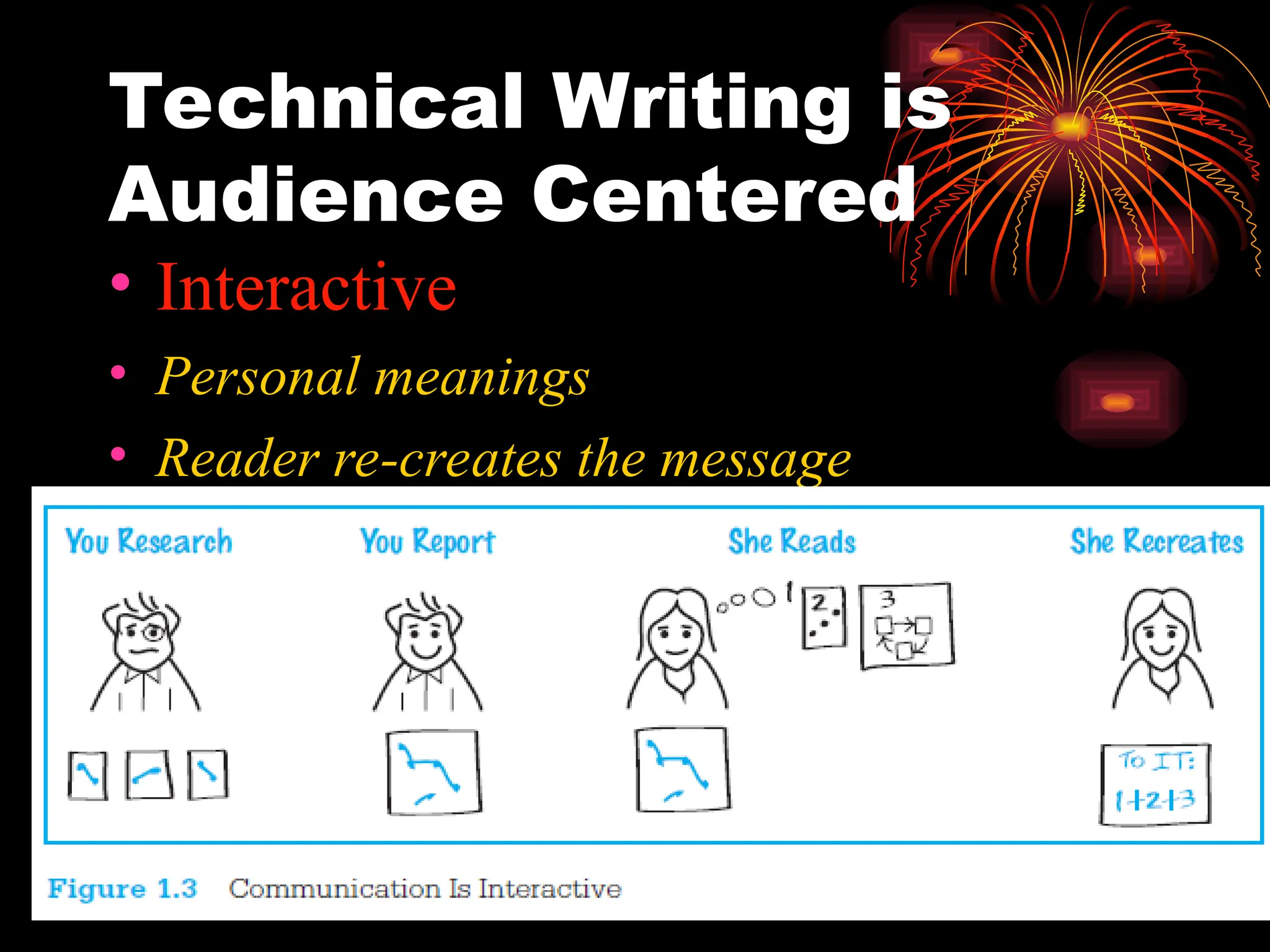
• Is interactive
• Has definite purpose
Technical Writing is
Presentational
•Use the top-down method
• Use headings
• Use chunks
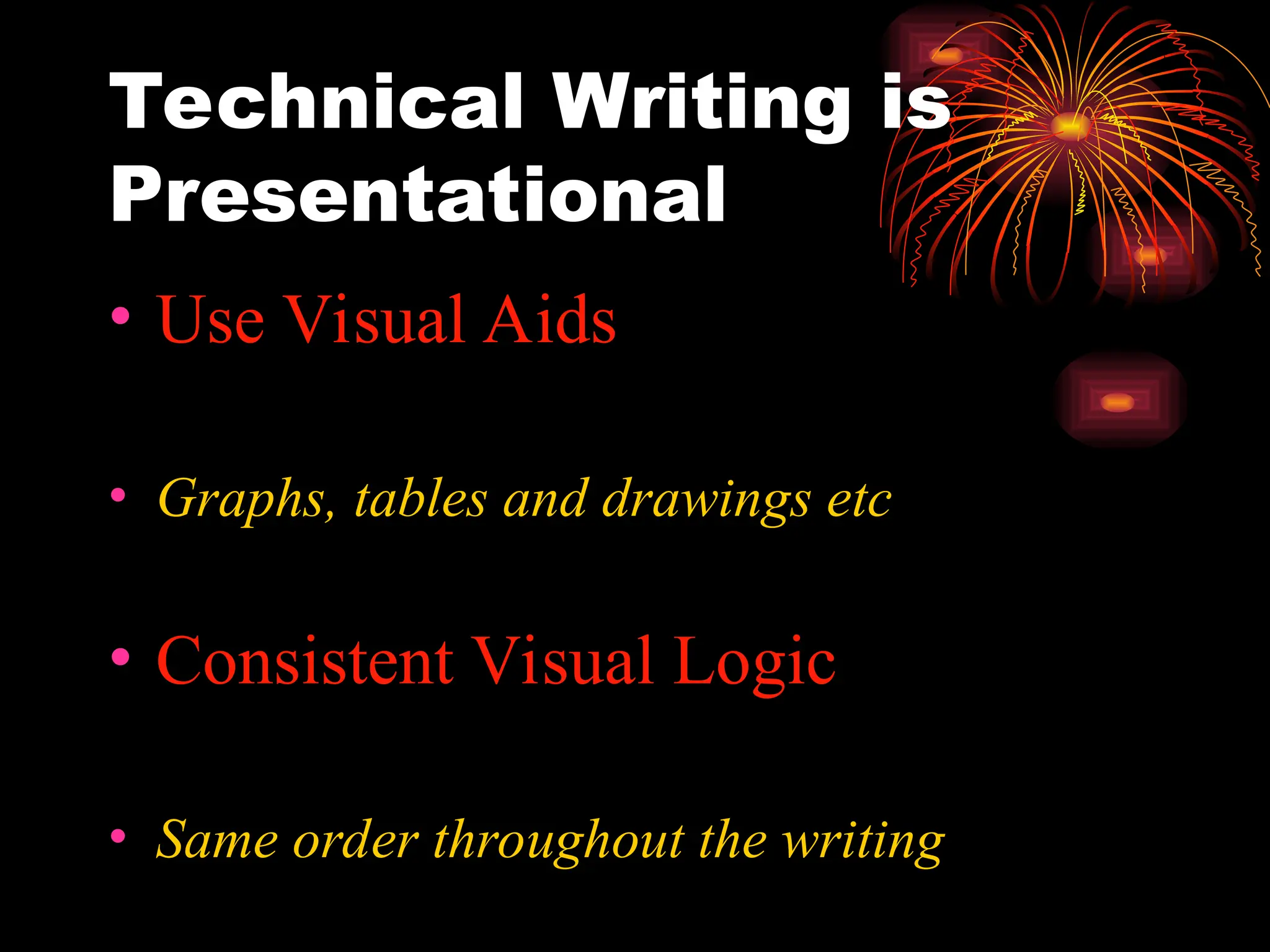
• Use visual aids
• Establish a consistent visual logic
• Use plain and objective language
7.
Technical Writing is
Presentational
•Use the Top-down Method
• Putting the main idea first
• Recommended for the good news messages
• Use Bottom-up Method
• Putting explanatory details firs
• Recommended for the bad news messages
Technical Writing is
Responsible
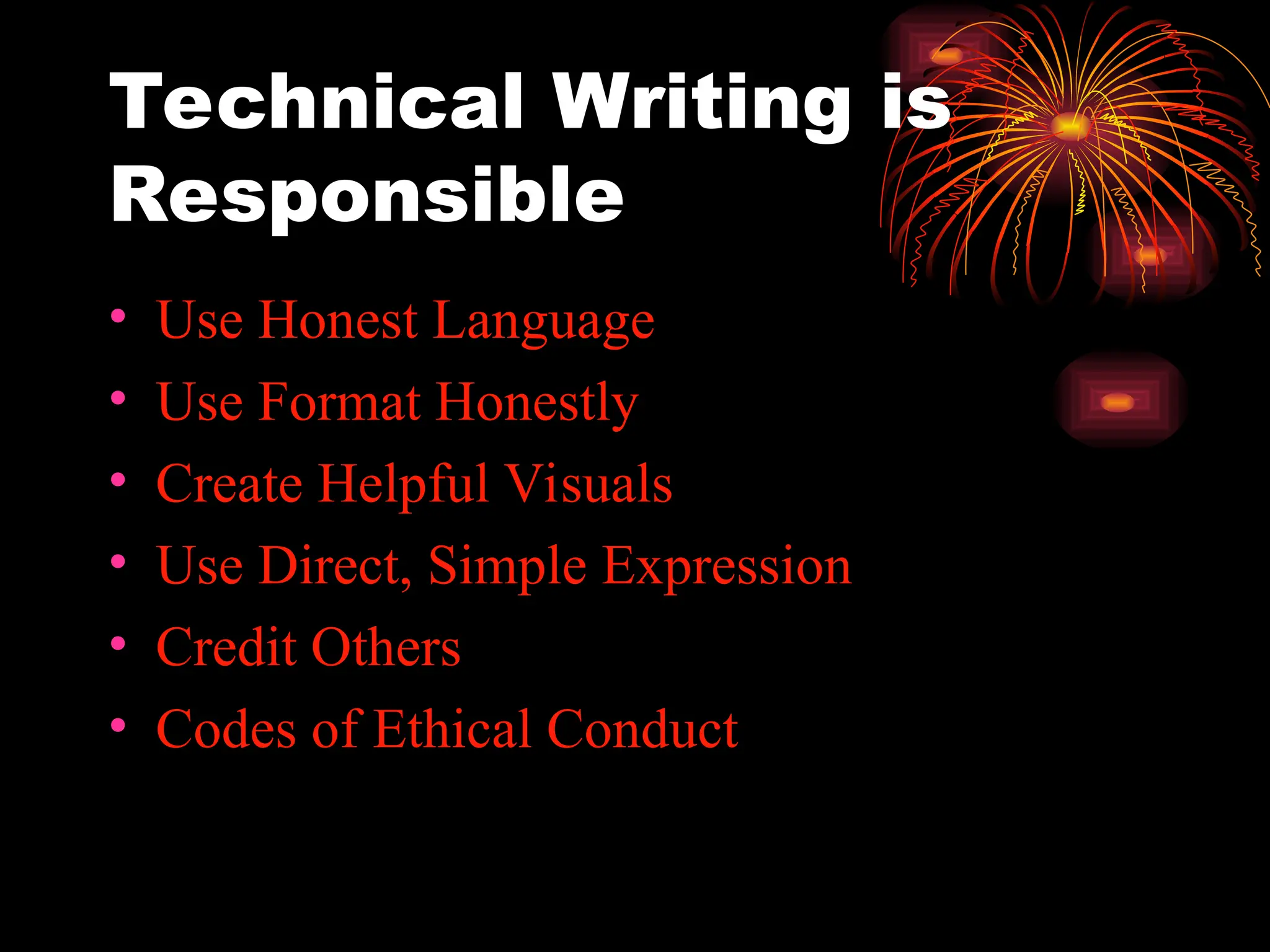
•Use Honest Language
• Use Format Honestly
• Create Helpful Visuals
• Use Direct, Simple Expression
• Credit Others
• Codes of Ethical Conduct
13.
Exercise
• Write aparagraph that persuades a specific audience to
act. Give two reasons to enroll in a certain class, to
purchase a certain object, to use a certain method to
solve a problem, or to accept your solution to a problem
(Question no. 2, p. 26).
• Write a paragraph that gives an audience information that
they can use to act. For example, give them information
on parking at your institution (Question no. 3, p. 27).
14.
Exercise
• Create avisual aid to enable a reader to act. Choose one of
these goals: show the location of an object in relation to other
objects (machines in a lab; rooms in a building); show someone
how to perform an act (how to print a document from a
computer; how to hold a hammer, how to create a contacts list
for e-mail or a social medium, how to sync contacts between
mobile devices); show why one item is better than another (cost
to purchase an object like an e-reader or a TV or class
notebooks; features of two objects). (Question no. 4, p. 27).
15.
Exercise
• Interview aprofessional in your field of interest. Choose
an instructor whom you know or a person who does not
work on campus. Ask questions about the importance of
writing to that person’s job. Questions you might ask
include
• • How often do you write each day or week?
• • How important is what you write to the successful
performance of your job?
• • Is writing important to your promotion?
• • What would be a major fault in a piece of writing in your
profession?
• • What are the features of writing (clarity, organization,
spelling, etc.) that you look for in someone else’s writing
and strive for in your own?