 It is the developing of a working plan of
  action.

 The design process was actually begun
  before the selection of site.

 It may be the combination of ideas
  arranged in a different way.
It is finding a solution to a problem.

He process of designing is an art of
  finding a new solution to a problem.
Note:
“The final design is usually presented in
the form of drawings & specifications
that can be used by the builders to
produce the final project”
Designing Considerations:

Regardless of the type of design project
being developed, there are basic factors
that are common to all designs.

1. Function
2. Appearance
3. Cost
4. Construction Materials
5. Strength
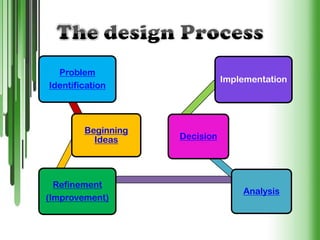
Problem
                               Implementation
Identification


        Beginning
          Ideas     Decision


  Refinement
                                   Analysis
(Improvement)
Problem Identification

 A problem is identified to
 prove that there is a need that
 must be satisfied.

 A background information
 must be gathered and
 evaluated to understand the
 full need.
Preliminary (Beginning) Ideas


  The designer should
  consider as many solutions as
  possible with little regards to
  the details as to whether or
  not a solution will work.
Refinement (Improvement)

 Selecting several of better
  ideas for refinement.

   REFINEMENT – specific
   details are improved so that
   the designer can judge the
   design.
Analysis


 Analyzing the design- the
    process of finding the
    strength in each part of
    the design.
Decision

• At this point, more than one design has been
  improved and analyze.
• It is necessary to make decision or present
  ideas to a group for decision.
• This are made to:
  – Accept one design
  – Combine several features or the best
    solution
  – Turn down all designs and repeat the
    design process.
Implementation (use)


 The designer supervises
 the preparation of the plan
 and specifications from which
 the project will be
 constructed.
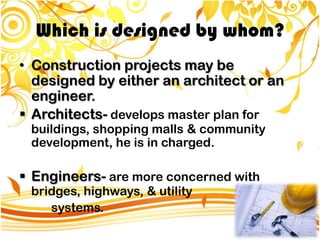
Which is designed by whom?
• Construction projects may be
  designed by either an architect or an
  engineer.
 Architects- develops master plan for
 buildings, shopping malls & community
 development, he is in charged.

 Engineers- are more concerned with
 bridges, highways, & utility
    systems.
Identifying Problem


The problem must be clearly
 defined in the mind of the
 designer. He must understand
 what is to be designed and
 why it is necessary.
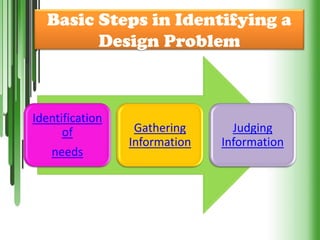
Basic Steps in Identifying a
        Design Problem


Identification
      of          Gathering      Judging
                 Information   Information
   needs
Identification of Needs


A design is always based on a need.

To clearly define the purpose of the
 design, the design statement should
 be written out in a work sheet.
Gathering Information


An additional information is needed to
 identify the problem and its limitations.

Problems would involve a study of the
 site to decide the best way to take
 advantage of its best features.
Judging Information
   Information gathered concerning
   the site and other factors affecting
   the design should be judged to
   obtain a better understanding of the
   problem.

• Note:
         Evaluation could be improved by
    drawing graphs to show past records &
    to make predictions for the future.
Thank You
      for
 listening..
    

Chapter ii.1

  • 2.
     It isthe developing of a working plan of action.  The design process was actually begun before the selection of site.  It may be the combination of ideas arranged in a different way.
  • 3.
    It is findinga solution to a problem. He process of designing is an art of finding a new solution to a problem. Note: “The final design is usually presented in the form of drawings & specifications that can be used by the builders to produce the final project”
  • 4.
    Designing Considerations: Regardless ofthe type of design project being developed, there are basic factors that are common to all designs. 1. Function 2. Appearance 3. Cost 4. Construction Materials 5. Strength
  • 5.
    Problem Implementation Identification Beginning Ideas Decision Refinement Analysis (Improvement)
  • 6.
    Problem Identification  Aproblem is identified to prove that there is a need that must be satisfied.  A background information must be gathered and evaluated to understand the full need.
  • 7.
    Preliminary (Beginning) Ideas  The designer should consider as many solutions as possible with little regards to the details as to whether or not a solution will work.
  • 8.
    Refinement (Improvement)  Selectingseveral of better ideas for refinement.  REFINEMENT – specific details are improved so that the designer can judge the design.
  • 9.
    Analysis  Analyzing thedesign- the process of finding the strength in each part of the design.
  • 10.
    Decision • At thispoint, more than one design has been improved and analyze. • It is necessary to make decision or present ideas to a group for decision. • This are made to: – Accept one design – Combine several features or the best solution – Turn down all designs and repeat the design process.
  • 11.
    Implementation (use)  Thedesigner supervises the preparation of the plan and specifications from which the project will be constructed.
  • 12.
    Which is designedby whom? • Construction projects may be designed by either an architect or an engineer.  Architects- develops master plan for buildings, shopping malls & community development, he is in charged.  Engineers- are more concerned with bridges, highways, & utility systems.
  • 14.
    Identifying Problem The problemmust be clearly defined in the mind of the designer. He must understand what is to be designed and why it is necessary.
  • 15.
    Basic Steps inIdentifying a Design Problem Identification of Gathering Judging Information Information needs
  • 16.
    Identification of Needs Adesign is always based on a need. To clearly define the purpose of the design, the design statement should be written out in a work sheet.
  • 17.
    Gathering Information An additionalinformation is needed to identify the problem and its limitations. Problems would involve a study of the site to decide the best way to take advantage of its best features.
  • 18.
    Judging Information  Information gathered concerning the site and other factors affecting the design should be judged to obtain a better understanding of the problem. • Note: Evaluation could be improved by drawing graphs to show past records & to make predictions for the future.
  • 19.
    Thank You for listening.. 