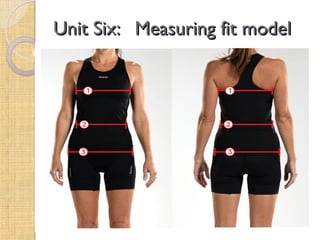
Unit Six: Measuring fit model
content coverage and topics:
 Tools and equipment
Body reference points
Body measurement
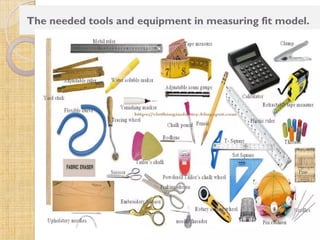
The needed tools and equipment in measuring fit model.
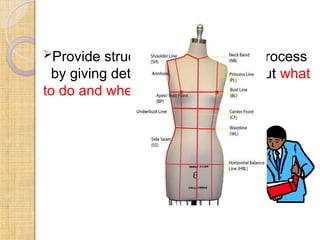
Provide structure to the learning process
by giving detailed instructions about what
to do and when to do it.
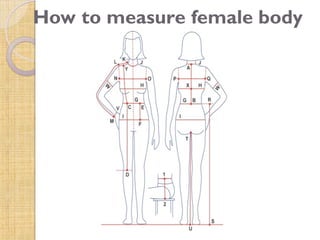
How to measure female body
Type of measurement
The bust measurement is calculated by
taking the circumference (front through
back) of the fullest area around the
bust. This is usually where the nipples
are.
Figure 6.1: Bust circumference
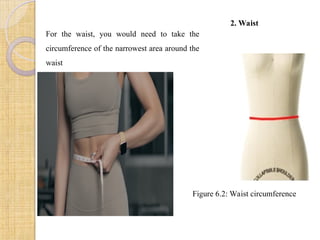
2. Waist
For the waist, you would need to take the
circumference of the narrowest area around the
waist
Figure 6.2: Waist circumference
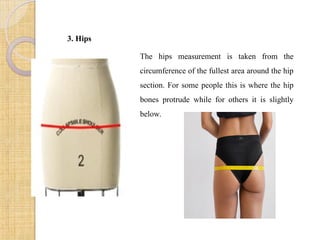
3. Hips
The hips measurement is taken from the
circumference of the fullest area around the hip
section. For some people this is where the hip
bones protrude while for others it is slightly
below.
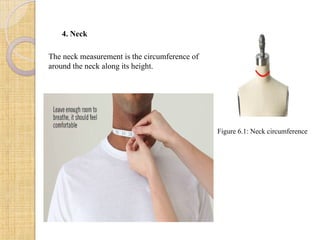
4. Neck
The neck measurement is the circumference of
around the neck along its height.
Figure 6.1: Neck circumference
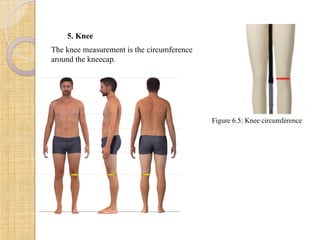
5. Knee
The knee measurement is the circumference
around the kneecap.
Figure 6.5: Knee circumference
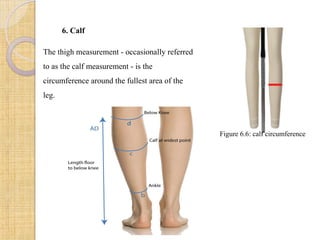
6. Calf
The thigh measurement - occasionally referred
to as the calf measurement - is the
circumference around the fullest area of the
leg.
Figure 6.6: calf circumference
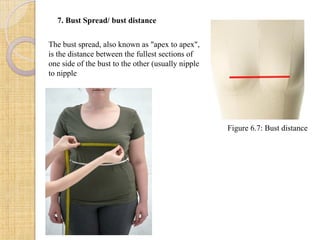
7. Bust Spread/ bust distance
The bust spread, also known as "apex to apex",
is the distance between the fullest sections of
one side of the bust to the other (usually nipple
to nipple
Figure 6.7: Bust distance
Vertical measurement is measured from Top to Dawn.
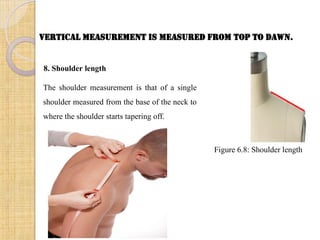
8. Shoulder length
The shoulder measurement is that of a single
shoulder measured from the base of the neck to
where the shoulder starts tapering off.
Figure 6.8: Shoulder length
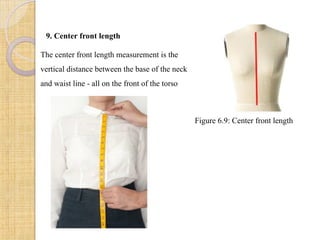
9. Center front length
The center front length measurement is the
vertical distance between the base of the neck
and waist line - all on the front of the torso
Figure 6.9: Center front length
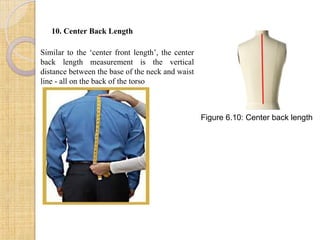
10. Center Back Length
Similar to the ‘center front length’, the center
back length measurement is the vertical
distance between the base of the neck and waist
line - all on the back of the torso
Figure 6.10: Center back length
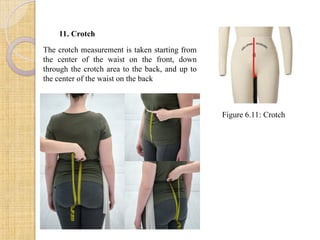
11. Crotch
The crotch measurement is taken starting from
the center of the waist on the front, down
through the crotch area to the back, and up to
the center of the waist on the back
Figure 6.11: Crotch
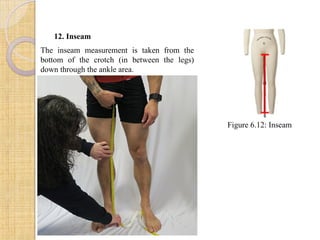
12. Inseam
The inseam measurement is taken from the
bottom of the crotch (in between the legs)
down through the ankle area.
Figure 6.12: Inseam
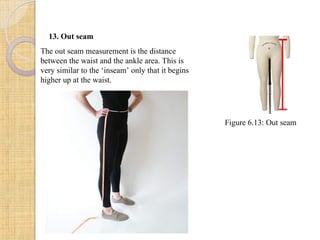
13. Out seam
The out seam measurement is the distance
between the waist and the ankle area. This is
very similar to the ‘inseam’ only that it begins
higher up at the waist.
Figure 6.13: Out seam
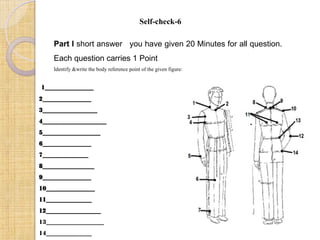
Self-check-6
Part I short answer you have given 20 Minutes for all question.
Each question carries 1 Point
Identify &write the body reference point of the given figure:
1________________
2________________
3__________________
4_____________________
5___________________
6________________
7_______________
8_________________
9________________
10________________
11_______________
12__________________
13___________________
14_______________
Unit Seven: physical characteristics
This unit to provide you the necessary information regarding the following content
coverage and topics:
 Body characteristics
 Unique features
 Recording information
Recording information of body characteristics
Body characteristics and body measurements effects on sizing .A well-fitted
garment adjusts naturally to the movements of the wearer, is comfortable,
presents a pleasing appearance in harmony with the figure, and may contribute
to the wearer’s sense of well-being, providing a positive psychological
experience focusing on the individual’s self-image.
When assess physical characteristics of human body have different proportions
shape & Posture some are unique or out of the standard.
The characteristics are may include
 posture
 shape classifications such as hourglass, rectangular, pear,
inverted triangle
 shoulder slope - raised, normal, sloping
 genetic, developmental and structural influences
 anthropometric classifications
 body sway and postural asymmetry - according to lower and
upper body
 proportions - high or low waist, mid-body shortness
Posture & Body shape was a major cause for mismatches between sizing
standards and target consumers. An awareness of the anatomical differences
among figure types helps explain why ready-to-wear garments cannot fit all
figures perfectly.
Body form (shapes) and types fall into four major categories, with each having
variations.
 Hourglass body shape
 Rectangle body shape
 Spoon body shape
 Triangle body shape
unique features of body shape
1. Normal Figure: This figure has height according to the age and the body
parts are all proportional. So it is called proportional figure or normal figure.
2. Abnormality in Figure: Figures differ from a normal figure is called as
abnormal figure. Some figures have disproportionate body part. Some
abnormal figures are listed below
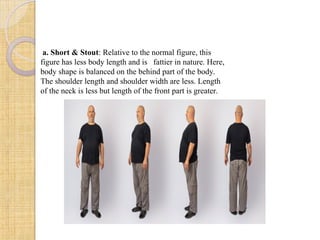
a. Short & Stout: Relative to the normal figure, this
figure has less body length and is fattier in nature. Here,
body shape is balanced on the behind part of the body.
The shoulder length and shoulder width are less. Length
of the neck is less but length of the front part is greater.
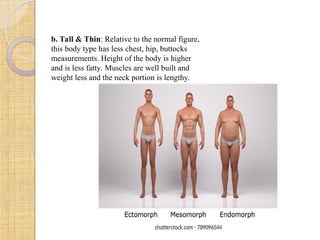
b. Tall & Thin: Relative to the normal figure,
this body type has less chest, hip, buttocks
measurements. Height of the body is higher
and is less fatty. Muscles are well built and
weight less and the neck portion is lengthy.
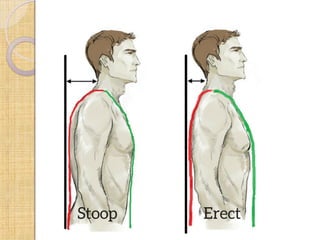
1.Variation in posture
The posture generally determined in the way the stands. This influences
both the prominence & the hollows of the contour .
if the normal posture is considered fairly erect, in comparison a stooping
posture would have a forward neck hollow chest & a more rounded back.
The stomach more prominent but the seat flatters.
A very erect stance may have the hip & waist area as the norm but more
prominent bust, flatter back & a straight erect neck column.
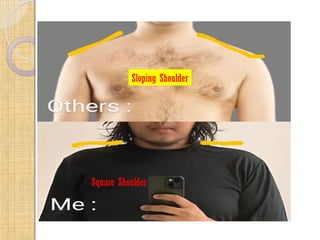
A. Shoulder slope:
Stooping Shoulder: Relative to the normal figure, shoulder slope is higher.
Depth of the scye is greater and length of the neck is higher.
Square Shoulder: Relative to the normal figure, shoulder slope is lesser.
Besides, shoulder width is in a rectangular shape. For this person, length of
the neck portion is less and the shoulder level is higher and length of the
neck is shorter.
Sloping Shoulder: Relative to the normal figure, shoulder slope is more. For
this person, length of the neck portion is more and the shoulder level is
lower and length of the neck is higher.
Square Shoulder
Sloping Shoulder
Thank you

chapter 6 analyse fit model last material.ppt

  • 1.
    Unit Six: Measuringfit model Unit Six: Measuring fit model
  • 2.
    content coverage andtopics: content coverage and topics:  Tools and equipment Body reference points Body measurement
  • 3.
    The needed toolsand equipment in measuring fit model.
  • 4.
    Provide structure tothe learning process by giving detailed instructions about what to do and when to do it.
  • 5.
    How to measurefemale body
  • 6.
    Type of measurement Thebust measurement is calculated by taking the circumference (front through back) of the fullest area around the bust. This is usually where the nipples are. Figure 6.1: Bust circumference
  • 7.
    2. Waist For thewaist, you would need to take the circumference of the narrowest area around the waist Figure 6.2: Waist circumference
  • 8.
    3. Hips The hipsmeasurement is taken from the circumference of the fullest area around the hip section. For some people this is where the hip bones protrude while for others it is slightly below.
  • 9.
    4. Neck The neckmeasurement is the circumference of around the neck along its height. Figure 6.1: Neck circumference
  • 10.
    5. Knee The kneemeasurement is the circumference around the kneecap. Figure 6.5: Knee circumference
  • 11.
    6. Calf The thighmeasurement - occasionally referred to as the calf measurement - is the circumference around the fullest area of the leg. Figure 6.6: calf circumference
  • 12.
    7. Bust Spread/bust distance The bust spread, also known as "apex to apex", is the distance between the fullest sections of one side of the bust to the other (usually nipple to nipple Figure 6.7: Bust distance
  • 13.
    Vertical measurement ismeasured from Top to Dawn. 8. Shoulder length The shoulder measurement is that of a single shoulder measured from the base of the neck to where the shoulder starts tapering off. Figure 6.8: Shoulder length
  • 14.
    9. Center frontlength The center front length measurement is the vertical distance between the base of the neck and waist line - all on the front of the torso Figure 6.9: Center front length
  • 15.
    10. Center BackLength Similar to the ‘center front length’, the center back length measurement is the vertical distance between the base of the neck and waist line - all on the back of the torso Figure 6.10: Center back length
  • 16.
    11. Crotch The crotchmeasurement is taken starting from the center of the waist on the front, down through the crotch area to the back, and up to the center of the waist on the back Figure 6.11: Crotch
  • 17.
    12. Inseam The inseammeasurement is taken from the bottom of the crotch (in between the legs) down through the ankle area. Figure 6.12: Inseam
  • 18.
    13. Out seam Theout seam measurement is the distance between the waist and the ankle area. This is very similar to the ‘inseam’ only that it begins higher up at the waist. Figure 6.13: Out seam
  • 19.
    Self-check-6 Part I shortanswer you have given 20 Minutes for all question. Each question carries 1 Point Identify &write the body reference point of the given figure: 1________________ 2________________ 3__________________ 4_____________________ 5___________________ 6________________ 7_______________ 8_________________ 9________________ 10________________ 11_______________ 12__________________ 13___________________ 14_______________
  • 20.
    Unit Seven: physicalcharacteristics This unit to provide you the necessary information regarding the following content coverage and topics:  Body characteristics  Unique features  Recording information
  • 21.
    Recording information ofbody characteristics Body characteristics and body measurements effects on sizing .A well-fitted garment adjusts naturally to the movements of the wearer, is comfortable, presents a pleasing appearance in harmony with the figure, and may contribute to the wearer’s sense of well-being, providing a positive psychological experience focusing on the individual’s self-image. When assess physical characteristics of human body have different proportions shape & Posture some are unique or out of the standard. The characteristics are may include
  • 22.
    The characteristics aremay include  posture  shape classifications such as hourglass, rectangular, pear, inverted triangle  shoulder slope - raised, normal, sloping  genetic, developmental and structural influences  anthropometric classifications  body sway and postural asymmetry - according to lower and upper body  proportions - high or low waist, mid-body shortness
  • 23.
    Posture & Bodyshape was a major cause for mismatches between sizing standards and target consumers. An awareness of the anatomical differences among figure types helps explain why ready-to-wear garments cannot fit all figures perfectly.
  • 24.
    Body form (shapes)and types fall into four major categories, with each having variations.  Hourglass body shape  Rectangle body shape  Spoon body shape  Triangle body shape
  • 25.
    unique features ofbody shape 1. Normal Figure: This figure has height according to the age and the body parts are all proportional. So it is called proportional figure or normal figure. 2. Abnormality in Figure: Figures differ from a normal figure is called as abnormal figure. Some figures have disproportionate body part. Some abnormal figures are listed below
  • 26.
    a. Short &Stout: Relative to the normal figure, this figure has less body length and is fattier in nature. Here, body shape is balanced on the behind part of the body. The shoulder length and shoulder width are less. Length of the neck is less but length of the front part is greater.
  • 27.
    b. Tall &Thin: Relative to the normal figure, this body type has less chest, hip, buttocks measurements. Height of the body is higher and is less fatty. Muscles are well built and weight less and the neck portion is lengthy.
  • 28.
    1.Variation in posture Theposture generally determined in the way the stands. This influences both the prominence & the hollows of the contour . if the normal posture is considered fairly erect, in comparison a stooping posture would have a forward neck hollow chest & a more rounded back. The stomach more prominent but the seat flatters. A very erect stance may have the hip & waist area as the norm but more prominent bust, flatter back & a straight erect neck column.
  • 29.
    A. Shoulder slope: StoopingShoulder: Relative to the normal figure, shoulder slope is higher. Depth of the scye is greater and length of the neck is higher. Square Shoulder: Relative to the normal figure, shoulder slope is lesser. Besides, shoulder width is in a rectangular shape. For this person, length of the neck portion is less and the shoulder level is higher and length of the neck is shorter. Sloping Shoulder: Relative to the normal figure, shoulder slope is more. For this person, length of the neck portion is more and the shoulder level is lower and length of the neck is higher.
  • 31.
  • 32.