RESEARCH METHODS
FOR BUSINESS
Mr. PHON Sophath
April 2022
CHAPTER 3
THE RESEARCH PROCESS: STEPS 4 AND 5:
THEORETICAL FRAMEWORK HYPOTHESIS
DEVELOPMENT
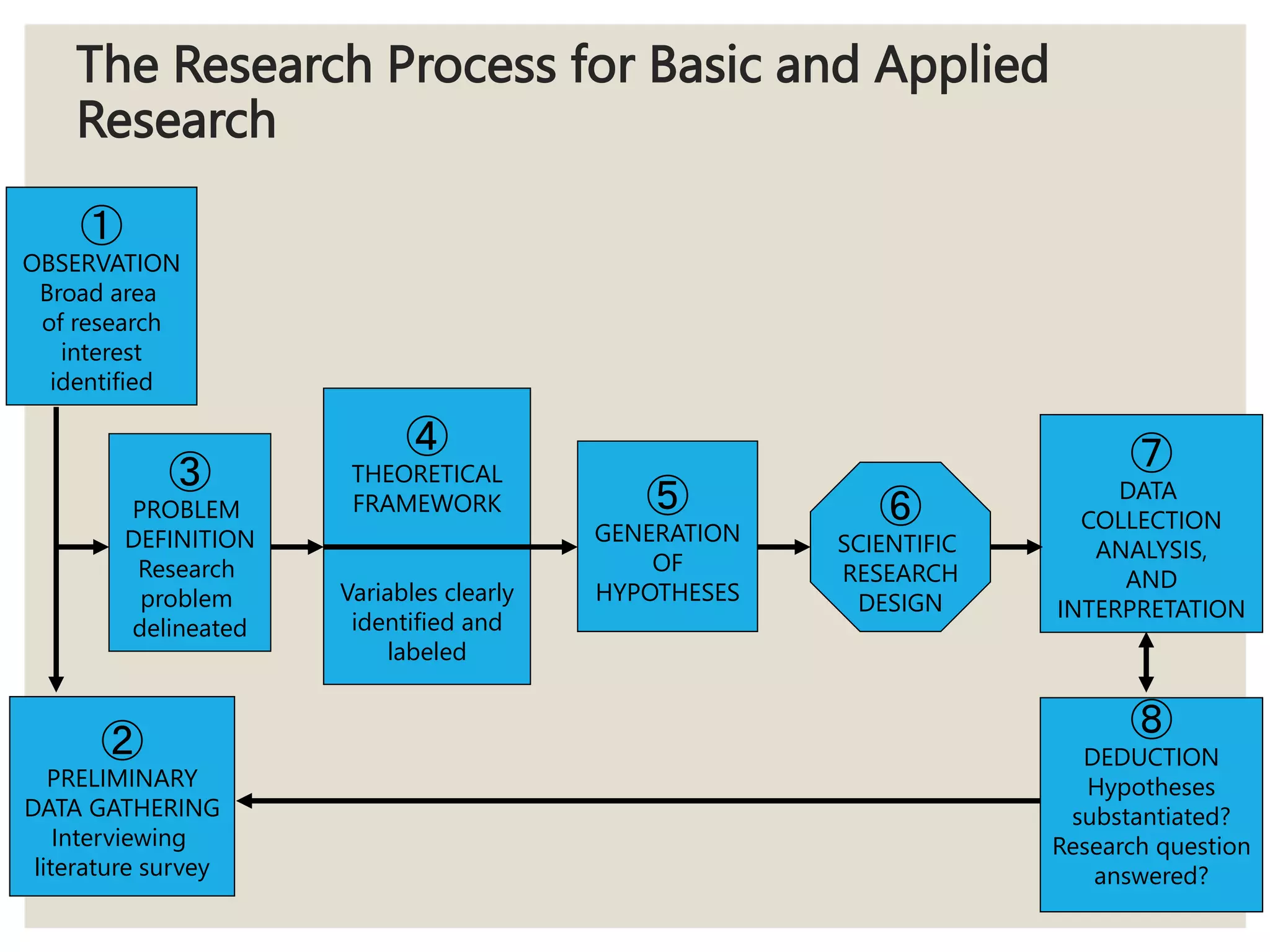
The Research Process for Basic and Applied
Research
①
OBSERVATION
Broad area
of research
interest
identified
②
PRELIMINARY
DATA GATHERING
Interviewing
literature survey
③
PROBLEM
DEFINITION
Research
problem
delineated
④
THEORETICAL
FRAMEWORK
Variables clearly
identified and
labeled
⑤
GENERATION
OF
HYPOTHESES
⑥
SCIENTIFIC
RESEARCH
DESIGN
⑦
DATA
COLLECTION
ANALYSIS,
AND
INTERPRETATION
⑧
DEDUCTION
Hypotheses
substantiated?
Research question
answered?
The Need for a Theoretical Framework
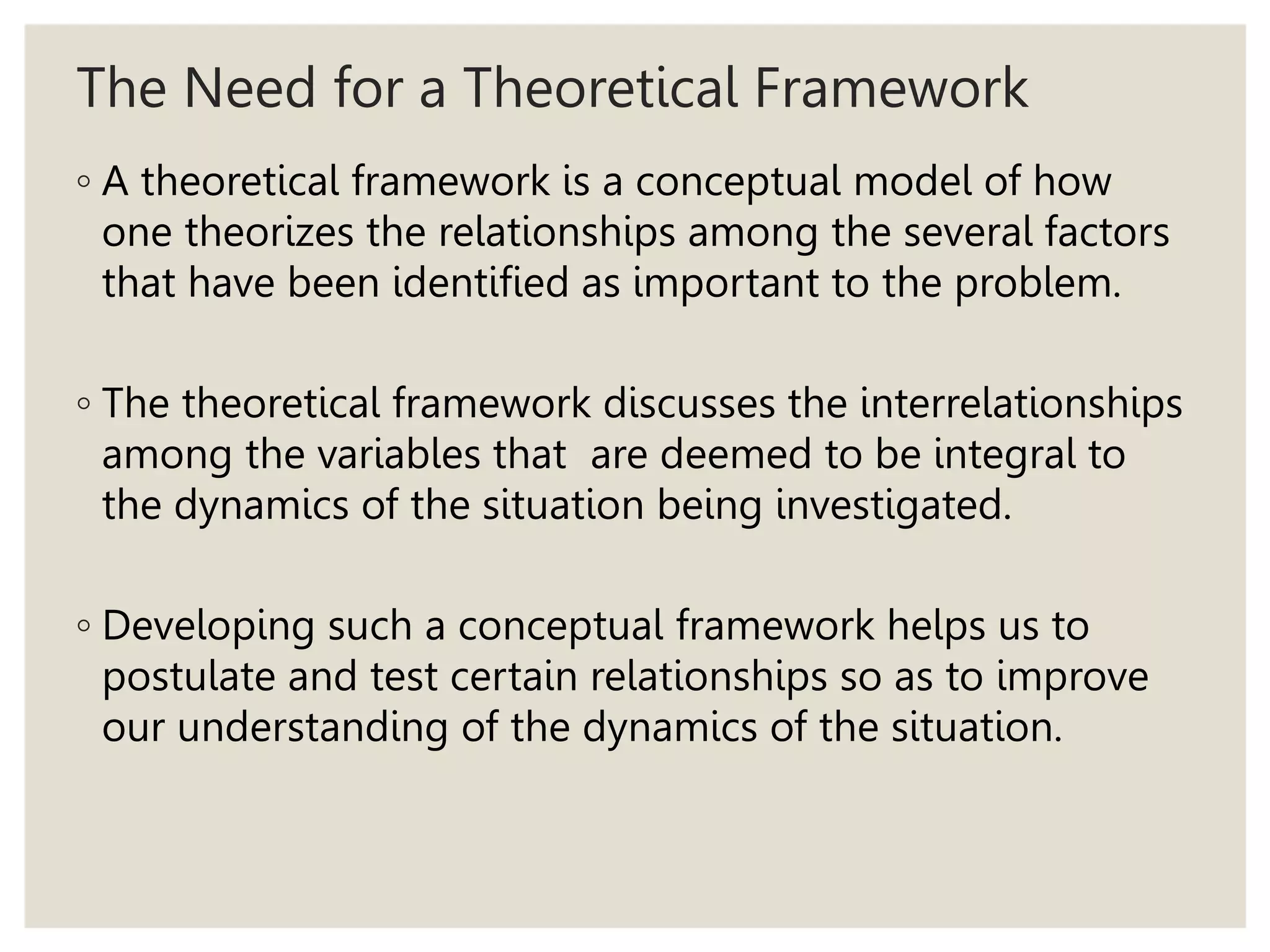
◦ A theoretical framework is a conceptual model of how
one theorizes the relationships among the several factors
that have been identified as important to the problem.
◦ The theoretical framework discusses the interrelationships
among the variables that are deemed to be integral to
the dynamics of the situation being investigated.
◦ Developing such a conceptual framework helps us to
postulate and test certain relationships so as to improve
our understanding of the dynamics of the situation.
Variables
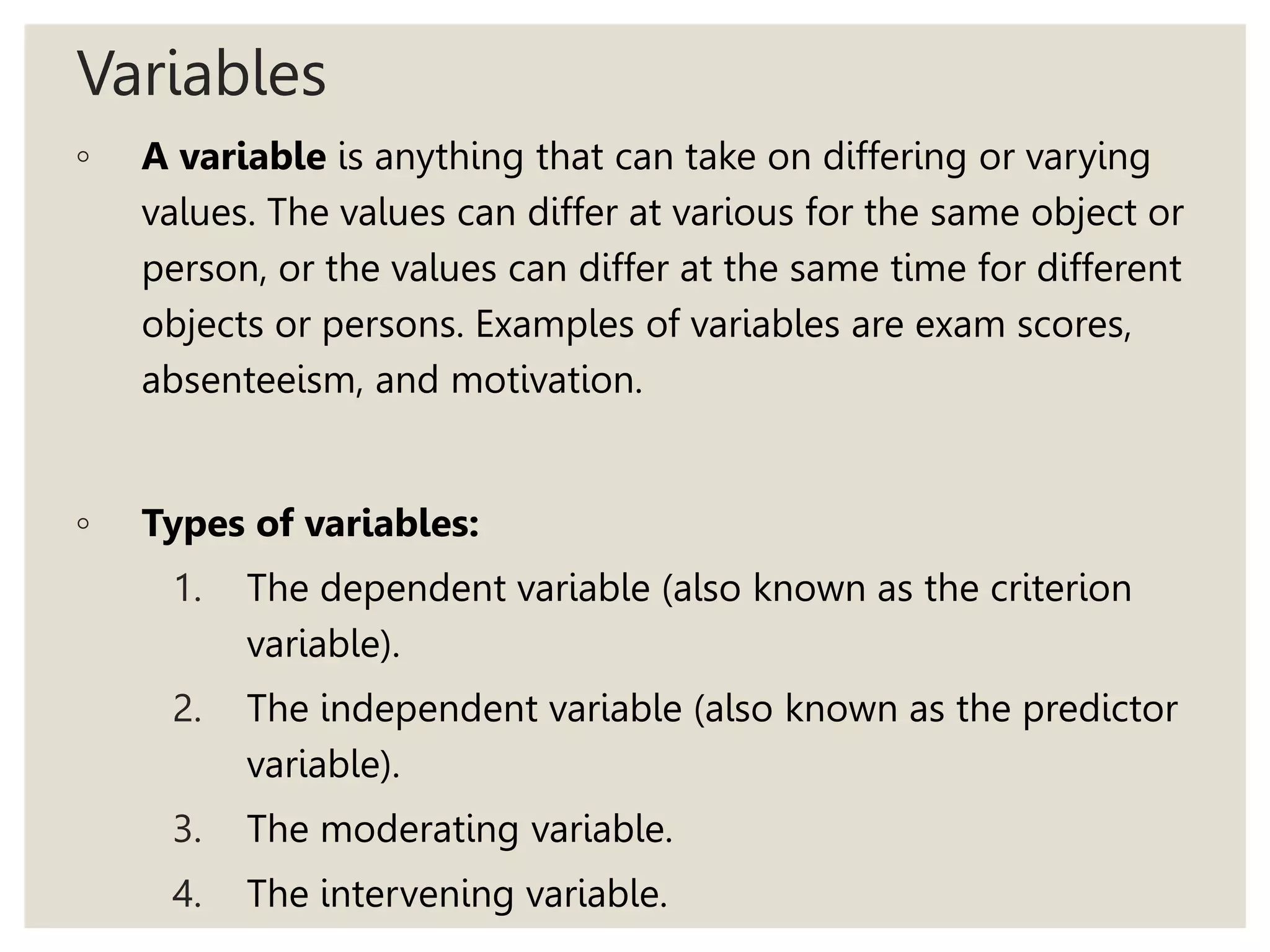
◦ A variable is anything that can take on differing or varying
values. The values can differ at various for the same object or
person, or the values can differ at the same time for different
objects or persons. Examples of variables are exam scores,
absenteeism, and motivation.
◦ Types of variables:
1. The dependent variable (also known as the criterion
variable).
2. The independent variable (also known as the predictor
variable).
3. The moderating variable.
4. The intervening variable.
Dependent variable
◦ The dependent variable is the variable of primary
interest to the research. The researcher’s goal is to
explain or predict the variability in the dependent
variable.
Independent variable
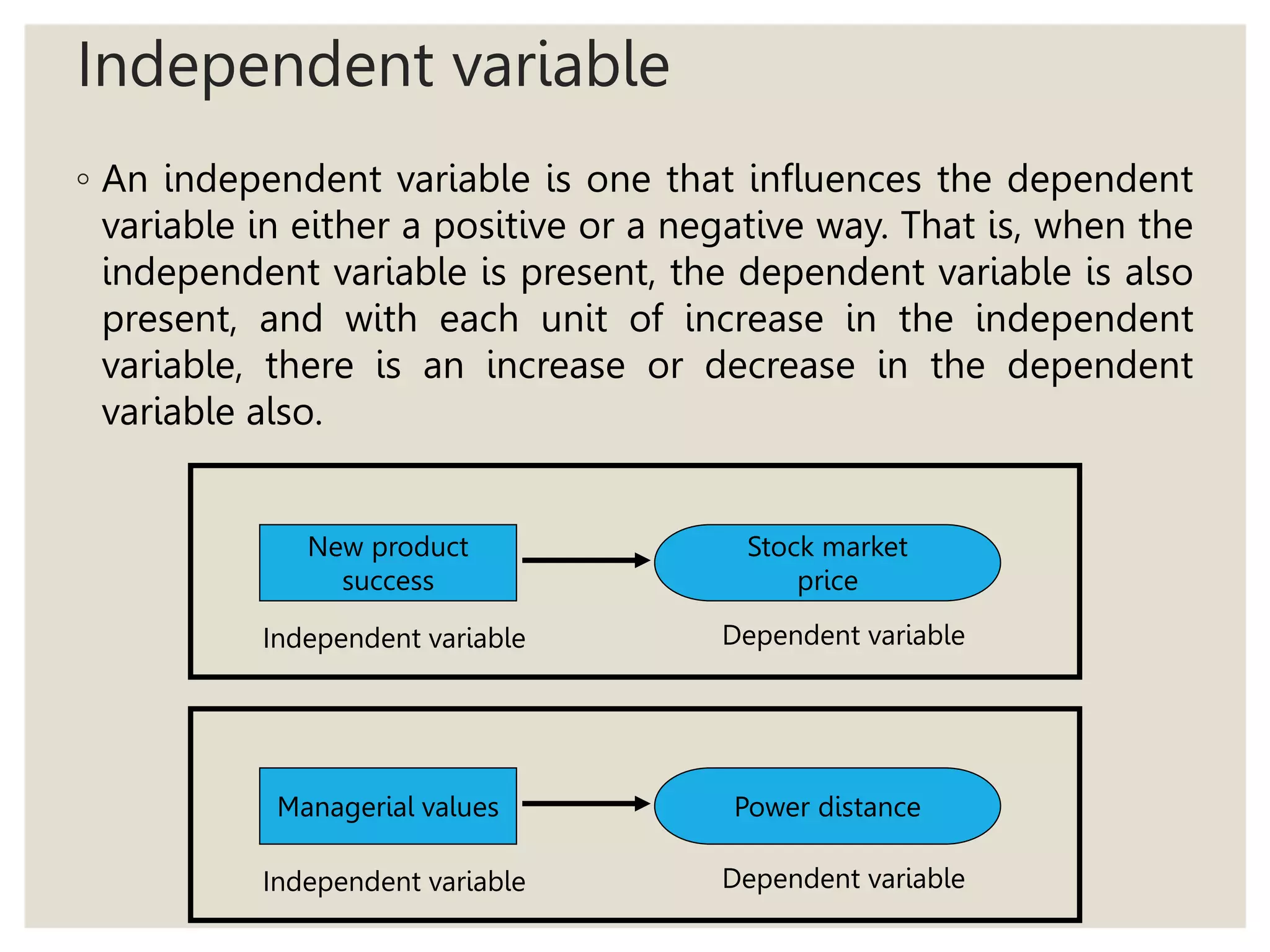
◦ An independent variable is one that influences the dependent
variable in either a positive or a negative way. That is, when the
independent variable is present, the dependent variable is also
present, and with each unit of increase in the independent
variable, there is an increase or decrease in the dependent
variable also.
New product
success
Stock market
price
Independent variable Dependent variable
Managerial values Power distance
Independent variable Dependent variable
Moderating variable
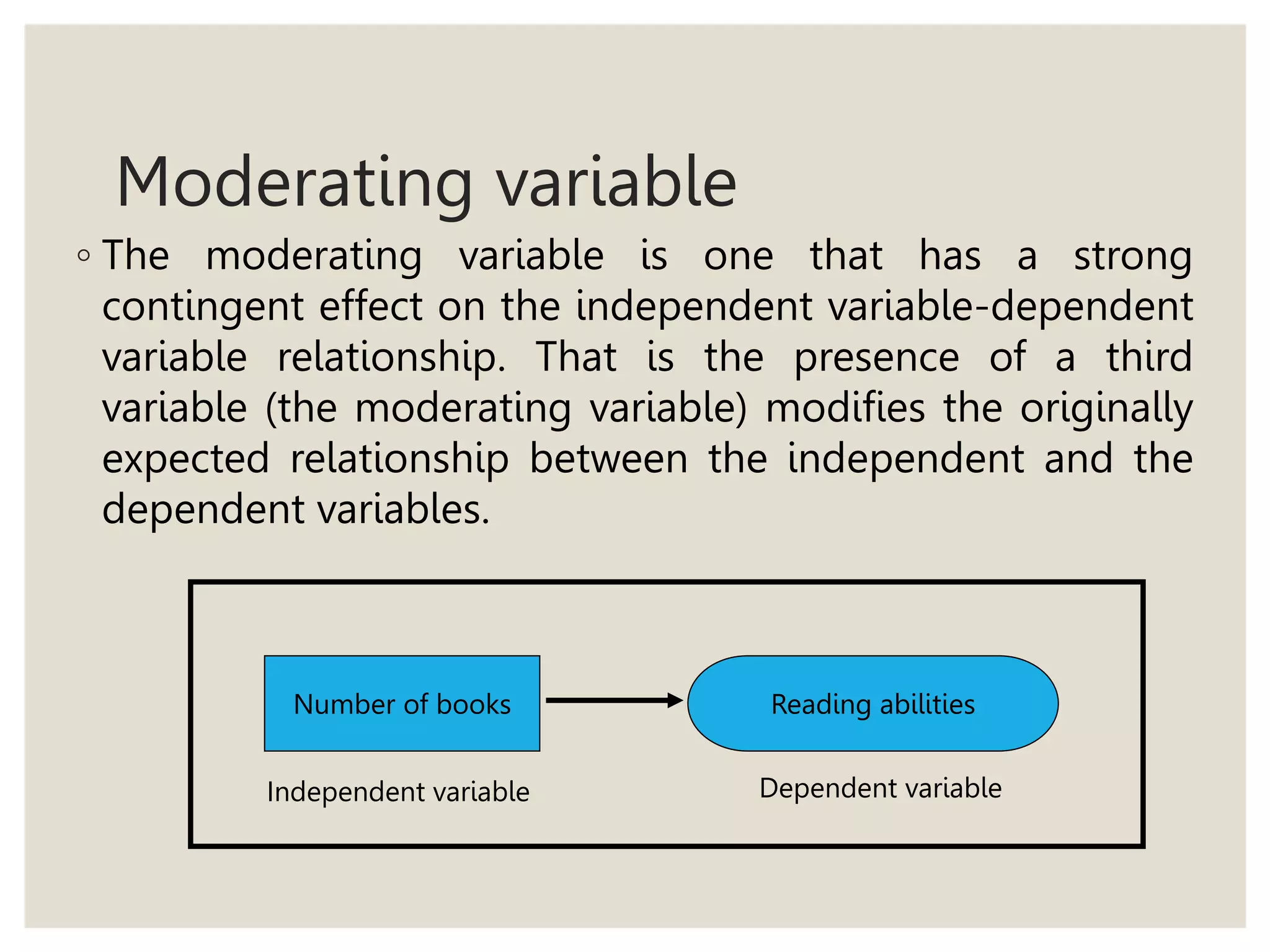
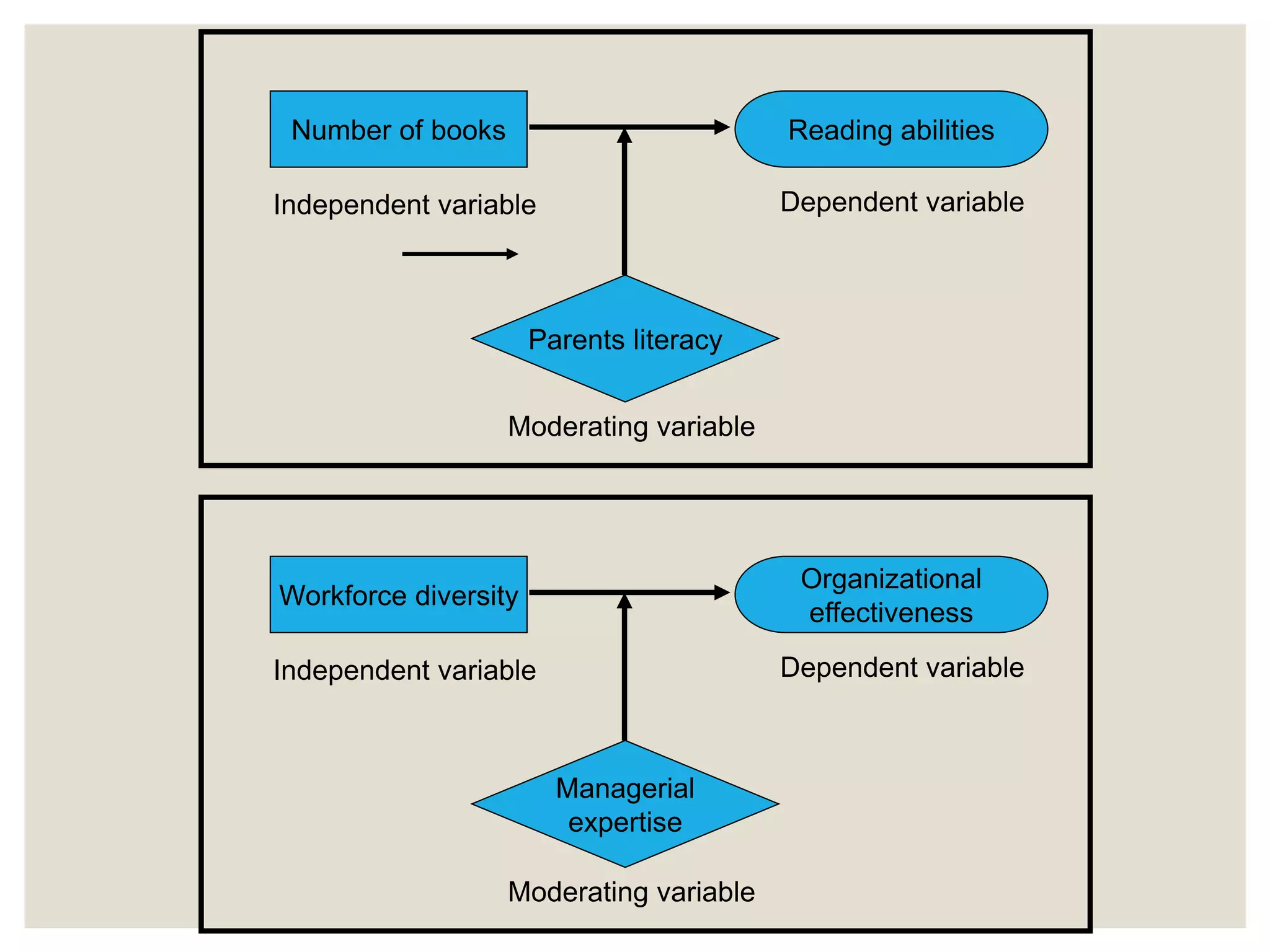
◦ The moderating variable is one that has a strong
contingent effect on the independent variable-dependent
variable relationship. That is the presence of a third
variable (the moderating variable) modifies the originally
expected relationship between the independent and the
dependent variables.
Number of books Reading abilities
Independent variable Dependent variable
Number of books Reading abilities
Independent variable Dependent variable
Parents literacy
Moderating variable
Workforce diversity
Organizational
effectiveness
Independent variable Dependent variable
Managerial
expertise
Moderating variable
Intervening variable
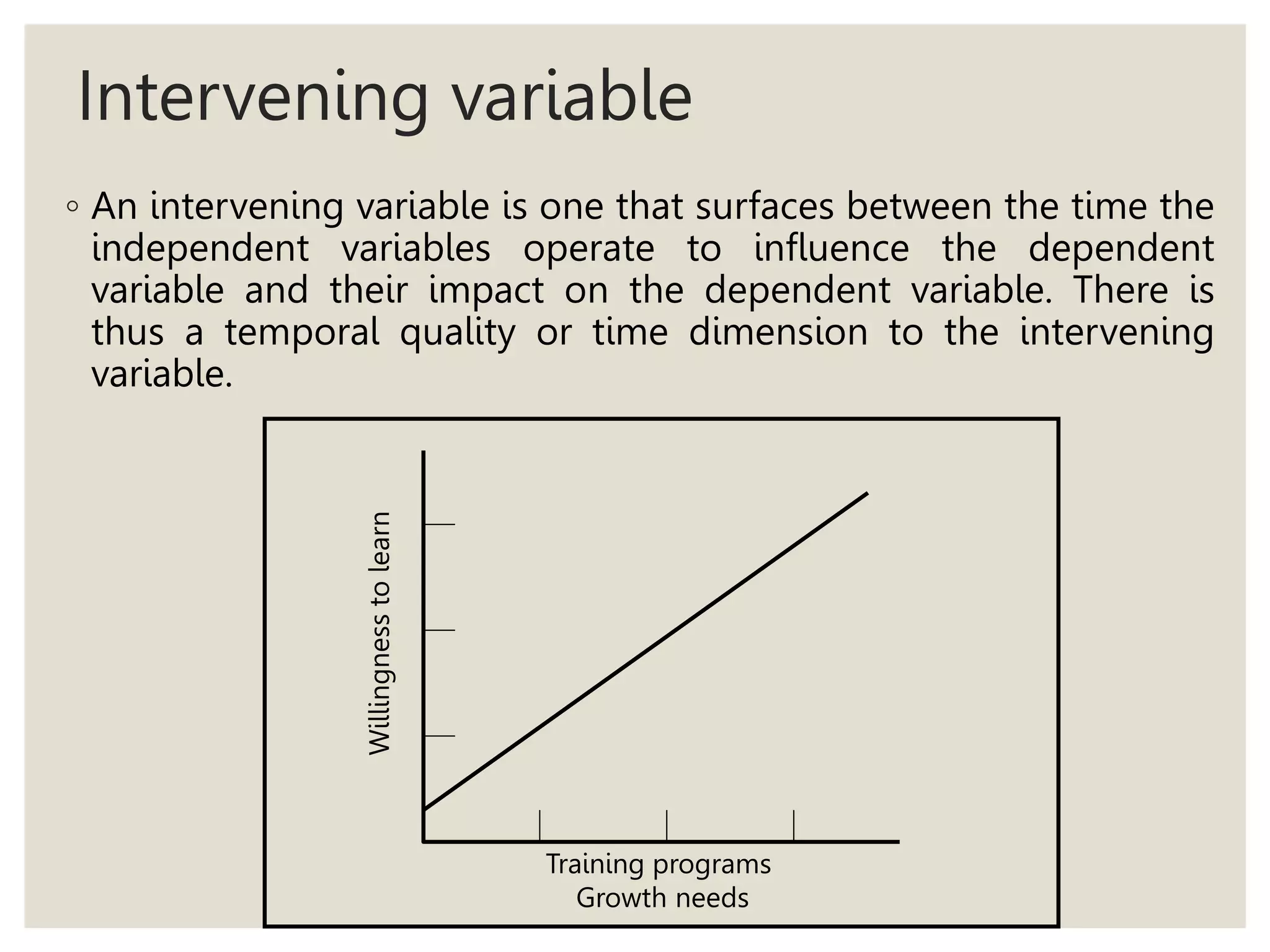
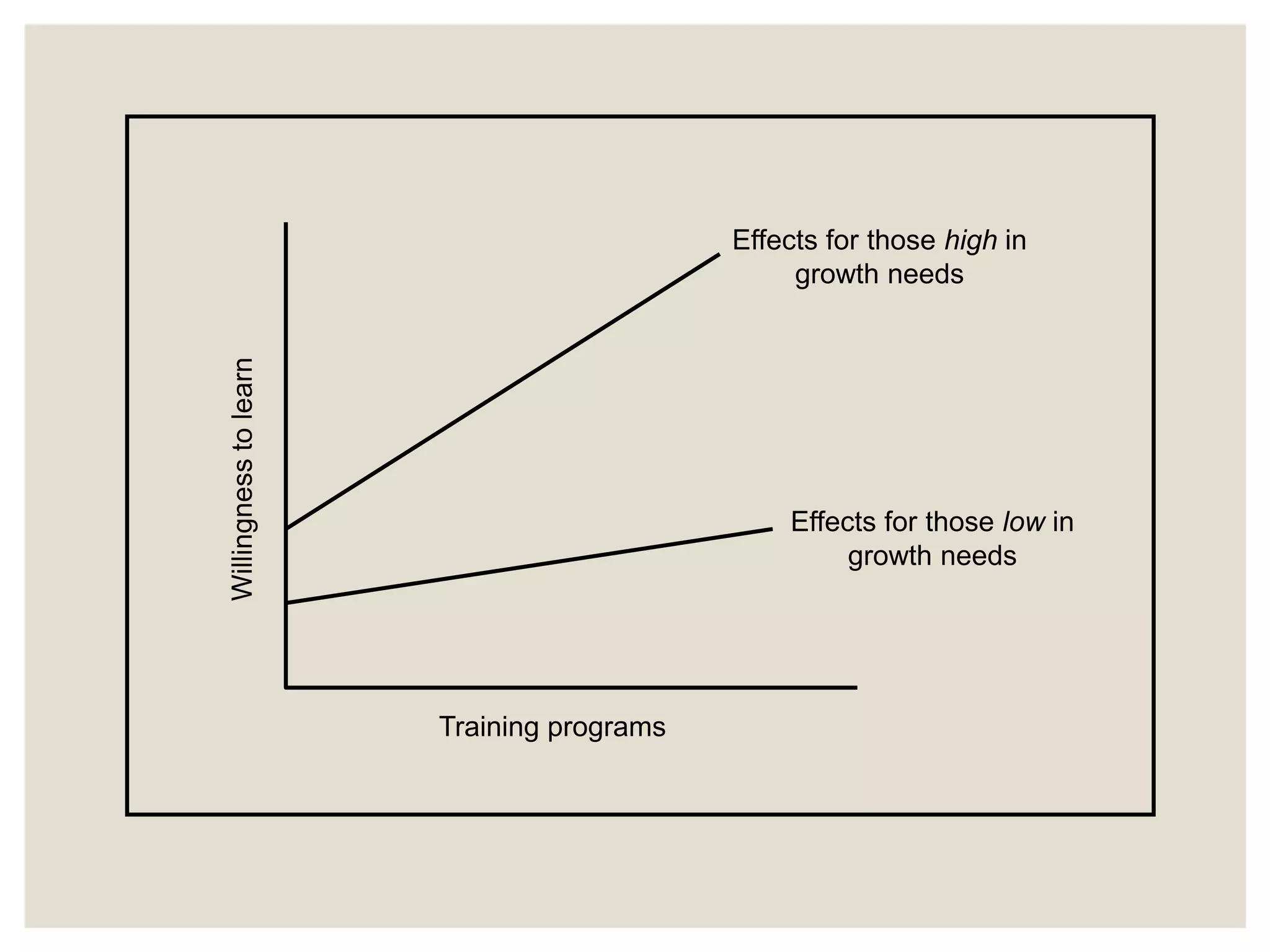
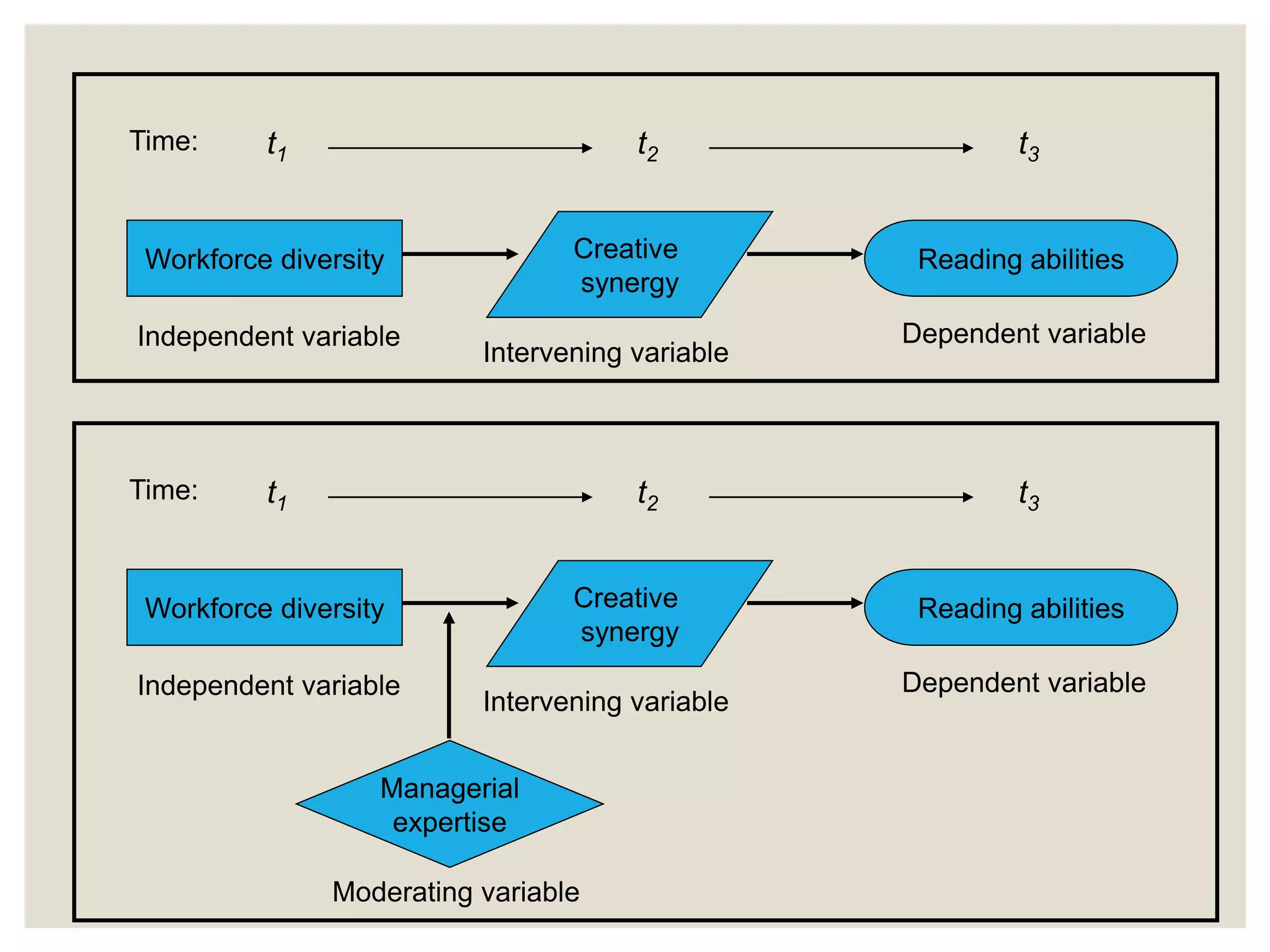
◦ An intervening variable is one that surfaces between the time the
independent variables operate to influence the dependent
variable and their impact on the dependent variable. There is
thus a temporal quality or time dimension to the intervening
variable.
Training programs
Growth needs
Willingness
to
learn
Training programs
Willingness
to
learn
Effects for those low in
growth needs
Effects for those high in
growth needs
Workforce diversity Reading abilities
Creative
synergy
Independent variable Dependent variable
Intervening variable
Time: t1 t2 t3
Workforce diversity Reading abilities
Creative
synergy
Independent variable Dependent variable
Intervening variable
Time: t1 t2 t3
Managerial
expertise
Moderating variable
Theoretical Framework
◦ The theoretical framework is the foundation on
which the entire research project is based. It is
logically developed, described, and elaborated
network network of associations among variables
that have been identified through such processes
as interviews, observations, and literature survey.
The components of the
theoretical framework
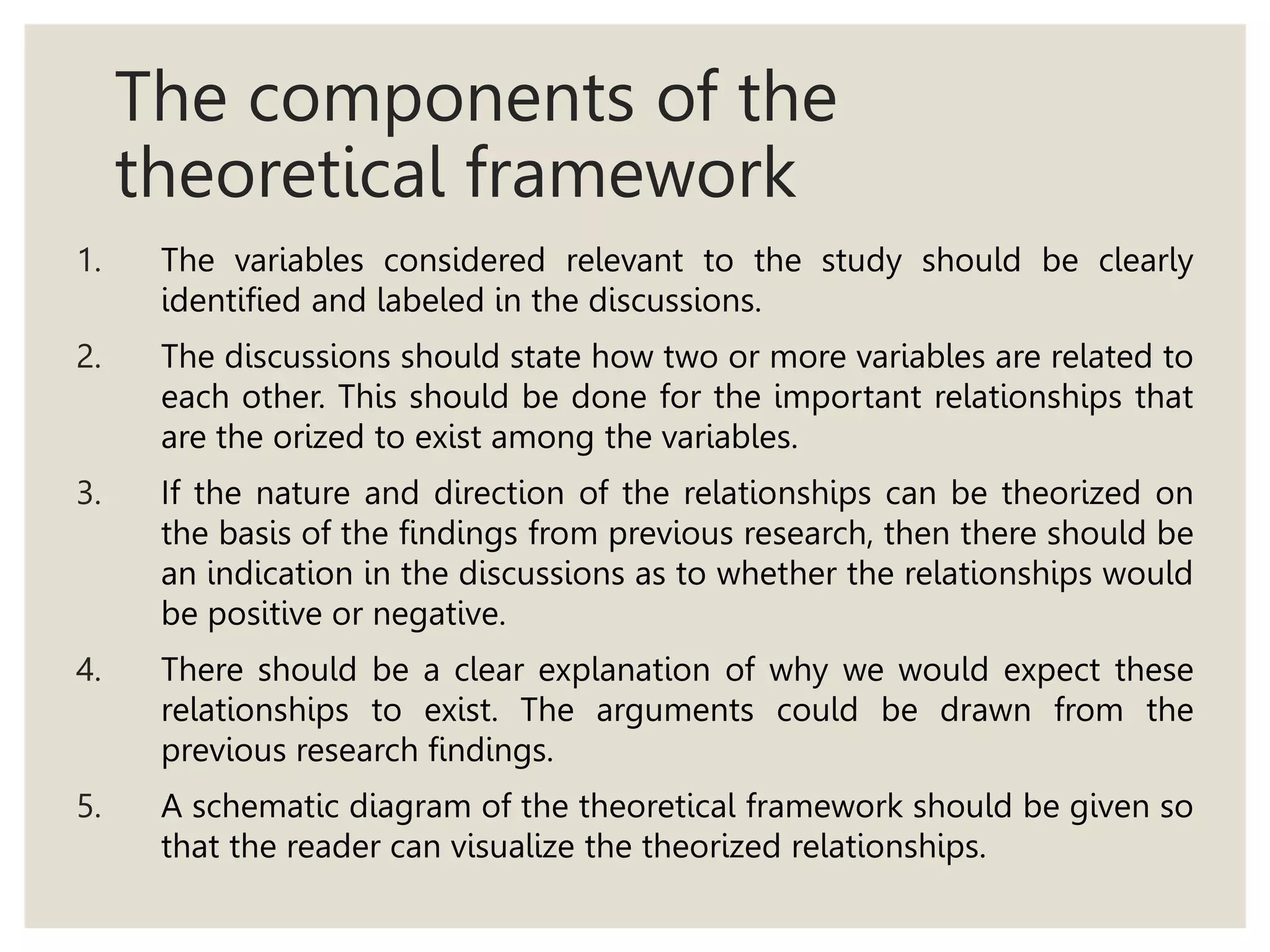
1. The variables considered relevant to the study should be clearly
identified and labeled in the discussions.
2. The discussions should state how two or more variables are related to
each other. This should be done for the important relationships that
are the orized to exist among the variables.
3. If the nature and direction of the relationships can be theorized on
the basis of the findings from previous research, then there should be
an indication in the discussions as to whether the relationships would
be positive or negative.
4. There should be a clear explanation of why we would expect these
relationships to exist. The arguments could be drawn from the
previous research findings.
5. A schematic diagram of the theoretical framework should be given so
that the reader can visualize the theorized relationships.
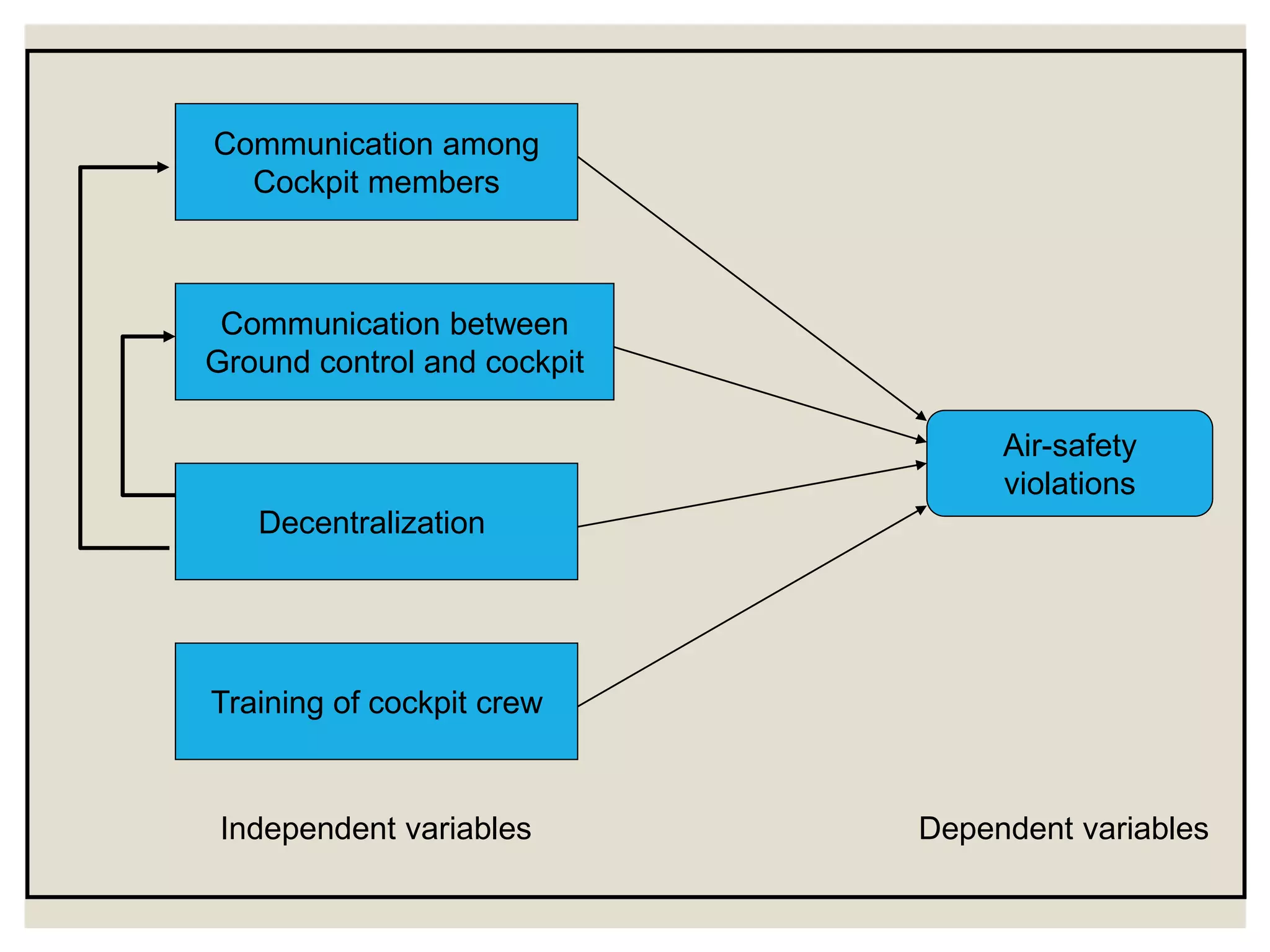
Communication among
Cockpit members
Communication between
Ground control and cockpit
Decentralization
Training of cockpit crew
Independent variables
Air-safety
violations
Dependent variables
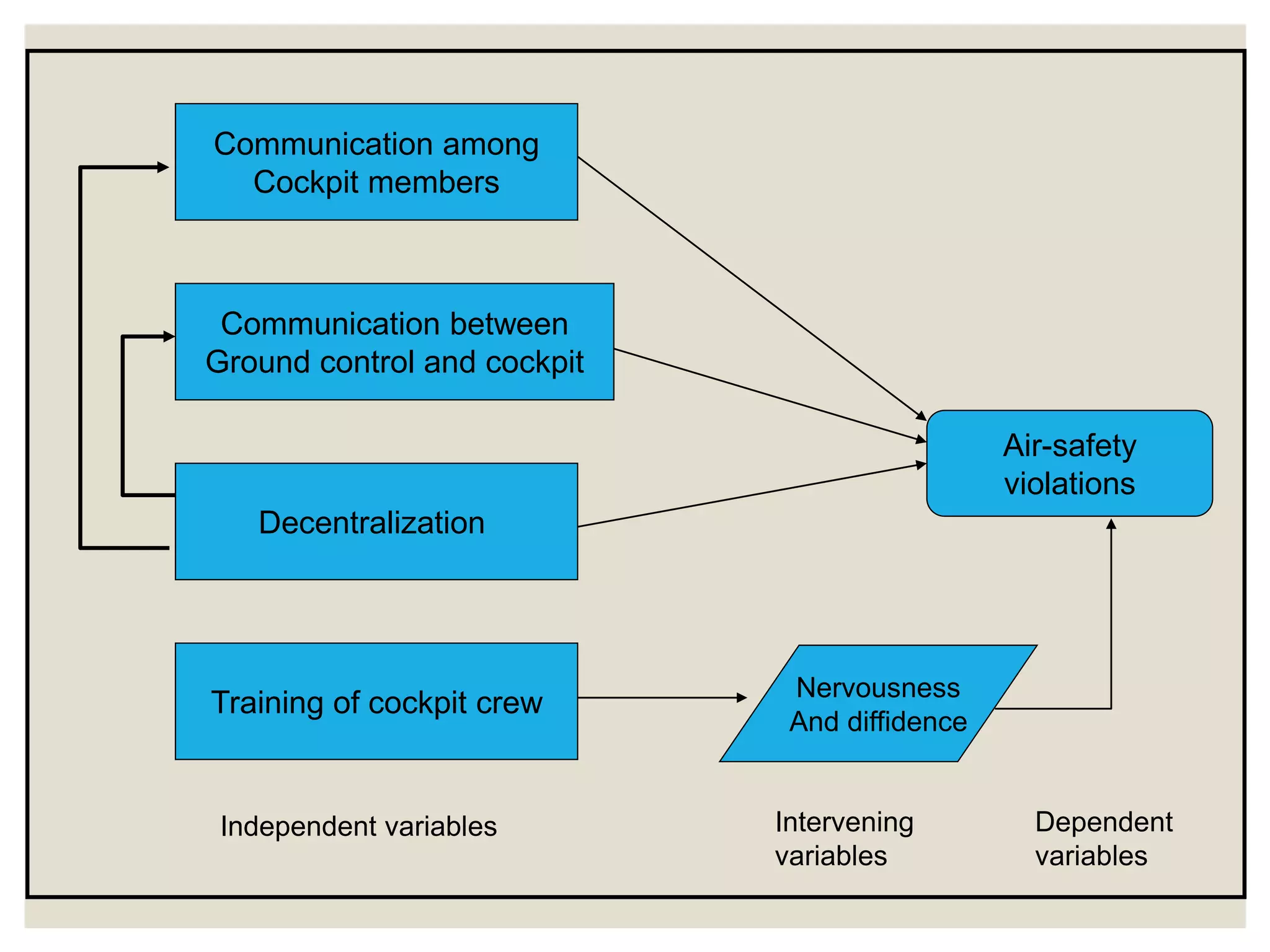
Communication among
Cockpit members
Communication between
Ground control and cockpit
Decentralization
Training of cockpit crew
Independent variables
Air-safety
violations
Dependent
variables
Nervousness
And diffidence
Intervening
variables
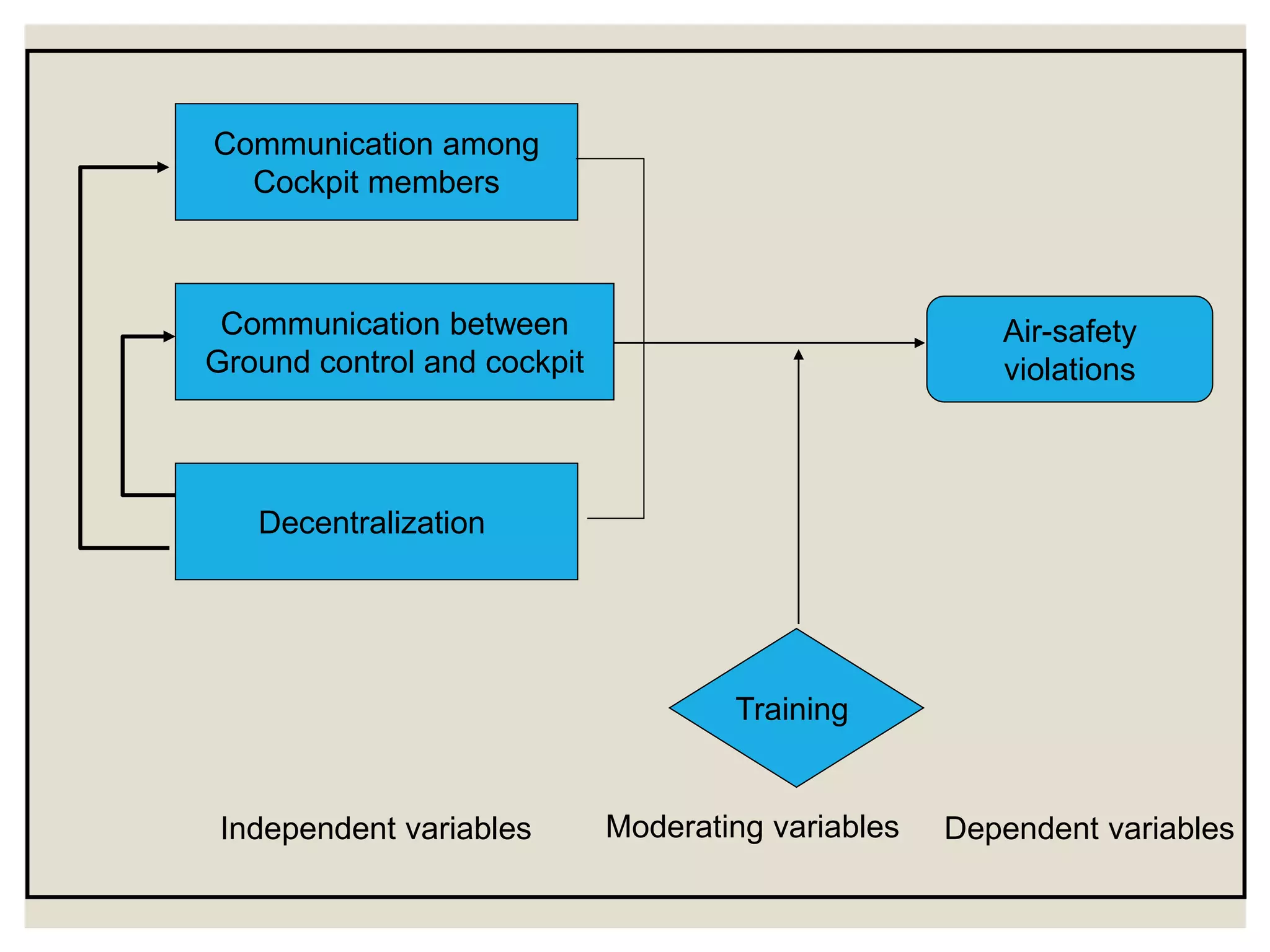
Communication among
Cockpit members
Communication between
Ground control and cockpit
Decentralization
Independent variables
Air-safety
violations
Dependent variables
Training
Moderating variables
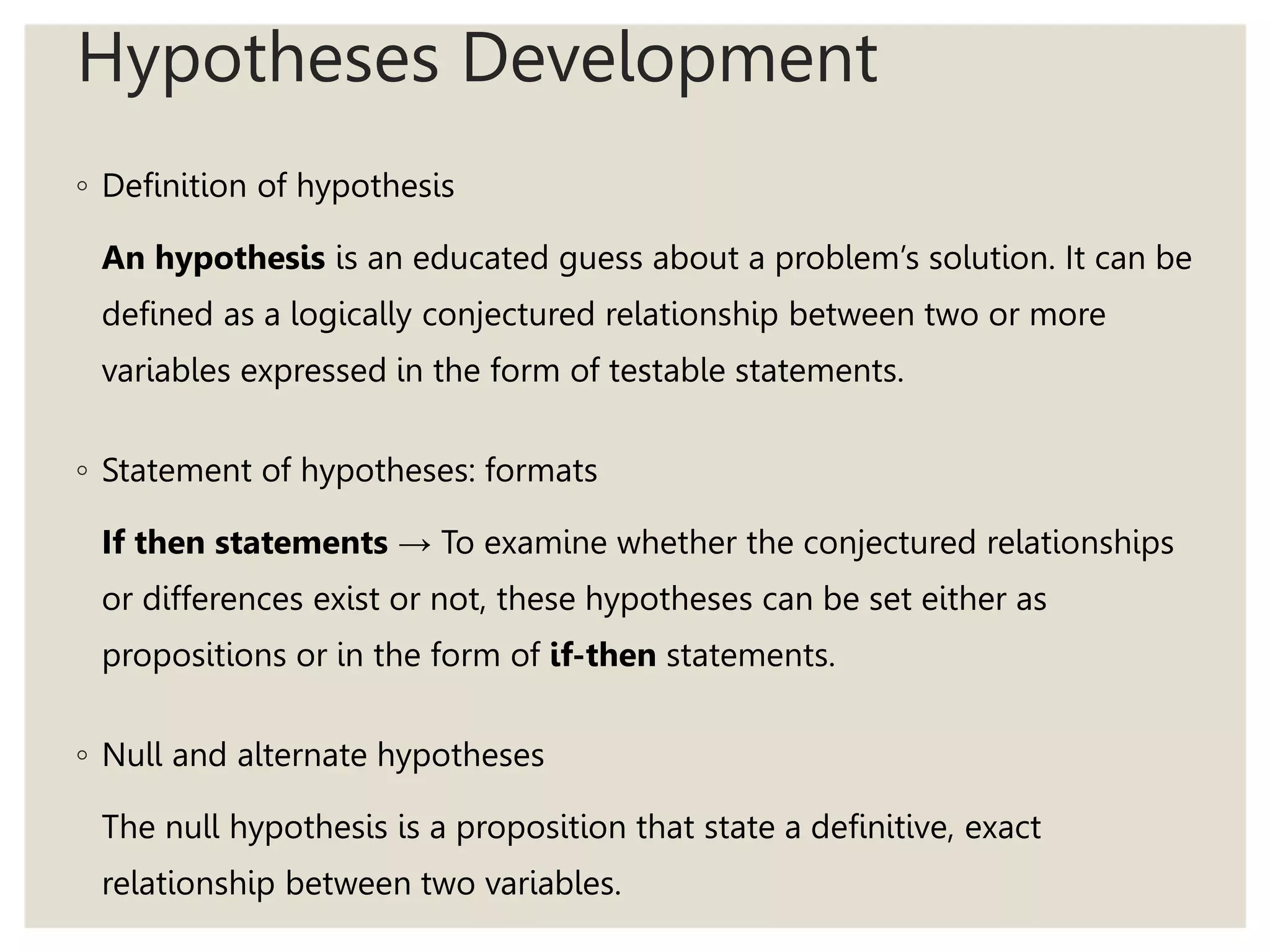
Hypotheses Development
◦ Definition of hypothesis
An hypothesis is an educated guess about a problem’s solution. It can be
defined as a logically conjectured relationship between two or more
variables expressed in the form of testable statements.
◦ Statement of hypotheses: formats
If then statements → To examine whether the conjectured relationships
or differences exist or not, these hypotheses can be set either as
propositions or in the form of if-then statements.
◦ Null and alternate hypotheses
The null hypothesis is a proposition that state a definitive, exact
relationship between two variables.
Hypotheses Testing with Qualitative
Research: Negative Case Analysis
◦ Hypotheses can also be tested through qualitative data. For
example, let us say that a researcher has developed the
theoretical framework after extensive interviews, that unethical
practices by employees are a function of their being ignorant of
what is right or wrong, or because of a need for more money,
or because of the organization’s indifference to such practices.
To test the hypothesis that these three factors are the primary
ones that influence unethical practices, the researcher will look
for data that would disconfirm the hypothesis. When even a
single case disconfirms the hypothesis, he will revise the theory.
Summary
In this chapter we examined the four types of
variables: dependent, independent, moderating, and
intervening. We also discussed how theoretical
frameworks are developed and testable hypotheses are
generated therefrom as they relate to both qualitative and
quantitative research. In the next chapter we will examine
the basic research design issues.

Chapter 3_Research Process 4-5.ppt

  • 1.
    RESEARCH METHODS FOR BUSINESS Mr.PHON Sophath April 2022
  • 2.
    CHAPTER 3 THE RESEARCHPROCESS: STEPS 4 AND 5: THEORETICAL FRAMEWORK HYPOTHESIS DEVELOPMENT
  • 3.
    The Research Processfor Basic and Applied Research ① OBSERVATION Broad area of research interest identified ② PRELIMINARY DATA GATHERING Interviewing literature survey ③ PROBLEM DEFINITION Research problem delineated ④ THEORETICAL FRAMEWORK Variables clearly identified and labeled ⑤ GENERATION OF HYPOTHESES ⑥ SCIENTIFIC RESEARCH DESIGN ⑦ DATA COLLECTION ANALYSIS, AND INTERPRETATION ⑧ DEDUCTION Hypotheses substantiated? Research question answered?
  • 4.
    The Need fora Theoretical Framework ◦ A theoretical framework is a conceptual model of how one theorizes the relationships among the several factors that have been identified as important to the problem. ◦ The theoretical framework discusses the interrelationships among the variables that are deemed to be integral to the dynamics of the situation being investigated. ◦ Developing such a conceptual framework helps us to postulate and test certain relationships so as to improve our understanding of the dynamics of the situation.
  • 5.
    Variables ◦ A variableis anything that can take on differing or varying values. The values can differ at various for the same object or person, or the values can differ at the same time for different objects or persons. Examples of variables are exam scores, absenteeism, and motivation. ◦ Types of variables: 1. The dependent variable (also known as the criterion variable). 2. The independent variable (also known as the predictor variable). 3. The moderating variable. 4. The intervening variable.
  • 6.
    Dependent variable ◦ Thedependent variable is the variable of primary interest to the research. The researcher’s goal is to explain or predict the variability in the dependent variable.
  • 7.
    Independent variable ◦ Anindependent variable is one that influences the dependent variable in either a positive or a negative way. That is, when the independent variable is present, the dependent variable is also present, and with each unit of increase in the independent variable, there is an increase or decrease in the dependent variable also. New product success Stock market price Independent variable Dependent variable Managerial values Power distance Independent variable Dependent variable
  • 8.
    Moderating variable ◦ Themoderating variable is one that has a strong contingent effect on the independent variable-dependent variable relationship. That is the presence of a third variable (the moderating variable) modifies the originally expected relationship between the independent and the dependent variables. Number of books Reading abilities Independent variable Dependent variable
  • 9.
    Number of booksReading abilities Independent variable Dependent variable Parents literacy Moderating variable Workforce diversity Organizational effectiveness Independent variable Dependent variable Managerial expertise Moderating variable
  • 10.
    Intervening variable ◦ Anintervening variable is one that surfaces between the time the independent variables operate to influence the dependent variable and their impact on the dependent variable. There is thus a temporal quality or time dimension to the intervening variable. Training programs Growth needs Willingness to learn
  • 11.
    Training programs Willingness to learn Effects forthose low in growth needs Effects for those high in growth needs
  • 12.
    Workforce diversity Readingabilities Creative synergy Independent variable Dependent variable Intervening variable Time: t1 t2 t3 Workforce diversity Reading abilities Creative synergy Independent variable Dependent variable Intervening variable Time: t1 t2 t3 Managerial expertise Moderating variable
  • 13.
    Theoretical Framework ◦ Thetheoretical framework is the foundation on which the entire research project is based. It is logically developed, described, and elaborated network network of associations among variables that have been identified through such processes as interviews, observations, and literature survey.
  • 14.
    The components ofthe theoretical framework 1. The variables considered relevant to the study should be clearly identified and labeled in the discussions. 2. The discussions should state how two or more variables are related to each other. This should be done for the important relationships that are the orized to exist among the variables. 3. If the nature and direction of the relationships can be theorized on the basis of the findings from previous research, then there should be an indication in the discussions as to whether the relationships would be positive or negative. 4. There should be a clear explanation of why we would expect these relationships to exist. The arguments could be drawn from the previous research findings. 5. A schematic diagram of the theoretical framework should be given so that the reader can visualize the theorized relationships.
  • 15.
    Communication among Cockpit members Communicationbetween Ground control and cockpit Decentralization Training of cockpit crew Independent variables Air-safety violations Dependent variables
  • 16.
    Communication among Cockpit members Communicationbetween Ground control and cockpit Decentralization Training of cockpit crew Independent variables Air-safety violations Dependent variables Nervousness And diffidence Intervening variables
  • 17.
    Communication among Cockpit members Communicationbetween Ground control and cockpit Decentralization Independent variables Air-safety violations Dependent variables Training Moderating variables
  • 18.
    Hypotheses Development ◦ Definitionof hypothesis An hypothesis is an educated guess about a problem’s solution. It can be defined as a logically conjectured relationship between two or more variables expressed in the form of testable statements. ◦ Statement of hypotheses: formats If then statements → To examine whether the conjectured relationships or differences exist or not, these hypotheses can be set either as propositions or in the form of if-then statements. ◦ Null and alternate hypotheses The null hypothesis is a proposition that state a definitive, exact relationship between two variables.
  • 19.
    Hypotheses Testing withQualitative Research: Negative Case Analysis ◦ Hypotheses can also be tested through qualitative data. For example, let us say that a researcher has developed the theoretical framework after extensive interviews, that unethical practices by employees are a function of their being ignorant of what is right or wrong, or because of a need for more money, or because of the organization’s indifference to such practices. To test the hypothesis that these three factors are the primary ones that influence unethical practices, the researcher will look for data that would disconfirm the hypothesis. When even a single case disconfirms the hypothesis, he will revise the theory.
  • 20.
    Summary In this chapterwe examined the four types of variables: dependent, independent, moderating, and intervening. We also discussed how theoretical frameworks are developed and testable hypotheses are generated therefrom as they relate to both qualitative and quantitative research. In the next chapter we will examine the basic research design issues.